Which of the following nonfinancial factors is most likely to be a cause of a
going-concern problem?
A. Hiring a new CEO.
B. Loss of a key patent.
C. Announcing a new stock issue.
D. Replacing an old product line.
Answer:
A company has a debit balance of $3,500 in the Allowance for Doubtful Accounts. It
estimates that 2% of net credit sales of $1,500,000 will be uncollectible. The required
journal entry to record bad debt expense should include a debit to:
A. Allowance for Doubtful Accounts for $30,000.
B. Allowance for Doubtful Accounts for $33,500.
C. Bad Debt Expense for $33,500.
D. Bad Debt Expense for $30,000.
Answer:
Which of the following describes the classification and normal balance of the retained
earnings account?
A. Asset, debit
B. Stockholders’ equity, credit
C. Liability, credit
D. Stockholders’ equity, debit
Answer:
Which of the following is not consistent with the changes in financial results reported
by Momentum Clothing Distributors?
A. Momentum obtained additional debt and equity financing in 2013, which the
company used to acquire additional assets.
B. Assets acquired in 2014 did not improve Momentum’s ability to generate sales from
each dollar invested in assets.
C. The total dollar amount of stockholders’ equity increased from 2012 to 2013 and
from 2013 to 2014.
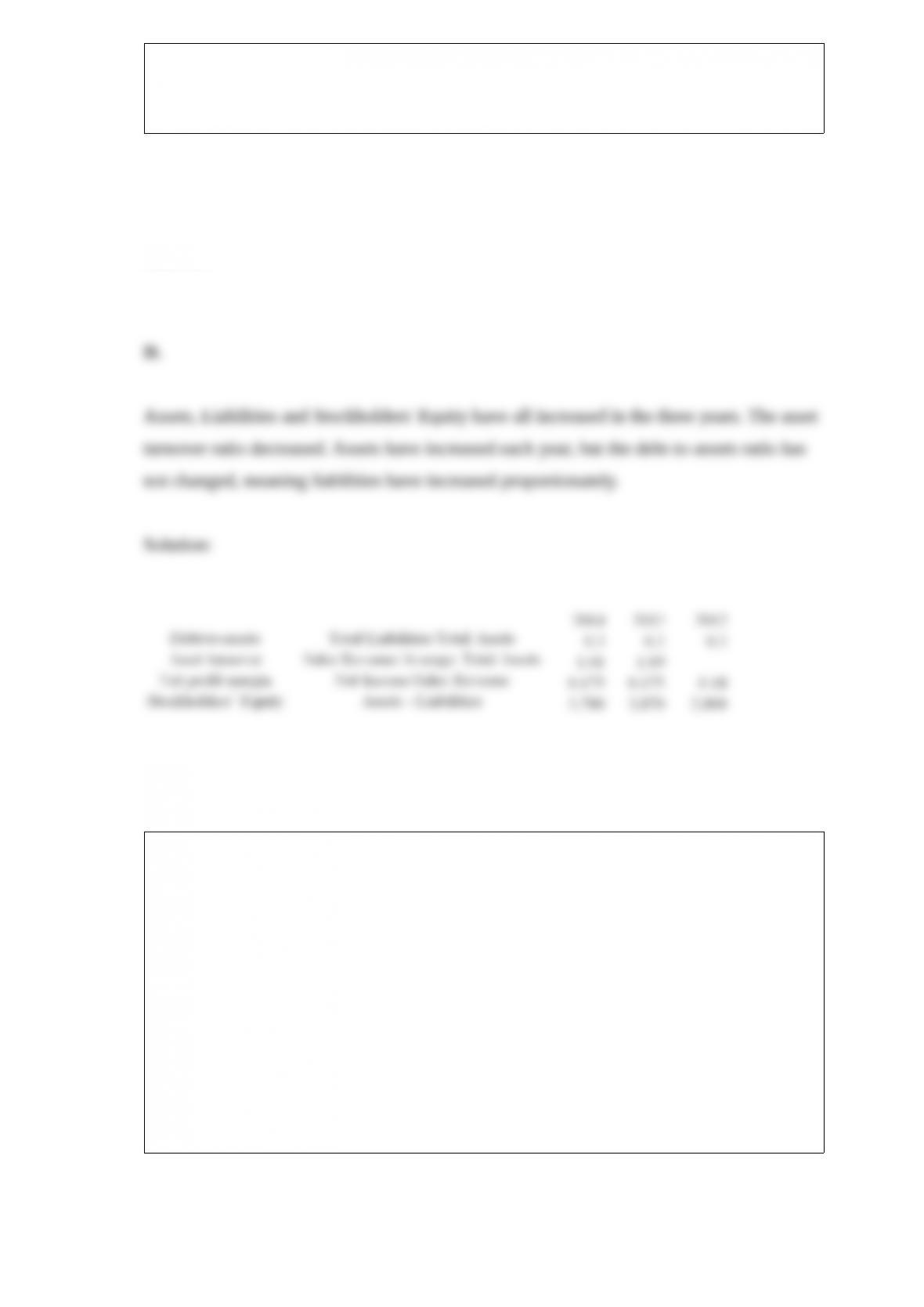
D. Momentum’s financing strategy has shifted toward greater relative reliance on
investors for funding the company’s growth.
Answer:
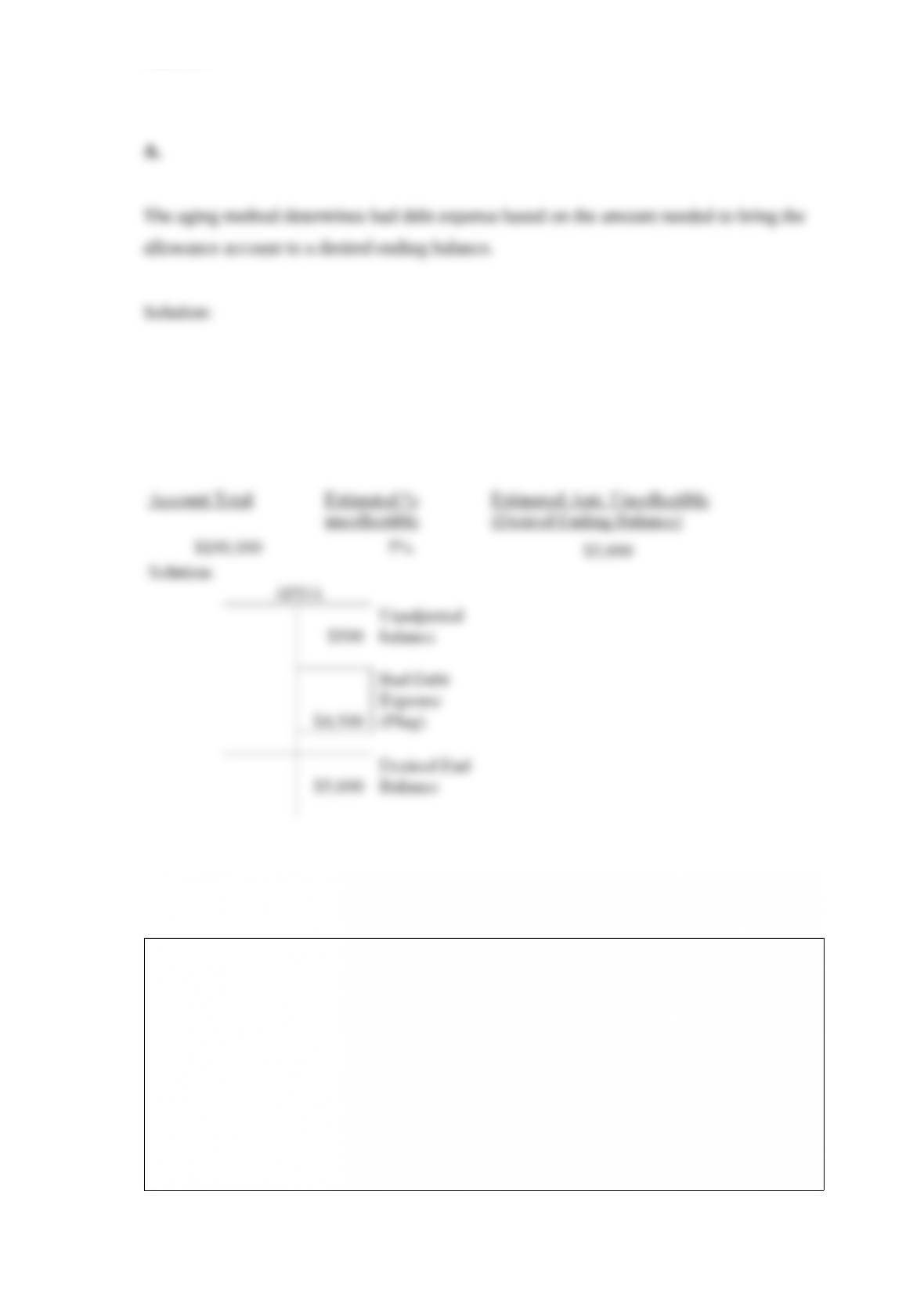
On average, 5% of total accounts receivable has been uncollectible in the past. At the
end of the year, the balance of accounts receivable is $100,000 and the allowance for
doubtful accounts has an unadjusted credit balance of $500. Credit sales during the year
were $150,000. Using the aging of accounts receivable method, the estimated bad debt
expense would be:
A. $4,500.
B. $5,000.
C. $7,000.
D. $7,500.
Answer:
Some bonds mature in installments. If a bond issue contains this feature, the bonds are
known as:
A. secured bonds.
B. convertible bonds.
C. callable bonds.
D. serial bonds.
Answer:
The primary purpose of an audit is to:
A. add credibility to the financial statements.
B. assure investors that no errors have been made.
C. detect fraud.
D. assure creditors that they will be repaid.
Answer:
The primary goals of inventory management do not include:
A. maintaining a sufficient quantity of inventory to keep customers satisfied.
B. maintaining sufficient quality of inventory to keep customers satisfied.
C. minimizing the costs associated with maintaining inventories.
D. minimizing the quantity of ending inventory.
Answer:
Which of the following does not create a liability?
A. Buying goods and services on credit.
B. Obtaining a short-term loan.
C. Issuing long-term debt.
D. Remitting sales tax to the government.
Answer:
Which of the following is the equation for cost of goods sold?
A. Beginning inventory + net purchases – Ending inventory
B. Beginning inventory + net purchases + Ending inventory
C. Net purchases – Ending inventory
D. Ending inventory + net purchases – Beginning inventory
Answer:
Which of the following would eventually cause a reduction in retained earnings?
A. Receiving contributions from investors.
B. Earning unearned revenue.
C. Billing customers for services provided.
D. Using up supplies.
Answer:
The stockholders’ equity section of the balance sheet includes all of the following
except:
A. retained earnings.
B. contributed capital.
C. treasury stock.
D. dividends.
Answer:
Extending credit to customers will not result in which of the following additional costs?
A. Increased wage costs will be incurred to evaluate customer creditworthiness, track
what each customer owes, and follow up to ensure collection.
B. Bad debt expense will result when amounts cannot be collected from customers.
C. Delayed receipt of cash may result in requiring the company to take out short-term
loans and incur interest costs.
D. Decreased gross profit from reduced sales.
Answer:
Accrual adjustments involve:
A. increasing assets and revenues or increasing liabilities and expenses moving in the
same direction.
B. increasing assets and expenses or increasing liabilities and revenues.
C. increasing assets and decreasing revenues or increasing liabilities and decreasing
expenses.
D. increasing assets and decreasing expenses or increasing liabilities and decreasing
revenues.
Answer:
A company originally recorded Prepaid Rent. As of the end of the accounting year, part
of this is no longer prepaid. If no adjustment is made to record this expiration, which of
the following will occur?
A. Assets will be understated and expenses will be overstated.
B. Assets will be overstated and expenses will be understated.
C. Assets and expenses will be overstated.
D. Assets and expenses will be understated.
Answer:
The 2014 records of Thompson Company showed beginning inventory, $6,000; cost of
goods sold, $14,000; and ending inventory, $8,000. The cost of purchases was:
A. $12,000.
B. $10,000.
C. $9,000.
D. $16,000.
Answer:
A company has liquid assets of $5 million and net income of $10 million. Current
liabilities total $2.5 million, interest expense is $2 million, and income tax expense is
$3 million. What is the quick ratio for the company?
A. 0.5
B. 7.5
C. 0.3
D. 2.0
Answer:
A company has 110,000 shares authorized, 50,000 shares issued, and 5,000 shares of
treasury stock. How many shares are outstanding?
A. 45,000
B. 155,000
C. 55,000
D. 145,000
Answer:
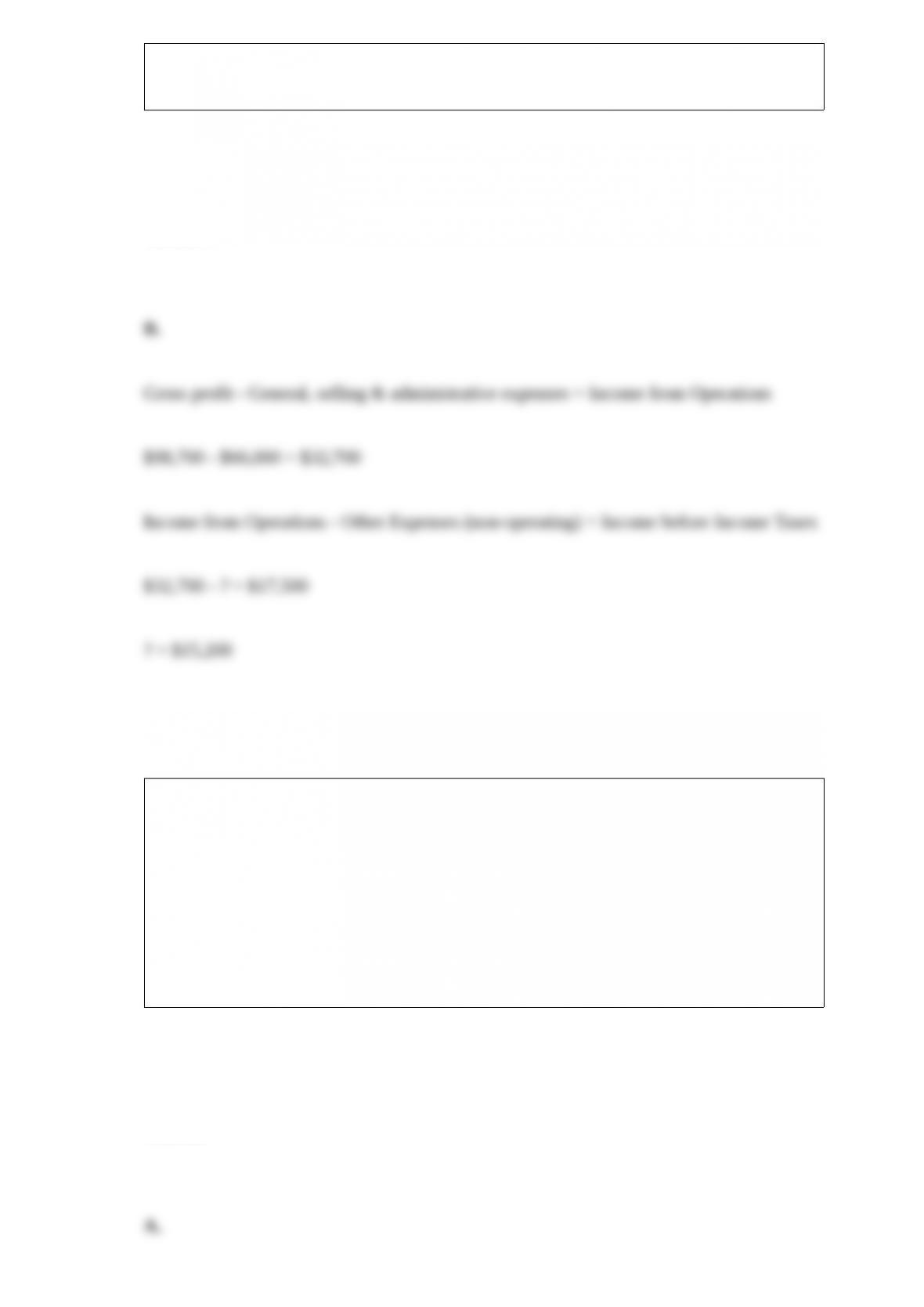
A company reported the following:
Use the information above to answer the following question. What is the amount other
expenses (non-operating)?
A. $19,700
B. $15,200
C. $17,500
D. $24,200
Answer:
Cash equivalents include which of the following:
A. a 30-day bank certificate of deposit.
B. petty cash.
C. a 6-month U.S. treasury bill.
D. savings account balances.
Answer:
A typical balance sheet provides no information regarding which of the following
items?
A. To whom the company owes money.
B. For what the company owes money.
C. How much the company owes.
D. The proportion of the company’s debts that will be paid in the short-term.
Answer:
Accounts receivable
A. has a normal credit balance.
B. is increased by a debit.
C. is a liability.
D. is increased when a company receives cash from its customers.
Answer:
Which of the following would be reported on the statement of cash flows, using the
direct method, as a cash flow from operating activities?
A. Payment of income taxes.
B. Payment of dividends.
C. Purchase of a building.
D. Purchase of treasury stock.
Answer:
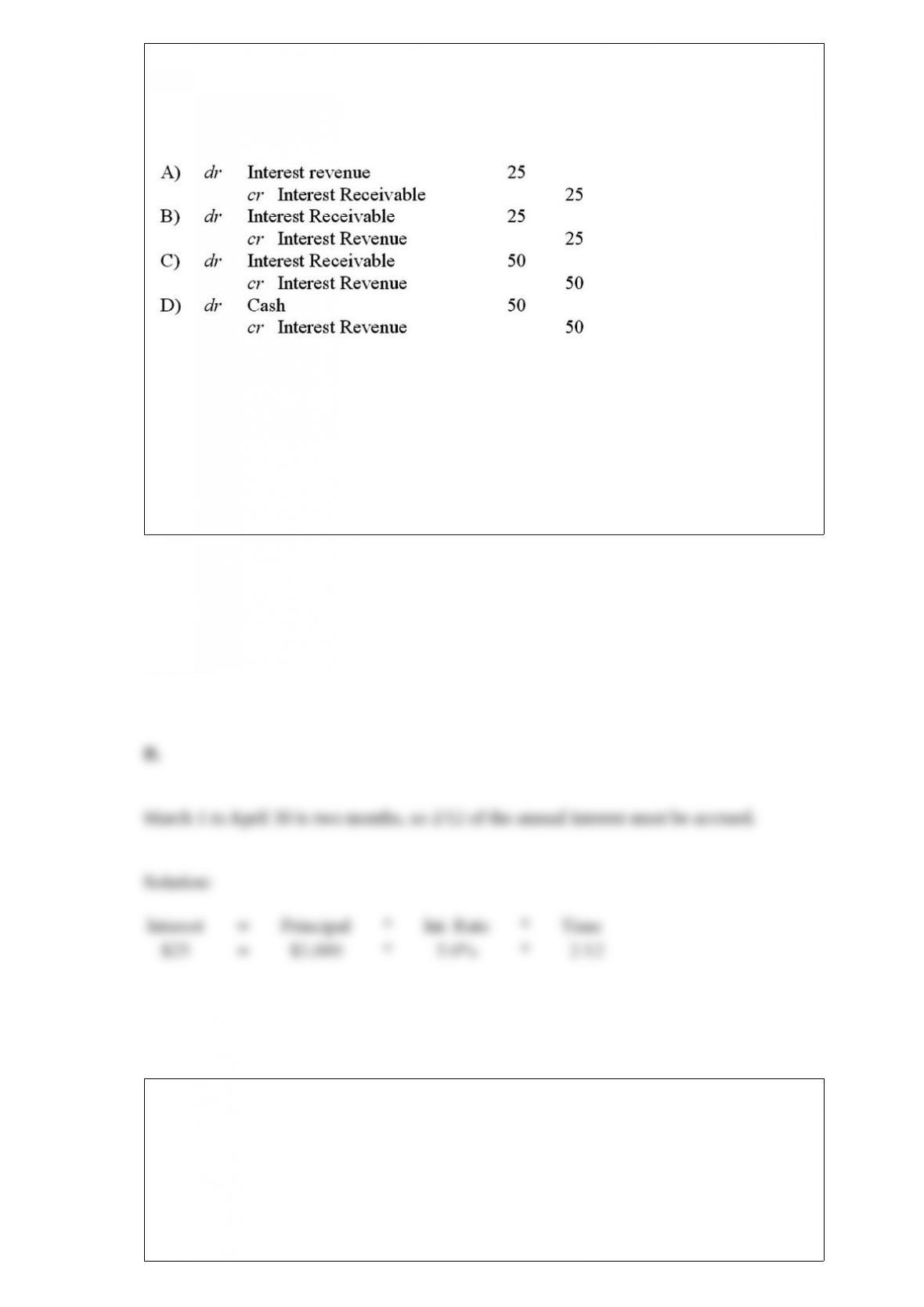
Preston Corporation issues a $3,000 note to Fulton Corporation on March 1, which
carries interest at an annual rate of 5%. Interest is payable when the note matures on
June 30. What entry will Fulton make at its year-end, April 30, if interest on the note
has not previously been accrued?
A. Option A
B. Option B
C. Option C
D. Option D
Answer:
IBM is planning to issue $1,000 bonds with a stated interest rate of 7% and a maturity
date of July 15, 2022. If interest rates fall in the economy so that similar financial
investments pay 5%, IBM will:
A. not be able to issue the bonds because no one will buy them.
B. receive a higher issue price as buyers compete for the bonds.
C. have to accept a lower issue price to attract buyers.
D. have to reprint the bond certificates to change stated interest rate to 5%.
Answer:
A toy store with a calendar year-end is likely to have:
A. unpredictable fluctuations in cash flow from quarter to quarter.
B. the largest cash inflow from operations in the second and third quarters (April –
September).
C. a fairly stable cash flow across all four quarters.
D. the largest cash inflow from operations in the fourth and first quarters (October –
March).
Answer:
Which of the following errors cause net income to be understated?
A. Employee wages that have not been paid are not recorded.
B. Depreciation expense is not recorded.
C. Collection of accounts receivable is not recorded.
D. Revenue that has been earned but not yet collected has not been recorded.
Answer:
Over the past five years, a company had average annual credit sales of $320,000 and
this year had write-offs of $2,000. Credit sales in the current year are $300,000. The
balance in the Allowance for Doubtful Accounts is a $500 credit. Using the percentage
of credit sales method and an estimate of 1%, what amount should the company record
as an estimate of bad debt expense?
A. $2,500
B. $3,000
C. $2,980
D. $3,200
Answer:
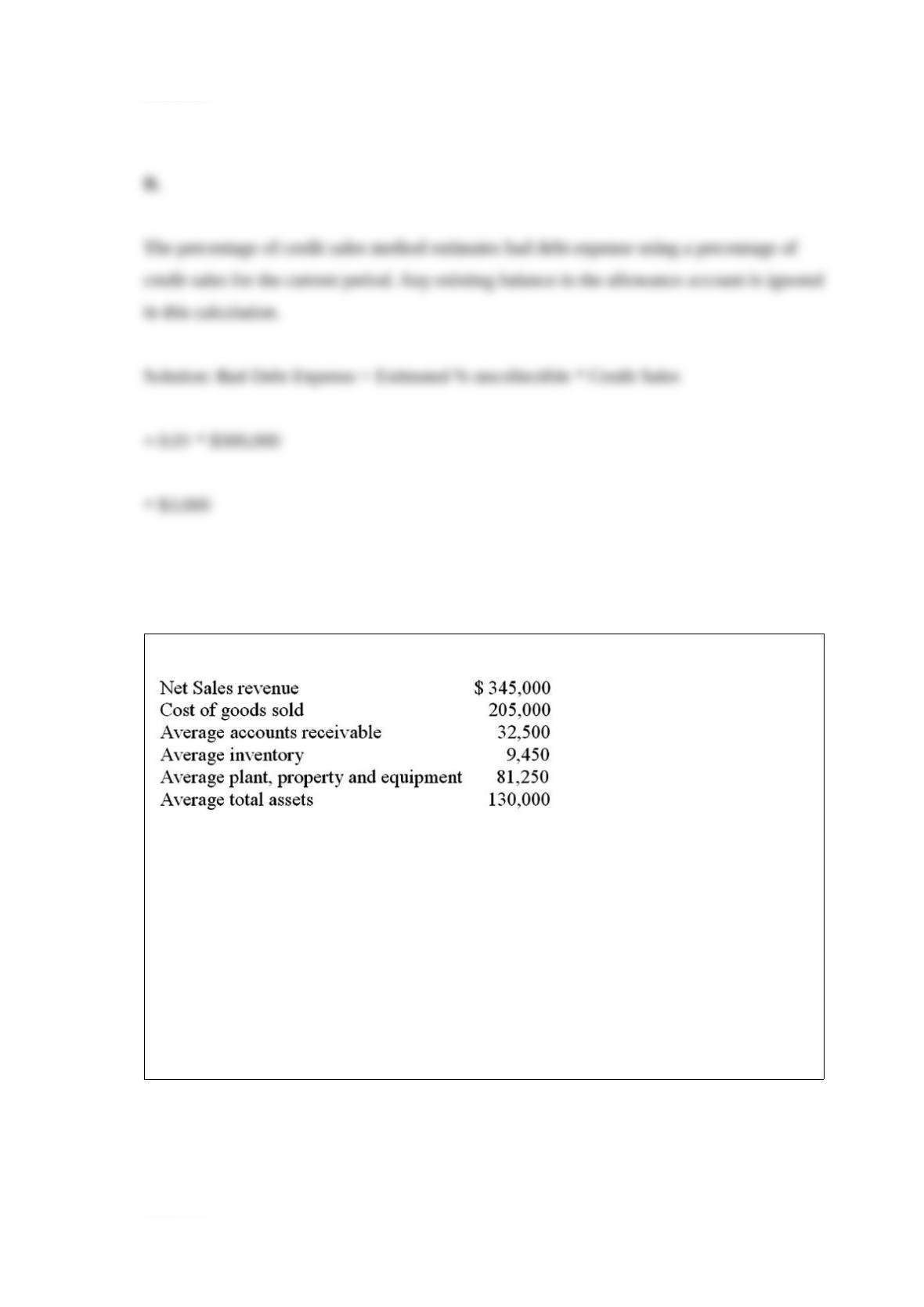
The following information is available for a company for the current year:
Which of the following is closest to the company’s inventory turnover ratio for the
current year?
A. 4.61
B. 3.44
C. 21.69
D. 13.76
Answer:
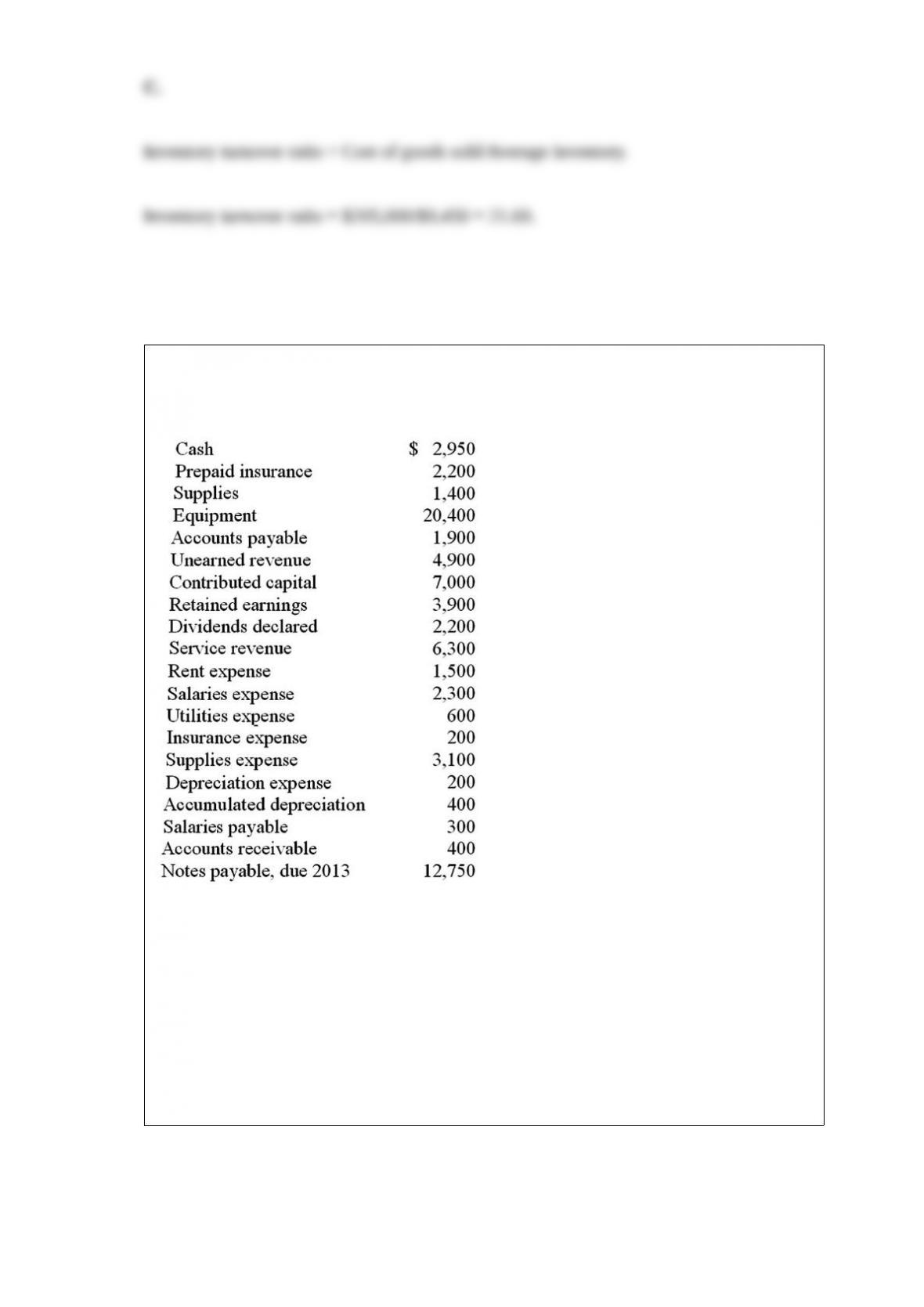
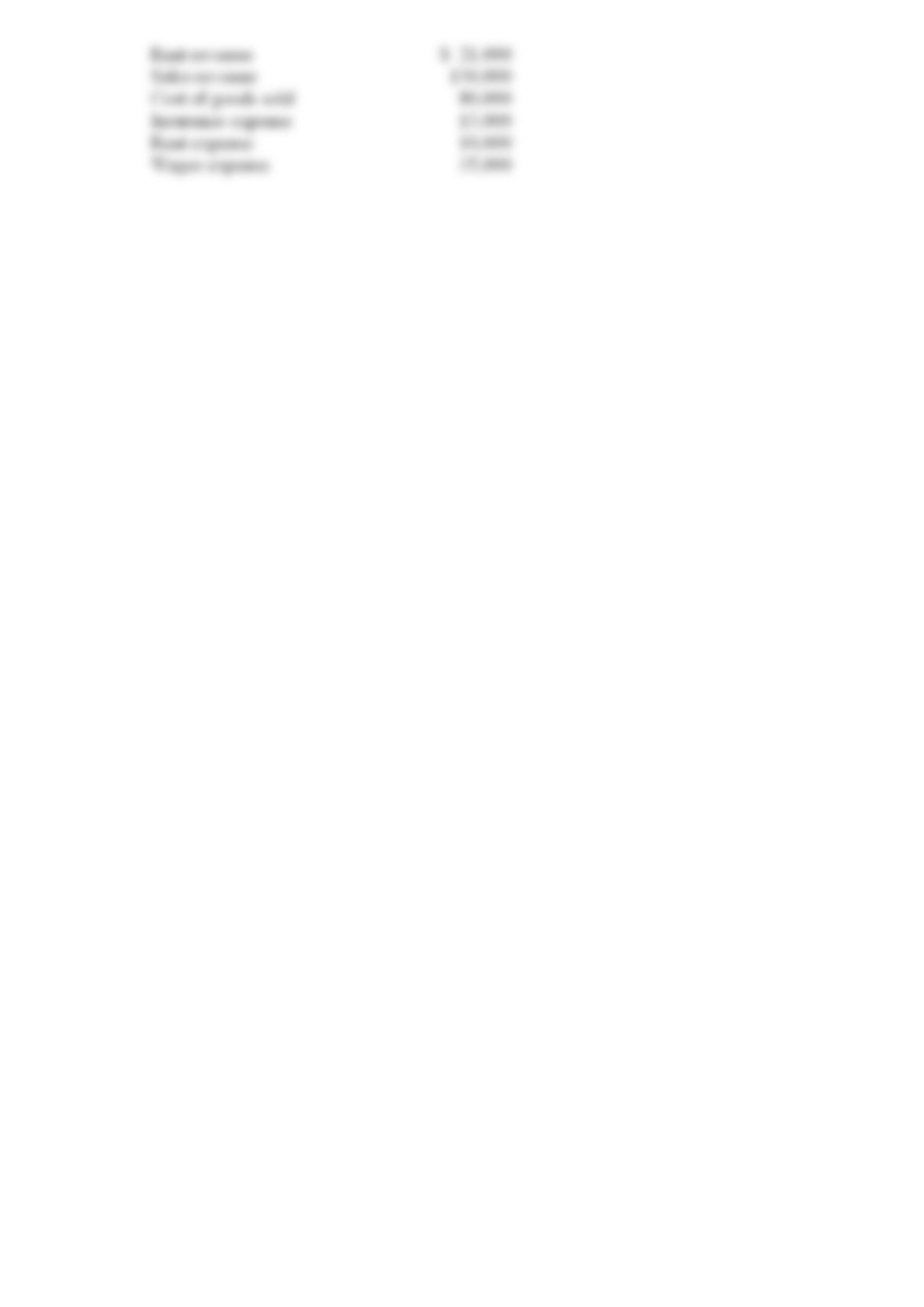
The following items are taken from the adjusted trial balance prepared as of December
31, 2013. All accounts have normal balances.
What is the amount of net income (net loss) for the year?
A. ($2,000)
B. ($3,800)
C. ($1,600)
D. ($3,300)
Answer:
The Acme Corporation buys 300 units of merchandise in January at $5 each. Acme
buys 500 units at $4 each in February and 200 units at $6 each in March. Acme sells
150 units during this quarter. Acme uses a periodic inventory system and had no
beginning inventory. What is its cost of goods sold for the quarter using the LIFO
method?
A. $600
B. $934
C. $750
D. $900
Answer:
A company uses $100,000 in cash to pay off $100,000 in notes payable. This would
result in a:
A. $100,000 debit to Notes Payable and a $100,000 credit to Cash.
B. $100,000 credit to Cash and a $100,000 credit to Notes Payable.
C. $100,000 debit to Cash and a $100,000 credit to Notes Payable.
D. $100,000 debit to Cash and a $100,000 debit to Notes Payable.
Answer:
Which of the following measures would assist in assessing the profitability of a
company?
A. Asset turnover.
B. Times interest earned ratio.
C. Inventory turnover ratio.
D. Debt to assets ratio.
Answer:
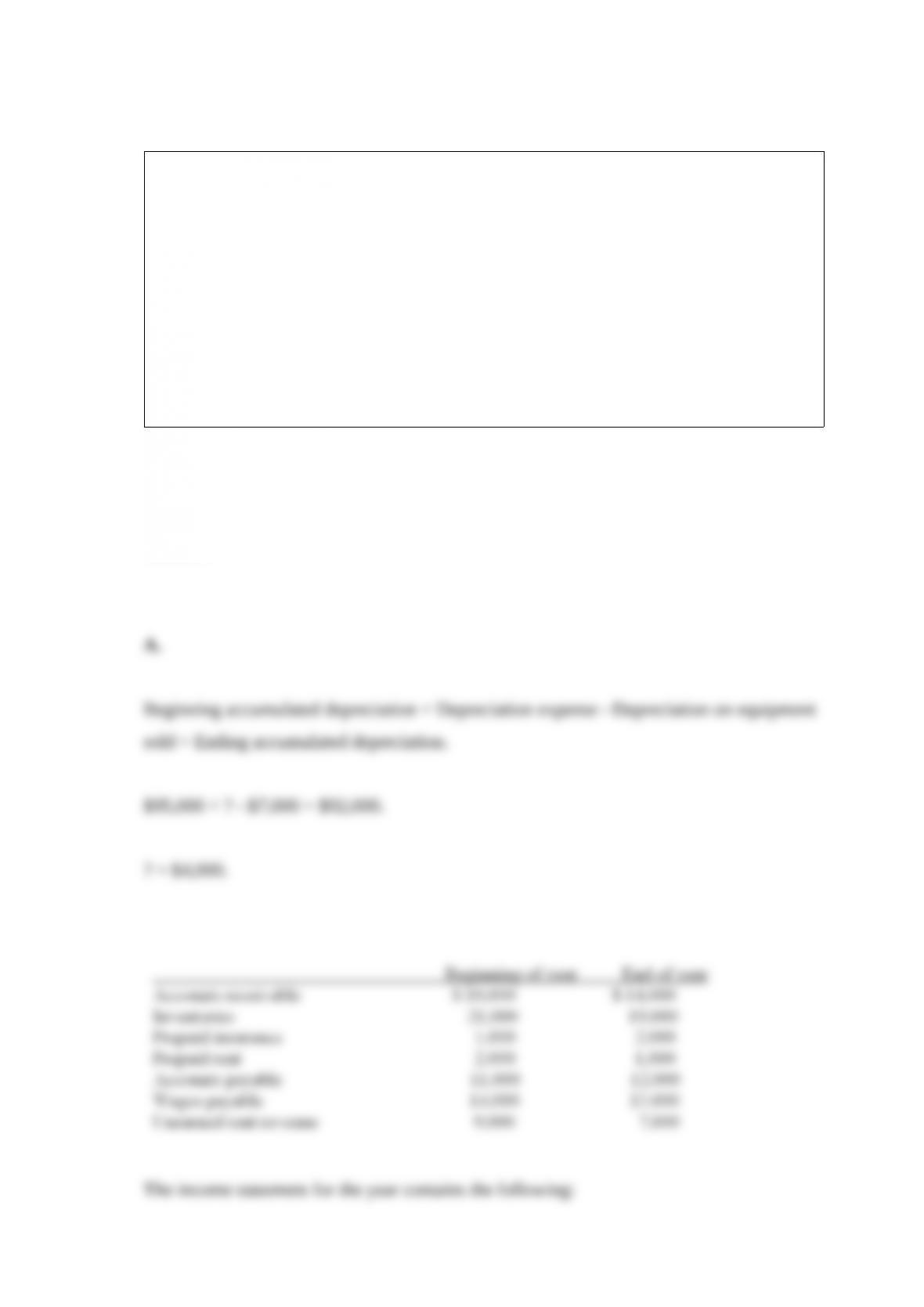
Use the information above to answer the question below. The company uses the indirect
method in preparing the statement of cash flows. What is the amount of depreciation
expense that will be reported in the operating activities section of the statement?
A. $4,000
B. $11,000
C. $7,000
D. $10,000
Answer: