1) Harris Corporation, a retailer, had cost of goods sold of $290,000 last year. The
beginning inventory balance was $26,000 and the ending inventory balance was
$24,000. The corporation’s inventory turnover was closest to:
A.12.08
B.11.60
C.5.80
D.11.15
2) An activity-based costing system that is designed for internal decision-making will
not conform to generally accepted accounting principles because:
A.under activity-based costing the sum of all product costs does not equal the total costs
of the company.
B.under activity-based costing manufacturing costs are assigned to products.
C.activity-based costing has not been approved by the United Nation’s International
Accounting Board.
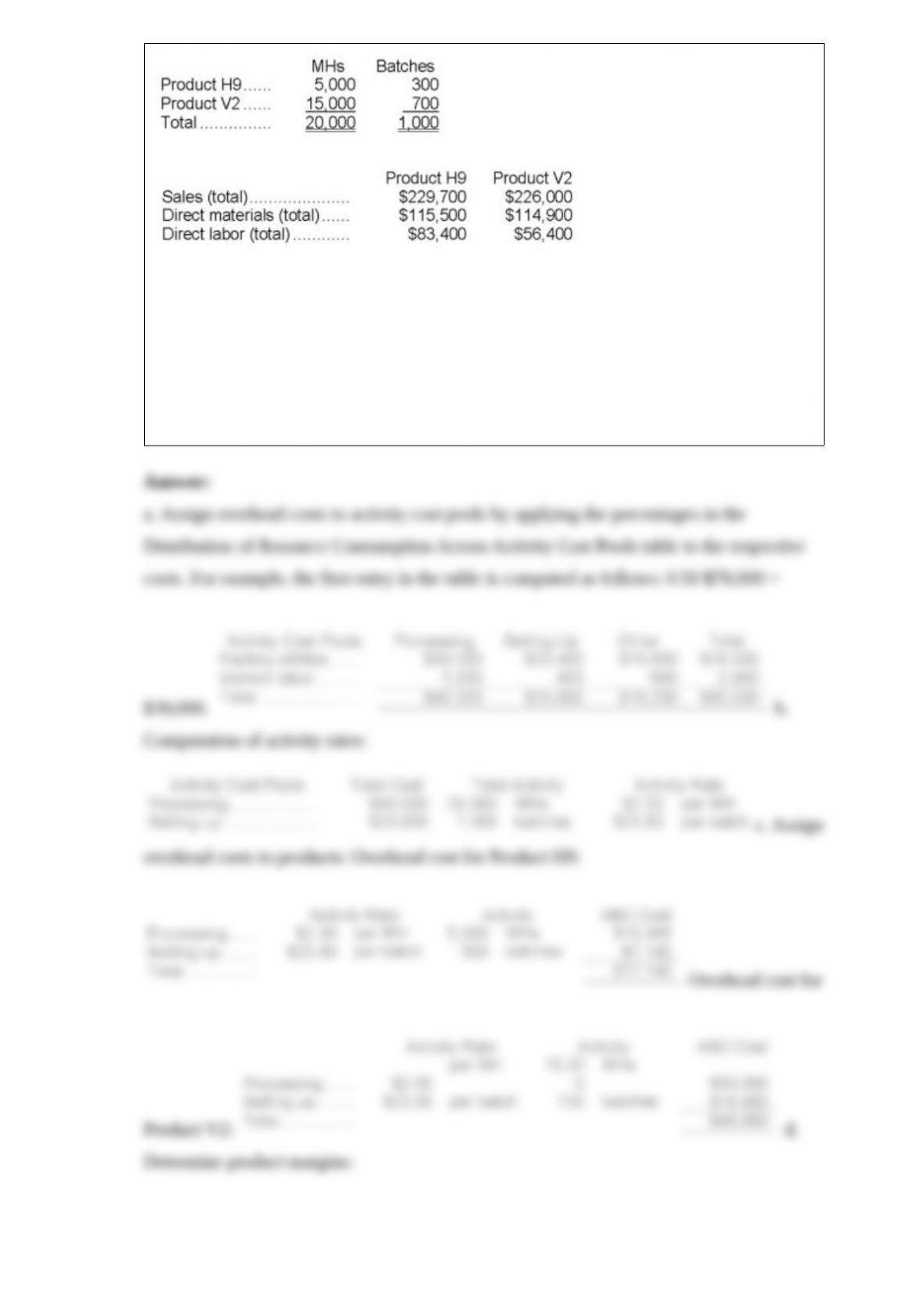
3) Barnette Corporation has an activity-based costing system with three activity cost
pools-Processing, Setting Up, and Other. The company’s overhead costs, which consist
of factory utilities and indirect labor, are allocated to the cost pools in proportion to the
activity cost pools’ consumption of resources. Costs in the Processing cost pool are
assigned to products based on machine-hours (MHs) and costs in the Setting Up cost
pool are assigned to products based on the number of batches. Costs in the Other cost
pool are not assigned to products. Data concerning the two products and the company’s
costs and activity-based costing system appear below:
Distribution of Resource Consumption Across Activity Cost Pools
Required:
a. Assign overhead costs to activity cost pools using activity-based costing.
b. Calculate activity rates for each activity cost pool using activity-based costing.
c. Determine the amount of overhead cost that would be assigned to each product using
activity-based costing.
d. Determine the product margins for each product using activity-based costing.
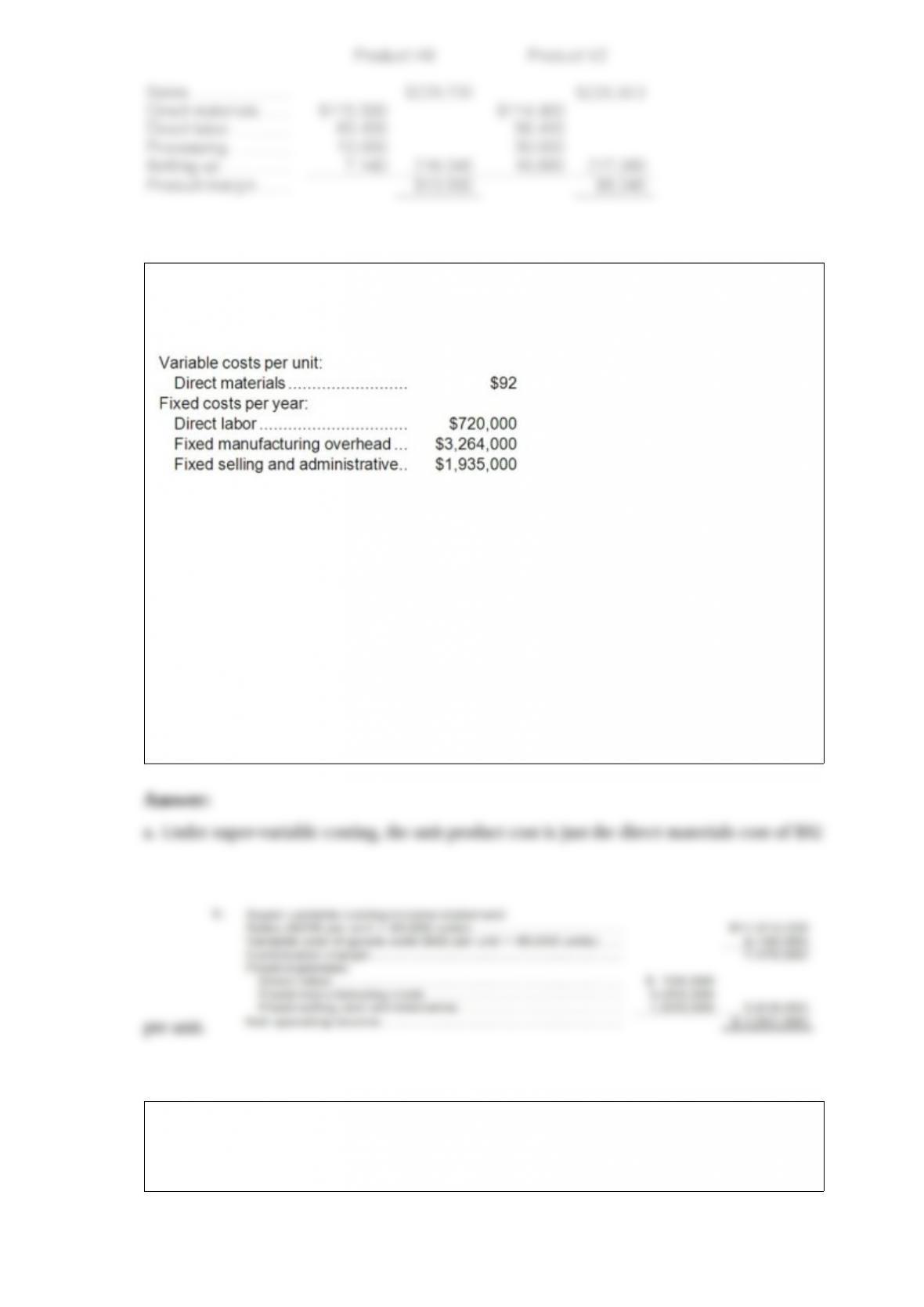
4) Calder Corporation manufactures and sells one product. The following information
pertains to the company’s first year of operations:
The company does not have any variable manufacturing overhead costs or variable
selling and administrative costs. During its first year of operations, the company
produced 48,000 units and sold 45,000 units. The company’s only product is sold for
$258 per unit.
Required:
a. Assume the company uses super-variable costing. Compute the unit product cost for
the year.
b. Assume the company uses super-variable costing. Prepare an income statement for
the year.
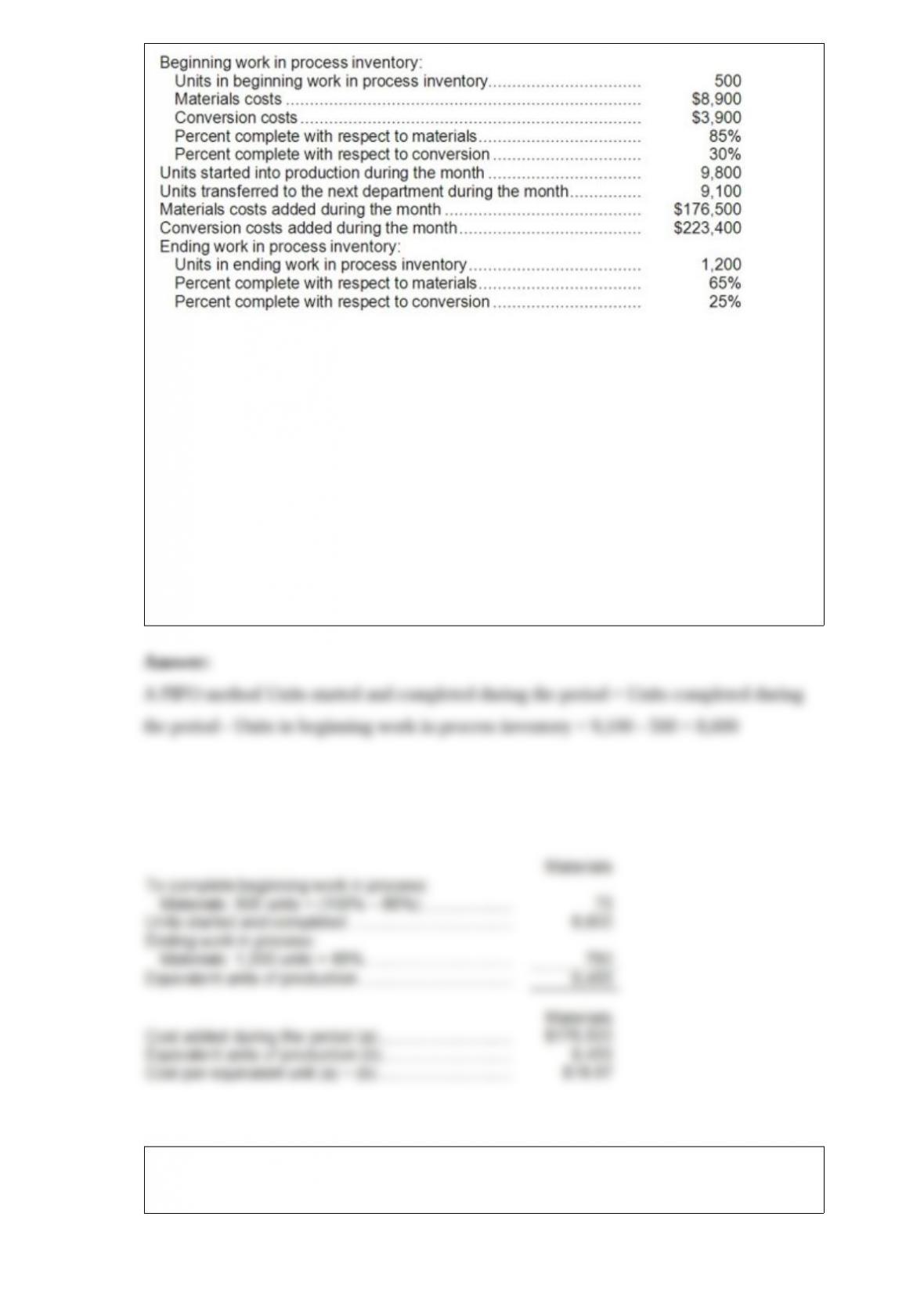
5) Ozogoz Corporation uses the FIFO method in its process costing system. Data
concerning the first processing department for the most recent month are listed below:
Note: Your answers may differ from those offered below due to rounding error. In all
cases, select the answer that is the closest to the answer you computed. To reduce
rounding error, carry out all computations to at least three decimal places.
The cost per equivalent unit for materials for the month in the first processing
department is closest to:
A.$18.67
B.$20.94
C.$19.40
D.$17.14
6) A portion of Lapore Corporation’s Balance Sheet appears below:
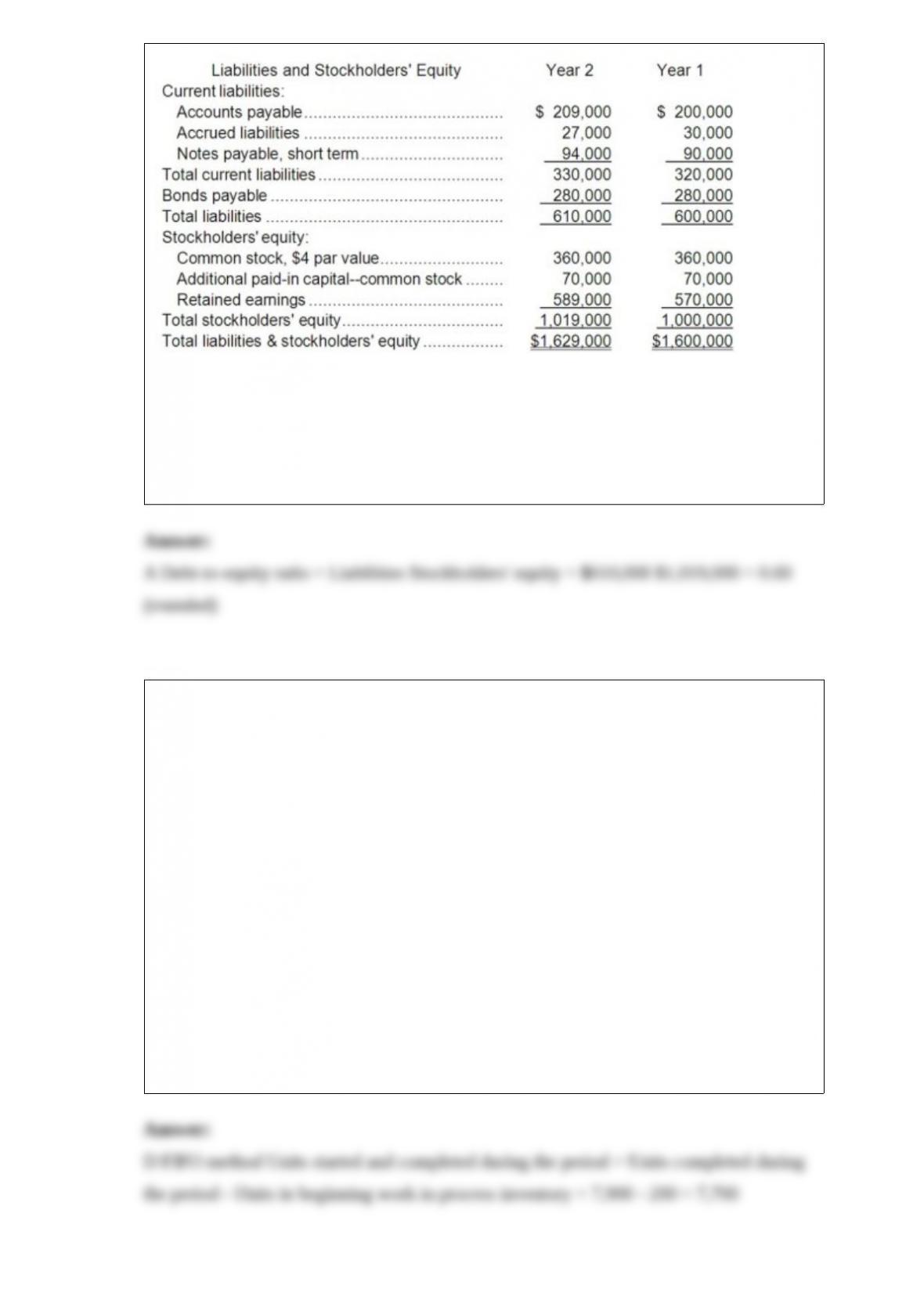
The company’s debt-to-equity ratio at the end of Year 2 is closest to:
A.0.60
B.0.37
C.0.39
D.0.27
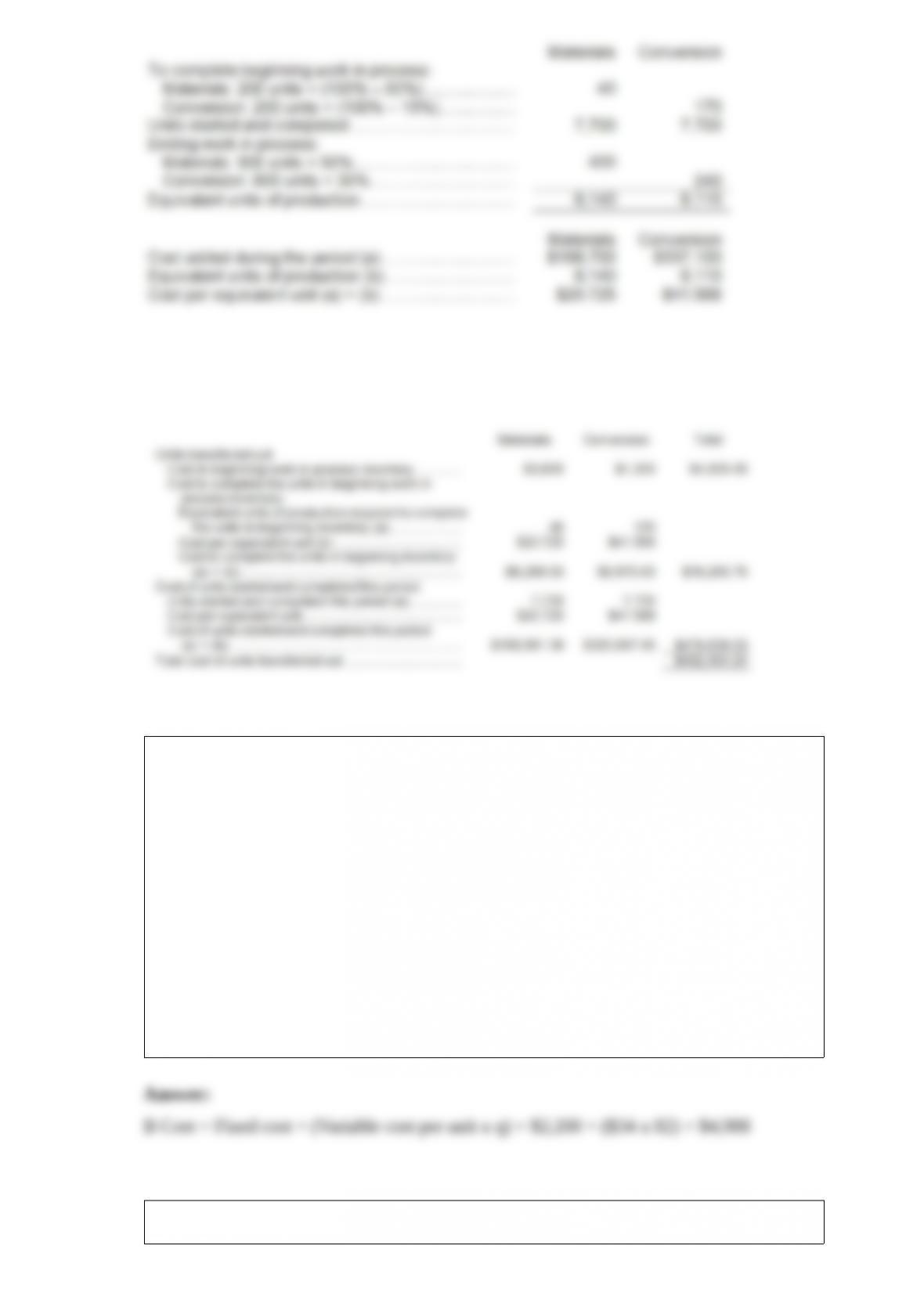
7) Pushkin Corporation uses the FIFO method in its process costing system. Data
concerning the first processing department for the most recent month are listed below:
Note: Your answers may differ from those offered below due to rounding error. In all
cases, select the answer that is the closest to the answer you computed. To reduce
rounding error, carry out all computations to at least three decimal places.
The total cost transferred from the first processing department to the next processing
department during the month is closest to:
A.$505,800
B.$510,700
C.$541,932
D.$492,434
8) Shelby Boat Wash’s cost formula for its cleaning equipment and supplies is $2,200
per month plus $34 per boat. For the month of September, the company planned for
activity of 82 boats, but the actual level of activity was 32 boats. The actual cleaning
equipment and supplies for the month was $3,340.
The cleaning equipment and supplies in the planning budget for September would be
closest to:
A.$3,288
B.$4,988
C.$3,340
D.$8,559
9) Suppose the selling price of the upgraded computers has not been set. At what selling
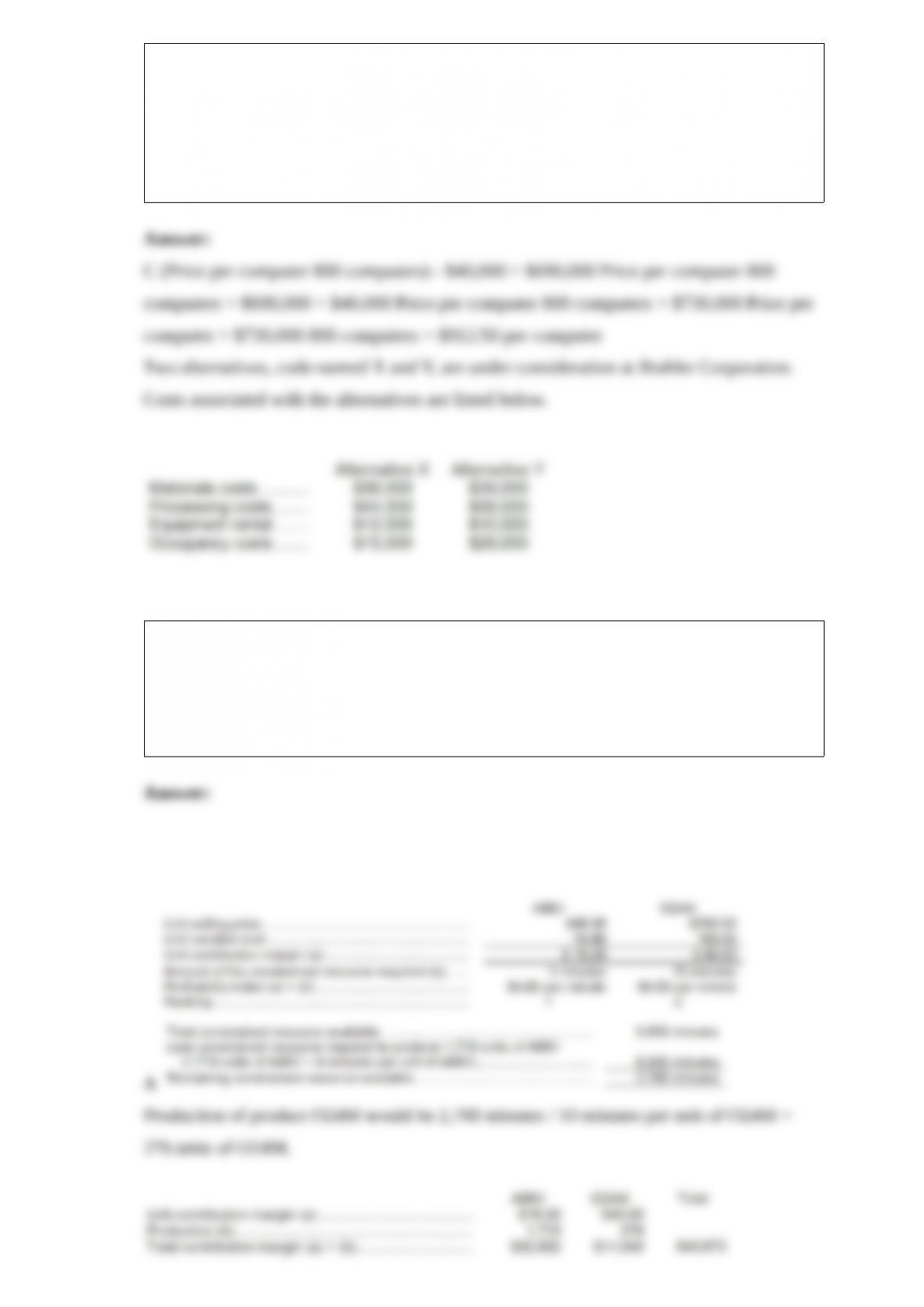
price per unit would the company be as well off upgrading the computers as if it just
sold the computers in their present condition?
A.$86.50
B.$887.50
C.$912.50
D.$562.50
10) What is the maximum contribution margin the company can earn per month?
A.$43,872
B.$42,428
C.$57,632
D.$41,120