Managerial accounting primarily provides information on past performance.
Separation of duties relates to a control activity in the accounting system.
In verifying a claim for a loss of inventory, an insurance company might use the gross
profit method.
It is never correct for a compound entry’s debit totals and credit totals to be unequal.
A limitation of using industry norms in financial performance evaluation is that some
companies in the same industry may not be strictly comparable.
An individual can be prosecuted by the SEC for insider trading whether or not that
individual is employed by the company involveD)
Reversing entries, like any other entries, are posted to the ledger.
A 2-for-1 stock split will have the same effect on the number of shares outstanding as a
200 percent stock dividend.

It is unlikely that a company would want to bond its employees who handle cash or
inventory.
Reversing entries are never required.
Capital investment analysis can be applied in case of expensive and long-term projects.
The board of directors appoints the audit committee, which in turn performs an
independent audit of the company’s records.
An expense account is closed with a credit to the expense account and a debit to Income
Summary.
‘Variable costs are relevant and fixed costs are irrelevant.’ Explain why you agree or
disagree with this statement.
The matching of revenue with inventory costs is best achieved with the FIFO method.
Mesquite, Inc. engaged in the following transactions during October:
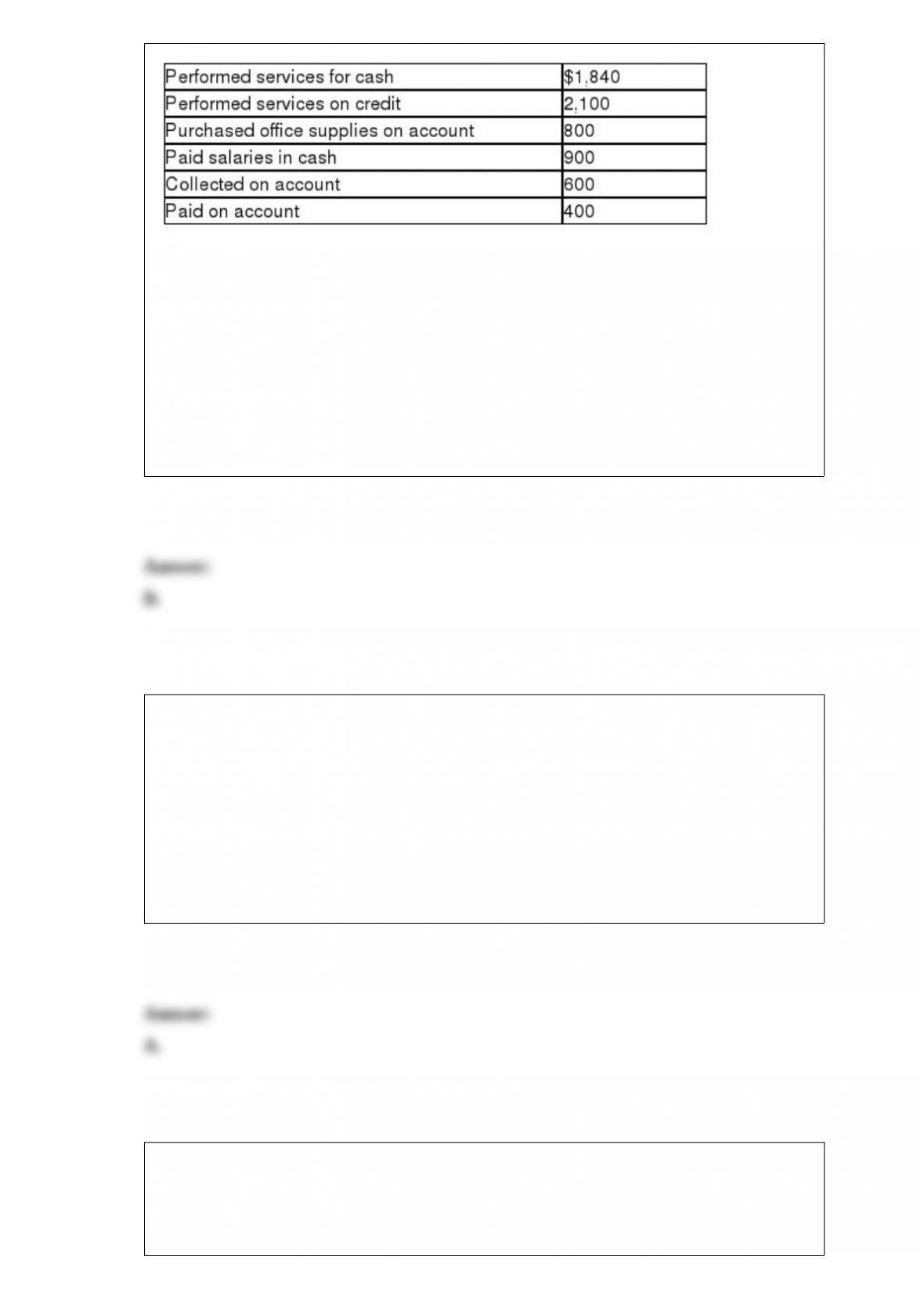
What is the balance in cash after these transactions?
A.$940
B.$1,140
C.$740
D.$2,440
To find the days’ payable,
A.divide 365 by the payables turnover.
B.multiply the payables turnover by 365.
C.divide the payables turnover by 365.
D.subtract 365 from the payables turnover.
An unrealistic picture of the inventory’s current value on the balance sheet is an
argument against using
A.Specific identification.

B.FIFO.
C.Average-cost.
D.LIFO.
An overstatement of beginning inventory results in
A.no effect on the period’s gross margin.
B.an overstatement of gross margin.
C.an understatement of gross margin.
D.a need to adjust purchases.
It is necessary to distinguish between capital and revenue expenditures because of
which of the following accounting rules or principles?
A.Matching
B.Full disclosure
C.Materiality
D.Consistency

Repair bills for large machinery may include a flat fee for the visit to the company’s
premises plus additional labor charges per hour of repair work and various costs of
replacement parts needed. What type of cost is the repair?
A.Selling cost
B.Variable cost
C.Fixed cost
D.Mixed cost
Serial bonds are bonds that
A.mature on several different dates.
B.all have the same maturity date.
C.must be secured.
D.are also called term bonds.
Fusion Inc. sells a single product which has a contribution margin of $125 per unit. The
fixed cost of Fusion is $195,000. If the company wants to earn $55,000 as operating
income, it should sell:
A.2,000 units.
B.1,560 units.
C.440 units.
D.2,500 units.

Which of the following situations is not an example of a deferral?
A.Recording supplies consumed.
B.Recording unrecorded, earned revenues.
C.Recording depreciation.
D.Recording the portion of prepaid rent that has expired.
In preparing adjustments to the work sheet, which of the following accounts could not
be added to the Account Name column?
A.Interest Receivable
B.Notes Payable
C.Depreciation Expense’“Equipment
D.Interest Income
Which of the following equations provides the breakeven point in units? (Here, BE
refers to breakeven, SP refers to selling price, VC refers to variable costs, FC refers to
fixed costs, and CM refers to contribution margin.)

A.BE units = (SP – VC) / FC per unit.
B.VC per unit + FC = SP per unit x BE units.
C.BE units = FC / CM per unit.
D.SP per unit + VC per unit = FC / BE units.
The interest on a three-month, 12 percent, $16,200 note receivable is
A.$486.
B.$162.
C.$324.
D.$1,944.
Engineering design is an activity vital to the success of any motor vehicle manufacturer.
Identify the level at which engineering design would be classified in the cost hierarchy
used with ABC for a maker of built-to-order city and county emergency vehicles
(orders are usually placed for 10 to 12 identical vehicles).
A.Unit-level activity
B.Batch-level activity
C.Product-level activity
D.Facility-level activity

.Engineering design is an activity vital to the success of any motor vehicle
manufacturer. Identify the level at which engineering design would be classified in the
cost hierarchy used with ABC for a maker of unique luxury automobiles.
A.Unit-level activity
B.Batch-level activity
C.Product-level activity
D.Facility-level activity
All of the following are inventory costing methods except
A.first-in, first-out.
B.average-cost.
C.periodic.
D.specific identification.
When a list of customers or subscribers is purchased, its cost is
A.immediately expensed.
B.capitalized as an intangible asset.
C.amortized over a maximum of 5 years.
D.amortized as people on the list move away or pass on.
If Year 1 equals $2,800, Year 2 equals $3,108, and Year 3 equals $3,668, the index
number to be assigned for Year 3 in trend analysis, assuming that Year 1 is the base
year, is
A.100.
B.141.
C.131.
D.136.
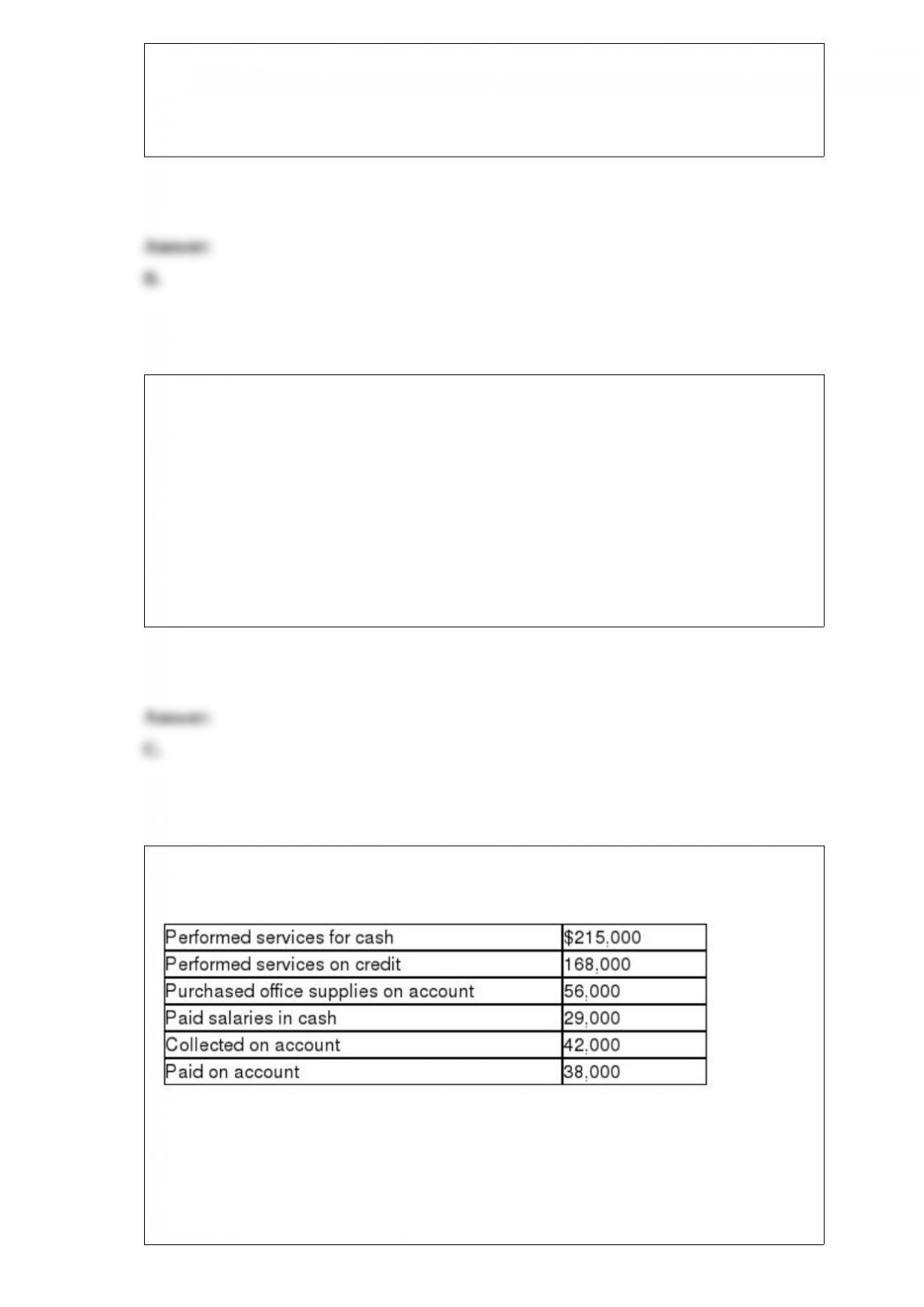
Copper Company began operations in April and then engaged in the following
transactions during April
What is the balance in cash after these transactions?
A.$302,000
B.$190,000
C.$144,000
D.$87,000
In July, a company pays three years’ insurance in advance. The December 31 adjusting
entry is
A.Insurance Expense ‘“ Debit; Prepaid Insurance ‘“ Credit
B.Prepaid Insurance ‘“ Debit; Insurance Expense ‘“ Credit
C.Insurance Expense ‘“ Debit; Cash ‘“ Credit
D.Prepaid Insurance ‘“ Debit; Cash ‘“ Credit
Underfoot Products uses standard costing. The following information about overhead
was generated during May:
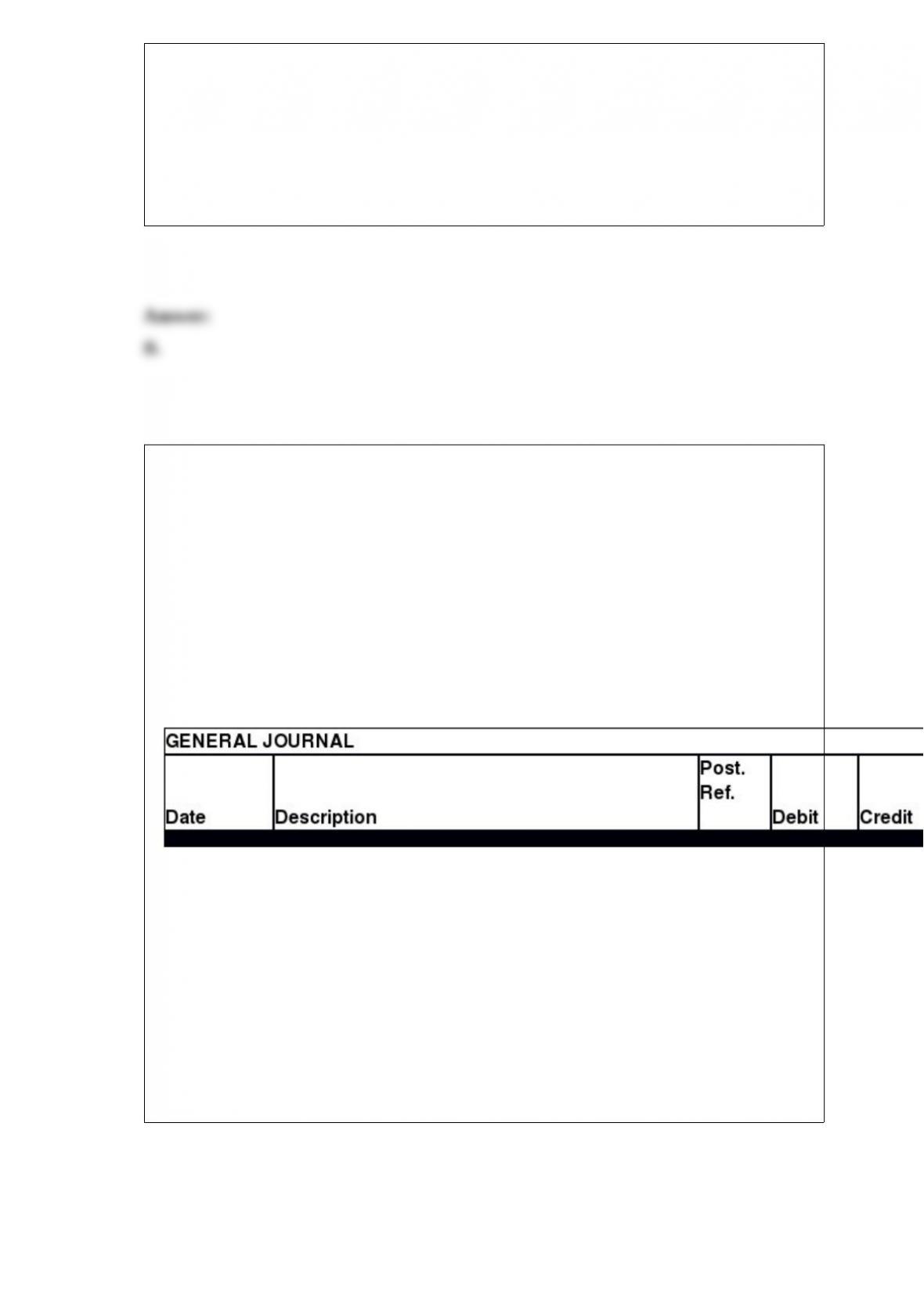
Using the above information provided for Underfoot Products, compute the fixed
overhead volume variance.
A.$5,000 (U)
B.$10,000 (U)
C.$10,000 (F)
D.$15,000 (F)
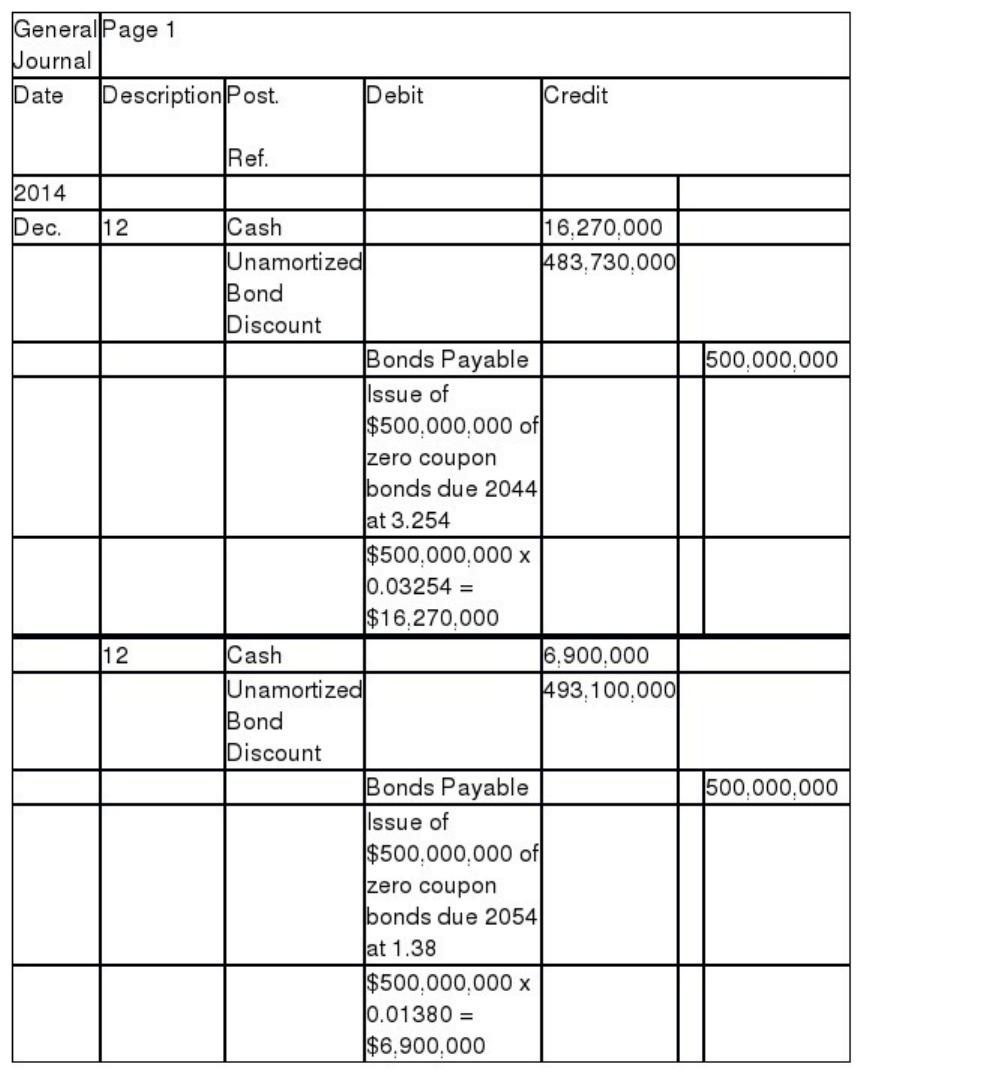
A notice appeared in the Grant Street Times stating that Dollar Savings Association of
Texas was issuing $2.9 billion in zero coupon bonds. ‘The Bonds do not pay interest
periodically. The only scheduled payment to the holder of a Bond will be the amount at
maturity,’ the ad read. The details of two components of the issue were as follows:
$500,000,000 Bonds due December 12, 2044, at 3.254; $500,000,000 Bonds due
December 12, 2054, at 1.380; plus accrued amortization, if any, of the original issue
discount from December 12, 2014, to date of delivery.
a. Assuming all the bonds were issued on December 12, 2014, prepare entries in journal
form to record each component shown above.
b. Determine the approximate market interest rate on each of the two components of the
bond issue. Assume that interest is compounded annually. Use Table 3 in the appendix
on future value and present value tables.
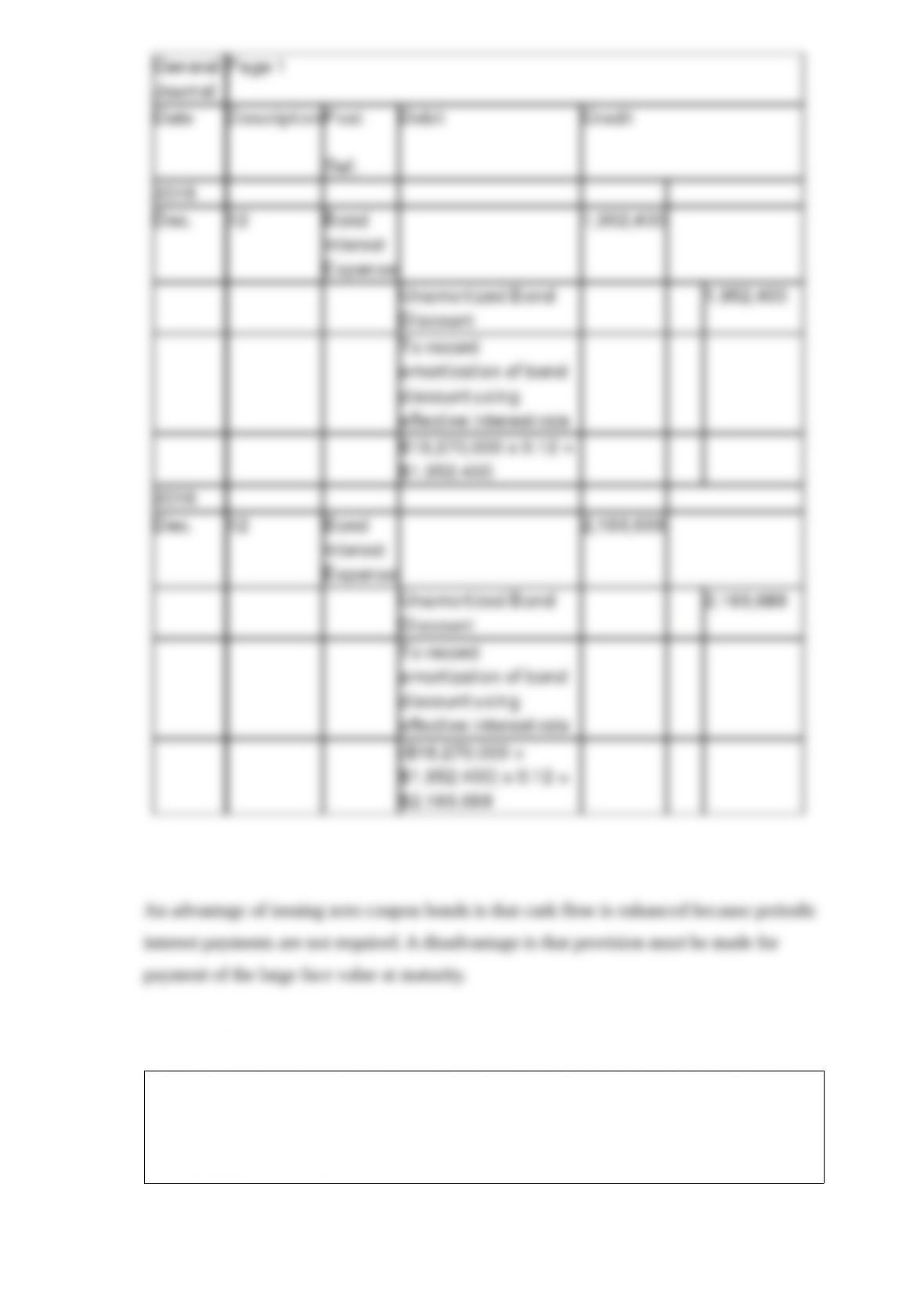
c. Prepare entries in journal form to record bond interest expense for each of the first
two years (December 12, 2015 and 2016) on the component of the bond due in 2044
(ignore effects of fiscal year ends). What advantages or disadvantages are there to
Dollar in issuing zero coupon bonds?
Candy Stores Inc. gives you the following information:
The standard material cost is $7 per pound for a 15 pound bag of chocolate. The
following is the actual cost and usage data:
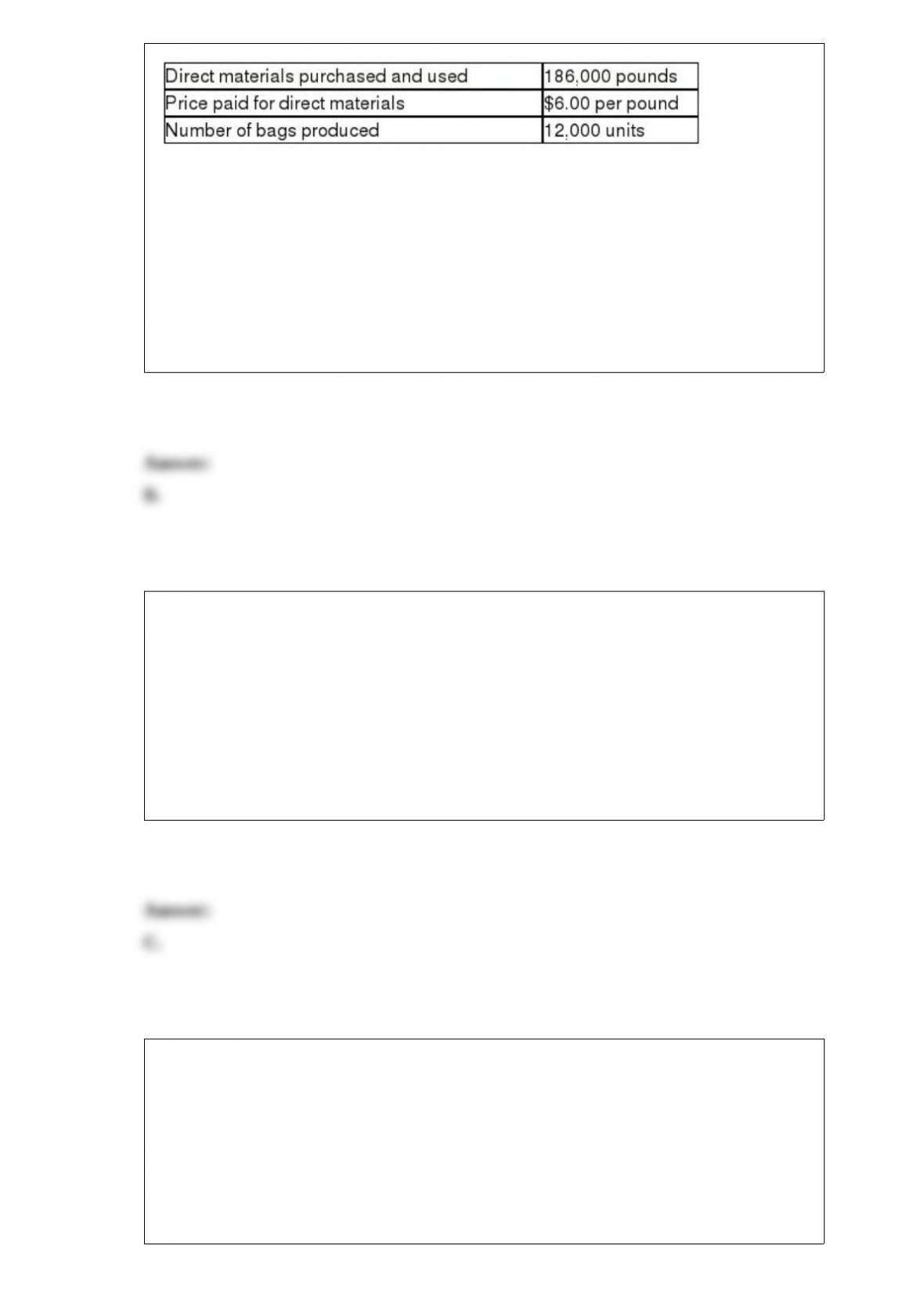
Using the above information provided for Candy Stores, compute the direct materials
quantity variance for Candy Stores.
A.$42,000 (F)
B.$42,000 (U)
C.$186,000 (F)
D.$186,000 (F)
The maturity value of a 60-day, 9 percent, $4,000 note receivable is
A.$3,940.66.
B.$3,641.78.
C.$4,059.18
D.$4,360.24.
Which of the following sets of documents are in the correct sequence?
A.Purchase order, check, receiving report
B.Purchase requisition, purchase order, invoice
C.Purchase requisition, receiving report, purchase order

D.Purchase order, purchase requisition, invoice
Production has just been completed for January 2014 by Colombo Inc. The company
utilizes a process costing system, and the following accounting and operating
information was obtained from company records:
a. Beginning work in process inventory consisted of units totaling 8,200 that were 60
percent complete as of January 1, 2014 (all direct materials were added to the units at
the beginning of the production process that took place in the preceding month).
b. 260,000 units were started during January.
c. At the end of the month, 22,400 units were in work in process inventory and were
100 percent complete with respect to direct materials and 40 percent complete with
respect to conversion costs.
From the figures shown above, and assuming a FIFO costing flow, prepare in good
form a schedule of equivalent production for the month ended January 31, 2014.
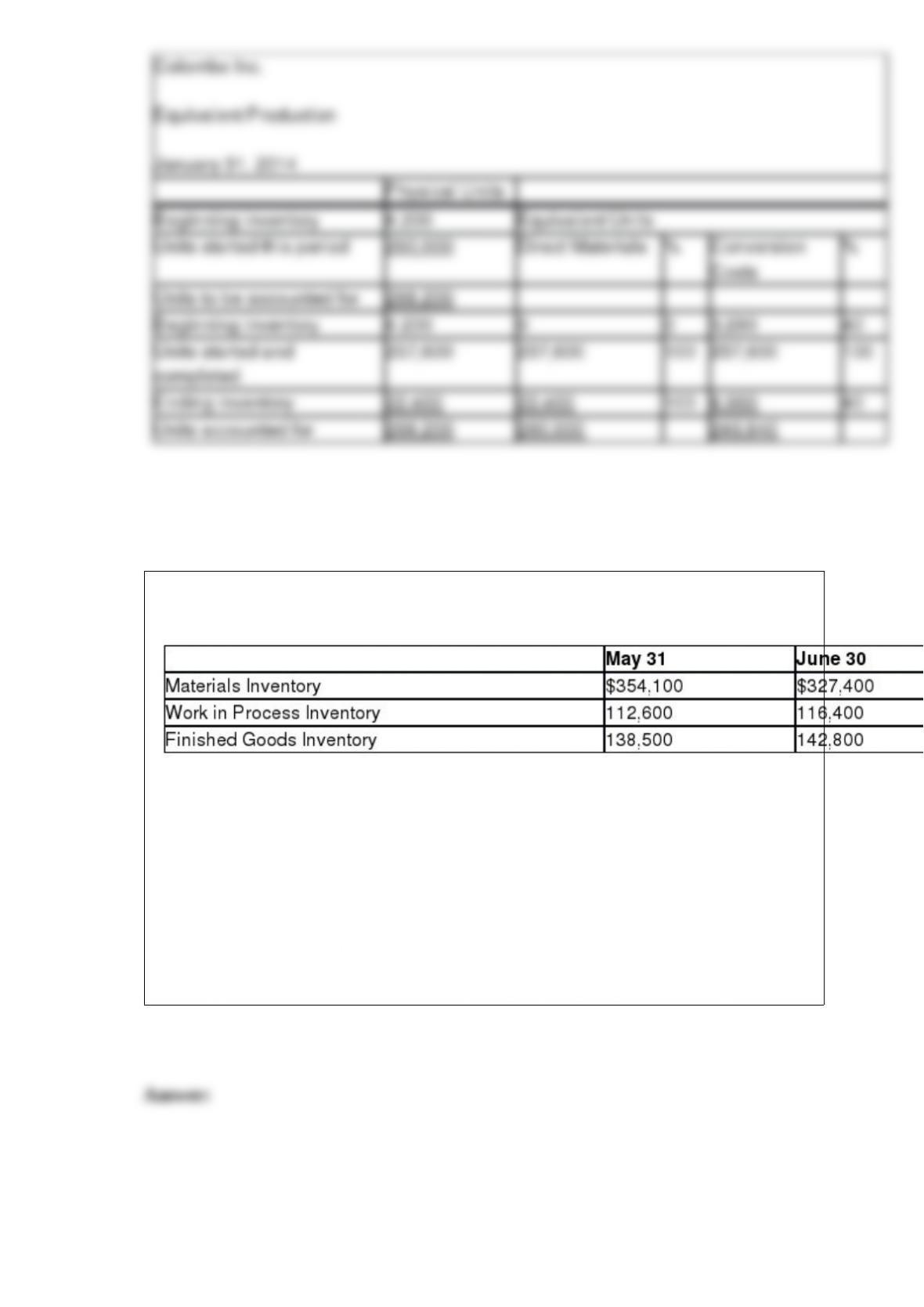
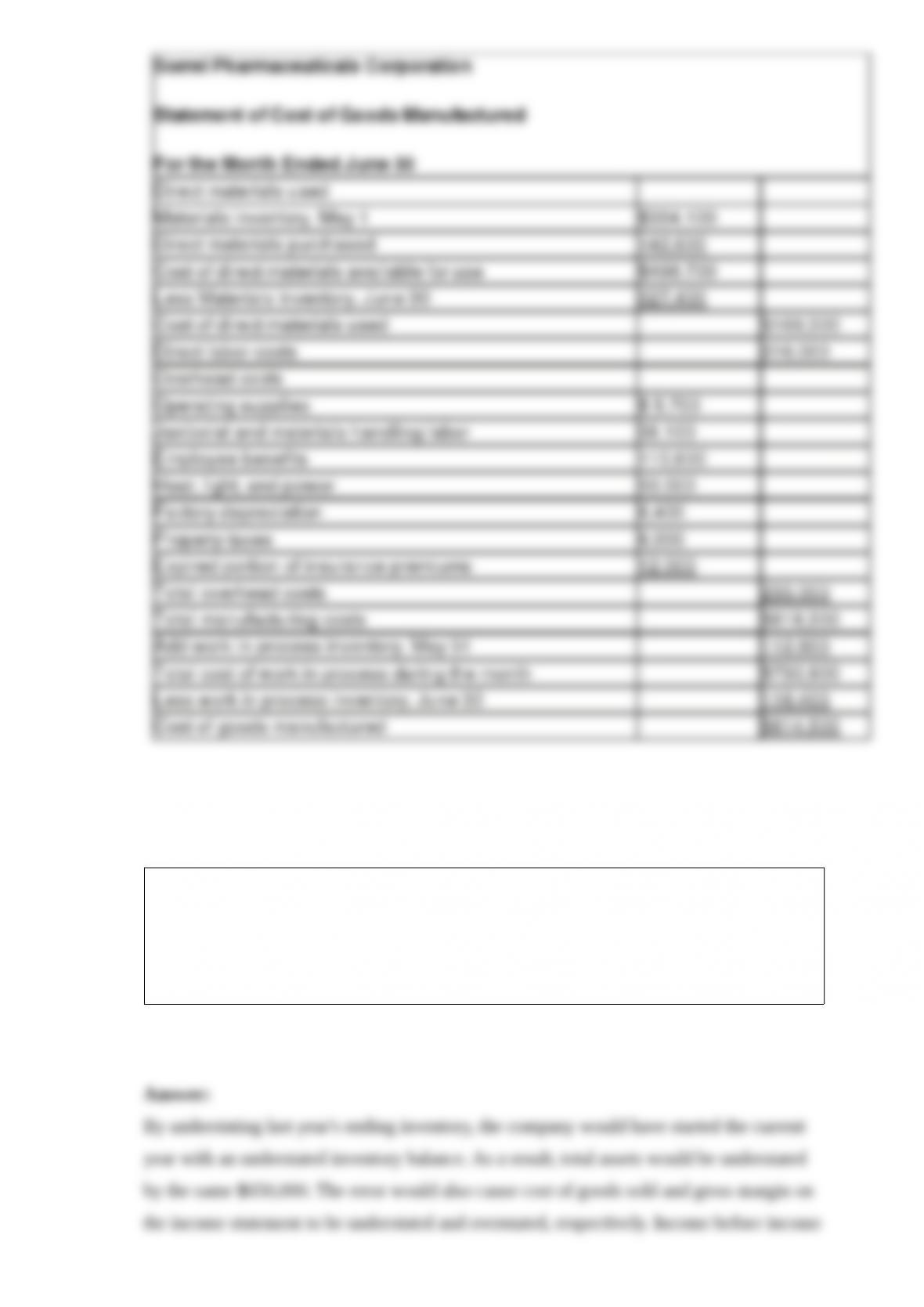
Sorrel Pharmaceuticals Corporation manufactures a variety of drugs that are marketed
internationally. Inventories on May 31 and June 30 were as follows:
Purchases of materials for June were $142,600. Direct labor costs were incurred and
computed on the basis of 27,000 hours at $8 per hour. Actual overhead costs incurred in
June were as follows: operating supplies used, $5,700; janitorial and materials handling
labor, $38,100; employee benefits, $110,800; heat, light, and power, $50,000; factory
depreciation, $8,400; property taxes, $8,000; and expired portion of insurance
premiums, $12,000. Net sales for June were $992,700. Selling and administrative
expenses were $165,000.
Prepare a statement of cost of goods manufactured for the month ended June 30.
Assume that during the physical count of the inventory of a large corporation last year,
$650,000 of merchandise was not counted. The error was not detected, and the financial
statements for the current fiscal year were prepared. Identify the individual statements
that would be affected and explain the effect the error would have on each of these
statements.

Russell Corporation issued $224,000 of 12 percent bonds (at face value) one month
after the last semi-annual interest date. Which of the following is the entry to record the
issuance?
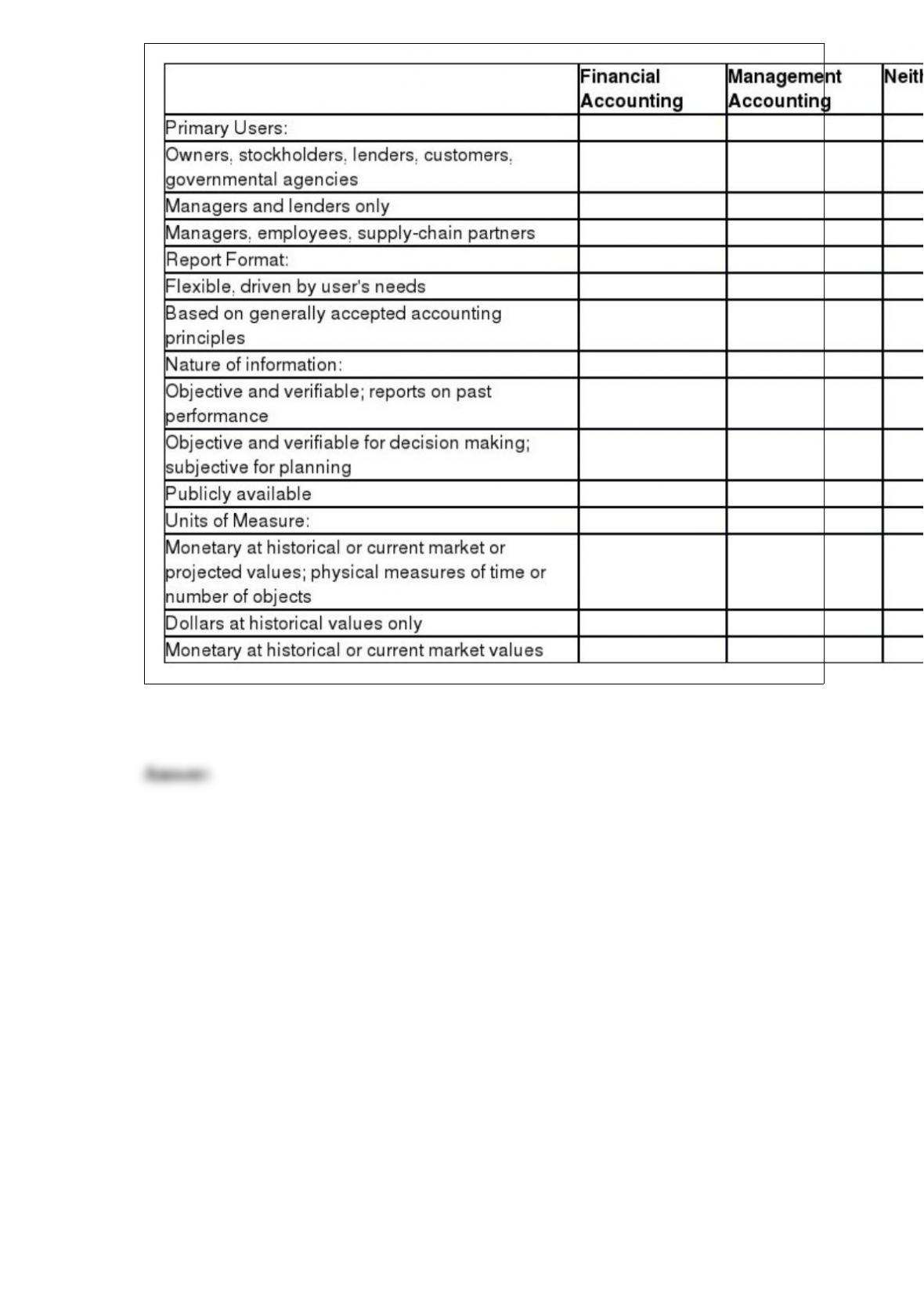
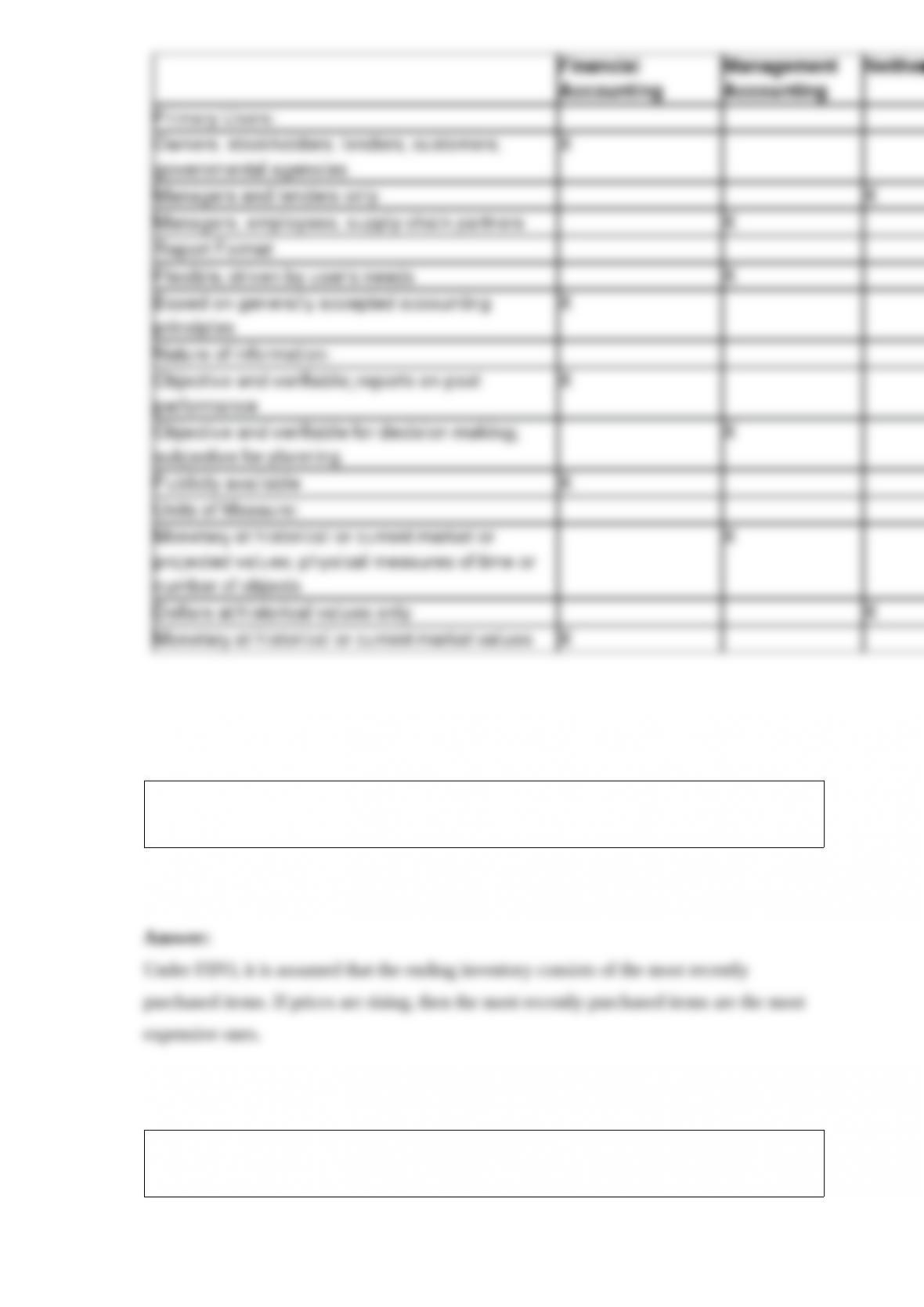
Management accounting differs from financial accounting in many ways. Indicate with
an ‘X’ in the appropriate column whether each of the following characteristics relates to
financial accounting, management accounting, or neither.
Under rising prices, why will the FIFO method produce a higher ending inventory than
LIFO?
Presented below are the owner’s Capital, Withdrawals, and Income Summary accounts
for Brookman Medical Supplies for the year ended December 31, 20×5.
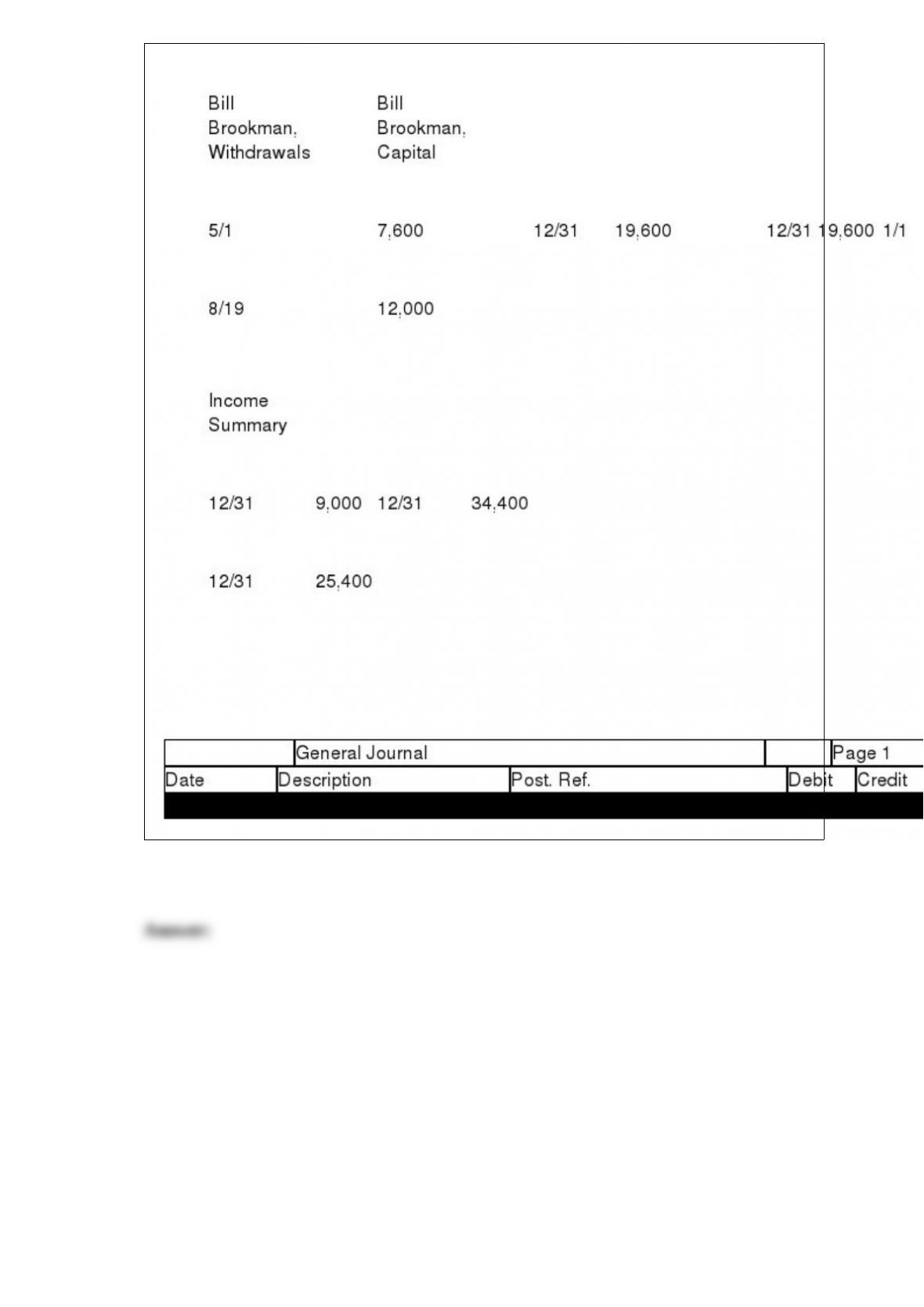
In the journal provided, prepare the closing entries that resulted in the T accounts
above. Assume that the only revenue is Service Revenue and the only expense is
Advertising Expense. Omit explanations.