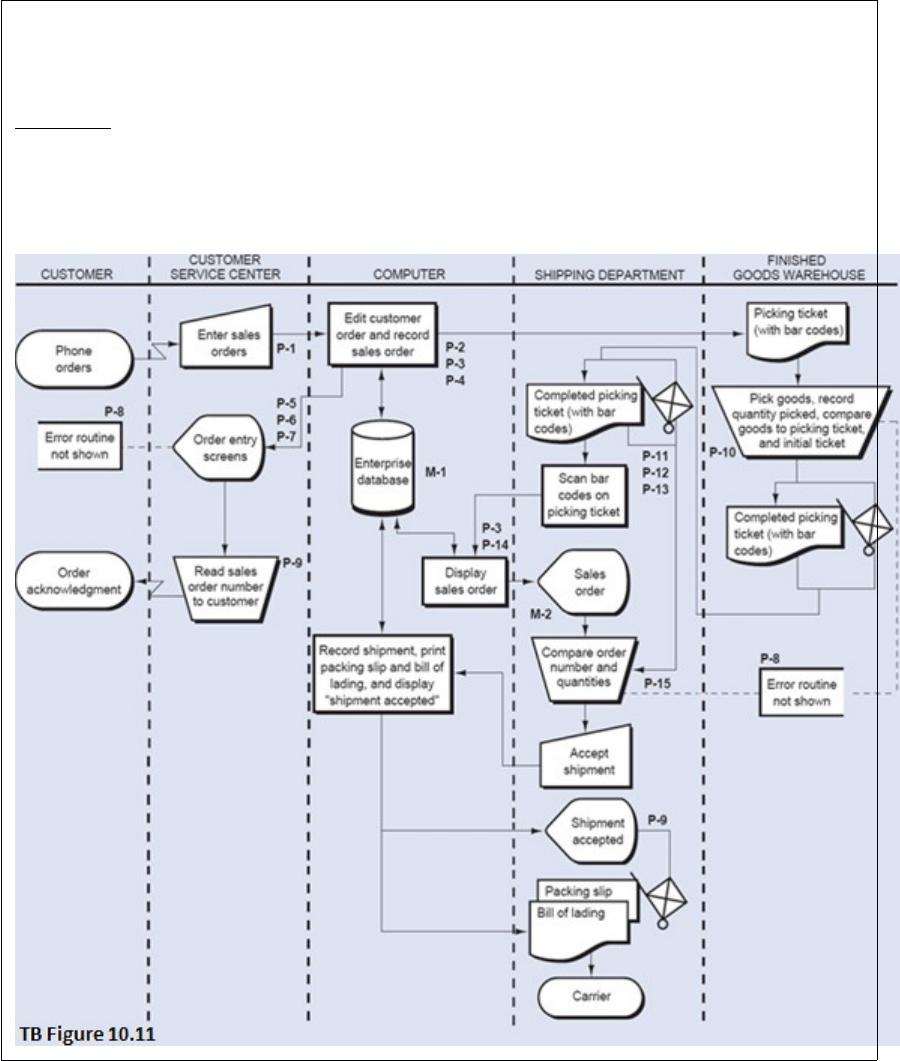
TB Figure 10.11 is the annotated systems flowchart for the order entry/sales process.
TB Figure 10.12 is the related control matrix. Following the control matrix is a
description of the first control plan, P-1.
Required:
Using the format shown for control plan P-1, write descriptions for control plans P-2,
P-10, P-14, P-15, and M-1.
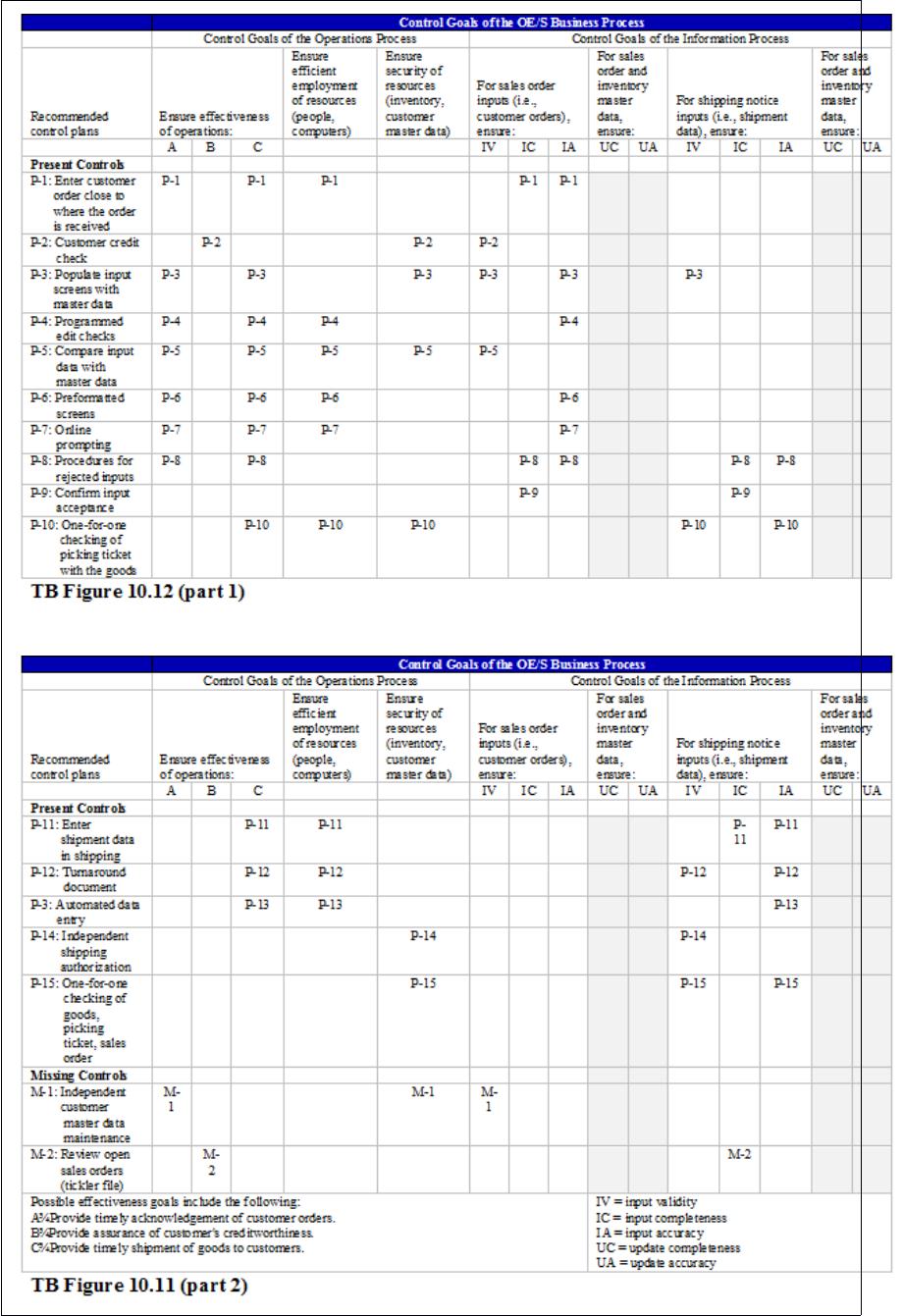
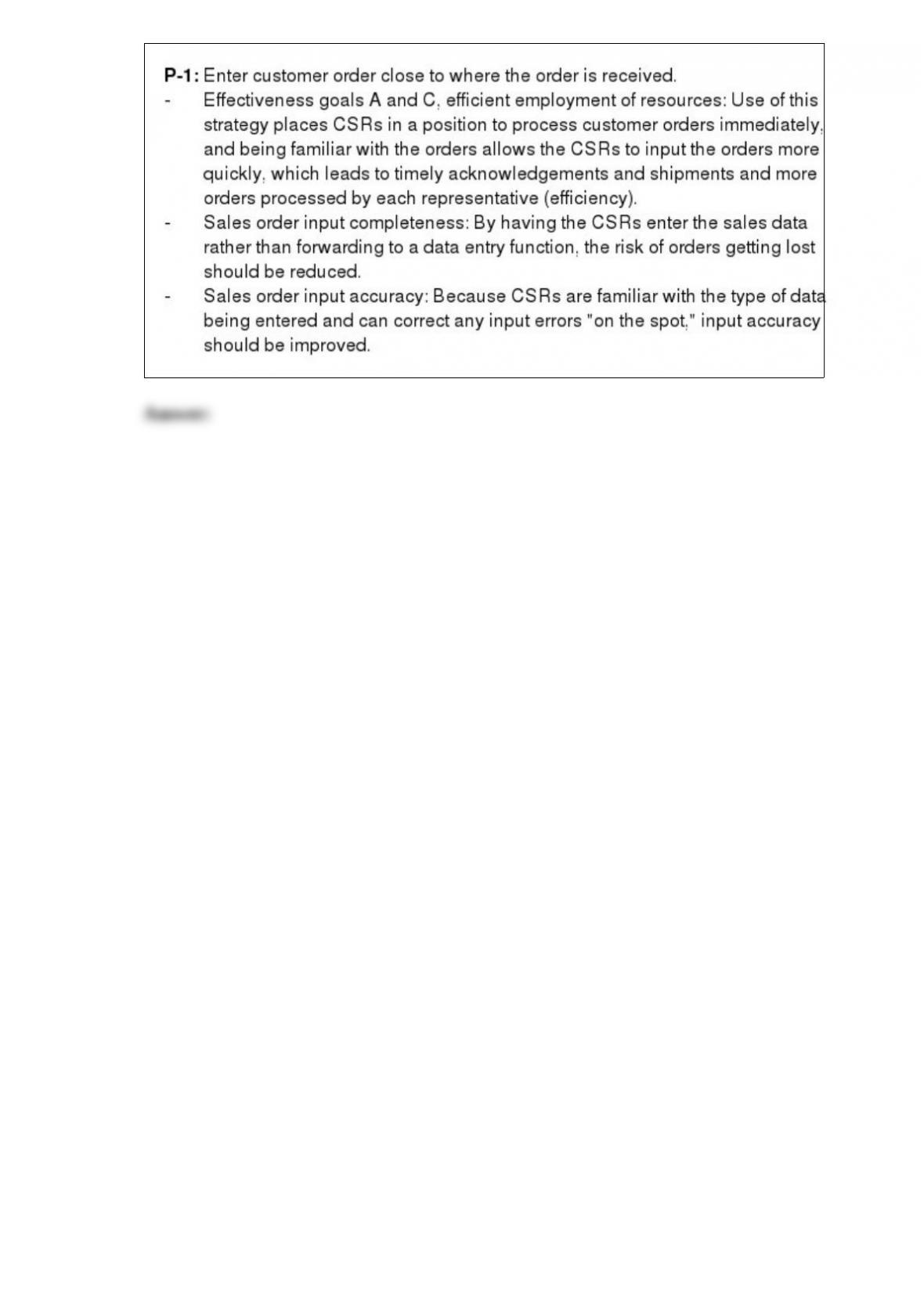
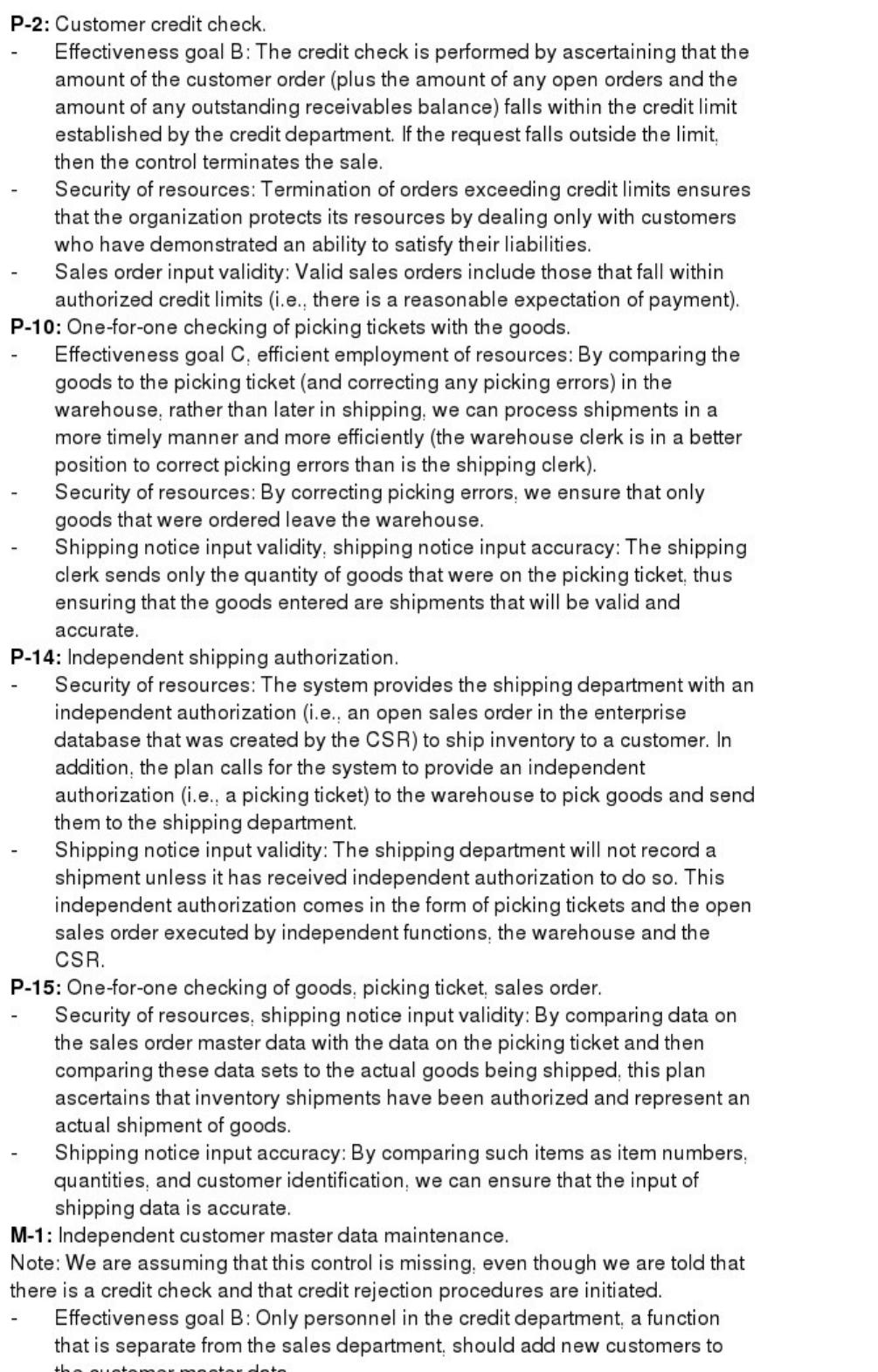
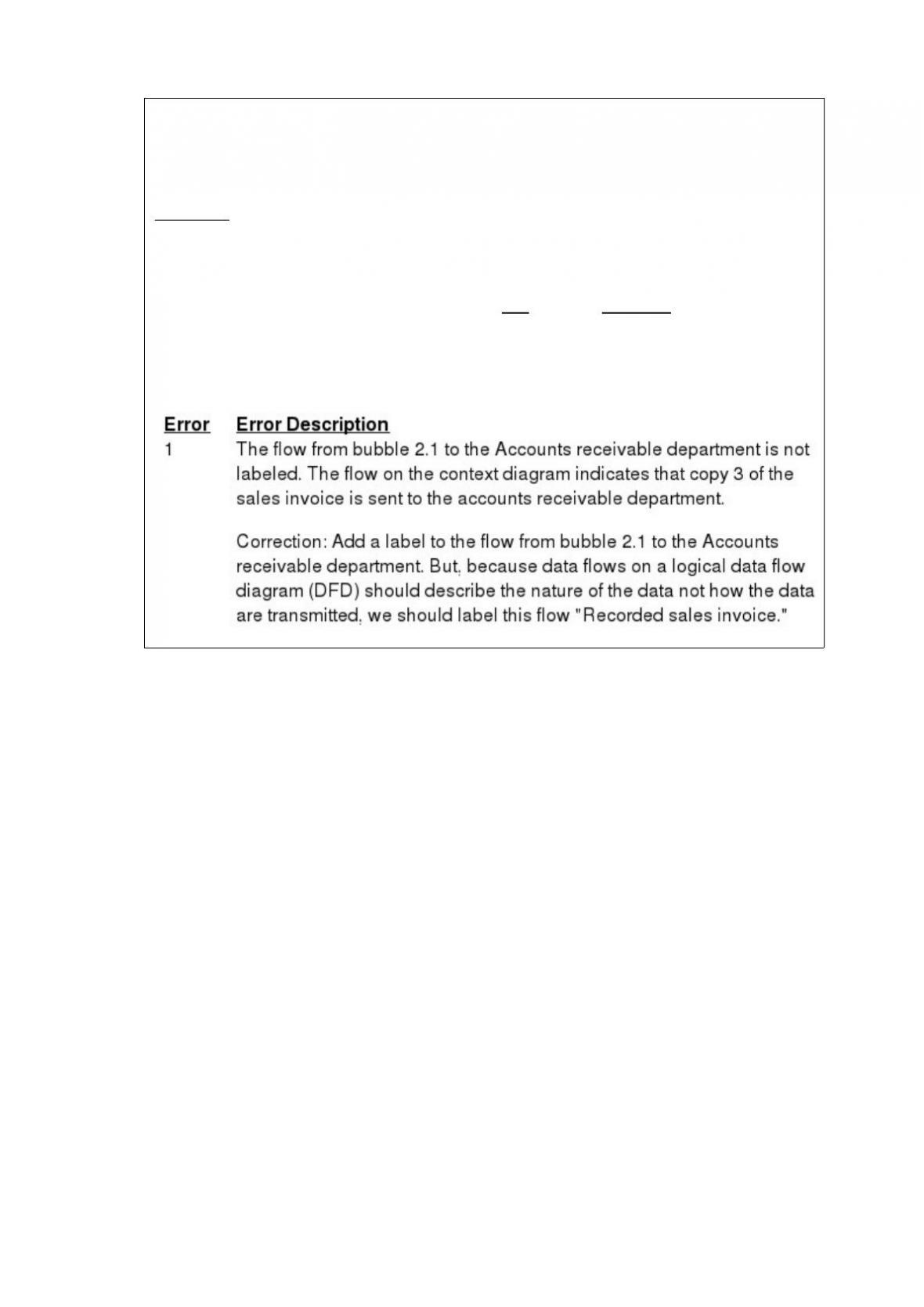
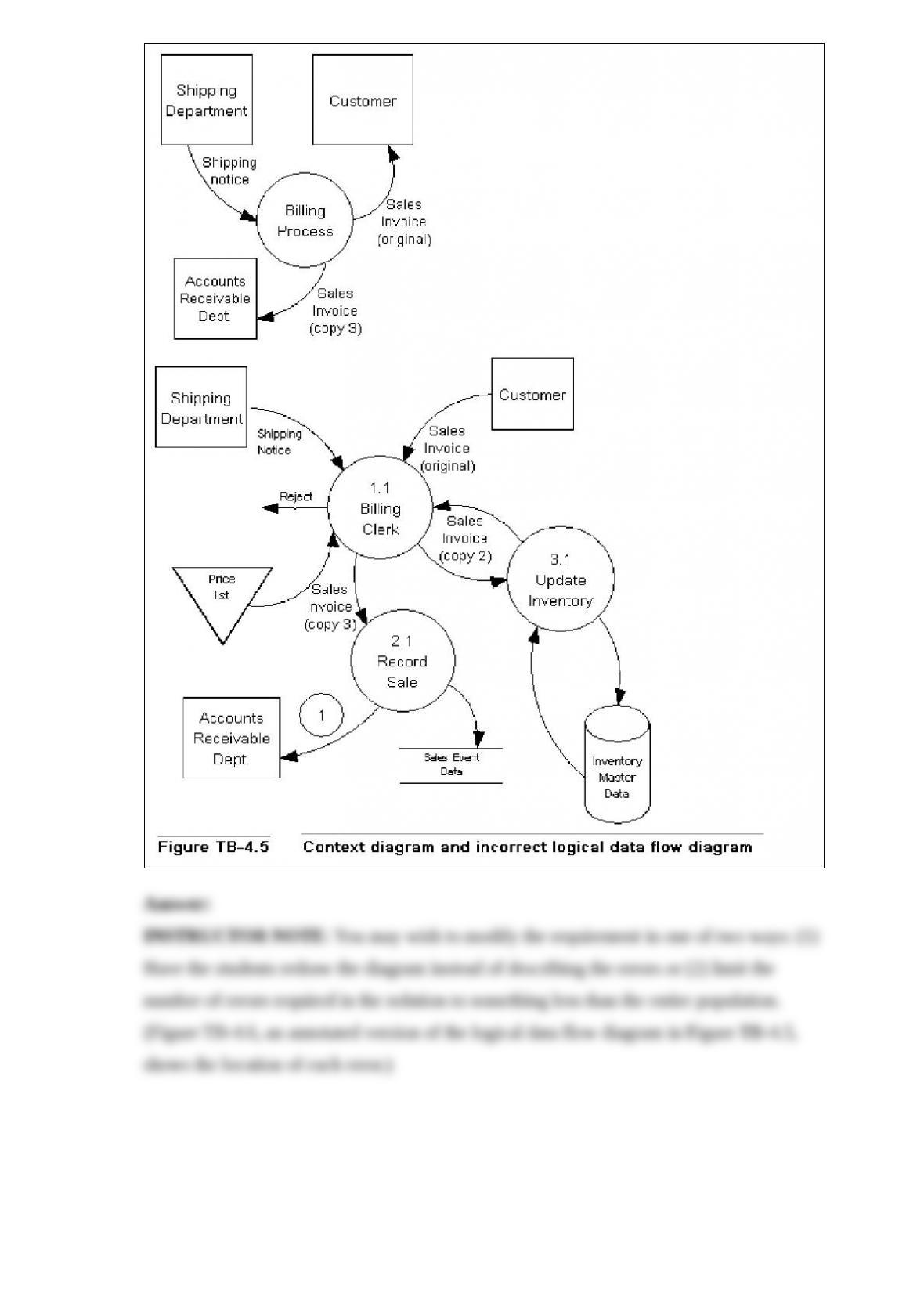
Figure TB-4.5 shows a level 0 logical data flow diagram for a billing system. Also
shown for reference is the context diagram for the system. The logical data flow
diagram intentionally violates several of the guidelines and other techniques presented
in the text for drawing data flow diagrams.
Required:
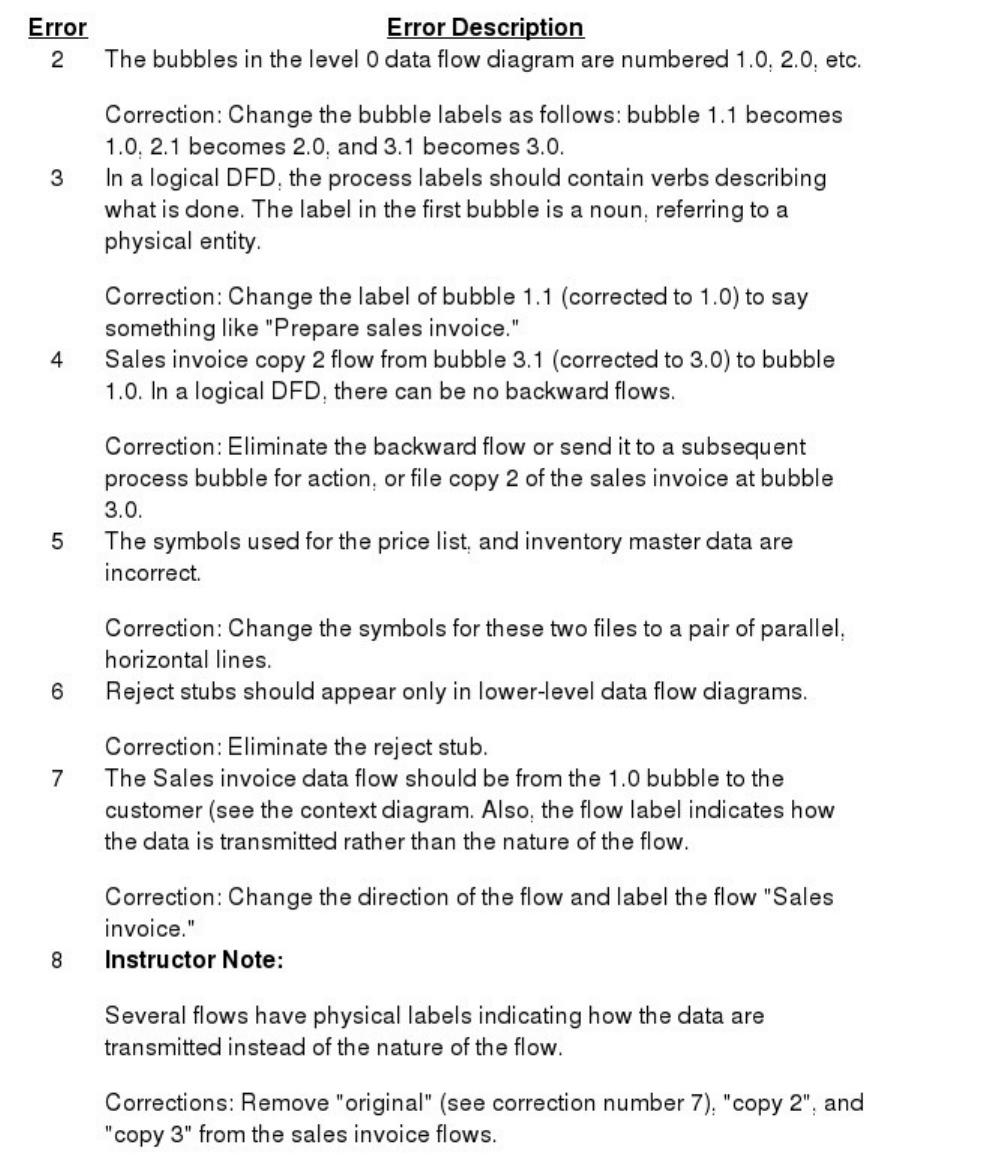
Identify as many of the errors in the logical data flow diagram construction as you can.
In the logical data flow diagram, place consecutive numbers (each in a circle) next to
the points at which the errors exist. On your solution sheet, list the numbers and write a
one- to two-sentence description of each error and what the corrected diagram should
depict. If an error occurs in more than one place, mark each occurrence of the error.
Error 1 is provided as an example of how to construct the solution. Do not identify nor
correct any errors that may exist on the context diagram.
The process within TB Figure 15.3, Bubble 3.0 might be described as follows: After the
master production schedule is determined, an important step in completing the
production in a timely manner is identifying, ordering, and receiving materials.
Materials requirements planning is a process that uses bills of material, raw material
and WIP inventory status data, open order data, and the master production schedule to
calculate a time-phased order requirements schedule for materials and subassemblies.
The schedule shows the time period when a manufacturing order or purchase order
should be released so that the subassemblies and raw materials will be available when
needed. The process involves working backward from the date production is to begin to
determine the timing for manufacturing subassemblies and then moving back further to
determine the date that orders for materials must be issued into the purchasing process.
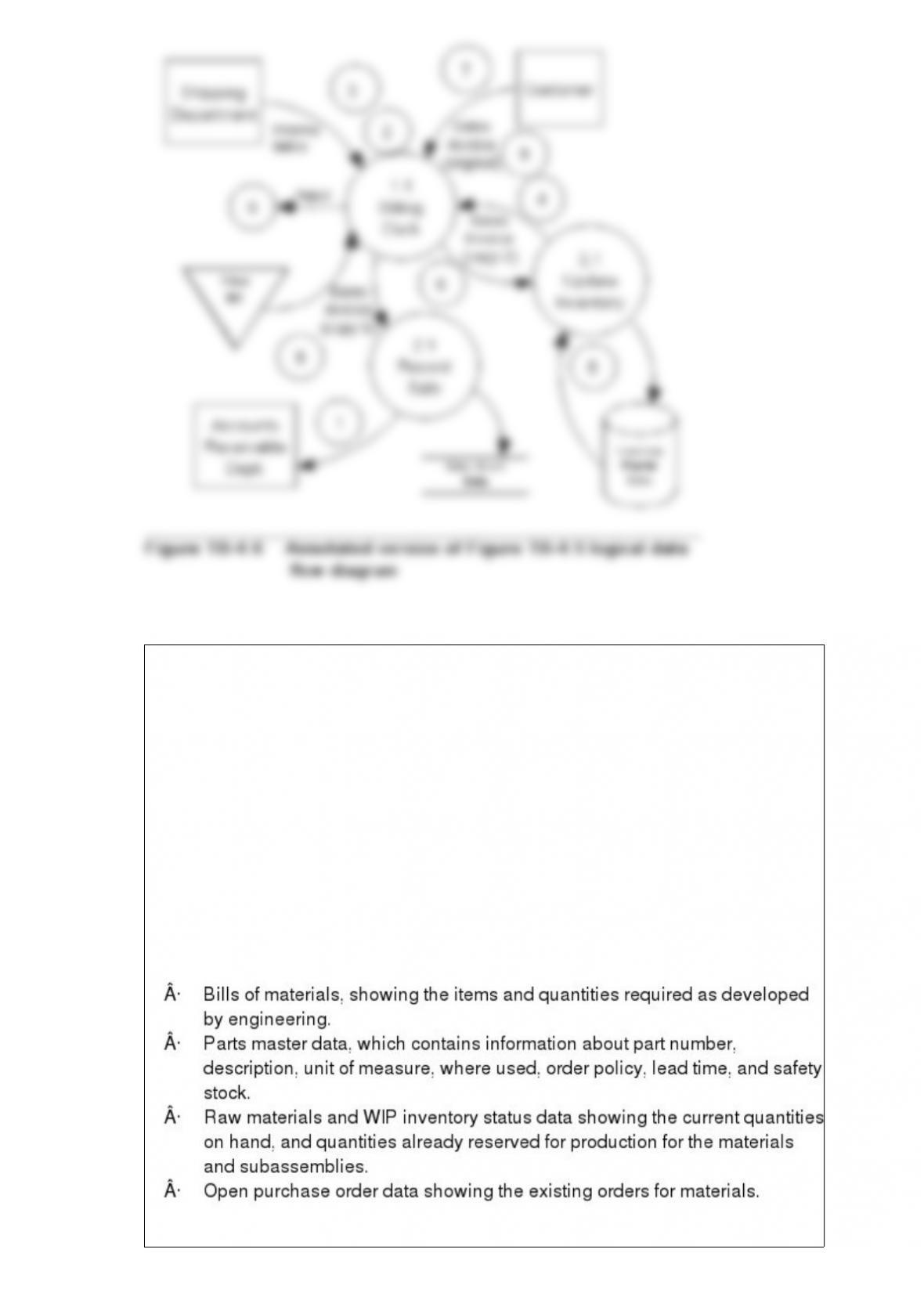
In an enterprise system, this process is performed automatically, using a variety of data
from the enterprise database including:
The process begins by exploding the bill of materials to determine the total of each
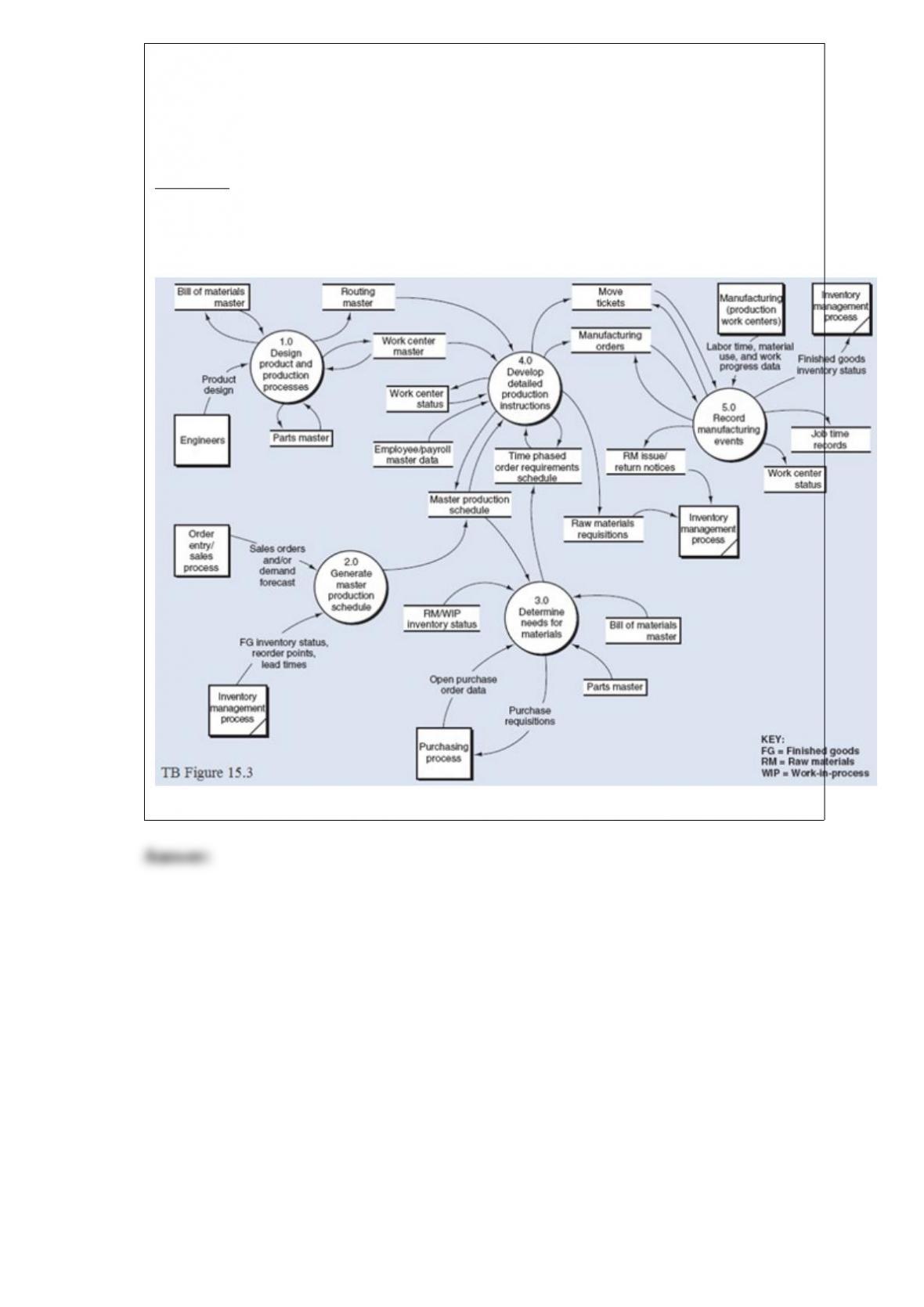
component required to manufacture a given quantity of an upper level assembly or a
subassembly specified in the master production schedule. Based on lead time data for
producing and ordering materials and subassembly requirements are output in a
time-phased order requirements schedule. Based on this schedule, and open PO data,
purchase requisitions are generated and sent to purchasing.
Required:
Refer to TB Figure 15.3. Prepare a Level 1 data flow diagram for the materials
requirements planning process only.
______________________________ usually includes a design environment for
modeling and documenting business processes. This process is targeted at looking for
improvements that can be made to the existing system to increase efficiency and
effectiveness.
The AICPA Internet assurance program that includes a certification and seal is called
VeriSign.
Internal entities do not perform any information processing activities.