1) Explain the major difference between a merchandising business and a service
business.
2) Discuss three practical implications of misclassifying product and/or period costs.
3) Why do companies often calculate average cost for products that they make, rather
than the actual cost for each unit?
4) Describe the difference between an asset exchange transaction and a claims exchange
transaction.
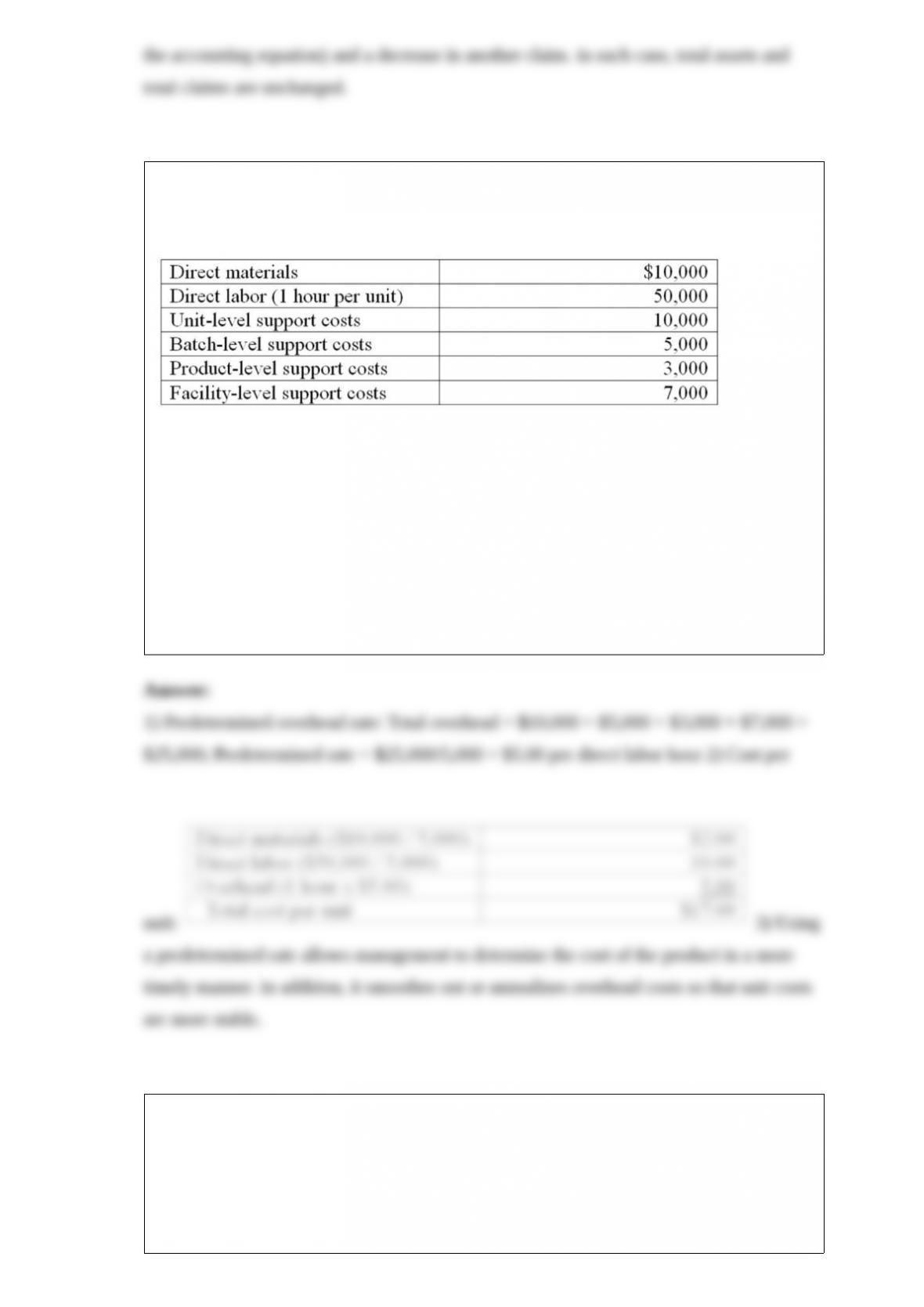
5) The management accountant at Melrose, Inc. provided the following estimated costs
for producing 5,000 units of a specialty product manufactured by the firm:
The company believes that direct labor hours are the most appropriate cost driver for
assigning overhead costs to its product.
Required:
1) Compute the predetermined overhead rate for this company.
2) Compute the specialty product’s total estimated cost per unit.
3) Why do firms assign overhead costs using a predetermined overhead rate instead of
assigning actual costs?
6) Hines Co. owned an asset (equipment) that originally cost $24,000. The company
sold the asset on January 1, 2012 for $8,000 cash. Accumulated depreciation on the day
of sale amounted to $18,000. Based on this information, indicate whether each of the
following statements is true or false.
1>The sale would result in a decrease in total assets for Hines
2>The final stage in the life cycle of a tangible asset is its disposal
3>In 2012, Hines would show an $8,000 cash inflow in the investing activities section
of the cash flow statement
4>In 2012, Hines would recognize a $2,000 cash inflow in the operating activities
section of the statement of cash flows
5>The sale of the asset would result in a $2,000 gain on the income statement
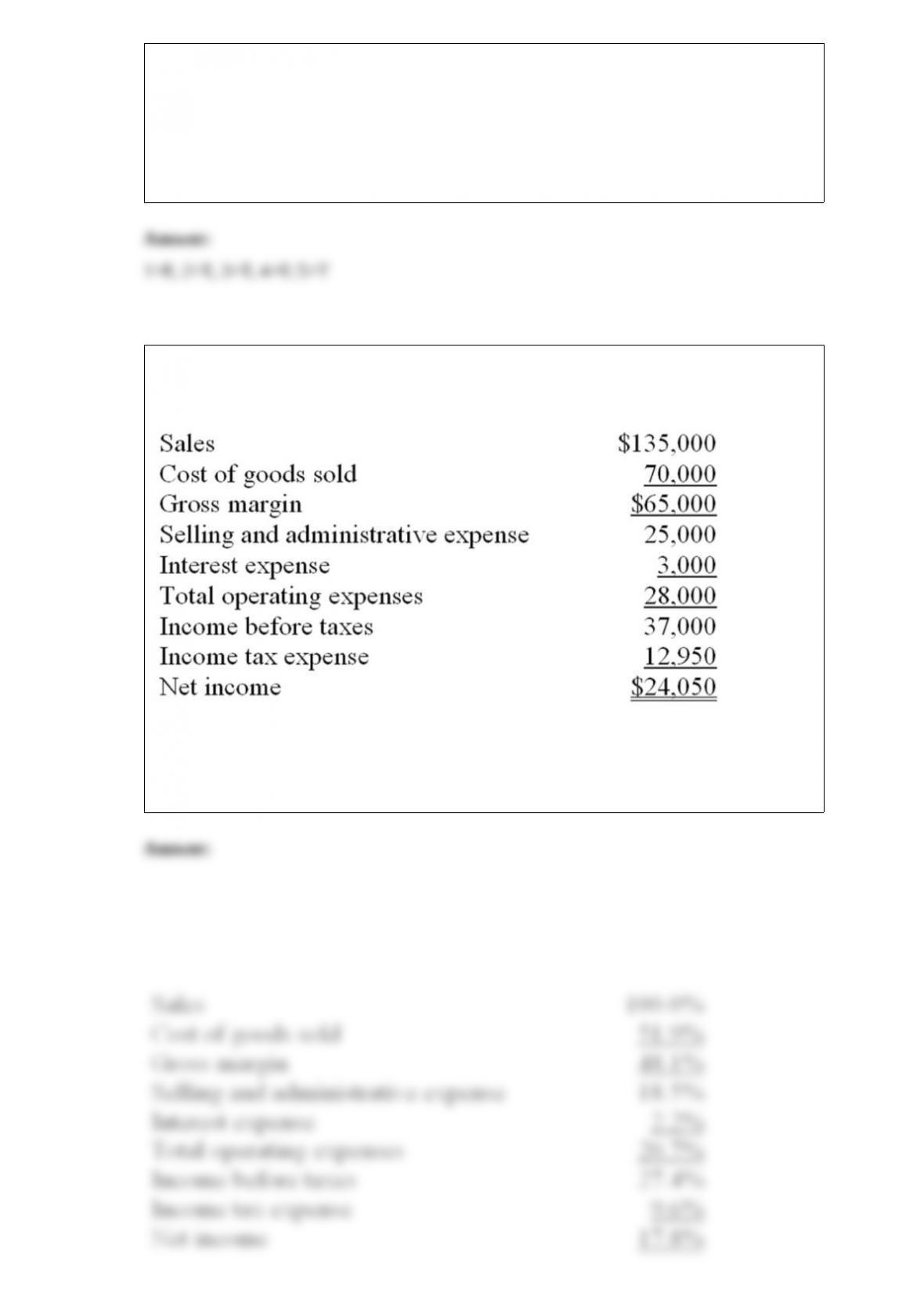
7) The following income statement was prepared by Davidson Company for 2012:
Required:
Perform vertical analysis for Davidson Company’s 2012 income statement.