1) A corporation had stockholders’ equity on January 1 as follows: Common Stock, $5
par value, 1,000,000 shares authorized, 500,000 shares issued; Paid-in Capital in Excess
of Par Value, Common Stock, $1,000,000; Retained Earnings, $3,000,000. Prepare
journal entries to record the following transactions:
2) One of the main differences between the calculation of cost of goods sold for a
merchandiser and that of a manufacturer is that the calculation includes cost of goods
purchased for the merchandiser, but the manufacturer replaces that with
__________________________.
3) The difference between total debits and total credits for an account, including any
beginning balance is the _______________________.
4) On January 1, a company purchased a machine for $75,000 that had a 6-year useful
life and a salvage value of $6,000. After three years of straight-line depreciation, the
company paid $7,500 cash at the beginning of the year to improve the efficiency of the
machine. The effect of the expenditure was to increase the productivity of the machine
without increasing its remaining useful life or changing its salvage value. Straight-line
depreciation is used throughout the machine’s life.
1> Prepare the journal entry to record the $7,500 expenditure.
2> Prepare the journal entry to record depreciation expense for the fourth year.
5) The __________________ principle requires that an accounting information system
conform with a company’s activities, personnel, and structure, and must adapt to a
company’s unique characteristics.
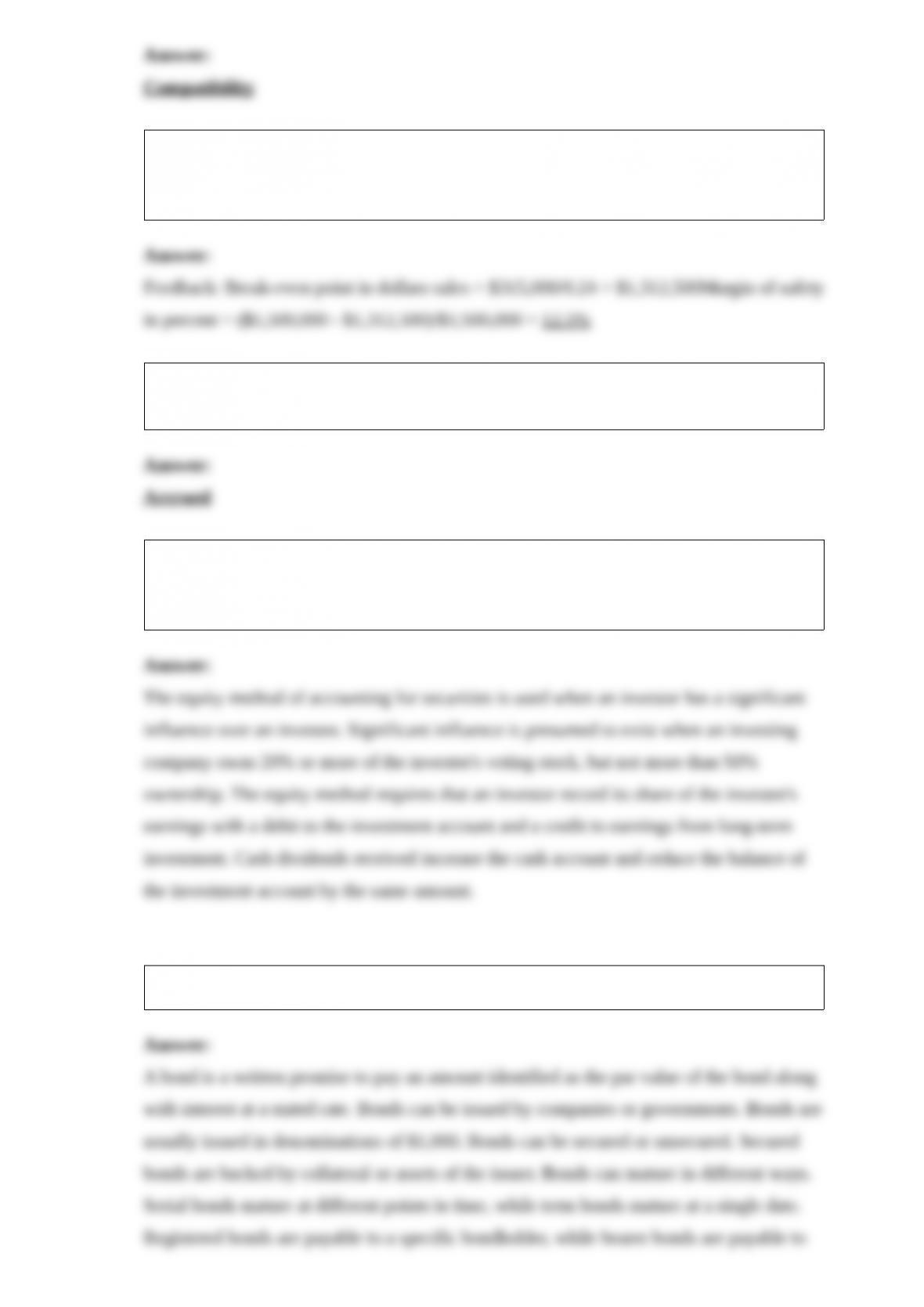
6) Davison Company has fixed costs of $315,000 and a contribution margin ratio of
24%. If sales are expected to be $1,500,000, what is the percentage of the margin of
safety?
7) __________________ expenses are those costs that are incurred in a period but are
both unpaid and unrecorded.
8) Explain how equity securities having significant influence are accounted for and
reported in the financial statements. Include a discussion of the criterion for these
securities in terms of an investee’s voting stock.
9) What is a bond? Identify and discuss the different types of bonds.
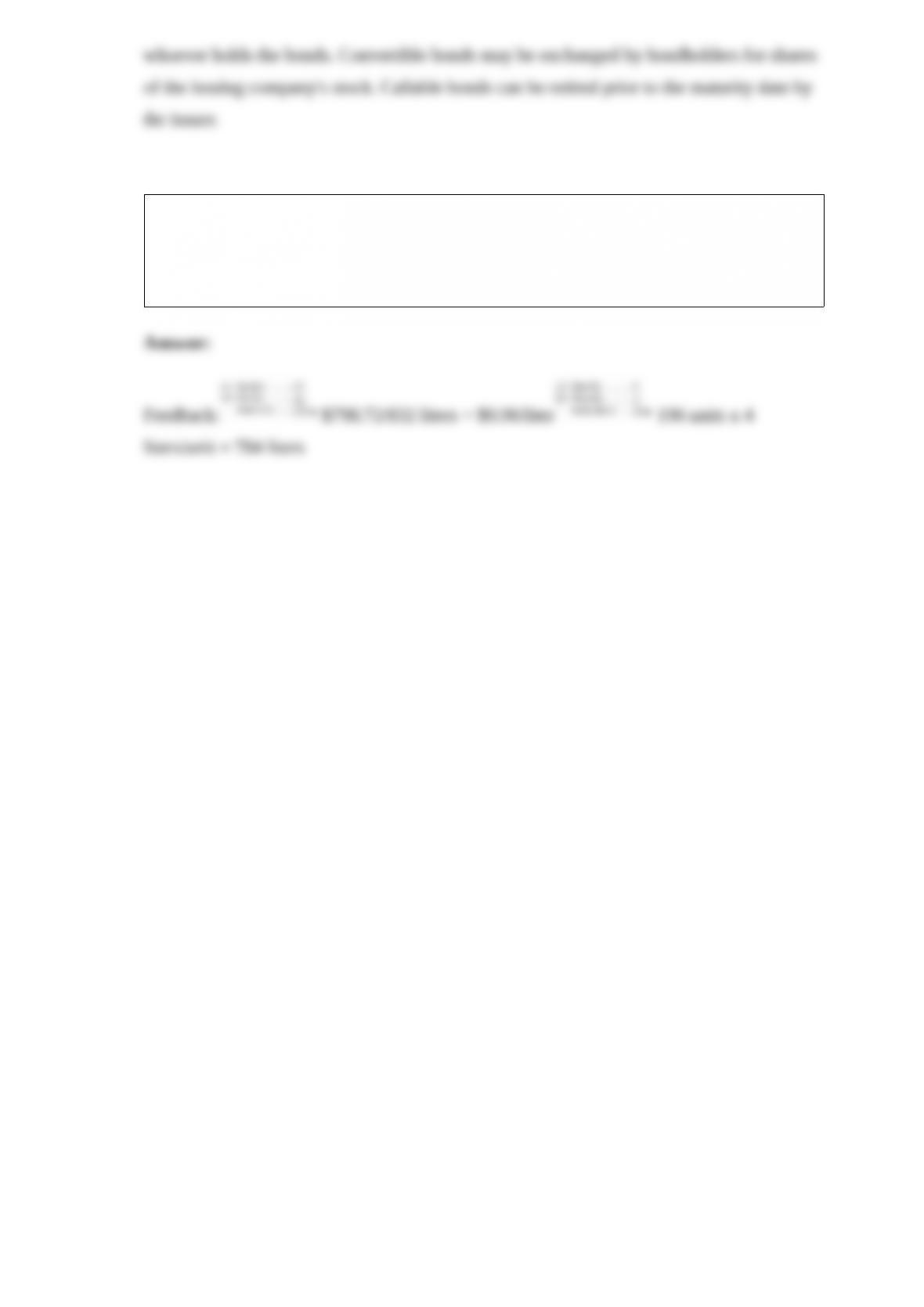
10) Duval, Inc. budgets direct materials at $1/liter and each product requires 4 liters per
unit of finished product. April’s activities show usage of 832 liters to complete 196 units
at a cost of $798.72. Compute the direct materials price and quantity variances. Indicate
is the variance is favorable or unfavorable.