
A statement of comprehensive income does not include: A. Net income.
B. Losses resulting from the return on pension assets exceeding expectations.
C. Losses from changes in estimates regarding the PBO.
D. Prior service cost.
Answer:
Amortization of capitalized computer software costs is: A. Either the
percentage-of-revenue method or the straight-line method at the company’s option.
B. The greater of the percentage-of-revenue method or the straight-line method.
C. The lesser of the percentage-of-revenue method or the straight-line method.
D. Based on neither the percentage-of-revenue nor the straight-line method.
Answer:
An accounting change that is reported by the prospective approach is reflected in the
financial statements of: A. Prior years only.
B. Prior years plus the current year.

C. The current year only.
D. Current and future years.
Answer:
In accounting for oil and gas exploration costs, companies: A. May not use the full-cost
method.
B. May use the successful efforts method.
C. May use the slippery slope method.
D. All of the above are correct.
Answer:
Schneider Inc. had salaries payable of $60,000 and $90,000 at the end of 2012 and
2013, respectively. During 2013, Schneider recorded $620,000 in salaries expense in its
income statement. Cash outflows for salaries in 2013 were: A. $590,000.
B. $620,000.
C. $650,000.
D. $530,000.
Answer:
Fulbright Corp. uses the periodic inventory system. During its first year of operations,
Fulbright made the following purchases (listed in chronological order of acquisition):
– 40 units at $100
– 70 units at $80
– 170 units at $60
Sales for the year totaled 270 units, leaving 10 units on hand at the end of the year.
Ending inventory using the LIFO method is: A. $650.
B. $1,000.
C. $707.
D. $600.
Answer:

Technoid Inc. sells computer systems. Technoid leases computers to Lone Star
Company on January 1, 2013. The manufacturing cost of the computers was $12
million.
This noncancelable lease had the following terms:
– Lease payments: $2,466,754 semiannually; first payment at January 1, 2013;
remaining payments at June 30 and December 31 each year through June 30, 2017.
– Lease term: five years (10 semiannual payments).
– No residual value; no bargain purchase option.
– Economic life of equipment: five years.
– Implicit interest rate and lessee’s incremental borrowing rate: 5% semiannually.
– Fair value of the computers at January 1, 2013: $20 million.
Collectibility of the rental payments is reasonably assured, and there are no lessor costs
yet to be incurred.
What is the interest revenue that Technoid would report on this lease in its 2013 income
statement? A. $0.
B. $1,673,820.
C. $876,662.
D. None of the above is correct.
Answer:
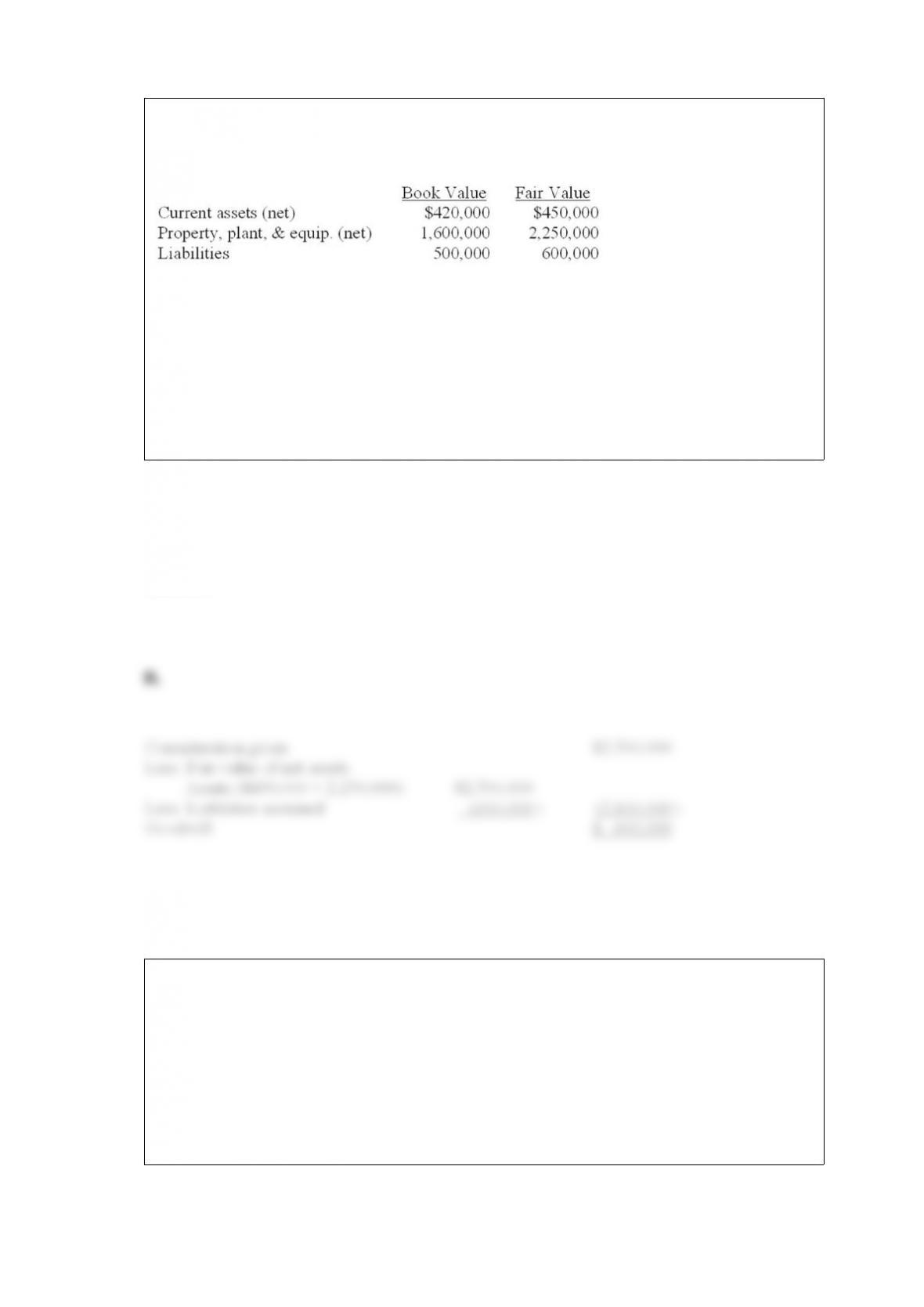
Juliana Corporation purchased all of the outstanding stock of Caldwell Inc., paying
$2,700,000 cash. Juliana assumed all of the liabilities of Caldwell. Book values and fair
values of acquired assets and liabilities were:
Juliana would record goodwill of: A. $1,180,000.
B. $600,000.
C. $880,000.
D. $100,000.
Answer:
In comparing the direct method with the indirect method of preparing the statement of
cash flows: A. Only operating activities are presented differently.
B. Only investing activities are presented differently.
C. Only financing activities are presented differently.
D. All activities are presented differently.

Answer:
On May 1, Foxtrot Co. agreed to sell the assets of its Footwear Division to Albanese
Inc. for $80 million. The sale was completed on December 31, 2013.
The following additional facts pertain to the transaction:
– The Footwear Division qualifies as a component of the entity according to GAAP
regarding discontinued operations.
– The book value of Footwear’s assets totaled $48 million on the date of the sale.
– Footwear’s operating income was a pre-tax loss of $10 million in 2013.
– Foxtrot’s income tax rate is 40%.
In the 2013 income statement for Foxtrot Co., it would report: A. Income (loss) on its
total operations for the year without separation.
B. Income (loss) on its continuing operation only.
C. Income (loss) from its continuing and discontinued operations separately.
D. Income and gains separately from losses.
Answer:
An example of fraud would be: A. Issuing a purchase order without first securing bids.

B. Buying raw materials from an affiliated company.
C. Knowingly classifying a material noncurrent receivable as a current receivable.
D. Forgetting to accrue salaries and wages payable.
Answer:
The statement of cash flows reports cash flows from the activities of: A. Operating,
purchasing, and investing.
B. Borrowing, paying, and investing.
C. Financing, investing, and operating.
D. Using, investing, and financing.
Answer:
Eve’s Apples opened business on January 1, 2013, and paid for two insurance policies
effective that date. The liability policy was $36,000 for 18 months, and the crop damage
policy was $12,000 for a two-year term. What is the balance in Eve’s prepaid insurance
as of December 31, 2013? A. $9,000.
B. $18,000.
C. $30,000.
D. $48,000.
Answer:
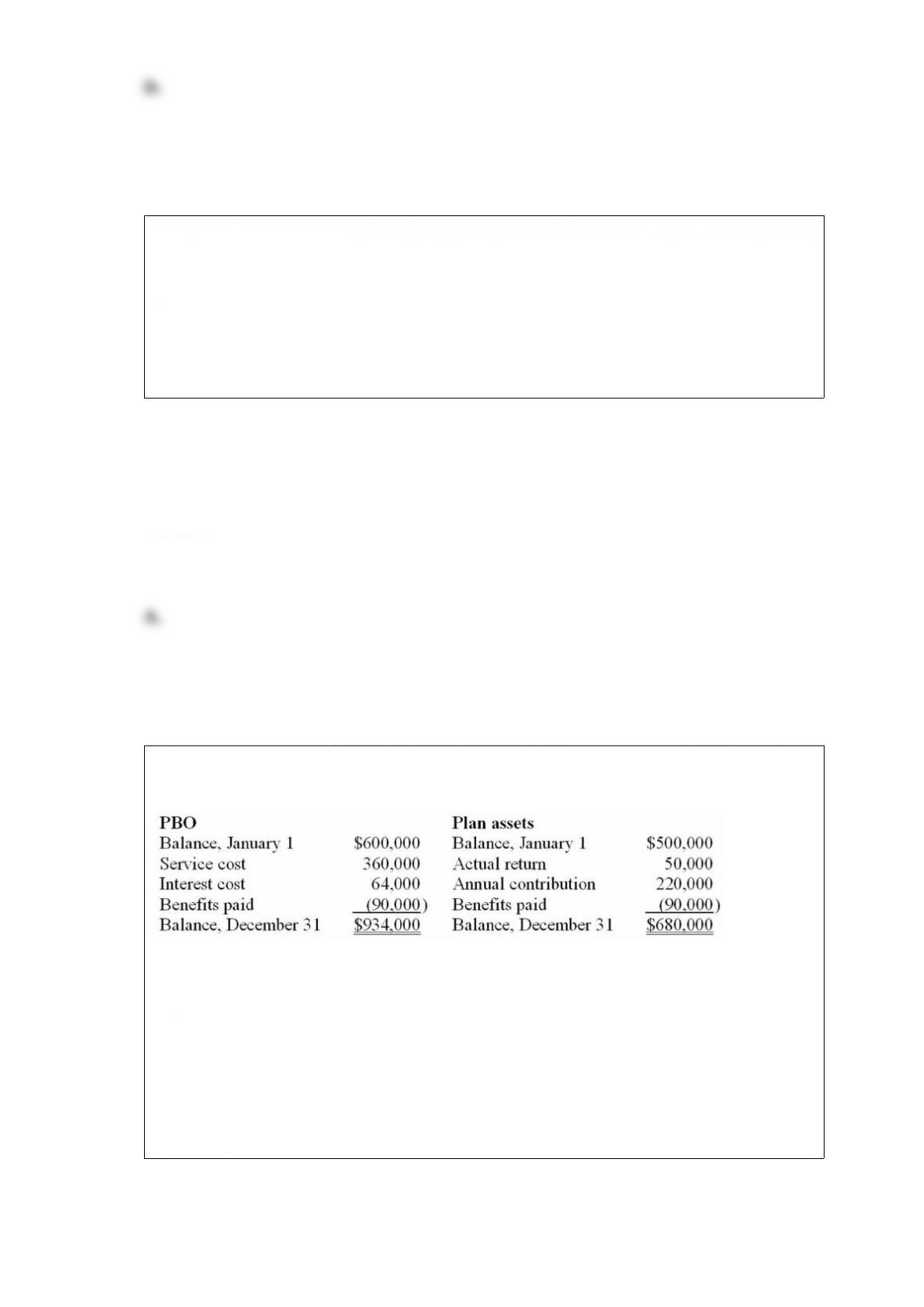
Harvey’s Wholesale Company sold supplies of $46,000 to Northeast Company on April
12 of the current year, with terms 1/15, n/60. Harvey uses the net method of accounting
for cash discounts.
What entry would Harvey’s make on April 23, assuming the customer made the correct
payment on that date? A.
B.
C.
D.
Answer:
Pro forma earnings: A. Could be considered management’s view of permanent earnings.
B. Are needed for the correction of errors.
C. Are standardized under generally accepted accounting principles.
D. Are useful to compare two different firms’ performance.
Answer:
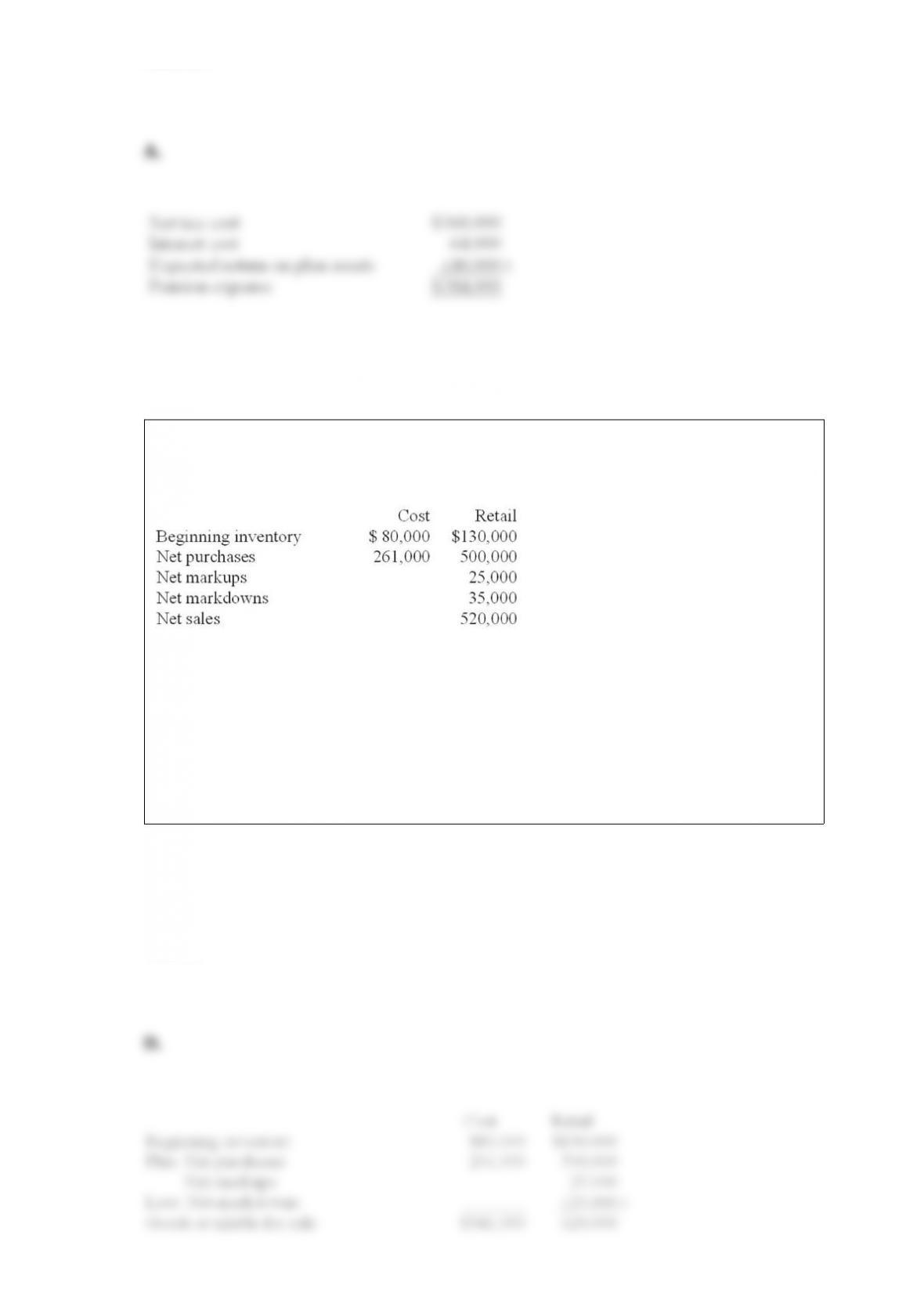
Fox Company received the following reports of its defined benefit pension plan for the
current calendar year:
The long-term expected rate of return on plan assets is 8%. Assuming no other data are
relevant, what is the pension expense for the year? A. $384,000.
B. $360,000.
C. $424,000.
D. $374,000.
Answer:
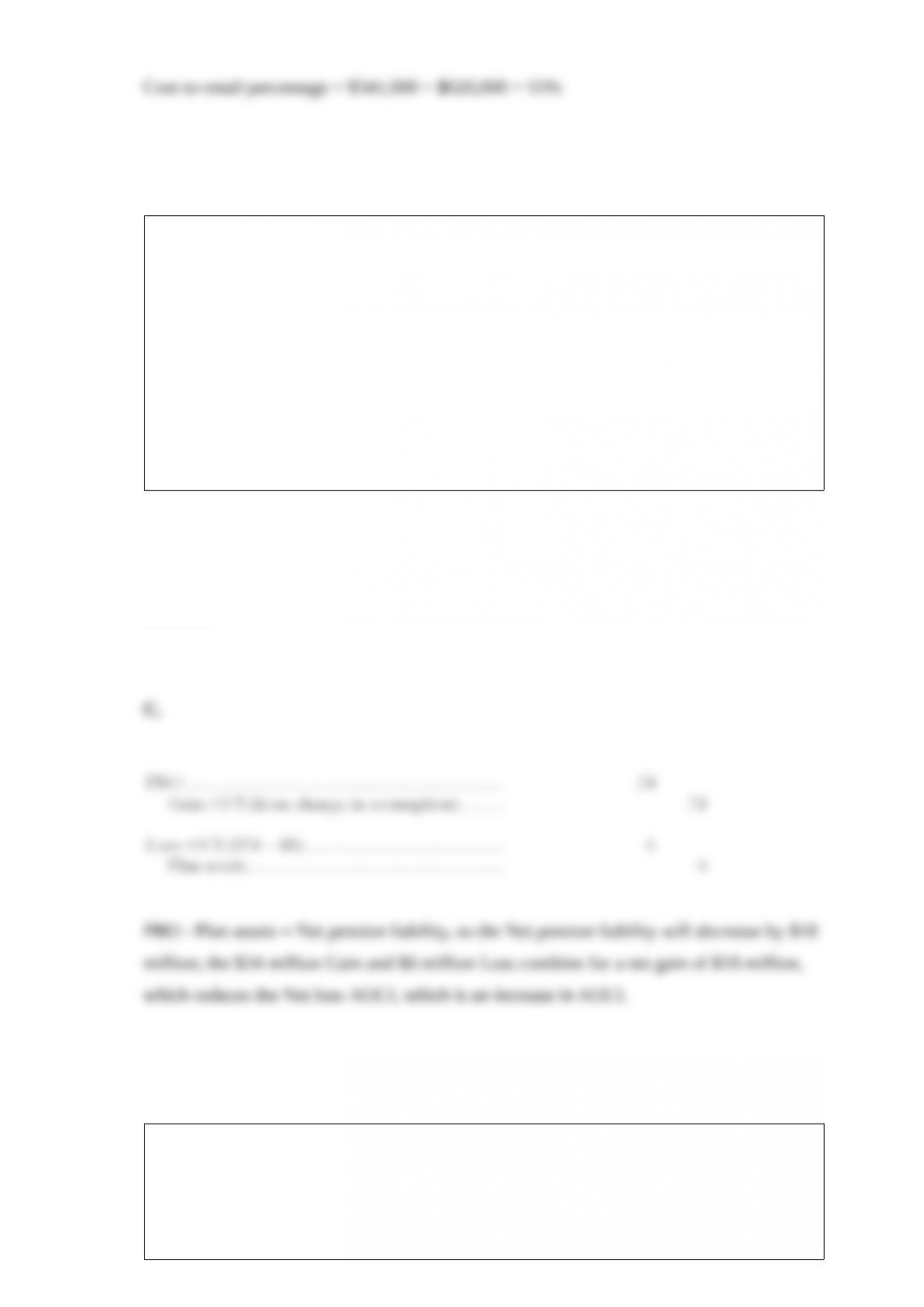
Marilee’s Electronics uses a periodic inventory system and the average cost retail
method to estimate ending inventory and cost of goods sold. The following data is
available from the company records for the month of June 2013:
The average cost-to-retail percentage is: A. 52.2%.
B. 61.5%.
C. 56.8%
D. 55%.
Answer:
JL Health Services reported a net loss-AOCI in last year’s balance sheet. This year, the
company revised its estimate of future salary levels causing its PBO estimate to decline
by $24. Also, the $48 million actual return on plan assets was less than the $54 million
expected return. As a result: A. The statement of comprehensive income will report a $6
million gain and a $24 million loss.
B. The net pension liability will increase by $18 million.
C. Accumulated other comprehensive income will increase by $18 million.
D. The net pension liability will decrease by $24 million.
Answer:
An analyst compiled the following information for U Inc. for the year ended December
31, 2013:
▪ Net income was $1,700,000.

▪ Depreciation expense was $400,000.
▪ Interest paid was $200,000.
▪ Income taxes paid were $100,000.
▪ Common stock was sold for $200,000.
▪ Preferred stock (8% annual dividend) was sold at par value of $250,000.
▪ Common stock dividends of $50,000 were paid.
▪ Preferred stock dividends of $20,000 were paid.
▪ Equipment with a book value of $100,000 was sold for $200,000.
Using the indirect method, what was U Inc.’s net cash flow from operating activities for
the year ended December 31, 2013? A. $2,000,000.
B. $2,030,000.
C. $2,080,000.
D. $2,100,000.
Cash flows from operations using the indirect method are computed by taking net
income plus noncash expenses (e.g., depreciation) less gains from the equipment sale.
Note that cash flow from operations must be adjusted downward for the amount of the
gain on the sale of the equipment. Cash flow from operations is ($1,700,000 + 400,000
– ($200,000 – 100,000)) = $2,000,000. Note that interest and income taxes paid are
expenses shown on the income statement and will already be factored into net income.
The other information relates to financing and investing cash flows.
Answer:
When bonds are sold at a premium, if the annual straight-line amortization amount is
compared to the annual effective interest amortization amount over the life of the bond
issue, the annual amount of the straight-line amortization of premium is: A. Higher than

the effective interest amount in the early years and less than the effective interest
amount in the later years.
B. Less than the effective interest amount in the early years and more than the effective
interest amount in the later years.
C. Higher than the effective interest amount every year.
D. Less than the effective interest amount every year.
Answer:
The acid-test ratio is also known as the: A. Current ratio.
B. Debt to equity ratio.
C. Times interest earned ratio.
D. Quick ratio.
Answer:
The following refers to the pension spreadsheet (columns have missing amounts) for
the current year for Pancho Villa Enterprises (PVE).
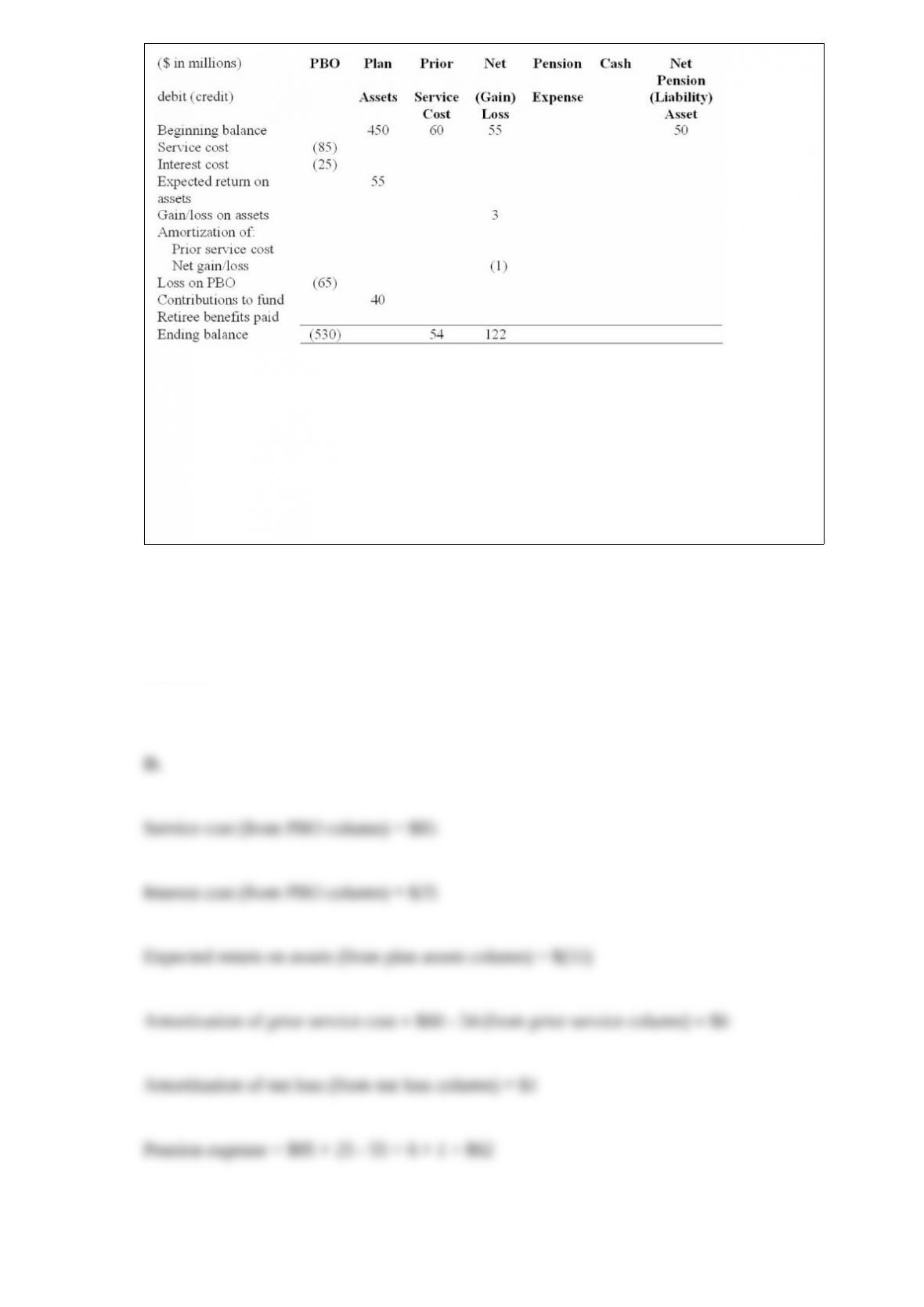
What was PVE’s pension expense for the year? A. $250.
B. $50.
C. $68.
D. $62.
Answer:

On January 1, 2013, the board of directors of Goby Inc. declared a $540,000 dividend.
The following data is from the balance sheet of Goby on that date:
How much is the liquidating dividend? A. $140,000.
B. $240,000.
C. $290,000.
D. None of the above is correct.
Answer:
The equity method of accounting for investments in voting common stock is
appropriate when: A. The investor can significantly influence the investee.
B. The investor has voting control over the investee.
C. The investor intends to hold the common stock indefinitely.
D. The investor is assured of a continued supply of a valuable raw material.
Answer:

Holding gains and losses on trading securities are included in earnings because: A. They
measure the success or failure of taking advantage of short-term price changes.
B. The IRS mandates the inclusion.
C. The SEC mandates the inclusion.
D. They measure the book value of the securities in the balance sheet date.
Answer:
Bird Brain Co. reported net income of $45,000 for the year ended December 31, 2013.
January 1 balances in accounts receivable and accounts payable were $23,000 and
$26,000 respectively. Year-end balances in these accounts were $22,000 and $28,000,
respectively. Assuming that all relevant information has been presented, Bird Brain’s
cash flows from operating activities would be: A. $48,000.
B. $44,000.
C. $46,000.
D. $45,000.
Answer:
Enhancing qualitative characteristics of accounting information include each of the
following except: A.Timeliness.
B.Materiality.
C.Comparability.
D.Verifiability.
Answer:
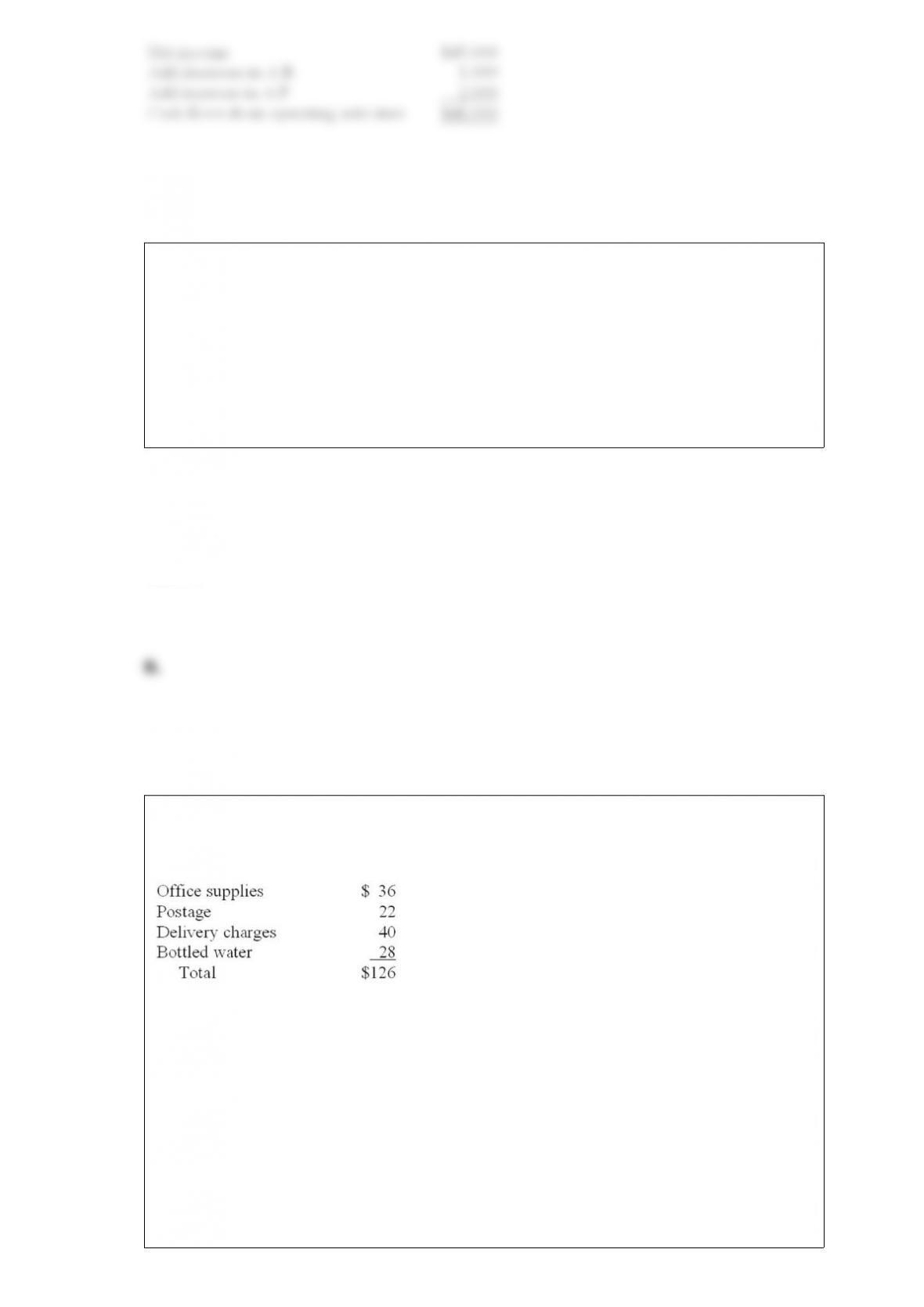
On July 1, 2013, Cromartie Furniture established a $150 petty cash fund. A check for
$150 was made out to the petty cash custodian. During July, the petty cash custodian
paid the following bills from the petty cash fund:
At the end of July the petty cash fund was replenished.
The journal entry to establish the petty cash fund includes: A. A credit to petty cash and
a debit to cash for $150.
B. A debit to petty cash and a credit to cash for $150.
C. A credit to cash and a debit to various expenses for $126.
D. A credit to petty cash and a debit to various expenses for $126.

Answer:
During 2013, the Longhorn Oil Company incurred $5,000,000 in exploration costs for
each of 20 oil wells drilled in 2013 in west Texas. Of the 20 wells drilled, 14 were dry
holes. Longhorn uses the successful efforts method of accounting. Assuming that none
of the oil found is depleted in 2013, what oil exploration expense would Longhorn
charge for this activity in its 2013 income statement? A. $0.
B. $30 million.
C. $70 million.
D. $100 million.
Answer:
Which of the following is not a characteristic of ‘simple” debt? A. Investor’s purpose is
collecting cash flows.
B. An amount of principal (adjusted for premium or discount) is transferred to the
borrower at issuance that will be returned to the debt holder when the debt matures.
C. The debt instrument is not a derivative.
D. The debt cannot be prepaid or settled in a way that the investor does not recover
substantially all of its original investment unless that is what the investor chooses.
Answer:
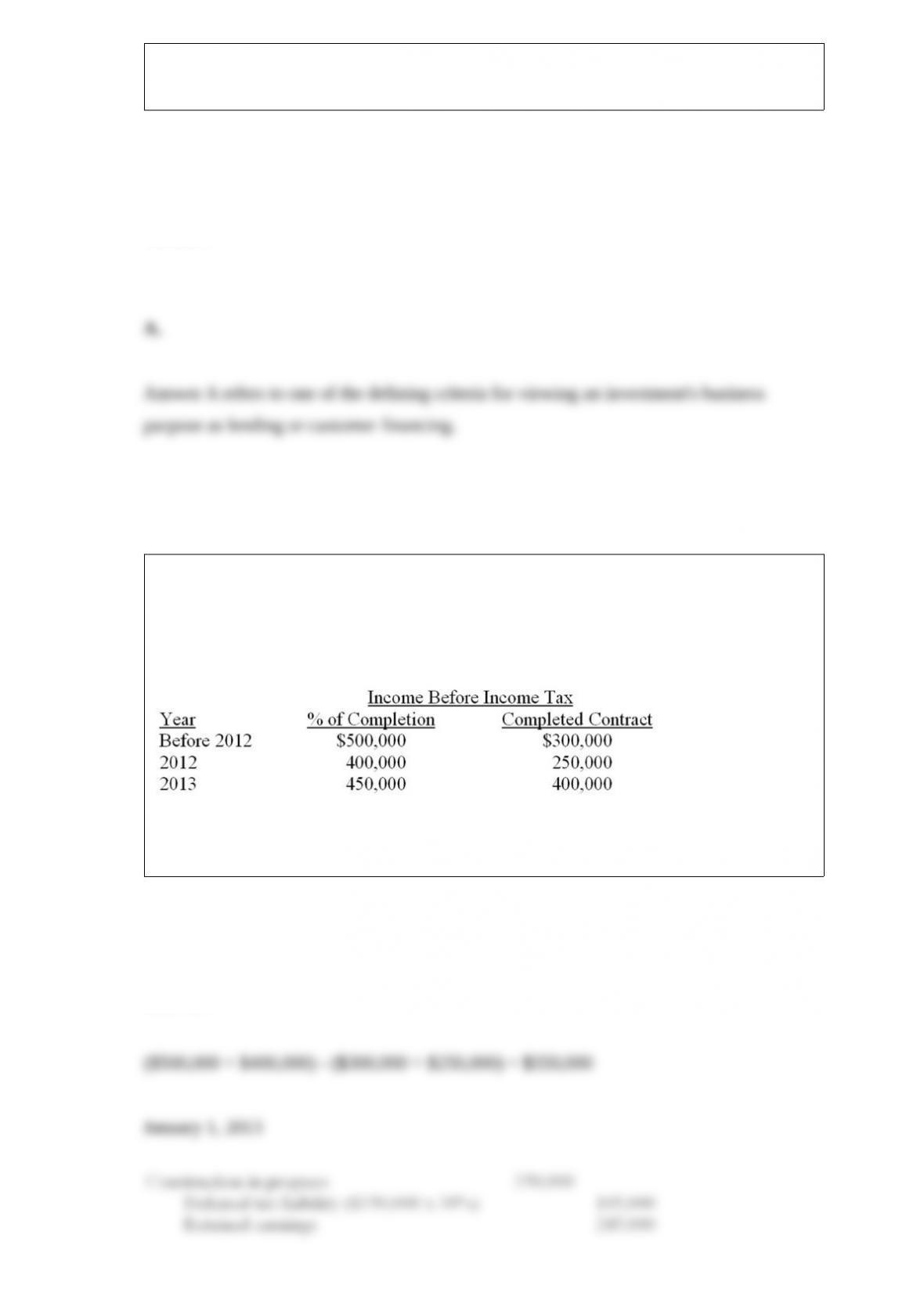
On January 1, 2013, Bubba Construction decided to change from the completed
contract method of accounting for long-term construction contracts to the
percentage-of-completion method. The company will continue to use the completed
contract method for tax purposes. The tax rate is 30%. The following is all relevant data
concerning the change.
Required:
Prepare the journal entry to record the accounting change.
Answer:
On January 1, 2013, Shirley Corporation purchased 10% bonds dated January 1, 2013,
with a face amount of $10 million. The bonds mature in 2022 (10 years). For bonds of
similar risk and maturity, the market yield is 12%. Interest is paid semiannually on June
30 and December 31.
Required:
1) Determine the price of the bonds at January 1, 2013.
2) Prepare the journal entry to record the bond purchase by Shirley on January 1, 2013.
3) Prepare the journal entry to record interest on June 30, 2013, using the effective
interest method.
4) Prepare the journal entry to record interest on December 31, 2013, using the effective
interest method.
Answer:
Why are differences in reported amounts for deferred taxes are among the most
frequent between IFRS and U.S. GAAP, despite the fact that the two follow similar
approaches for accounting for taxation?
Answer:
How do U.S. GAAP and IFRS differ with regard to reporting prior service costs.
Answer:
On January 1, 2013, Holbrook Company leased a building under a three-year operating
lease. The annual rental payments are $40,000 on January 1, 2013; $30,000 on January
1, 2014; and $20,000 on January 1, 2015.
Required:
Prepare the appropriate journal entries for Holbrook Company from the inception of the
lease through the end of 2015.
Answer:
In its 2012 Annual Report to Shareholders, Henchman & Co. provided the following
Statement of Cash Flows:
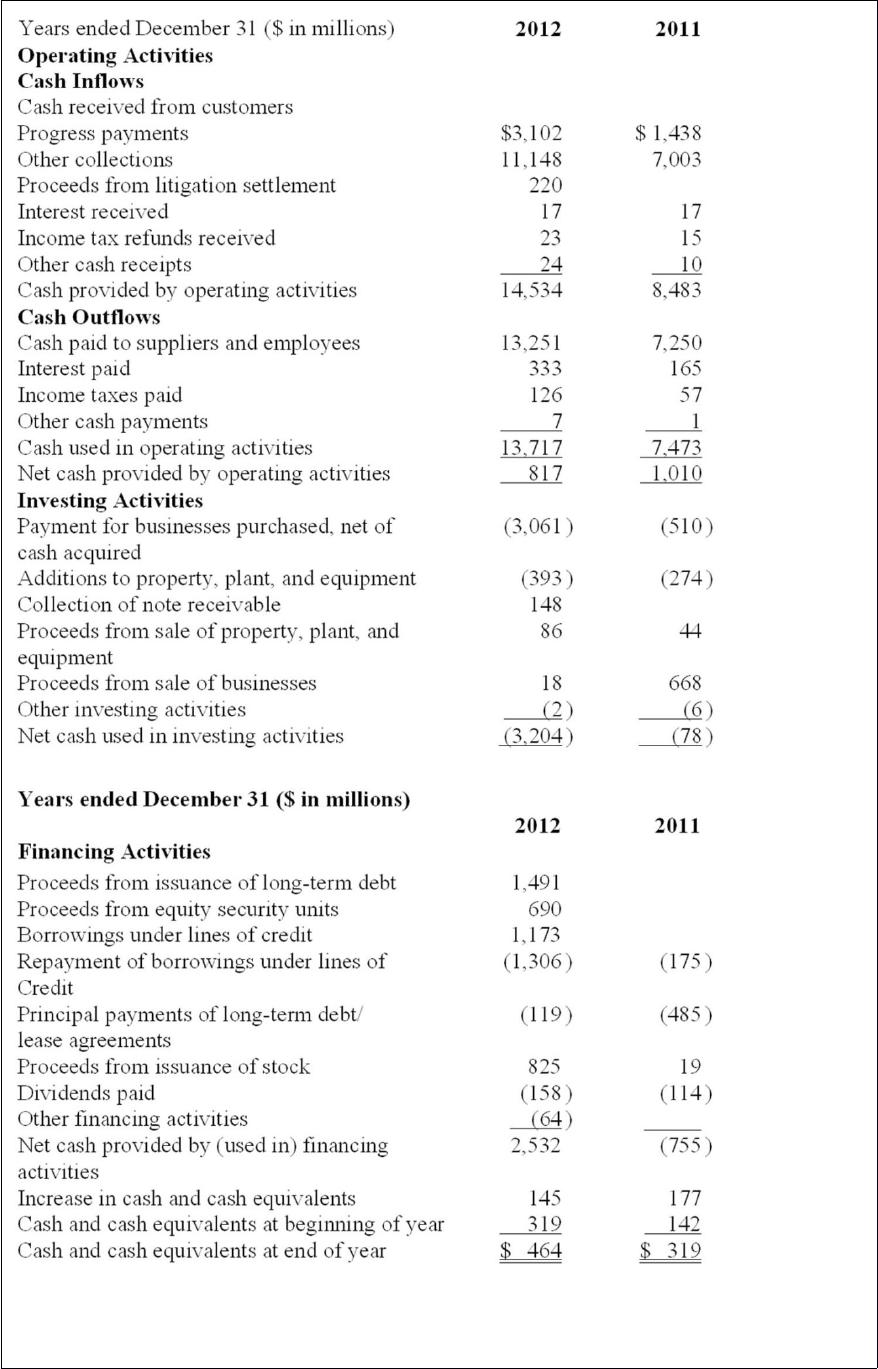
Which type of activity (operating, investing, financing) was most responsible for the
cash flow experienced by Henchman & Co. during 2012?
Answer:
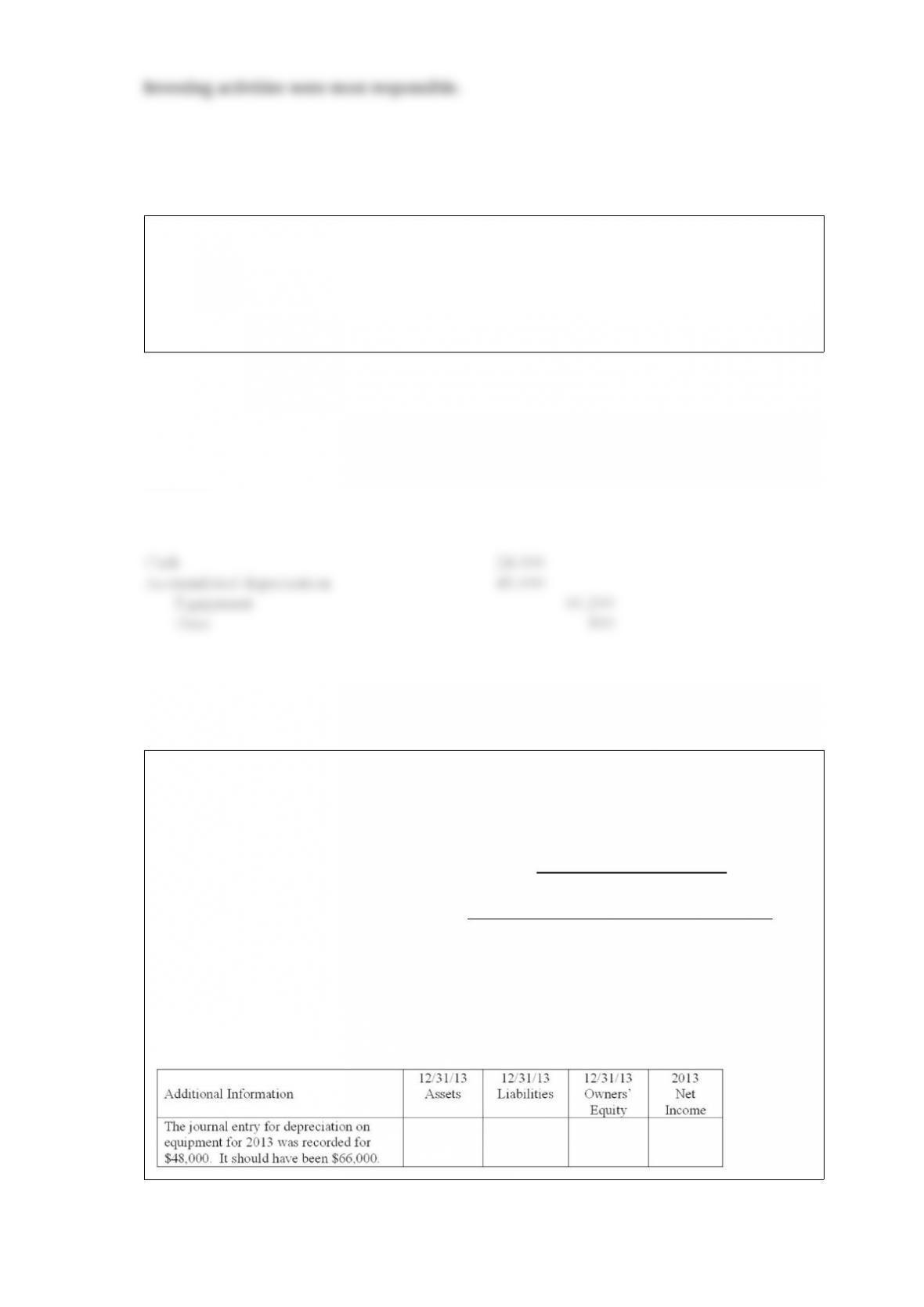
McLean Mfg. Company sold a three-speed lathe for $24,000 cash. The lathe cost
$66,200 and had a book value of $23,200.
Required:
Prepare the journal entry to record the sale.
Answer:
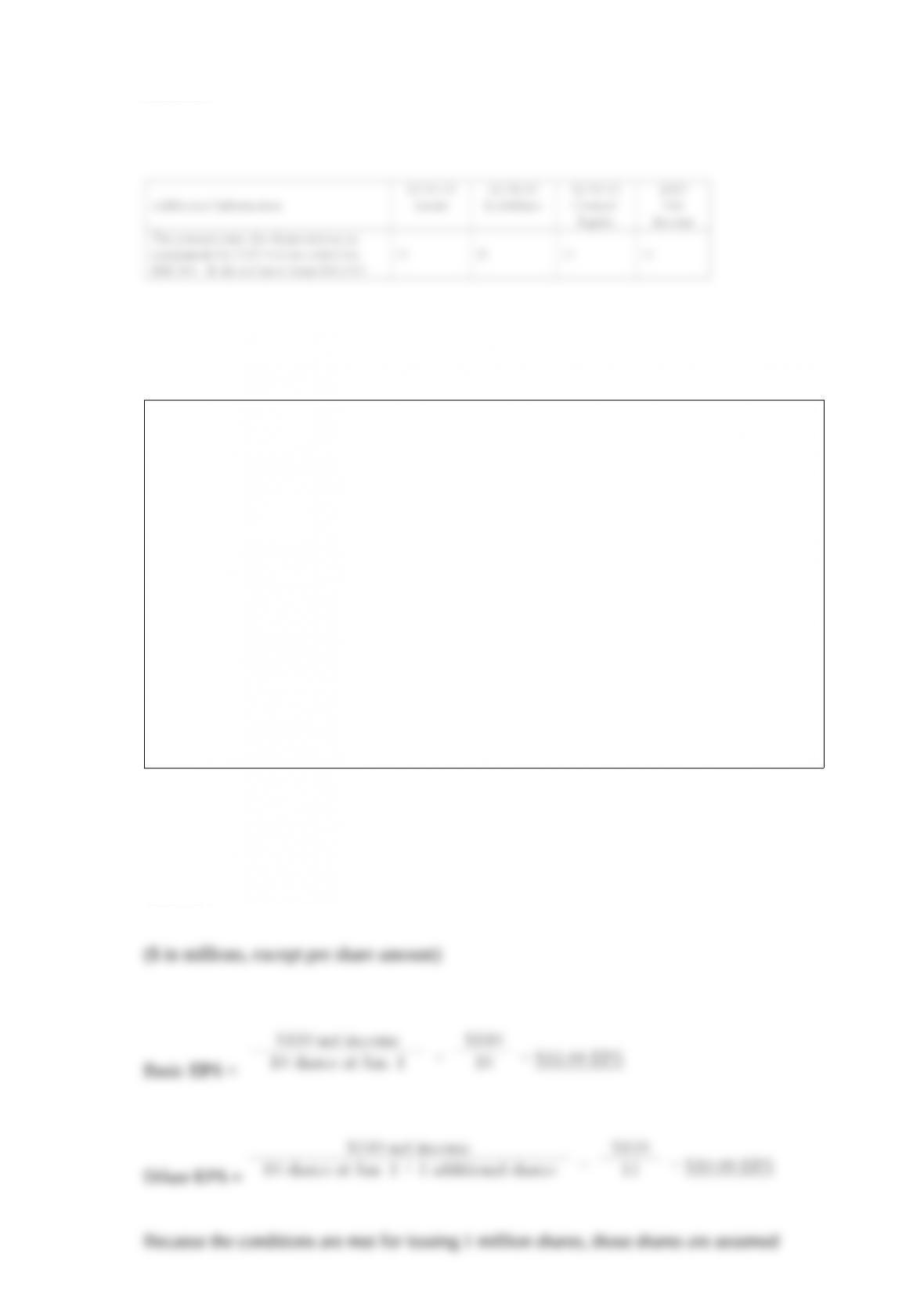
You are reviewing O’Brian Co.’s adjusted trial balance for the year ended 12/31/13. You
notice several omissions and incorrect items during your review, some of which are
noted below. For each one, you are to determine what effect, if any, these items would
have on the stated components of O’Brian Co.’s 2013 Income Statement and 12/31/13
Balance Sheet if they are not corrected or updated. Assume no income taxes.
Use the following code for your answers. You need not include any dollar amounts.
N = No Effect
O = Overstated
U = Understated
Answer:
During 2013, Quattro entered into the following transactions relating to shareholders’
equity. The corporation was authorized to issue 20 million common shares, $1 par per
share.
Net income for 2013 was $110 million.
Jan. 2: Issued 10 million common shares for cash.
Jan. 3: Entered an agreement with the company president to issue up to 2 million
additional shares of common stock in 2013 based on the earnings of Quattro in 2013. If
net income exceeds $100 million, the president will receive 1 million shares; 2 million
shares if net income exceeds $120 million.
Required:
Compute basic and diluted EPS for 2013.
Answer:

On December 31, 2012, Vitners Company had outstanding 400,000 shares of common
stock and 40,000 shares of 8% cumulative preferred stock (par $10).
February 28, 2013, issued an additional 36,000 shares of common stock
September 1, 2013, 9,000 shares were retired.
A 10% stock dividend was declared and distributed on July 1, 2013.
At year-end, there were fully vested incentive stock options outstanding for 30,000
shares of common stock (adjusted for the stock dividend). The exercise price was $18.
The market price of the common stock averaged $20 during the year. Also outstanding
were $1,000,000 face amount of 10% convertible bonds issued in 2010 and convertible
into 50,000 common shares (adjusted for the stock dividend). Net income was
$900,000. The tax rate for the year was 40%.
Required:
Compute basic and diluted EPS (rounded to 2 decimal places) for the year ended
December 31, 2013.
Answer:
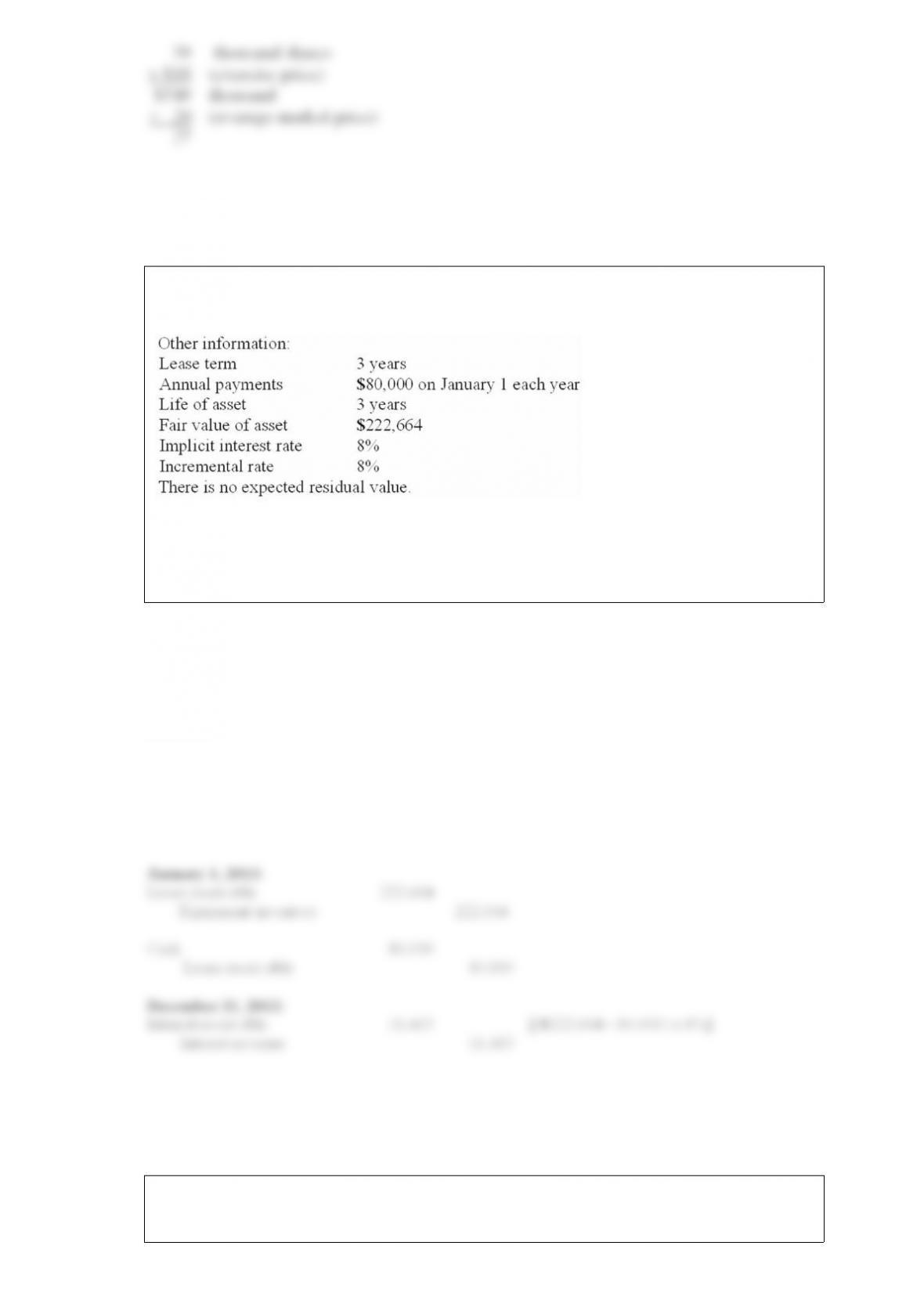
Eastern Edison Company leased equipment from Low-Tech Leasing on January 1,
Low-Tech purchased the equipment at a cost of $222,664.
Required:
Prepare appropriate journal entries for Low-Tech Leasing for 2013. Assume a
December 31 year-end.
Answer:
The trial balance of Lakewood Inc. included the following accounts as of December 31,
2013:
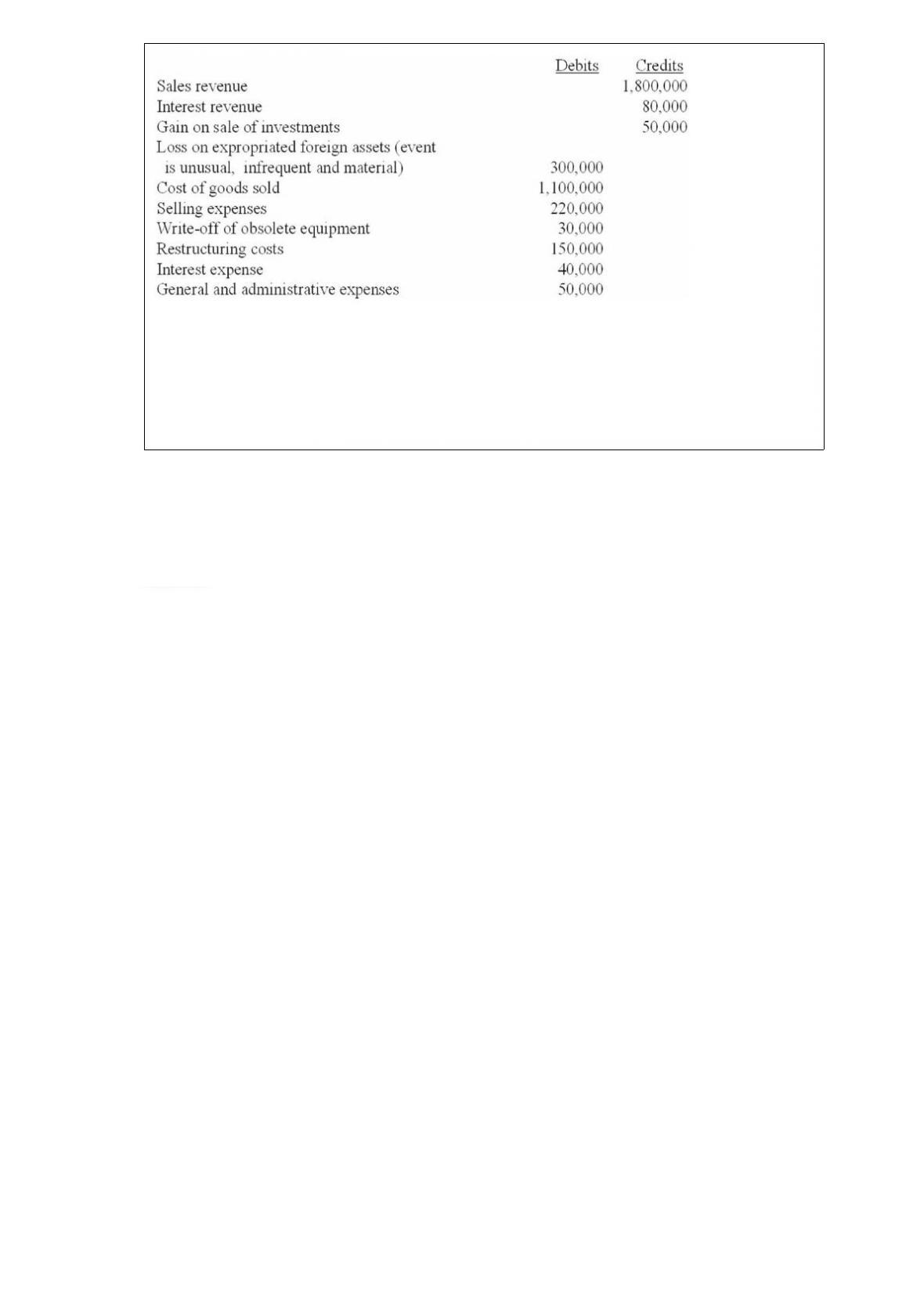
Lakewood Inc. had 100,000 shares of stock outstanding throughout the year. Income tax
expense has not yet been accrued. The effective tax rate is 30%.
Required:
Prepare a multiple-step income statement with earnings per share disclosure.
Answer:
Why would an oil company argue to use the full-cost method of accounting for oil and
gas exploration costs?
Answer:

On March 15, 2013, Ellis Corporation issued 5,000 shares of its no-par common stock
in exchange for a patent. On the date of the transaction, the market price of the common
stock was $22 per share. Ellis also received a tract of land from the City of Montrose as
an enticement to build a new office building on the site. The land had a fair value of
$510,000 and Ellis was required to pay only $200,000 to secure title to the land.
Required:
1) Prepare the journal entries to record the transactions under U.S. GAAP.
2) Prepare the entry to record the government grant assuming Ellis prepares its financial
statements according to International Financial Reporting Standards. Prepare the entry
according to each of the alternatives available under IFRS.
Answer:
Jaycom Enterprises has invested its excess cash in the stock of several different
companies and desires to maximize income over the short run. Jaycom is unsure about
the appropriate investment policy and thus what reporting practice to follow.
Required:
What classification procedure and subsequent classification could Jaycom follow in
order to meet its objective? How will Jaycom justify its choice to the Jaycom auditors?
Answer:
When stock is issued for consideration other than cash, what is the measurement
objective?
Answer:

The balance sheets of Callaway Foods list current assets followed by noncurrent assets
and current liabilities before long-term liabilities. If Callaway Foods prepared its
financial statements according to International Financial Reporting Standards, what
other approach might it take in preparing its balance sheet?
Answer:
Answer:
Rumsfeld Corporation leased a machine on December 31, 2013, for a three-year period.
The lease agreement calls for annual payments in the amount of $16,000 on December
31 of each year beginning on December 31, Rumsfeld has the option to purchase the
machine on December 31, 2016, for $20,000 when its fair value is expected to be
$30,000. The machine’s estimated useful life is expected to be five years with no
residual value. Rumsfeld uses straight-line depreciation for this type of machinery. The
appropriate interest rate for this lease is 12%.
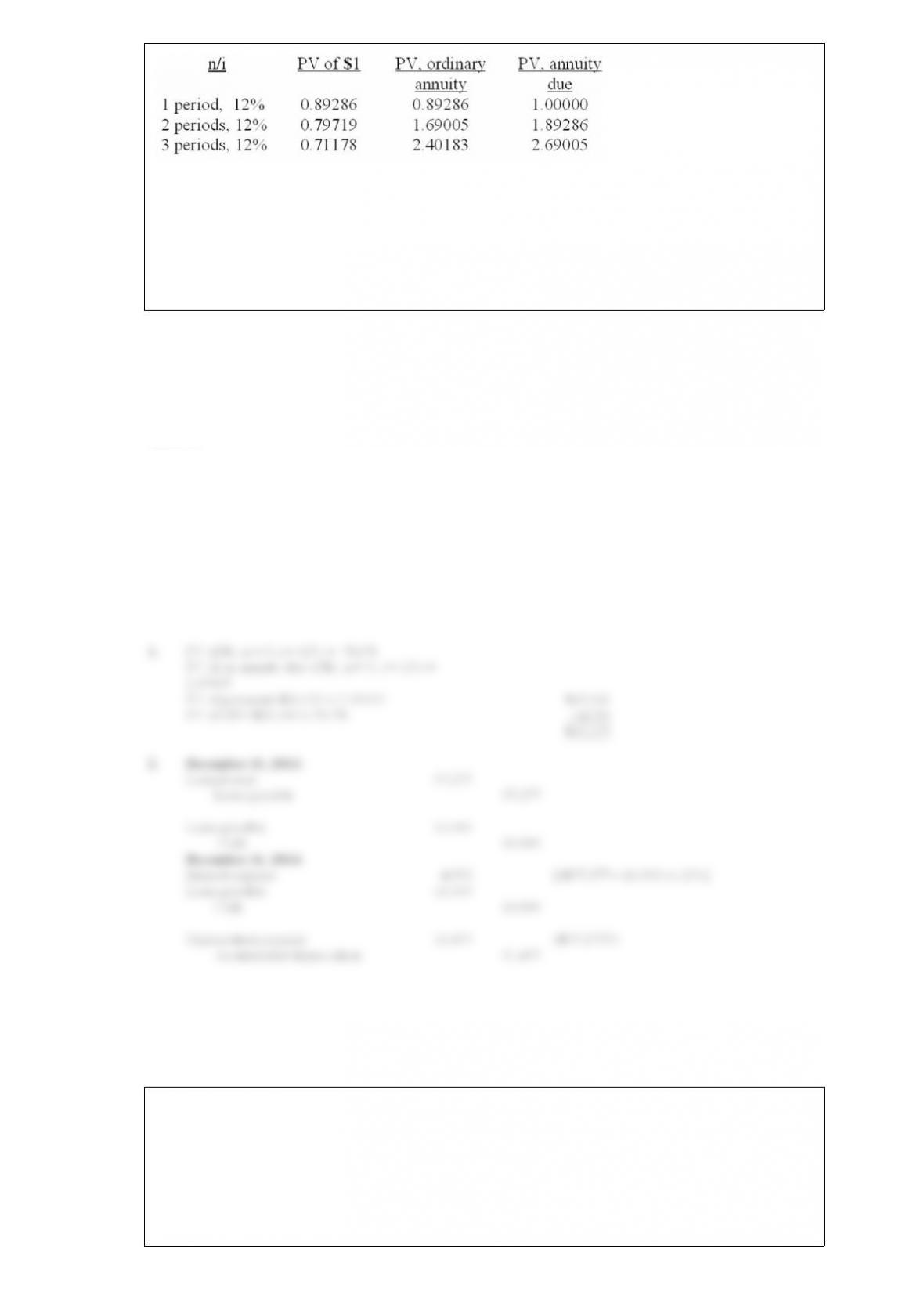
Required:
1) Calculate the amount to be recorded as a leased asset and the associated lease
liability.
2) Prepare Rumsfeld’s journal entries for this lease for 2013 and
Answer:
On March 1, 2013, Navy Corporation used excess cash to purchase U.S. Treasury bonds
for $103,000 plus accrued interest. The bonds were purchased at face value. The
appropriate interest rate is 6%. Interest on these bonds is payable on January 1 and July
1 of each year. Navy’s investment is accounted for as held to maturity. The fair value of
the Treasury bonds is $104,000 at year-end.
Required:
Prepare the appropriate journal entries to record the transactions for the year, including
any year-end adjustments. Show calculations, rounded to the nearest dollar.
Answer: