
Sanjeev enters into a contract offering uncertain consideration. The contract pays him
$1,000/month for six months of continuous consulting services. In addition, there is a
60% chance the contract will pay an additional $2,000 and a 40% chance the contract
will pay an additional $3,000, depending on the outcome of the consulting contract.
Sanjeev estimates uncertain consideration using the most likely amount. What is the
amount of revenue Sanjeev would recognize for the first month of the contract? A. $0.
B. $1,000.
C. $1,333.
D. $1,400.
Answer:
In testing for recoverability of property, plant, and equipment, an impairment loss is
required if the: A. Asset’s book value exceeds the undiscounted sum of expected future
cash flows.
B. Undiscounted sum of its expected future cash flows exceeds the asset’s book value.
C. Present value of expected future cash flows exceeds its book value.
D. None of the above is correct.
Answer:

The four criteria provided in GAAP for distinguishing a capital lease from an operating
lease do not include: A. The agreement specifies that ownership transfers at the end of
the lease term.
B. The collectibility of the lease payments must be reasonably predictable.
C. The agreement contains a bargain purchase option.
D. The noncancelable lease term is 75% or more of the useful life of the leased asset.
Answer:
Under both U.S. GAAP and IFRS, a lease is a capital lease (called a finance lease under
IFRS) if substantially all risks and rewards of ownership are transferred. In making this
determination, more judgment, and less specificity, is applied using:A. U.S. GAAP.
B. IFRS.
C. Both U.S. GAAP and IFRS.
D. Neither U.S. GAAP nor IFRS.
Answer:

For the lessee to account for a lease as a capital lease, the lease must meet: A. All four
of the criteria specified by GAAP regarding accounting for leases.
B. Any one of the six criteria specified by GAAP regarding accounting for leases.
C. Any two of the criteria specified by GAAP regarding accounting for leases.
D. Any one of the four criteria specified by GAAP regarding accounting for leases.
Answer:
Coastal Shores Inc. (CSI) was destroyed by Hurricane Fred on August 5, 2013. At
January 1, CSI reported an inventory of $170,000. Sales from January 1, 2013, to
August 5, 2013, totaled $480,000 and purchases totaled $195,000 during that time. CSI
consistently marks up its products 60% over cost to arrive at a selling price. The
estimated inventory loss due to Hurricane Fred would be: A. $131,175.
B. $65,000.
C. $17,143.
D. None of the above is correct.
Answer:

Interest expense is: A. The effective interest rate times the amount of the debt
outstanding during the interest period.
B. The stated interest rate times the amount of the debt outstanding during the interest
period.
C. The effective interest rate times the face amount of the debt.
D. The stated interest rate times the face amount of the debt.
Answer:
Interest payments to creditors are reported in a statement of cash flows as: A. An
investing activity.
B. A borrowing activity.
C. A financing activity.
D. An operating activity.
Answer:

If the lessor records unearned rent at the beginning of a lease term, the lease must: A.
Be a direct financing lease.
B. Be a sales-type lease.
C. Contain a bargain renewal option.
D. Be an operating lease.
Answer:
On January 1, 2013, Rupar Retailers purchased $100,000 of Anand Company bonds at a
discount of $5,000. The Anand bonds pay 6% interest but were purchased when the
market interest rate was 7% for bonds of similar risk and maturity. The bonds pay
interest semiannually on January 1 and July 1 of each year. Rupar accounts for the
bonds as a held-to-maturity investment, and uses the effective interest method. In
Rupar’s December 31, 2013, journal entry to record the second period of interest, Rupar
would record a credit to interest revenue of: A. $3,336.
B. $3,325.
C. $3,000.
D. $3,500.
Answer:

Which of the following indicates the margin of safety provided to creditors? A. Rate of
return on shareholders’ equity.
B. Times interest earned ratio.
C. Gross margin.
D. Debt to equity ratio.
Answer:
Expenses in an income statement prepared under International Financial Reporting
Standards: A. Must be classified by function.
B. Must be classified by natural description.
C. Can be classified either by function or by natural description.
D. None of the above is correct.

Answer:
The key elements of a defined benefit pension plan include all of the following except:
A. The pension expense.
B. The plan assets.
C. Amortized future benefits.
D. The employer’s obligation.
Answer:
Listed below are 10 terms followed by a list of phrases that describe or characterize the
terms. Match each phrase with the correct term. 1) 1.Allocation base
2) 2.Activity-based method
3) 3.Residual value
4) 4.Service life
5) 5.Amortization
6) 6.Straight-line method
7) 7.Additions
8) 8.Depletion

9) 9.Improvements
10) 10.Double-declining balance
A. The replacement of a major component of plant and equipment asset
B. Can be expressed in units of time or in units of activity
C. Cost allocation for an intangible asset
D. Allocates an equal amount of depreciable base to each period
E. Multiplies book value by twice the straight-line rate
F. Estimates service life in terms of a measure of activity
G. The amount the company expects to receive for the asset at the end of its life
H. Cost allocation for natural resources
I. Adding a new major component to existing plant and equipment
J. The difference between cost and residual value
Answer:
On June 1, 2012, the Crocus Company began construction of a new manufacturing
plant. The plant was completed on October 31, 2013. Expenditures on the project were
as follows ($ in millions):
On July 1, 2012, Crocus obtained a $70 million construction loan with a 6% interest
rate. The loan was outstanding through the end of October, 2013. The company’s only
other interest-bearing debt was a long-term note for $100 million with an interest rate of

8%. This note was outstanding during all of 2012 and 2013. The company’s fiscal
year-end is December 31.
Interest capitalized for 2014 was: A. $104,625.
B. $86,805
C. $87,875.
D. $67,500.
Answer:
Which of the following is a contingency that would most likely require accrual?A.
Potential claims on extended warranties.
B. Customer premium offers.
C. Potential liability on a product where none have yet been sold.
D. Sales tax payable.
Answer:

On July 1, Wiggins Associates enters into a contract to provide consulting services to
Pennsylvania University. The contract is anticipated to last four months and is intended
to achieve significant cost savings at the university. The contract stipulates that PU will
pay Wiggins $25,000 at the end of each month, and, if total cost savings reach a specific
target, PU will pay an additional $20,000 to Wiggins at the end of the contract. Wiggins
estimates a 75% chance that cost savings will reach the target. Wiggins reports revenue
under the proposed ASU.
Required:
1) Assume that Wiggins estimates uncertain consideration as the most likely amount, to
the following for Wiggins:
a. Prepare the journal entry on July 31 to record the first month of revenue under the
contract.
b. Assuming total cost saving exceed target, prepare the journal entry, if any, on October
31 to record receipt of the $20,000 bonus (ignore the normal October payment of
$25,000).
c. Assuming total cost saving do not reach the target, prepare the journal entry, if any,
on October 31 to record failure to receive the $20,000 bonus (ignore the normal
October payment of $25,000).
2) Now assume that Wiggins estimates uncertain consideration as the
probability-weighted amount. Repeat requirement 1.a (but not 1.b or c).
Answer:

On January 1, 2013, G Corp. granted stock options to key employees for the purchase
of 80,000 shares of the company’s common stock at $25 per share. The options are
intended to compensate employees for the next two years. The options are exercisable
within a four-year period beginning January 1, 2015, by the grantees still in the employ
of the company. No options were terminated during 2013, but the company does have
an experience of 4% forfeitures over the life of the stock options. The market price of
the common stock was $31 per share at the date of the grant. G Corp. used the Binomial
pricing model and estimated the fair value of each of the options at $10. What amount
should G charge to compensation expense for the year ended December 31, 2013? A.
$307,200.
B. $320,000.
C. $384,000.
D. $400,000.

Answer:
Crawford Inc. has bonds outstanding during a year in which the market rate of interest
has risen. Crawford elected the fair value option for the bonds upon issuance. What will
the company report for the bonds in its income statement for the year? A. Interest
expense and a gain.
B. Interest expense and a loss.
C. A gain and no interest expense.
D. A loss and no interest expense.
Answer:
Pat’s Custom Tuxedo Shop maintains its records on the cash basis. During this past year
Pat’s collected $42,000 in tailoring fees, and paid $14,000 in expenses. Depreciation
expense totaled $2,000. Accounts receivable increased $1,500, supplies increased
$4,000, and accrued liabilities increased $2,500. Pat’s accrual basis net income was: A.
$18,000.
B. $34,000.
C. $23,000.

D. $29,000.
Answer:
The FASB issues accounting standards in the form of: A.Accounting Research
Bulletins.
B.Accounting Standards Updates.
C.Financial Accounting Standards.
D.Financial Technical Bulletins.
Answer:

Listed below are five terms followed by a list of phrases that describe or characterize
each of the terms. Match each phrase with the correct term by placing the number
designating the best term in the space provided by the phrase. 1) Vesting period
2) Stock option
3) Bonuses
4) Performance condition plans
5) Expired options
A. Paid-in capital effectively renamed under the fair value approach
B. A right to buy shares of stock in the future
C. Expensed as compensation in the period earned.
D. Shares given for achieving financial goals
E. Benefit period over which stock option compensation expense is spread.
Answer:
Dooling Corporation reported balances in the following accounts for the current year:
Cost of goods sold was $7,500. What was the amount of cash paid to suppliers? A.
$7,000.
B. $7,200.
C. $7,300.
D. $7,500.
Answer:
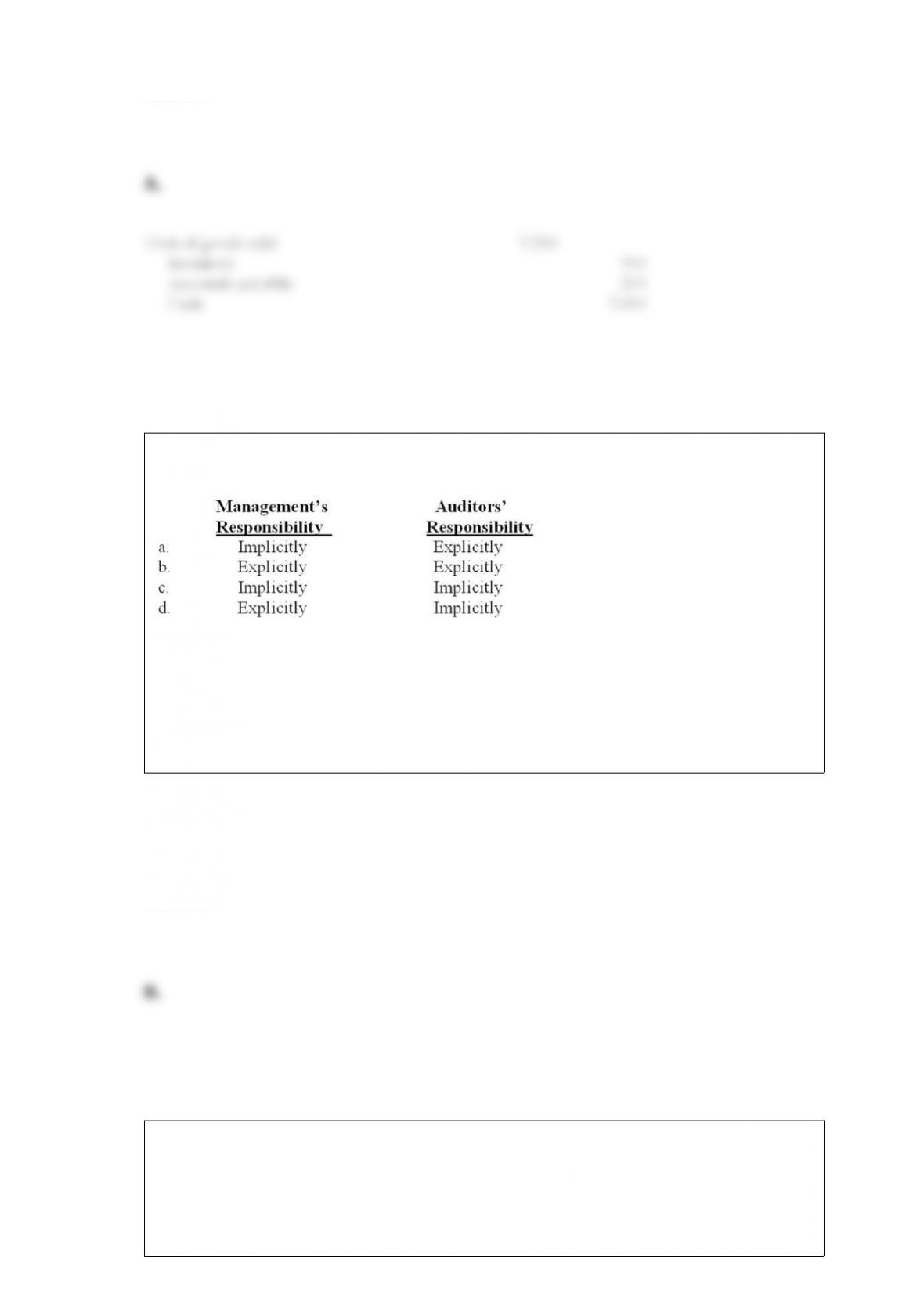
How are management’s responsibility and the auditors’ opinion on internal controls
represented in the standard auditor’s report?
A. Option a
B. Option b
C. Option c
D. Option d
Answer:
The accounting concept that requires recognition of a liability for customer premium
offers is: A. Periodicity.
B. Conservatism.
C. Historical cost.
D. The matching principle.
Answer:
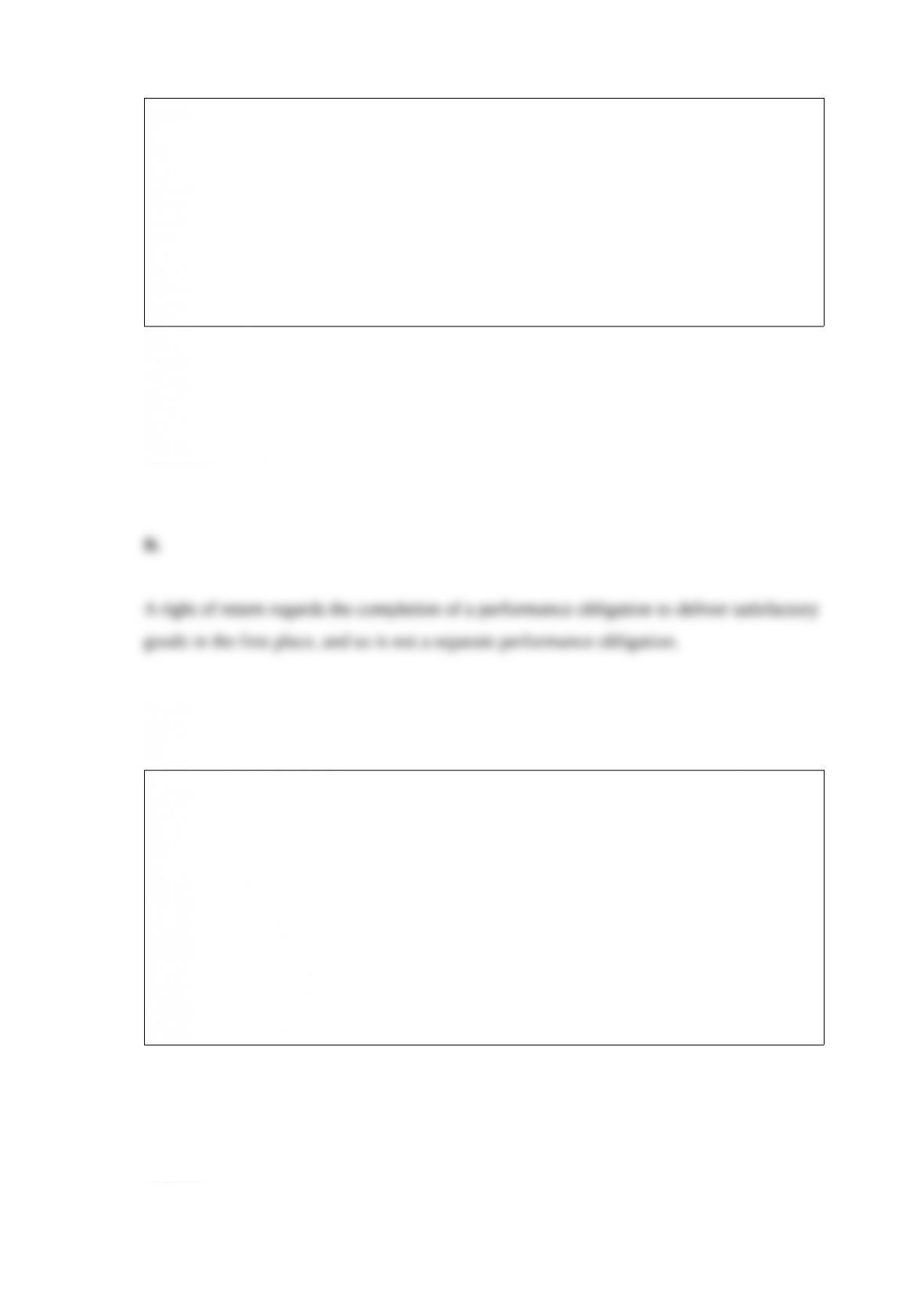
Anthers Inc. bought the following portfolio of trading securities near the end of 2013.
What amount will be reported in the balance sheet for this portfolio at December 31,
2013, and how will it be classified?
A. Option a
B. Option b
C. Option c
D. Option d
Answer:
Which of the following is not a separate performance obligation? A. A good that the
seller could sell separately.
B. A right of return.
C. An option for a customer to purchase goods under terms that are more advantageous
than those enjoyed by other customers.
D. An extended warranty.
Answer:
Boomerang Computer Company sells computers with an unconditional right to return
the computer if the customer is not satisfied. Boomerang has a long history selling these
computers under this returns policy and can provide precise estimates of the amount of
returns associated with each sale. Boomerang most likely should recognize revenue: A.
When Boomerang delivers a computer to a customer.
B. When Boomerang receives cash from the customer.
C. When a customer returns a computer.
D. Never, because the right of return is unconditional.
Answer:

On March 1, 2013, Doll Co. issued 10-year convertible bonds at 106. During 2016, the
bonds were converted into common stock when the market price of Doll’s common
stock was 500 percent above its par value. On March 1, 2013, cash proceeds from the
issuance of the convertible bonds should be reported as: A. A liability for the entire
proceeds.
B. Paid-in capital for the entire proceeds.
C. Paid-in capital for the portion of the proceeds attributable to the conversion feature
and as a liability for the balance.
D. A liability for the face amount of the bonds and paid-in capital for the premium over
the par value.
Answer:
Hawk Corporation purchased 10,000 shares of Diamond Corporation stock in 2010 for
$50 per share and classified the investment as securities available for sale. Diamond’s
market value was $60 per share on December 31, 2011, and $65 on December 31, 2012.
During 2013, Hawk sold all of its Diamond stock at $70 per share. In its 2013 income
statement, Hawk would report: A. A gain of $50,000.
B. A gain of $150,000.
C. A gain of $200,000
D. A gain of $300,000.
Answer:
GAAP regarding accounting for unrealized gains and losses on investments in equity
securities will apply to an investment when the percentage of ownership of another
company is: A. Less than 20%.
B. 20% to 50%.
C. Over 50%.
D. Exactly 100%.
Answer:
Carolina Mills purchased $270,000 in supplies this year. The supplies account increased
by $10,000 during the year to an ending balance of $66,000. What was supplies
expense for Carolina Mills during the year? A. $300,000.
B. $280,000.
C. $260,000.
D. $240,000.
Answer:
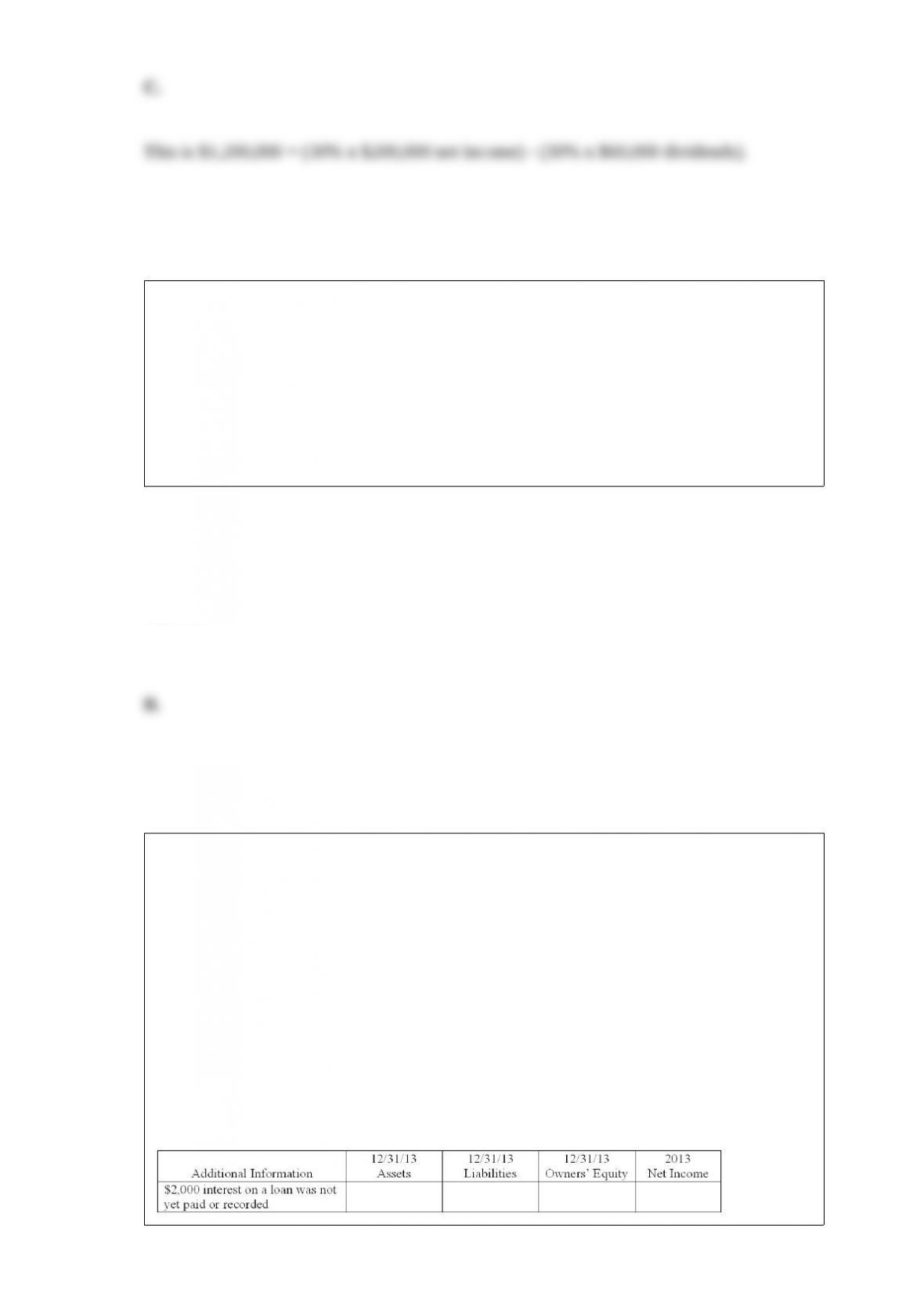
Assume that, on January 1, 2013, Matsui Co. paid $1,200,000 for its investment in
60,000 shares of Yankee Inc. Further, assume that Yankee has 200,000 total shares of
stock issued. The book value and fair value of Yankee’s identifiable net assets were both
$4,000,000 at January 1, 2013. The following information pertains to Yankee during
2013:
What amount would Matsui report in its year-end 2013 balance sheet for its investment
in Yankee? A. $1,320,000.
B. $1,260,000.
C. $1,242,000.
D. None of the above is correct.
Answer:
Which of the following statements characterizes an operating lease? A. The lessee
records depreciation and interest.
B. The lessor records depreciation and lease revenue.
C. The lessor transfers title at the end of the lease term.
D. The lessee records a leased asset.
Answer:
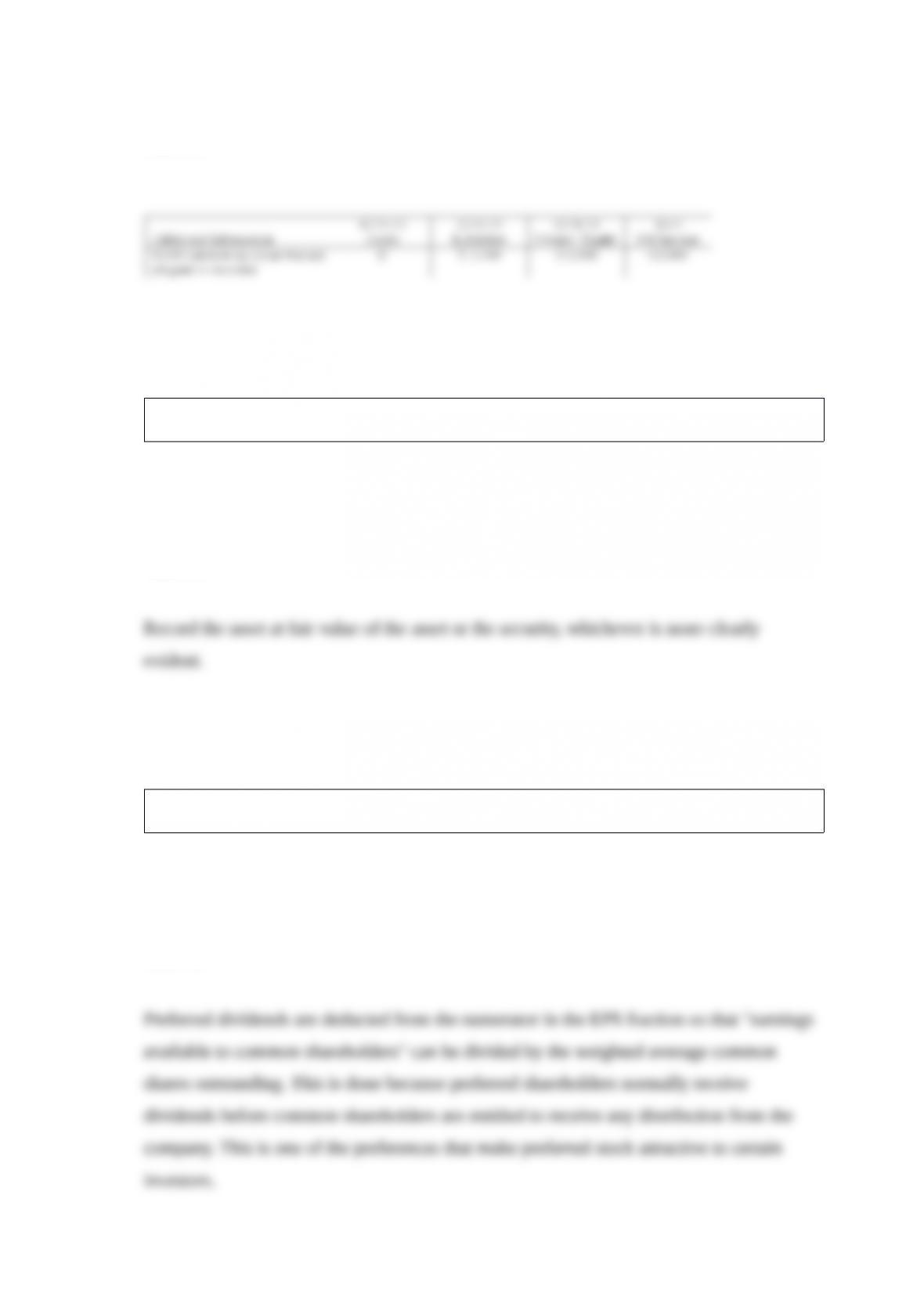
Suppose that Laramie Company’s adjusted trial balance ignored the following
information. For each item of information, indicate what effects, if any, these omissions
would have on the stated components of Laramie Company’s 2013 Income Statement
and 12/31/13 Balance Sheet. Assume no income taxes.
Use the following code for your answers and be sure to include the dollar amounts of
the effects next to the letter O or U:
N = No Effect
O = Overstated
U = Understated 114.
Answer:
How are assets valued when they are acquired by issuing stock?
Answer:
Why are preferred dividends deducted from net income when calculating EPS?
Answer:
Explain and show an example of how the FASB’s conceptual framework is needed in
formulating standards on controversial topics.
Answer:
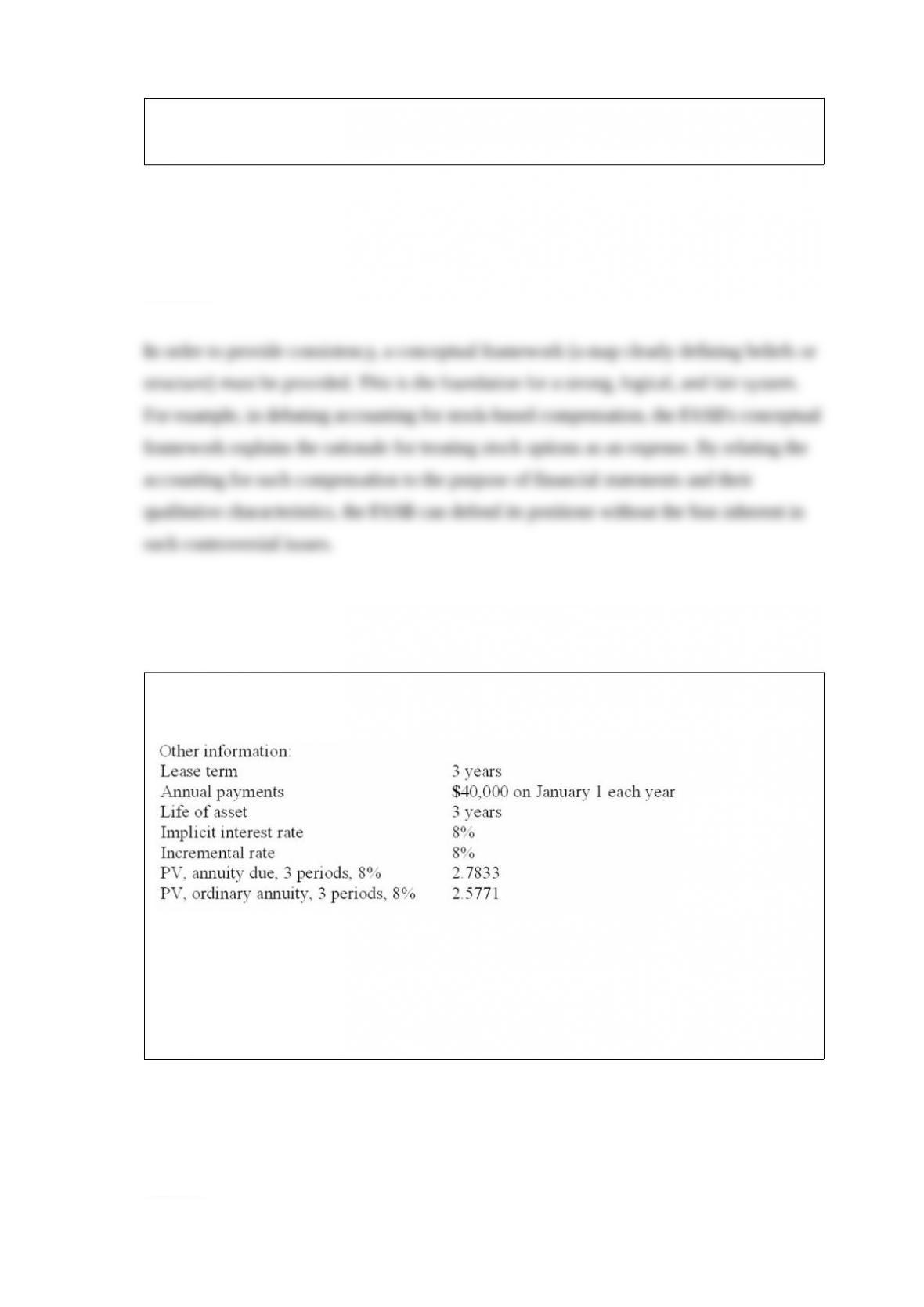
Northwestern Edison Company leased equipment from Hi-Tech Leasing on January 1,
Hi-Tech manufactured the equipment at a cost of $90,000.
There is no expected residual value.
Required:
Prepare appropriate journal entries for Hi-Tech Leasing for 2013 and 2014. Assume a
December 31 year-end.
Answer:
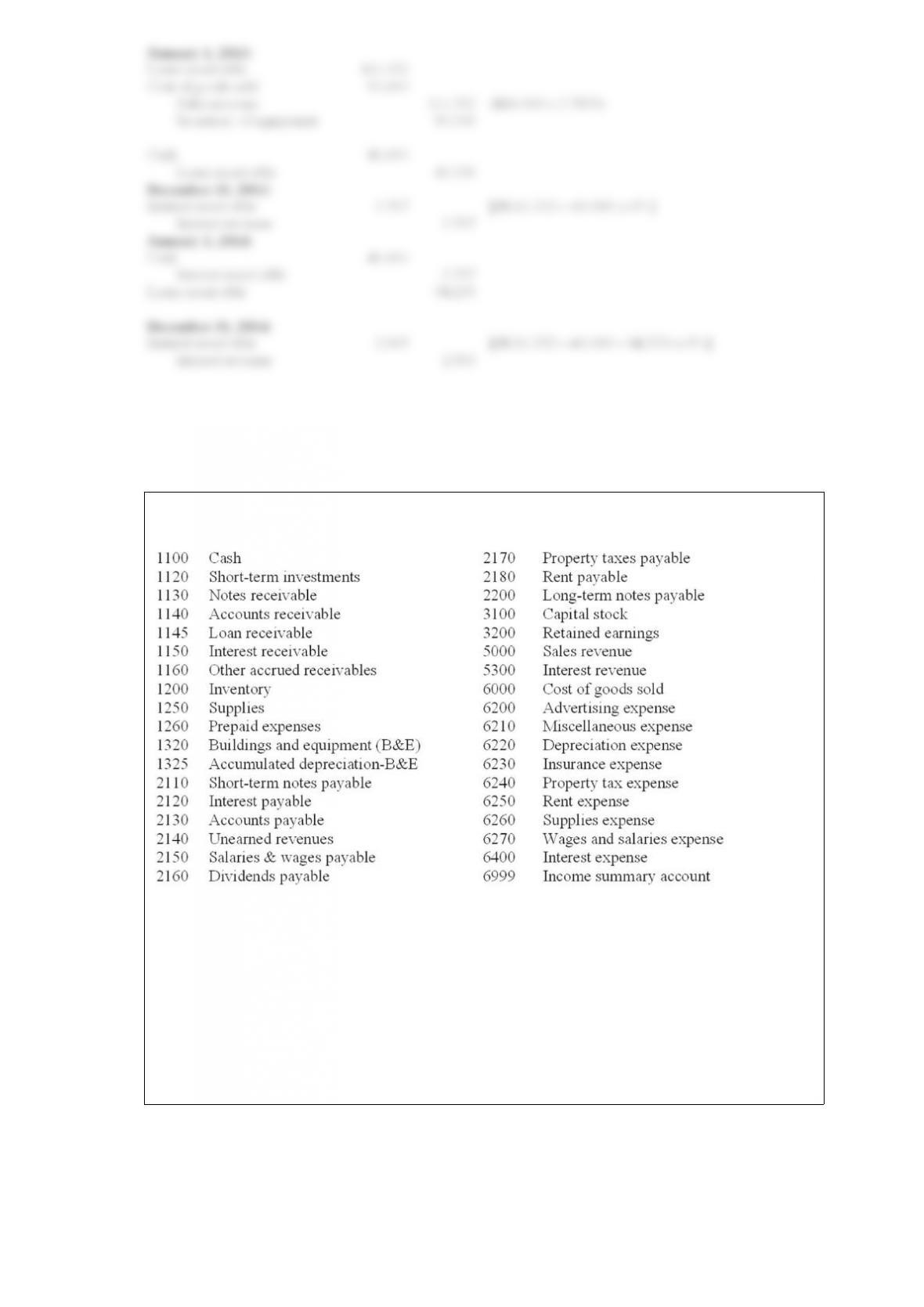
Using the chart of accounts provided, indicate by account number the account or
accounts that would be debited and credited in the following transactions and indicate
the type of transaction as: (1) an external transaction, (2) an internal transaction
recorded as an adjusting journal entry, or (3) a closing entry. The company uses a
perpetual inventory system. All prepayments are initially recorded in permanent
accounts.
Sold inventory for cash.
Answer:
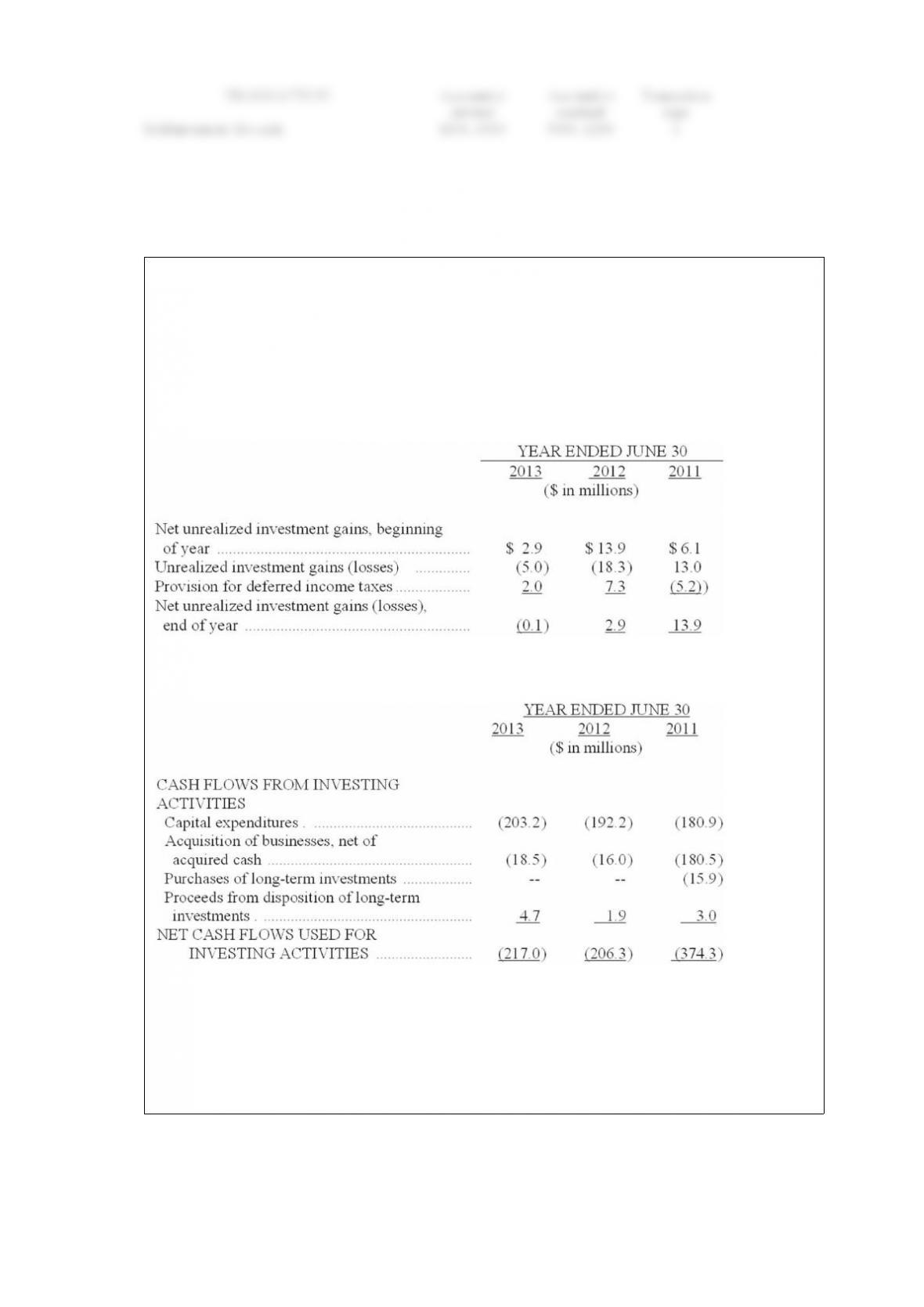
Fragrance International, a large perfume manufacturer, reported the following in its
2013 annual report to shareholders:
ACCUMULATED OTHER COMPREHENSIVE INCOME
The components of accumulated other comprehensive income (loss) (“AOCI”) included
in the accompanying consolidated balance sheets consist of the following:
CONSOLIDATED STATEMENTS OF CASH FLOWS
Investments sold during 2013 originally cost $3.0 million.
Prepare journal entries that Fragrance International recorded at June 30, 2013, to (1)
record any necessary changes to the fair value adjustment for available-for-sale
securities and (2) record any tax effects associated with those changes.
Answer:
Cahill & Sons earned before-tax income of $450,000 for its 2013 fiscal year. During the
year the company experienced a $310,000 loss resulting from the expropriation of
assets in a foreign country. The amount of the loss is material and the event is
considered to be unusual and infrequent. The loss is not included in the $450,000
income figure. The company’s income tax rate is 30%.
Required:
1. Prepare a partial 2013 income statement for Cahill starting with income before tax
and any separately reported items.
2. Repeat requirement 1 assuming that Cahill prepares its financial statements
according to International Financial Reporting Standards.
Answer:
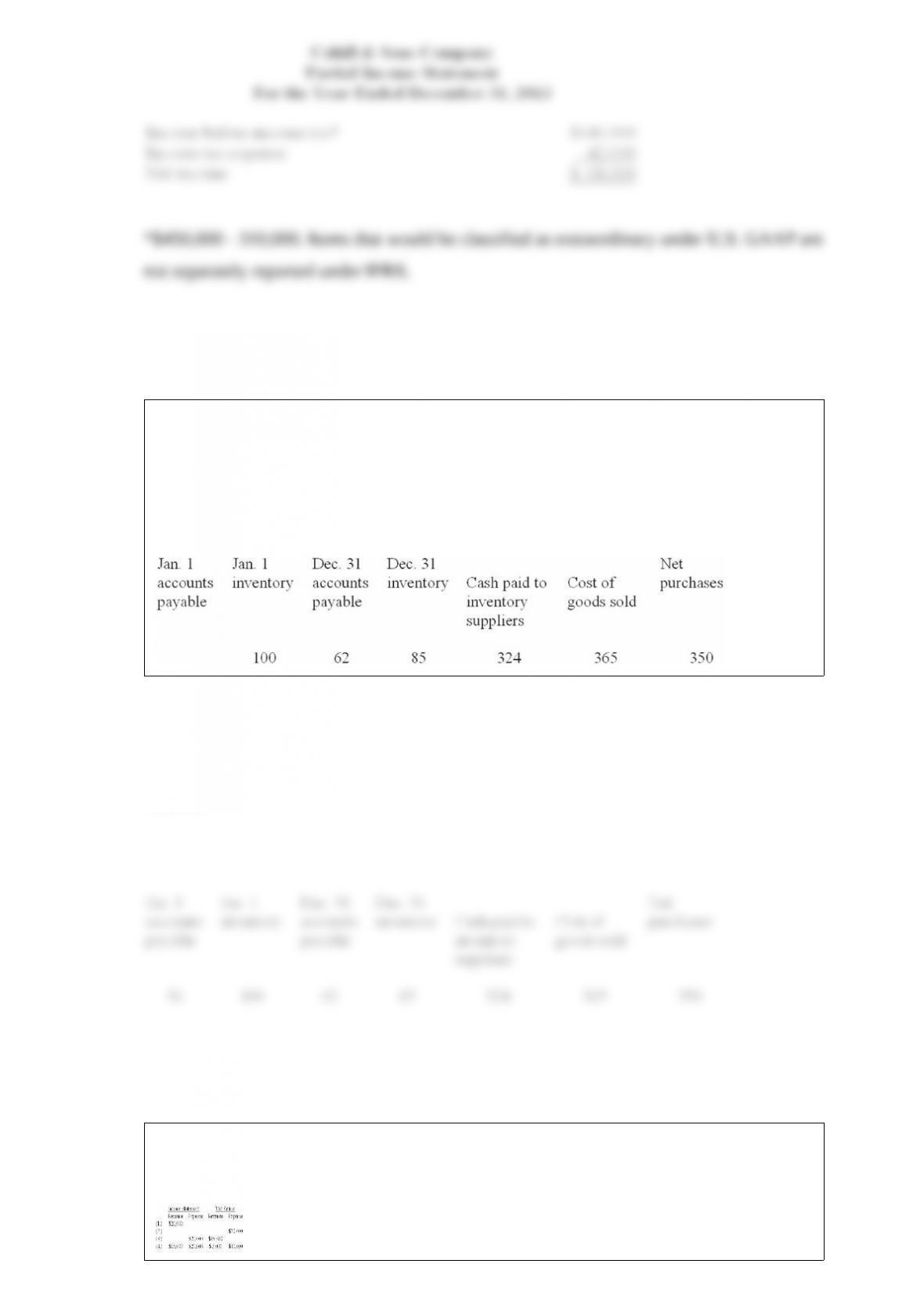
The following information is taken from the accounting records of Madeline Inc. for the
year 2013. Missing information has been left blank. Inventory is the only supply that
Madeline purchases on credit.
Required:
Compute the missing amounts.
Answer:
Four independent situations are described below. Each involves future deductible
amounts and/or future taxable amounts produced by temporary differences reported first
on:

Required:For each situation, determine the taxable income assuming pretax accounting
income is $100,000. Show well-labeled computations.
Answer:
Why do companies find the issuance of convertible bonds to be an attractive form of
financing?
Answer:
Alpaca Corporation had revenues of $200,000 in its first year of operations. The
company has not collected on $20,000 of its sales and still owes $25,000 on $70,000 of
merchandise it purchased. The company had no inventory on hand at the end of the
year. The company paid $15,000 in salaries. Owners invested $20,000 in the business
and $20,000 was borrowed on a five-year note. The company paid $2,000 in interest
that was the amount owed for the year, and paid $6,000 for a two-year insurance policy
on the first day of business. Alpaca has an effective income tax rate of 40%.
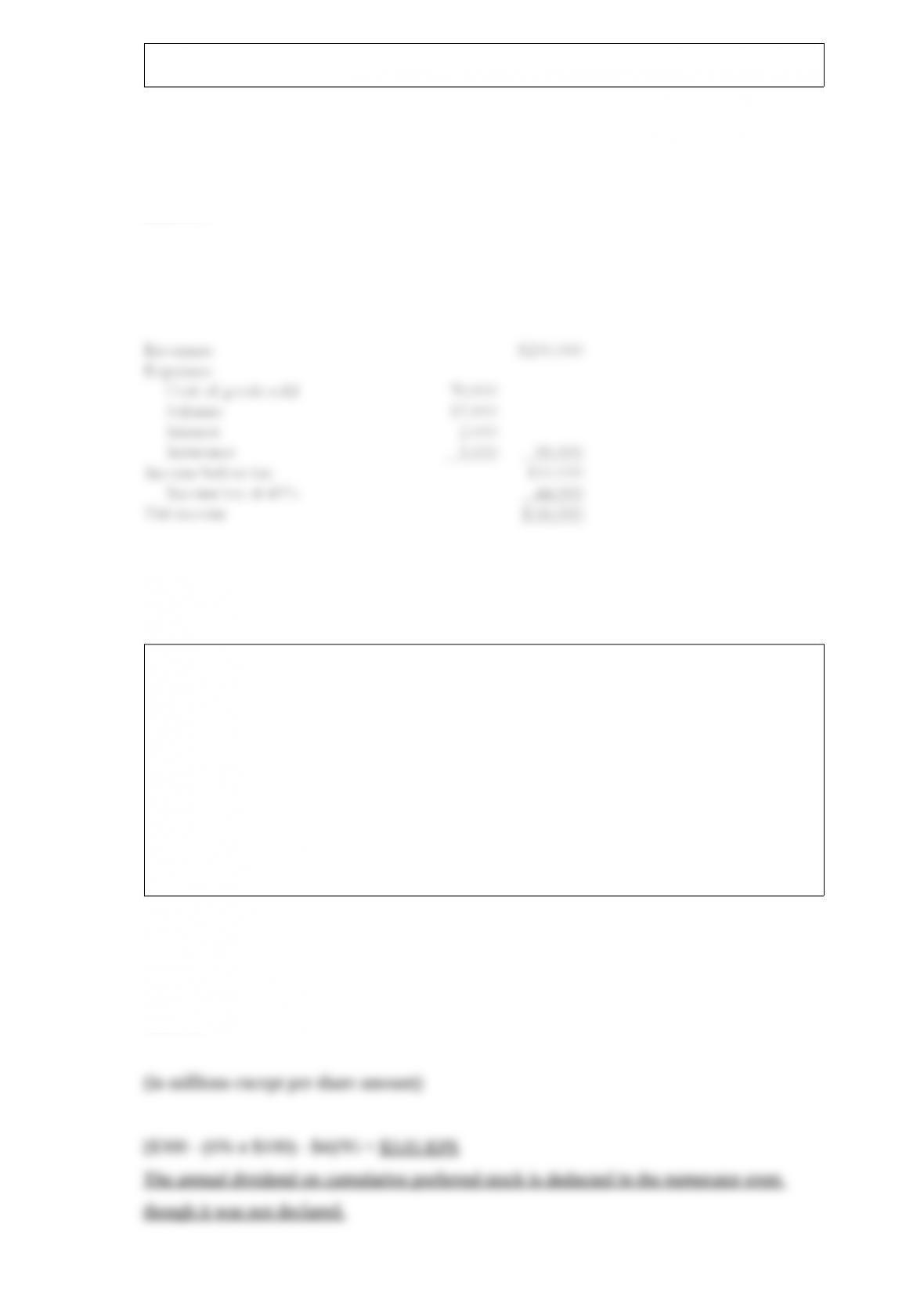
Compute net income for the first year for Alpaca Corporation.
Answer:
Kramer Inc. had 95 million shares of common stock, 1 million shares of 6%, $100 par,
cumulative preferred stock, and 1 million shares of 8%, $100 par, noncumulative
preferred stock outstanding at the end of 2012 and 2013. No dividends were declared or
paid on common stock in either year. In 2013, a $3 million dividend was paid on the 6%
preferred stock and a $4 million dividend was paid on the 8% preferred stock. Net
income for 2013 was $300 million. The company’s tax rate is 30%.
Required:
Compute basic earnings per share (rounded to 2 decimal places) for the year ended
December 31, 2013.
Answer:
Symington and Cribbs (S&C) is a sporting goods distributor. S&C uses the FIFO
inventory method to determine the cost of its ending inventory. Ending inventory
quantities are determined by a physical count. For the fiscal year-end December 31,
2013, ending inventory was originally determined to be $67 million. However, in early
January of 2014, the company’s controller, Amy Grant, discovered that an error was
made in the inventory count. The correct amount of ending inventory should be $87
million. The auditors did not discover the error and the financial statements are
scheduled to be issued on February 26, 2014. S&C is a public company.
Amy’s first reaction was to communicate her finding to the auditors and to revise the
financial statements before they are issued. However, she knows that this was a very
good year for the company with profits far exceeding analysts’ expectations. If the error
is not corrected this year, it will self-correct next year as long as 2014 ending inventory
is correctly stated. This will help future 2014 profits. On the other hand, her fellow
workers’ profit sharing plans are based on annual pretax earnings and if she revises the
statements, everyone’s profit sharing bonus will be higher this year.
Required:
1) Is Amy correct by stating that the error will self-correct next year as long as 2014
ending inventory is correctly stated? If the error is not corrected in the current year,
what will be the effect on 2013 and 2014 income before tax?
2) Discuss the ethical dilemma Amy faces.
Answer:
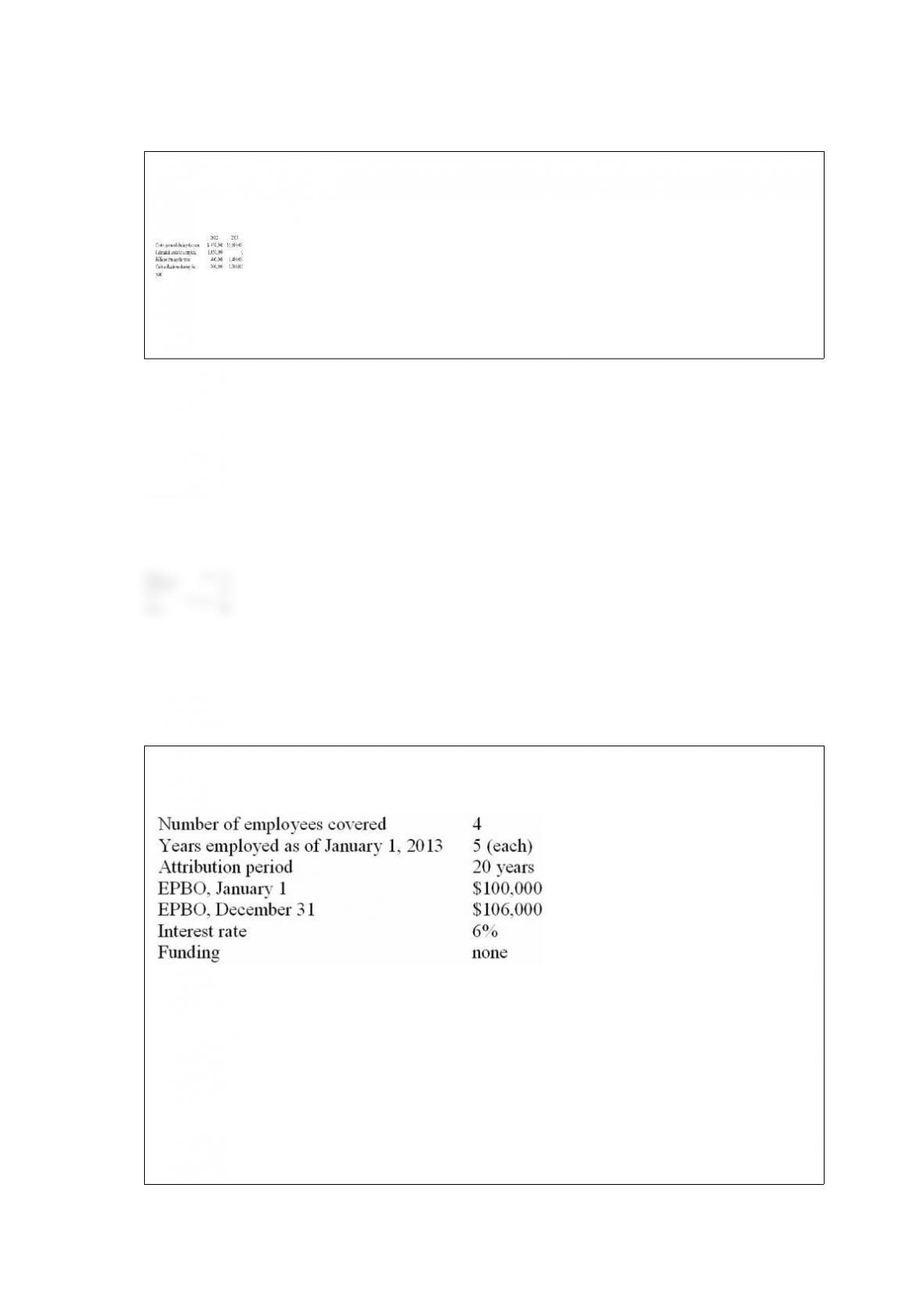
Beavis Construction Company was the low bidder on a construction project to build an
earthen dam for $1,800,000. The project was begun in 2012 and completed in 2013.
Cost and other data are presented below:
Assume that Beavis uses the percentage-of-completion method for revenue recognition.
Required: Compute the amount of gross profit recognized during 2012 and
Answer:
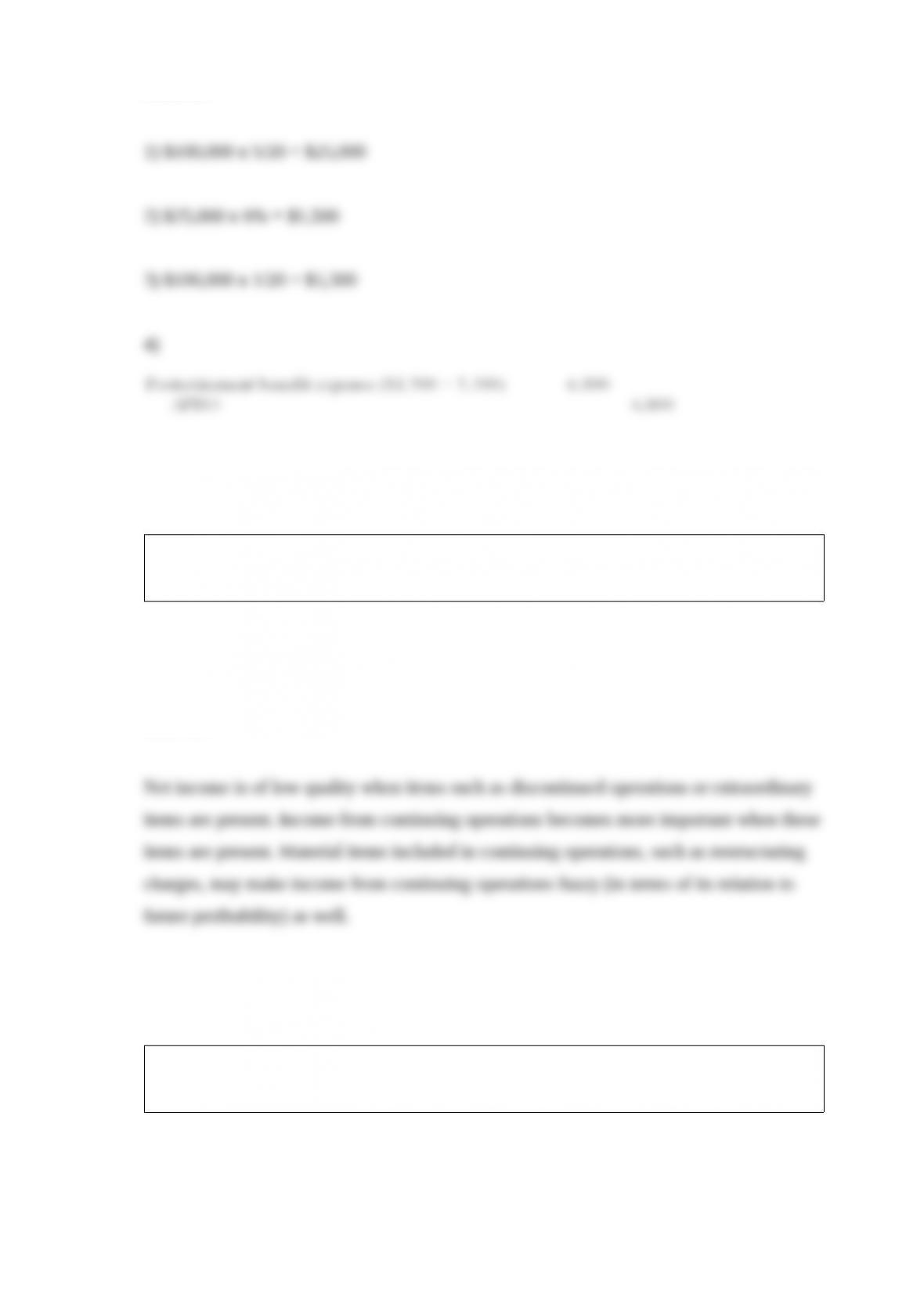
The following data are available pertaining to Firewall Corporation’s retiree health plan
for 2013:
Required:
1) What is the APBO at the beginning of 2013?
2) What is the interest cost for 2013?
3) What is service cost for 2013?
4) Prepare the journal entry to record the postretirement benefit expense for 2013.
Answer:
Net income, often referred to as “the bottom line,” is not always a good predictor of
future income. Explain this statement.
Answer:
The condensed balance sheet and income statement for Marjoram Company are
presented below.
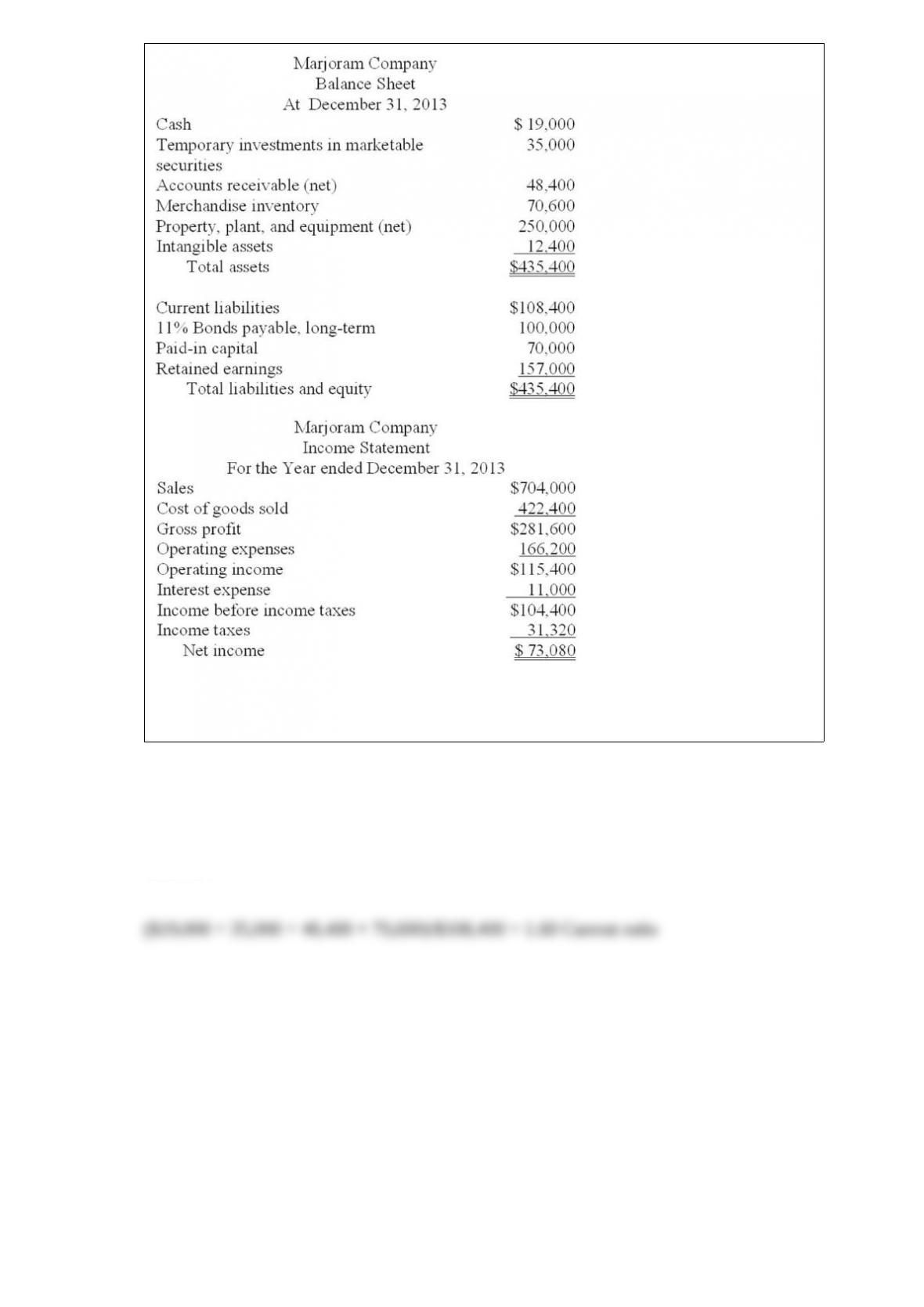
Compute the current ratio for Marjoram Company. Round your answer to two decimal
places.
Answer: