Zvinakis Mining Company paid $200,000 for the rights to mine lead in southeast
Missouri. The cost to drill and erect a mine shaft was $2,400,000, and equipment to
process the lead ore before shipment to the smelter was $1,800,000. The mine is
expected to yield 2,000,000 tons of ore during the five years it is expected to be
operating. The equipment has an estimated residual value of $150,000 when mining is
concluded. The mine started operations on April 30, 2016. In 2016, 300,000 tons of ore
were extracted, and in 2017, 700,000 tons were mined.
Required:
1> Compute the depletion rate and the units-of-production depreciation rate.
2> Compute depletion and depreciation for 2016 and 2017.
Which of the following generally is associated with accounts payable?
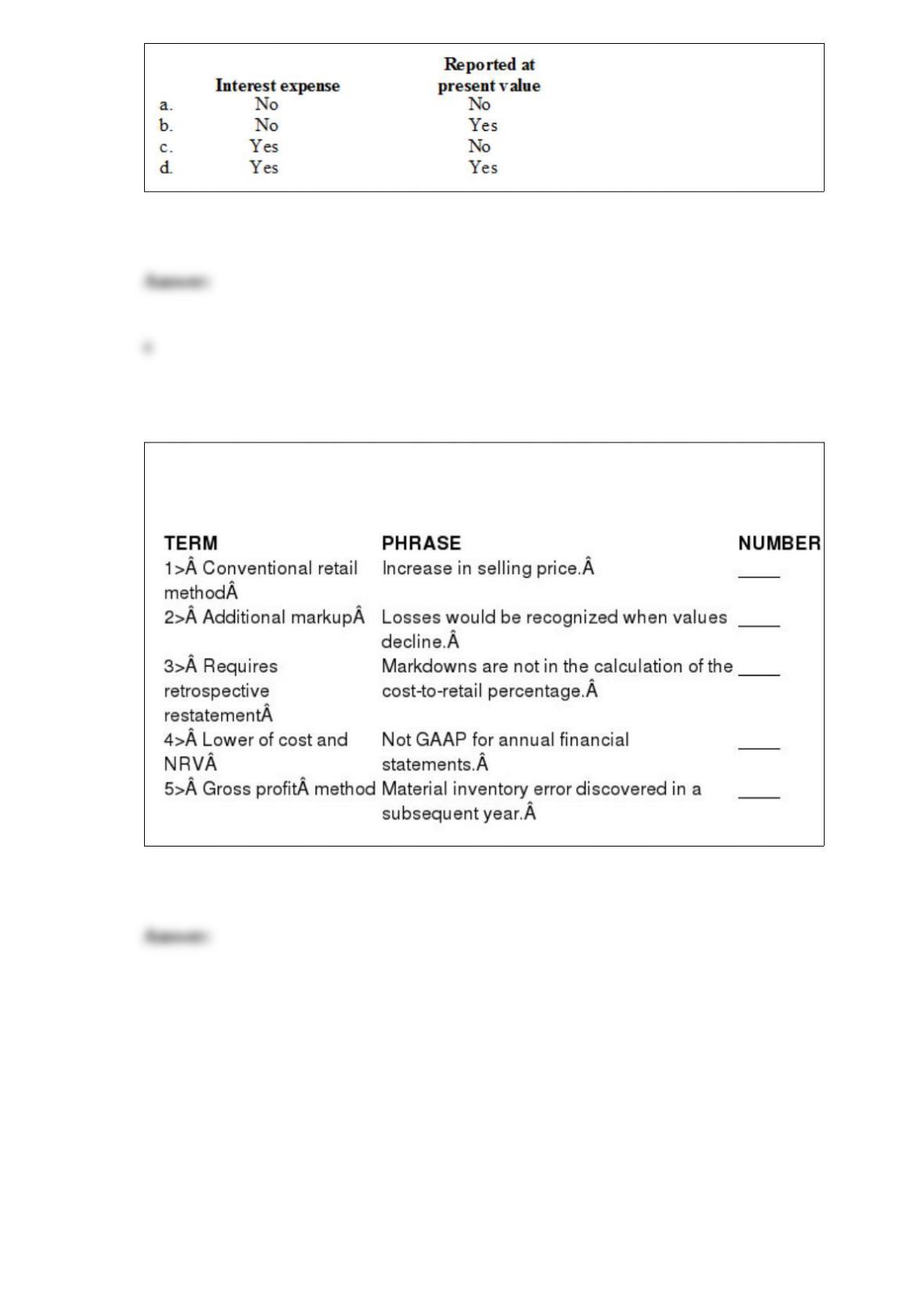
Listed below are five terms followed by a list of phrases that describe or characterize
each of the terms. Match each phrase with the number for the correct term.
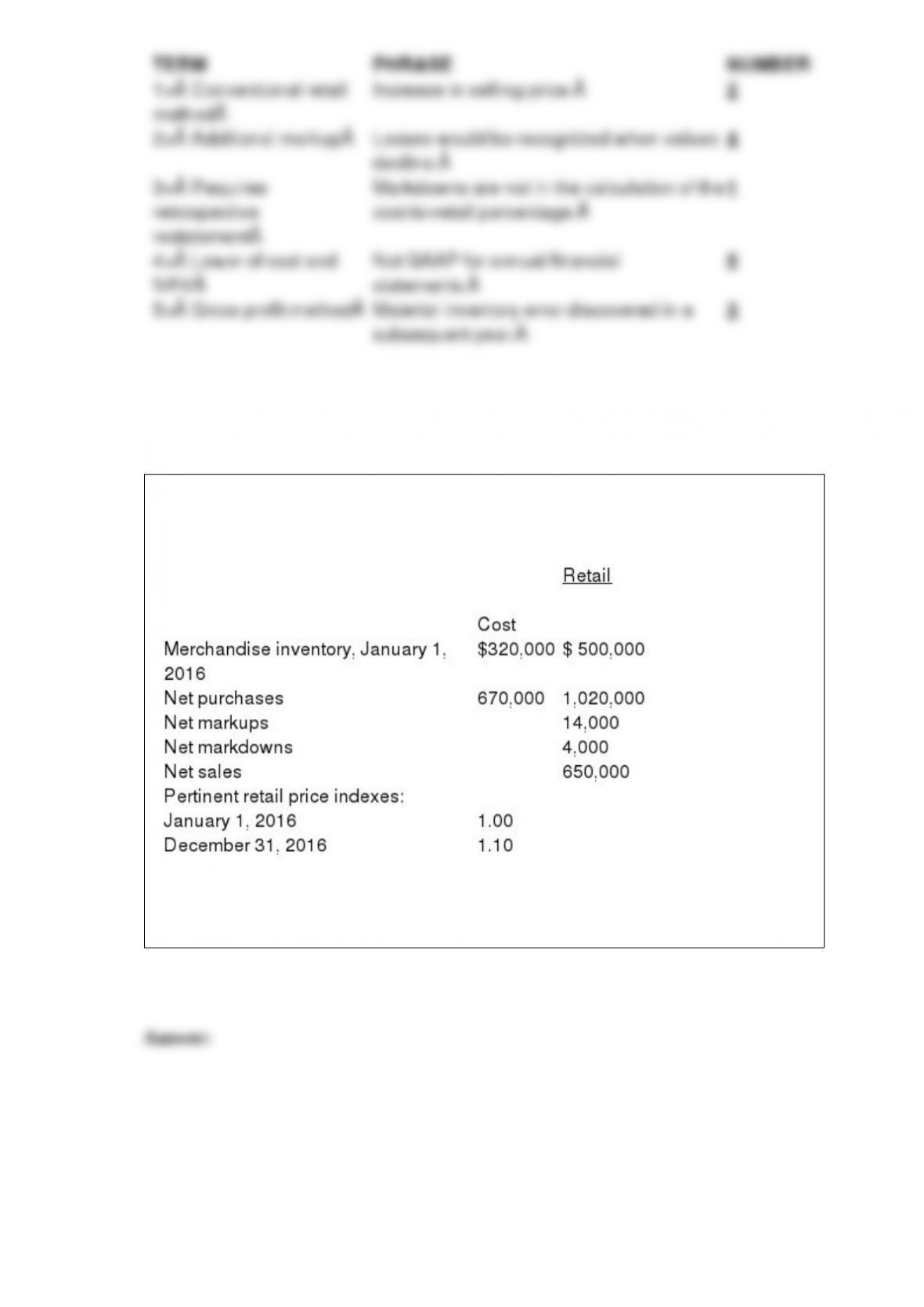
Charleston Company has elected to use the dollar-value LIFO retail method to value its
inventory. The following data has been accumulated from the accounting records:
Required:
Estimate the ending inventory for December 31, 2016.
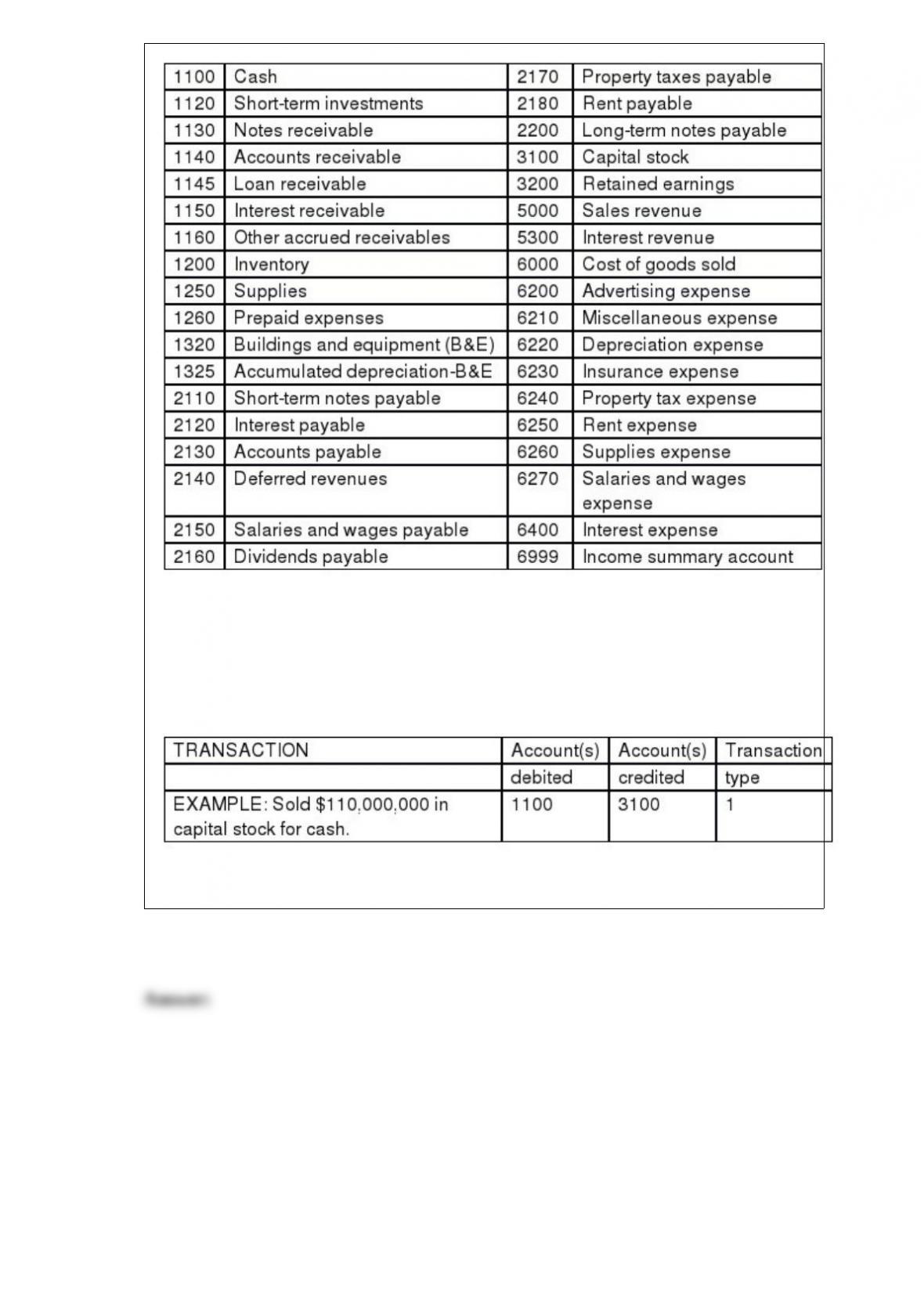
Using the chart of accounts provided, indicate by account number the account or
accounts that would be debited and credited in the following transactions and indicate
the type of transaction as: (1) an external transaction, (2) an internal transaction
recorded as an adjusting journal entry, or (3) a closing entry. The company uses a
perpetual inventory system. All prepayments are initially recorded in permanent
accounts.
Purchased building and equipment for $10,000,000, paying 20% cash and issuing a
30-year note for the balance.
Explain briefly how a company who sells to distributors with a right of return might
manage earnings if the company was falling short of profit projections. What sort of
ethical problems could result from that earnings management?

In its 2016 annual report to shareholders, the Goodday Chemical Company included the
following disclosure note excerpts on CONTINGENCIES in its annual report to
shareholders: At December 31, 2016, Goodday had recorded liabilities aggregating
$66.5 million for anticipated costs related to various environmental matters, primarily
the remediation of numerous waste disposal sites and certain properties sold by
Goodday. These costs include legal and consulting fees, site studies, the design and
implementation of remediation plans, post-remediation monitoring and related activities
and will be paid over several years. The amount of Goodday’s ultimate liability in
respect of these matters may be affected by several uncertainties, primarily the ultimate
cost of required remediation and the extent to which other responsible parties
contribute. At December 31, 2016, Goodday had recorded liabilities aggregating $218.7
million for potential product liability and other tort claims, including related legal fees
expected to be incurred, presently asserted against Goodday. The amount recorded was
determined on the basis of an assessment of potential liability using an analysis of
available information with respect to pending claims, historical experience, and, where
available, current trends. Goodday is a defendant in numerous lawsuits involving at
December 31, 2016, approximately 63,000 claimants alleging various asbestos-related
personal injuries purported to result from exposure to asbestos in certain rubber-coated
products manufactured by Goodday in the past or in certain Goodday facilities.
Typically, these lawsuits have been brought against multiple defendants in state and
federal courts. In the past, Goodday has disposed of approximately 22,000 cases by
defending and obtaining the dismissal thereof or by entering into a settlement. Goodday
has policies and coverage-in-place agreements with certain of its insurance carriers that
cover a substantial portion of estimated indemnity payments and legal fees in respect of
the pending claims. At December 31, 2016, Goodday has recorded an asset in the
amount it expects to collect under the policies and coverage-in-place agreements with
certain carriers related to its estimated asbestos liability. Goodday has also commenced
discussions with certain of its excess coverage insurance carriers to establish
arrangements in respect of their policies. Subject to the uncertainties referred to above,
Goodday has concluded that in respect of any of the above described liabilities, it is not
reasonably possible that it would incur a loss exceeding the amount recognized at
December 31, 2016, with respect thereto which would be material relative to the
consolidated financial position, results of operations, or liquidity of Goodday.
Show the summary journal entry that Goodday recorded for the environmental cleanup
and product liability/tort claim matters, described in the note disclosure.