
A manufacturer may employ a job order cost system for some of its products and a
process cost system for others.
Answer:
Changes in technology, machinery, or production methods may make past cost data
irrelevant when setting standards.
Answer:
Under the cost price approach, the transfer price is the price at which the product or
service transferred could be sold to outside buyers.
Answer:
A drawing account represents the amount of withdrawals made by the owner.

Answer:
Two factors that typically lead to ethical violations are relevance and timeliness of
accounting information.
Answer:
Most accounting systems evolve as the business grows and requires changes in their
methods for collecting, accumulating, and reporting information.
Answer:
If the amount of a bond premium on an issued 11%, 4-year, $100,000 bond is $12,928,
the semiannual straight-line amortization of the premium is $1,416.

Answer:
A deduction allowed to wholesalers and retailers from the price of merchandise listed in
catalogs is called cash discounts.
Answer:
Cross-referencing is useful in assuring that the debits and credits are in balance.
Answer:
When a corporation discontinues a segment of its operations at a loss, the loss should be
reported as a separate item after income from continuing operations on the income
statement.
Answer:

Total fixed costs change as the level of activity changes.
Answer:
If sinking fund cash is used to purchase investments, those investments are reported on
the balance sheet as marketable securities.
Answer:
A group of related accounts that make up a complete unit is called a trial balance.
Answer:

Partnership’s asset accounts should be changed from cost to fair market value when a
new partner is admitted to a firm or an existing partner withdraws and dies.
Answer:
Double taxation is a disadvantage of a corporation because the same party has to pay
taxes twice on the income.
Answer:
Net income is shown on the work sheet in the Income Statement debit column and the
Balance Sheet credit column.
Answer:

Prime costs consists of direct materials, indirect materials, and direct labor.
Answer:
The post reference notation used in the journal is the page number.
Answer:
The erroneous moving of an entire number one or more spaces to the right or left, such
as writing $85 as $850, is called a transposition.
Answer:
The negotiated price approach allows the managers of decentralized units to agree
among themselves as to the transfer price.

Answer:
The stock dividends distributable account is listed in the current liability section of the
balance sheet.
Answer:
If a company uses the periodic inventory system to cost its inventory, the gross profit
method is a method that can be used to check on theft when the actual inventory is
taken by the company.
Answer:
Sales Returns and Allowances is a contra-revenue account.
Answer:

In the periodic inventory system, purchases of merchandise for resale are debited to the
Purchases account.
Answer:
In calculating the net present value of an investment in equipment, the required
investment and its terminal residual value should be subtracted from the present value
of all future cash inflows.
Answer:
The accounting for defined benefit plans is usually very easy and straight forward.
Answer:

In a perpetual inventory system, when merchandise is returned to the seller, Cost of
Merchandise Sold is debited as part of the transaction.
Answer:
If a partner’s capital balance is a debit after it has absorbed its share of the loss on
realization, the balance is referred to as a deficiency.
Answer:
While separation of duties may play a strong role in the internal control of inventory, it
is not significant in controlling payroll.
Answer:

The proceeds of a discounted note are equal to the face value of the note.
Answer:
The average cost inventory method is the rarely used with a perpetual inventory system.
Answer:
The principal financial statements of a proprietorship are the income statement,
statement of owner’s equity, and the balance sheet.
Answer:
Most large companies will use only one inventory costing methods for all of its

different segments.
Answer:
Which of the following errors will cause the trial balance totals to be unequal?
A.posting the debit portion of a journal entry incorrectly when the credit portion of the
entry is correctly posted
B.failure to record a transaction or to post a transaction
C.recording the same transaction more than once
D.recording the same erroneous amount for both the debit and the credit parts of a
transaction
Answer:
The chart of account for the Miguel Company includes some of the following accounts:
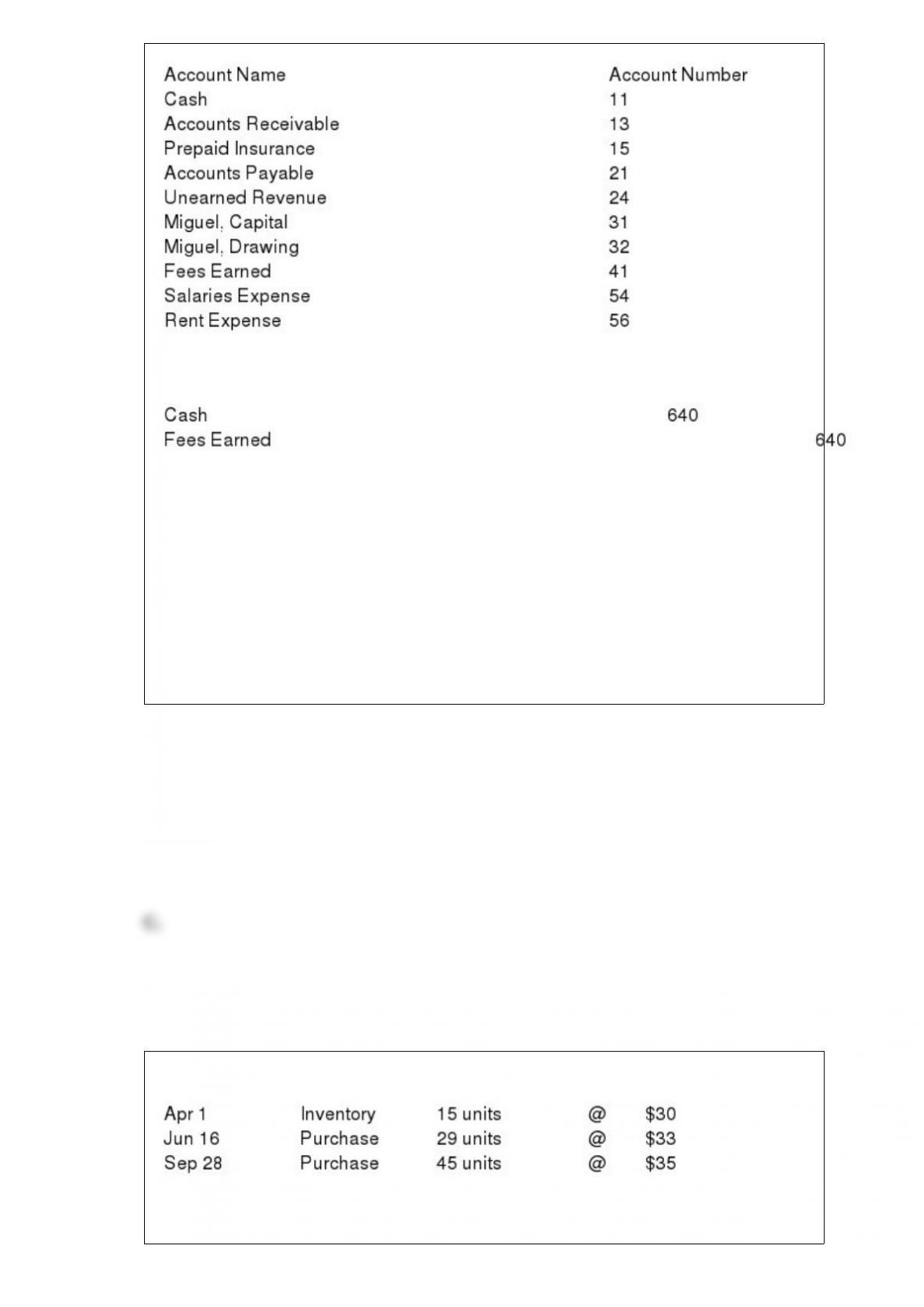
On the journal page 3, the following transaction was found:
What is the post reference that will be found on the journal entry?
A.41
B.3
C.11, 41
D.11
Answer:
The units of Product Green-2 available for sale during the year were as follows:
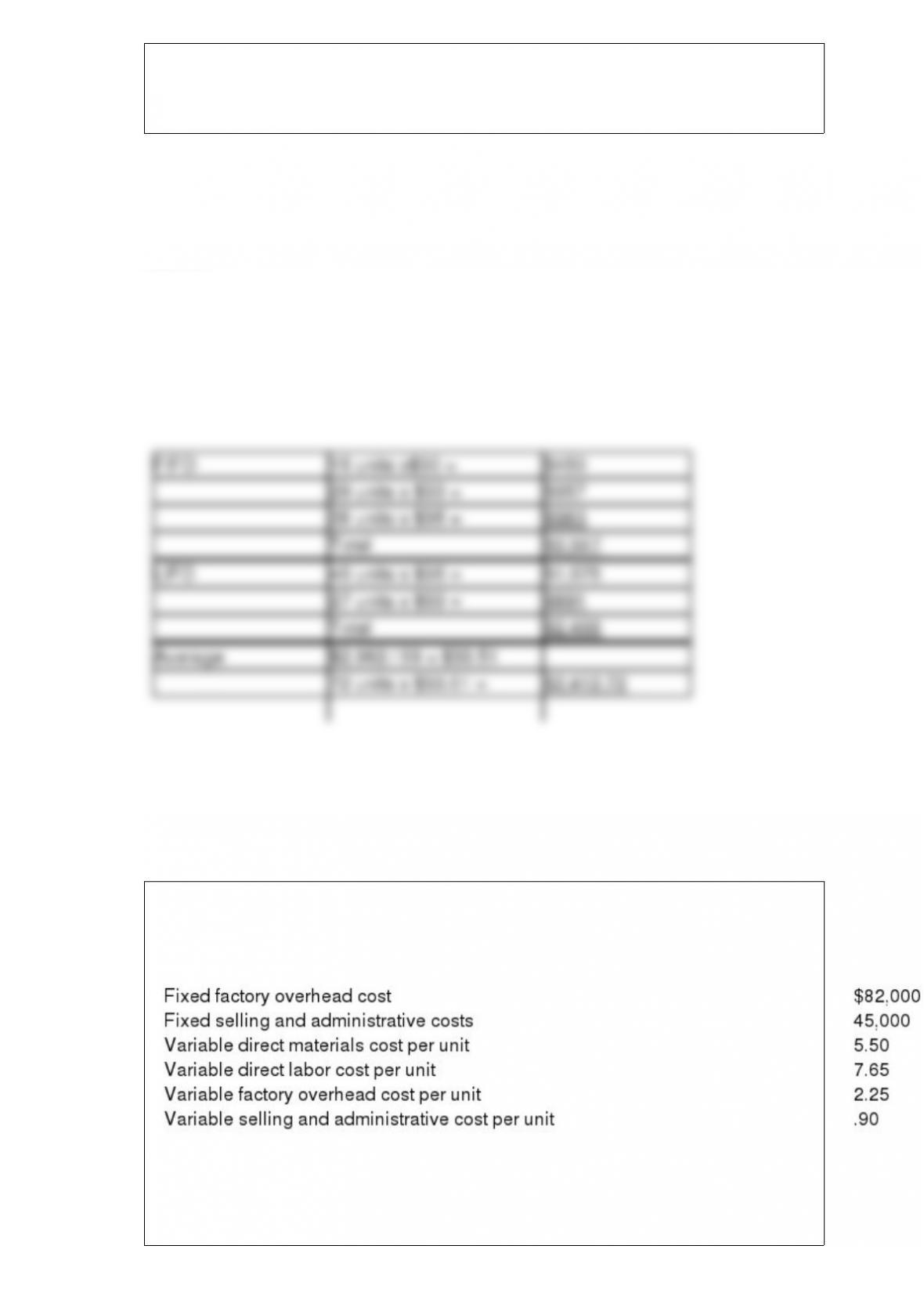
There are 17 units of the product in the physical inventory at Sep 30. The periodic
inventory system is used. Determine the cost of merchandise sold by (a) FIFO, (b)
LIFO, and (c) average cost methods.
Answer:
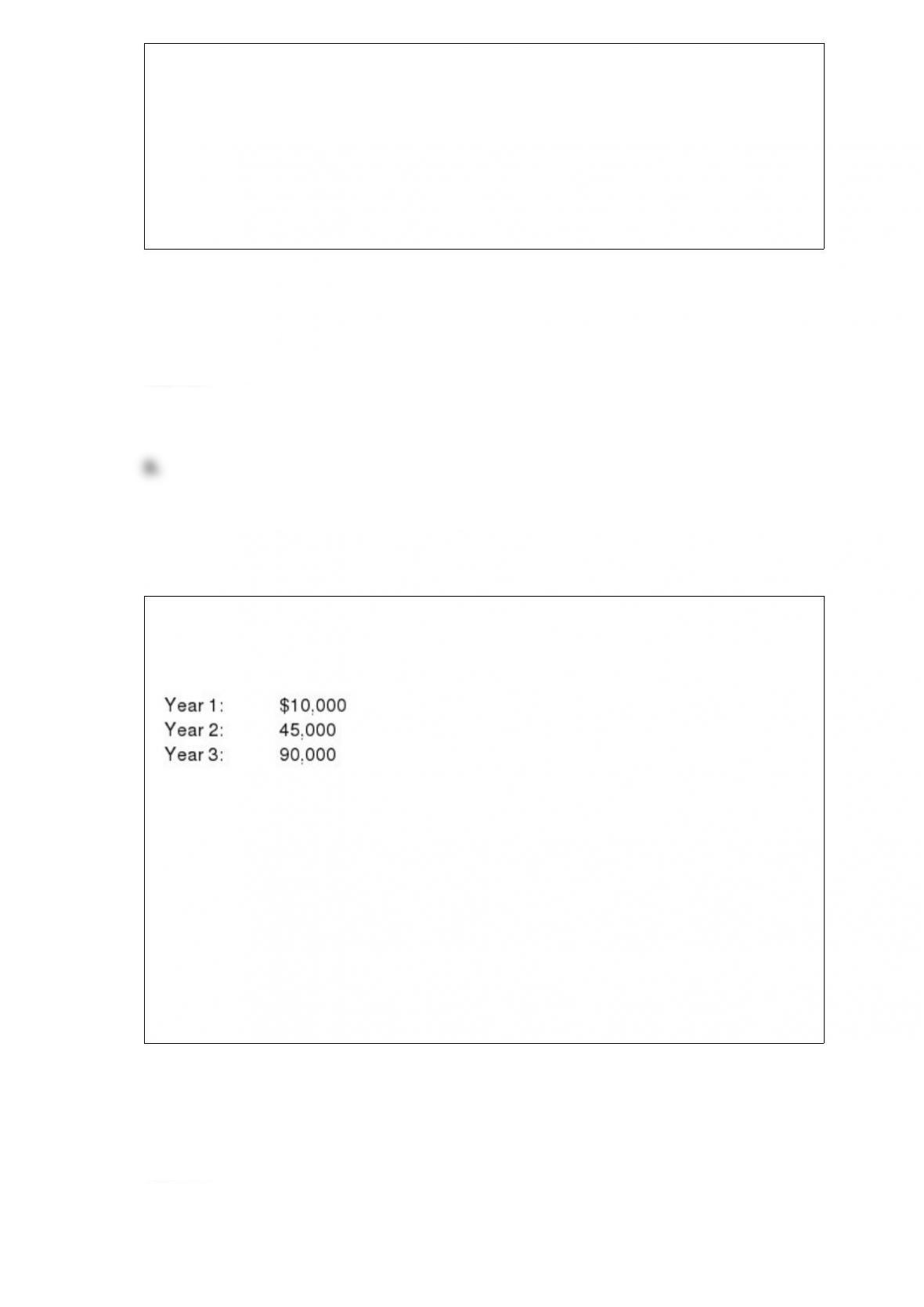
Mallard Corporation uses the product cost concept of product pricing. Below is cost
information for the production and sale of 45,000 units of its sole product. Mallard
desires a profit equal to a 12% rate of return on invested assets of $800,000.
The unit selling price for the company’s product is:

A.$19.35
B.$15.75
C.$22.05
D.$21.26
Answer:
Office supplies were sold by Ari’s Alarm Service at cost to another repair shop, with
cash received. Which of the following entries for Ari’s Alarm Service records this
transaction?
A.Office Supplies, debit; Cash, credit
B.Office Supplies, debit; Accounts Payable, credit
C.Cash, debit; Office Supplies, credit
D.Accounts Payable, debit; Office Supplies, credit
Answer:
A Cash Payments journal would not include a
A.Cash credit column
B.Sales Discounts credit column
C.Accounts Payable debit column
D.Other Accounts debit column
Answer:
Sabas Company has 20,000 shares of $100 par, 2% cumulative preferred stock and
100,000 shares of $50 par common stock. The following amounts were distributed as
dividends:
Determine the dividends per share for preferred and common stock for the second year.
A.$2.25 and $0.00
B.$2.25 and $0.45
C.$0.00 and $0.45
D.$2.00 and $0.45
Answer:
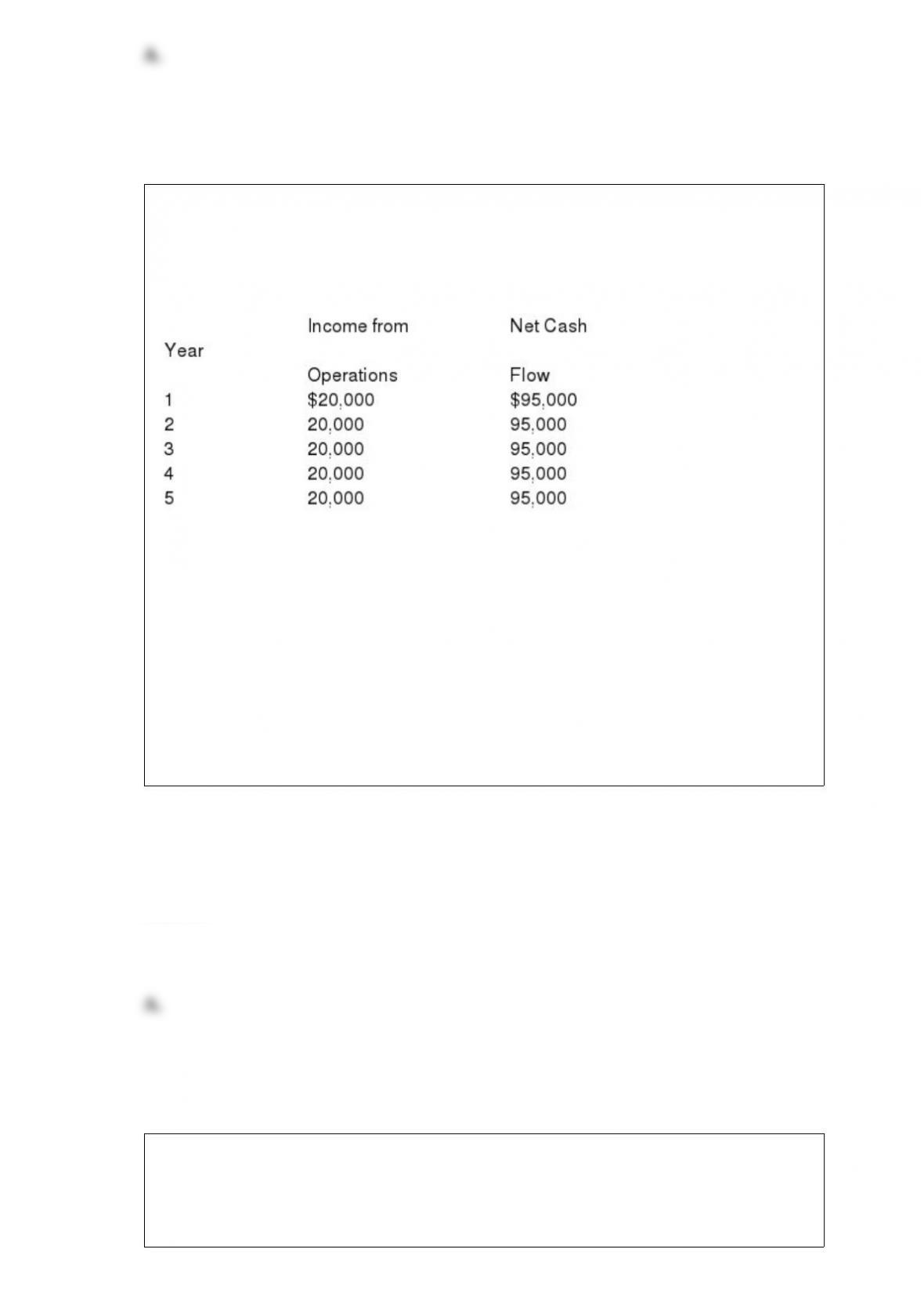
The management of River Corporation is considering the purchase of a new machine
costing $380,000. The company’s desired rate of return is 6%. The present value factor
for an annuity of $1 at interest of 6% for 5 years is 4.212. In addition to the foregoing
information, use the following data in determining the acceptability in this situation:
The cash payback period for this investment is:
A.4 years
B.5 years
C.20 years
D.3 years
Answer:
A company using the periodic inventory system has the following account balances:
Merchandise Inventory at the beginning of the year, $3,600; Freight-In, $650;
Purchases, $10,700; Purchases Returns and Allowances, $1,950; Purchases Discounts,
$330. The cost of merchandise purchased is equal to

A.$12,670
B.$9,070
C.$8,420
D.$17,230
Answer:
Prior to the last weekly payroll period of the calendar year, the cumulative earnings of
employees A and B are $99,350 and $91,000 respectively. Their earnings for the last
completed payroll period of the year are $850 each. The maximum amount of earnings
subject to social security tax at 6% is $100,000. All earnings are subject to Medicare tax
of 1.5%. Assuming that the payroll will be paid on December 29, what will be the
employer’s total FICA tax for this payroll period on the two salary amounts of $850
each?
A.$127.50
B.$115.50
C.$112.50
D.$0
Answer:

Which of the following is the best description of accounting’s role in business?
A.Accounting provides stockholders with information regarding the market value of the
company’s stocks.
B.Accounting provides information to managers to operate the business and to other
users to make decisions regarding the economic condition of the company.
C.Accounting helps in decreasing the credit risk of the company.
D.Accounting is not responsible for providing any form of information to users. That is
the role of the Information Systems Department.
Answer:
Next year’s sales forecast shows that 20,000 units of Product A and 22,000 units of
Product B are going to be sold for prices of $10 and $12 per unit, respectively. The
desired ending inventory of Product A is 20% higher than its beginning inventory of
2,000 units. The beginning inventory of Product B is 2,500 units. The desired ending
inventory of B is 3,000 units.
Budgeted purchases of Product A for the year would be:
A.22,400 units
B.20,400 units
C.20,000 units
D.12,200 units
Answer:

All of the following are ways that managers use managerial information except
A.to evaluate the company’s stock performance
B.to evaluate the performance of a company’s operations
C.to support long-term planning decisions
D.to determine the cost of manufacturing a product
Answer:
Decisions to install new equipment, replace old equipment, and purchase or construct a
new building are examples of
A.sales mix analysis.
B.variable cost analysis.
C.capital investment analysis.
D.variable cost analysis.
Answer:
Which of the following measures the length of time it takes to acquire, sell and replace
inventory?
A.inventory turnover
B.number of days’ sales in inventory
C.retail method of inventory costing
D.gross profit method of inventory costing
Answer:
On April 30, a business estimates depreciation on equipment used during the first year
of operations to be $2,900. (a) Journalize the adjusting entry required as of April 30. (b)
If the adjusting entry in (a) were omitted, which items would be erroneously stated on
(1) the income statement for the year and (2) the balance sheet as of April 30?
Answer:
A product cost is:
A.expensed in the period in which it is incurred
B.shown with current liabilities on the balance sheet
C.shown on the income statement with the operating expenses
D.expensed in the period the product is sold
Answer:
The following information pertains to Carlton Company. Assume that all balance sheet
amounts represent both average and ending balance figures. Assume that all sales were
on credit.
Assets
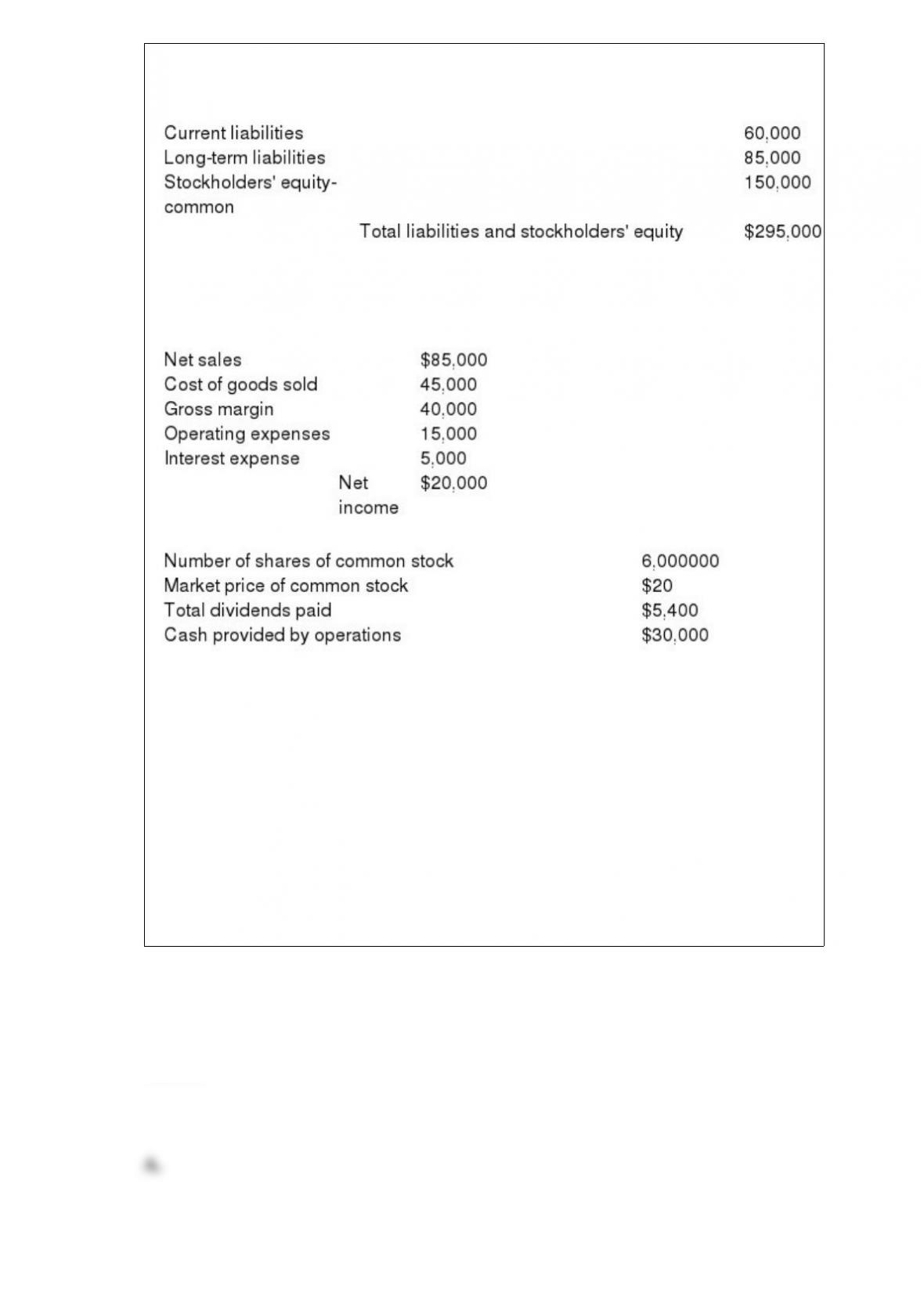
Liabilities and Stockholders’ Equity
Income Statement
What is the rate earned on total assets for this company? Round your answer to one
decimal point.
A.8.5%
B.6.8%
C.10.3%
D.13.3%
Answer:

Equipment with an estimated market value of $30,000 is offered for sale at $45,000.
The equipment is acquired for $15,000 in cash and a note payable of $20,000 due in 30
days. The amount used in the buyer’s accounting records to record this acquisition is
A.$30,000
B.$35,000
C.$15,000
D.$45,000
Answer:
The account Unrealized Gain (Loss) on Available-For-Sale Securities should be
included in the
A.Income statement as Other Revenue (Expenses)
B.Balance sheet as an adjustment to the asset account
C.Balance sheet as an adjustment to Stockholders’ Equity
D.Statement of Retained Earnings
Answer:
The Winston Company estimates that the factory overhead for the following year will
be $1,250,000. The company has decided that the basis for applying factory overhead
should be machine hours, which is estimated to be 50,000 hours. The total machine
hours for the year was 54,300. The actual factory overhead for the year was $1,375,000.
a) Determine the total factory overhead amount applied.
b) Calculate the over or under applied amount for the year.
c) Prepare the journal entry to close factory overhead into Cost of Goods Sold.
Answer:
Anderson, Inc. incurred the following transactions during the month of February, 2010.
Record the appropriate ones in the Cash payments journal. If a transaction should not be
recorded in the Cash payments journal, indicate where it should be posted.
(a) On February 3rd the company purchased $650 worth of supplies on account. The
Supplies account number is 15.
(b) On February 5th Anderson made a payment on account to Sanders Industries in the
amount of $1,125 – check number 2004.
(c) On February 14th Anderson bought a one-year insurance policy for $1,500. The
Prepaid Insurance account number is 14 – check number 2005
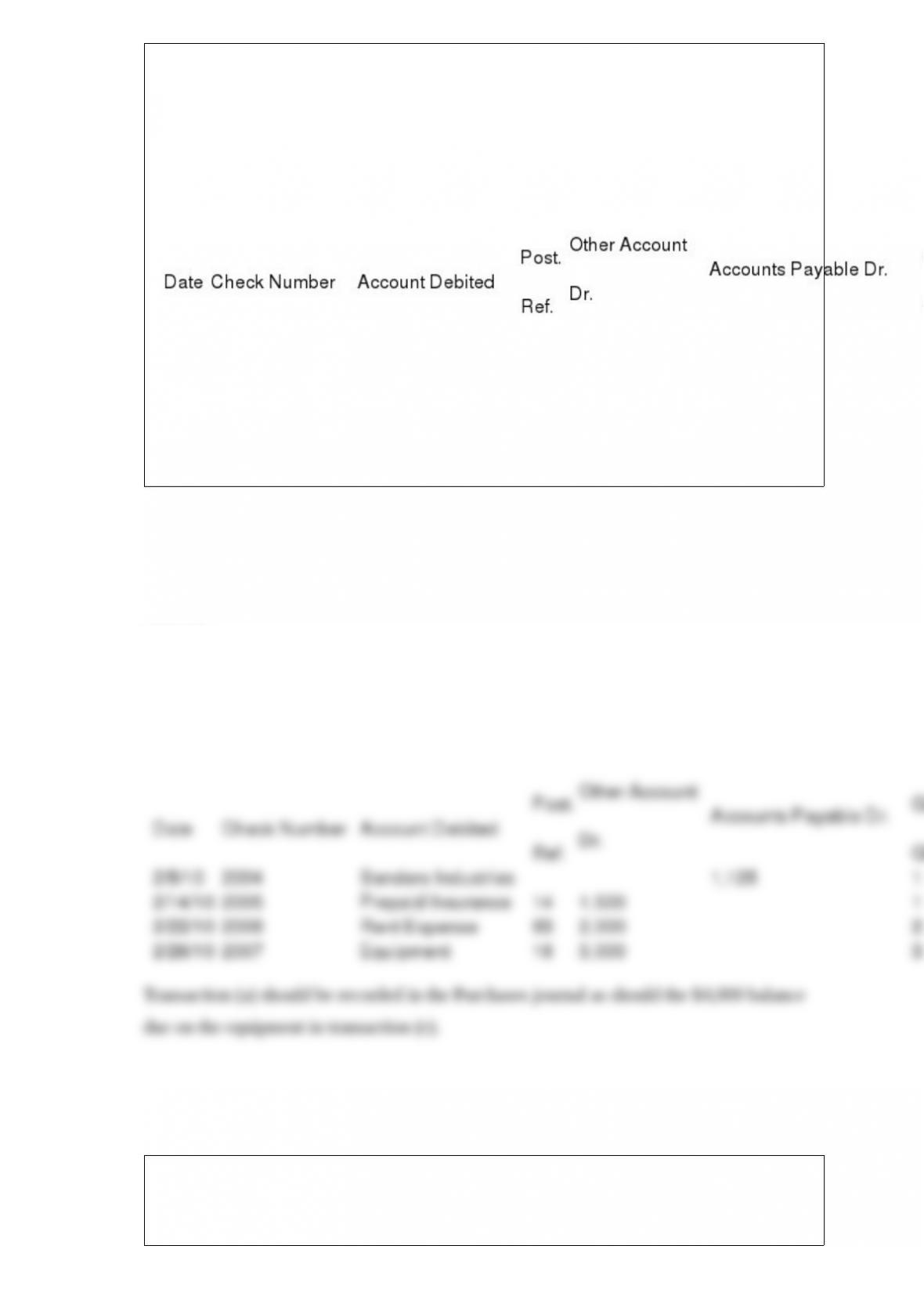
(d) On February 22nd Anderson paid monthly rent of $2,000. The Rent Expense
account number is 63 – check number 2006.
(e) On February 26th Anderson purchased equipment making a down payment of
$3,000 (check number 2007) and agreeing to pay the $4,000 balance in 30 days. The
Equipment account number is 18.
Answer:
Partner A has a capital balance of $40,000 and devotes full time to the partnership.
Partner B has a capital balance of $50,000 and devotes half time to the partnership. If
no other information is available regarding distributions, in what ratio is net income to

be divided?
A.4:5
B.1:1
C.5:4
D.1:2
Answer:
On January 2nd, Newsprint Manufacturing purchases 5 rolls of paper on account at
$125.00 per roll for use within the production process. On January 5th 4 rolls of this
paper are issued to Job 010507A in the Printing Department. The Printing Department
records $675.00 in direct labor and $1,150.00 of factory overhead to Job 010507A. On
January 8th Printing transfers Job 010507A to the Folding Department. The folding
department applies $450.00 in direct labor and $655.00 in factory overhead to Job
010507A. Job 010507A is transferred to Finished Goods Inventory on January 9th.
(a) Journalize the purchasing of the paper to Raw Materials Inventory.
(b) Journalize the transfer of raw materials to work in process, the application of direct
labor, and the application of manufacturing overhead to Job 010507A while in the
Printing Department.
(c) Journalize the transfer of Job 010507A to the Folding Department at actual cost.
(d) Journalize the application of direct labor, and the application of manufacturing
overhead to Job 010507A while in the Folding Department.
(e) Journalize the transfer of Job 010507A to Finished Goods Inventory at actual cost.
Answer:
The Victor Corporation issues 1,000, 10-year, 8%, $1,000 bonds dated January 1, 2011,
at 96. The journal entry to record the issuance will show a
A.debit to Cash of $1,000,000.
B.credit to Discount on Bonds Payable for $40,000.
C.credit to Bonds Payable for $960,000.
D.debit to Cash for $960,000.
Answer:
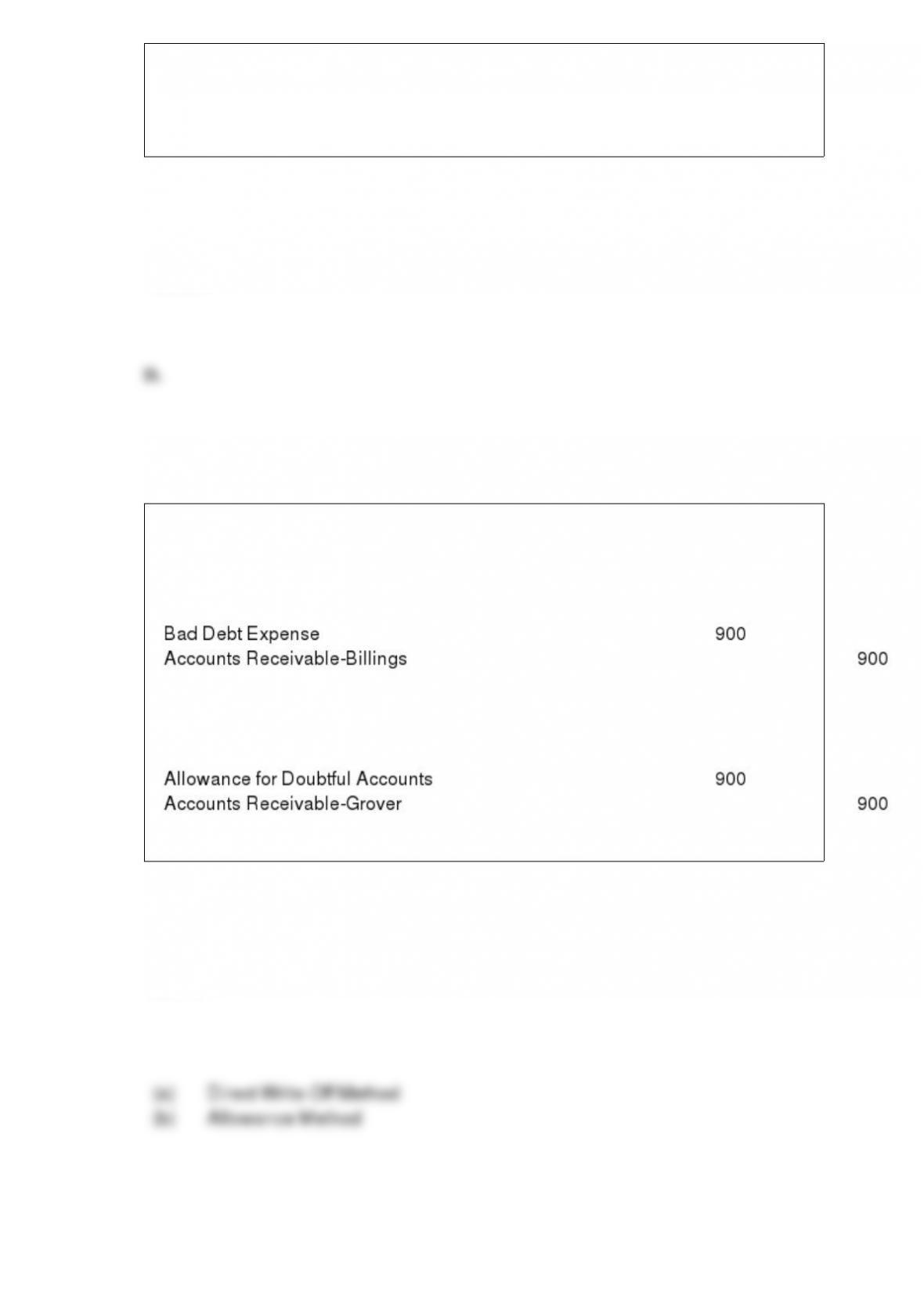
The following journal entries would be used in one of the two methods of accounting
for uncollectible receivables. Identify each.
(a)
(b)
Answer:
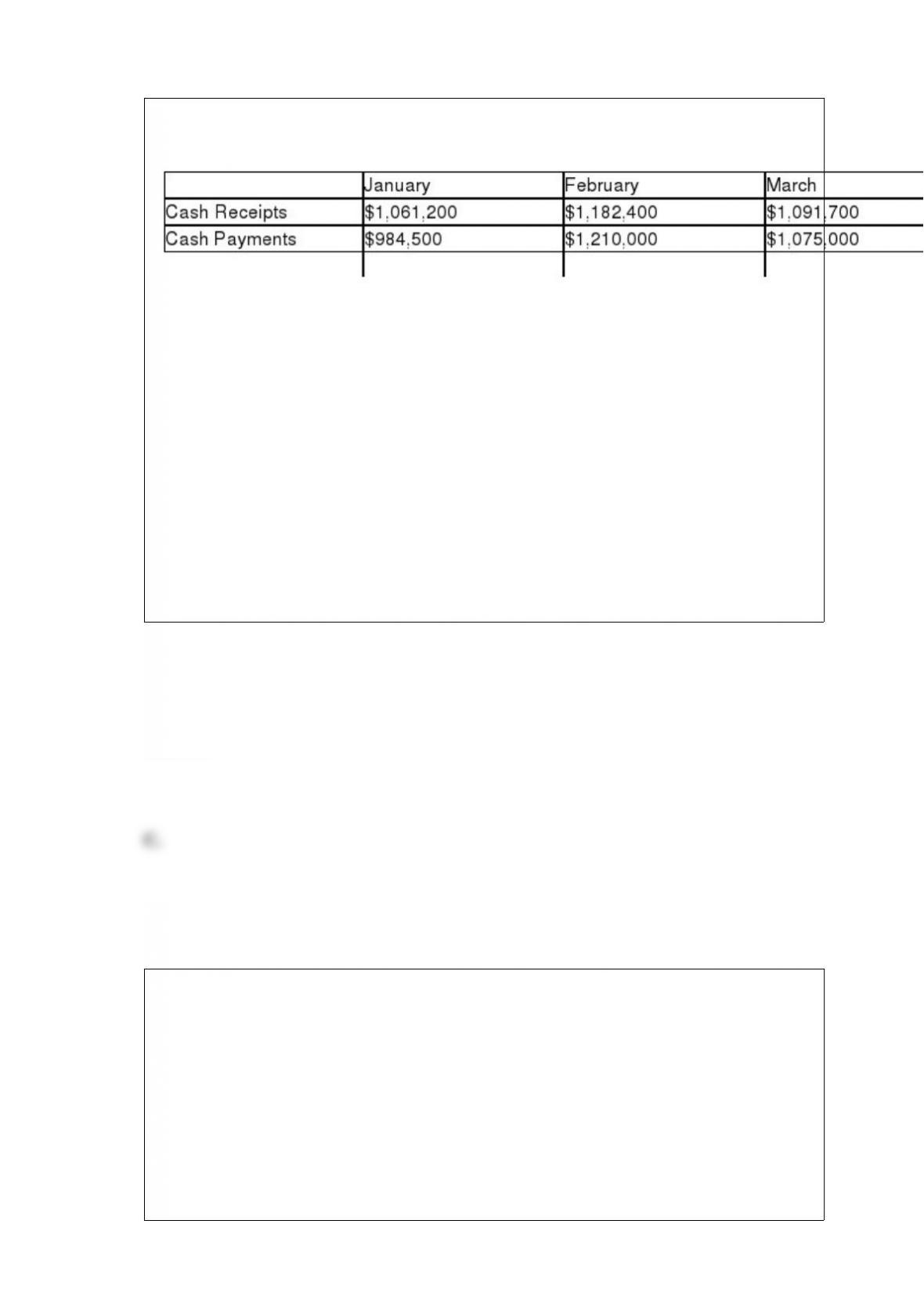
A company is preparing its their Cash Budget. The following data has been provided for
cash receipts and payments.
The company’s cash balance at January 1st is $290,000. This company desires a
minimum cash balance of $340,000.
What is the amount of excess cash or deficiency of cash (after considering the
minimum cash balance required) for February?
A.$109,100 deficiency
B.$10,900 excess
C.$900 deficiency
D.$109,100 excess
Answer:
On the statement of cash flows, the cash flows from operating activities section would
include
A.receipts from the issuance of capital stock
B.payment for interest on short-term notes payable
C.payments for the purchase of investments
D.payments for cash dividends

Answer:
There are four closing entries. The first one is to close ____, the second one is to close
____, the third one is to close ____, and the last one is to close ____.
A.Revenues, expenses, income summary, drawing account
B.Expenses, assets, income summary, capital account
C.Capital account, drawing account, income summary, assets
D.Drawing account, income summary, expenses, revenues
Answer:
If the allowance method of accounting for uncollectible receivables is used, what
general ledger account is debited to write off a customer’s account as uncollectible?
A.Uncollectible Accounts Expense
B.Allowance for Doubtful Accounts
C.Accounts Receivable
D.Interest Expense

Answer:
The Designer Company issued 10-year bonds on January 1, 2011. The 6% bonds have a
face value of $800,000 and pay interest every January 1 and July 1. The bonds were
sold for $690,960 based on the market interest rate of 8%. Designer uses the
effective-interest method to amortize bond discounts and premiums. On July 1, 2011,
Designer should record interest expense (round to the nearest dollar) of
A.$27,638
B.$24,000
C.$48,000
D.$55,277
Answer:
Generally, the revenue account for a merchandising business is entitled
A.Sales
B.Fees Earned
C.Gross Sales

D.Gross Profit
Answer:
The journal entry a company uses to record partially funded pension rights for its
salaried employees, at the end of the year is
A.debit Salary Expense; credit Cash
B.debit Pension Expense; credit Unfunded Pension Liability
C.debit Pension Expense; credit Unfunded Pension Liability and Cash
D.debit Pension Expense; credit Cash
Answer:
The payroll register of Seaside Architecture Company indicates $870 of Social Security
and $217 of Medicare tax withheld on total salaries of $14,500 for the period. Assume
earnings subject to state and federal unemployment compensation taxes are $5,250. at
the federal rate of 0.8% and state rate of 5.4%. Provide the journal entry to record the
payroll tax expense for the period.
Answer:
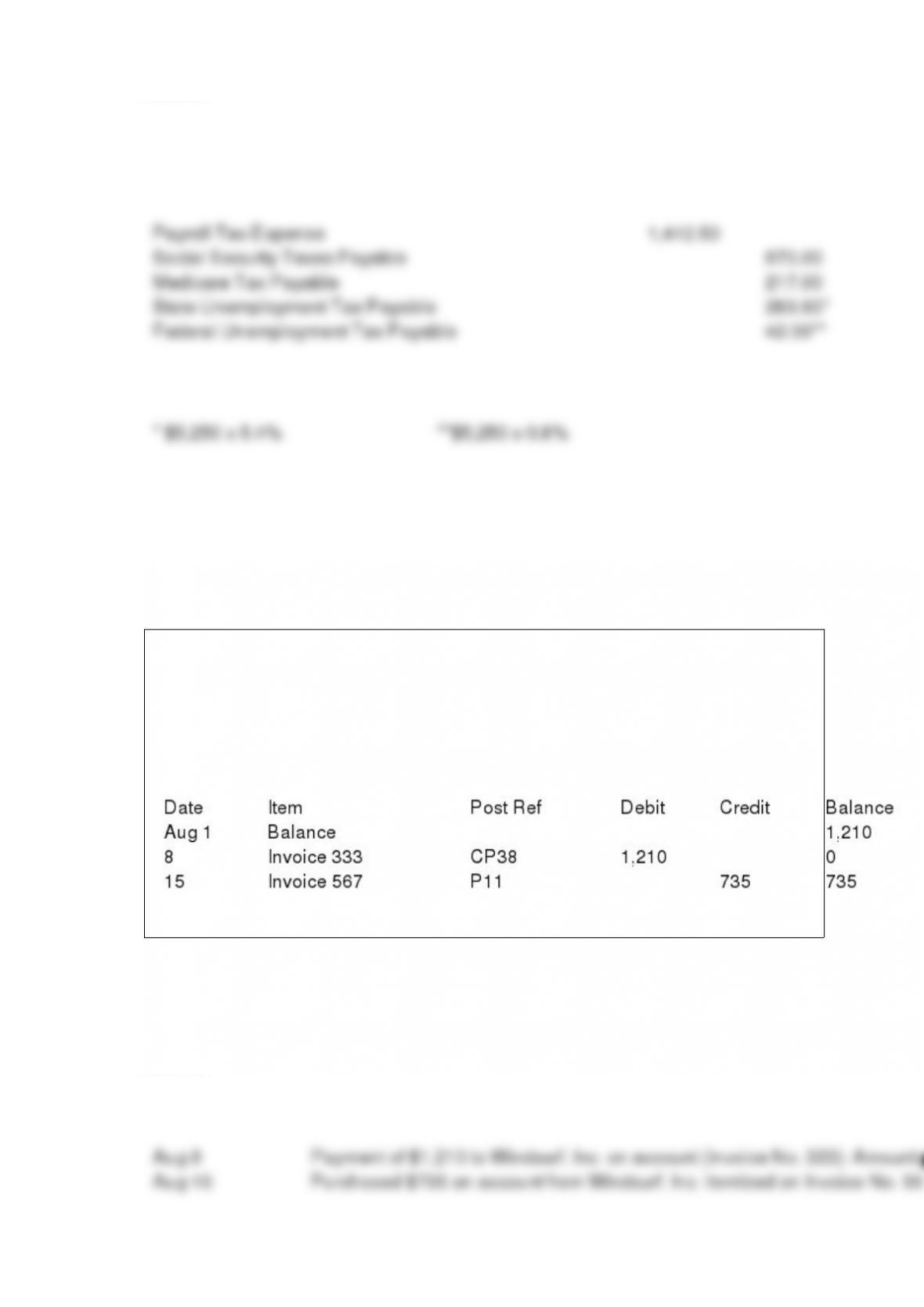
The debits and credits from two transactions are presented in the following creditor’s
account:
NAME Windsurf, Inc.
ADDRESS 343 Coastline Road
Describe each transaction and the source of each posting.
Answer:
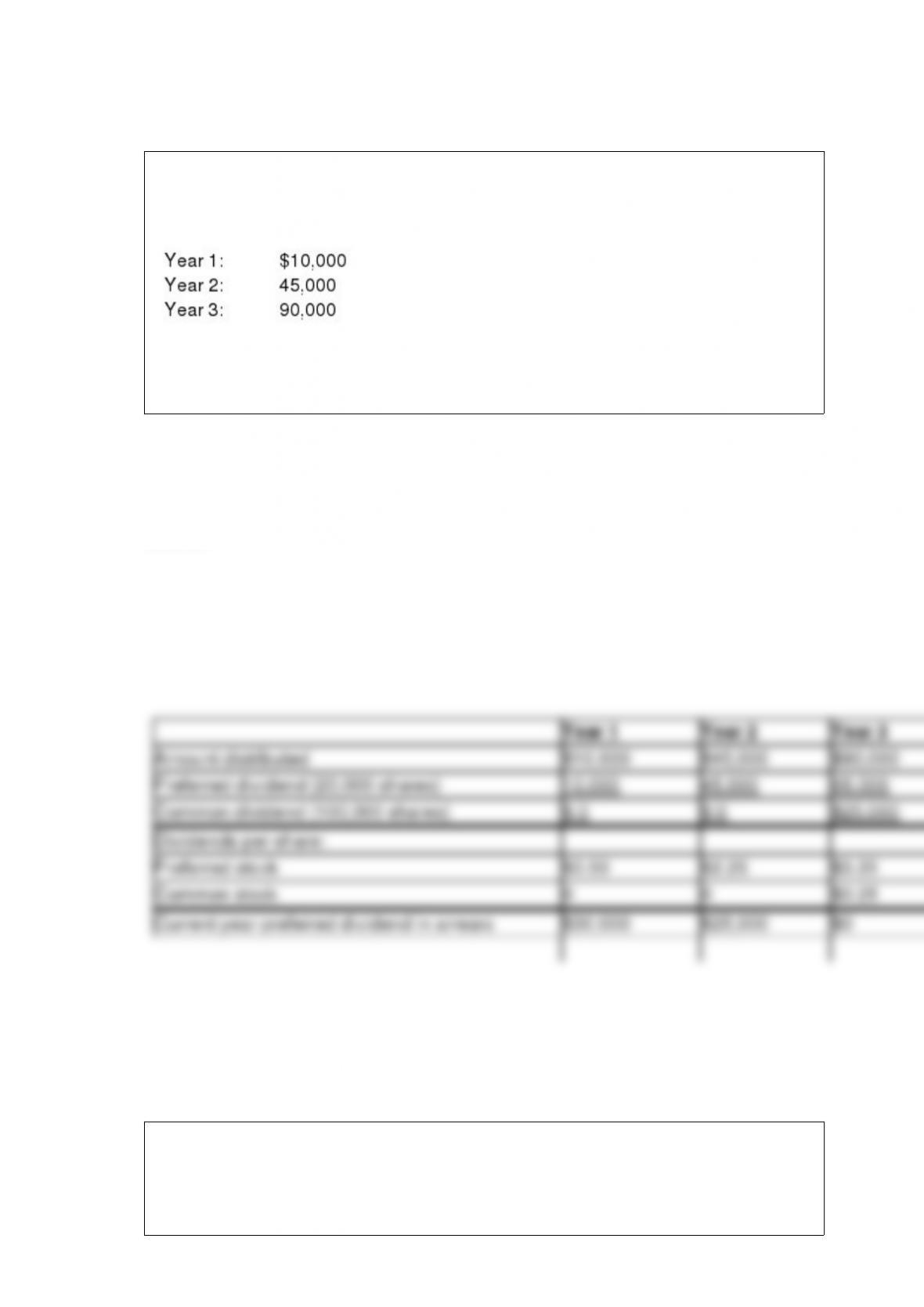
Sabas Company has 20,000 shares of $100 par, 2% cumulative preferred stock and
100,000 shares of $50 par common stock. The following amounts were distributed as
dividends:
Determine the dividends per share for preferred and common stock for each year.
Answer:
The prepaid insurance account had a beginning balance of $6,600 and was debited for
$2,300 of premiums paid during the year. Journalize the adjusting entry required at the
end of the year assuming the amount of unexpired insurance related to future periods is
$4,100.
Answer:
Prepare a journal entry for the purchase of a truck on April 4 for $85,700, paying
$15,000 cash and the remainder on account.
Answer:
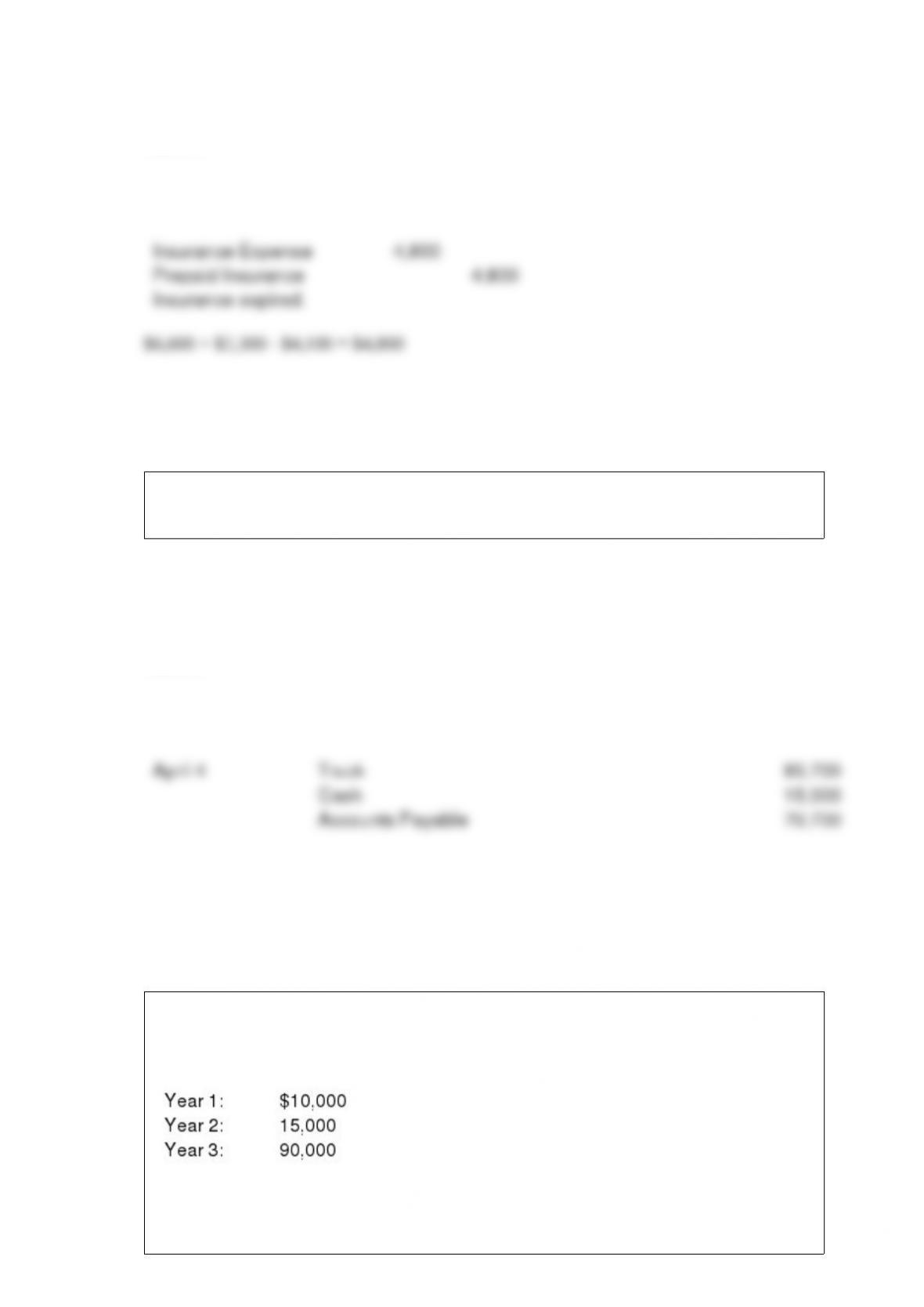
Sabas Company has 20,000 shares of $100 par, 1% non-cumulative preferred stock and
100,000 shares of $50 par common stock. The following amounts were distributed as
dividends:
Determine the dividends per share for preferred and common stock for each year.
Answer:
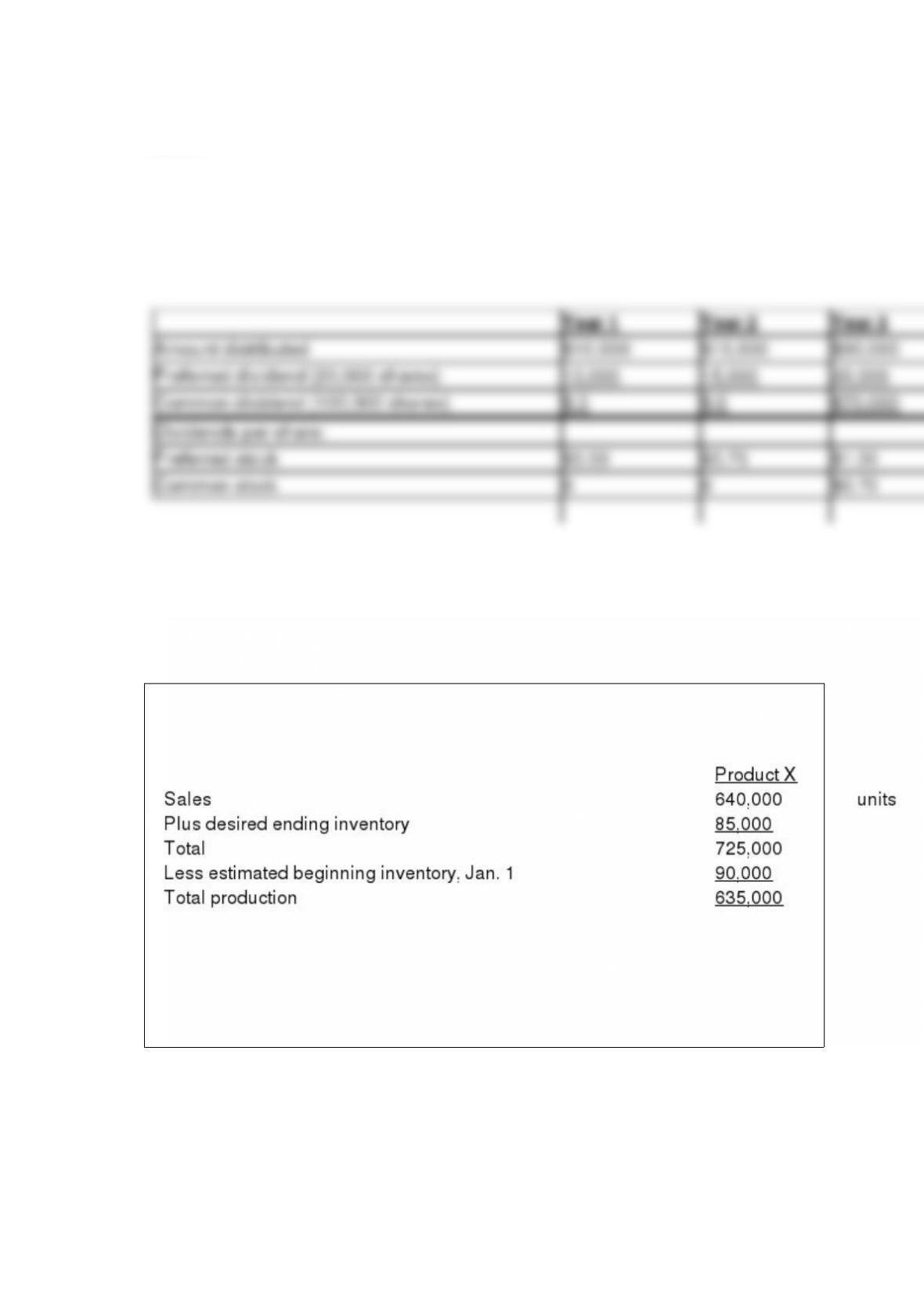
Purple Inc. production budget for Product X for the year ended December 31 is as
follows:
In Purple’s production operations, Materials A, B, and C are required to make Product
X. The quantities of direct materials expected to be used for each unit of product are as
follows:
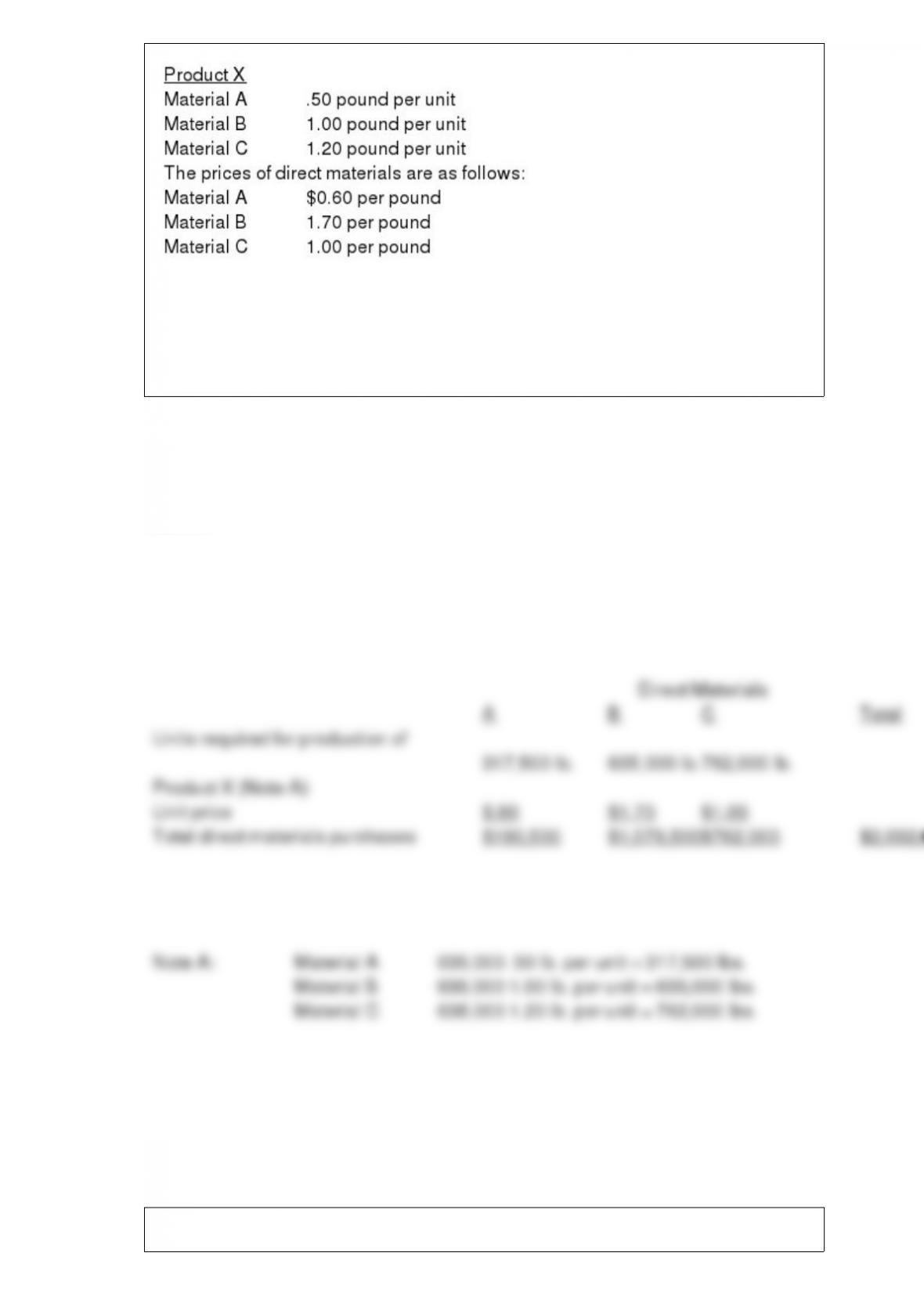
Prepare a direct materials purchases budget for Product X, assuming that there are no
beginning or ending inventories for direct materials (all units purchased are used in
production).
Answer:
A one-year insurance policy was purchased on June 1, 2011 for $1,500. The adjusting
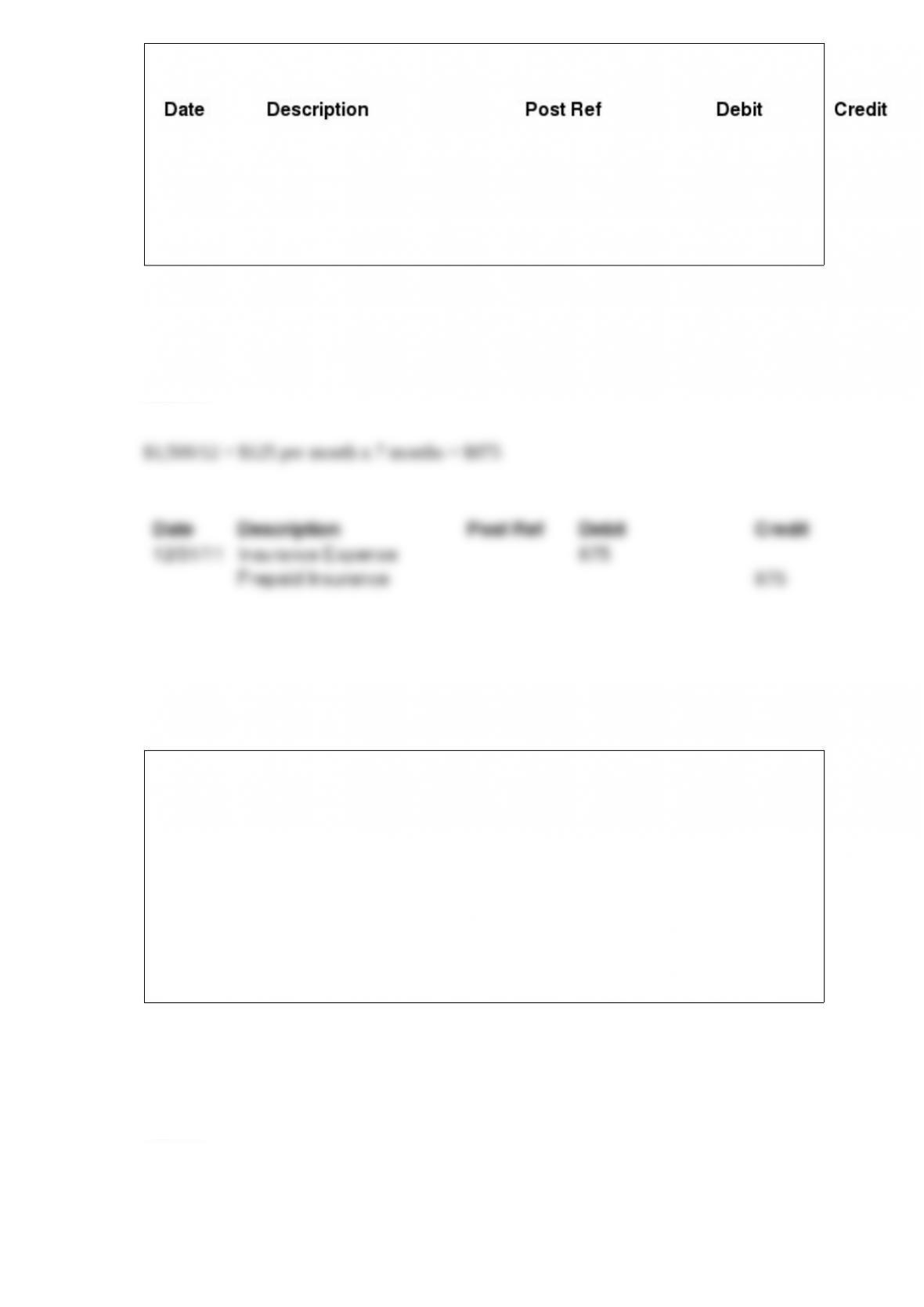
entry on December 31, 2011 would be:
Answer:
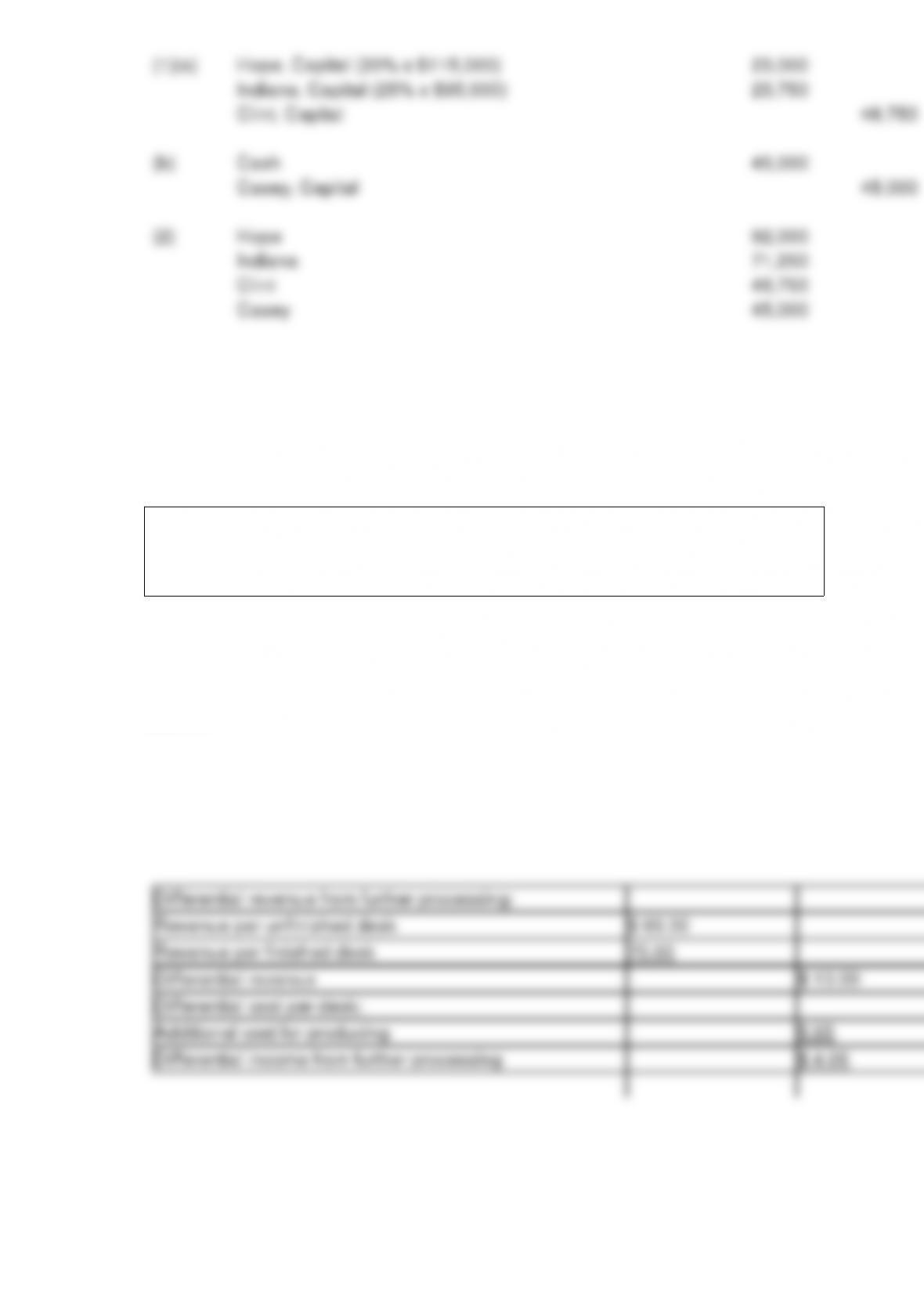
The capital accounts of Hope and Indiana have balances of $115,000 and $95,000,
respectively. Clint and Casey are to be admitted to the partnership. Clint buys one-fifth
of Hope’s interest for $30,000 and one-fourth of Indiana’s interest for $20,000. Casey
contributes $45,000 cash to the partnership, for which he is to receive an ownership
equity of $45,000.
(1) Journalize the entries to record the admission of (a) Clint and (b) Casey.
(2) What are the capital balances of each partner after the admission of the new
partners?
Answer:
An unfinished desk is produced for $36.00 and sold for $65.00. A finished desk can be
sold for $75.00. The additional processing cost to complete the finished desk is $5.95.
Provide a differential analysis for further processing.
Answer:
On the first day of the fiscal year, a company issues a $500,000, 8%, 10 year bond that
pays semi-annual interest of $20,000 ($500,000 x 8% x 1/2), receiving cash of
$437,740. Journalize the entry to record the issuance of the bonds.
Answer:
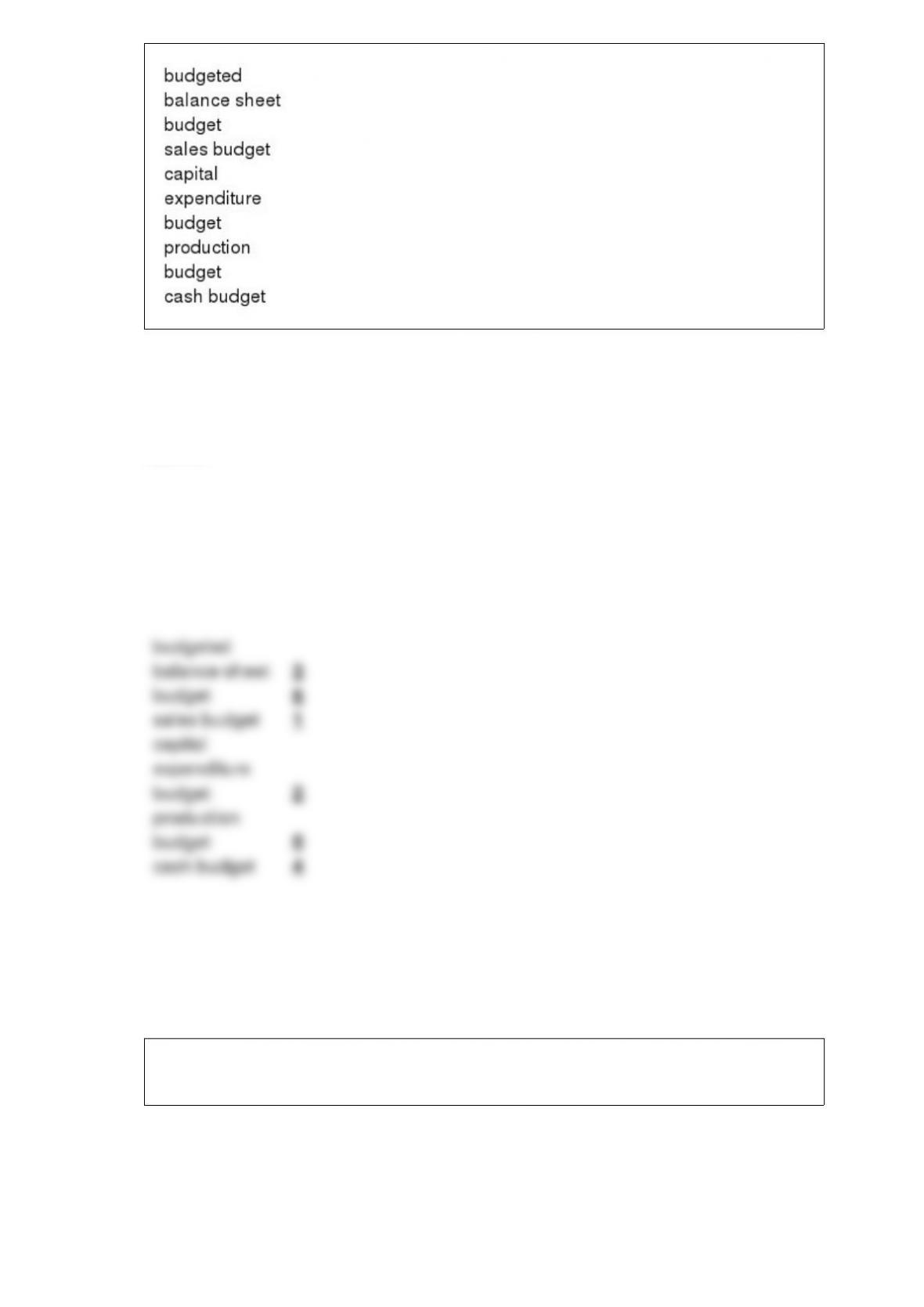
Match the following terms with the best definition given.
Answer:
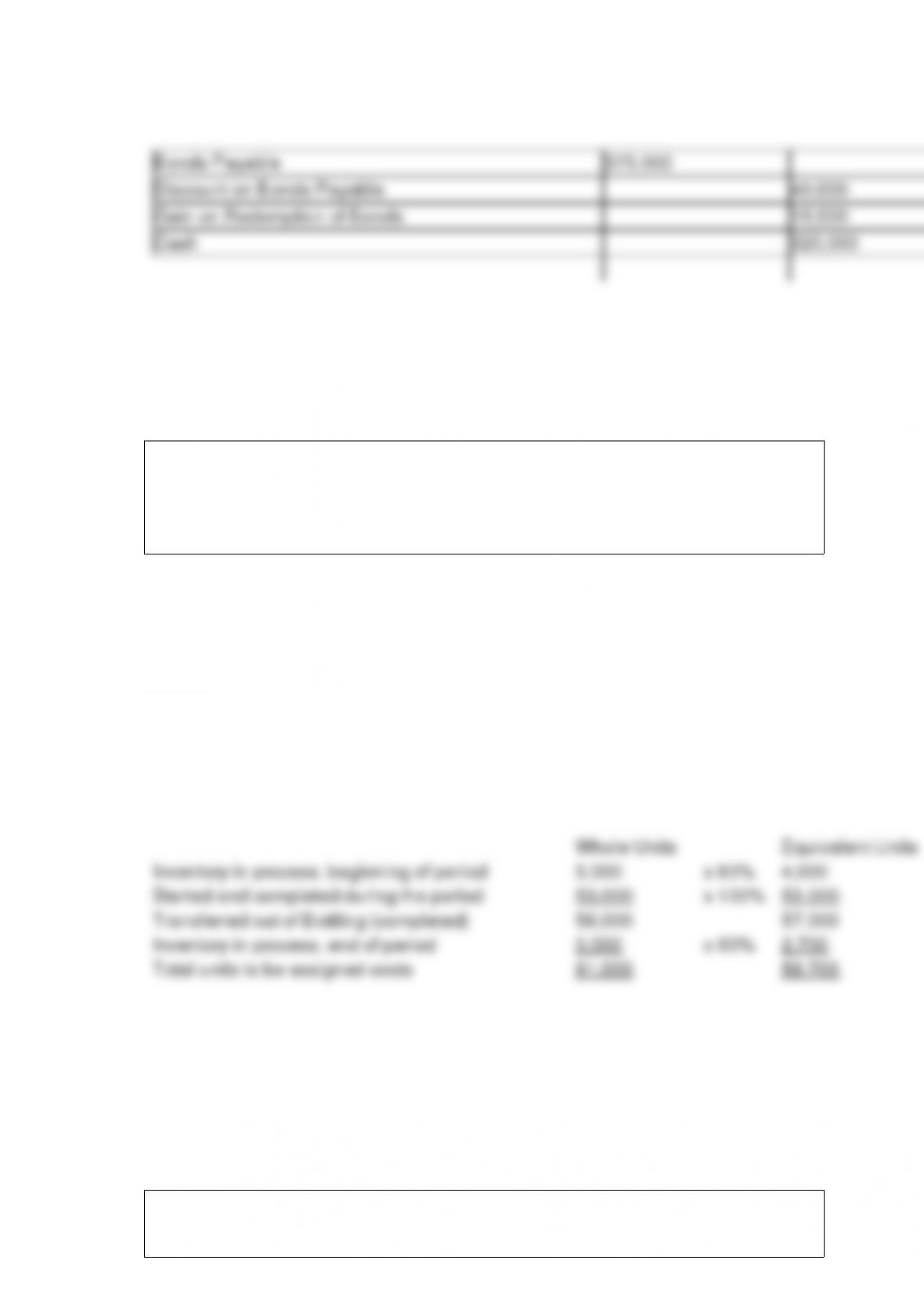
A $375,000 bond issue on which there is an unamortized discount of $40,000 is
redeemed for $320,000. Journalize the redemption of the bonds.
Answer:
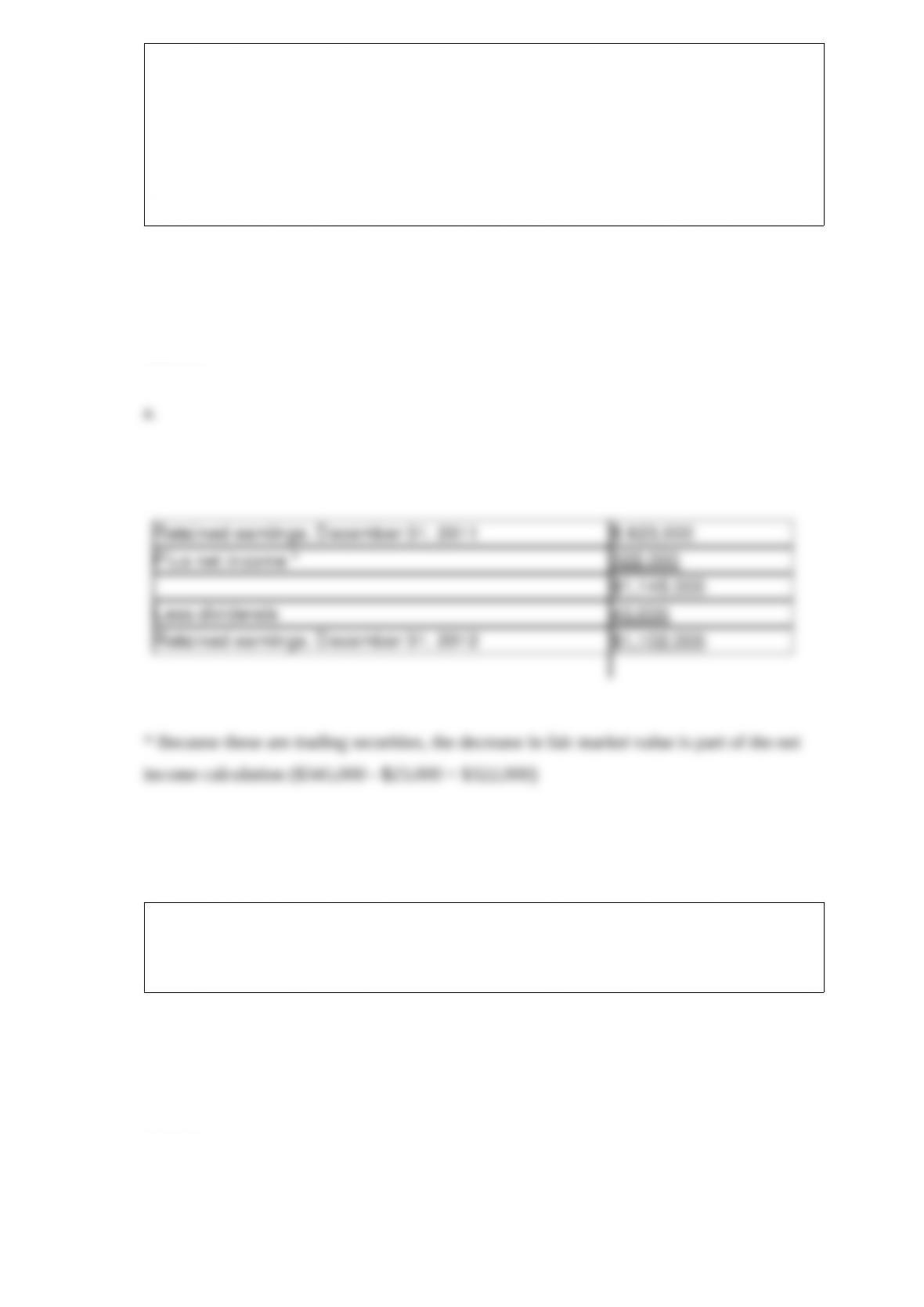
The Bottling Department of Mountain Springs Water Company had 5,000 liters in
beginning work in process inventory (20% complete). During the period, 58,000 liters
were completed. The ending work in process inventory was 3,000 liters (90%
complete). What are the equivalent units for conversion costs under the FIFO method?
Answer:
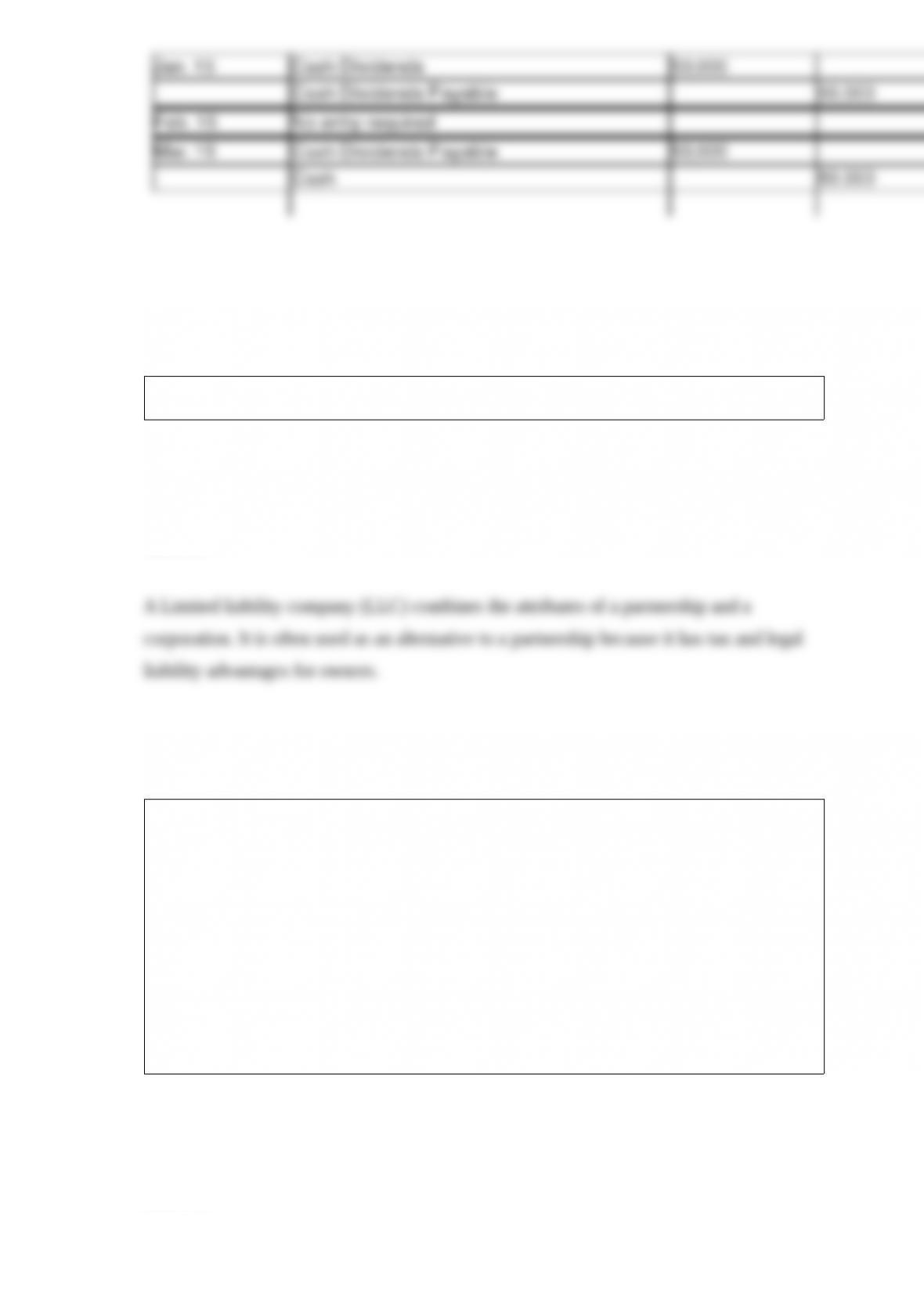
The income statement for Hudson Company reported net income of $345,000 for the
year ended December 31, 2012 before considering the following:
During the year the company purchased trading securities. At year end, the fair value of
the investment portfolio was $23,000 less than cost.
The balance of retained earnings was $823,000 on December 31, 2011. Hudson
Company paid $43,000 in cash dividends in 2012. Calculate the balance of retained
earnings on December 31, 2012.
Answer:
The dates of importance in connection with a cash dividend of $50,000 on a
corporation’s common stock are January 15, February 15, and March 15. Journalize the
entries required on each date.
Answer:
Discuss the characteristics of a LLC (Limited liability company).
Answer:
Explain how variable costing net income will be different than absorption costing net
income under the following situations:
(1) A company had no beginning or ending inventory. During the year they produced
and sold 10,000 units.
(2) A company had no beginning inventory. During the year they produced 10,000 units
and sold 8,000 units.
(3) A company had 2,000 units in beginning inventory. During the year they produced
10,000 units and sold 12,000 units.
Answer:
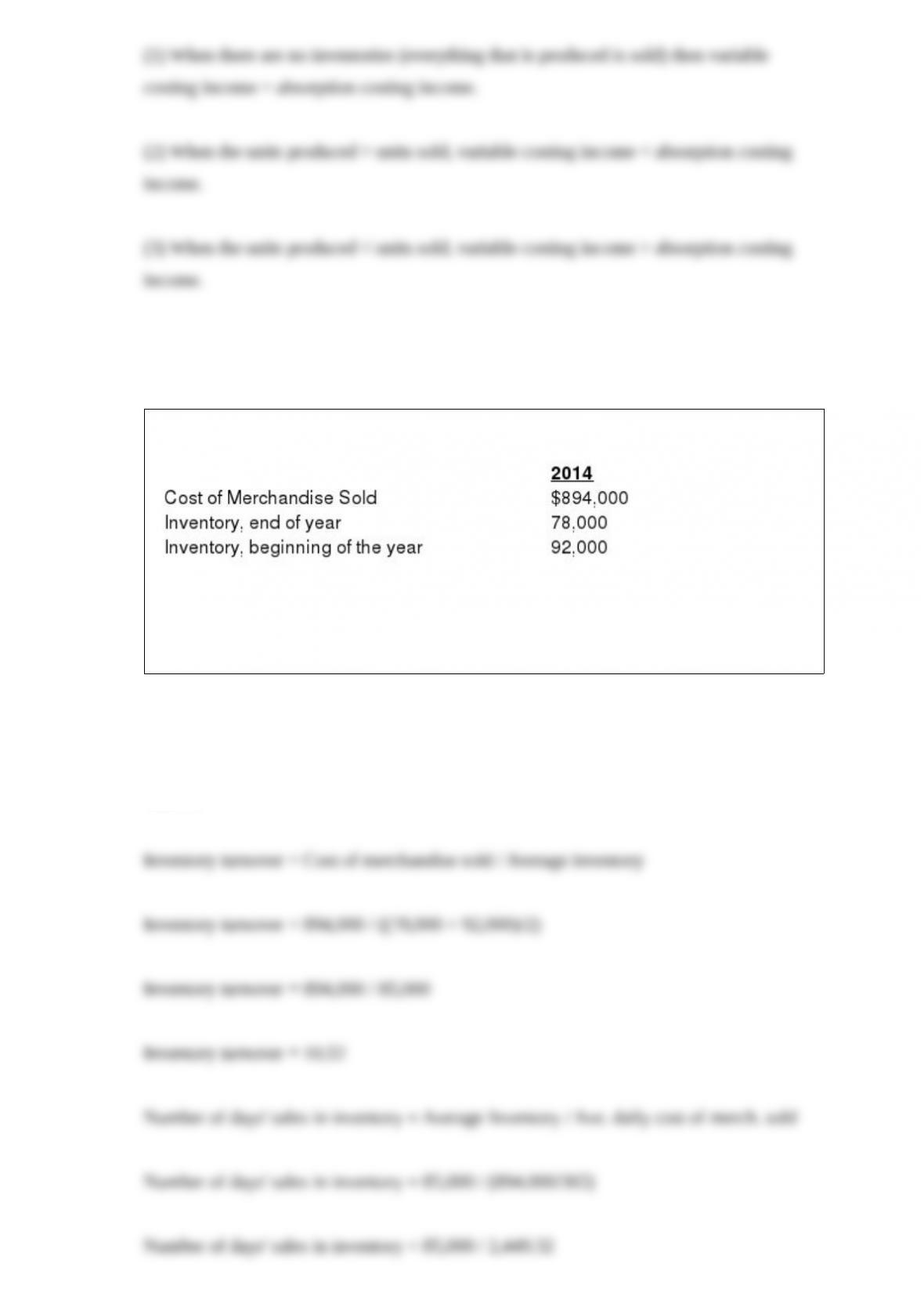
The following data were taken from Bowman Inc.
Determine the inventory turnover ratio and the number of days’ sales in inventory for
Bowman Inc. Round to two decimal places.
Answer:
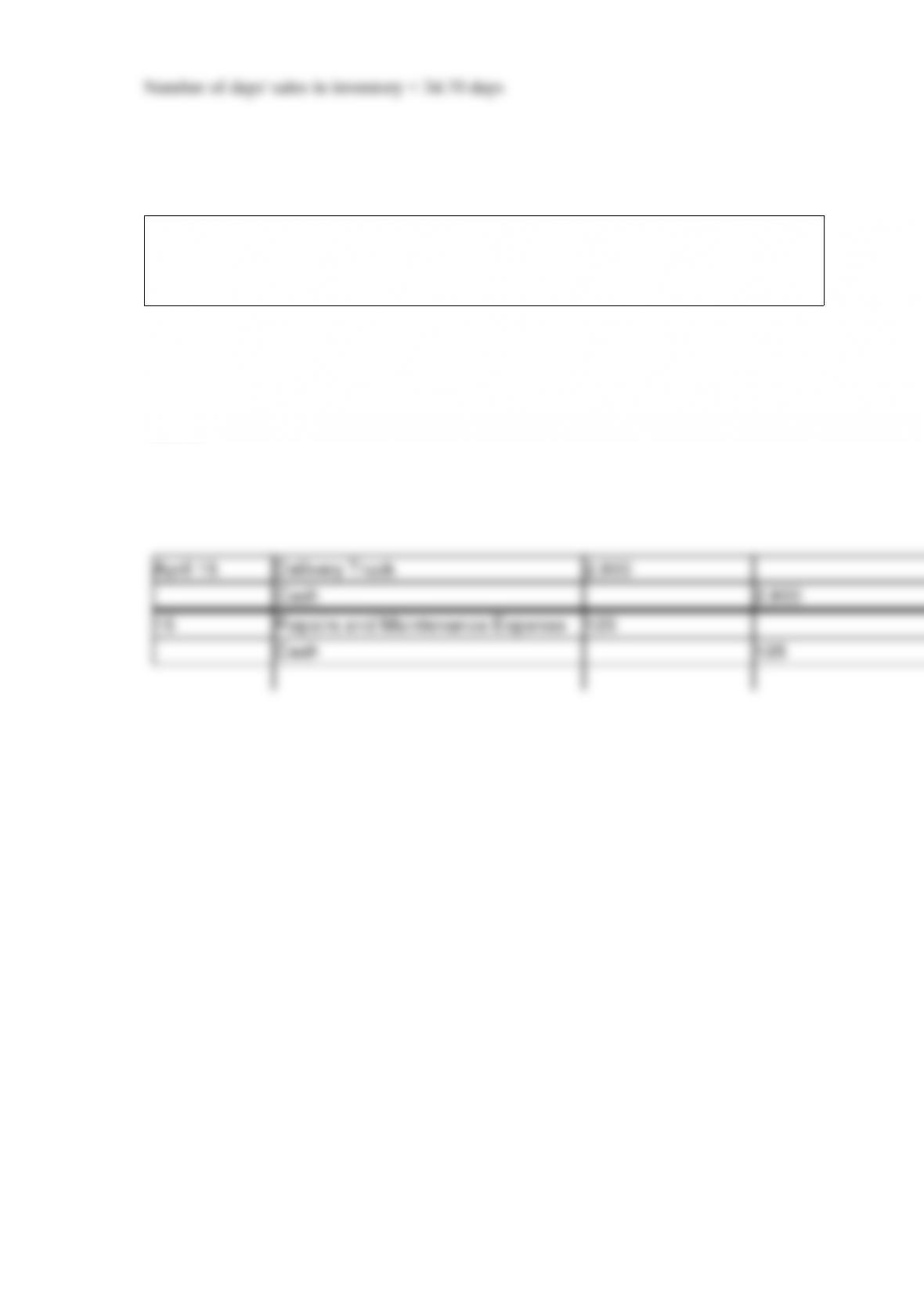
On April 15, Compton Co. paid $2,800 to upgrade a delivery truck and $125 for an oil
change. Journalize the entries for the upgrade to delivery truck and oil change
expenditures.
Answer: