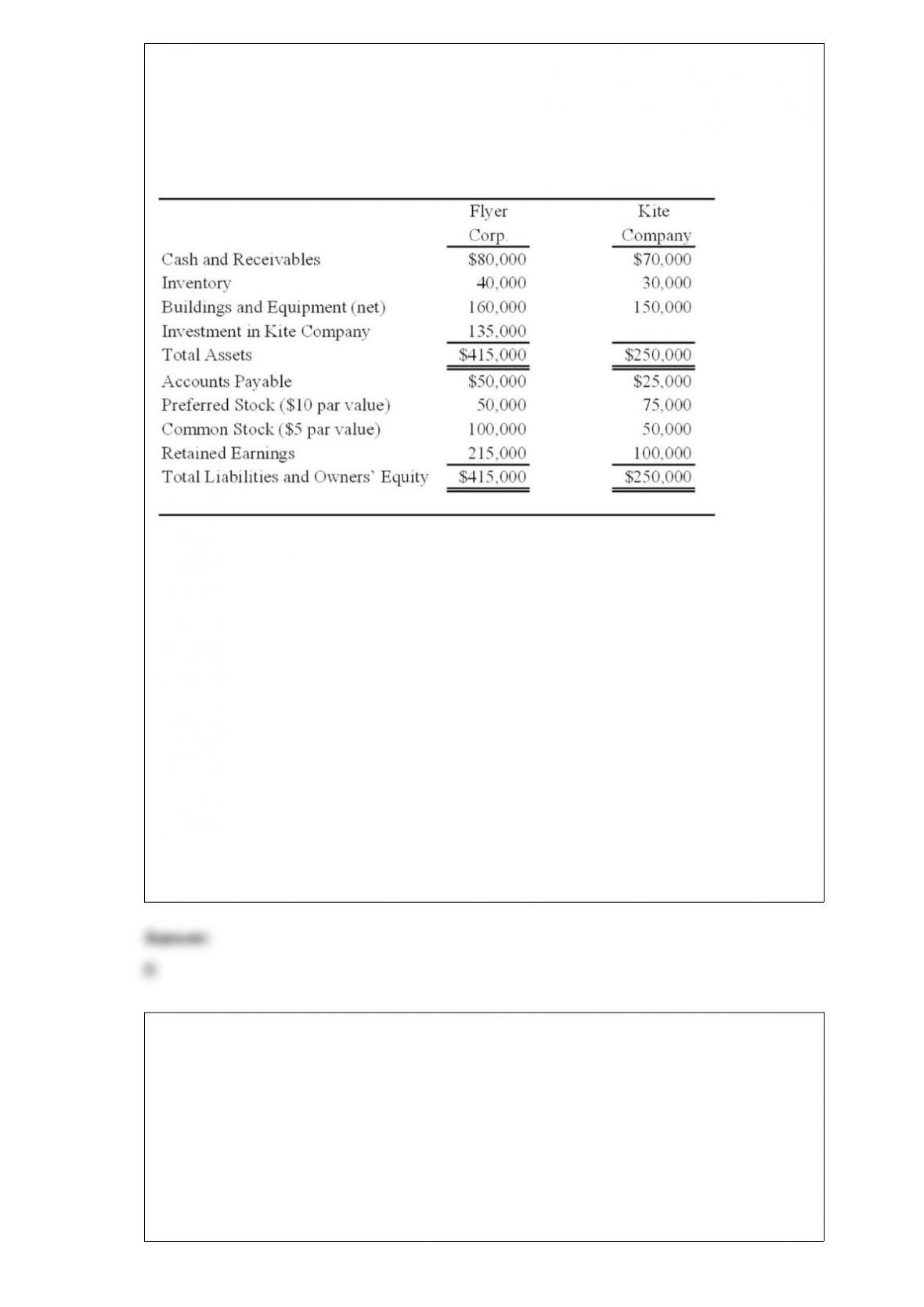
1) Flyer Corporation holds 90 percent of Kite Company’s common shares but none of
its preferred shares. On the date of acquisition, the fair value of the noncontrolling
interest was equal to 10 percent of the book value of Kite Company. Summary balance
sheets for the companies on December 31, 20X8, are as follows:
Flyer’s preferred pays a 8 percent annual dividend, and Kite’s preferred pays a 10
percent dividend. Kite’s preferred shares can be converted into 20,000 shares of
common stock at any time. Kite reported net income of $35,000 and paid a total of
$10,000 of dividends in 20X8. Flyer reported income from its separate operations of
$80,000 and paid total dividends of $25,000 in 20X8.
Based on the information provided, what is the diluted earnings per share for the
consolidated entity for 20X8?
A.4.53
B.4.33
C.4.00
D.3.80
2) Which of the following describes how a governmental fund (e.g. general fund)
accounts for a capital lease:
A.noncurrent liability
B.bond accounting
C.an asset and a lease liability
D.none of these identifies the appropriate way to account for a capital lease
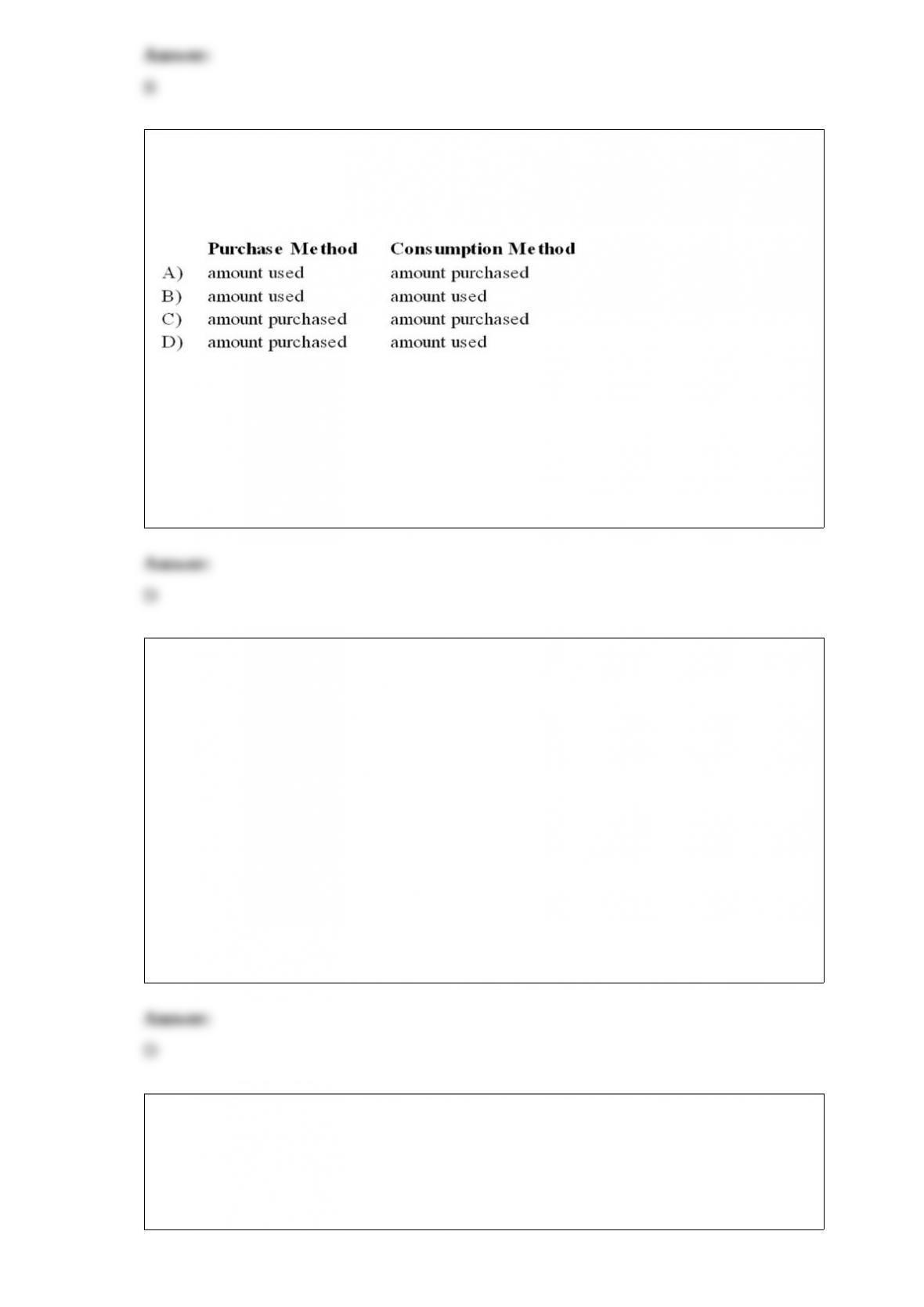
3) What amount should be reported as expenditures for the current fiscal year when
accounting for inventories of supplies under the purchase method and under the
consumption method?
A.Option A
B.Option B
C.Option C
D.Option D
4) Parent Company purchased 100 percent of Son Inc. on January 1, 20X2 for
$420,000. Son reported earnings of $82,000 and declared dividends of $4,000 during
20X2.
Based on the preceding information and assuming Parent uses the equity method to
account for its investment in Son, what is the balance in Parent’s Investment in Son
account on December 31, 20X2, prior to consolidation?
A.$416,000
B.$420,000
C.$424,000
D.$498,000
On January 1, 20X9, Gulliver Corporation acquired 80 percent of Sea-Gull Company’s
common stock for $160,000 cash. The fair value of the noncontrolling interest at that
date was determined to be $40,000. Data from the balance sheets of the two companies
included the following amounts as of the date of acquisition:
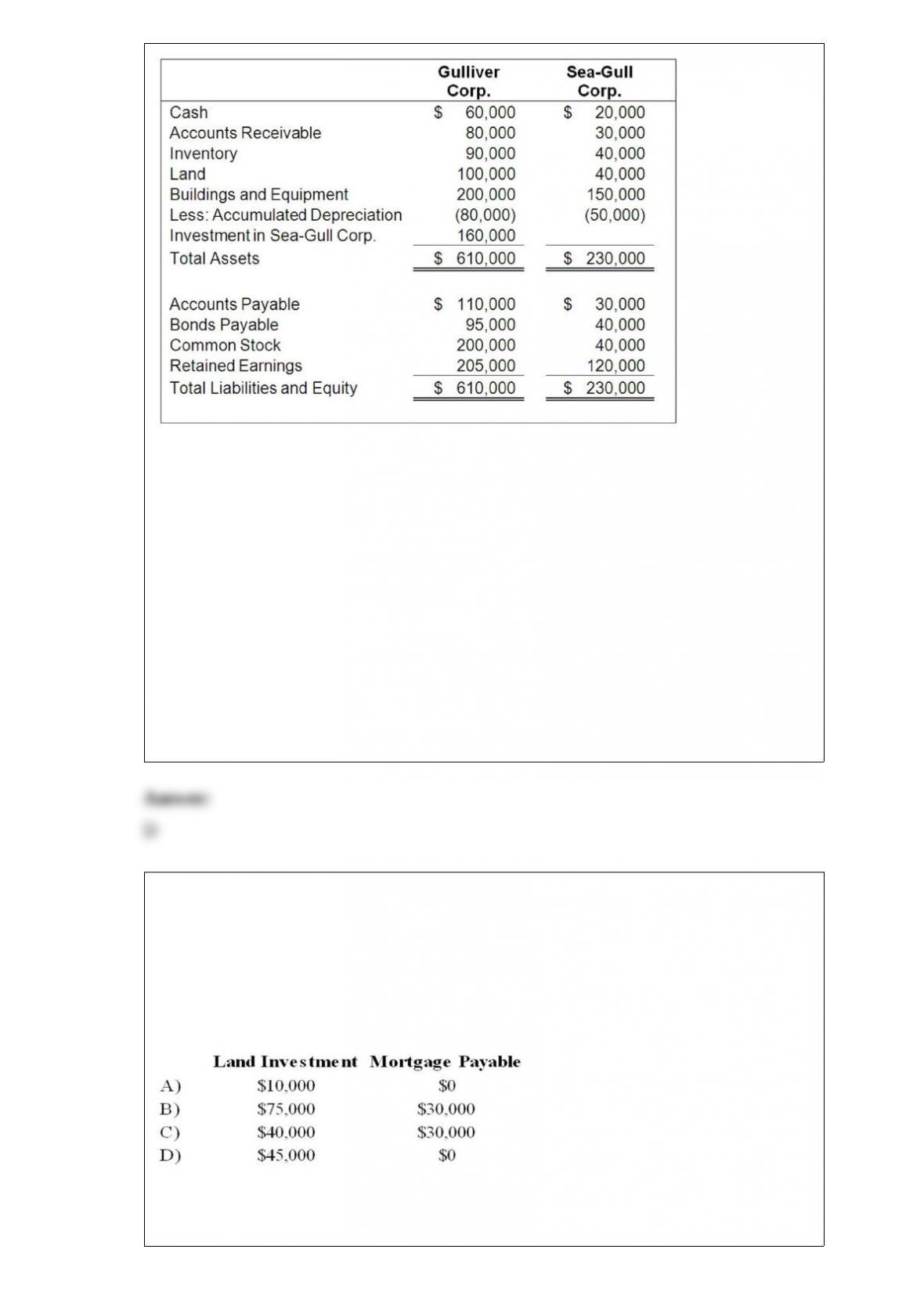
At the date of the business combination, the book values of Sea-Gull’s net assets and
liabilities approximated fair value except for inventory, which had a fair value of
$45,000, and land, which had a fair value of $60,000.
Based on the preceding information, what amount of goodwill will be reported in the
consolidated balance sheet prepared immediately after the business combination?
5) A.$0
B.$40,000
C.$20,000
D.$15,000
6) On December 31, 20X8, Mr. and Mrs. Williams owned a parcel of land held as an
investment. The land was purchased for $40,000 in 20X6, and was encumbered by a
mortgage with a principal balance of $30,000 at December 31, 20X8. On this date the
fair value of the land was $75,000. In the Williams’ December 31, 20X8, personal
statement of financial condition, at what amount should the land investment and
mortgage payable be reported?
A.Option A
B.Option B
C.Option C
D.Option D
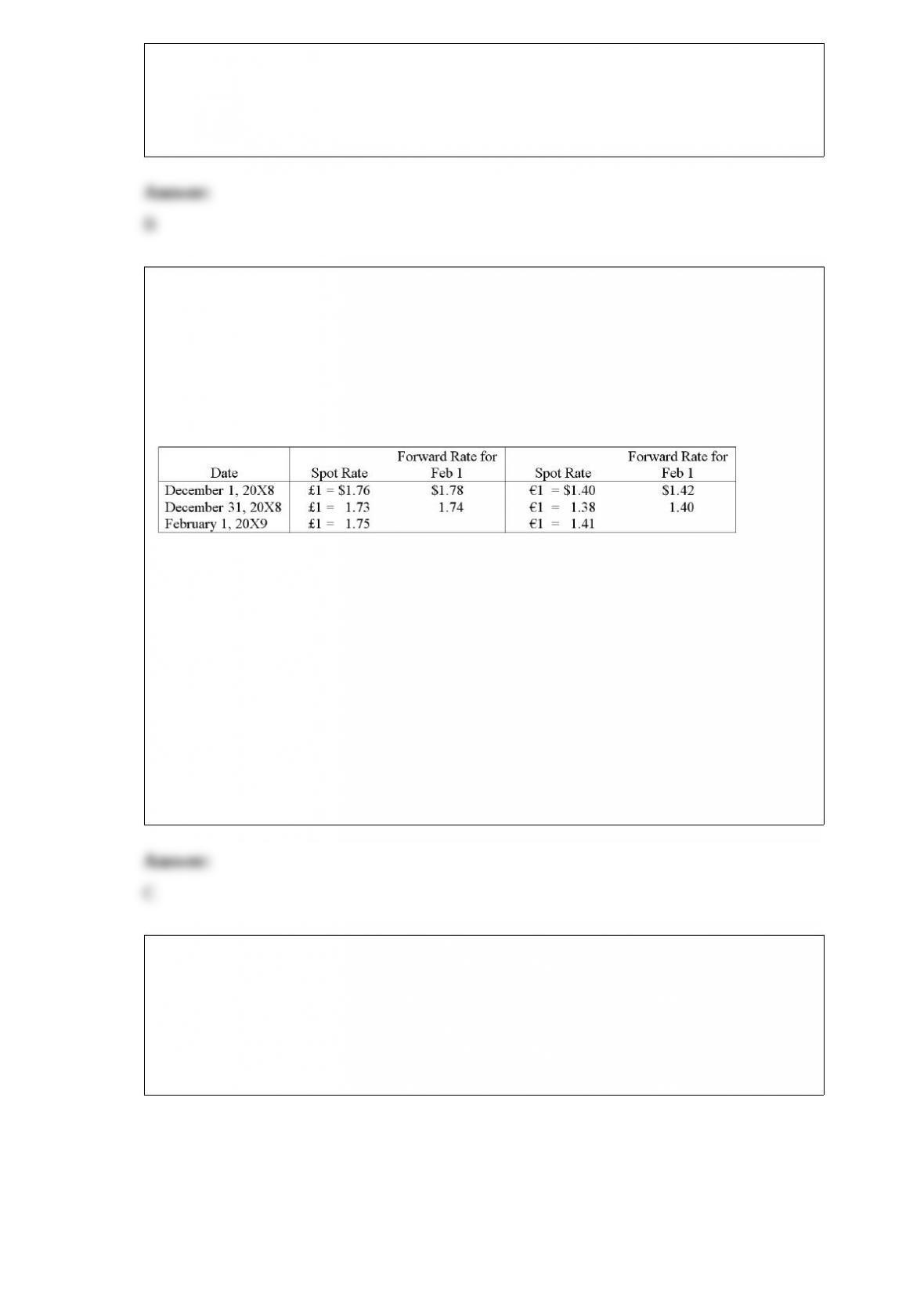
7) On December 1, 20X8, Hedge Company entered into a 60-day speculative forward
contract to sell 200,000 British pounds (£) at a forward rate of £1 = $1.78. On the same
day it purchased a 60-day speculative forward contract to buy 100,000 euros () at a
forward rate of 1 = $1.42.
The rates are as follows:
Hedge had no other speculation transactions in 20X8 and 20X9. Ignore taxes.
Based on the preceding information, what is the effect of the British pound speculative
contract on 20X8 net income?
A.$10,000 gain
B.$6,000 gain
C.$8,000 gain
D.$2,000 loss
8) Note: This is a Kaplan CPA Review Question
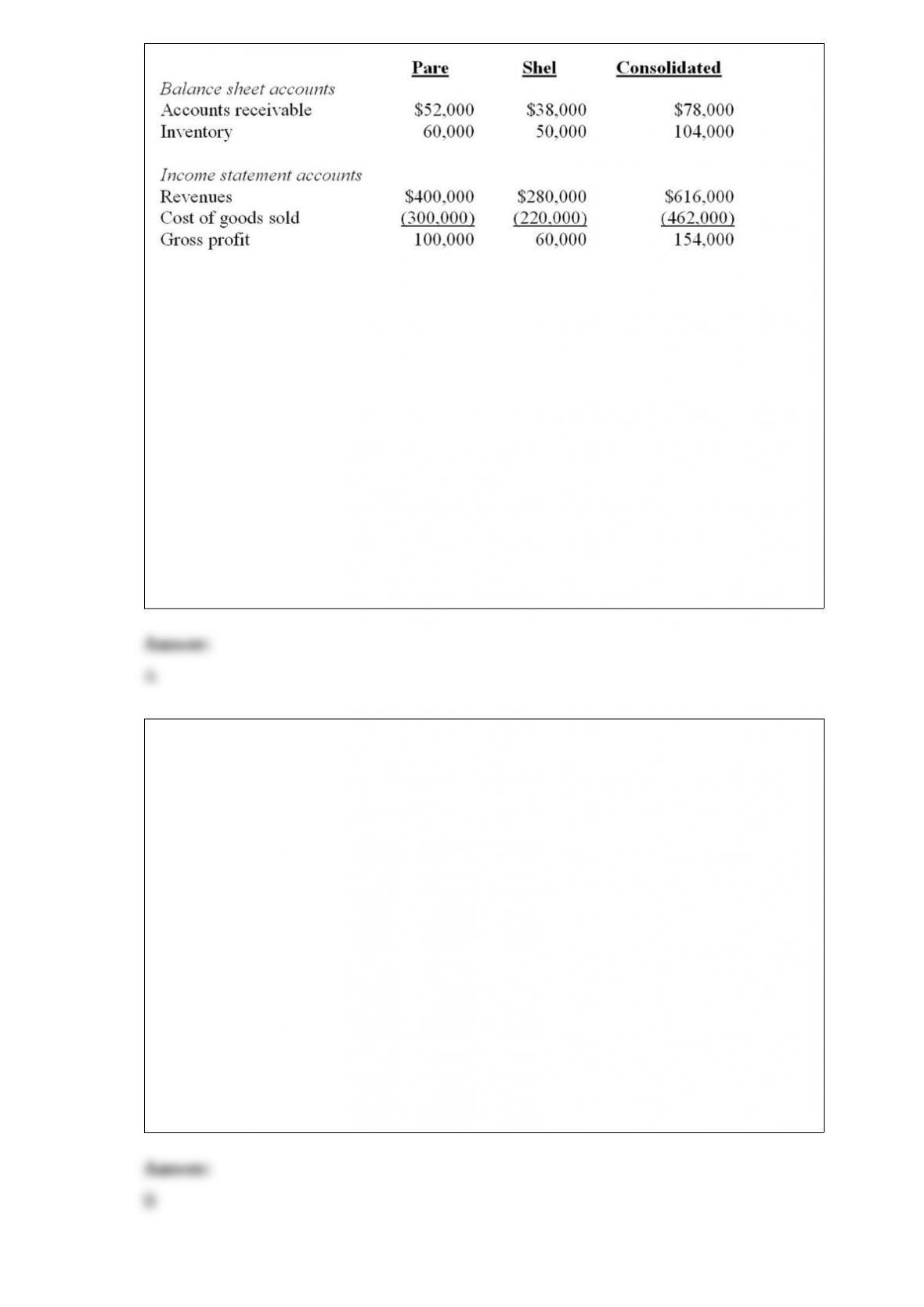
Selected information from the separate and consolidated balance sheets and income
statements of Pare, Inc. and its subsidiary, Shel Co., as of December 31, 20X5, and for
the year then ended is as follows:
Additional information:
During 20X5, Pare sold goods to Shel at the same markup on cost that Pare uses for all
sales.
At December 31, 20X5, what was the amount of Shel’s payable to Pare for
intercompany sales?
A.$12,000
B.$6,000
C.$58,000
D.$64,000
9) On January 1, 20X8, Parent Company acquired 90 percent ownership of Subsidiary
Corporation, at underlying book value. The fair value of the noncontrolling interest at
the date of acquisition was equal to 10 percent of the book value of Subsidiary
Corporation. On Mar 17, 20X8, Subsidiary purchased inventory from Parent for
$90,000. Subsidiary sold the entire inventory to an unaffiliated company for $120,000
on November 21, 20X8. Parent had produced the inventory sold to Subsidiary for
$62,000. The companies had no other transactions during 20X8.
Based on the information given above, what amount of sales will be reported in the
20X8 consolidated income statement?
A.$62,000
B.$120,000
C.$90,000
D.$58,000
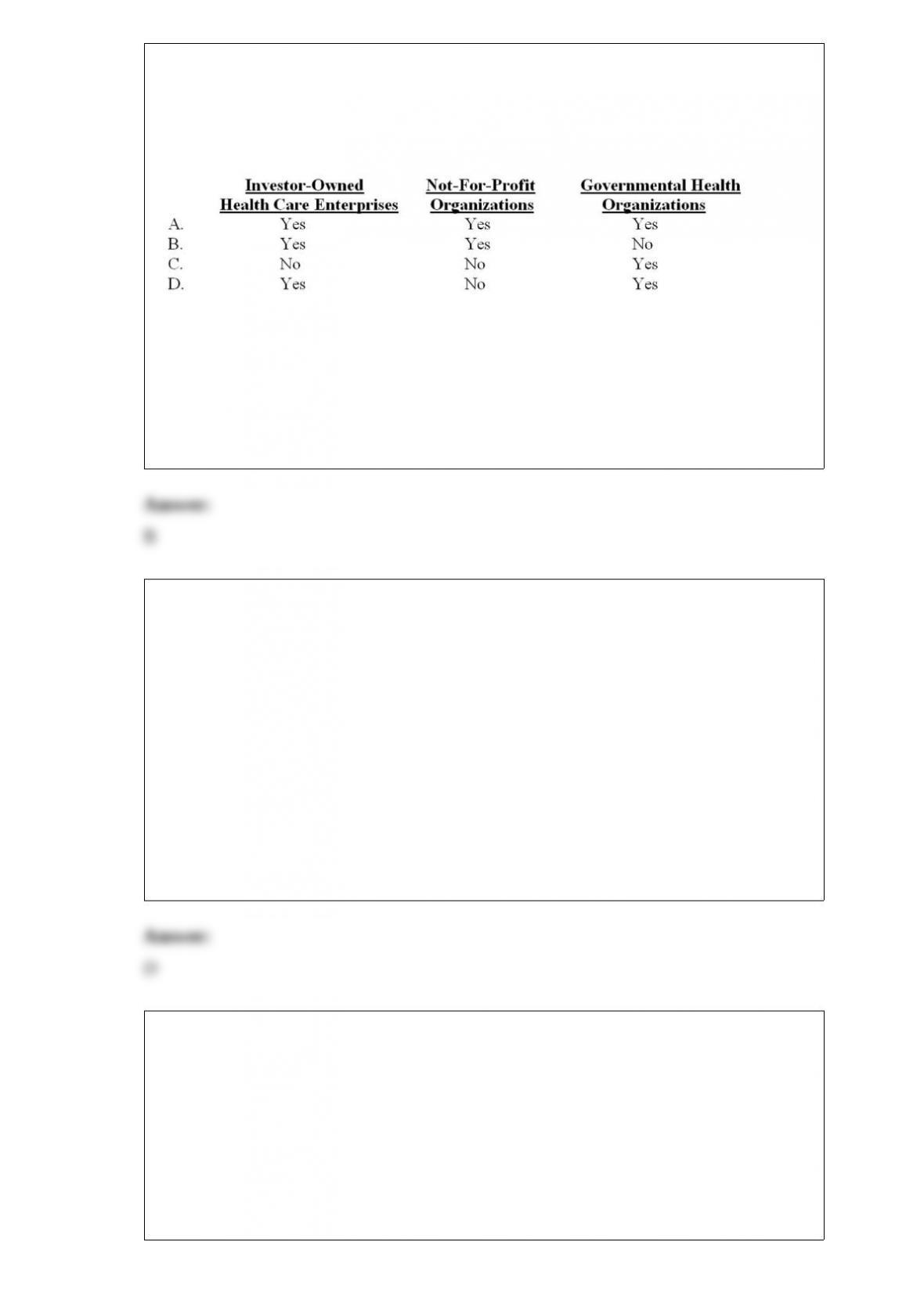
10) Note: This is a Kaplan CPA Review Question
Which of the following types of health care organizations follow FASB authoritative
literature?
A.Option A
B.Option B
C.Option C
D.Option D
11) Plummet Corporation reported the book value of its net assets at $400,000 when
Zenith Corporation acquired 100 percent ownership. The fair value of Plummet’s net
assets was determined to be $510,000 on that date.
Based on the preceding information, what amount will be recorded by Zenith as its
investment in Plummet, if it paid $500,000 for the acquisition?
A.$610,000
B.$400,000
C.$500,000
D.$510,000
12) Information concerning the unexpected resignation of one or more of the
registrant’s directors would be disclosed on which of the following forms?
I. Form 8-Q
II. Form 8-K
A.I
B.II

C.Both I and II
D.Neither I nor II
13) During the year a parent makes sales of inventory at a profit to its 75 percent owned
subsidiary. The subsidiary also makes sales of inventory at a profit to its parent during
the same year. Both the parent and the subsidiary have on hand at the end of the year 20
percent of the inventory acquired from one another. Consolidated revenues for the year
should exclude:
A.80 percent of the total revenues from intercompany sales
B.total revenues from intercompany sales
C.only the revenues from the subsidiary’s intercompany sales
D.only the revenues from the parent’s intercompany sales
14) On a partner’s personal statement of financial condition, how should liabilities be
valued?
I. Present value
II. Lower of present value or cash settlement amount
A.I
B.II
C.Both I and II
D.Neither I nor II
15) Golden Path, a labor union, had the following receipts and expenses for the year
ended December 31, 20X8:
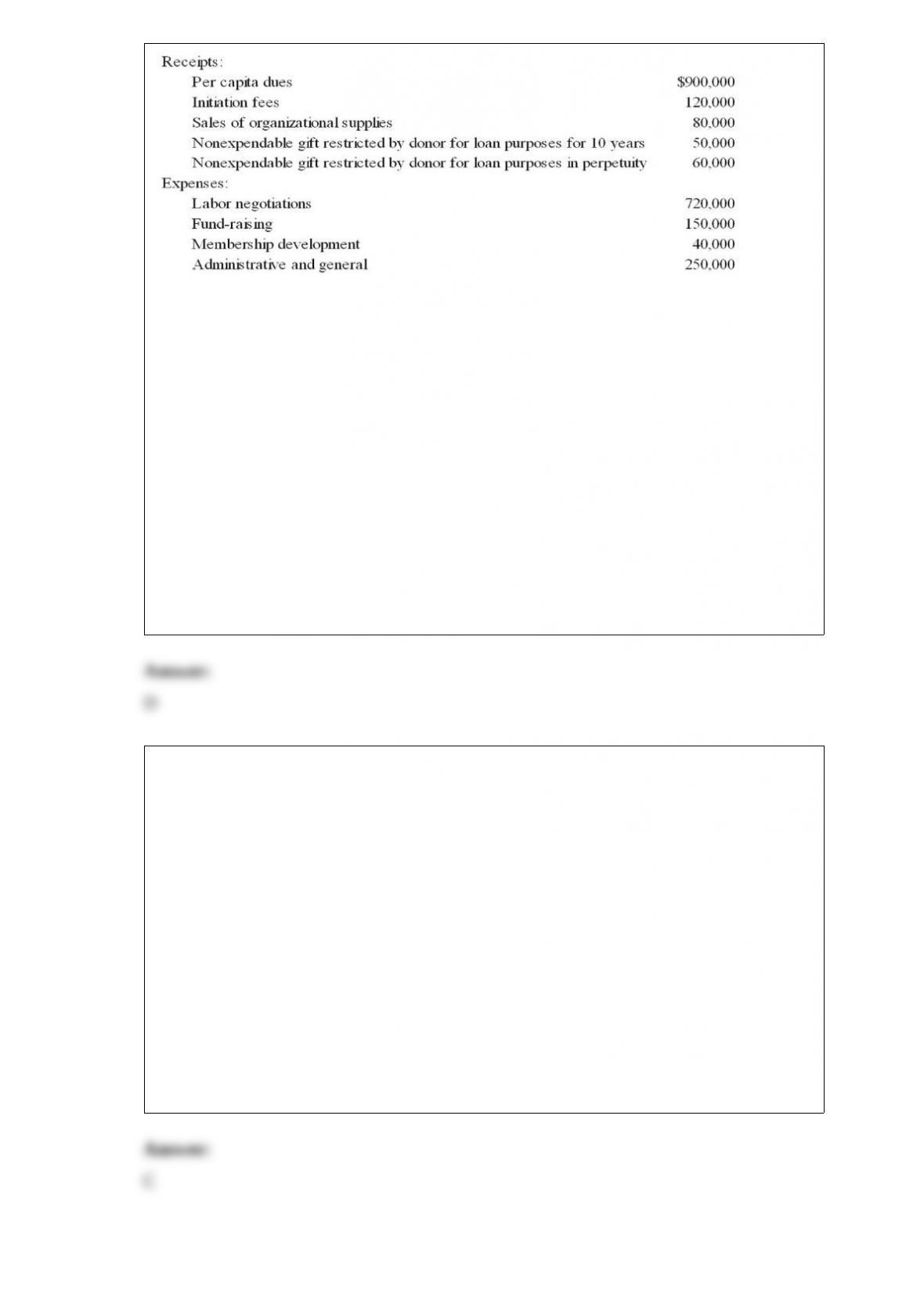
The union’s constitution provides that 12 percent of the per capita dues be designated
for the strike insurance fund to be distributed for strike relief at the discretion of the
union’s executive board.
Based on the information provided, in Golden Path’s statement of activities for the year
ended December 31, 20X8, what amounts should be reported under the classifications
of temporarily and permanently restricted net assets?
A.$0 and $110,000 respectively
B.$110,000 and $0 respectively
C.$60,000 and $50,000 respectively
D.$50,000 and $60,000 respectively
16) Parent Co. purchases 100 percent of Son Company on January 1, 20X1, when
Parent’s retained earnings balance is $520,000 and Son’s is $150,000. During 20X1, Son
reports $15,000 of net income and declares $6,000 of dividends. Parent reports
$105,000 of separate operating earnings plus $15,000 of equity-method income from its
100 percent interest in Son; Parent declares dividends of $40,000.
Based on the preceding information, what is Son’s post-closing retained earnings
balance on December 31, 20X1:
A.$141,000
B.$150,000
C.$159,000
D.$165,000
17) The transactions described in the following questions occurred in a voluntary health
and welfare organization during the year ended December 31, 20X8. For each
transaction, indicate its effect(s) on the organization’s statement of activities prepared
for the year ended December 31, 20X8. List all effects of transactions affecting more
than one class of net assets. Indicate your choice(s) by entering the letter corresponding
to the effects listed here:
Effects of Transactions on Statement of Activities
A. Increases unrestricted net assets.
B. Decreases unrestricted net assets.
C. Increases temporarily restricted net assets.
D. Decreases temporarily restricted net assets.
E. Increases permanently restricted net assets.
F. Decreases permanently restricted net assets.
G. Transaction is not reported on the statement of activities.
Received cash contributions restricted by donors for research.
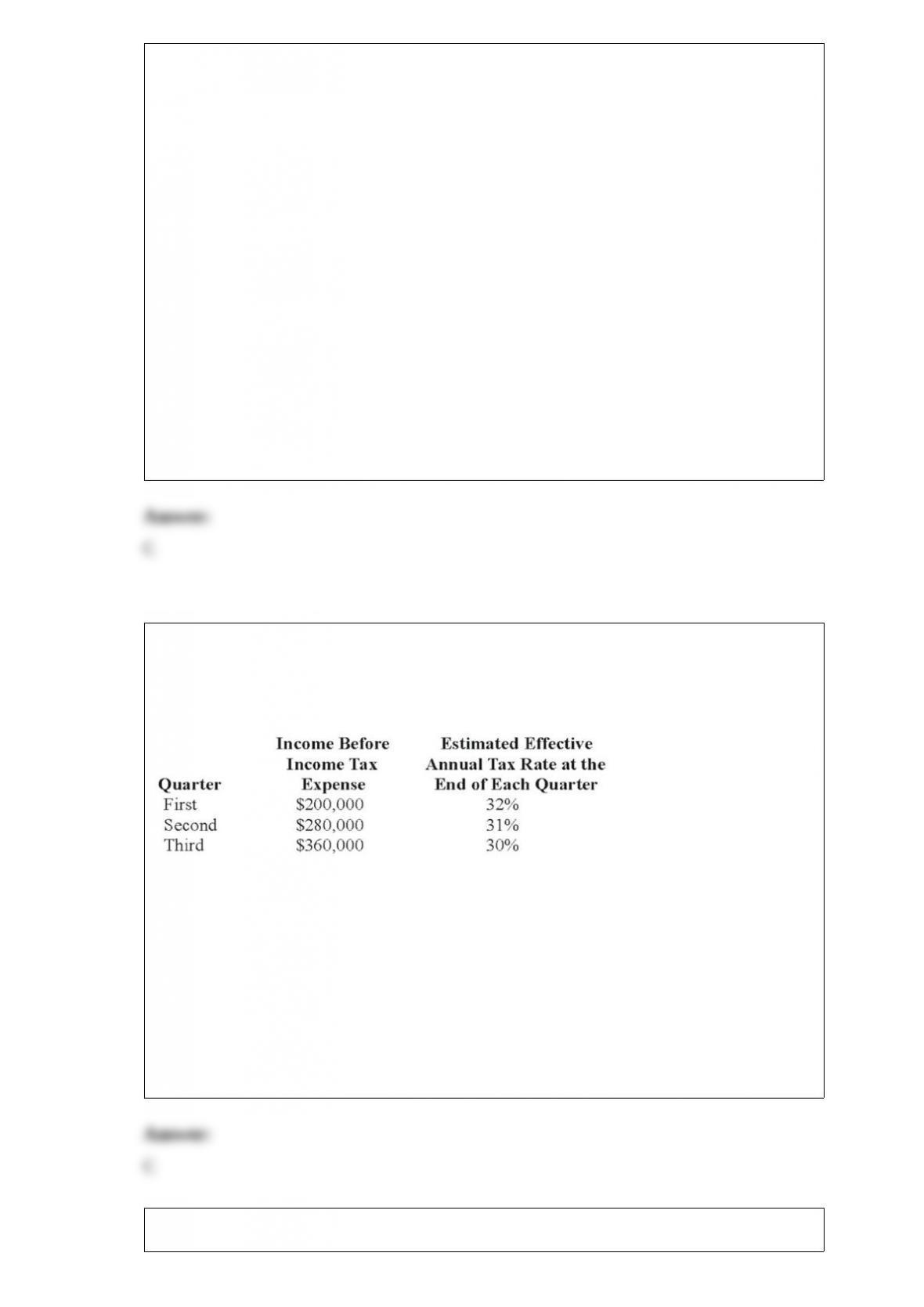
18) Toledo Imports, a calendar-year corporation, had the following income before tax
expense and estimated effective annual income tax rates for the first three quarters in
20X8:
Toledo’s income tax expense in its interim income statement for the nine months ended
September 30 and for the third quarter, respectively, are:
A.$250,800 and $103,200
B.$252,000 and $108,000
C.$252,000 and $103,200
D.$250,800 and $108,000
19) During its inception, Devon Company purchased land for $100,000 and a building
for $180,000. After exactly 3 years, it transferred these assets and cash of $50,000 to a
newly created subsidiary, Regan Company, in exchange for 15,000 shares of Regan’s
$10 par value stock. Devon uses straight-line depreciation. Useful life for the building
is 30 years, with zero residual value. An appraisal revealed that the building has a fair
value of $200,000.
Based on the information provided, at the time of the transfer, Regan Company should
record:
A.Building at $180,000 and no accumulated depreciation
B.Building at $162,000 and no accumulated depreciation
C.Building at $200,000 and accumulated depreciation of $24,000
D.Building at $180,000 and accumulated depreciation of $18,000
20) On January 1, 20X8, Chariot Company acquired 100 percent of Stryder Company
for $220,000 cash. The trial balances for the two companies on December 31, 20X8,
included the following amounts:
On the acquisition date, Stryder reported net assets with a book value of $170,000. A
total of $10,000 of the acquisition price is applied to goodwill, which was not impaired
in 20X8. Stryder’s depreciable assets had an estimated economic life of 10 years on the
date of combination.The difference between fair value and book value of tangible assets

is related entirely to buildings and equipment. Chariot used the equity method in
accounting for its investment in Stryder. Analysis of receivables and payables revealed
that Stryder owed Chariot $10,000 on December 31, 20X8.
Based on the information provided, the amount of differential assigned to buildings and
equipment that is amortized for the year is:
A.$5,000
B.$4,000
C.$10,000
D.$3,600
21) Five of eight internally reported operating segments of Rollins Company qualify
under the standards set by ASC 280 for segment reporting. However, the five identified
segments do not meet the 75 percent revenue test. ASC 280 prescribes that
management:
A.subdivide segments until there are at least 10 reportable segments
B.consolidate the remaining operating segments and include them under an “all other”
category
C.select additional operating segments until the 75% threshold is met
D.include the heading “corporate headquarters” as an operating segment
22) Perth Corporation owns 90 percent of Dundee Company’s stock. At the end of
20X8, Perth and Dundee reported the following partial operating results and inventory
balances:
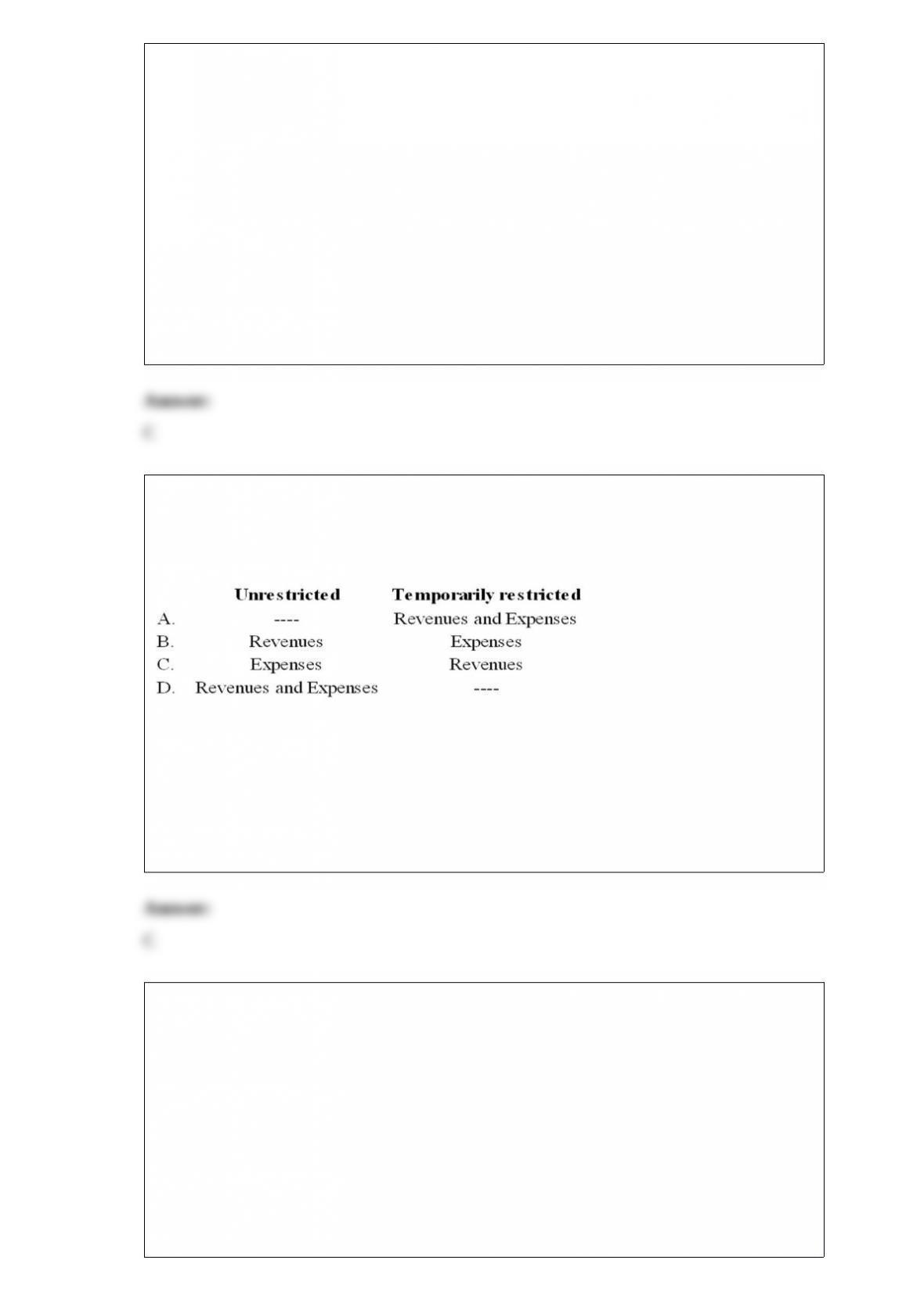
Perth regularly prices its products at cost plus a 30 percent markup for profit. Dundee
prices its sales at cost plus a 10 percent markup. The total sales reported by Perth and
Dundee include both intercompany sales and sales to nonaffiliates.
Based on the information given above, what amount of sales will be reported in the
consolidated income statement for 20X8?
A.$500,000
B.$850,000
C.$600,000
D.$800,000
23) A not-for-profit organization received a donation temporarily restricted as to use.
The donated amount was later spent in accordance with the restriction. In which
category(ies) of net assets should the related revenues and expenses be recognized?
A.Option A
B.Option B
C.Option C
D.Option D
24) Earth Company owns 100 percent of the capital stock of both Mars Corporation and
Venus Corporation. Mars purchases merchandise inventory from Venus at 125 percent
of Venus’s cost. During 20X8, Venus sold inventory to Mars that it had purchased for
$25,000. Mars sold all of this merchandise to unrelated customers for $56,892 during
20X8. In preparing combined financial statements for 20X8, Earth’s bookkeeper
disregarded the common ownership of Mars and Venus.
Based on the information given above, what amount should be eliminated from cost of
goods sold in the combined income statement for 20X8?
A.$31,250
B.$25,000
C.$56,892
D.$6,250
25) For a less-than-wholly-owned subsidiary, goodwill under the parent theory:
A. exceeds goodwill under the proprietary theory
B. exceeds goodwill under the entity theory
C. is less than goodwill under the entity theory
D. is less than goodwill under the proprietary theory
26) On January 1, 20X8, Chariot Company acquired 100 percent of Stryder Company
for $220,000 cash. The trial balances for the two companies on December 31, 20X8,
included the following amounts:
On the acquisition date, Stryder reported net assets with a book value of $170,000. A
total of $10,000 of the acquisition price is applied to goodwill, which was not impaired
in 20X8. Stryder’s depreciable assets had an estimated economic life of 10 years on the
date of combination.The difference between fair value and book value of tangible assets
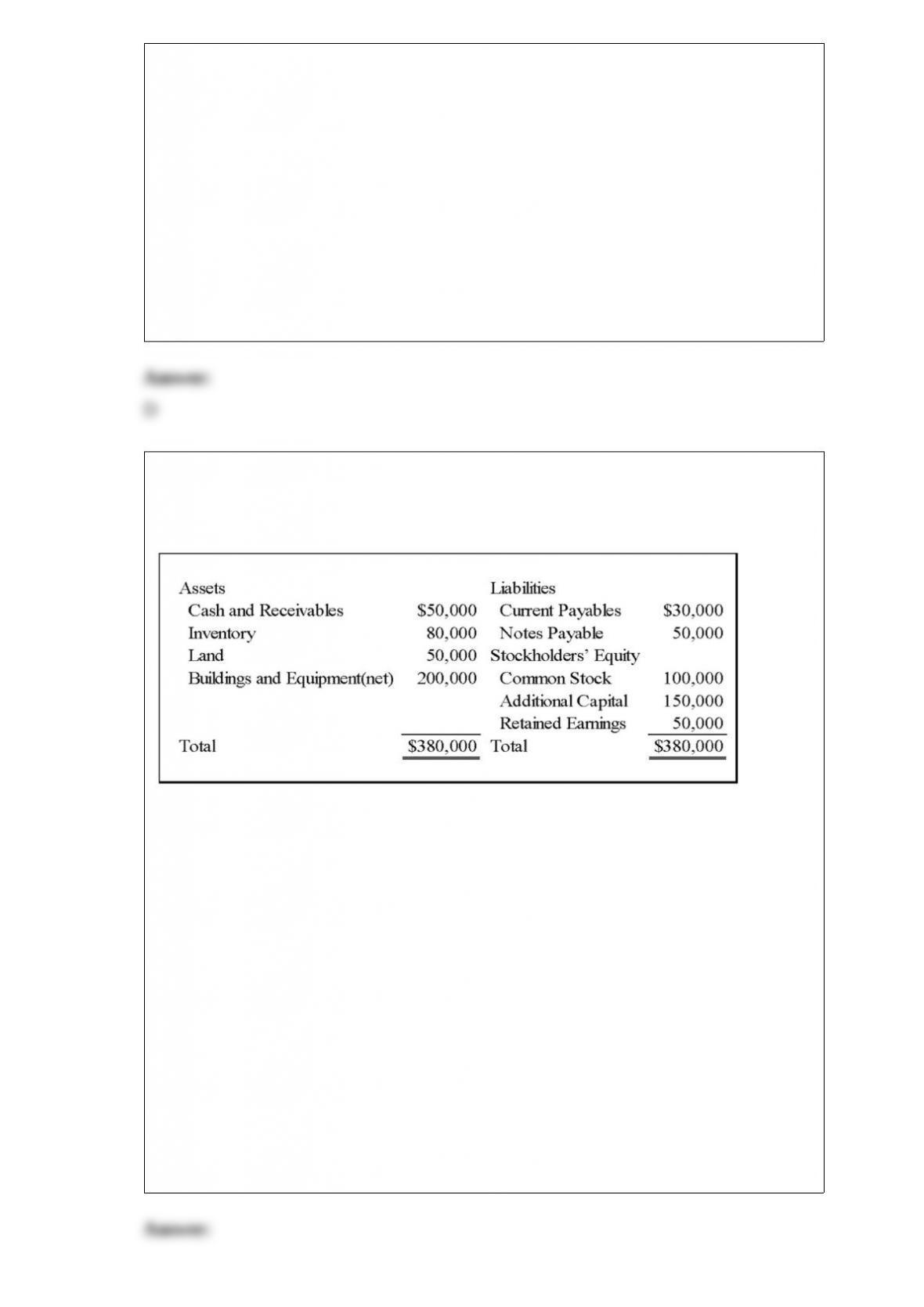
is related entirely to buildings and equipment. Chariot used the equity method in
accounting for its investment in Stryder. Analysis of receivables and payables revealed
that Stryder owed Chariot $10,000 on December 31, 20X8.
Based on the information provided, the differential associated with this acquisition is:
A.$36,000
B.$40,000
C.$10,000
D.$50,000
27) On January 1, 20X9, Wilton Company acquired all of Sirius Company’s common
shares, for $365,000 cash. On that date, Sirius’s balance sheet appeared as follows:
The fair values of all of Sirius’s assets and liabilities were equal to their book values
except for inventory that had a fair value of $85,000, land that had a fair value of
$60,000, and buildings and equipment that had a fair value of $250,000. Buildings and
equipment have a remaining useful life of 10 years with zero salvage value. Wilton
Company decided to employ push-down accounting for the acquisition. Subsequent to
the combination, Sirius continued to operate as a separate company.
Based on the preceding information, what amount of differential will arise in the
consolidation process?
A.$0
B.$5,000
C.$15,000
D.$65,000
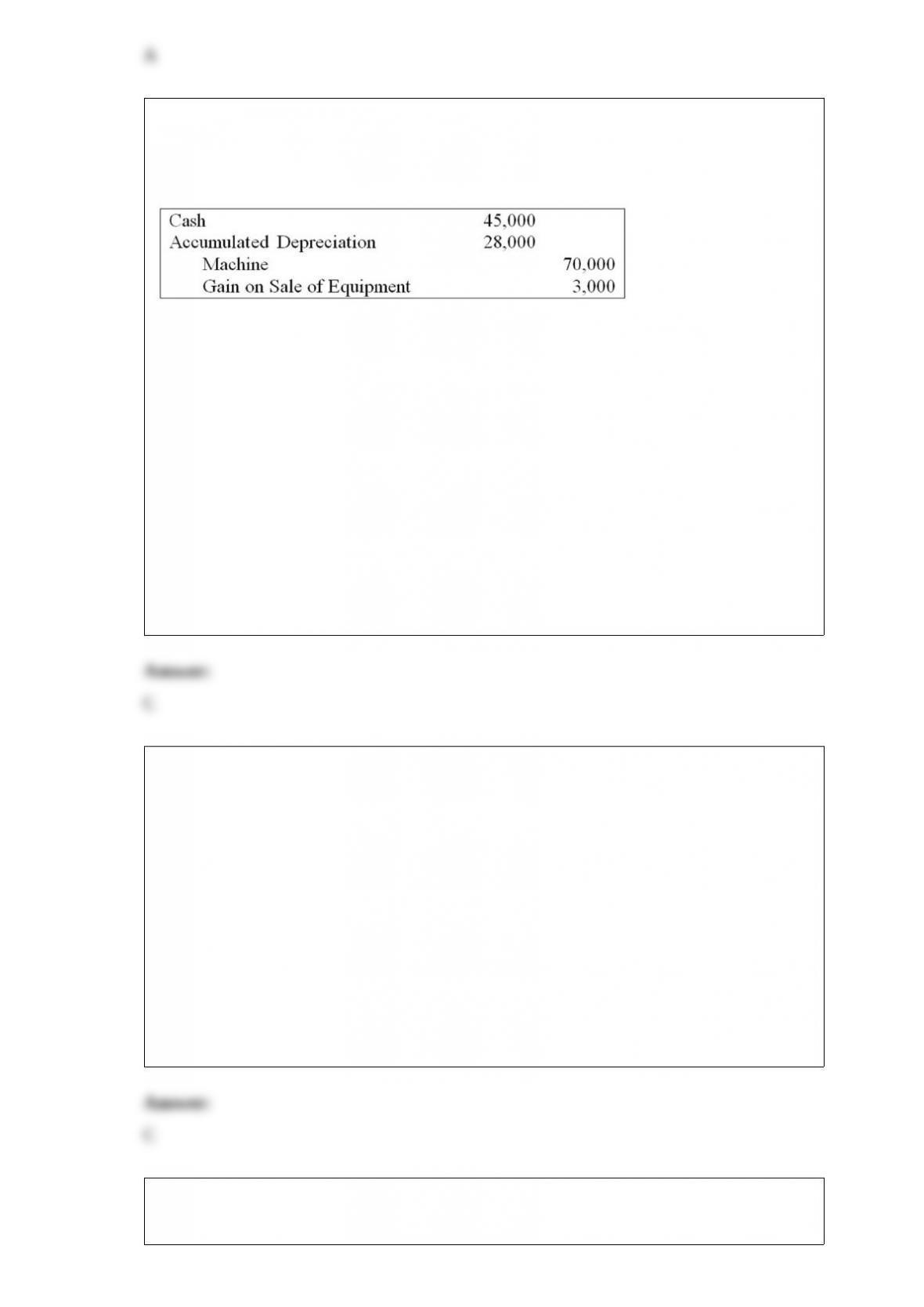
28) On January 1, 20X7, Servant Company purchased a machine with an expected
economic life of five years. On January 1, 20X9, Servant sold the machine to Master
Corporation and recorded the following entry:
Master Corporation holds 75 percent of Servant’s voting shares. Servant reported net
income of $50,000, and Master reported income from its own operations of $100,000
for 20X9. There is no change in the estimated economic life of the equipment as a result
of the intercorporate transfer.
Based on the preceding information, consolidated net income for 20X9 will be:
A.$150,000
B.$100,000
C.$148,000
D.$130,000
29) Which of the following are examples of intercompany balances and transactions
that must be eliminated in preparing consolidated financial statements?
I. Security holdings
II. Interest and dividends
III. Sales and purchases
A.I, II
B.I, III
C.I, II, III
D.II
30) Catalyst Corporation acquired 90 percent of Trigger Corporation’s common stock
on September 30, 20X8 for $225,000. At that date, the fair value of the
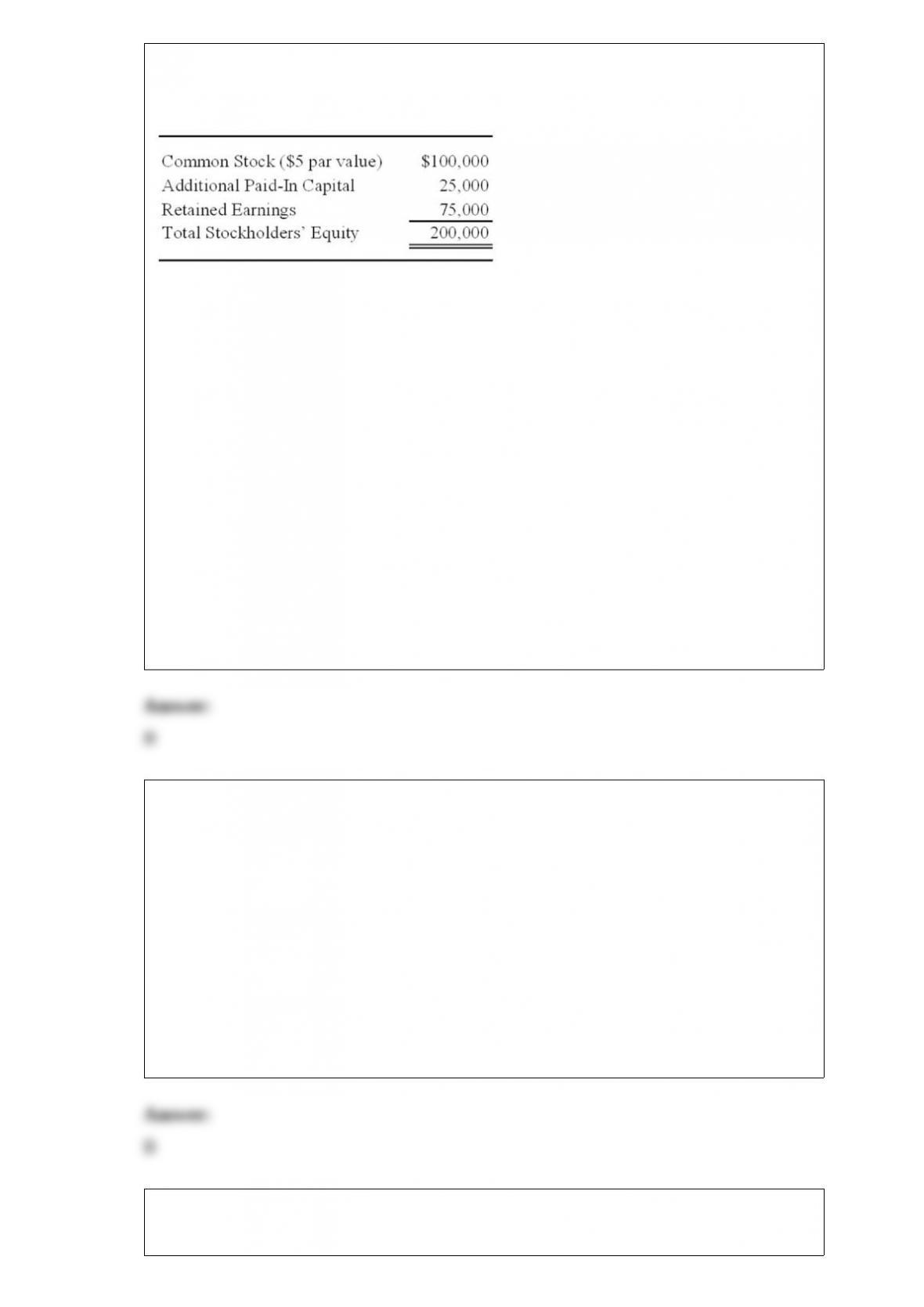
noncontrollinginterest was $25,000. On January 1, 20X8, Trigger reported the
following stockholders’ equity balances:
Trigger reported net income of $80,000 in 20X8, earned uniformly throughout the year,
and declared and paid dividends of $10,000 on June 30 and $30,000 on December 31,
20X8. Catalyst reported retained earnings of $250,000 on January 1, 20X8, and had
20X8 income of $120,000 from its separate operations. Catalyst paid dividends of
$50,000 on December 31, 20X8. Catalyst accounts for its investment in Trigger
Corporation using the fully adjusted equity method.
Based on the information provided, what is the consolidated income to the controlling
interest reported for the year 20X8?
A.$192,000
B.$138,000
C.$140,000
D.$120,000
31) On the statement of activities for a private, not-for-profit literary society, expenses
decrease which of the following classes of net assets?
I. temporarily restricted net assets
II. unrestricted net assets
A.I only
B.II only
C.Either I or II
D.Neither I nor II
32) Sky Corporation owns 75 percent of Earth Company’s stock. On July 1, 20X8, Sky
sold a building to Earth for $33,000. Sky had purchased this building on January 1,

20X6, for $36,000. The building’s original eight-year estimated total economic life
remains unchanged. Both companies use straight-line depreciation. The equipment’s
residual value is considered negligible.
Based on the information provided, the gain on sale of the building eliminated in the
consolidated financial statements for 20X8 is:
A.$8,250
B.$10,500
C.$6,000
D.$11,250
33) Parent Corporation owns 90 percent of Subsidiary 1 Company’s stock and 75
percent of Subsidiary 2 Company’s stock. During 20X8, Parent sold inventory
purchased in 20X7 for $48,000 to Subsidiary 1 for $60,000. Subsidiary 1 then sold the
inventory at its cost of $60,000 to Subsidiary 2. Prior to December 31, 20X8,
Subsidiary 2 sold $45,000 of inventory to a nonaffiliate for $67,000 and held $15,000 in
inventory at December 31, 20X8.
Based on the information given above, what amount should be reported in the
December 31, 20X8, consolidated balance sheet as inventory?
A.$36,000
B.$12,000
C.$15,000
D.$28,000
34) Gotham City acquires $25,000 of inventory on November 1, 20X7, having held no
inventory previously. On December 31, 20X7, the end of Gotham City’s fiscal year, a
physical count shows $8,000 still in stock. During 20X8, $6,500 of this inventory is
used, resulting in a $1,500 remaining balance of supplies on December 31, 20X8.
Which of the following accounts are debited when closing entries are made for the
general fund (assume outstanding encumbrances lapse at year-end)?
I. Appropriations Control.
II. Estimated Revenues Control.
III. Encumbrances.

IV. Budgetary Fund Balance-Reserved for Encumbrances.
V. Estimated Other Financing Uses-Transfer Out.
VI. Revenue-Property Tax.
A.I, II, III, VI
B.I, II, IV
C.I, IV, V, VI
D.III, IV, V