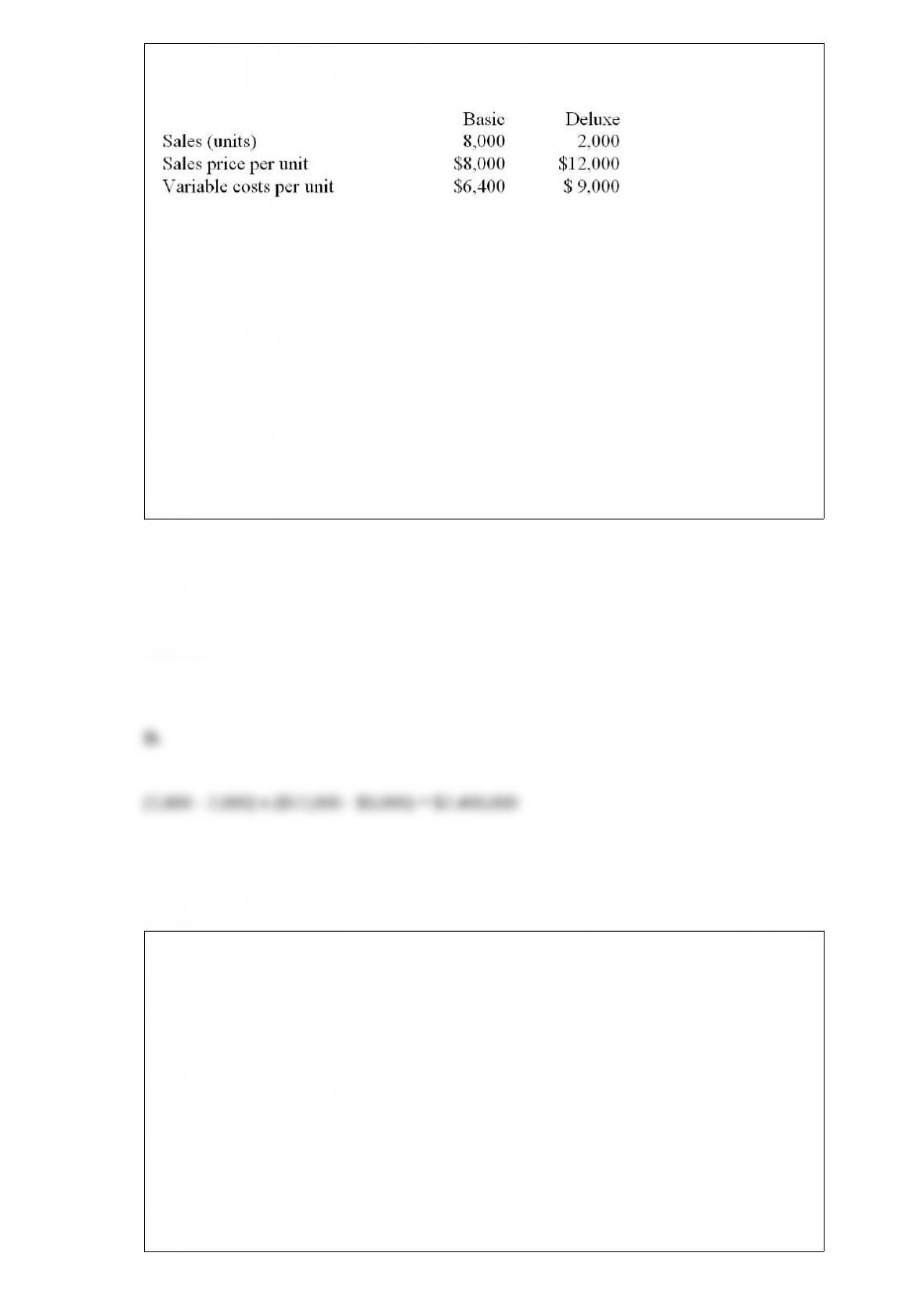
A machine distributor sells two models, basic and deluxe. The following information
relates to its master budget.
Actual sales were 7,000 basic models and 2,800 deluxe models. The actual sales prices
were the same as the budgeted sales prices for both models.
What is the sales activity variance for the deluxe model?
A. $400,000
B. $800,000
C. $1,600,000
D. $2,400,000
Answer:
Slurpy produces soft drinks and sodas. Production of 100,000 liters was started in
February, 85,000 liters were completed. Material costs were $38,220 for the month
while conversion costs were $16,380. There was no beginning work-in-process; the
ending work-in-process was 40% complete. What is the cost of the product that remains
in work-in-process?
A. $16,380
B. $51,000
C. $3,600
D. $9,000
Answer:
Department D has recently purchased and installed new computerized equipment for
Product X. This equipment will increase the overhead costs by $2,700 and decrease
labor costs (due to time savings) in Department D by $3.00 per case. Machine hours
will not change. If Smelly uses departmental rates, what are the product costs per case
for Product X assuming Departments C and D use direct labor hours and machine hours
as their respective allocation bases?
A. $80.00
B. $74.00
C. $69.50
D. $79.50
Answer:
Some managers prefer to use cost rather than market price in controlling transfers
between divisions. If cost is to be used, then it should be
A. full cost.
B. direct cost.
C. variable cost.
D. standard cost.
E. absorption cost.
Answer:
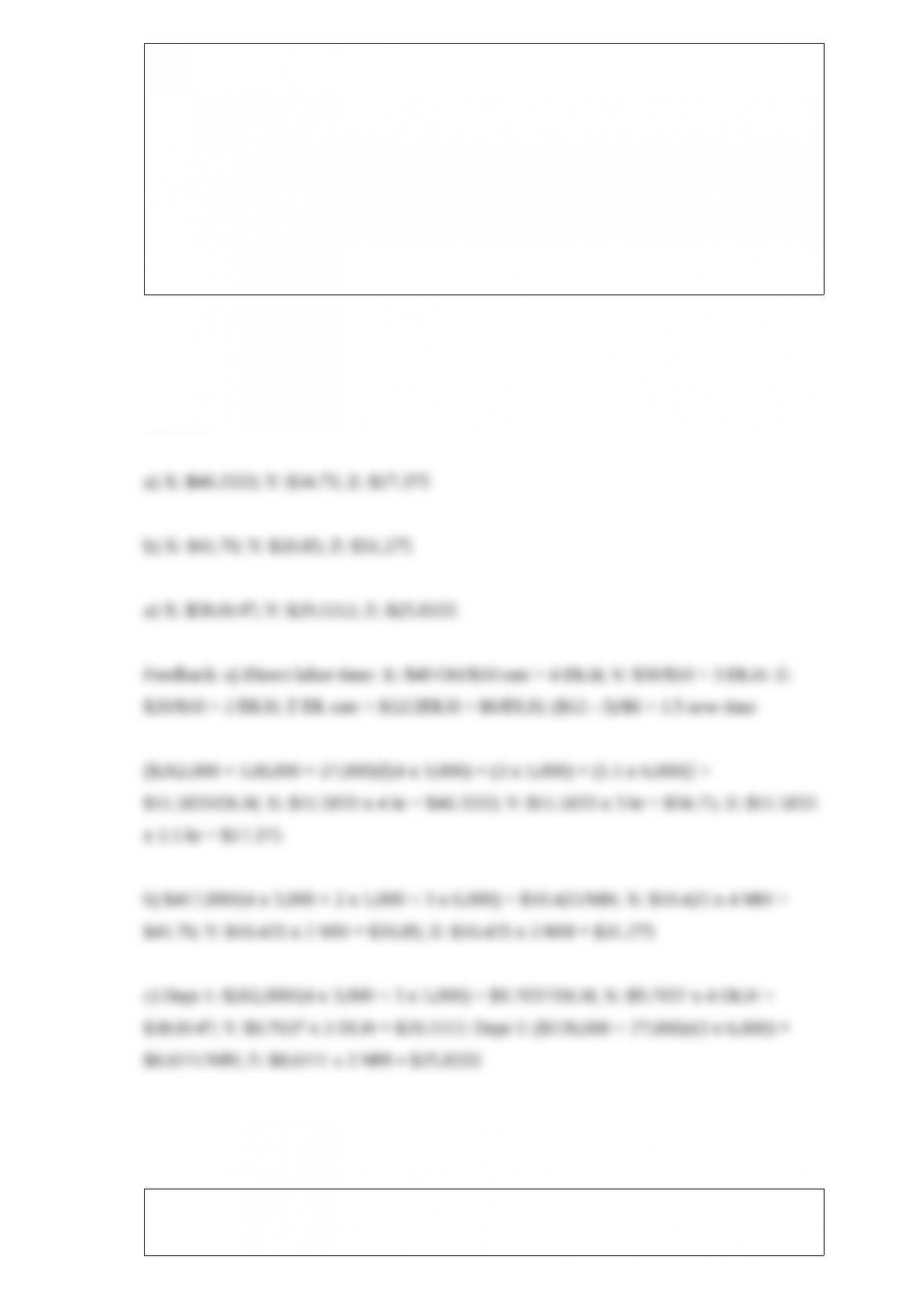
XYZ Company manufactures and distributes several different products. They currently
use a plantwide allocation method for allocating overhead at a rate of $10 per direct
labor hour. Department 1 produces Products X and Y. Department 1 has $262,000 in
traceable overhead. Department 2 manufactures Product Z. Department 2 has $128,000
in traceable overhead. The product costs (per unit) and other information are as follows:
Department 2 has recently purchased and installed new computerized equipment for
Product Z. This equipment will increase the overhead costs by $27,000 and decrease
labor costs (due to time savings) in Department 2 by $3.00 per case. Machine hours will
not change.
Required:
a) If XYZ uses a plantwide rate based on direct labor hours, what are the revised
overhead costs per unit for Product X, Y and Z?
b) If XYZ uses a plantwide rate based on machine hours, what are the revised overhead
costs per unit for Product X, Y and Z?
c) XYZ uses departmental rates, allocating Departments 1 on direct labor hours and 2
on machine hours. What are the overhead costs per unit for Product X, Y and Z?
Answer:
Which of the following is not normally considered part of the value chain?
A. Research and development
B. Purchasing
C. Administration
D. Distribution
E. Customer service
Answer:
Which of the following statements is (are) true regarding managerial decisions?
(A) The design and use of management control systems affects how an individual
makes and implements decisions.
(B) Rational managers will always make decisions that are in the best interest of the
organization employing them.
A. Only A is true.
B. Only B is true.
C. Both A and B are true.
D. Neither A nor B is true.
Answer:
The amount of direct materials issued to production is found by
A. subtracting ending work in process from total work in process during the period.
B. adding beginning direct materials inventory and the delivered cost of direct
materials.
C. subtracting ending direct materials from direct materials available for production.
D. adding delivered cost of materials, labor, and manufacturing overhead.
E. subtracting purchases discounts and purchases returns and allowances from
purchases of direct material plus freight-in.
Answer:
RedTail Mfg has the following data:
If RedTail has actual monthly sales of $1,500,000 and desires an operating profit of
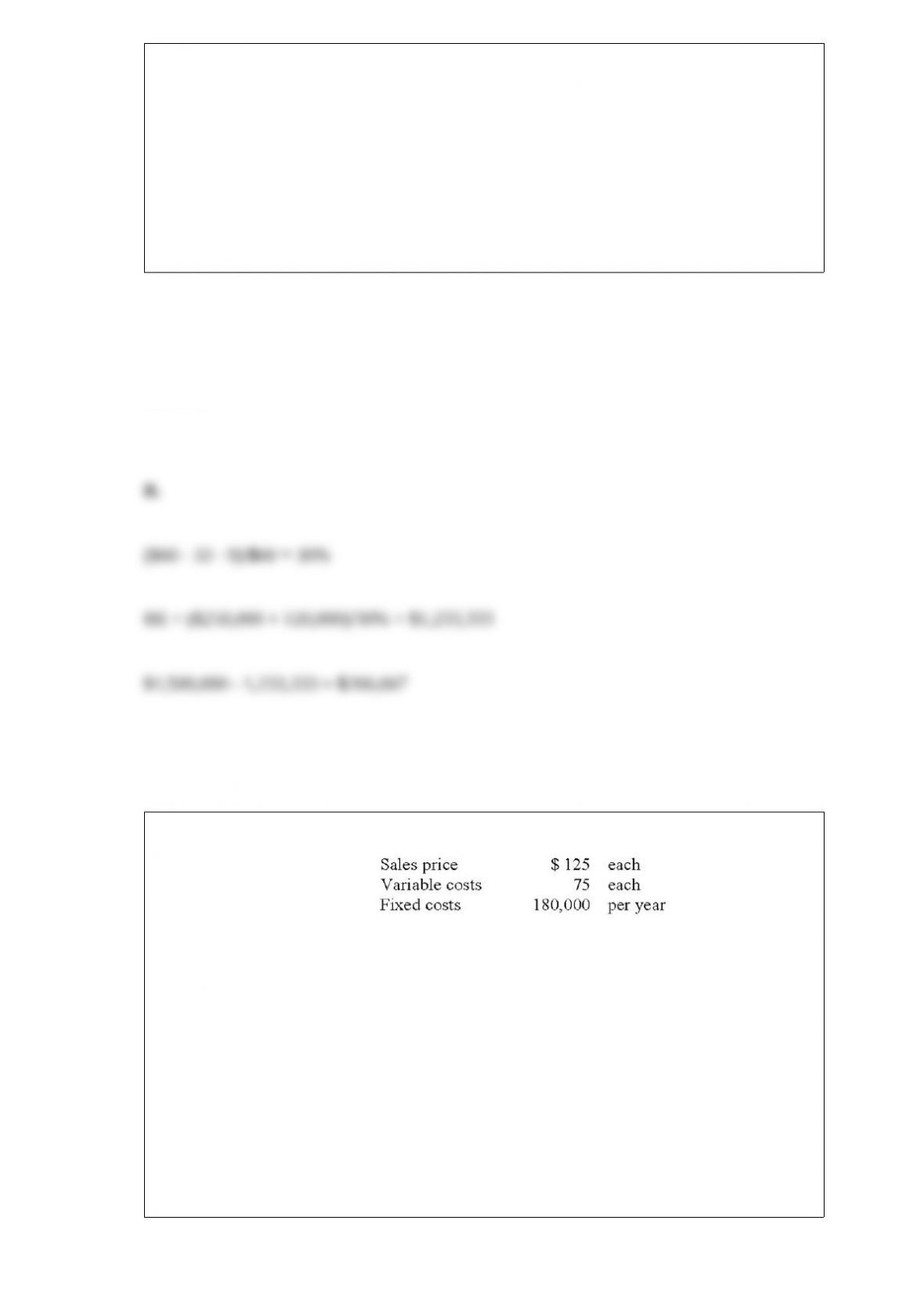
$50,000 per month, what is the margin of safety?
A. $100,000
B. $266,667
C. $50,000
D. $1,130,000
Answer:
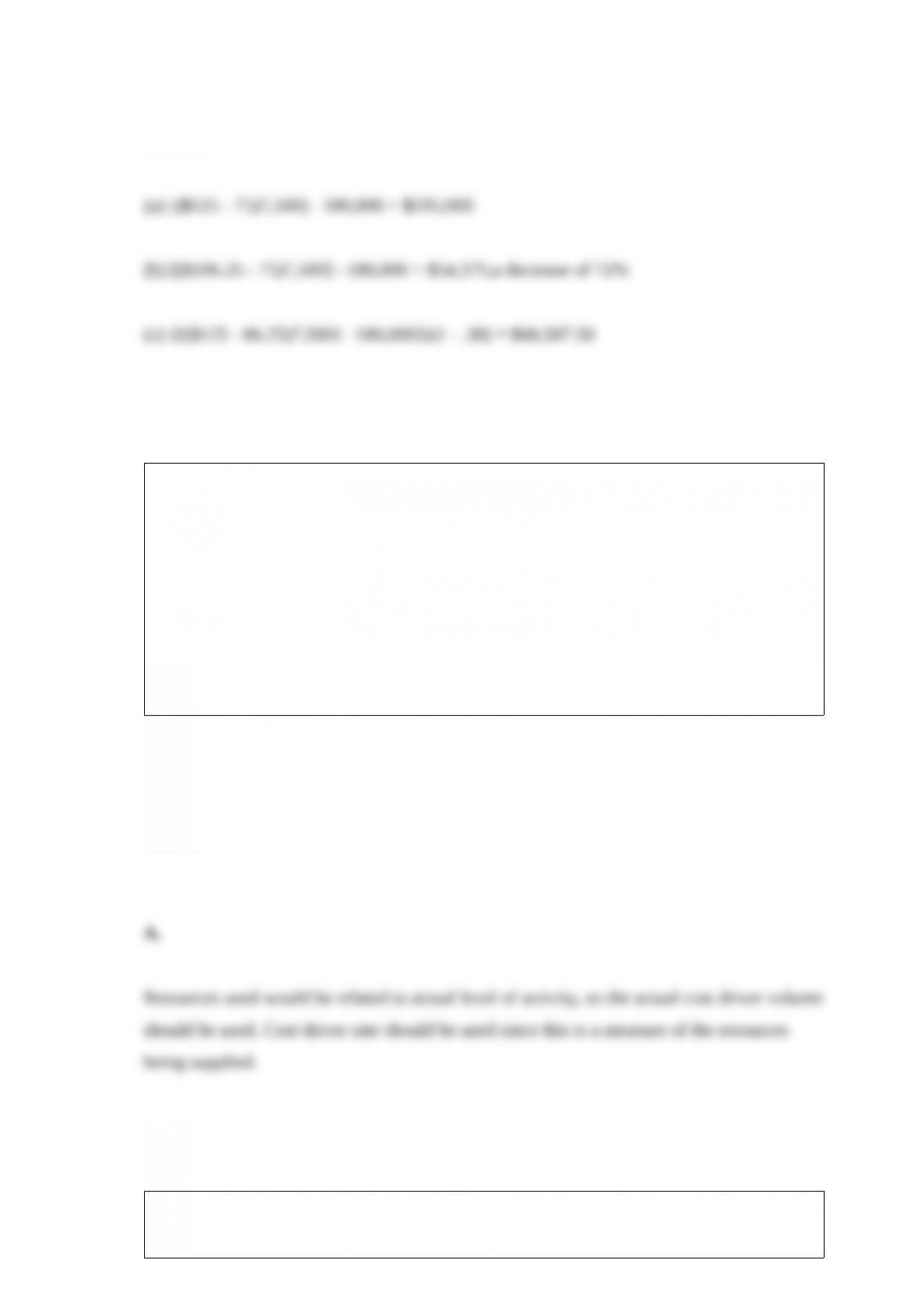
Zuma, Inc. is considering the introduction of a new music player with the following
price and cost characteristics:
Projected sales are 7,500 units per year.
Required (consider each question independent of each other):
(a) What will the operating profit be?
(b) What is the impact on operating profit if the selling price per unit decreases by
15%?
(c) What is the net income if variable costs per unit increase by 15% and Zuma has a
38% tax rate?
Answer:
The amount of resources used in an activity-based costing (ABC) system for a specific
activity is computed by multiplying the:
A. cost driver rate and the actual cost driver volume.
B. cost driver rate and the planned cost driver volume.
C. overhead rate and the actual cost driver volume.
D. overhead rate and the planned cost driver volume.
Answer:
Which of the following statements is (are) false regarding the effective use of
management control systems?
(A) In general, single rate cost allocations should not be used in management control
systems because clear control over the cost being allocated cannot be determined.
(B) The primary reason to use a dual rate allocation system is to focus a manager’s
performance evaluation on factors under the manager’s direct control.
A. Only A is false.
B. Only B is false.
C. Both A and B are false.
D. Neither A nor B is false.
Answer:
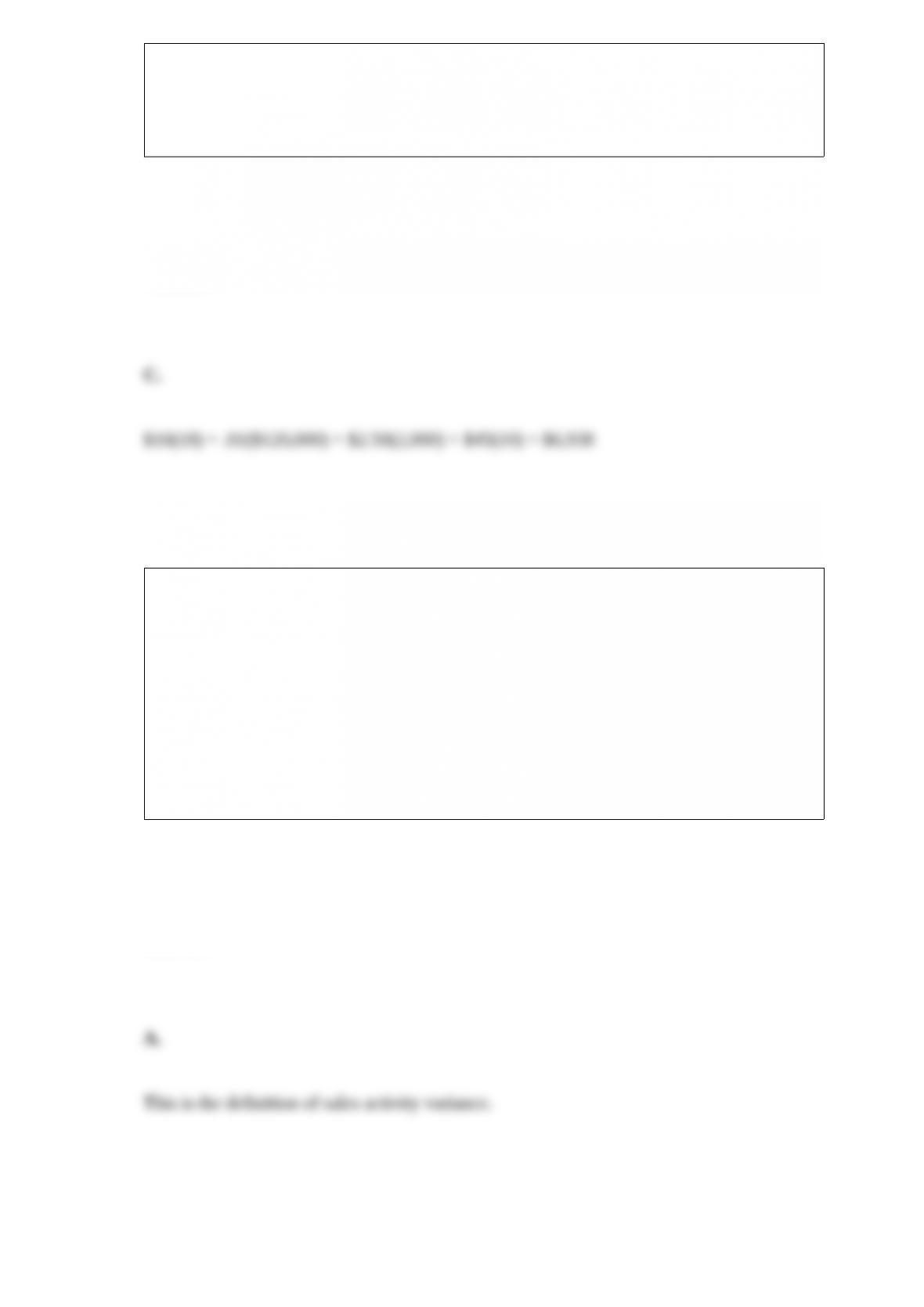
Folly Beach Industries decides to price delivery service according to the results of a
recent activity-based costing (ABC) study. The study indicates Folly Beach should
charge $16 per order, 1% of the order’s value for general delivery costs, $2.50 per item,
and $45 for delivery.
A year later, Folly Beach collected the following information for three of its customers:
What are the total delivery costs charged to Customer A during the year?
A. $5,738
B. $6,650
C. $6,938
D. $20,235
Answer:
The difference between operating profits in the master budget and operating profits in
the flexible budget is called
A. sales activity variance.
B. flexible budget variance.
C. production volume variance.
D. total operating profit variance.
Answer:
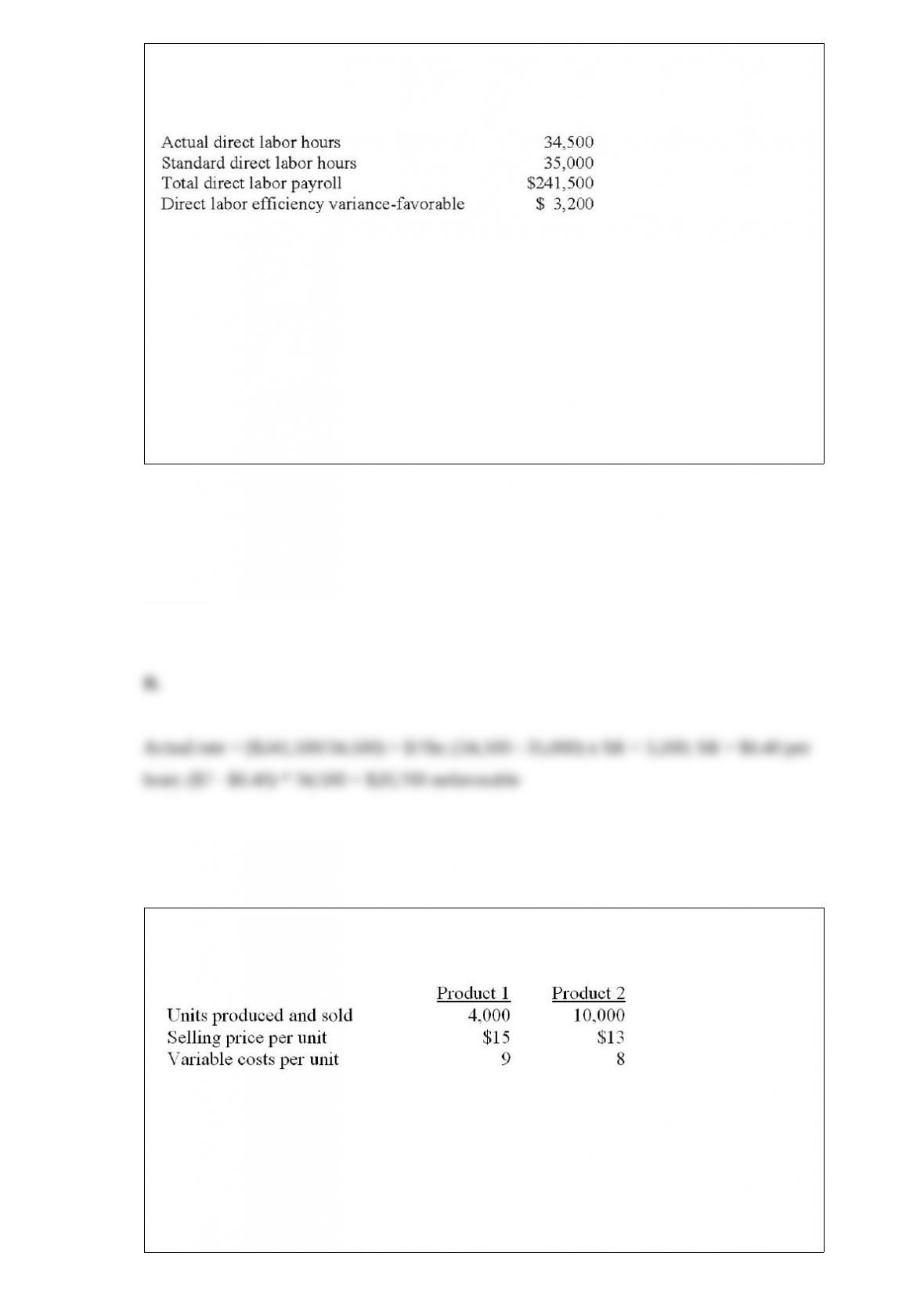
Information on Barber Company’s direct labor costs for the month of January is as
follows:
What is Barber’s direct labor price (rate) variance?
A. $17,250
B. $20,700
C. $18,750
D. $21,000
Answer:
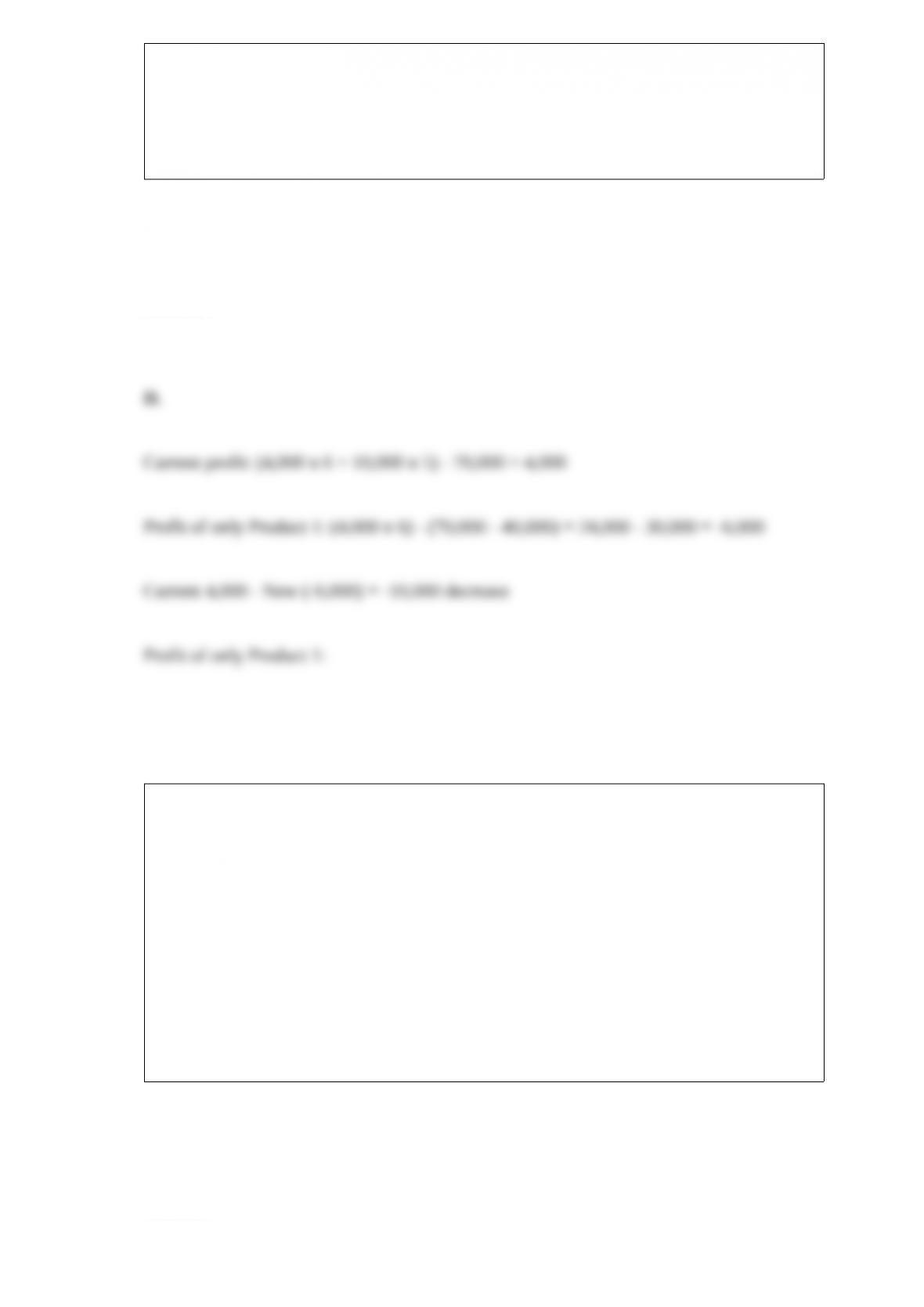
Albany Industries produces two products. Information about the products is as follows:
The company’s fixed costs totaled $70,000, of which $15,000 can be directly traced to
Product 1 and $40,000 can be directly traced to Product 2. The effect on the firm’s
profits if Product 2 is dropped would be a
A. $10,000 increase
B. $35,000 increase
C. $35,000 decrease
D. $10,000 decrease
Answer:
Activity analysis is one of the first stages in implementing an activity-based costing
system. Which of the following steps in “activity analysis” is usually performed first?
A. Classify all activities as value-added or nonvalue-added.
B. Chart, from start to finish, the activities used to complete the product or service.
C. Identify the process objectives that are defined by what the customer wants or
expects from the process.
D. Continuously improve the efficiency of all value-added activities and develop plans
to eliminate or reduce nonvalue-added ones.
Answer:
In developing a master budget for a manufacturing company, which one of the
following items should be done first?
A. development of a sales budget.
B. development of the capital budget.
C. determination of manufacturing capacity.
D. determination of the advertising budget.
E. preparation of a pro forma income statement.
Answer:
Activity-based cost management (ABM) can best be defined as
A. a cost system using multiple departmental overhead rates.
B. the use of cost information gathered using activity-based costing (ABC).
C. a quality-control system focusing on eliminating errors and mistakes.
D. an incentive system for a company’s key decision-makers.
Answer:
An operating unit of an organization is called a profit center if it is responsible
A. only for costs.
B. only for revenues.
C. for costs and revenues.
D. for investments in assets.
Answer:
The following information has been gathered for Roswell Machining for its fiscal year
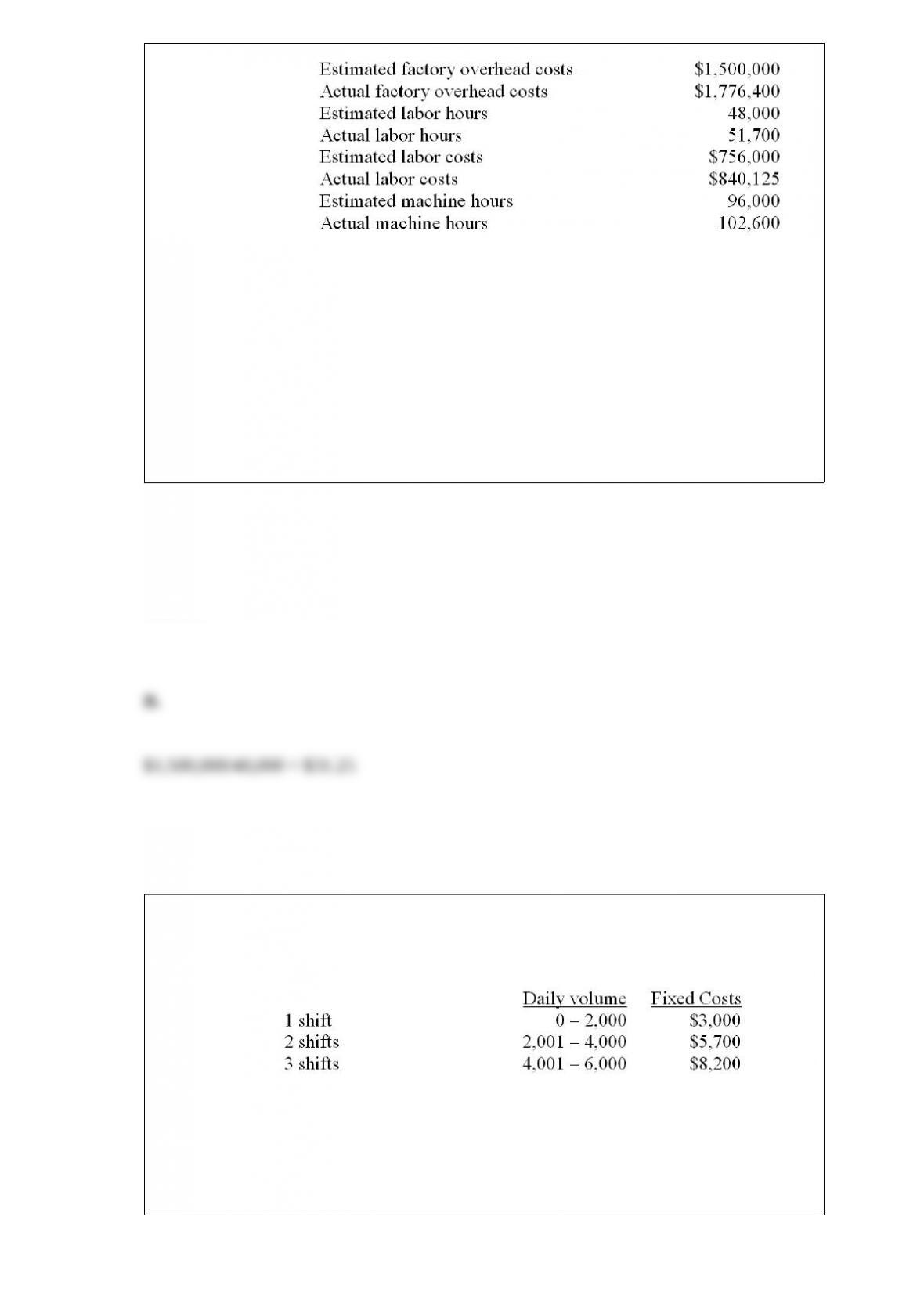
ending December 31:
What is the predetermined factory overhead rate per labor hour?
A. $29.01
B. $31.25
C. $37.01
D. $34.36
Answer:
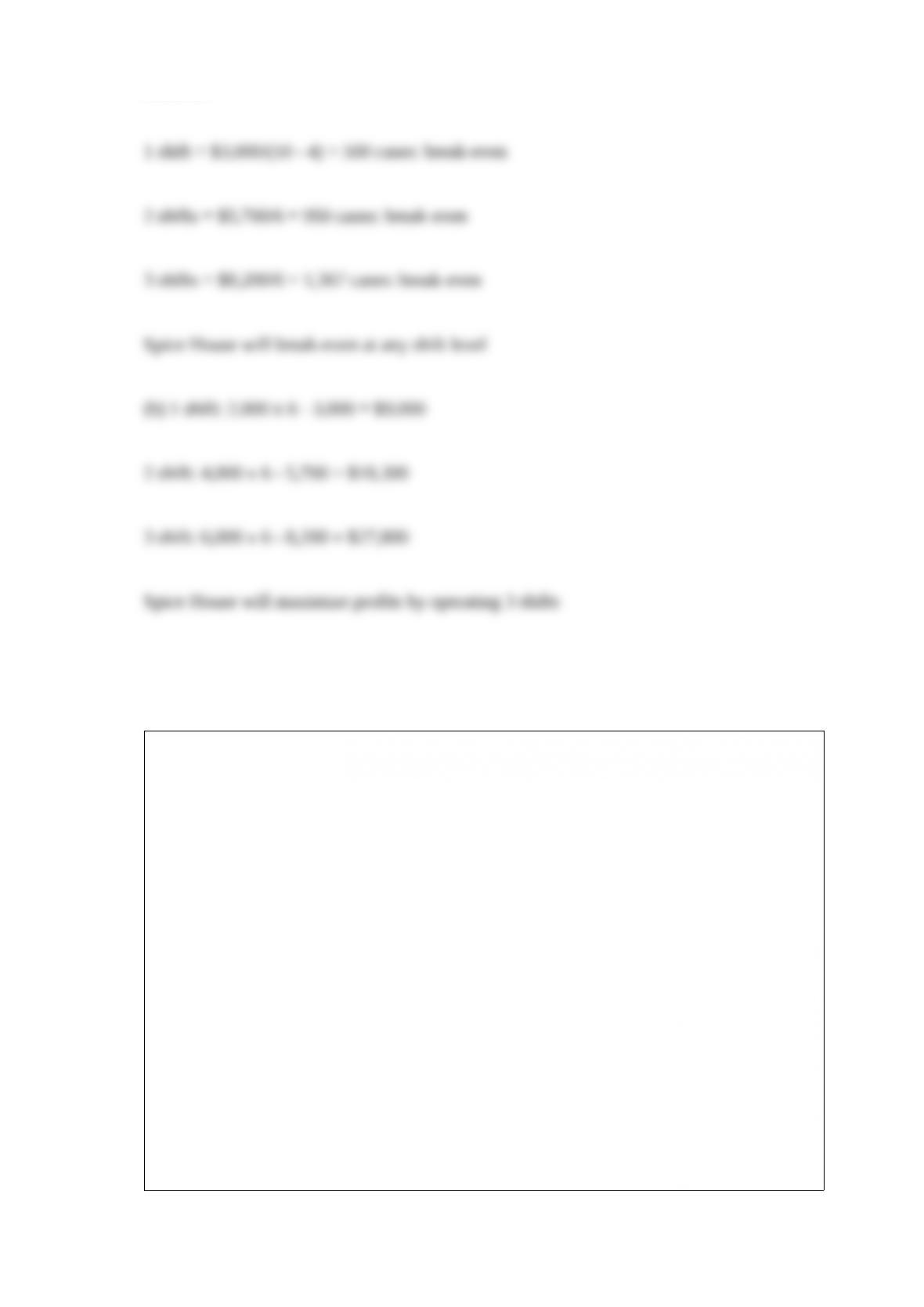
The Spice House packages horseradish and mustards in a factory that can operate one,
two or three shifts. The product sells for $10 a case and has variable costs of $4 per
case. Fixed costs are related to the number of shifts that are operated, with the estimated
costs as follows:
Required:
(a) Determine the break-even point(s).
(b) If Spice House can sell all it can produce, how many shifts should be operated?
Answer:
The Sun Company manufactures a special line of graphic tubing items. The company
estimates it will sell 75,000 units of this item in 2008. The beginning finished goods
inventory contains 20,000 units. The target for each year’s ending inventory is 10,000
units.
Each unit requires five feet of plastic tubing. The tubing inventory currently includes
70,000 feet of the required tubing. Materials on hand are targeted to equal three month’s
production. Any shortage in materials will be made up by the immediate purchase of
materials. Sales take place evenly throughout the year.
What is the production budget (in units) for 2008?
A. 60,000
B. 65,000
C. 75,000
D. 85,000

Answer:
Chipper Division of Acme Corp. sells 80,000 units of part Z-25 to the outside market.
Part Z-25 sells for $40, has a variable cost of $22, and a fixed cost per unit of $10.
Chipper has a capacity to produce 100,000 units per period. Jones Division currently
purchases 10,000 units of part Z-25 from Chipper for $40. Jones has been approached
by an outside supplier willing to supply the parts for $36. If Acme uses a negotiated
transfer pricing system, what is the minimum transfer price that should be charged for
this transaction?
A. $40
B. $36
C. $32
D. $22
Answer:
Which of the following items would not be an example of an economic value added
(EVA) adjustment to eliminate accounting distortions?
A. Research & development costs
B. Advertising expenditures
C. Patent amortization
D. Common stock
Answer:
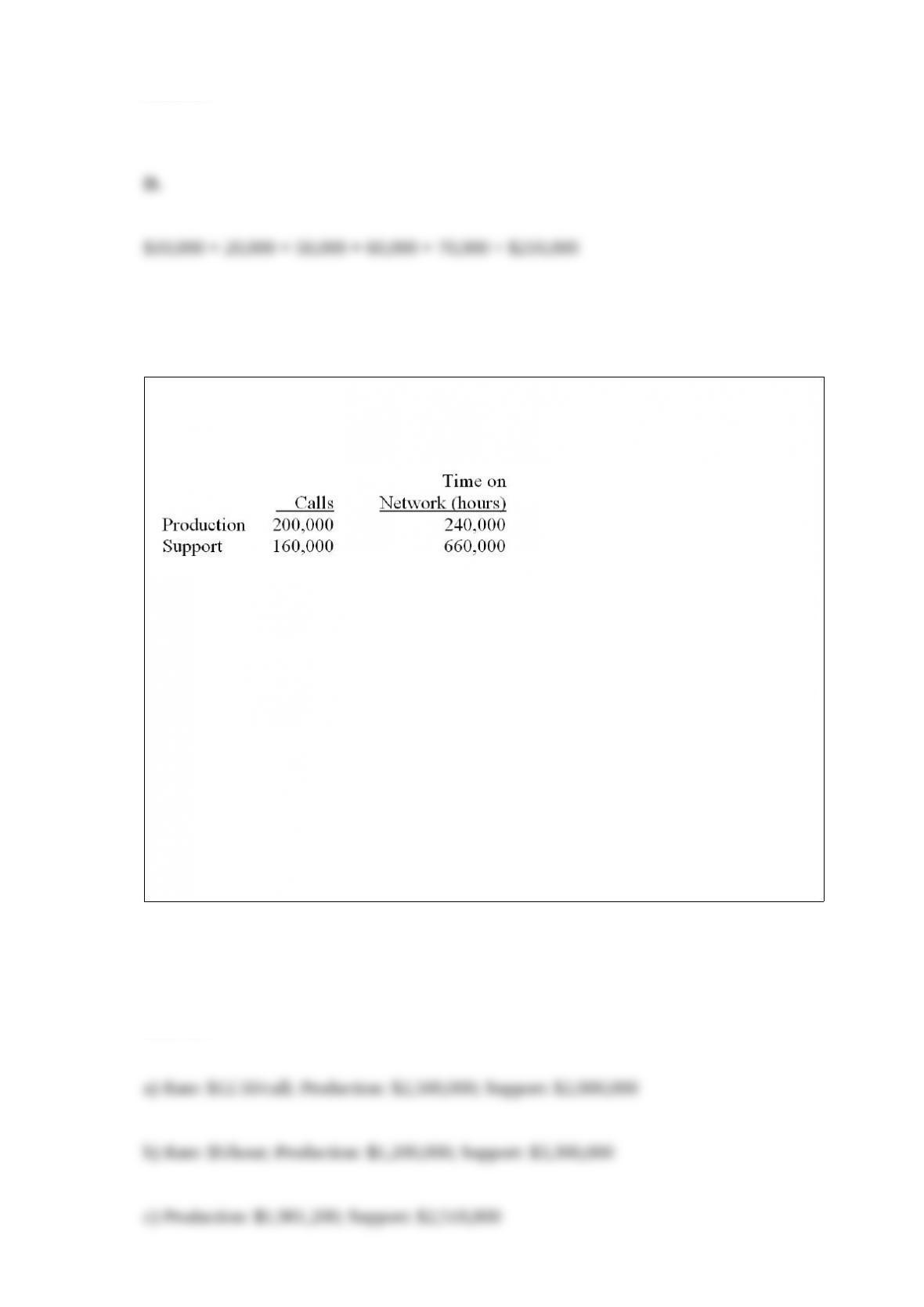
QC Enterprises quality control report for August contains the following items.
What would be the total of the nonconformance costs on the August quality control
report for QC Enterprises?
A. $120,000
B. $150,000
C. $180,000
D. $210,000
Answer:
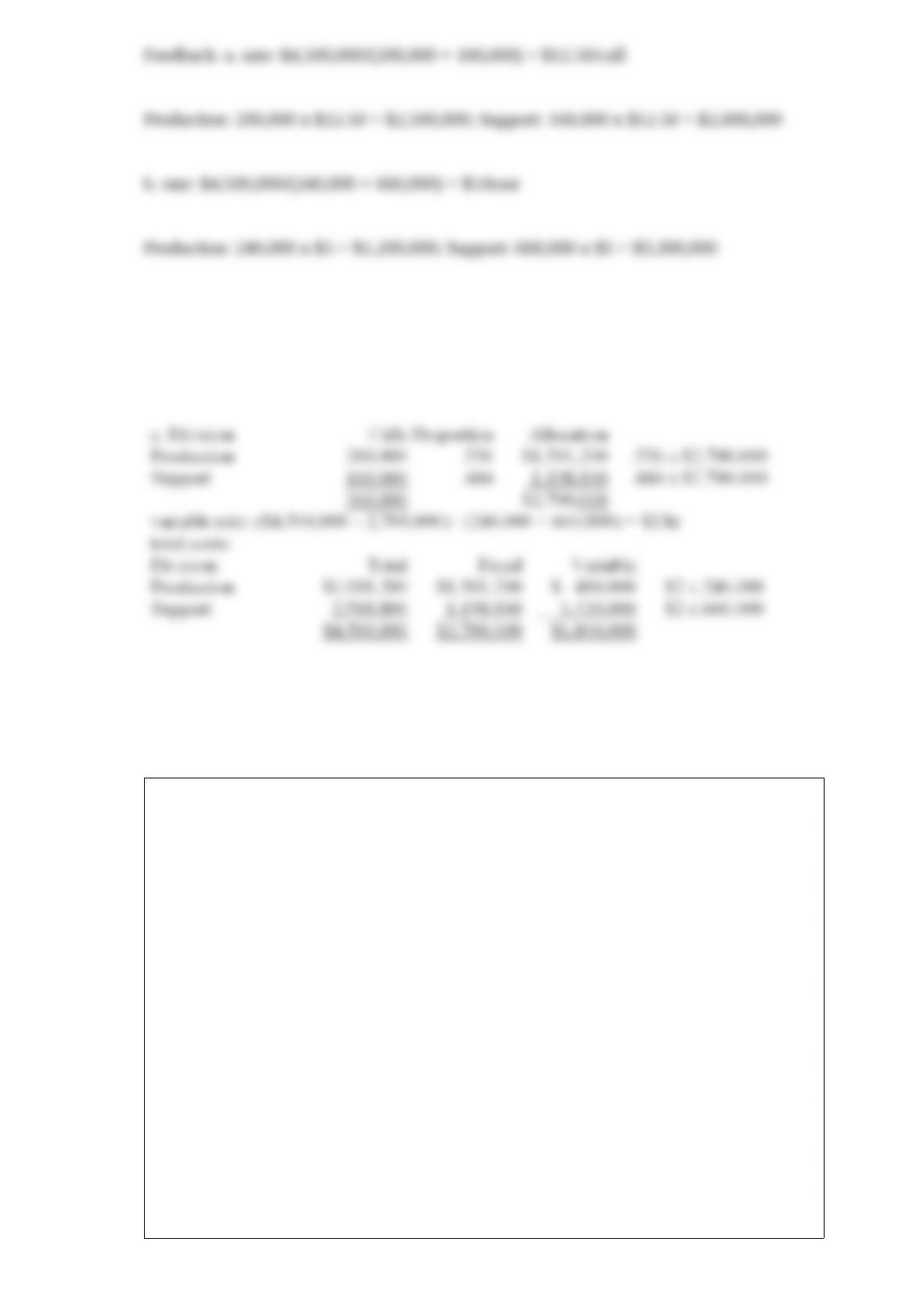
Redding has two divisions, Production and Support, that share the common costs of the
company’s communications network. The annual common costs are $4,500,000. You
have been provided with the following information for the upcoming year:
Required (use three decimal places in your calculations):
a) What is the allocation rate for the upcoming year assuming Redding uses the
single-rate method and allocates common costs based on the number of calls? Calculate
the costs allocated to each division.
b) What is the allocation rate for the upcoming year assuming Redding uses the
single-rate method and allocates common costs based on the time on the network?
Calculate the costs allocated to each division.
c) The cost accountant determined $2,700,000 of the communication network’s costs
were fixed and should be allocated based on the number of calls. The remaining costs
should be allocated based on the time on the network. What is the total communication
network costs allocated to each division?
Answer:
Avery Corporation has two divisions, A and B, which are both organized as profit
centers; Division A produces and sells widgets to Division B and to outside customers.
Division A has total costs of $35, $20 of which are variable. Division A is operating
significantly below capacity and sells the widgets for $50.
Division B has received an offer from an outsider vendor to supply all the widgets it
needs (20,000 widgets) at a cost of $45. The manager of Division B is considering the
offer but wants to approach Division A first.
What would be the profit impact to Avery Corporation as a whole if Division B
purchased the 20,000 widgets it needs from the outside vendor for $45?
A. no change in profit to Avery
B. $100,000 increase in profits
C. $100,000 decrease in profits
D. $500,000 decrease in profits
Answer:
Green Lumber Supply noticed a recent decline in the amount of purchases from a key
customer. Worried that other customers might also reduce their purchases, Green’s
management decided to evaluate the cost of its delivery service. Which of the following
cost drivers is more appropriate for general administrative costs of the Delivery
Department?
A. Number of different items ordered
B. Value of each order
C. Total number of items in each order
D. Number of deliveries made
Answer:
Which of the following is not a physical measure that can be used for allocating joint
costs using the physical quantities method?
A. Tons of steel
B. Ounces of gold
C. Dollars of labor
D. Feet of lumber
Answer:
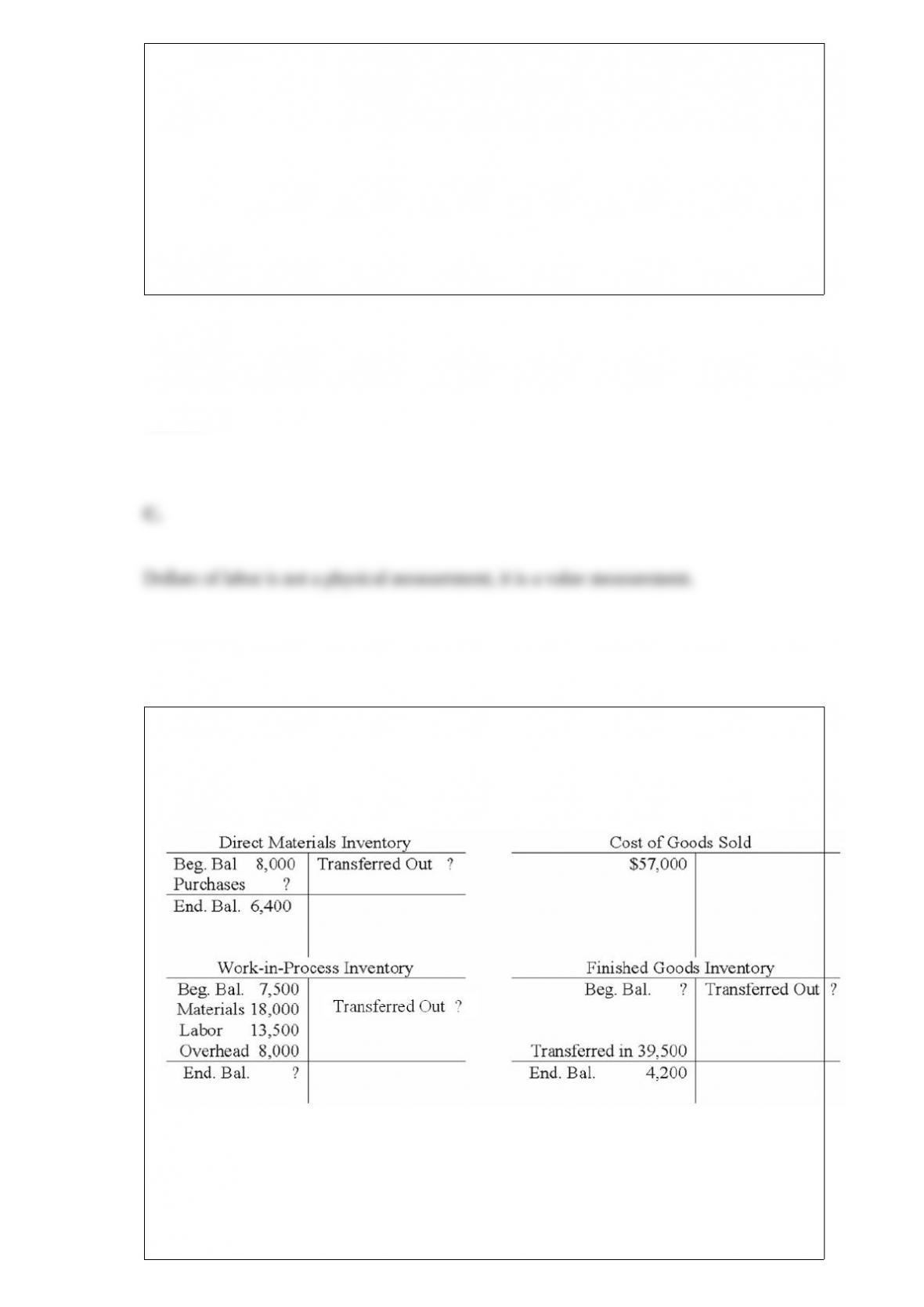
The financial records for the Lee Manufacturing Company have been destroyed in a
fire. The following information has been obtained from a separate set of books
maintained by the cost accountant. The cost accountant now asks for your assistance in
computing the missing amounts.
What is the amount of the materials purchased?
A. $14,400
B. $16,400
C. $18,000
D. $19,600
Answer: