

Canliss Mining uses the replacement method to determine depreciation on its office
equipment. During 2011, its first year of operations, office equipment was purchased at
a cost of $14,000. Useful life of the equipment averages four years and no salvage value
is anticipated. In 2013, equipment costing $5,000 was sold for $600 and replaced with
new equipment costing $6,000. Canliss would record 2013 depreciation of: A. $3,500.
B. $4,400.
C. $5,400.
D. None of the above is correct.
Answer:
During 2013, Prospect Oil Corporation incurred $4,000,000 in exploration costs for
each of 15 oil wells drilled in 2013. Of the 15 wells drilled, 10 were dry holes. Prospect
uses the successful efforts method of accounting. Assuming that Prospect depletes 30%
of the oil discovered in 2013, what amount of these exploration costs would remain in
its 12/31/13 balance sheet? A. $6 million.
B. $14 million.
C. $20 million.
D. $42 million.
Answer:


Prior years’ financial statements are restated under the: A. Current approach.
B. Prospective approach.
C. Retrospective approach.
D. None of the above is correct.
Answer:
A primary goal of earnings per share determination is: A. Conservatism.
B. Comparability.
C. Materiality.
D. Objectivity.
Answer:


Of the following, which is not an investing activity?A. Purchasing a new computer.
B. Buying treasury stock.
C. Selling a parcel of land.
D. Purchasing short-term investments.
Answer:
Robertson Corporation’s inventory balance was $22,000 at the beginning of the year
and $20,000 at the end. The inventory turnover ratio for the year was 6.0 and the gross
profit ratio 40%. What were net sales for the year? A. $126,000.
B. $200,000.
C. $120,000.
D. $210,000.
Answer:


The replacement of a major component increased the productive capacity of production
equipment from 10 units per hour to 18 units per hour. The expenditure should be
debited to: A. Repairs.
B. Equipment.
C. Maintenance.
D. Gain from repairs.
Answer:
Reliable Enterprises sells distressed merchandise on extended credit terms. Collections
on these sales are not reasonably assured, and bad debt losses cannot be reasonably
predicted. It is unlikely that repossessed merchandise is in condition to be re-sold.
Therefore, Reliable uses the cost recovery method. Merchandise costing $30,000 was
sold for $55,000 in 2012. Collections on this sale were $20,000 in 2012, $15,000 in


2013, and $20,000 in 2014.
In 2012, Reliable would recognize gross profit of: A. $0.
B. $25,000.
C. $8,090.
D. $8,333.
Answer:
Permanent accounts would not include: A. Cost of goods sold.
B. Inventory.
C. Current liabilities.
D. Accumulated depreciation.
Answer:
Nonconvertible bonds affect the calculation of: A. Basic earnings per share.


B. Diluted earnings per share.
C. Both A and B.
D. None of these is correct.
Answer:
At the end of the current year, a company overstated prepaid insurance by $80,000 and
understated supplies expense by $100,000. Its effective tax rate is 40%. As a result of
this error, net income is: A. Overstated by $108,000.
B. Overstated by $12,000.
C. Understated by $108,000.
D. Understated by $12,000.
Answer:
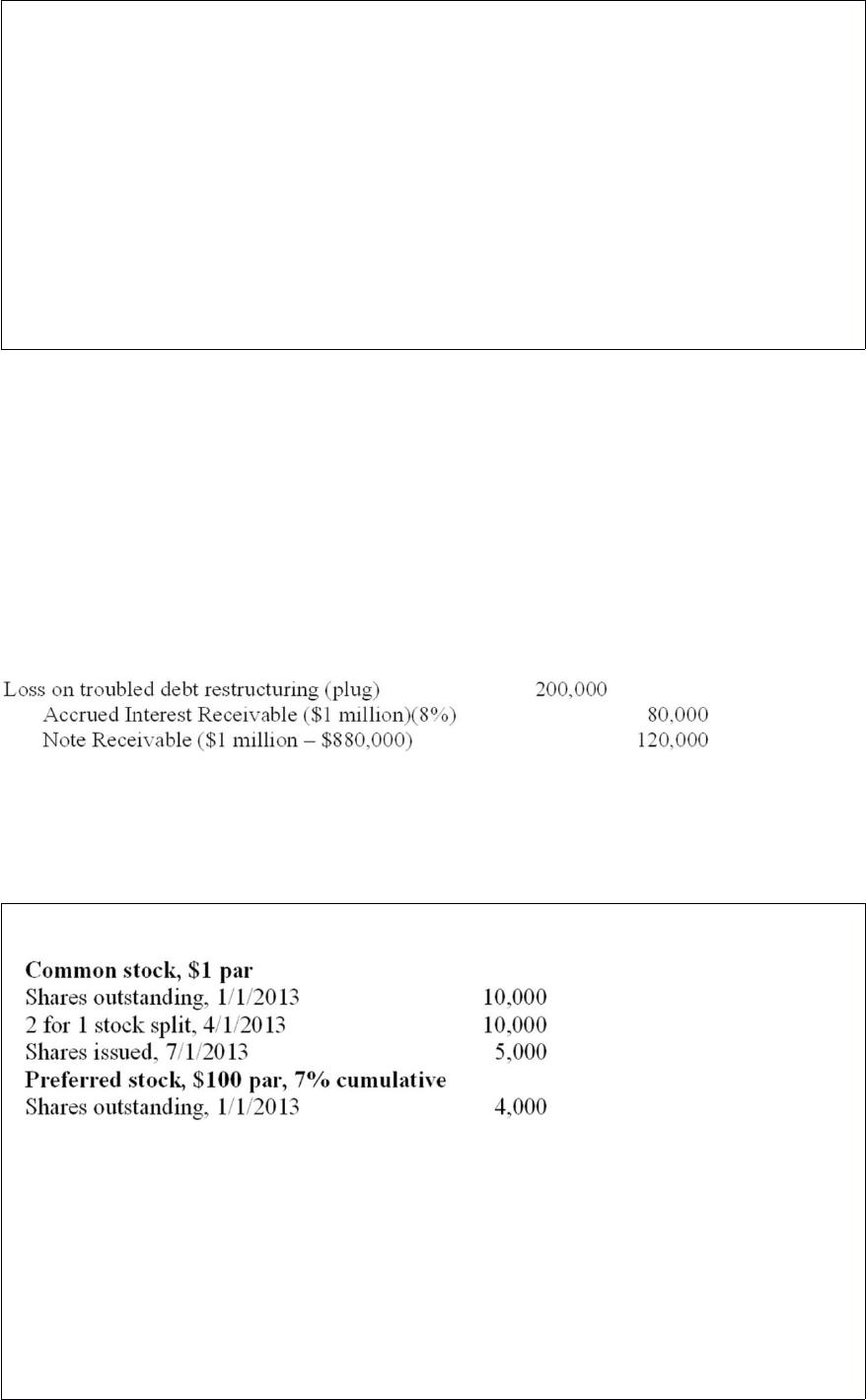
The O’Hara Group is owed $1,000,000 by Hilton Enterprises under an 8% note with
three years remaining to maturity. The prior year of interest was unpaid. O’Hara agrees
to restructure the note under terms that yield a present value of $880,000. The journal
entry that O’Hara would make to record this transaction would include a loss on
troubled debt restructuring of: A. $0.
B. $80,000.
C. $200,000.
D. $220,000.
Answer:
The following information pertains to J Company’s outstanding stock for 2013:
What is the number of shares J should use to calculate 2013 basic earnings per share?
A. 20,000.
B. 22,500.
C. 25,000.
D. 27,000.


Answer:
Preferred stock is called preferred because it usually has two preferences. These
preferences relate to: A. Dividends and voting rights.
B. Par value and dividends.
C. The preemptive right and voting rights.
D. Assets at liquidation and dividends.
Answer:
As of January 1, 2013, Farley Co. had a credit balance of $520,000 in its allowance for
uncollectible accounts. Based on experience, 2% of Farley’s credit sales have been
uncollectible. During 2013, Farley wrote off $650,000 of accounts receivable. Credit
sales for 2013 were $18,000,000. In its December 31, 2013, balance sheet, what amount
should Farley report as allowance for uncollectible accounts? A. $230,000.
B. $360,000.
C. $590,000.
D. $880,000.


Answer:
Recording the expense for postretirement benefits will not:A. Increase the APBO.
B. Increase the postretirement benefit assets.
C. Decrease the prior service cost.
D. Increase the net loss-AOCI.
Answer:
When the equity method of accounting for investments is used by the investor, the
investment account is increased when: A. A cash dividend is received from the investee.
B. The investee reports a net income for the year.
C. The investor records additional depreciation related to the investment.
D. The investee reports a net loss for the year.


Answer:
Amortizing prior service cost for pension plans will: A. Decrease assets.
B. Increase liabilities.
C. Increase shareholders’ equity.
D. Decrease retained earnings.
Answer:
Payment of retirement benefits: A. Increases the PBO.
B. Increases the ABO.
C. Reduces the GBO.
D. Reduces the PBO.
Answer:


Which of the following investment securities held by Zoogle Inc. are not reported at fair
value in its balance sheet? A. Common stock held as available for sale securities.
B. Debt securities held to maturity.
C. Preferred stock held as trading securities.
D. All of the above are reported at fair value.
Answer:
ADH constructed a new subdivision during 2012 and 2013 under contract with Cactus
Development Co. Relevant data are summarized below:
ADH uses the completed contract method to recognize revenue.
In its December 31, 2012, balance sheet, ADH would report: A. The asset, cost and
profits in excess of billings, of $500,000.
B. The liability, billings in excess of cost, of $300,000.
C. The asset, contract amount in excess of billings, of $1,500,000.
D. The asset, deferred profit, of $400,000.
Answer:
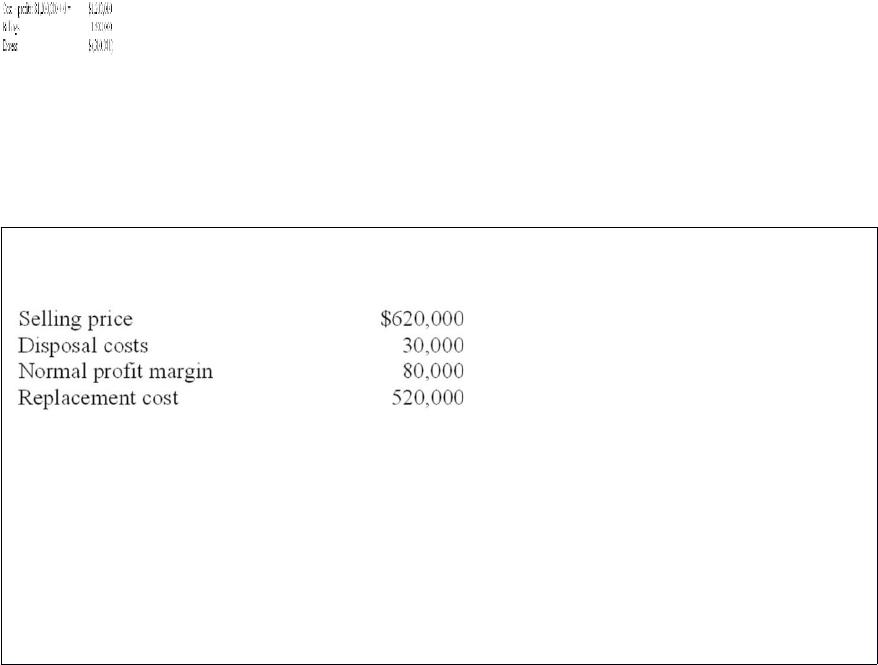
Montana Co. has determined its year-end inventory on a FIFO basis to be $600,000.
Information pertaining to that inventory is as follows:
What should be the carrying value of Montana’s inventory? A. $600,000.
B. $520,000.
C. $590,000.
D. $510,000.
Answer:


Which of the following is true about accounting for a troubled debt restructuring?A. If a
receivable becomes impaired, it is remeasured at the discounted present value of the
cash flows that were originally expected to be collected, but at a revised discount rate.
B. Receivables are not remeasured; instead, fair values are obtained from reliable
factors.
C. If a receivable is continued, but with modified terms, a loss is typically recorded.
D. Receivables are never settled outright at the time of a restructuring.
Answer:
Current liabilities normally are recorded at their: A. Present value.
B. Cost.
C. Maturity amount.
D. Expected value.
Answer:


A change in the residual value of equipment is accounted for: A. As a prior period
adjustment.
B. Prospectively.
C. Retrospectively.
D. None of the above is correct.
Answer:
The factors that need to be determined to compute depreciation are an asset’s: A. Cost,
residual value, and physical life.
B. Cost, replacement value, and service life.
C. Fair value, residual value, and economic life.
D. Cost, residual value, and service life.
Answer:
Using straight-line depreciation for financial reporting purposes and MACRS for tax
purposes in the first year of an asset’s life creates a: A. Future deductible amount.


B. Permanent difference not requiring inter-period tax allocation.
C. Deferred tax asset.
D. Deferred tax liability.
Answer:
False Value Hardware began 2013 with a credit balance of $32,000 in the allowance for
sales returns account. Sales and cash collections from customers during the year were
$650,000 and $610,000, respectively. False Value estimates that 6% of all sales will be
returned. During 2013, customers returned merchandise for credit of $28,000 to their
accounts. False Value’s 2013 income statement would report net sales of: A. $622,000.
B. $607,000.
C. $646,000.
D. $611,000.
Answer:


F Co. declares a 5% stock dividend. If the market price at declaration is $12 per share, a
shareholder with 110 shares likely would receive: A. Five additional shares.
B. Fractional share rights for 5½ shares.
C. Five additional shares and $6 in cash.
D. Five additional shares and a fractional share right for 2½ shares.
Answer:
On June 30, 2013, K Co. had outstanding 9%, $10,000,000 face value bonds maturing
on June 30, 2018. Interest is payable semiannually every June 30 and December 31. On
June 30, 2013, after amortization was recorded for the period, the unamortized bond
premium and bond issue costs were $60,000 and $100,000, respectively. On that date,
K acquired all its outstanding bonds on the open market at 98 and retired them. At June
30, 2013, what amount should K recognize as gain on redemption of bonds before
income taxes? A. $40,000.
B. $160,000.
C. $240,000.
D. $360,000.
Answer:

Explain, using an example, how a company can use earnings management and justify it
by conservatism.
Answer:
Sunnyvale Computer Company sells a line of computers that carry a six-month
warranty. Customers are offered the opportunity to buy a two-year extended warranty
for an additional charge. During 2013, Sunnyvale received $320,000 from customers
for these extended warranties. All sales are on credit, and funds are received evenly
throughout the year and the warranties go into effect immediately after purchase.
Required:
Prepare a summary journal entry to record sales of the extended warranties. Also
prepare any other entries associated with the warranties that should be recorded during
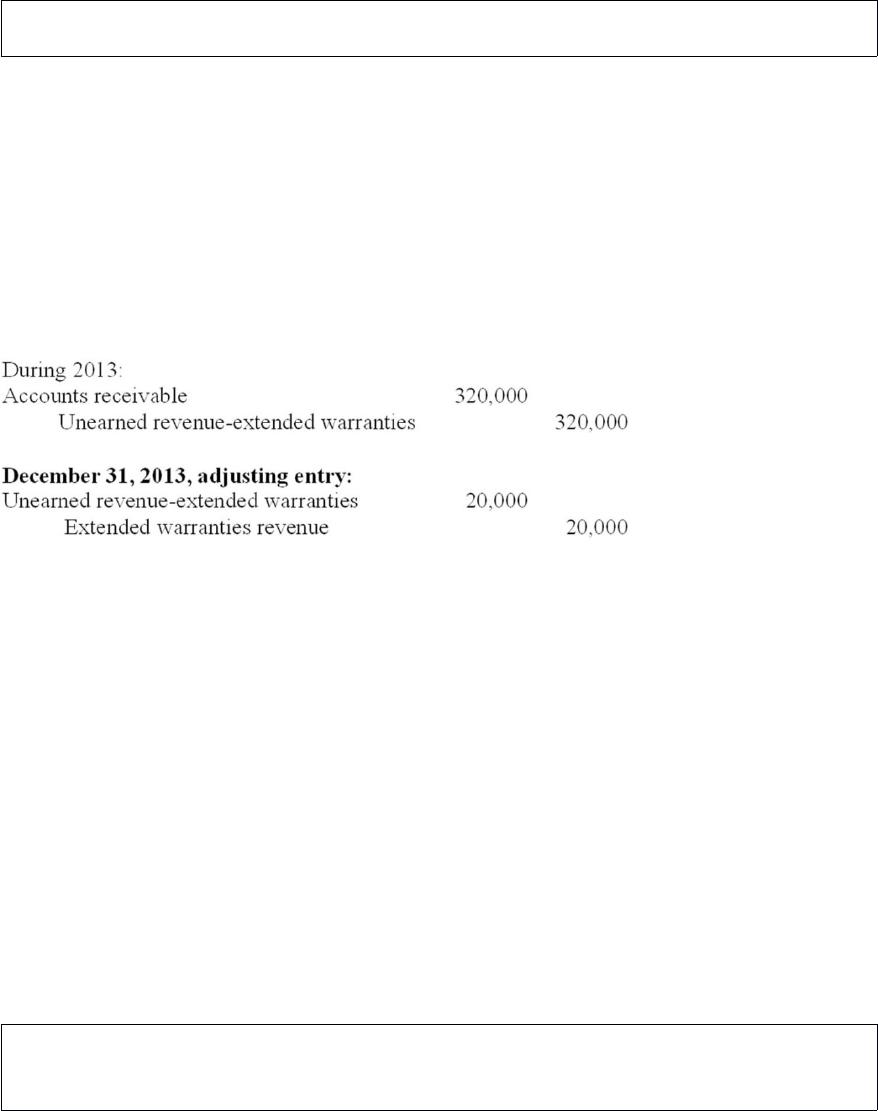
2013.
Answer:
Distinguish between an installment sale and a revolving credit agreement (e.g., as
happens with a credit card, where there is a sequence of purchases and payments).
Answer:
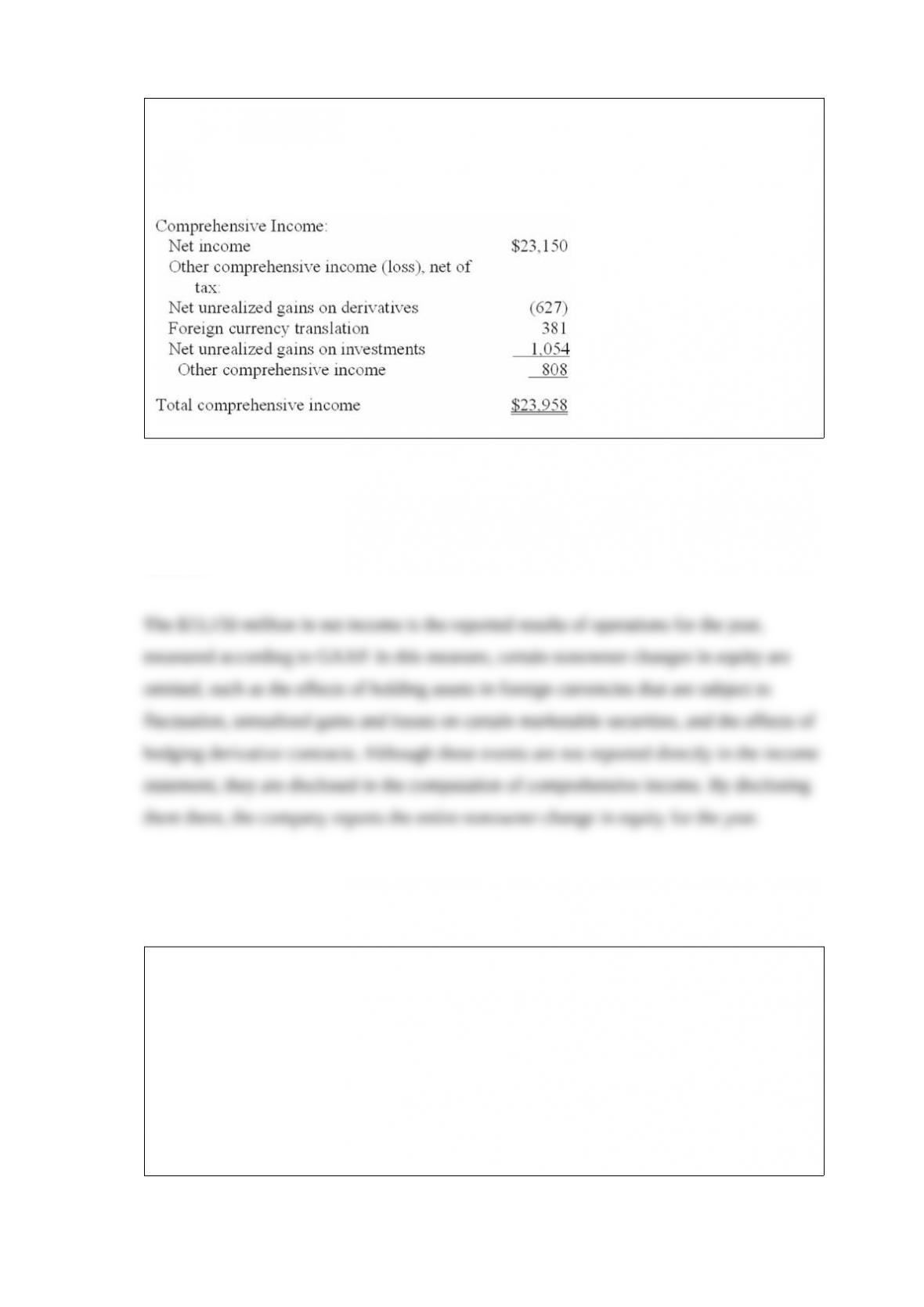

Presented below is an excerpt ($ in millions) from the 2011 annual report to
shareholders of Microsoft Corporation. Explain how the shareholder should interpret
the difference between the net income and total comprehensive income for Microsoft in
2011.
Answer:
Pocus Inc. reports warranty expense when related products are sold. For tax purposes,
the warranty costs are deductible as incurred. At the end of the current year, Pocus has a
warranty liability of $500,000 and taxable income of $50,000,000. At the beginning of
the current year, Pocus reported a deferred tax asset of $210,000 related to the
difference in reporting warranty expense, its only temporary difference. The enacted tax
rate is 40% each year.
Required:Prepare the appropriate journal entry for Pocus to record the income tax
provision for the current year. Show well-labeled computations to support the three
amounts in your journal entry.


Answer:
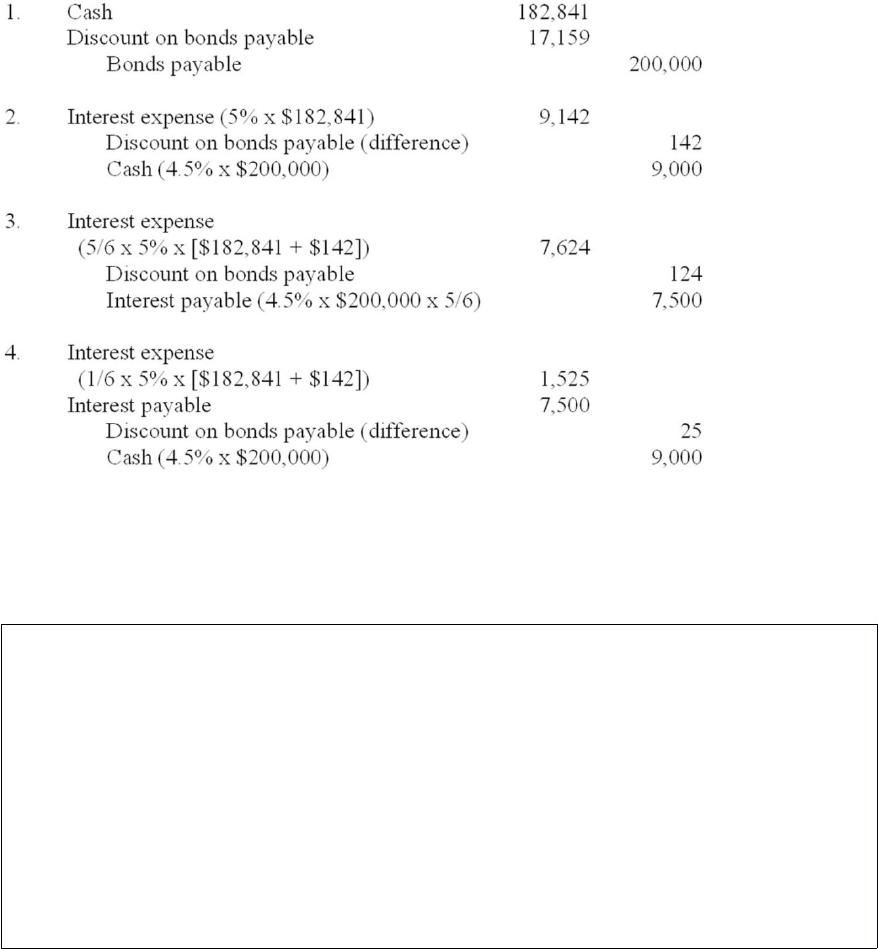
On February 1, 2013, Lagune & Sons issued 9% bonds dated February 1, 2013, with a
face amount of $200,000. The bonds sold for $182,841 and mature in 20 years. The
effective interest rate for these bonds was 10%. Interest is paid semiannually on July 31
and January 31. Lagune’s fiscal year is the calendar year.
Required:
1) Prepare the journal entry to record the bond issuance on February 1,
2) Prepare the entry to record interest on July 31, 2013, using the effective interest
method.
3) Prepare the necessary journal entry on December 31, 2013.
4) Prepare the necessary journal entry on January 31, 2014.
Answer:
Newjohn Company owns stock in several affiliated companies. Investments in some of
these affiliates are accounted for as securities available for sale while some are
accounted for using the equity method.
Required:
1) What factors determine which method should be used?
2) What events are recorded when the equity method is used?
3) What events are recorded when the securities are accounted for as available for sale?
Answer:


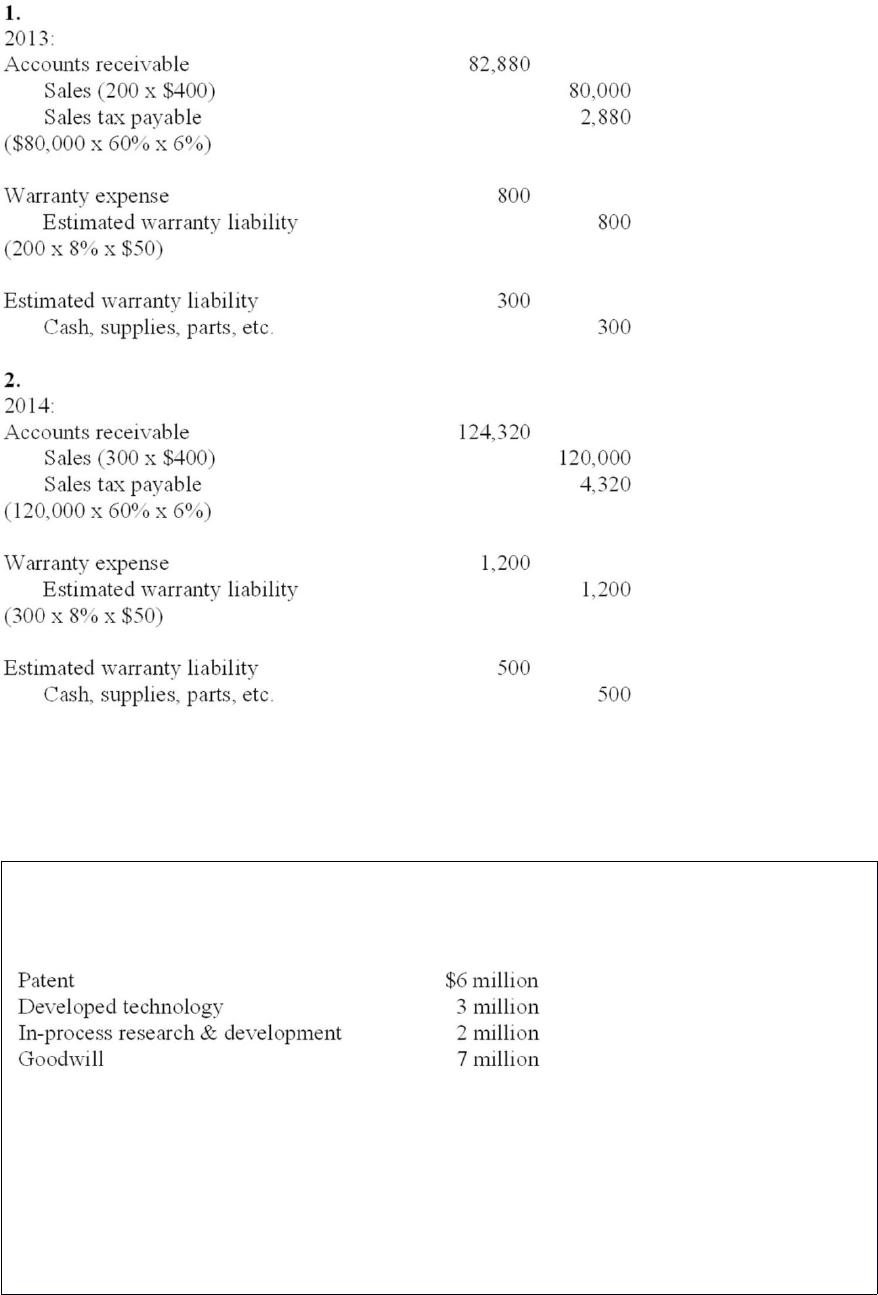
Hardin Widget Manufacturing began operations in January 2013. Hardin sells widgets
that carry a two-year manufacturer’s warranty against defects in workmanship. Hardin’s
management projects that 2% of the widgets will require repair during the first year of
the warranty while approximately 6% will require repair during the second year of the
warranty. The widgets sell for $400 each. The average cost to repair a widget is $50.
The company sells 60% of the widgets to retail customers who must pay a 6% sales tax.
Sales and warranty information for 2013 and 2014 are as follows:
2013: Sold 200 widgets on account; incurred warranty expenditures of $300.
2014: Sold 300 widgets on account; actual warranty expenditures were $500.
Required:
1) Prepare journal entries that summarize the sales and any aspects of the warranty for
2013.
2) Prepare journal entries that summarize the sales and any aspects of the warranty for
2014.
Answer:
On September 30, 2013, Morgan, Inc. acquired all of the outstanding common stock of
Pathways, Inc., for $100 million. In addition to tangible assets, Morgan recorded the
following assets as a result of the acquisition:
Morgan’s policy is to amortize intangible assets using the straight-line method, no
residual value, and a six-year useful life.
Required:
What is the total amount of expenses that would appear in Morgan’s income statement
for the year ended December 31, 2013, related to these items?
Answer:


The following partial income statement and balance sheet information (in $millions)
comes from the Annual Report of Saratoga Springs Co. for the year ending 12/31/2013:
Required: Compute the following amounts for Saratoga Springs Co.
Its return on assets for 2013. Round your answer to one decimal place, e.g., .1234 as
12.3%.
Answer:
The condensed balance sheet and income statement for Marjoram Company are
presented below.
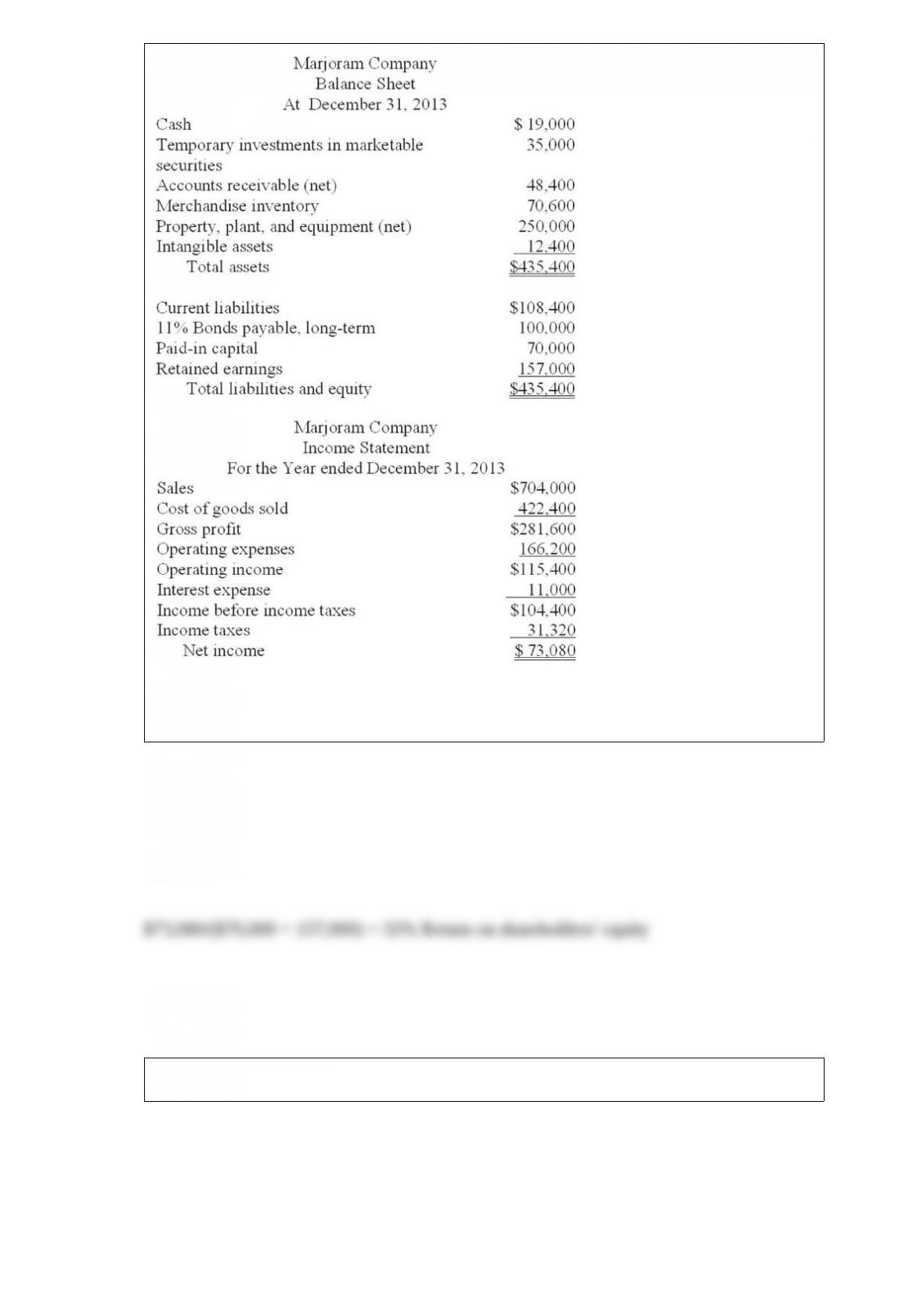
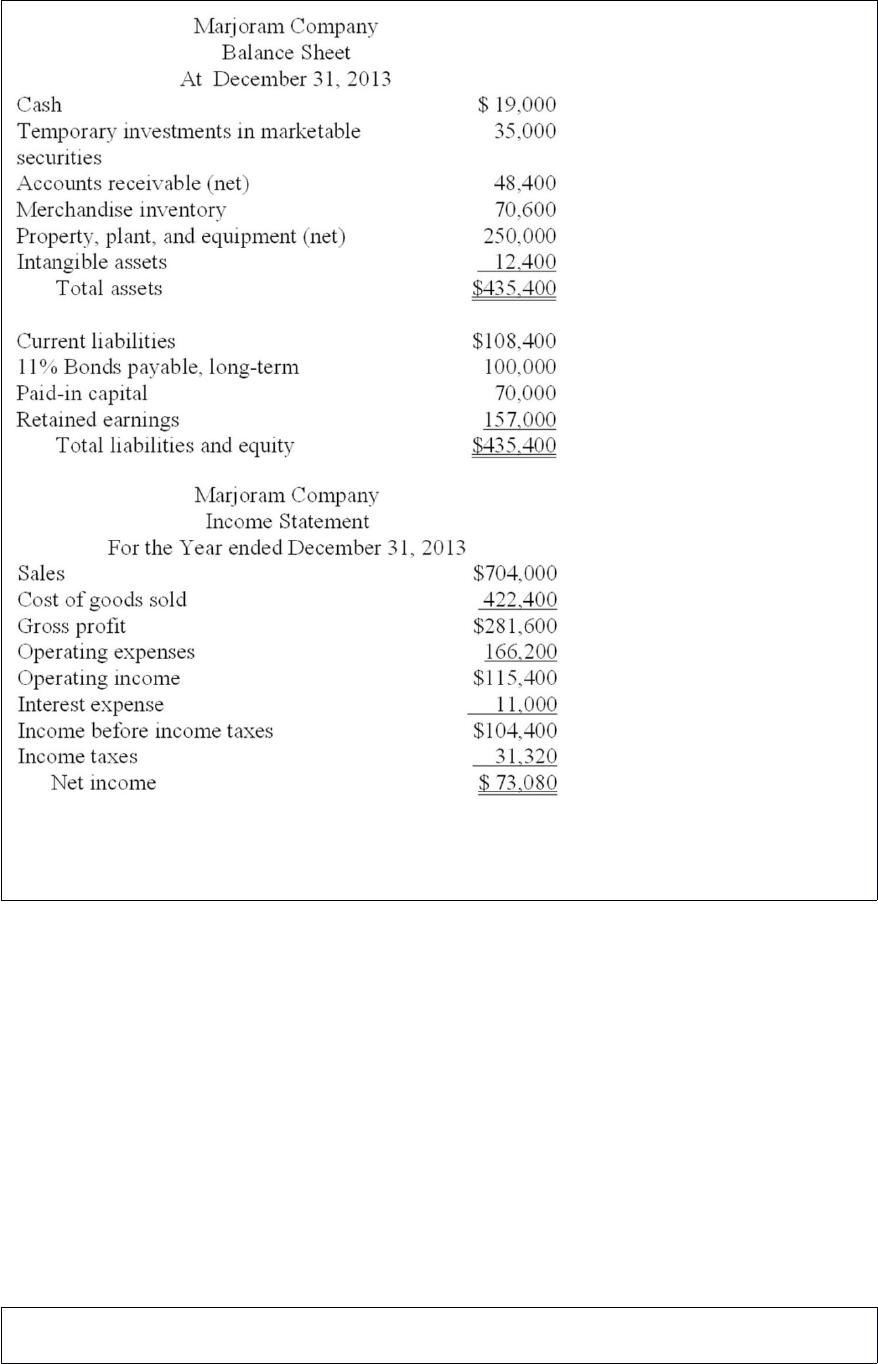
Compute the return on shareholders’ equity ratio for Marjoram Company. Round your
answer to two decimal places.
Answer:
Briefly differentiate between activity-based and time-based allocation methods.
Answer:
At the end of its first year of operations, Prince Charming Corporation had a current
liability of $300,000 for unearned rent. This was the only difference between pretax
accounting income and taxable income. Assume an income tax rate of 40%.
Required:
The tax liability from the tax return is $750,000. Prepare the journal entry to record
income taxes for Prince Charming’s first year of operations. Show well-labeled
computations.
Answer:
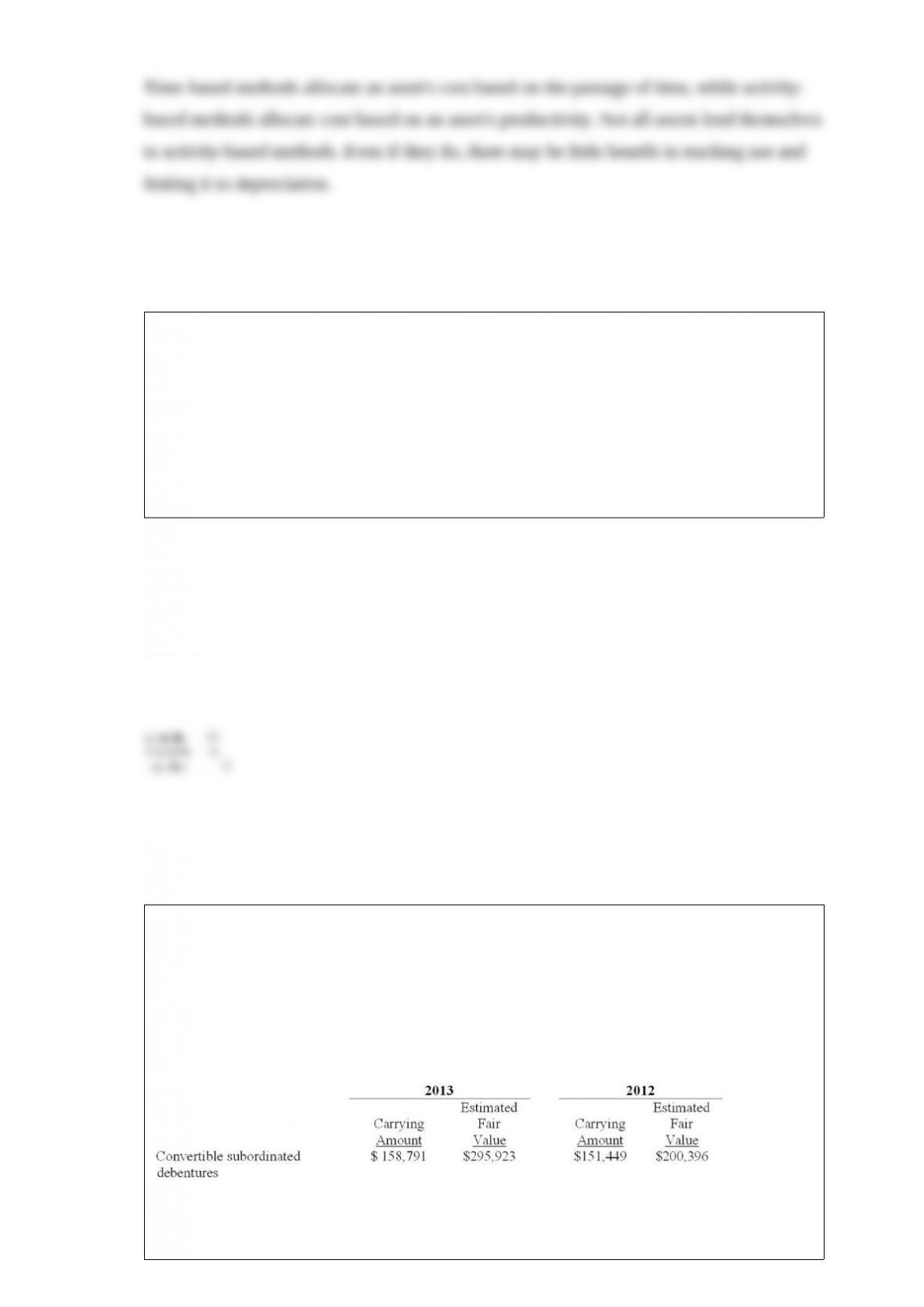
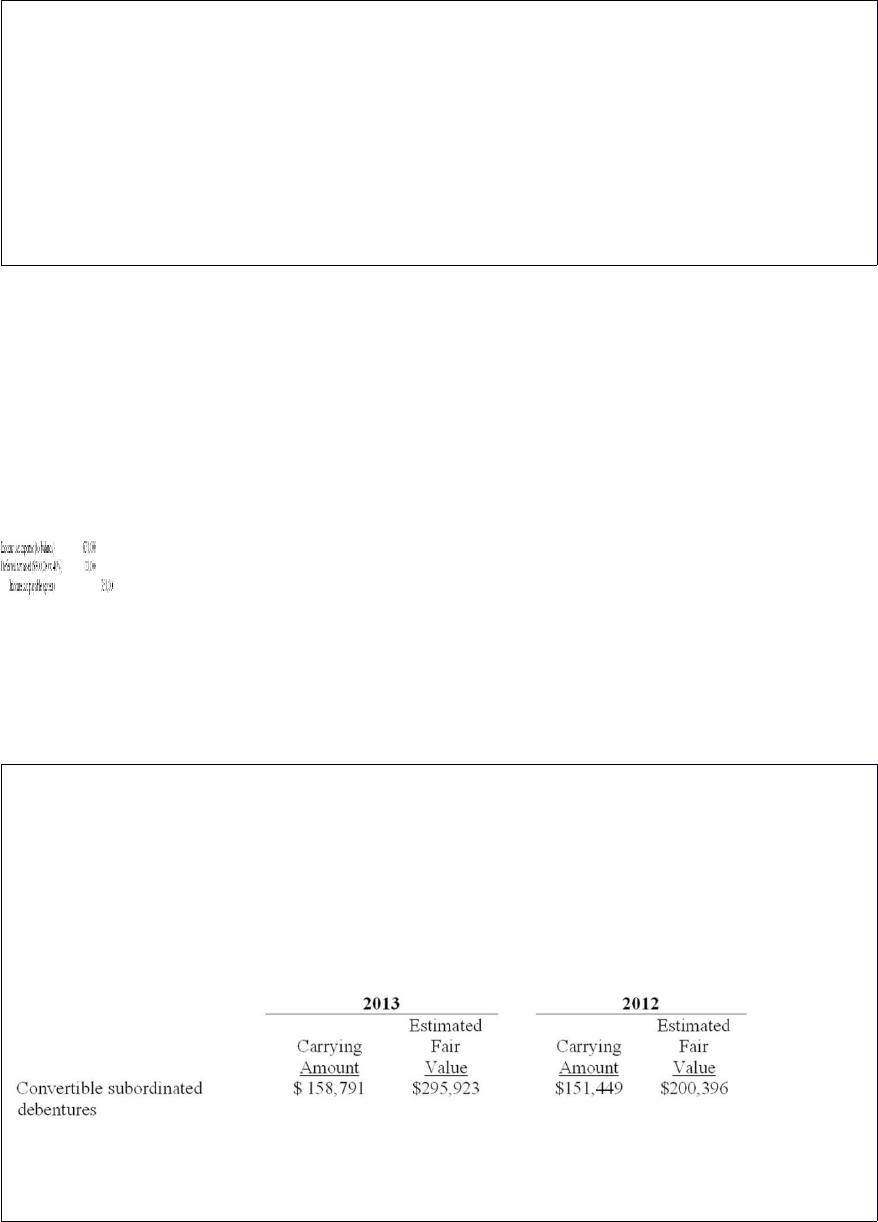
In its 2013 annual report to shareholders, Health Foods, Inc., disclosed the following
information about some of its indebtedness:
The fair value of convertible subordinated debentures is estimated using quoted market
prices. Carrying amounts and estimated fair values of our financial instruments other
than those for which carrying amounts approximate fair values as noted above are as
follows (in thousands)
In addition, the company disclosed the following:


We have outstanding zero coupon convertible subordinated debentures which had a
carrying amount of approximately $158.8 million and $151.4 million at September 26,
2013, and September 28, 2012, respectively. The debentures have an effective yield to
maturity of 5 percent and a principal amount at maturity on March 2, 2027, of
approximately $308.8 million. The debentures are convertible at the option of the
holder, at any time on or prior to maturity, unless previously redeemed or otherwise
purchased. The debentures have a conversion rate of 10.640 shares per $1,000 principal
amount at maturity, representing 3,285,632 shares. The debentures may be redeemed at
the option of the holder on March 2, 2017, or March 2, 2022, at the issue price plus
accrued original discount totaling approximately $188 million and $241 million,
respectively.
Required:
Determine the gain or loss that Health Foods would have reported in its 2013 income
statement if it had redeemed (and retired) the debentures at fair value at the end of the
fiscal year.
Answer:
Identify the major components included in the official definition of a liability as set
forth by Statement of Financial Accounting Concepts No. 6, “Elements of Financial
Statements.”
Answer:
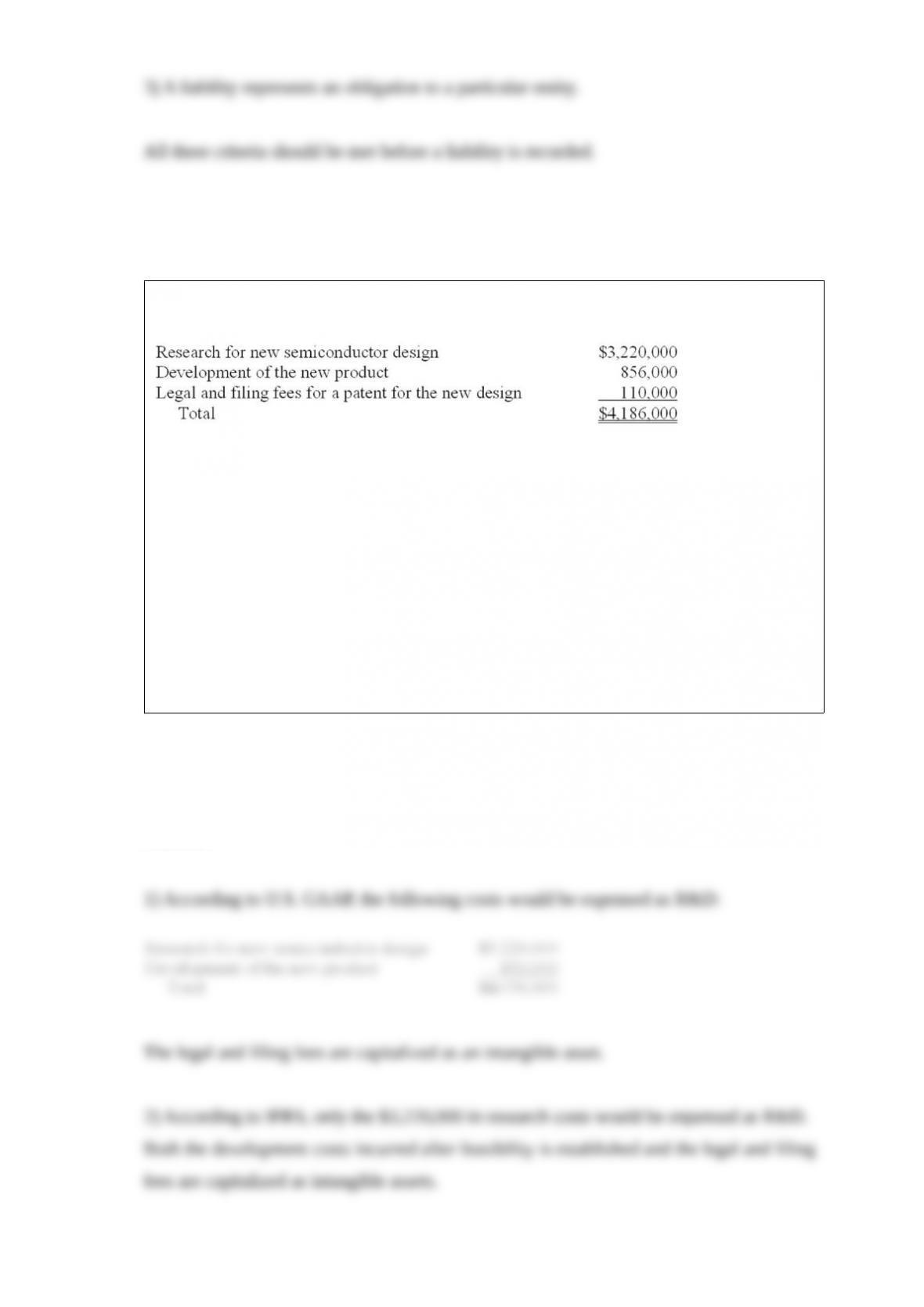
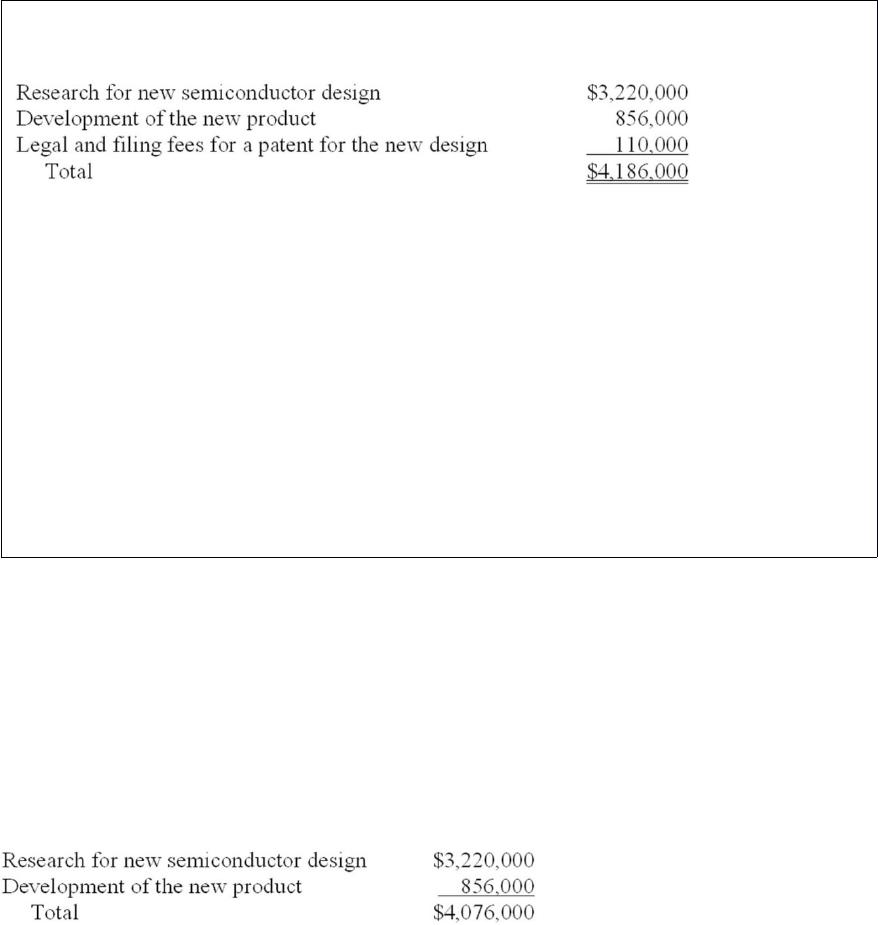
AstroTech Semiconductor incurred the following costs in 2013 related to a new product
design:
The development costs were incurred after technological and commercial feasibility
was established and after the future economic benefits were deemed probable. The
project was successfully completed, and the new product was patented before the end of
the 2013 fiscal year.
Required:
1) Calculate the amount of research and development expense AstroTech should report
in its 2013 U.S. GAAP income statement related to this project.
2) Repeat Requirement 1 assuming that AstroTech prepares its financial statements
according to International Financial Reporting Standards.
Answer:
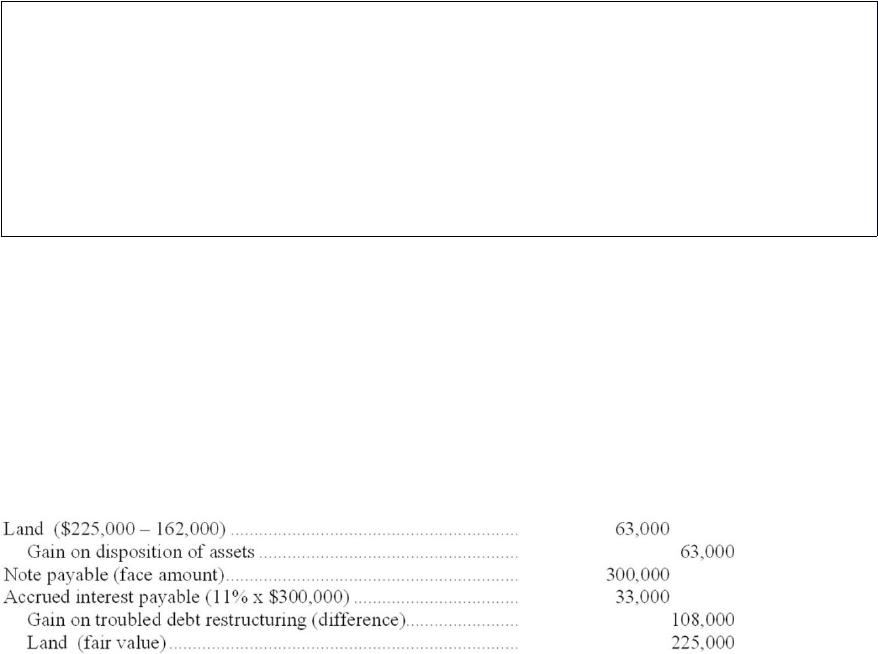
At January 1, 2013, TD owed First Bank $300,000, under an 11% note with three years
remaining to maturity. Due to financial difficulties, TD was unable to pay the previous
year’s interest. First Bank agreed to settle TD’s debt in exchange for land having a fair
value of $225,000. TD purchased the land in 2009 for $162,000.
Required:
Prepare the journal entry(s) to record the restructuring of the debt by TD.
Answer:
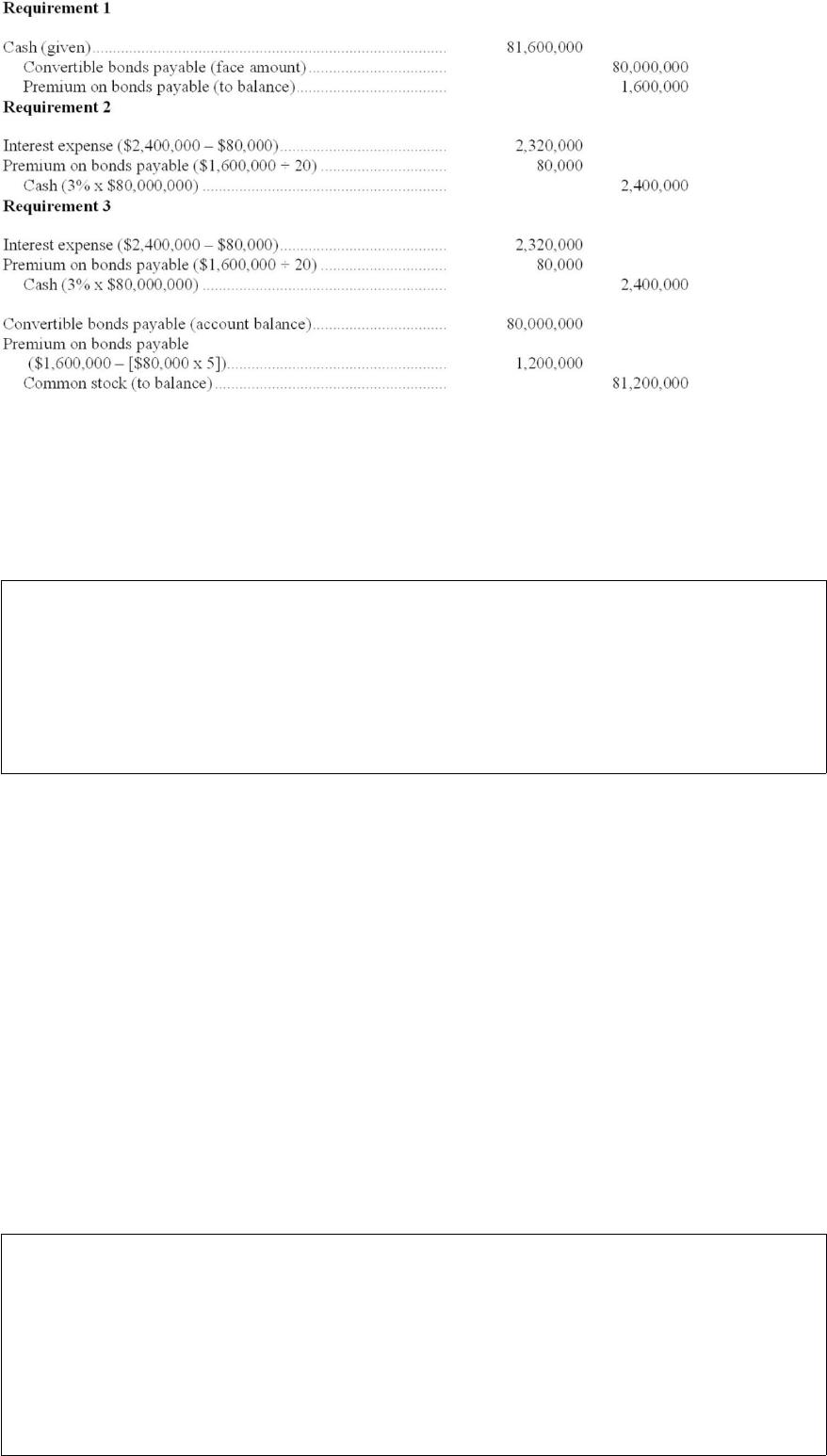
On January 1, 2013, Morton Sales Co. issued zero-coupon bonds with a face value of
$6 million for cash. The bonds mature in 10 years and were issued at a price of
$3,050,100. Required:
What amount of interest expense on these bonds would Morton Sales Co. report in its
2013 income statement?
Answer:
Slinky Company purchased merchandise on June 10, 2013, at a price of $20,000,
subject to credit terms of 2/10, n/30. Slinky uses the net method for recording purchases
and uses a perpetual inventory system.
Required:
1. Prepare the journal entry to record the purchase.
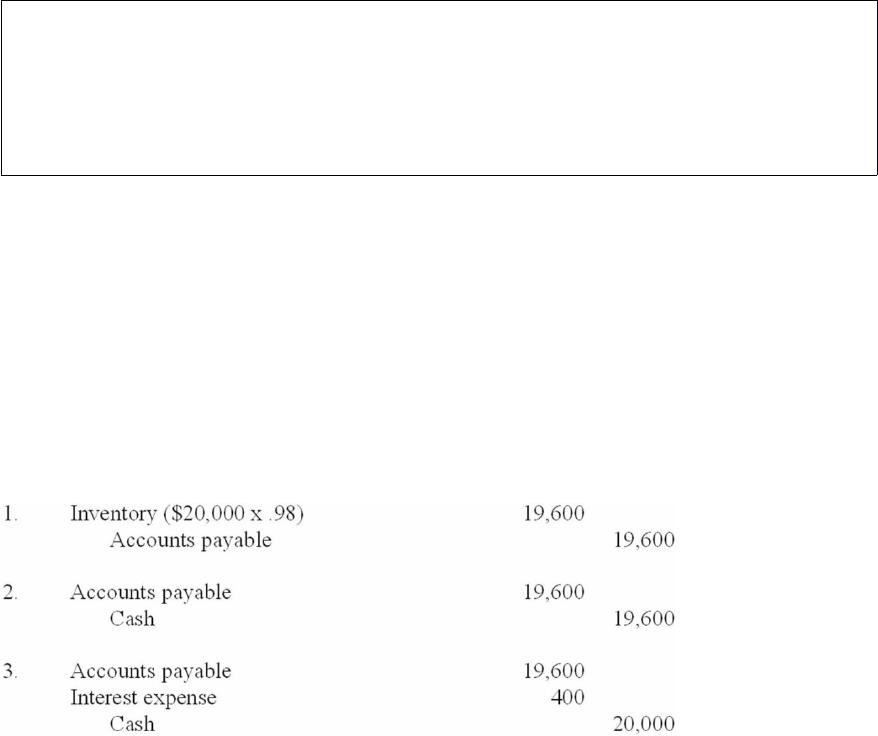
2. Prepare the journal entry to record the appropriate payment if the entire invoice is
paid on June 18, 2013.
3. Prepare the journal entry to record the appropriate payment if the entire invoice is
paid on July 8, 2013.
Answer: