1) McCarthy Company has inventory of 8 units at a cost of $200 each on October 1. On
October 2, it purchased 20 units at $205 each. 11 units are sold on October 4. Using the
FIFO perpetual inventory method, what is the value of inventory after the October 4
sale?
A.$3,485.
B.$3,445.
C.$3,500.
D.$3,472.
E.$3,461.
2) Which of the following should not be included in direct materials costs?
A.Invoice costs of direct materials.
B.Delivery charges on shipments to customers.
C.Materials storage costs.
D.Materials handling costs.
E.Incoming freight charges.
3) A corporation issued 5,000 shares of $10 par value common stock in exchange for
some land with a market value of $70,000. The entry to record this exchange is:
A.Debit Land $70,000; credit Common Stock $50,000; credit Paid-In Capital in Excess
of Par Value, Common Stock $20,000.
B.Debit Land $70,000; credit Common Stock $70,000.
C.Debit Land $50,000; credit Common Stock $50,000.
D.Debit Common Stock $50,000; debit Paid-In Capital in Excess of Par Value,
Common Stock $20,000; credit Land $70,000.
E.Debit Common Stock $70,000; credit Land $70,000.
4) On January 1, a company issues bonds dated January 1 with a par value of $300,000.
The bonds mature in 5 years. The contract rate is 9%, and interest is paid semiannually
on June 30 and December 31. The market rate is 8% and the bonds are sold for
$312,177. The journal entry to record the first interest payment using straight-line
amortization is:
A.Debit Interest Payable $13,500; credit Cash $13,500.00.
B.Debit Bond Interest Expense $12,282.30; debit Discount on Bonds Payable
$1,217.70; credit Cash $13,500.00.
C.Debit Bond Interest Expense $14,717.70; credit Premium on Bonds Payable
$1,217.70; credit Cash $13,500.00.
D.Debit Bond Interest Expense $14,717.70; credit Discount on Bonds Payable
$1,217.70; credit Cash $13,500.00.
E.Debit Bond Interest Expense $12,282.30; debit Premium on Bonds Payable
$1,217.70; credit Cash $13,500.00.
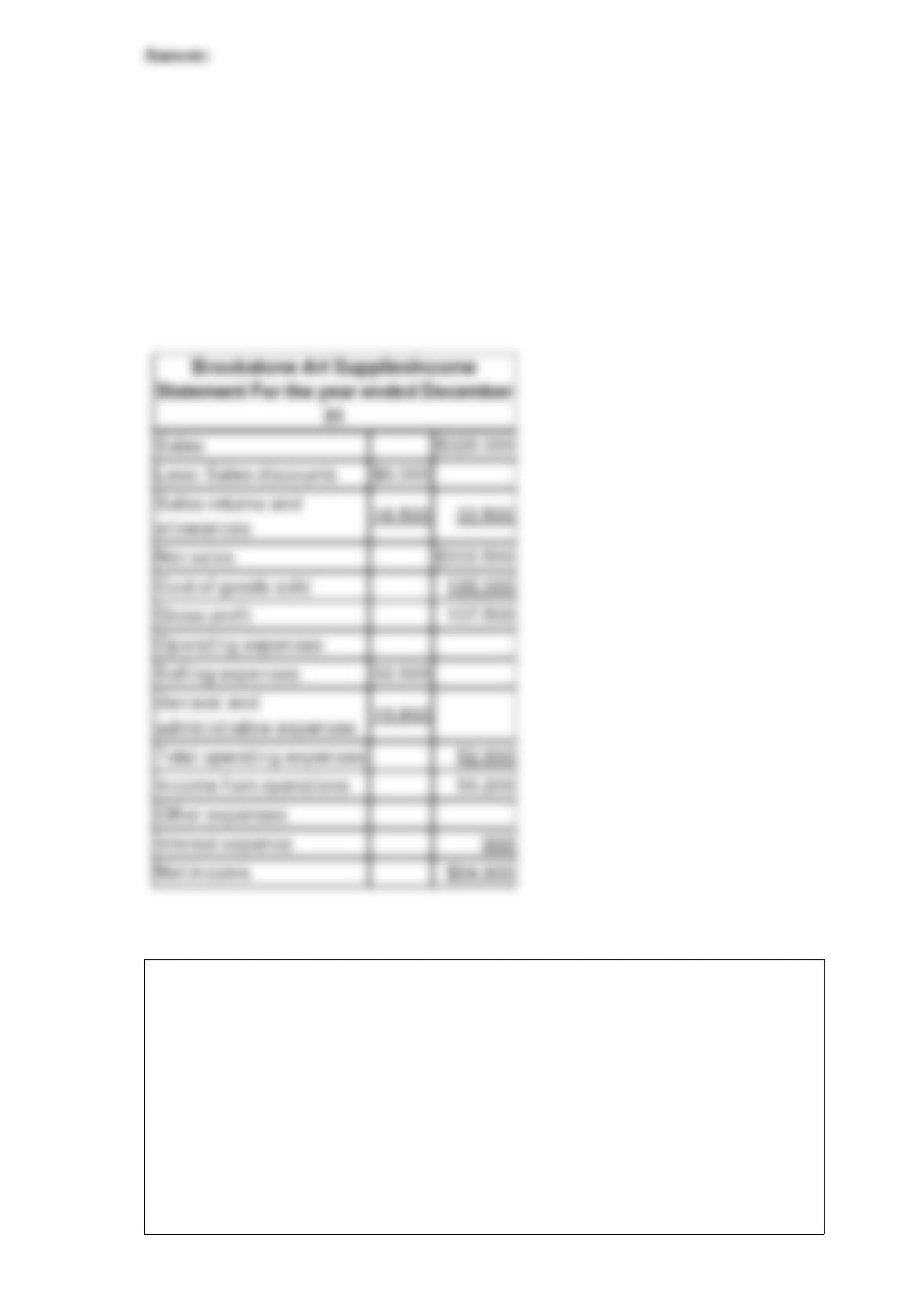
5) From the adjusted trial balance for Brookstone Art Supplies given below, prepare a
multiple-step income statement in good form.
6) Global Corporation had 50,000 shares of $20 par value common stock outstanding
on July 1. Later that day the board of directors declared a 10% stock dividend when the
market value of each share was $27. The entry to record this dividend is:
A.Debit Retained Earnings $135,000; credit Common Stock Dividend Distributable
$135,000.
B.Debit Retained Earnings $135,000; credit Cash $135,000.
C.Debit Retained Earnings $135,000; credit Common Stock Dividend Distributable
$100,000; credit Paid-In Capital in Excess of Par Value, Common Stock $35,000.
D.Debit Retained Earnings $100,000; credit Common Stock Dividend Distributable
$100,000.
E.No entry is made until the stock is issued.
7) Cloverton Corporation had net income of $30,000, net sales of $1,000,000, and
average total assets of $500,000. Its return on total assets is:
A.3%
B.200%
C.6%
D.17%
E.1.5%
8) Carson Company faces a probable loss on a pending lawsuit where the amount of the
loss is estimated to be $500,000. The journal entry to recognize the potential loss is:
A.Debit Prepaid Legal Expense $500,000; credit Contingent Legal Liability $500,000.
B.Debit Legal Expense $500,000; credit Lawsuit Payable $500,000.
C.Debit Contingent Legal Expense $500,000, credit Contingent Legal Liability
$500,000.
D.Debit Lawsuit Payable $500,000, credit Contingent Legal Liability $500,000.
E.No journal entry is required.
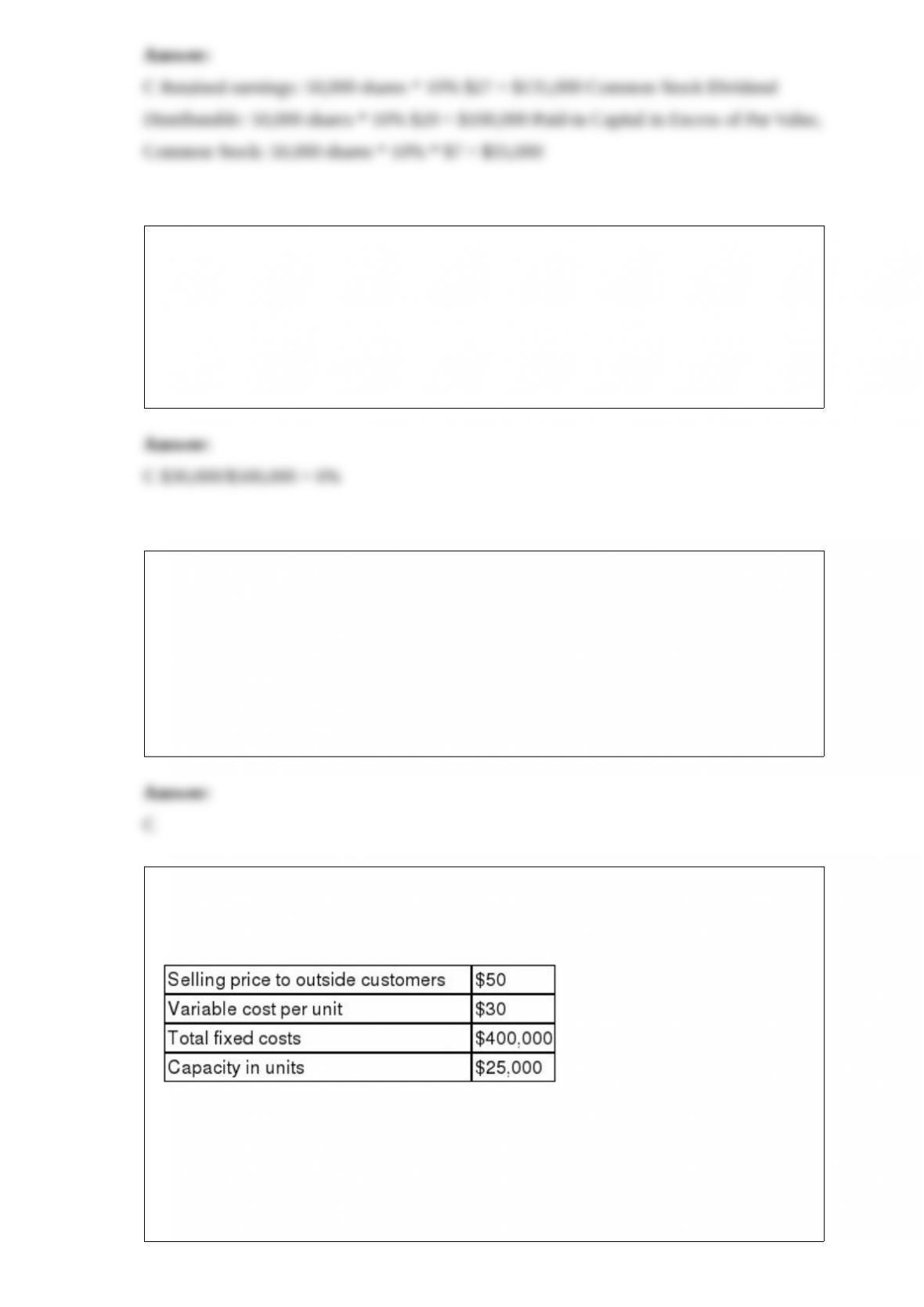
9) Division X makes a part that it sells to customers outside of the company. Data
concerning this part appear below:
Division Y of the same company would like to use the part manufactured by Division X
in one of its products. Division Y currently purchases a similar part made by an outside
company for $49 per unit and would substitute the part made by Division X. Division Y
requires 5,000 units of the part each period. Division X has ample excess capacity to
handle all of Division Y’s needs without any increase in fixed costs and without cutting
into outside sales. According to the formula in the text, what is the lowest acceptable
transfer price from the standpoint of the selling division?
A.$50
B.$49
C.$46
D.$30
E.$20
10) An asset’s book value is $18,000 on December 31, Year 5. The asset has been
depreciated at an annual rate of $3,000 on the straight-line method. Assuming the asset
is sold on December 31, Year 5 for $15,000, the company should record:
A.A loss on sale of $12,000.
B.A gain on sale of $12,000.
C.Neither a gain nor a loss is recognized on this transaction.
D.A gain on sale of $3,000.
E.A loss on sale of $3,000.
11) Current assets divided by current liabilities is the:
A.Current ratio.
B.Quick ratio.
C.Debt ratio.
D.Liquidity ratio.
E.Solvency ratio.
12) A business segment is part of a company that:
A.Requires only internal reporting.
B.Is separately identified by its products, services, or geographic market.
C.Requires special journals.
D.Requires subsidiary ledgers.
E.Cannot report its results separately.

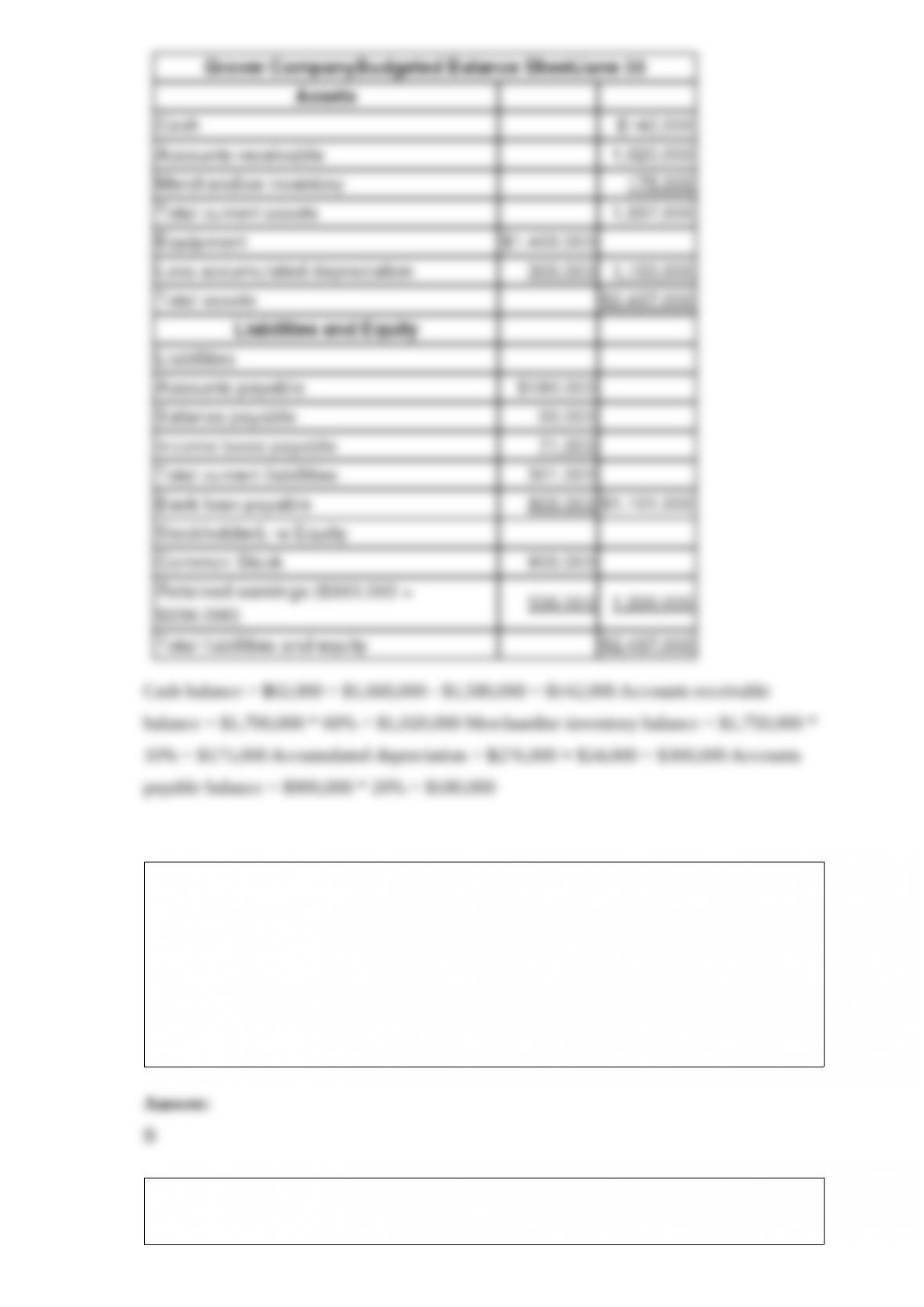
13) Use the following information to prepare a budgeted balance sheet for Grover
Company for the month of June.
a. The budgeted net income for the month of June is $236,000.
b. The beginning cash balance is $62,000; total budgeted cash receipts are $1,660,000;
total budgeted cash disbursements are $1,580,000.
c. Budgeted sales for June are $1,700,000. Collections are 40% in the month of sale and
60% in the month following.
d. The projected inventory balance is 10% of the following month’s sales. Sales for July
are projected to be $1,750,000.
e. Budgeted purchases for June are $900,000 to be paid 80% in the month of purchase
and 20% in the month following.
f. The equipment account balance is $1,400,000 on May 31. No equipment purchases or
disposals were made during June. On May 31, the accumulated depreciation is
$276,000. Depreciation expense for June is estimated to be $24,000.
g. There is an outstanding loan balance of $800,000.
h. Accrued income taxes payable for June 30 are $71,000; and salaries payable are
$50,000.
i. The only other balance sheet accounts are: Common Stock, with a balance of
$800,000 on May 31, and Retained Earnings with a balance of $300,000 on May 31. No
additional common stock was issued and no dividends were paid during June.
14) An accounts receivable ledger is a:
A.Subsidiary ledger that contains an account for each supplier (creditor).
B.List of the separate accounts that show the balances outstanding from credit
customers.
C.Book of original entry that is designed and used for recording only sales on credit.
D.Ledger that contains all financial statement accounts of a business.
E.Subsidiary ledger that contains a separate account for each party that grants both
short-term and long-term credit on account to the company.
15) On January 1, 2014, Rickson Corporation purchased 7,500 shares of AutoTech as a
long-term investment for a total of $235,000. The 7,500 shares represent 30% of the
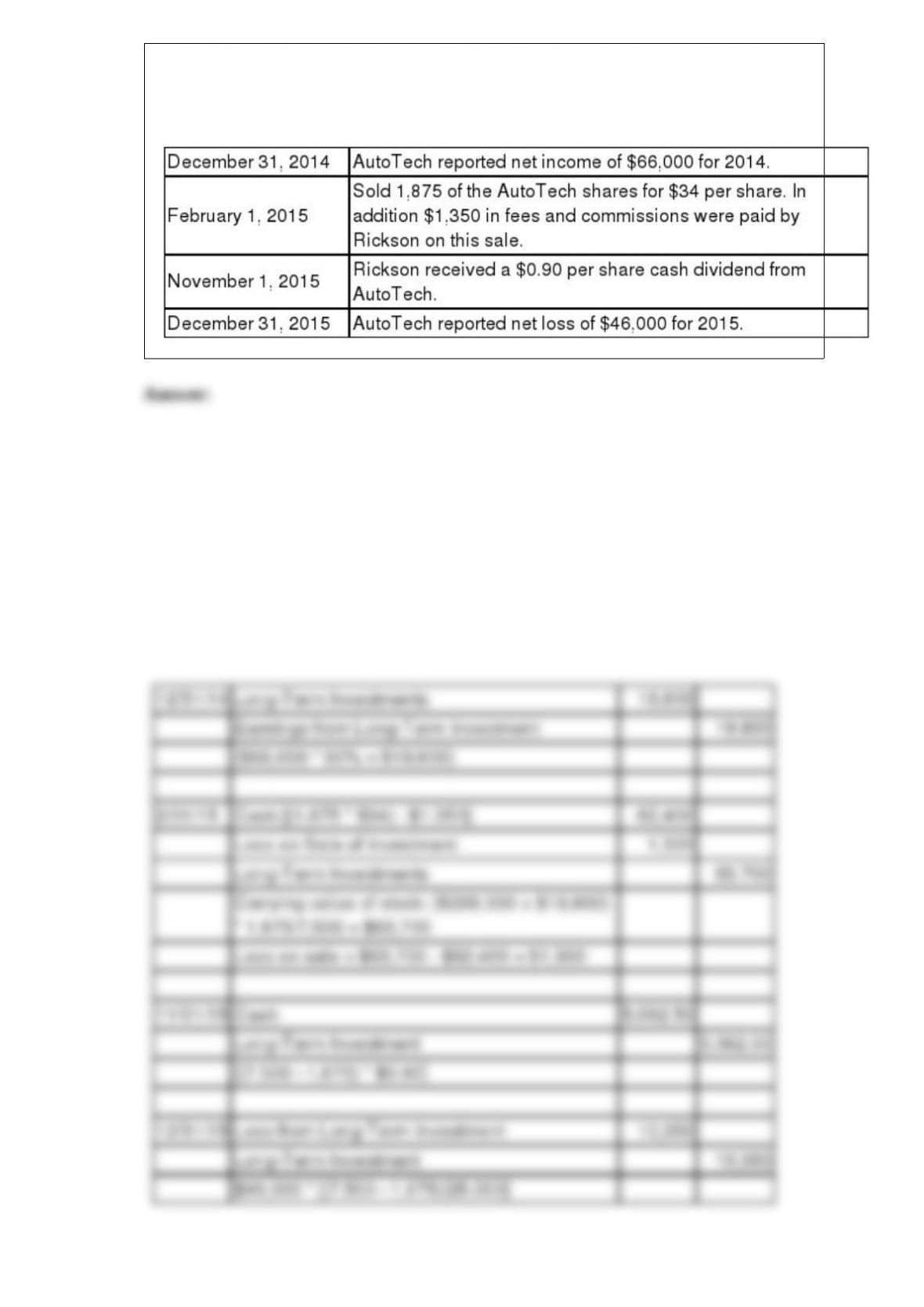
outstanding (25,000) shares of AutoTech. Prepare the journal entries for Rickson to
record the following transactions and events:
16) Based on predicted production of 25,000 units, FreshCo. anticipates $175,000 of
fixed costs and $137,500 of variable costs. What are the flexible budget amounts of
total costs for 20,000 and 30,000 units?
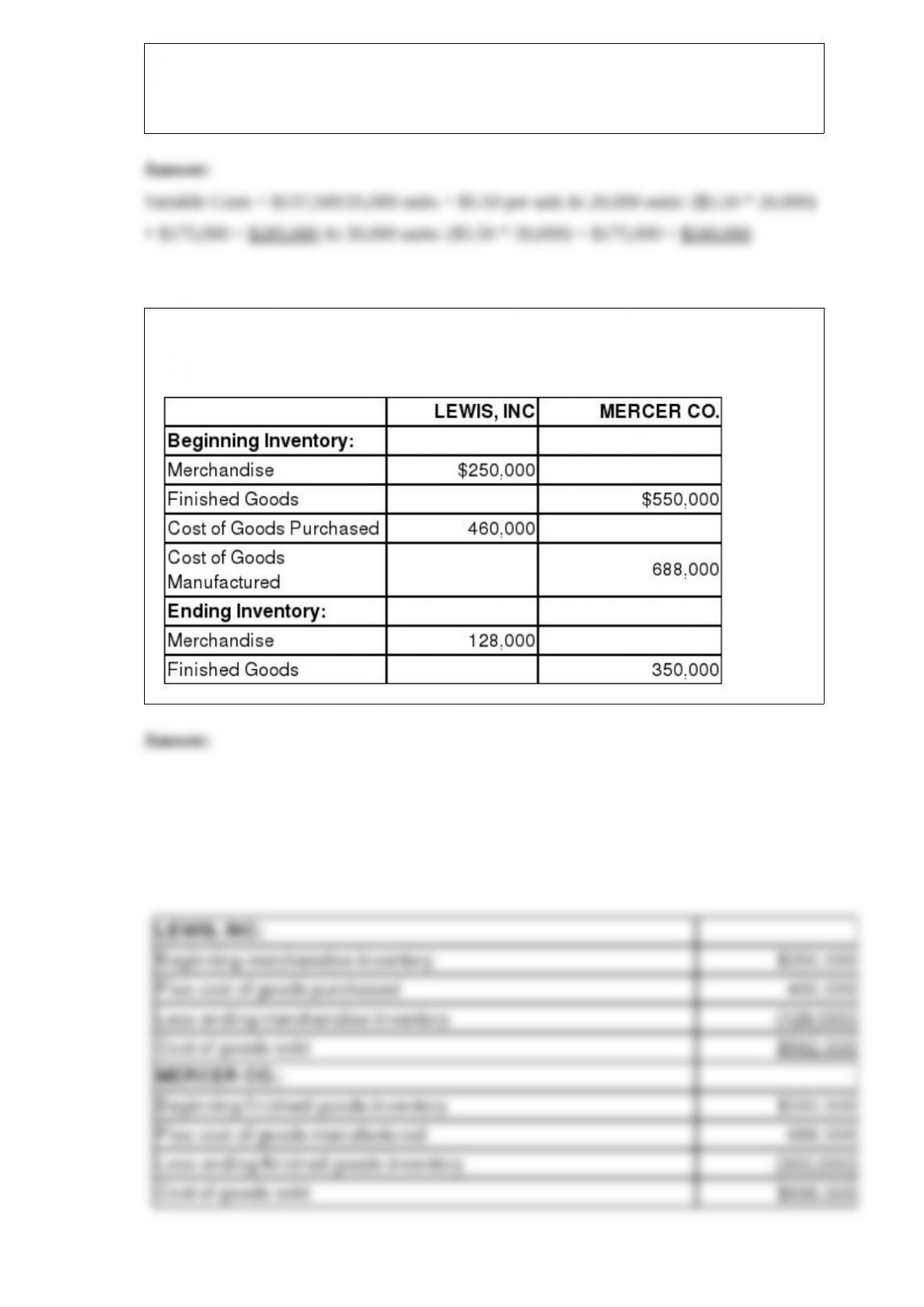
17) Calculate Cost of Goods Sold for the following two companies:
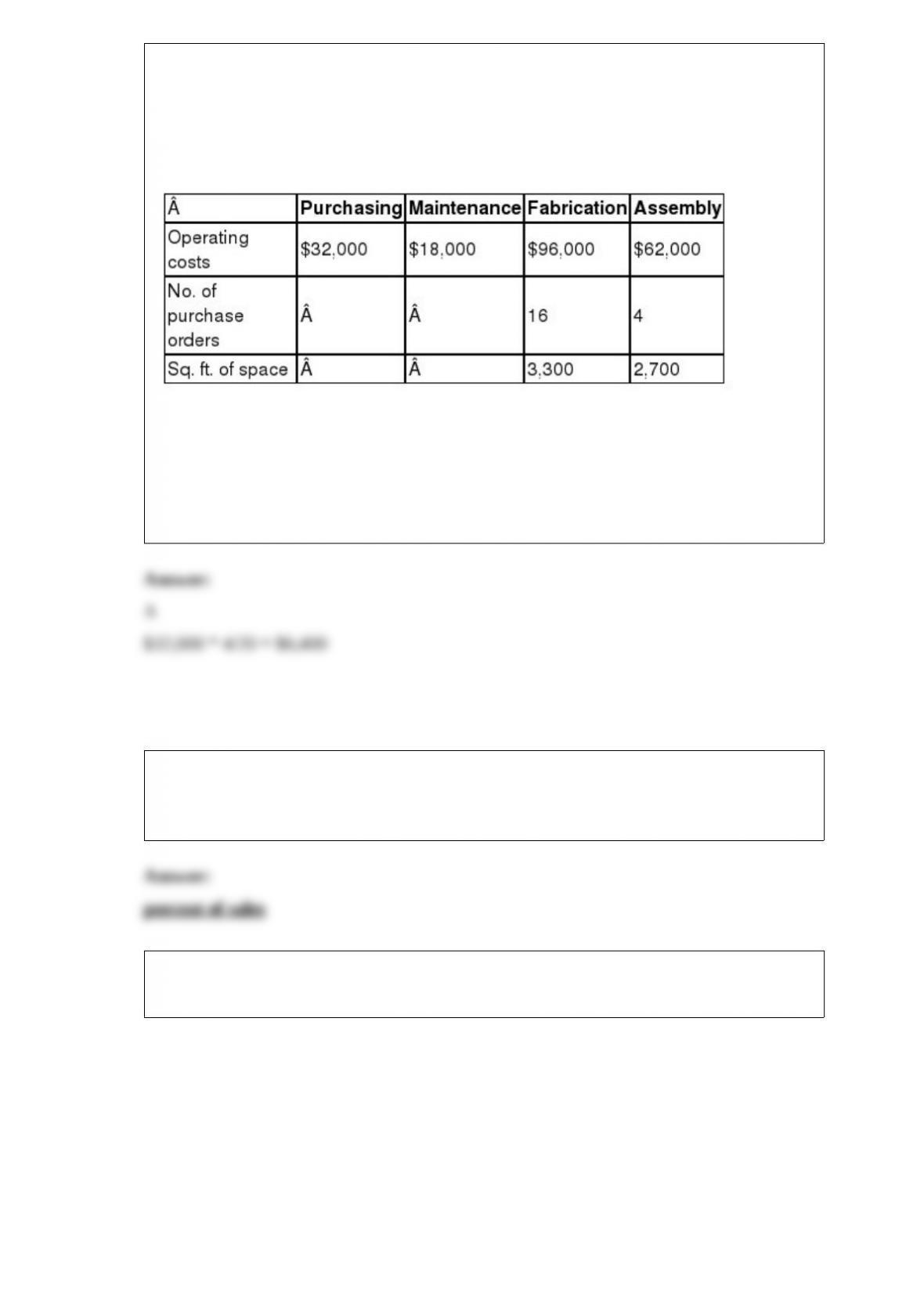
18) The following is a partially completed lower section of a departmental expense
allocation spreadsheet for Brickland. It reports the total amounts of direct and indirect
expenses for the four departments. Purchasing department expenses are allocated to the
operating departments on the basis of purchase orders. Maintenance department
expenses are allocated based on square footage.
Compute the amount of Purchasing department expense to be allocated to Assembly.
A.$6,400.
B.$9,900.
C.$8,100.
D.$14,400.
E.$25,600.
19) The _________________________ method of computing uncollectible accounts
uses income statement relationships to estimate bad debts and is based on the idea that a
given percent of a company’s credit sales for a period are uncollectible.
20) The Community Store reported the following amounts on their financial statements
for Year 1, Year 2, and Year 3:
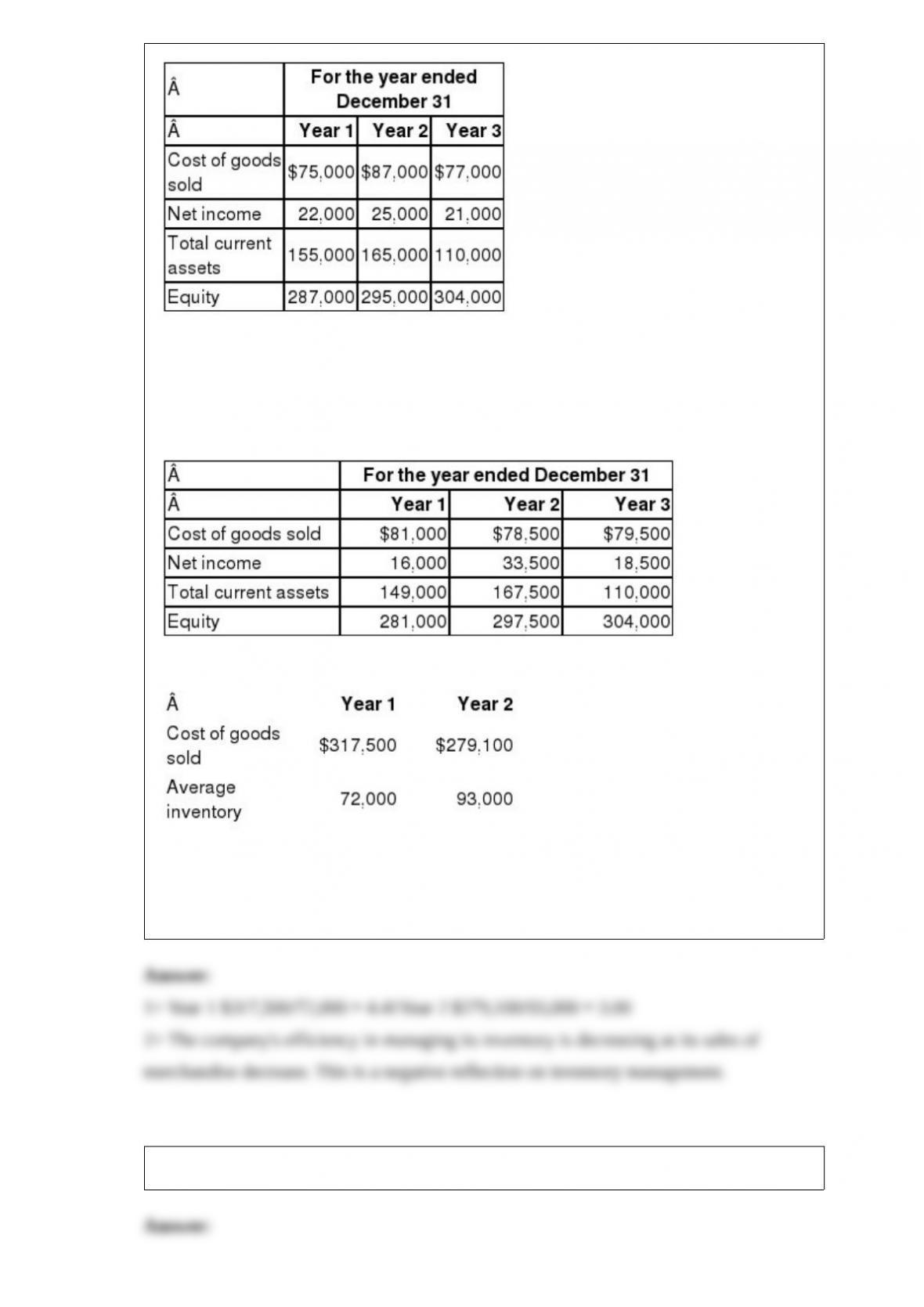
It was discovered early in Year 4 that the ending inventory on December 31, Year 1 was
overstated by $6,000, and the ending inventory on December 31, Year 2 was
understated by $2,500. The ending inventory on December 31, Year 3 was correct.
Ignoring income taxes determine the correct amounts of cost of goods sold, net income,
total current assets, and equity for each of the years Year 1, Year 2, and Year 3.
A company reported the following data:
Required:
1> Calculate the company’s merchandise inventory turnover for each year.
2> Comment on the company’s efficiency in managing its inventory.
21) What is managerial accounting and how is it used to aid decision makers?