1) What term is used for liabilities that are uncertain as to amount?
2) What are margin and turnover? If a division can increase turnover with margin
constant, how will return on investment be affected?
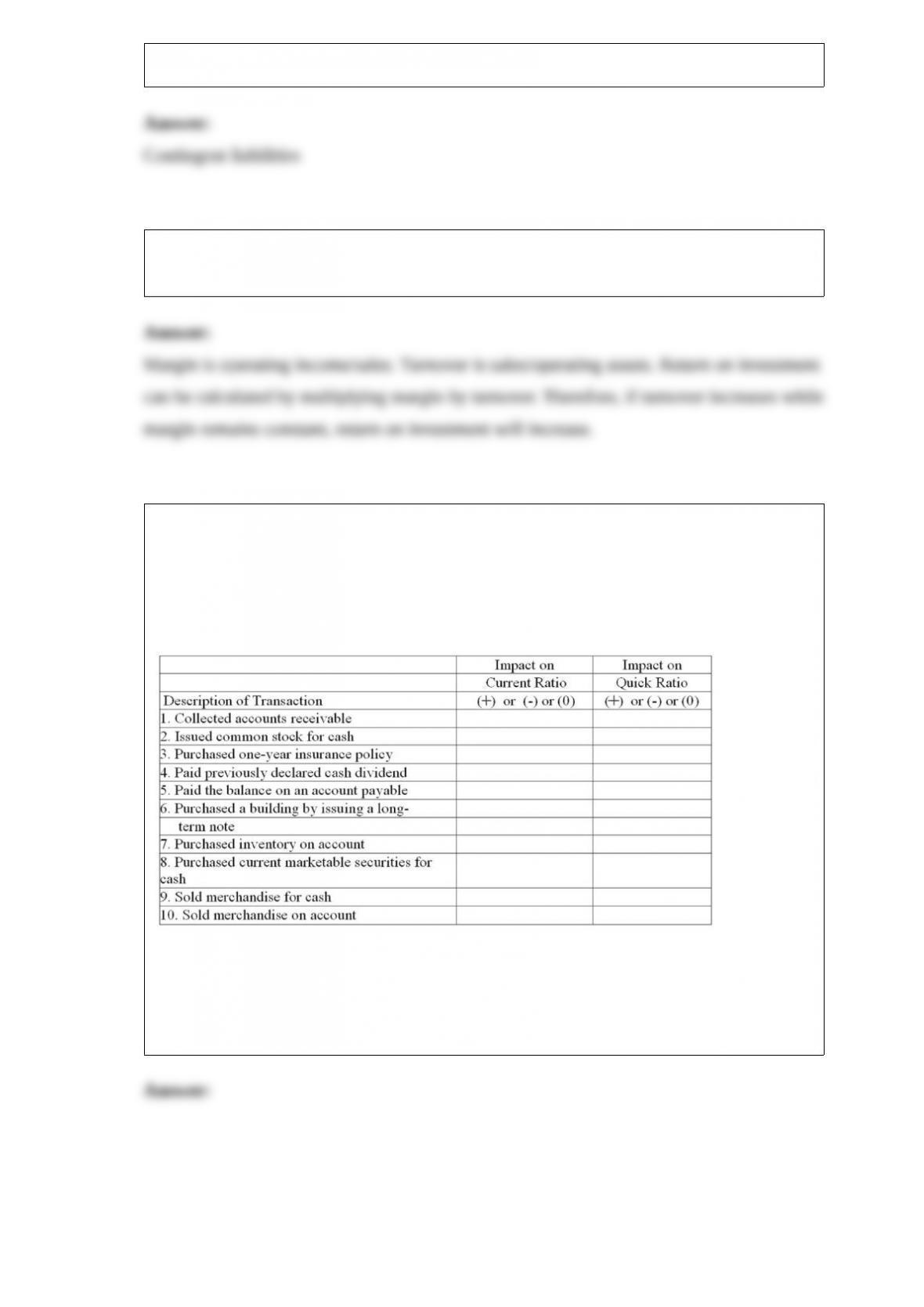
3) Many companies have to monitor closely certain ratios, such as the current ratio, due
to debt covenants. Selected transactions are provided below for a company that uses a
perpetual inventory system; sells its merchandise at a selling price that exceeds cost;
and had a current ratio of 1.85 and a quick ratio of 1.19 before the event occurred.
Required:
In the above table, indicate whether each transaction would increase (+), decrease (-), or
not affect (0) the company’s current ratio and quick ratio.
4) Indicate whether each of the following statements is true or false.
1>.Within the relevant range, the fixed cost per unit does not change
2>Within the relevant range, the variable cost per unit does not change
3>In describing a given cost as fixed or variable, one should specify what the activity
base is
4>A cost that is fixed with respect to one activity base may be variable with respect to
another
5>A cost relationship that is valid within the relevant range may not be valid outside the
relevant range
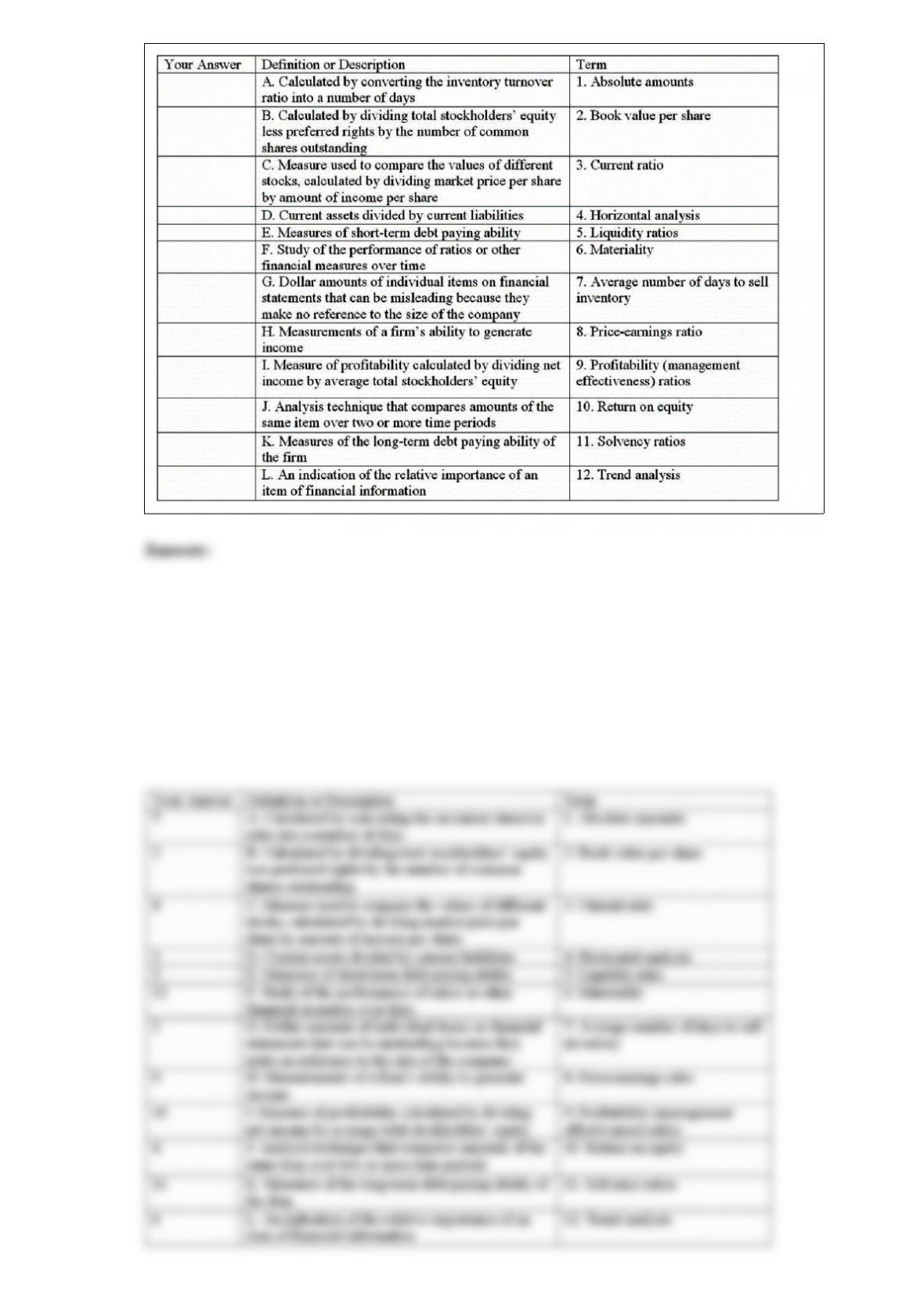
5) Matching. Select the term from the list provided that bests matches each of the
following descriptions or definitions:
6) Indicate whether each of the following statements about financial statement analysis
is true or false.
1>Solvency ratios measure a company’s long-term debt paying ability and financial
structure
2>The lower the debt to equity ratio, the higher is a company’s financial leverage
3>The debt to equity ratio and debt to assets ratio are two ways to measure the same
basic relationship
4>A company with a high debt to assets ratio probably would be considered to have a
high level of financial risk
5>From the point of view of stockholders, a decline in the debt to equity ratio is always
good news
7) What is the reinvestment assumption, and how does the assumption affect capital
investment analyses?