1) Operating profit is an example of nonfinancial information.
2) (Appendix) Using the direct method for service department’s cost allocations are
likely to undercost low-volume products.
3) If the link to strategy is not clearly established, key performance indicator cards will
lead to local but not to global or strategic improvements.
4) The design and introduction of new measurements and systems must be accompanied
by an analysis of the behavioral and organizational reactions to the measurements.
5) Unfavorable variances arise when actual costs exceed estimated budget costs.
6) If a product line was eliminated, forecasted annual corporate profits in the short run
would decrease by the amount of that product line’s contribution margin.
7) Cost driver rates calculated using actual work performed include an allocation for the
cost of resources used and for unused capacity.
8) Updates to time-driven ABC models are triggered by events that require the
estimates in the model to be modified, such as a significant change in costs of resources
supplied.
9) The text reported survey results that linked cheating during a game of golf to
unethical conduct on the job.
10) If a Balanced Scorecard’s implementation team is really committed, they can
initially develop the perfect scorecard.
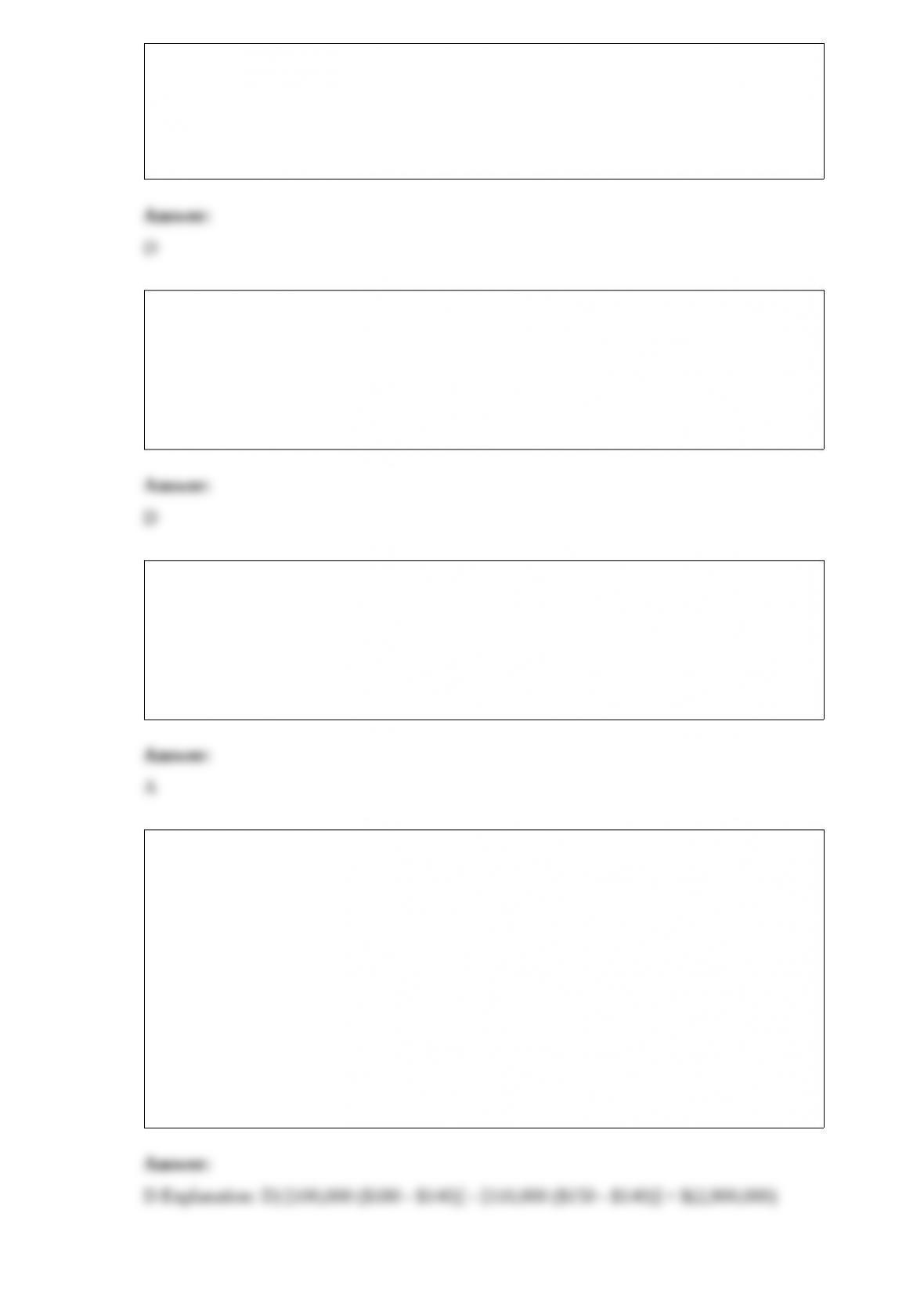
11) Talladega Industries, Inc., (TII) developed the following standard costs for direct
material and direct labor for one of their major products, the 10-gallon plastic container.
During August, TII produced and sold 10,000 containers using 980 pounds of direct
materials at an average cost per pound of $32 and 500 direct labor hours at an average
wage of $15.25 per hour.
August’s direct labor rate variance was:
A) $125 unfavorable
B) $125 favorable
C) $142,375 favorable
D) None of the above is correct
12) Intangible assets that are currently reported on the balance sheet include:
A) loyal and profitable customer relationships
B) organizational culture
C) employee skills and motivation
D) the cost of a patent giving exclusive rights to a process
13) A control system in which organizational participants focus on data coming out of
the system and ways to deal with it is known as a(n):
A) employee self-control system
B) diagnostic control system
C) task and results control system
D) interactive control system
14) If an employee observes management engaging in unethical behavior, the best thing
to do FIRST is:
A) ensure the facts are correct
B) present the facts to the local newspaper
C) do nothing and hope the problem resolves itself
D) immediately report the incident to a superior
15) Dennis’ TV currently sells small televisions for $180. It has costs of $140. A
competitor is bringing a new small television to market that will sell for $150.
Management believes it must lower the price to $150 to compete in the market for small
televisions. Marketing believes that the new price will cause sales to increase by 10%,
even with a new competitor in the market. Dennis’ sales are currently 100,000
televisions per year.
What is the change in profit margin if Marketing is correct and only the sales price is
changed?
A) $1,100,000
B) $300,000
C) $(1,100,000)
D) $(2,900,000)
16) Which of the following is NOT a function of a management accounting system?
A) strategic development
B) financial reporting
C) control
D) product costing
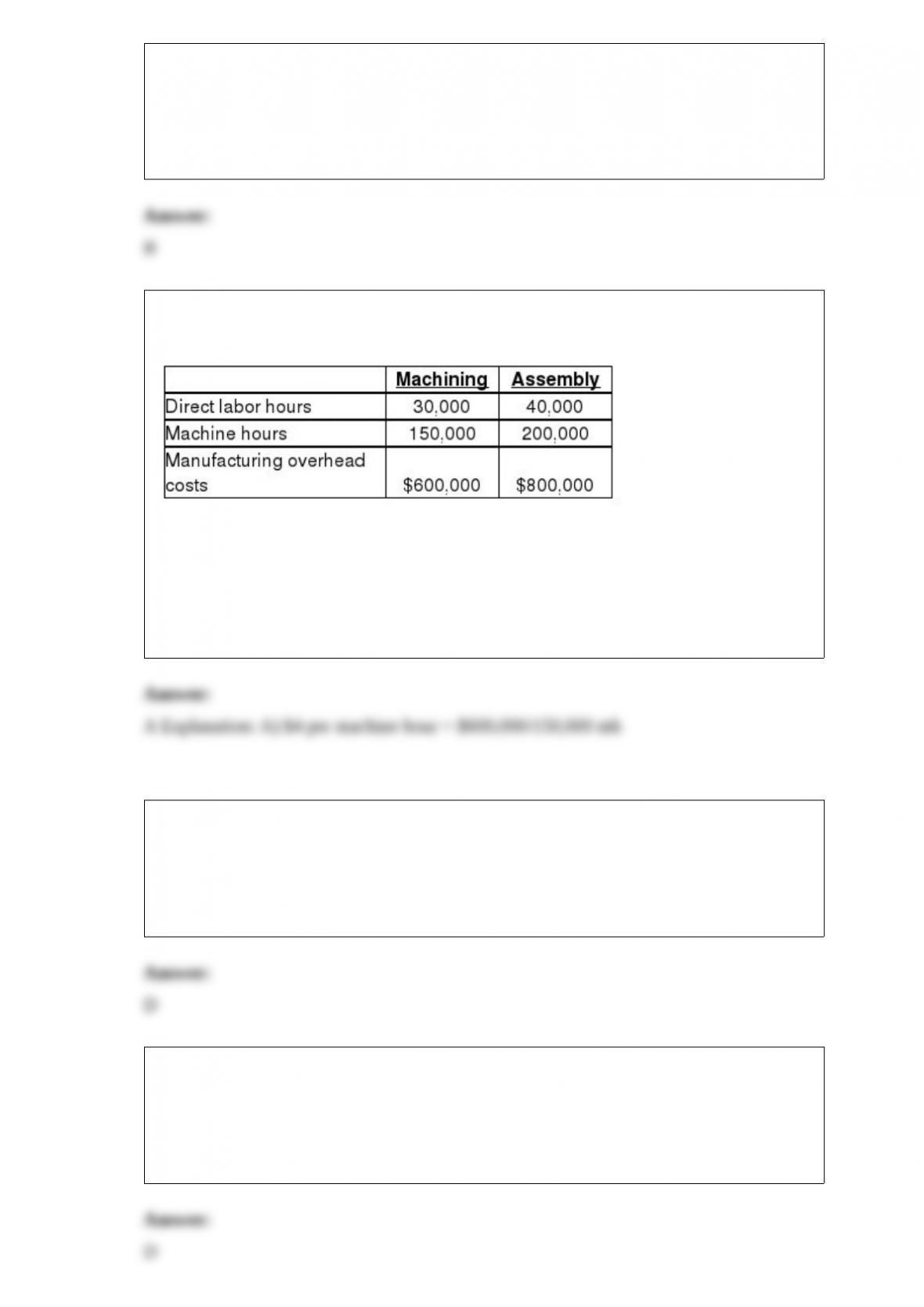
17) Rupe Company has two departments: Machining and Assembly. The following
estimates are for the coming year:
A predetermined manufacturing cost driver rate for the Machining Department based on
the number of machine hours in that department is:
A) $ 4 per machine hour
B) $10 per machine hour
C) $20 per machine hour
D) $40 per direct labor hour
18) Constraints from the theory of constraints may include:
A) the availability of direct materials in manufacturing
B) linear square feet of display space for a retailer
C) direct labor in the service industry
D) All of the above are correct
19) Relevant costs for target costing include:
A) variable manufacturing costs
B) variable manufacturing and variable nonmanufacturing costs
C) all fixed costs
D) all future costs, both variable and fixed
20) Which of the following is NOT an option to transform breakeven or loss customers
into profitable ones?
A) Improve the process used to produce, sell, deliver and service the customer
B) Use less menu-based pricing that allows customers to select features and services it
wishes to pay for
C) Improve margins by lowering costs
D) Use more discipline in granting discounts and allowances
21) Constraints from the theory of constraints may include:
A) the availability of direct materials in manufacturing
B) linear square feet of display space for a retailer
C) direct labor in the service industry
D) All of the above are correct
22) Which of the following statements is TRUE regarding capacity resources?
A) Raw materials and supplies are examples of intermediate-term resources
B) Long-term capacity usually varies directly with production levels
C) Flexible resources are usually purchased to acquire intermediate-term capacity
D) Long-term capacity resources are expensive and referred to as “committed”
resources
23) The elements of an effective ethical control system include all of the following
EXCEPT:
A) a statement of the employee’s ethical responsibilities
B) an ongoing internal audit of the efficiency of the organization’s ethical control
system
C) a statement of the organization’s values and code of ethics
D) a reward system for turning in those who violate the organization’s ethical code
24) The FIRST step in developing strategic objectives for the Balanced Scorecard is:
A) defining the long-run financial objectives
B) identifying the target customer
C) articulating the organization’s vision
D) select objectives for the customer value proposition
25) Total-life-cycle costing is the name given to:
A) a method of cost planning to reduce manufacturing costs to targeted levels
B) the process of examining each component of a product to determine whether its cost
can be reduced
C) the process of managing all costs along the value chain
D) a system that focuses on reducing costs during the manufacturing cycle
26) An interactive control system should be used to achieve goal congruence when:
A) human behavior needs to be controlled
B) there is a large degree of strategic uncertainty
C) systems are allowed to run in a routine fashion
D) the behavior of employees needs to be inspected while they are performing a task
27) ________ is a form of earnings management in which expense recognition may be
deferred to a future period with the goal of increasing net income in the current period.
A) Gain sharing
B) Smoothing
C) Data falsification
D) Gaming
28) A law firm would use management accounting information for all of the following
decisions except:
A) staffing needs
B) performance evaluation of staff
C) budgeted purchases of supplies
D) location of annual holiday party
29) Quality expert, W. Edwards Deming, helped develop and disseminate the
plan-do-check-act (PDCA) cycle.
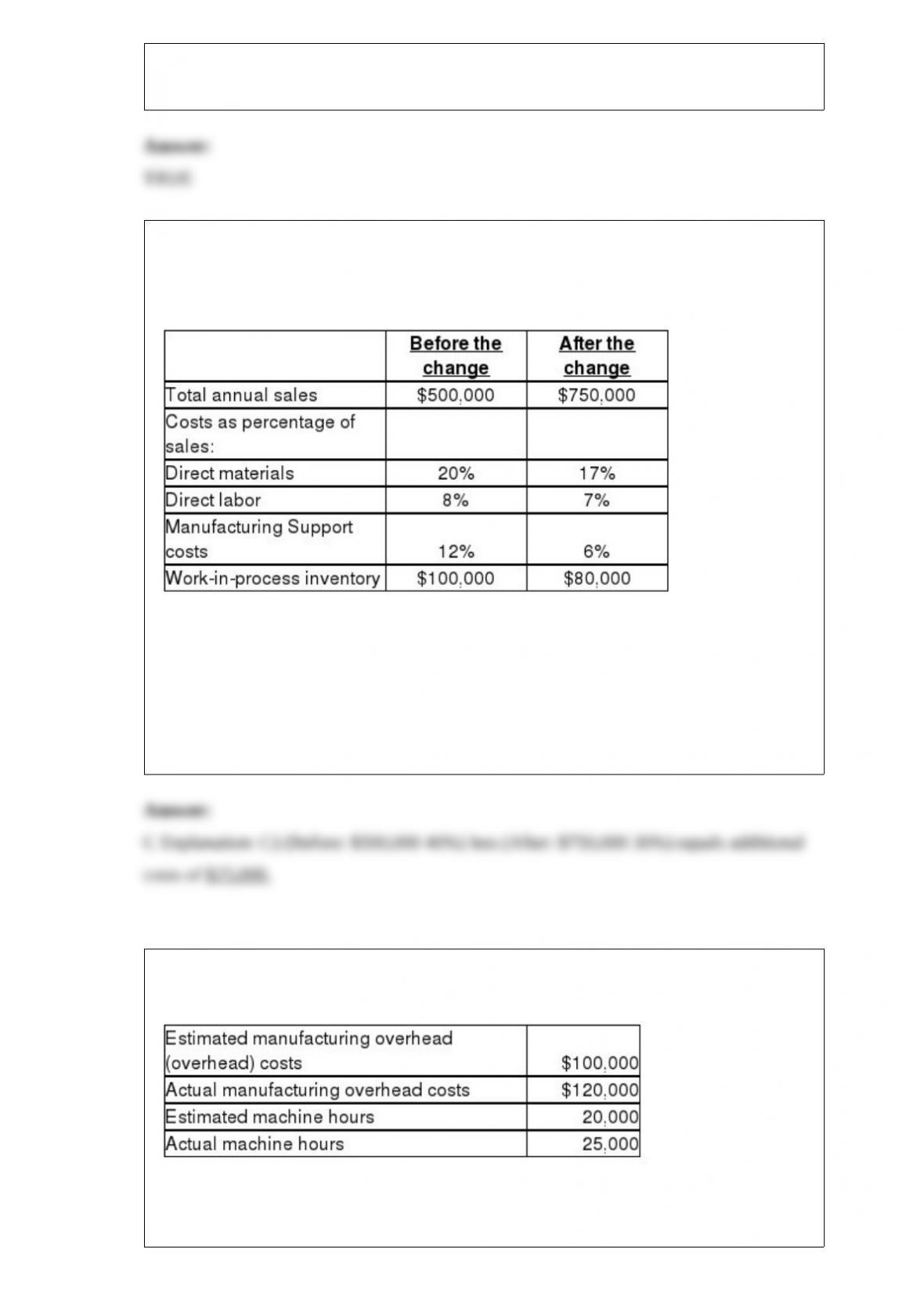
30) Vander Belt Manufacturing, Inc., is considering reorganizing its plant into
manufacturing cells. The following estimates have been prepared to evaluate the
benefits from the reorganization:
Inventory carrying costs are estimated to be 11% per year.
As a result of the layout reorganization, incremental manufacturing costs are projected
to:
A) decrease by $22,800 annually
B) decrease by $25,000 annually
C) increase by $25,000 annually
D) increase by $40,000 annually
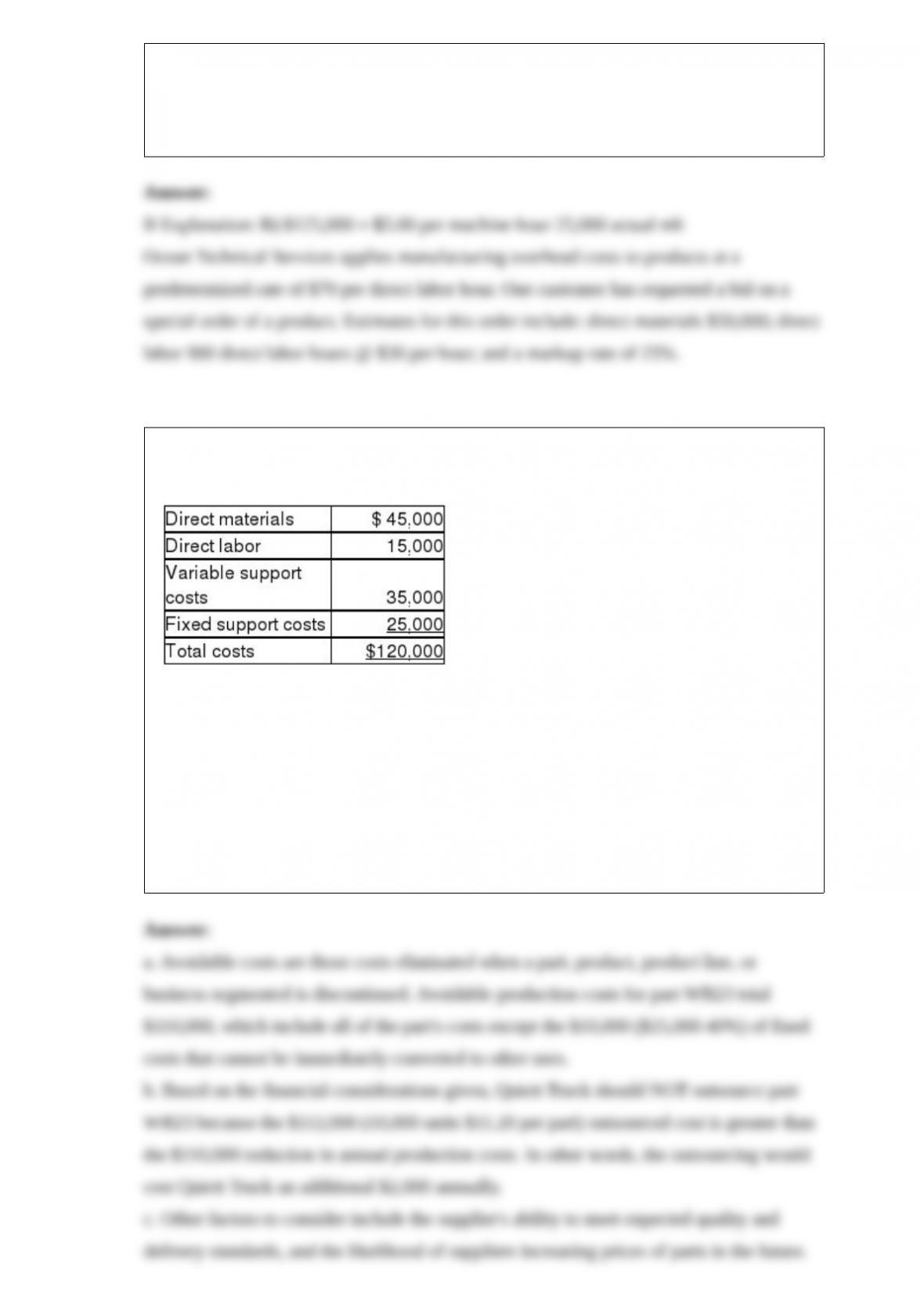
31) For 2011, Steve’s Plastics Manufacturing uses a normal job order costing system.
The accounting records contain the following information:
The only cost driver is machine hours.
Using normal job order costing, the amount of manufacturing overhead costs allocated
to jobs during 2011 is:
A) $150,000
B) $125,000
C) $120,000
D) $100,000
32) Quiett Truck manufactures part WB23 used in several of its truck models. 10,000
units are produced each year with production costs as follows:
Quiett Truck has the option of purchasing part WB23 from an outside supplier at $11.20
per unit. If part WB23 is outsourced, 40% of the fixed costs cannot be immediately
converted to other uses.
Required:
a. Describe avoidable costs. What amount of the part WB23’s production costs is
avoidable?
b. Should Quiett Truck outsource part WB23? Why or why not?
c. What other items should Quiett Truck consider before outsourcing any of the parts it
currently manufactures?
33) The characteristic of a management accounting and control system that means the
language used and the technical methods of producing management accounting
information not conflict within various parts of the organization is referred to as being:
A) in control
B) accurate
C) consistent
D) Kaizen
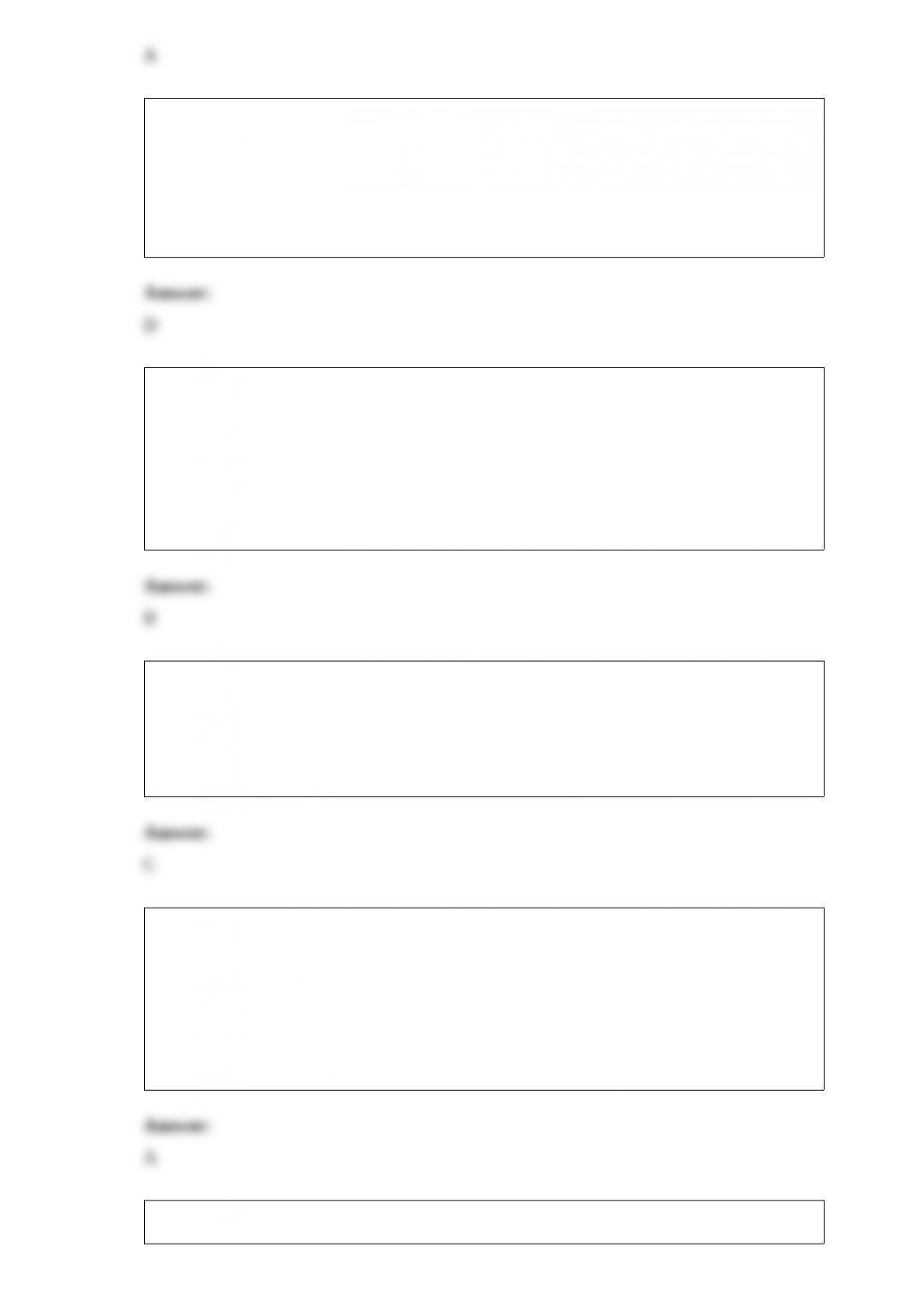
34) Long Island Manufacturing Company developed the following information for its
service departments, S1 and S2, and its production departments, P1 and P2:
Using the reciprocal method of service department cost allocation, how much is the
total overhead cost for P1 for the period if calculations are rounded to the nearest
dollar?
A) $25,210
B) $33,188
C) $25,120
D) $25,188
35) ________ requires that each discretionary expenditure be justified.
A) Zero-based budgeting
B) Periodic budgeting
C) Incremental budgeting
D) Continuous budgeting
36) Target costing differs from traditional costing in all of the following ways EXCEPT:
A) target costing collects market research continually throughout the target costing
process rather than as a single event
B) target costing uses the total-life-cycle concept to minimize ownership costs
C) traditional costing spends less time on product specification and design
D) traditional costing uses cross-functional teams to guide the process
37) The following statements are true regarding the customer perspective in the
Balanced Scorecard EXCEPT:
A) Customer satisfaction leads to customer retention
B) A customer target might be to reduce cash expenses by 3%.
C) Customer retention generally leads to increased customer profitability
D) Success in the customer perspective should lead to improvement in the financial
perspective.
38) All of the following would likely be classified as cost centers except:
A) maintenance department at local grocery store
B) your university’s computer center
C) surgical department of hospital
D) All of the above are cost centers
39) A budget should/can do all of the following EXCEPT that it:
A) should be prepared by managers from different functional areas working
independently of each other
B) should be adjusted if new opportunities become available during the year
C) can help management allocate limited resources
D) can become the performance standard against which firms can compare the actual
results
40) The management accountant for the Martino Organics has prepared the following
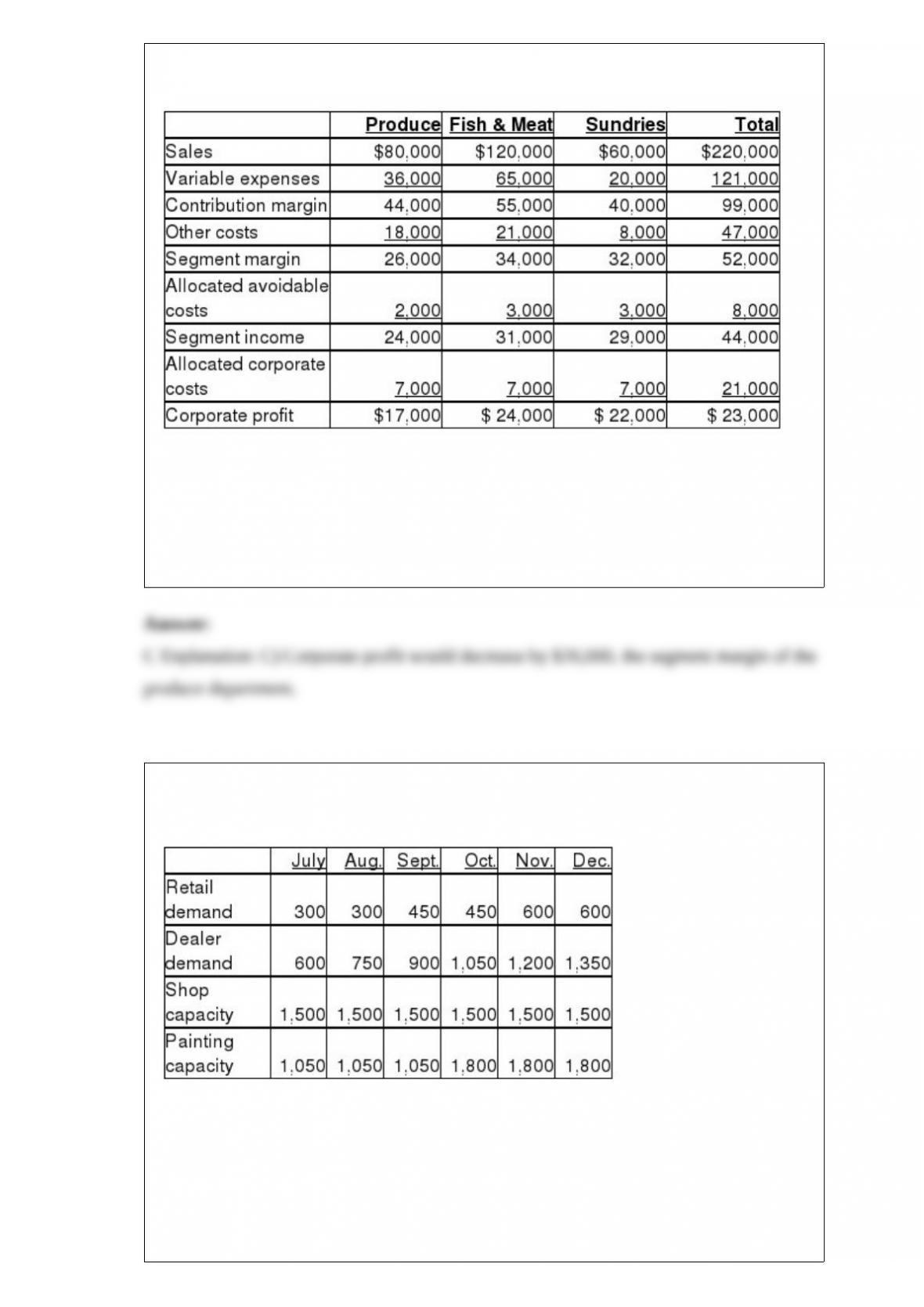
segmented income statement for the most current year.
If the Produce department had been eliminated prior to this year, the company would
have reported:
A) greater corporate profits
B) the same amount of corporate profits
C) less corporate profits
D) resulting profits cannot be determined
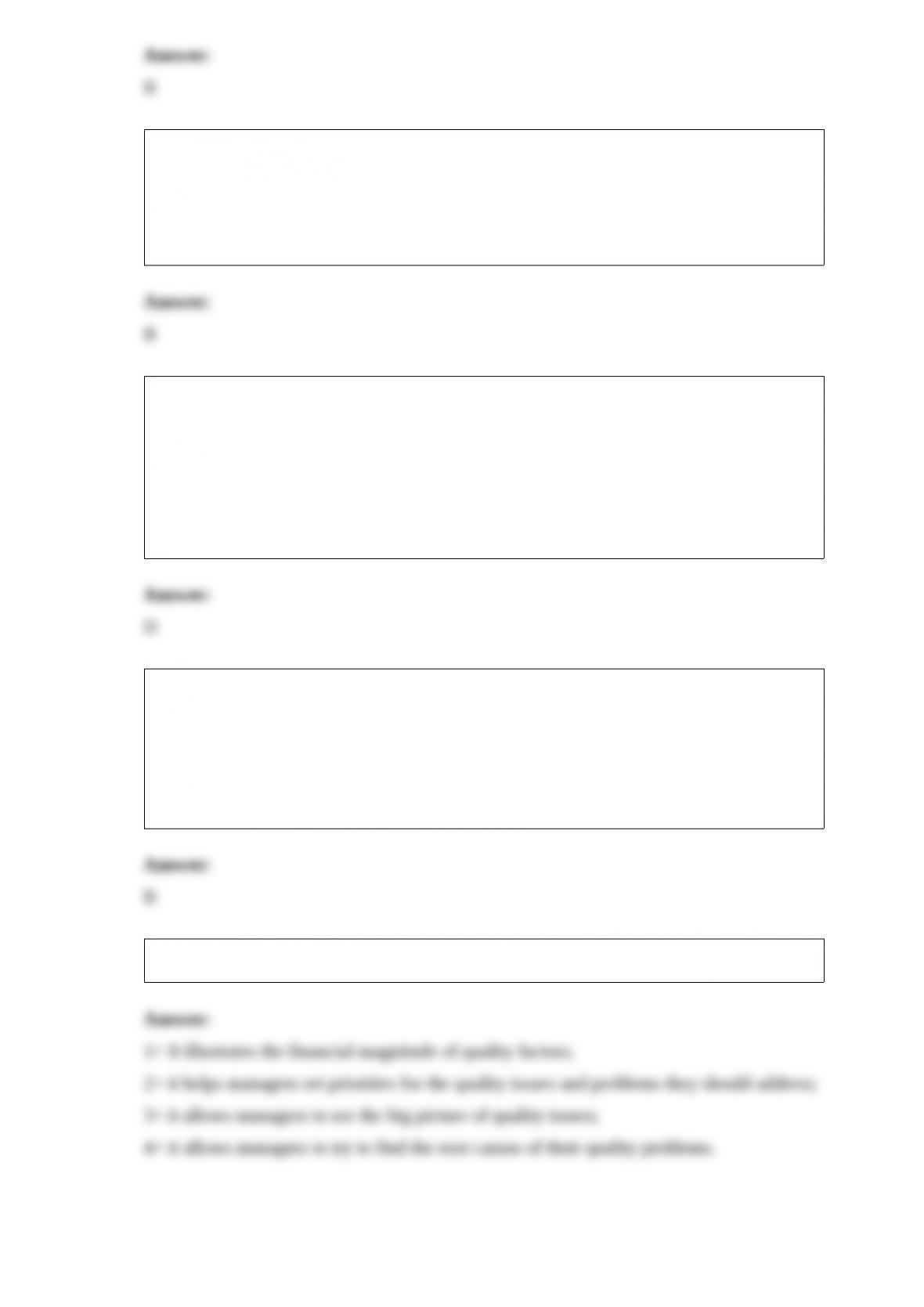
41) For the next six months, Kurtz Company projects the following information (in
units).
Demand drives production for that month and cannot be carried over from one month to
another. Retail customers are satisfied first.
Painting capacity appears to be:
A) short-term capacity
B) intermediate-term capacity
C) long-term capacity
D) total demand
42) ________ uses measurements of customer attitudes toward the product or service.
A) Profitability
B) Customer satisfaction
C) Customer loyalty
D) The net promoter score
43) When responsibility centers are treated as profit centers:
A) the segment manager has responsibility for pricing and product selection, but not for
purchasing and promotion
B) the corporate office makes most of the operating and pricing decisions
C) the information technology group of a manufacturing firm would typically be treated
as a profit center
D) there are usually problems associated with assigning jointly earned revenues
44) ________ is the process of varying key estimates to identify those estimates that are
the most critical to a decision.
A) A demand forecast
B) A sensitivity analysis
C) A pro forma income statement
D) The cash flow statement
45) Why is a cost-of-quality report useful?
46) Do activity-based costing systems always provide more accurate product costs than
conventional cost systems? Why or why not?
47) Provide a diagram of how the activity-based cost system model works and explain
the two major components of the model.
48) Three types of product costs are estimated on a job bid sheet. List each of these
costs and explain how each is estimated.
49) Discuss at least two inefficiencies of financial control.
50) Describe a variable cost. Describe a fixed cost. Explain why the distinction between
variable and fixed costs is important in management accounting.
51) Explain what accounts for the difference between each amount reported on the job
bid sheet and the job cost sheet for an individual job.
52) What is a key performance indicator scorecard and how does it differ from the
Balanced Scorecard? Which is more effective?
53) What is financial control and how does it relate to nonfinancial measures?