1) Garden Company had pretax accounting income of $24,000 during 2014. Garden’s
only temporary difference for 2011 relates to a sale made in 2012 and recognized for
accounting purposes at that time. However, Garden uses the installment sales method of
revenue recognition for tax purposes. During 2014 Garden collected a receivable from
the 2012 sale which resulted in $6,000 of income under the installment sales method.
Garden’s taxable income for 2014 would be
a. $6,000
b. $18,000
c. $24,000
d. $30,000
2) Recording the purchase price of a paper shredder (with an estimated useful life of 10
years) as an expense of the current period is justified by the
a. going-concern assumption
b. materiality constraint
c. matching principle
d. comparability principle
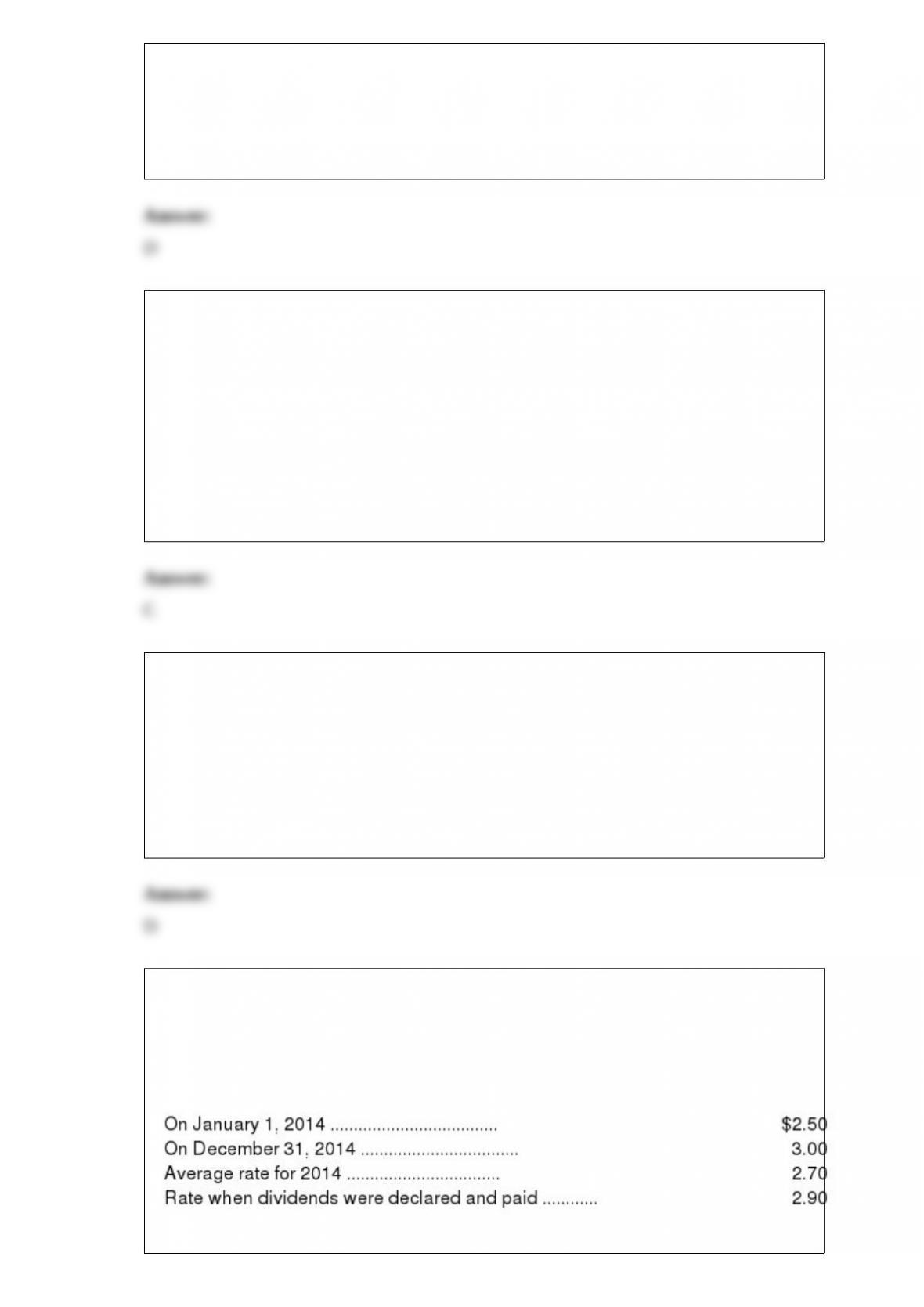
3) On August 31, 2014, Steinway Company purchased the following available-for-sale
securities:
On December 31, 2014, Steinway reclassified its investment in security I from
available-for-sale securities to trading securities. What total amount of loss on these
securities should be included in Steinway’ income statement for the year ended
December 31, 2014?
a. $0
b. $16,000
c. $22,000
d. $28,000
4) The cost of capital is defined as the
a. simple average of the interest rates of all debt outstanding
b. simple average of the cost of debt and equity
c. weighted average of the interest rates of all debt outstanding
d. weighted average of the cost of debt and equity
5) During 2014, Ongoing Company became involved in a tax dispute with the IRS. At
December 31, 2014, Ongoing’s tax adviser believed that an unfavorable outcome was
probable and a reasonable estimate of additional taxes was $450,000 but could be as
much as $650,000. After the 2014 financial statements were issued, Ongoing received
and accepted an IRS settlement offer of $550,000. What amount of accrued liability
would Ongoing have reported in its December 31, 2014, balance sheet?
a. $650,000
b. $550,000
c. $450,000
d. $0
6) Eli Corporation issued $200,000 of 10-year bonds on January 1. The bonds pay
interest on January 1 and July 1 and have a stated rate of 10 percent. If the market rate
of interest at the time the bonds are sold is 8 percent, what will be the issuance price of
the bonds?
a. $175,078
b. $211,283
c. $215,902
d. $227,183
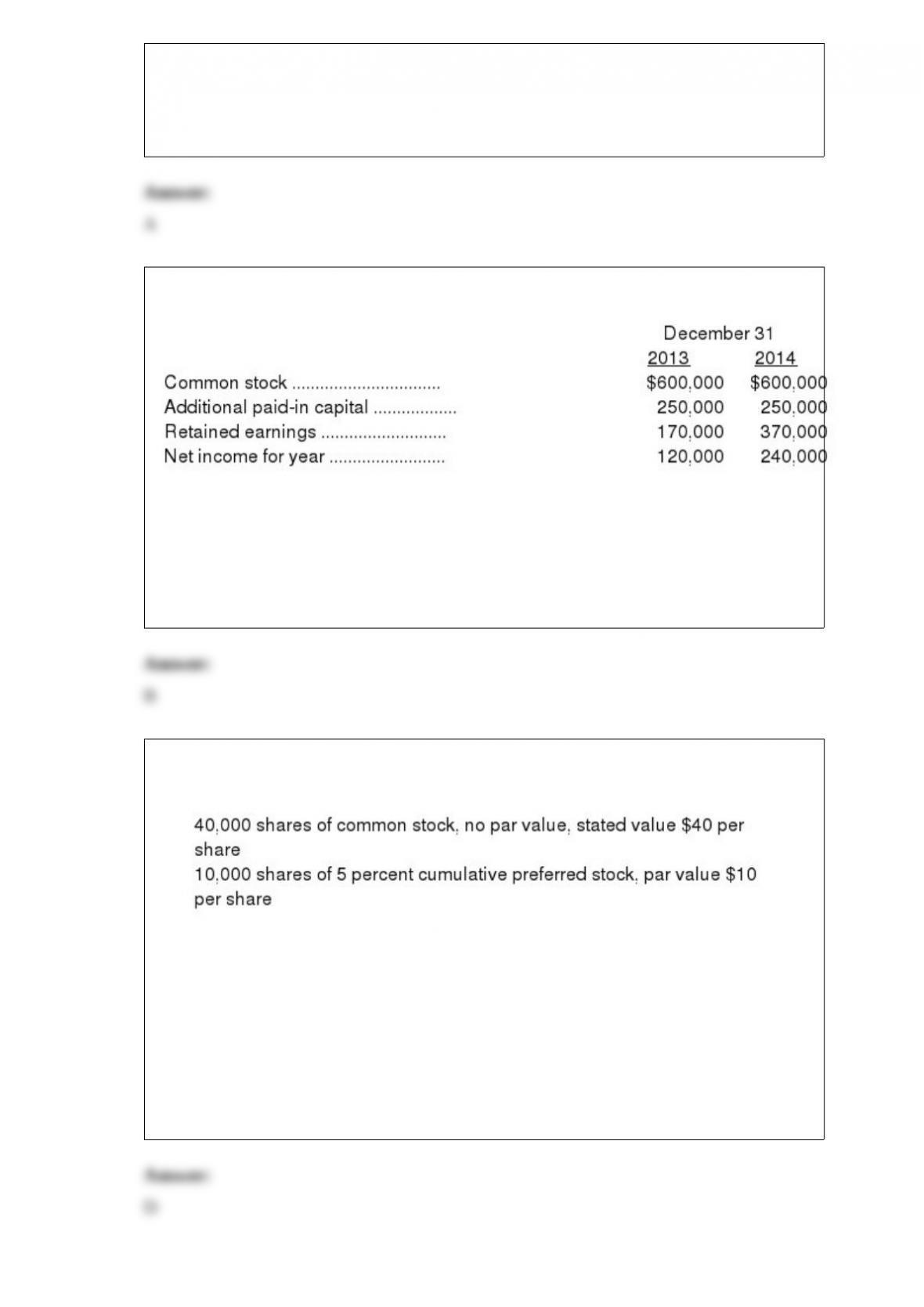
7) Finnish Company converts its foreign subsidiary financial statements using the
translation process. The companys subsidiary in Denmark reported the following for
2014: revenues and expenses of 95,000 and 63,000 kroner, respectively, earned or
incurred evenly throughout the year, dividends of 43,000 kroner were paid during the
year. The following exchange rates are available:
Translated net income for 2014 is
a. $86,400
b. $96,000
c. $(29,700)
d. $(28,500)
8) Selected information for Henriot Company is as follows:
Henriot’s return on common stockholder’s equity, rounded to the nearest percentage
point, for 2014 is
a. 20 percent
b. 21 percent
c. 28 percent
d. 40 percent
9) The Erhardt Corporation was incorporated on January 1, 2014, with the following
authorized capitalization:
During 2014, Erhardt issued 34,000 shares of common stock for a total of $1,700,000
and 6,000 shares of preferred stock at $16 per share. In addition, on December 20,
2014, subscriptions for 2,000 shares of preferred stock were taken at a purchase price of
$17. These subscribed shares were paid for on January 2, 2015. What should Erhardt
report as total contributed capital on its December 31, 2014, balance sheet?
a. $1,540,000
b. $1,762,000
c. $1,796,000
d. $1,830,000

10) At the beginning of the year, a firm leased equipment on a capital lease, capitalizing
$50,000 in both its lease liability and leased assets accounts. The contract calls for
payments each December 31 of $10,000. The lessees annual reporting period ends
December 31 and the contract reflects 10% interest. The lessee made the first payment
as required. Which of the following should be reflected on the statement of cash flows
under the indirect method for the first year of the contract (ignoring noncash
disclosures)?
a. $10,000 financing cash outflow
b. $10,000 operating cash outflow
c. $5,000 operating cash outflow; $5,000 financing cash outflow
d. $5,000 addition in the reconciliation of earnings and net operating cash flow
11) Assume cash paid to suppliers for the current year is $350,000, merchandise
inventory increased by $5,000 during the year, and accounts payable decreased by
$10,000 during the year. What was the cost of goods sold for the current year?
a. $335,000
b. $345,000
c. $355,000
d. $365,000
12) An operating cycle
a. is twelve months or less in length
b. is the average time required for a company to collect its receivables
c. is used to determine current assets when the operating cycle is longer than one year
d. starts with inventory and ends with cash
13) Harvest Corporation’s capital stock at December 31 consisted of the following: (a)
Common stock, $2 par value; 100,000 shares authorized, issued, and outstanding. (b)
10% noncumulative, nonconvertible preferred stock, $100 par value; 1,000 shares
authorized, issued, and outstanding.
Harvest’s common stock, which is listed on a major stock exchange, was quoted at $4
per share on December 31. Harvest’s net income for the year ended December 31 was
$50,000. The yearly preferred dividend was declared. No capital stock transactions
occurred. What was the price- earnings ratio on Harvest’s common stock at December
31?
a. 6 to 1
b. 8 to 1
c. 10 to 1
d. 16 to 1
14) For a company with a periodic inventory system, which of the following would
cause income to be overstated in the period of occurrence?
a. Overestimating bad debt expense
b. Understating beginning inventory
c. Overstated purchases
d. Understated ending inventory
15) The FASB specified in Statement No. 140 three conditions that must be met if a
transfer of receivables is to accounted for as a sale. Which of the following is not one of
the three conditions specified?
a. The transferred assets have been isolated from the transferor
b. The transferor’s obligation under the recourse provisions can be reasonably estimated
c. The transferee has the right to pledge or exchange the transferred assets
d. The transferor does not maintain effective control over the assets through an
agreement to repurchase the assets before their maturity
16) The following amounts are from Silverton Co.’s 2014 income statement:
What amount would Silverton show for income from continuing operations on a
multiple-step format income statement?
a. $52,000
b. $68,000
c. $57,000
d. $96,000
17) Mantle Company exchanged a used autograph-signing machine with Maris
Company for a similar machine with less use. Mantle’s old machine originally cost
$50,000 and had accumulated depreciation of $40,000, as well as a market value of
$40,000, at the time of the exchange. Maris’ old machine originally cost $60,000 and at
the time of the exchange had a book value of $30,000 and a market value of $32,000.
Maris gave Mantle $8,000 cash as part of the exchange. The exchange lacked
commercial substance. Mantle should record the cost of the new machine at
a. $8,000
b. $10,000
c. $16,000
d. $32,000
18) An entity sells an equal dollar amount of convertible preferred stock and long-term
notes payable. Prior to these transactions, total debt was less than total equity. How did
the sale of the convertible preferred stock and the long-term notes payable affect the
companys debt to total assets ratio?
a. The debt to total assets ratio would decrease
b. The debt to total assets ratio would increase
c. The debt to total assets ratio would remain the same
d. The effect on the debt to total assets ratio cannot be determined from the information
given
19) Which of the following accounting principles best describes the rationale for
reporting a liability for earned but unused compensated absences?
a. Historical cost
b. Full disclosure
c. Materiality
d. Matching
20) Which of the following describes the flow of product costs through the inventory
accounts of a manufacturer?

a. Raw materials, goods in process, factory overhead, finished goods
b. Raw materials, goods in process, finished goods
c. Raw materials, direct labor, factory overhead, finished goods
d. Raw materials, direct labor, factory overhead
21) For which type of derivative are changes in the fair value deferred and recognized
as an equity adjustment?
a. Fair value hedge
b. Cash flow hedge
c. Operating hedge
d. Notional value hedge
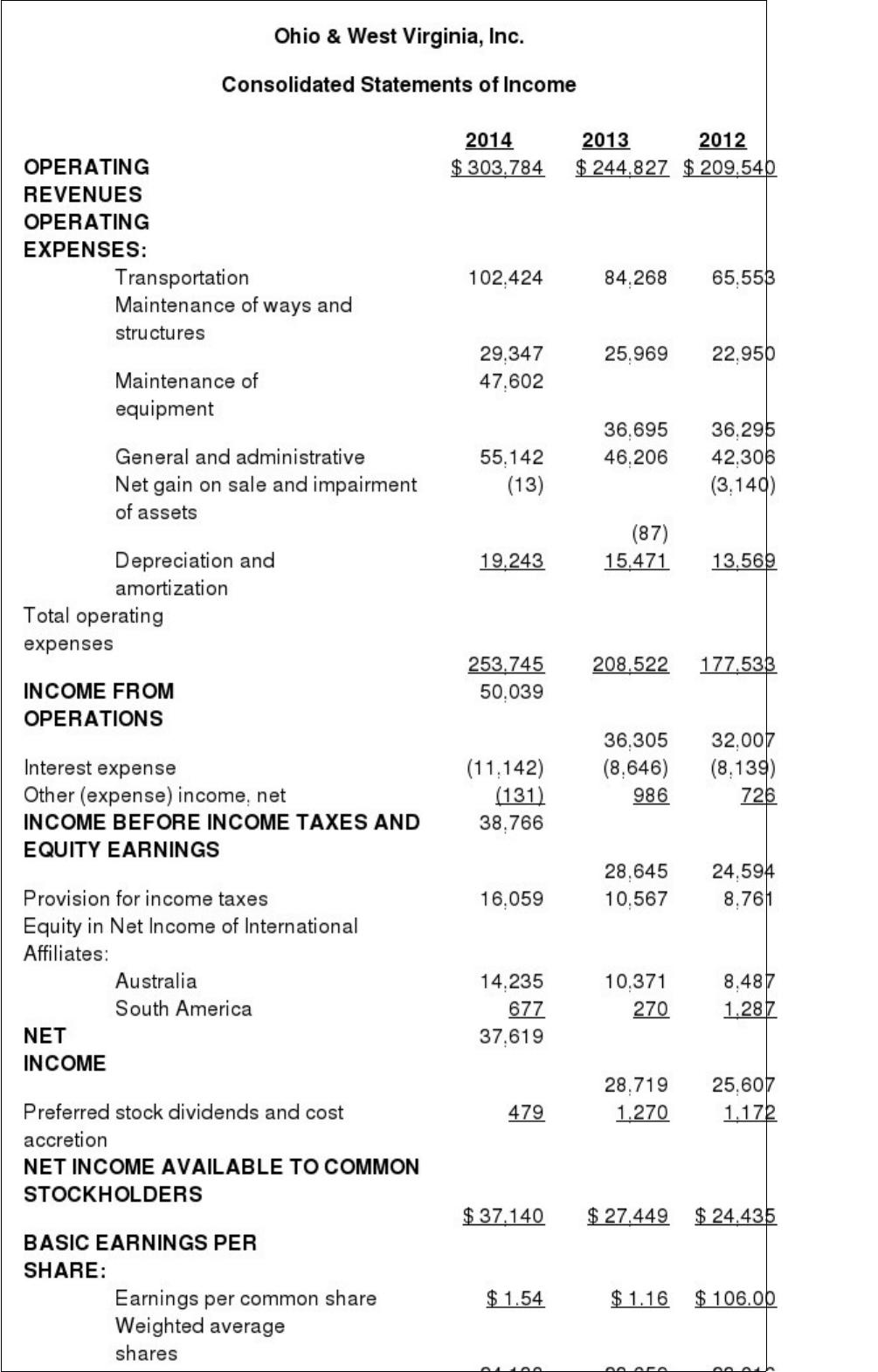
22) The following information is available for Ohio & West Virginia, Inc, from the
companys annual Form 10-K:
Ohio & West Virginia, Inc. (OWV) is a world-class provider of rail-freight
transportation and its supporting services. OWV functions as a holding company with
subsidiaries that own and operate regional freight railroads. We own or have interests in
47 railroads in five countries (United States, Canada, Mexico, Bolivia and Australia),
and operate over 9,300 miles of owned and leased track and more than 3,000 additional
miles under track-access arrangements.
Our revenues are generated primarily from the movement of freight over track owned
or operated by our railroads. At the heart of OWV’s success is the integration of our
railroads into strong regional rail systems. Our subsidiary, LinkRail, Inc., provides
freight car switching and rail-related services to industrial companies operating
extensive railroad facilities within their own complexes.
Information from the companys income statement contained in the Form 10-K annual
report to the Securities and Exchange Commission is as follows:
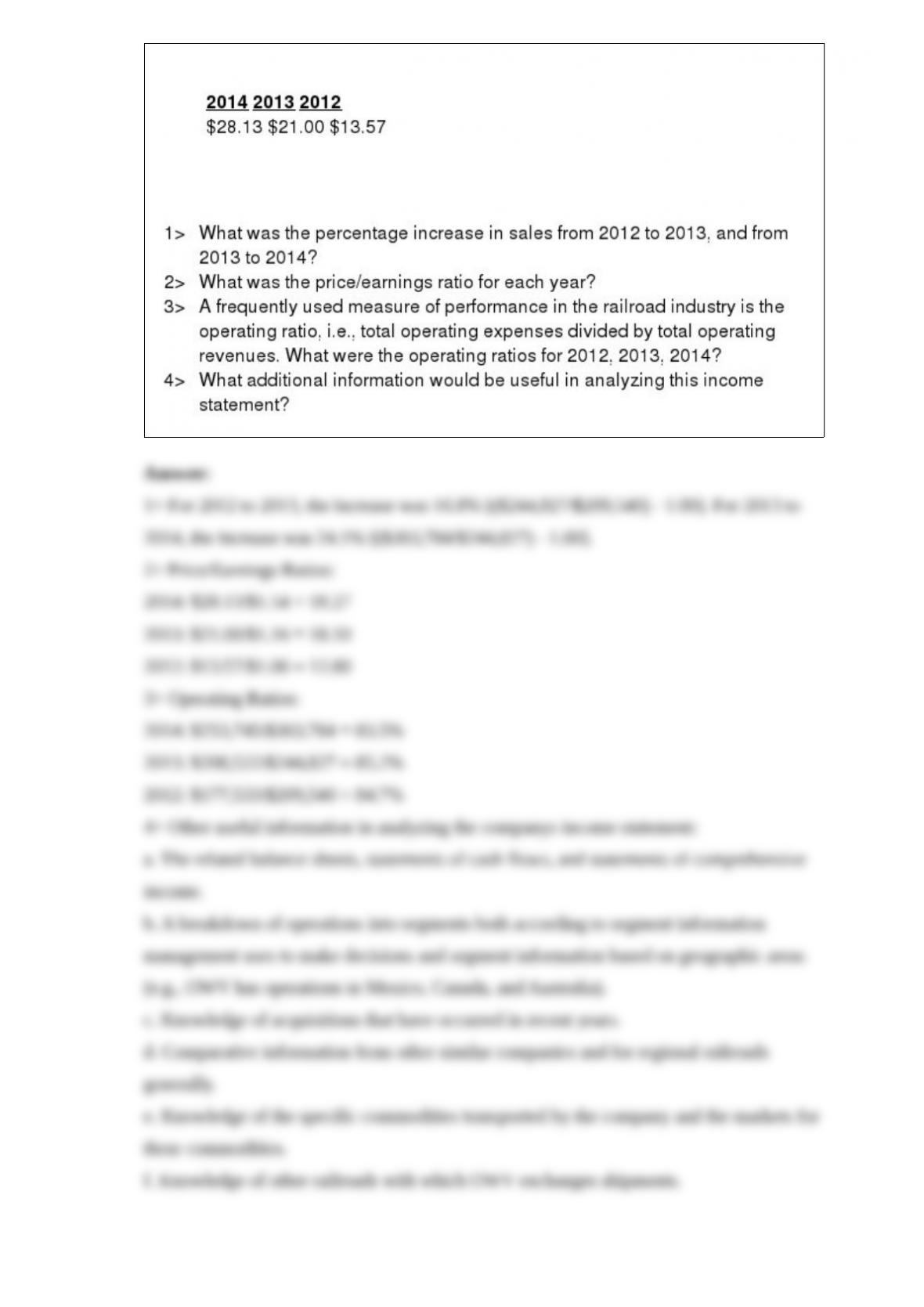
CLOSING STOCK PRICES AT DECEMBER 31:
Required:
Answer the following questions:
23) When comparing the percentage-of-completion and completed-contract methods of
accounting for long-term construction contracts, both methods will report the same
a. balances each period in the Progress Billings account
b. expense for cost of construction each year
c. amount of income in the year of completion
d. inventory carrying value each year during the construction period
24) The correction of an error in the financial statements of a prior period should be
reflected, net of applicable income taxes, in the current
a. income statement after income from continuing operations and before extraordinary
items
b. income statement after income from continuing operations and after extraordinary
items
c. retained earnings statement after net income but before dividends
d. retained earnings statement as an adjustment of the opening balance
25) If the balance shown on a company’s bank statement is less than the correct cash
balance, and neither the company nor the bank has made any errors, there must be
a. deposits credited by the bank but not yet recorded by the company
b. outstanding checks
c. bank charges not yet recorded by the company
d. deposits in transit
26) Under international accounting standards, cash paid for interest (associated with
interest expense) can be shown on the statement of cash flows as an
a. operating activity only
b. operating activity or a financing activity
c. operating activity or an investing activity
d. investing or financing activity
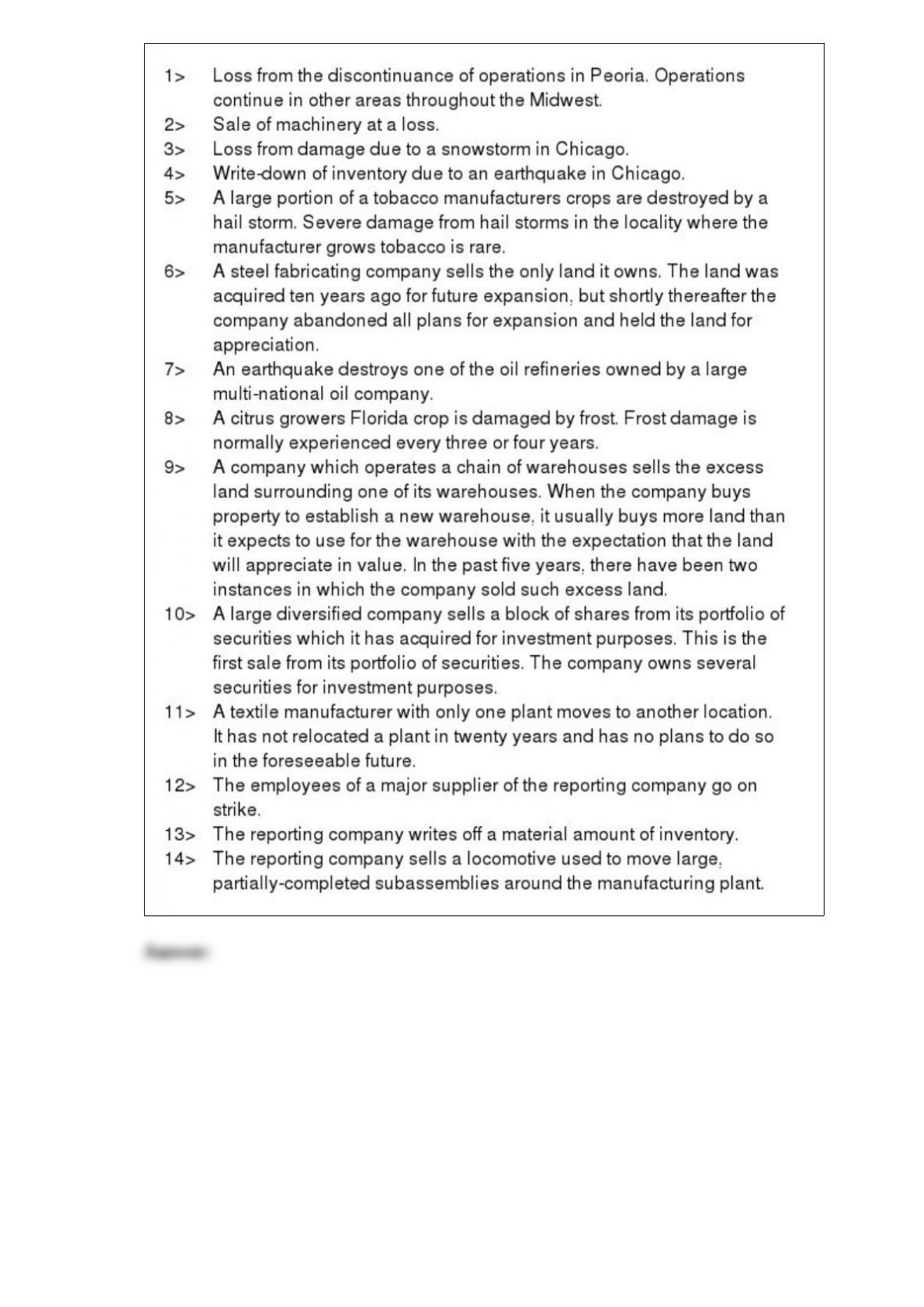
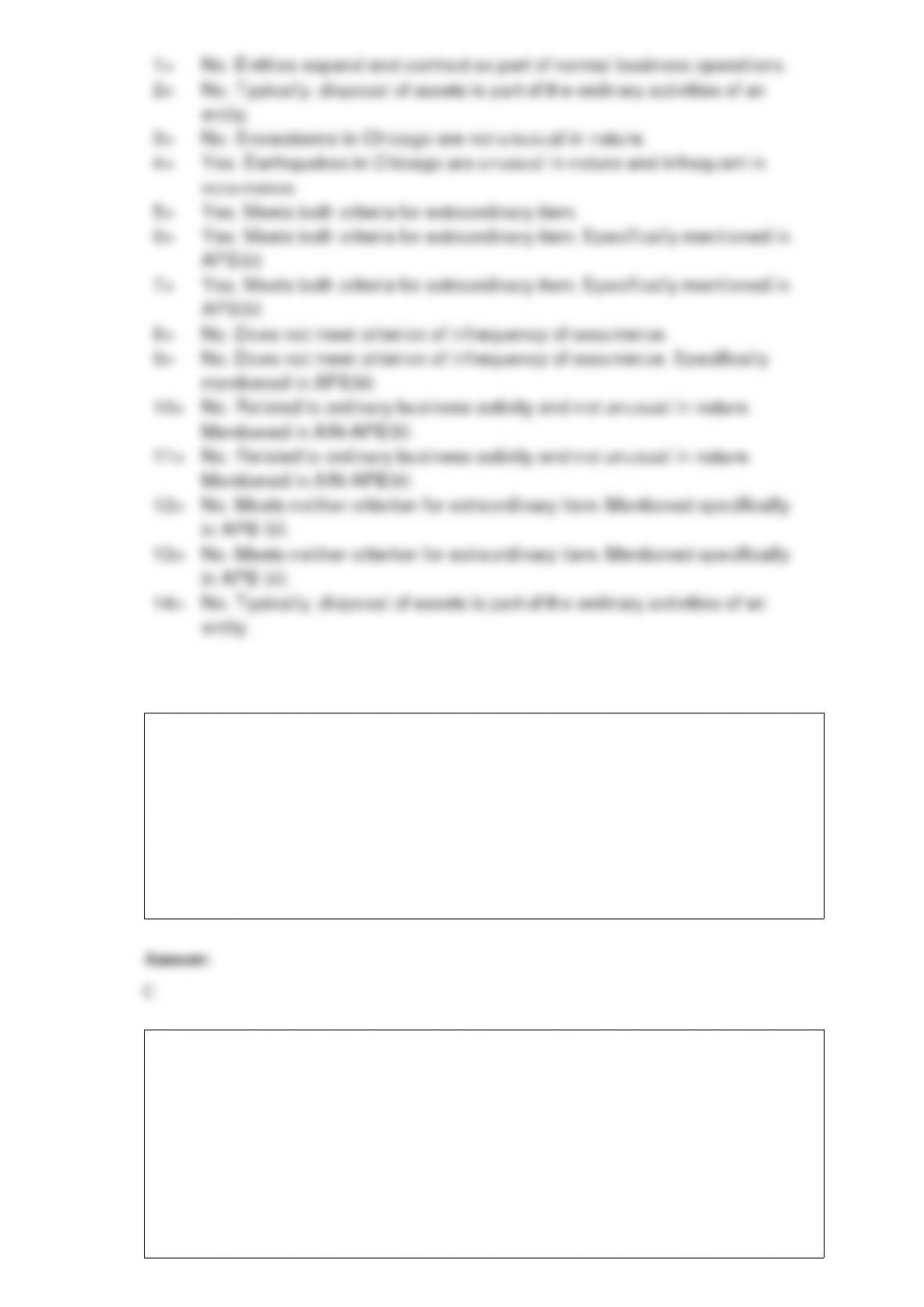
27) Indicate which of the items below should be reported in the financial statements as
an extraordinary item. Assume the dollar amounts associated with all items are material.
The items are:
28) Which one of the following items is not part of the minimum lease payments from
the standpoint of the lessee?
a. The minimum rental payments called for by the lease
b. Any guarantee the lessee is required to make at the end of the lease term regarding
any deficiency from a specified minimum
c. Any estimated residual value at the end of the lease term
d. Any payment the lessee must make at the end of the lease term to purchase the leased
property under a bargain purchase option
29) Asolo Construction Co. carries $10,000,000 comprehensive public liability
insurance with a $200,000 deductible clause. A suit for personal injury damages was
brought against Asolo in 2014. Asolo’s counsel believes it probable that the insurance
company will settle out of court for an estimated amount of $550,000. At December 31,
2014, Asolo should report an accrued liability of
a. $550,000
b. $350,000
c. $200,000
d. $0
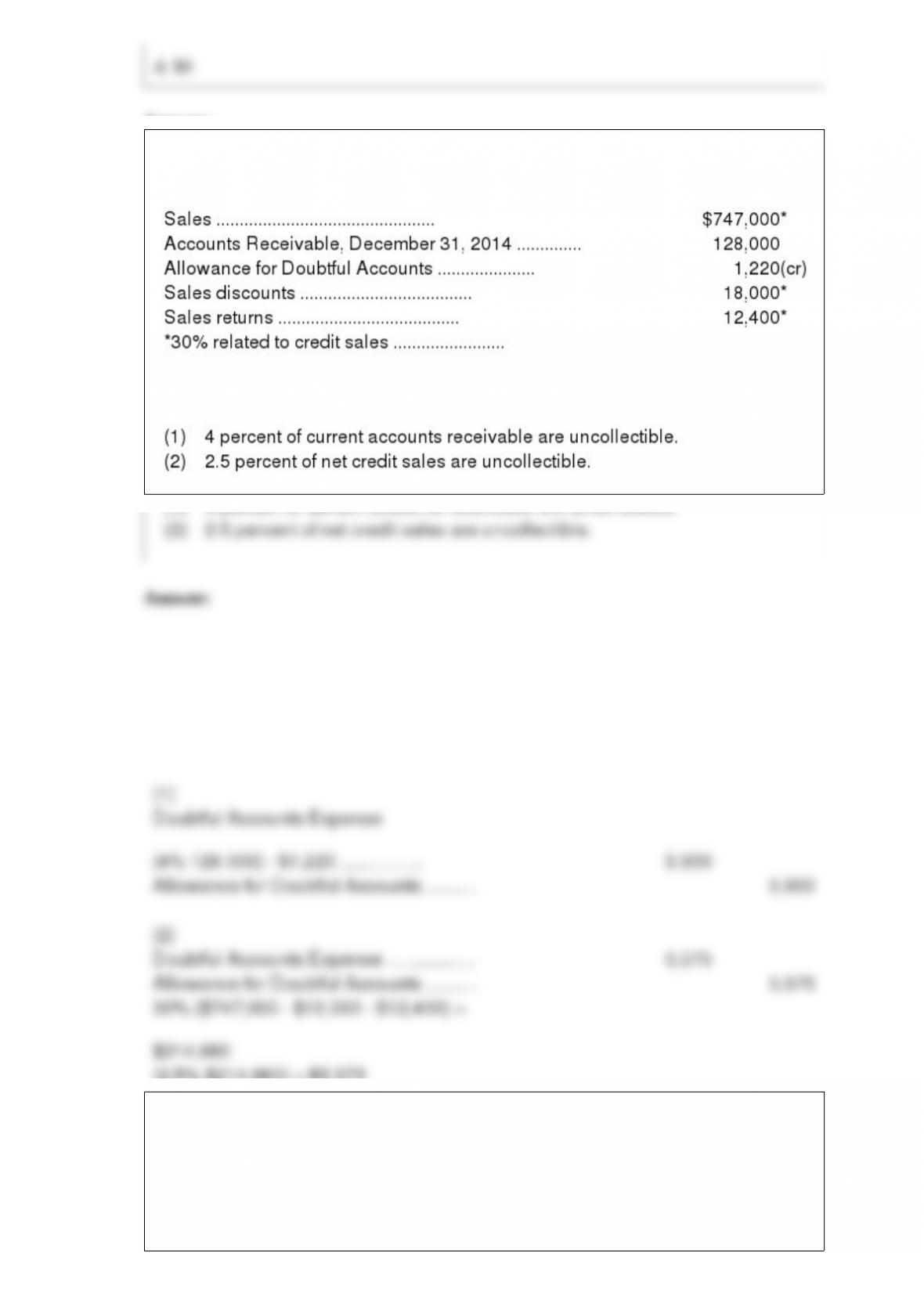
30) The following information was abstracted from the 2014 financial statements of
Keller Company:
Prepare the adjusting entry for doubtful accounts expense under each of the following
assumptions:
31) Mako’s Distributing purchased equipment on January 1, 2011. The equipment cost
$214,000 with a salvage value of $14,000 and an estimated life of 8 years. Initially,
Mako depreciated the equipment using the sum-of-the-years’-digits method. On January
1, 2014, the company elected to change to the straight-line method of depreciation.
Required:
Determine the depreciation expense for 2014 and prepare the appropriate journal entry.
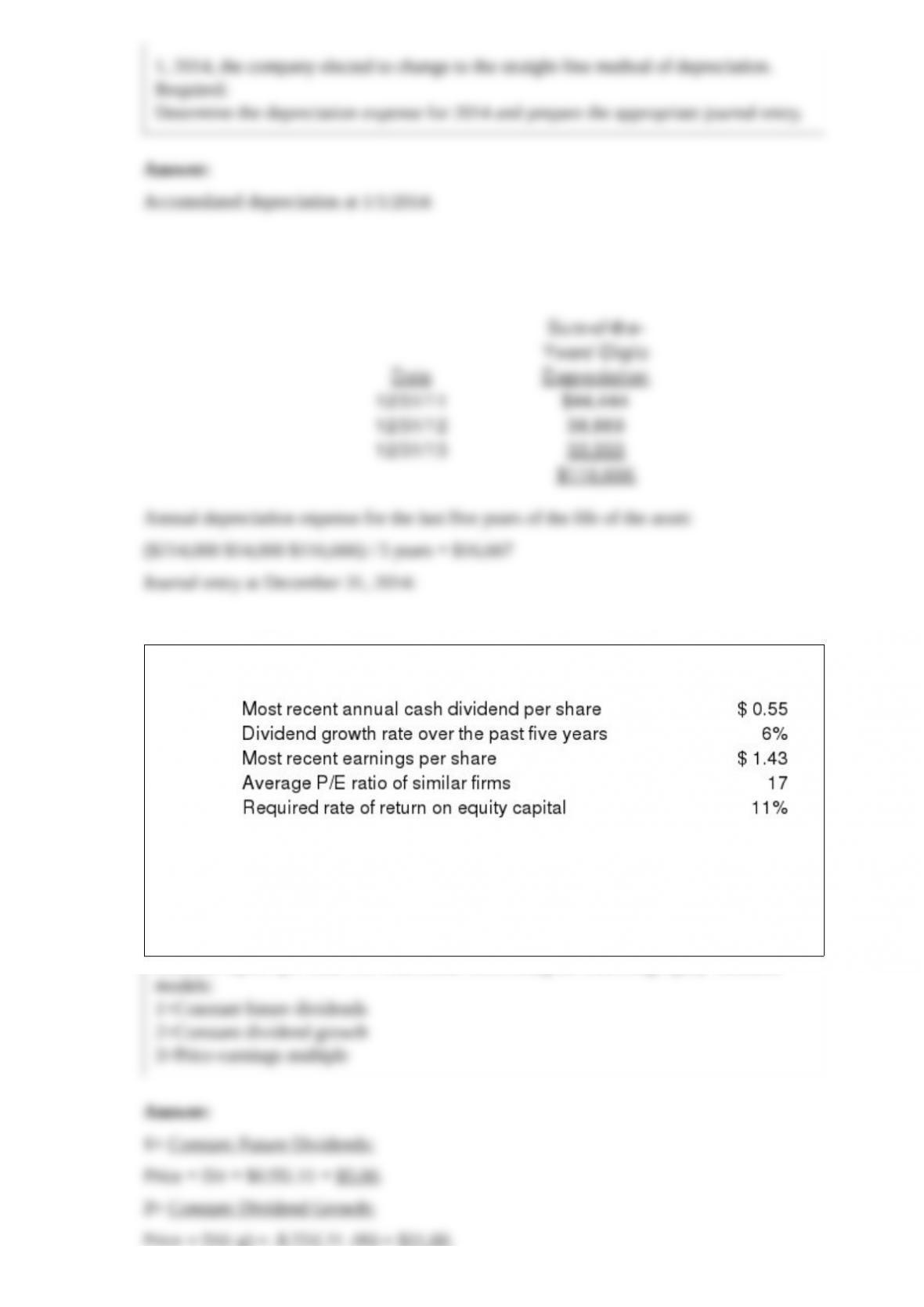
32) The following information has been collected regarding Collections Company:
Estimate a price per share for Collections stock using the following equity valuation
models:
1>Constant future dividends
2>Constant dividend growth
3>Price-earnings multiple
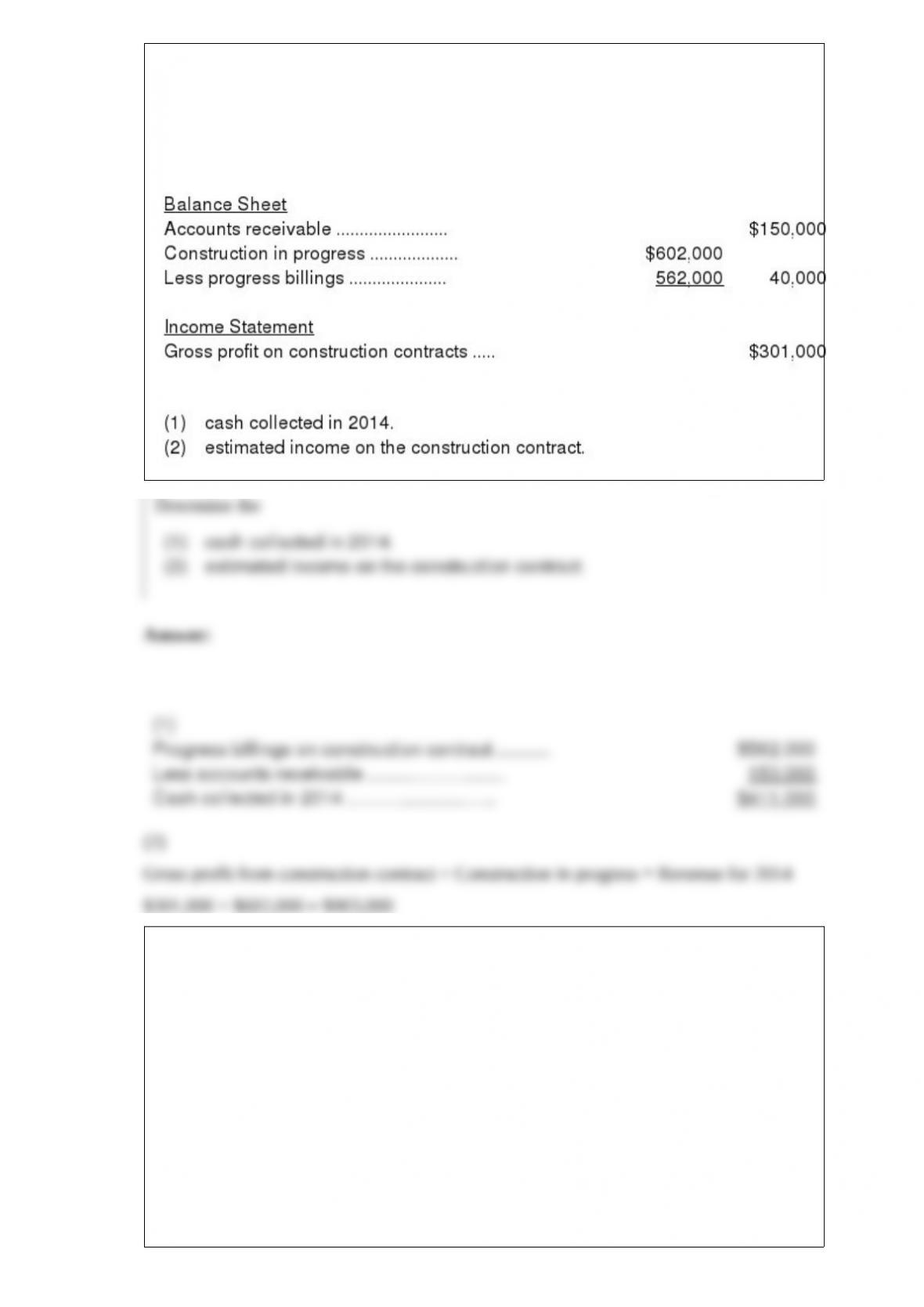
33) In 2014, Amsterdam Builders began construction work under a three-year contract
at a price of $7,525,000. The firm uses the percentage-of-completion method for
financial accounting purposes. The income to be recognized each year is based on the
proportion of cost incurred to the total estimated costs for completing the contract. The
financial statement presentations relating to this contract on December 31, 2014, are:
Determine the
34) On January 1, 2013, Venice Company initiated a stock incentive plan for many
employees. The plan provides for each qualified executive to receive options for 2,000
shares of common stock. The option is exercisable at any time after four years and prior
to expiration, which is five years from the date of grant. Employment with the company
is required through the exercise date. The options are not transferable and the specified
exercise price is set equal to the grant date market price of the stock. Compensation cost
is to be assigned equally to each year from the grant date to the first exercise (vesting)
date, which is four years. The company uses SFAS No. 123R to account for stock-based
compensation plans.
On January 1, 2016, 1,000 employees were each granted options to acquire 2,000 shares
under the plan when the market price of the stock was $30. Management expects a
forfeiture rate of approximately 4 percent per year over the service period. Application
of an option pricing model results in a fair value of each option at the grant date of $12
per option.
At December 31, 2016, 840 grantees are still employed by the company and will vest
with 2,000 options each. All vested options are exercised on December 28, 2017, prior
to their expiration on December 31, 2017. The market price of the stock on December
28, 2017, was $50 per share.
Required:
Prepare all entries necessary to account for this stock option plan. Assume that all
compensation expense is expensed in each period rather than being held back as part of
inventory cost.