
A firm has fixed costs of $200,000 and variable costs per unit of $6. It plans on selling
40,000 units in the coming year. To realize a profit of $20,000, the firm must have a
sales price per unit of at least
A. $11.00.
B. $11.50.
C. $10.00.
D. $10.50.
When the cost of lost units must be assigned, and those same units must be included in
an equivalent unit schedule, these units are considered
A. normal and discrete.
B. normal and continuous.
C. abnormal and discrete.
D. abnormal and continuous.
Diversity applies to differences in
A. race.
B. religion.
C. culture.

D. all of the above.
Joint costs are most frequently allocated based upon relative
A. profitability.
B. conversion costs.
C. prime costs.
D. sales value.
Which of the following components of production are allocable as joint costs when a
single manufacturing process produces several salable products?
A. direct material, direct labor, and overhead
B. direct material and direct labor only
C. direct labor and overhead only
D. overhead and direct material only
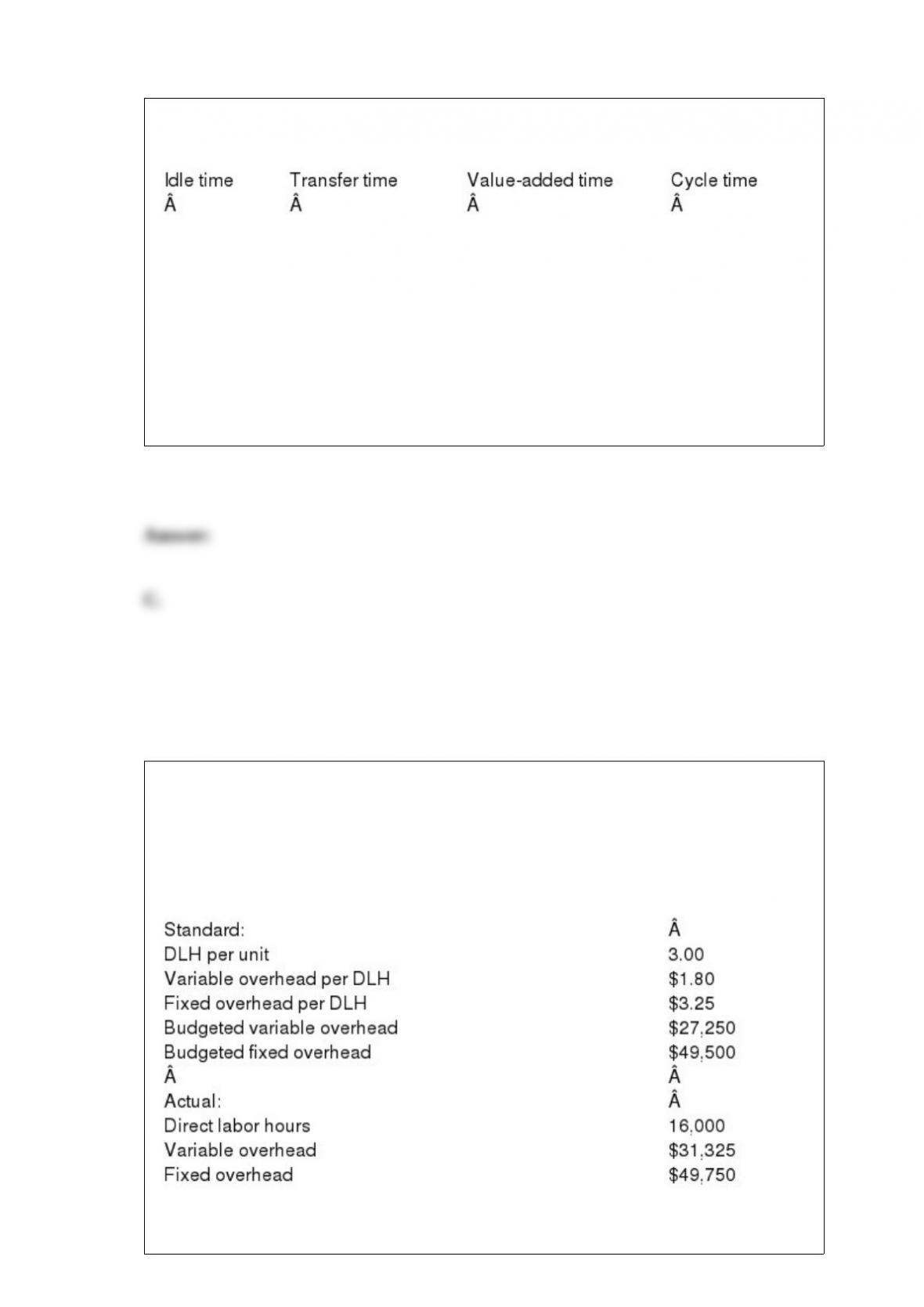
A just-in-time manufacturing process should have substantially less of which of the
following than a traditional manufacturing process?
A. yes yes yes yes
B. yes no no yes
C. yes yes no yes
D. no yes yes no
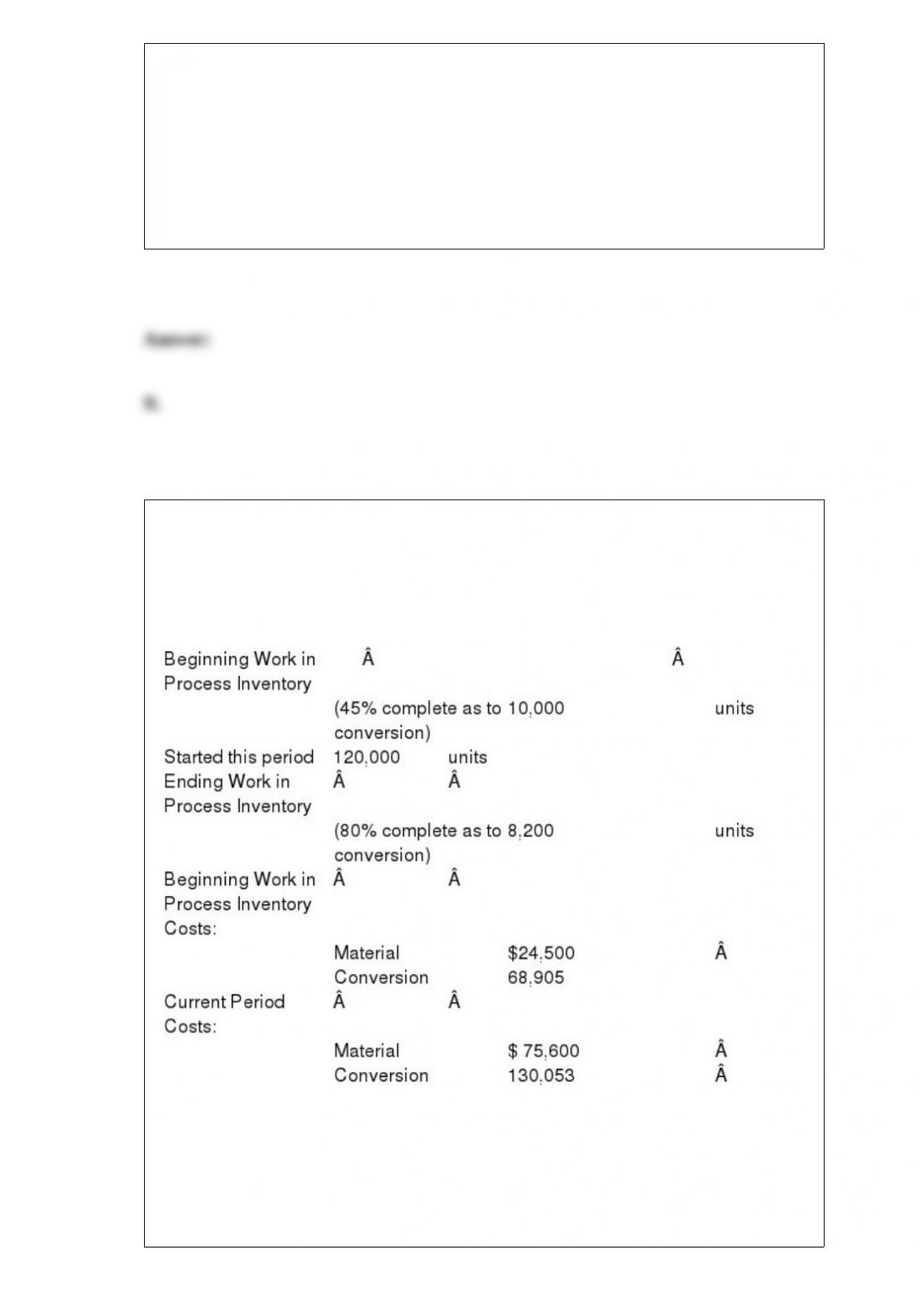
Commodore Company
Commodore Company uses a standard cost system for its production process and
applies overhead based on direct labor hours. The following information is available for
September when Commodore produced 5,000 units:
Refer to Commodore Company. Using the three-variance approach, what is the volume
variance?
A. $ 750 F
B. $ 750 U
C. $1,000 U
D. $1,000 F
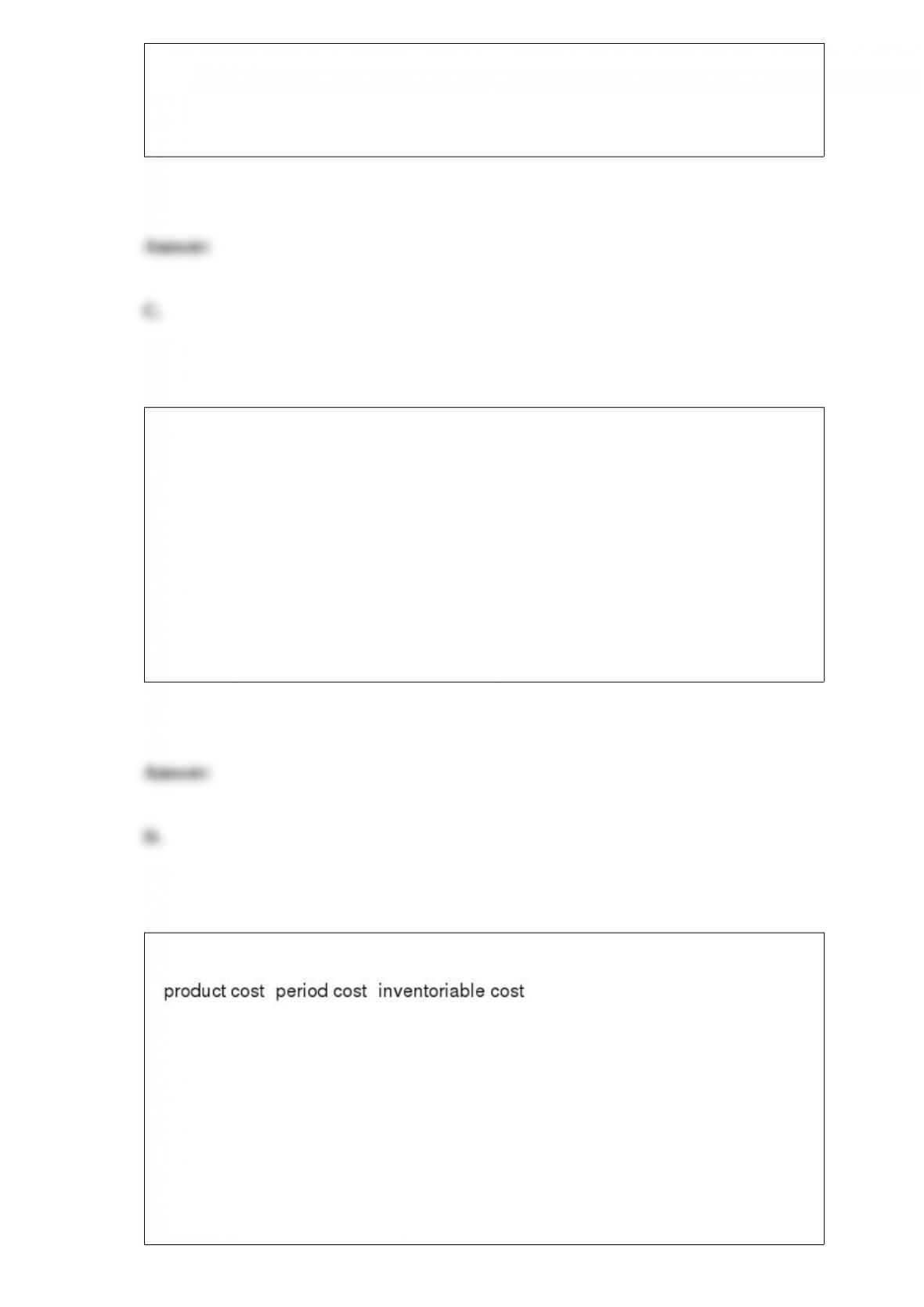
Wright Company
Wright Company adds material at the start of production. The following production
information is available for September:
Refer to Wright Company. What is the conversion cost per equivalent unit using the
weighted average method?
A. $1.01
B. $1.05
C. $1.55
D. $1.61
Ryan Corporation is relocating its facilities. The company estimates that it will take
three trucks to move office contents. If the per truck rental charge is $1,000 plus 25
cents per mile, what is the expected cost to move 800 miles?
A. $1,000
B. $1,200
C. $2,400
D. $3,600
A selling cost is a(n)
A. yes yes no
B. yes no no
C. no yes no
D. no yes yes

A disadvantage of participatory budgets is that
A. there is a high degree of acceptance of the goals and objectives by operating
management.
B. they are usually more realistic.
C. they lead to better morale and higher motivation.
D. they usually require more time to prepare.
Compensation packages for executives of American firms
A. are beginning to emphasize the long-term commitment executives should have in the
firm.
B. are considered comparable to packages earned by European and Asian executives.
C. are shifting towards lower percentages of annual incentives.
D. are shifting away from long-term awards.

Costs forgone when an individual or organization chooses one option over another are
A. budgeted costs.
B. sunk costs.
C. historical costs.
D. opportunity costs.
The ____ prohibits companies from pricing products at different amounts unless these
differences reflect differences in the cost to manufacture, sell, or distribute the
products.
A. Internal Revenue Service
B. Governmental Accounting Office
C. Sherman Antitrust Act
D. Robinson-Patman Act
Atlantic Princess Corporation
Atlantic Princess Corporation is considering the purchase of a new ocean-going vessel
that could potentially reduce labor costs of its operation by a considerable margin. The
new ship would cost $500,000 and would be fully depreciated by the straight-line

method over 10 years. At the end of 10 years, the ship will have no value and will be
scuttled. Atlantic Princess’s cost of capital is 12 percent, and its marginal tax rate is 40
percent.
Refer to Atlantic Princess Corporation. If the ship produces equal annual labor cost
savings over its 10-year life, how much do the annual savings in labor costs need to be
to generate a net present value of $0 on the project? (Round to the nearest dollar.)
Present value tables or a financial calculator are required.
A. $68,492
B. $115,154
C. $88,492
D. $157,487
Product costs are deducted from revenue
A. as expenditures are made.
B. when production is completed.
C. as goods are sold.
D. to minimize taxable income.
Which of the following would be least likely to be supported by subsidiary accounts or
ledgers in a company that employs a job-order costing system?

A. Work in Process Inventory
B. Raw Material Inventory
C. Accounts Payable
D. Supplies Inventory