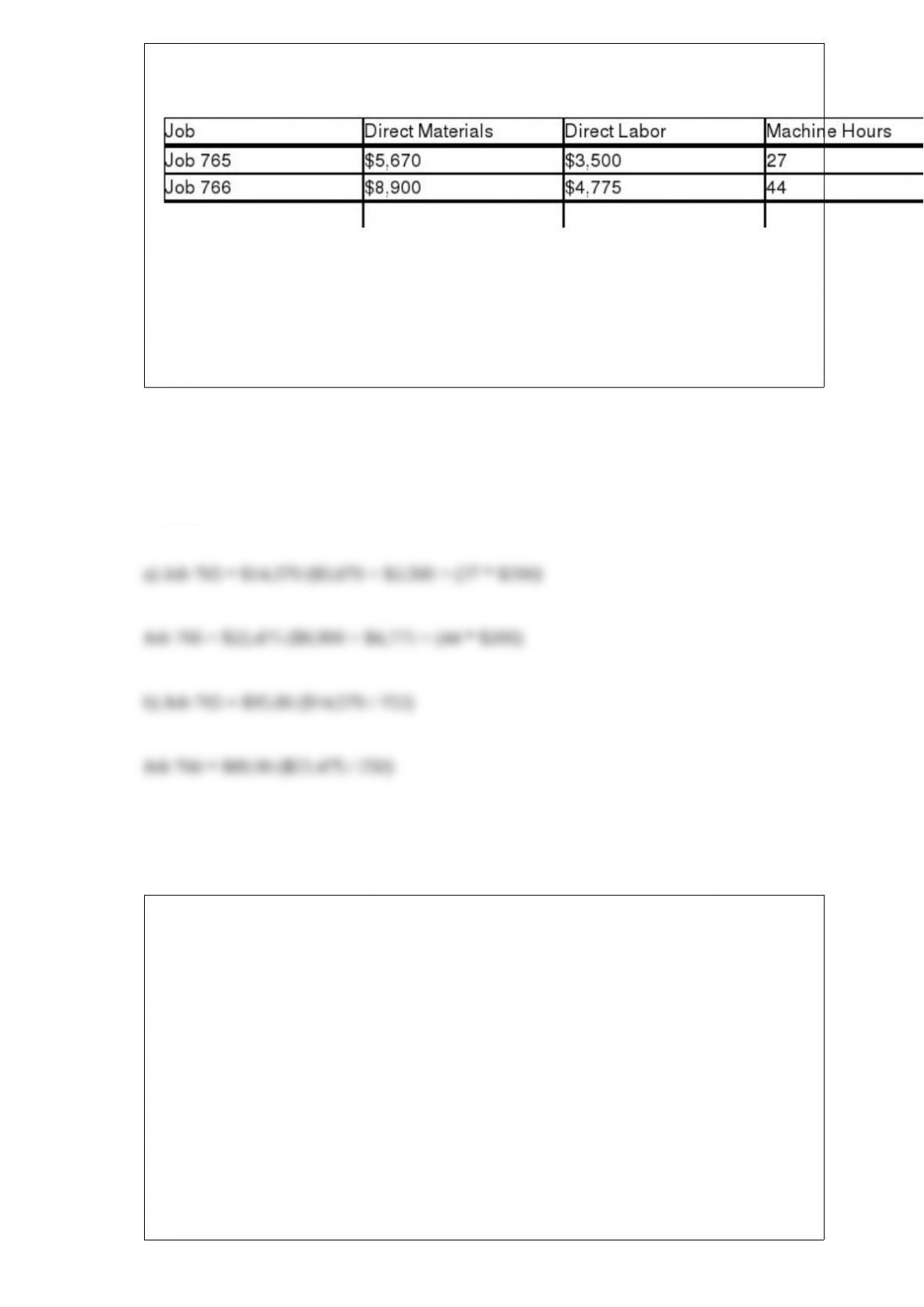
At the end of April, Cavy Company had completed Job 766 and 765. According to the
individual job cost sheets the information is as follows:
Job 765 produced 152 units, and Job 766 consisted of 250 units.
Assuming that the predetermined overhead rate is applied by using machine hours at a
rate of $200 per hour, determine the (a) balance on the job cost sheets for each job, and
(b) the cost per unit at the end of April.
Answer:
Materials used by Jefferson Company in producing Division C’s product are currently
purchased from outside suppliers at a cost of $10 per unit. However, the same materials
are available from Division A. Division A has unused capacity and can produce the
materials needed by Division C at a variable cost of $8.50 per unit. A transfer price of
$9.50 per unit is negotiated and 25,000 units of material are transferred, with no
reduction in Division A’s current sales.
How much would Division C’s income from operations increase?
A.$0
B.$75,000
C.$12,500

D.$50,000
Answer:
One of the accounting concepts upon which deferrals and accruals are based is
A.matching
B.cost
C.price-level adjustment
D.conservatism
Answer:
Internal control does not consist of policies and procedures that
A.protect assets from misuse
B.aid management in directing operations toward achieving business goals
C.guarantee the company will not go bankrupt

D.ensure that business information is accurate
Answer:
The transfer price which uses a variety of cost concepts is the
A.Negotiated price approach
B.Standard cost approach
C.Cost price approach
D.Market price approach
Answer:
The standard costs and actual costs for factory overhead for the manufacture of 2,500
units of actual production are as follows:
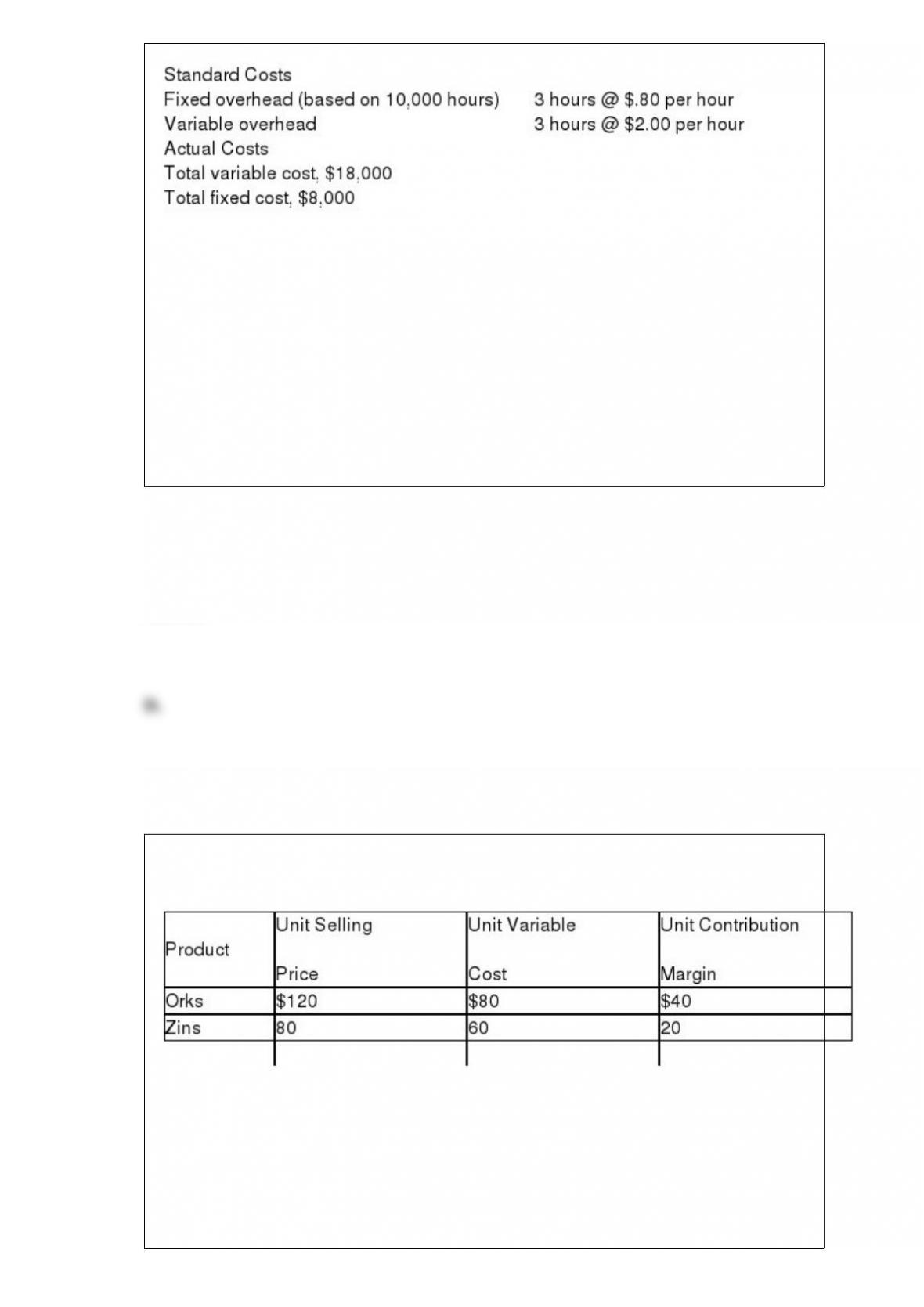
The amount of the factory overhead controllable variance is:
A.$2,000 unfavorable
B.$3,000 favorable
C.$0
D.$3,000 unfavorable
Answer:
Safari Co. sells two products, Orks and Zins. Last year Safari sold 21,000 units of Orks
and 14,000 units of Zins. Related data are:
Calculate the following:
a. Safari Co.’s sales mix
b. Safari Co.’s weighted average unit selling price
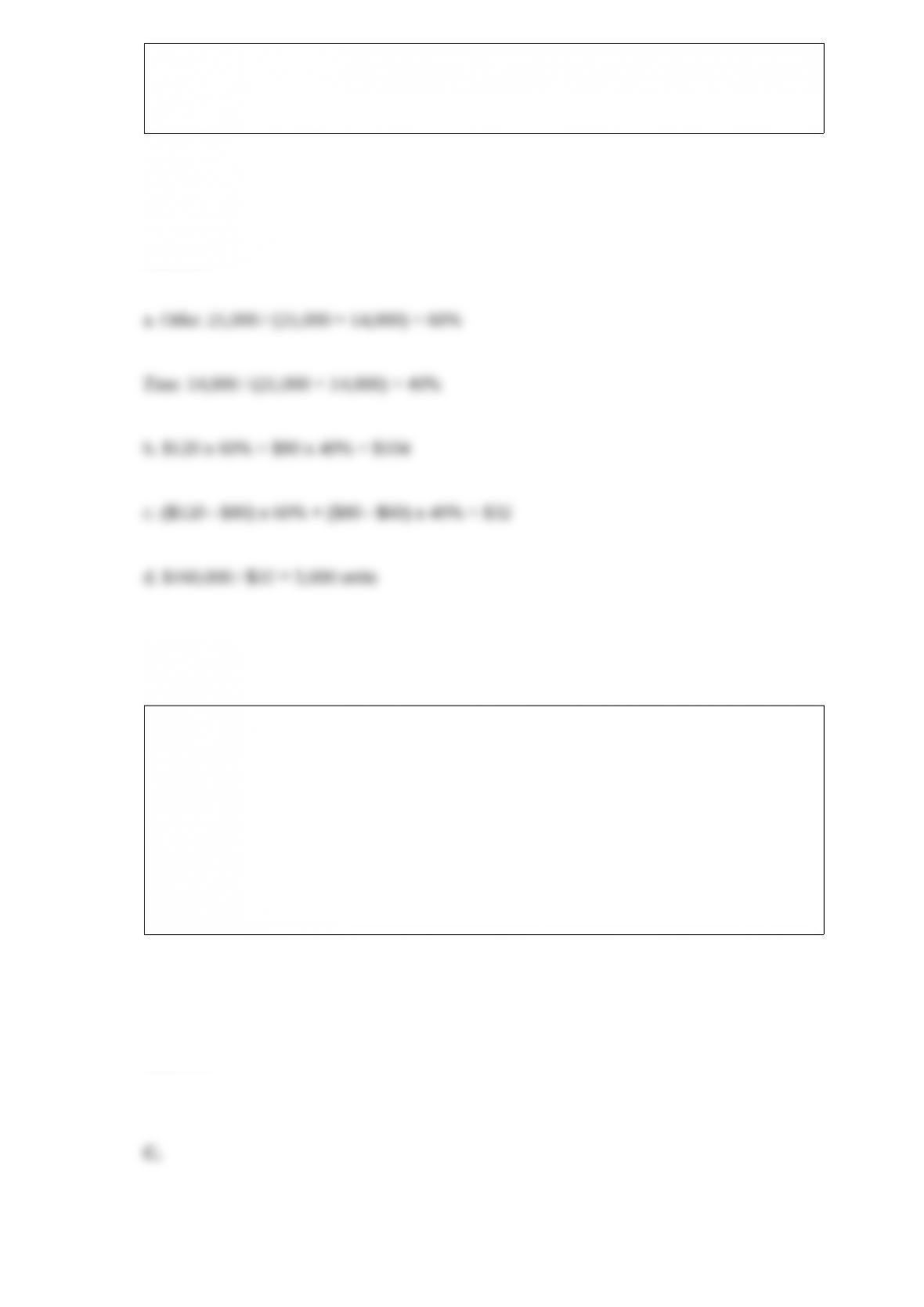
c. Safari Co’s weighted average unit contribution margin
d. Safari Co’s break-even point assuming that last year’s fixed costs were $160,000.
Answer:
Cash equivalents include
A.checks
B.coins and currency
C.money market accounts and commercial paper
D.stocks and short-term bonds
Answer:

An example of a preventive control is
A.a single person handles the responsibilities for operations, custody of assets, and
accounting
B.separation of the Purchasing Department and Accounting Department personnel
C.bonding employees who handle cash
D.accepting payment in currency only
Answer:
What entry is required in the company’s accounts to record outstanding checks?
A.debit Accounts Receivable; credit Cash
B.debit Cash; credit Accounts Receivable
C.debit Cash; credit Accounts Payable
D.none
Answer:

If fixed costs are $240,000, the unit selling price is $32, and the unit variable costs are
$20, what are the old and new break-even sales (units) if the unit selling price increases
by $4?
A.7,500 units and 6,667 units
B.20,000 units and 30,000 units
C.20,000 units and 15,000 units
D.12,000 units and 15,000 units
Answer:
A business is considering a cash outlay of $400,000 for the purchase of land, which it
could lease for $40,000 per year. If alternative investments are available which yield a
21% return, the opportunity cost of the purchase of the land is:
A.$84,000
B.$40,000
C.$44,000
D.$8,400
Answer:

The production budgets are used to prepare which of the following budgets.
A.Operating expenses
B.Direct materials purchases, direct labor cost, factory overhead cost
C.Sales in dollars
D.Sales in units
Answer:
The Mountain Springs Water Company has two departments. Purifying and Bottling.
The Bottling Department received 67,000 liters from the Purifying Department. During
the period, the Bottling Department completed 65,000 liters, including 3,000 liters of
work in process at the beginning of the period. The ending work in process was 5,000
liters. How many liters were started and completed during the period?
A.62,000
B.64,000
C.60,000
D.70,000
Answer:

The recording of the factory labor incurred for general factory use would include a
debit to:
A.Factory Overhead
B.Wages Payable
C.Wages Expense
D.Cost of Goods Sold
Answer:
If the cost of direct materials is a small portion of total production cost, it may be
classified as part of:
A.direct labor cost
B.selling and administrative costs
C.miscellaneous costs
D.factory overhead cost
Answer:

If bonds are issued at a premium, the stated interest rate is
A.higher than the market rate of interest.
B.lower than the market rate of interest.
C.too low to attract investors.
D.adjusted to a higher rate of interest.
Answer:
If the effect of the debit portion of an adjusting entry is to increase the balance of an
expense account, which of the following describes the effect of the credit portion of the
entry?
A.decreases the balance of an owner’s equity account
B.increases the balance of a liability account
C.increases the balance of an asset account
D.decreases the balance of an expense account
Answer:

A company that has 25,000 shares of $5.00 par value common stock issued and
outstanding paid a dividend of $0.40 per share. The market value of the stock is $16 per
share. The company’s dividend yield is:
A.2.5%
B.400%
C.16%
D.40%
Answer:
When management seeks to achieve personal departmental objectives that may work to
the detriment of the entire company, the manager is experiencing:
A.budgetary slack
B.padding
C.goal conflict
D.cushions
Answer:

When a company uses the allowance method of accounting for uncollectible
receivables, which entry would not be found in the general journal?
A.Bad Debt Expense 500
Allowance for Doubtful Accounts 500
B.Bad Debt Expense 500
Accounts Receivable – Bob Smith 500
C.Cash 300
Allowance for Doubtful Accounts 200
Accounts Receivable – Bob Smith 500
D.Cash 500
Accounts Receivable – Bob Smith 500
Answer:
A debit may signify a(n)
A.decrease in asset accounts
B.decrease in liability accounts
C.increase in the capital account
D.decrease in the drawing account
Answer:

Land acquired so it can be resold in the future is listed in the balance sheet as a(n)
A.fixed asset
B.current asset
C.investment
D.intangible asset
Answer:
If common stock is issued for an amount greater than par value, the excess should be
credited to
A.Retained Earnings.
B.Cash.
C.Legal Capital.
D.Paid-in Capital in Excess of Par Value.
Answer:
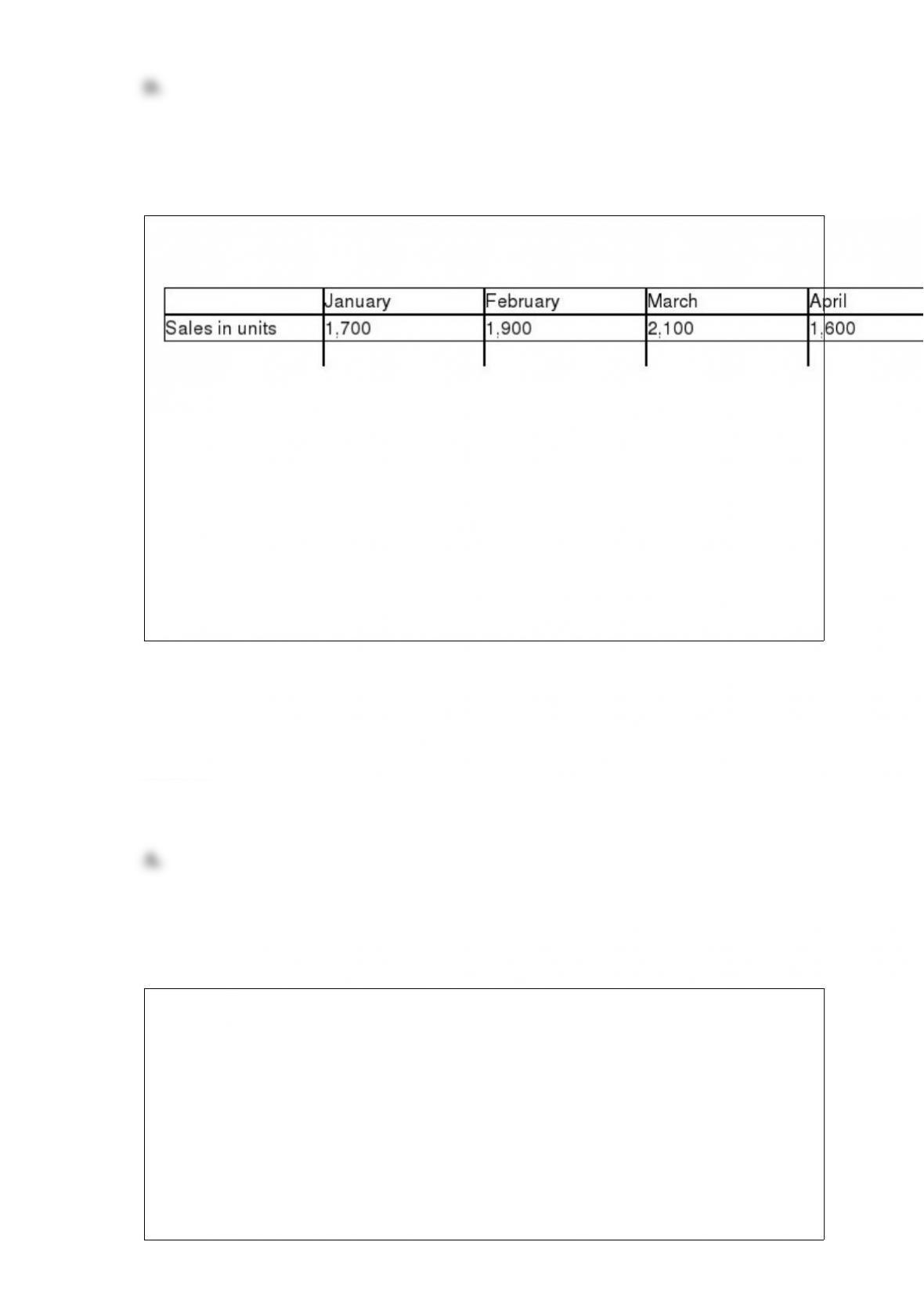
Truliant co. sells a product called Withall and has predicted the following sales for the
first four months of the current year:
Ending inventory for each month should be 20% of next month’s sales, and the
December 31 inventory is consistent with that policy. How many units should be
purchased in February?
A.1,940
B.1,800
C.1,900
D.1,850
Answer:
Which of the following is considered an unusual item affecting the prior period’s
income statement?
A.Change in accounting principles
B.Fixed asset impairments
C.Extraordinary item
D.Discontinued operations
Answer:
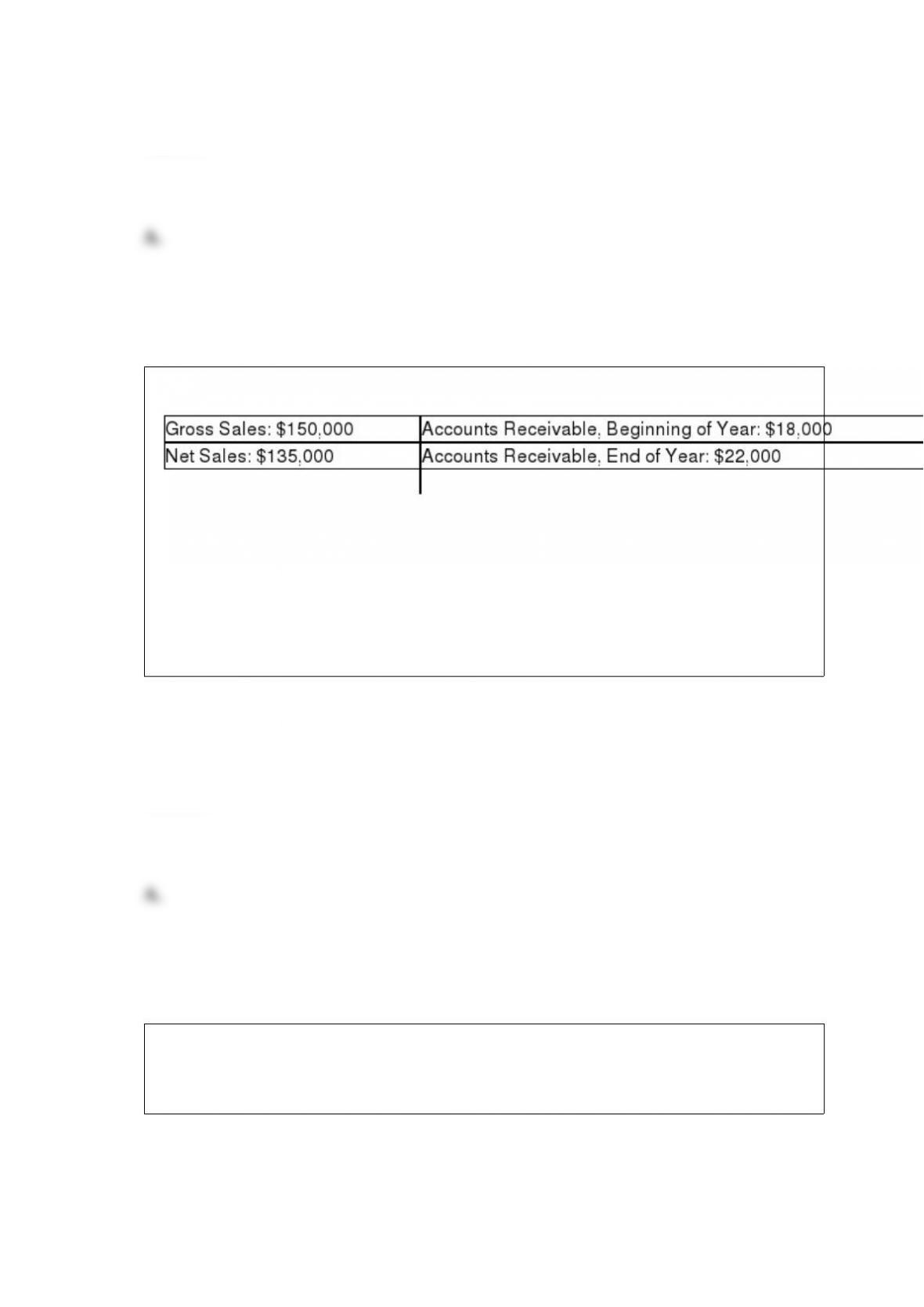
Given the following information, compute Accounts Receivable Turnover:
A.6.75
B.7.5
C.6.13
D.6.82
Answer:
On March 1, 2014, the amount of Norton Cook’s capital in Cook’s Catering Company
was $150,000. During March, he withdrew $31,000 from the business. The amounts of
the various assets, liabilities, revenues, and expenses are as follows:
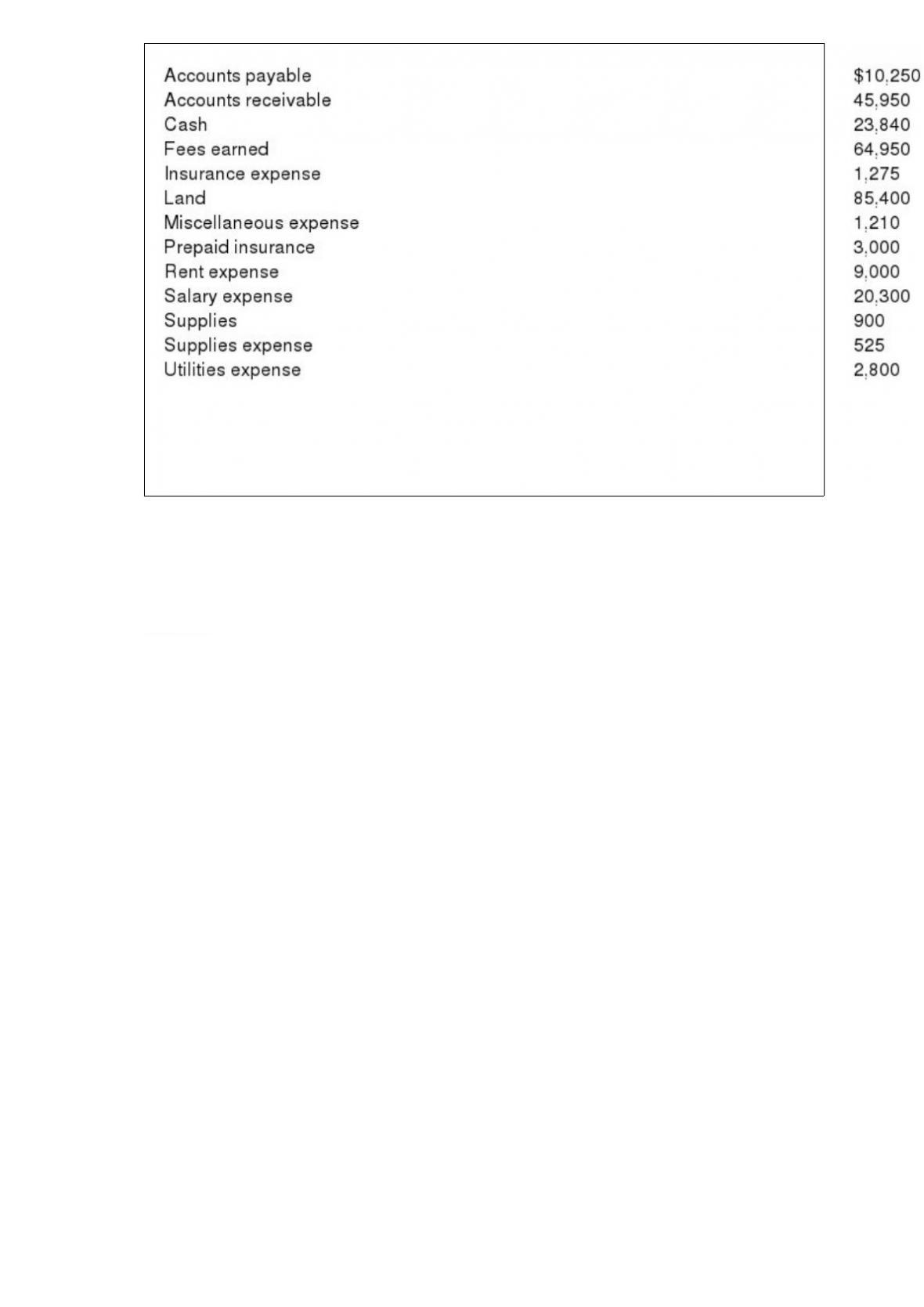
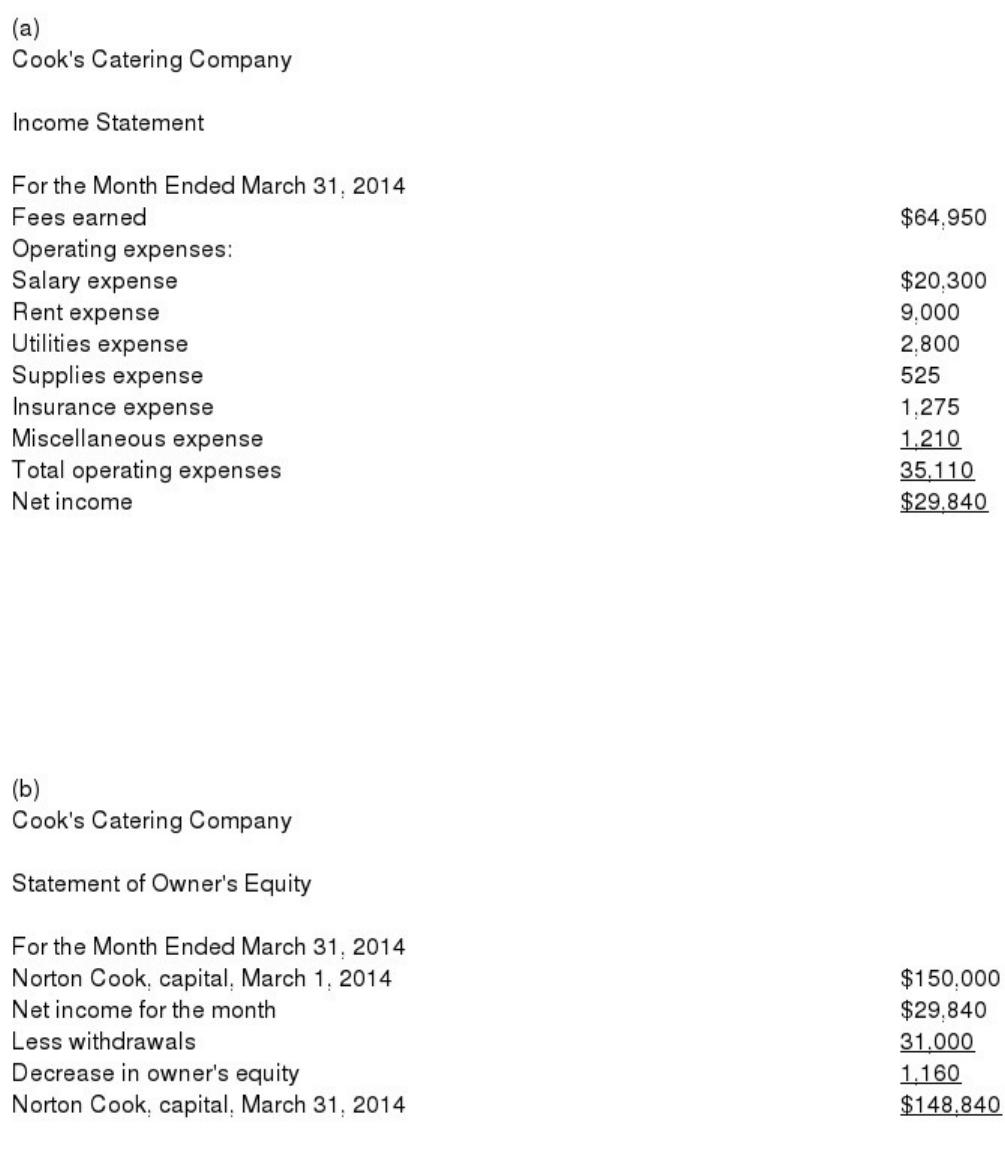
Present, in good form, (a) an income statement for March, (b) a statement of owner’s
equity for March, and (c) a balance sheet as of March 31.
Answer:
The journal entry a company uses to record pension rights that have not been funded for
its salaried employees, at the end of the year is
A.debit Salary Expense; credit Cash
B.debit Pension Expense; credit Unfunded Pension Liability
C.debit Pension Expense; credit Unfunded Pension Liability and Cash
D.debit Pension Expense; credit Cash
Answer:
When using the variable cost concept of applying the cost-plus approach to product
pricing, what is included in the markup?

A.Total costs plus desired profit
B.Desired profit
C.Total selling and administrative expenses plus desired profit
D.Total fixed manufacturing costs, total fixed selling and administrative expenses, and
desired profit
Answer:
Raptor Company is considering replacing equipment which originally cost $500,000
and which has $420,000 accumulated depreciation to date. A new machine will cost
$790,000 and the old equipment can be sold for $8,000. What is the sunk cost in this
situation?
A.$72,000
B.$80,000
C.$88,000
D.$290,000
Answer:
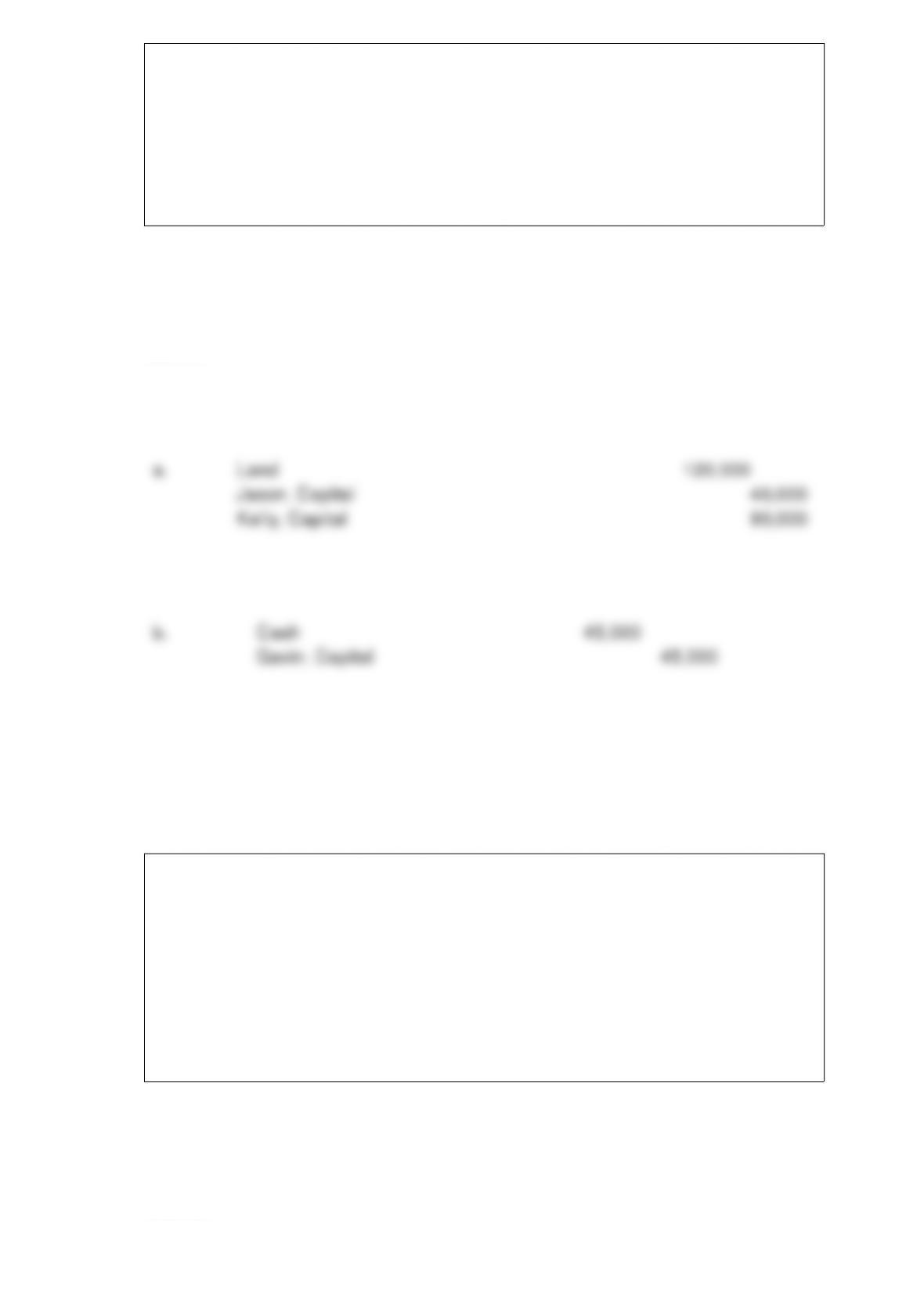
Gavin invested $45,000 in the Jason and Kelly partnership for ownership equity of
$45,000. Prior to the investment land was revalued to a market value of $320,000 from
a book value of $200,000. Jason and Kelly share net income in a 1:2 ratio.
a. Provide the journal entry for the revaluation of land.
b. Provide the journal entry to admit Gavin.
Answer:
On the bank’s accounting records, customers’ accounts are normally shown as
A.debit balances
B.expenses
C.an asset
D.a liability
Answer:
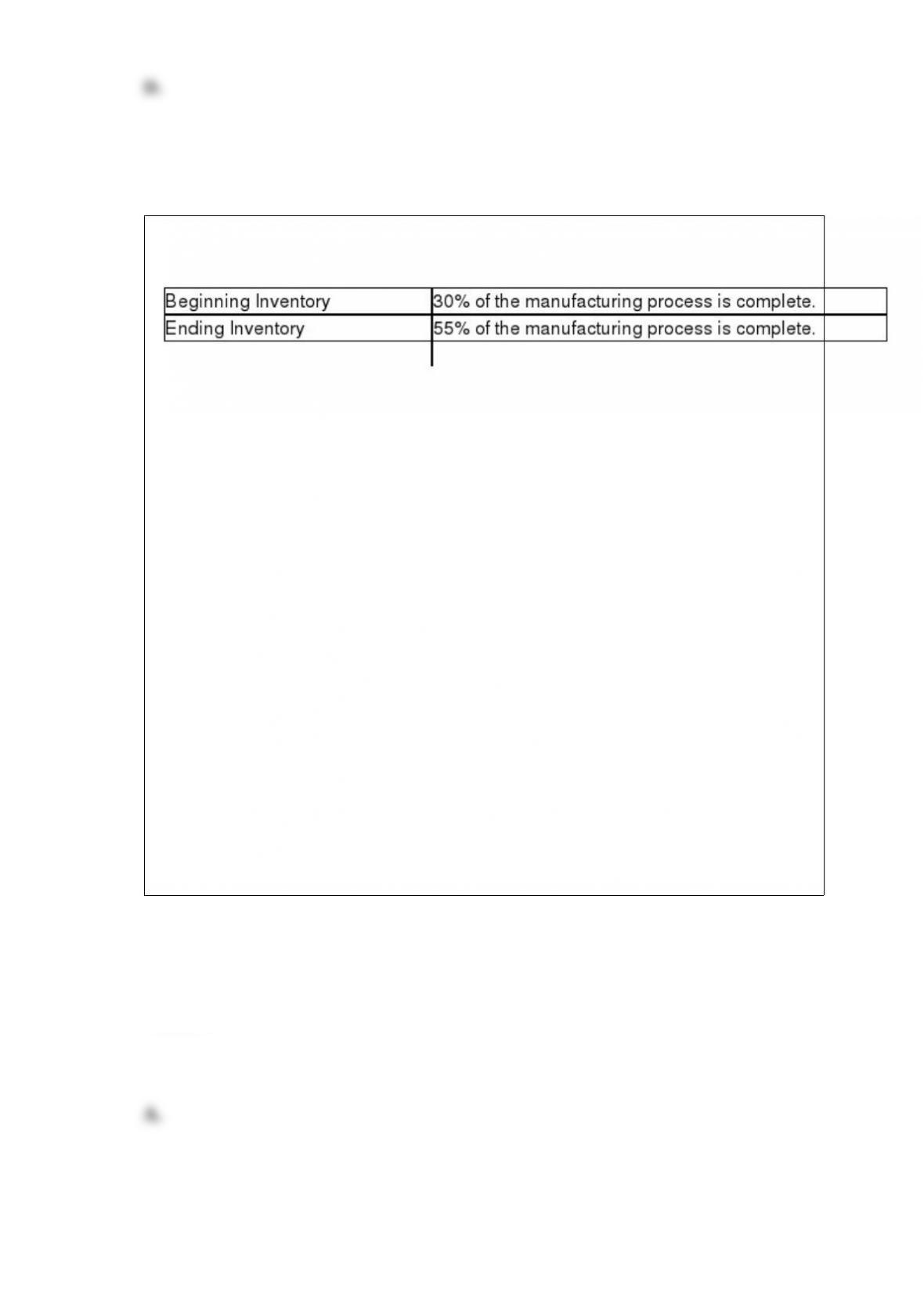
Carolwood Company manufactures widgets and uses process costing. The status of
their beginning and ending inventory is as follows:
Direct materials are added to the manufacturing process in stages. None are added when
production begins. Approximately 1/2 of the materials are added when the product is
25% complete. The other half is added when the product is 50% complete.
What percentage complete are Beginning Inventory and Ending Inventory with respect
to Direct materials(DM) and Conversion Costs(CC)?
A.Beg.Inventory DM-50% CC-30%
End.Inventory DM-100% CC-55%
B.Beg.Inventory DM-50% CC-30%
End.Inventory DM-55% CC-55%
C.Beg.Inventory DM-30% CC-30%
End.Inventory DM-55% CC-55%
D.Beg.Inventory DM-50% CC-70%
End.Inventory DM-100% CC-45%
Answer: