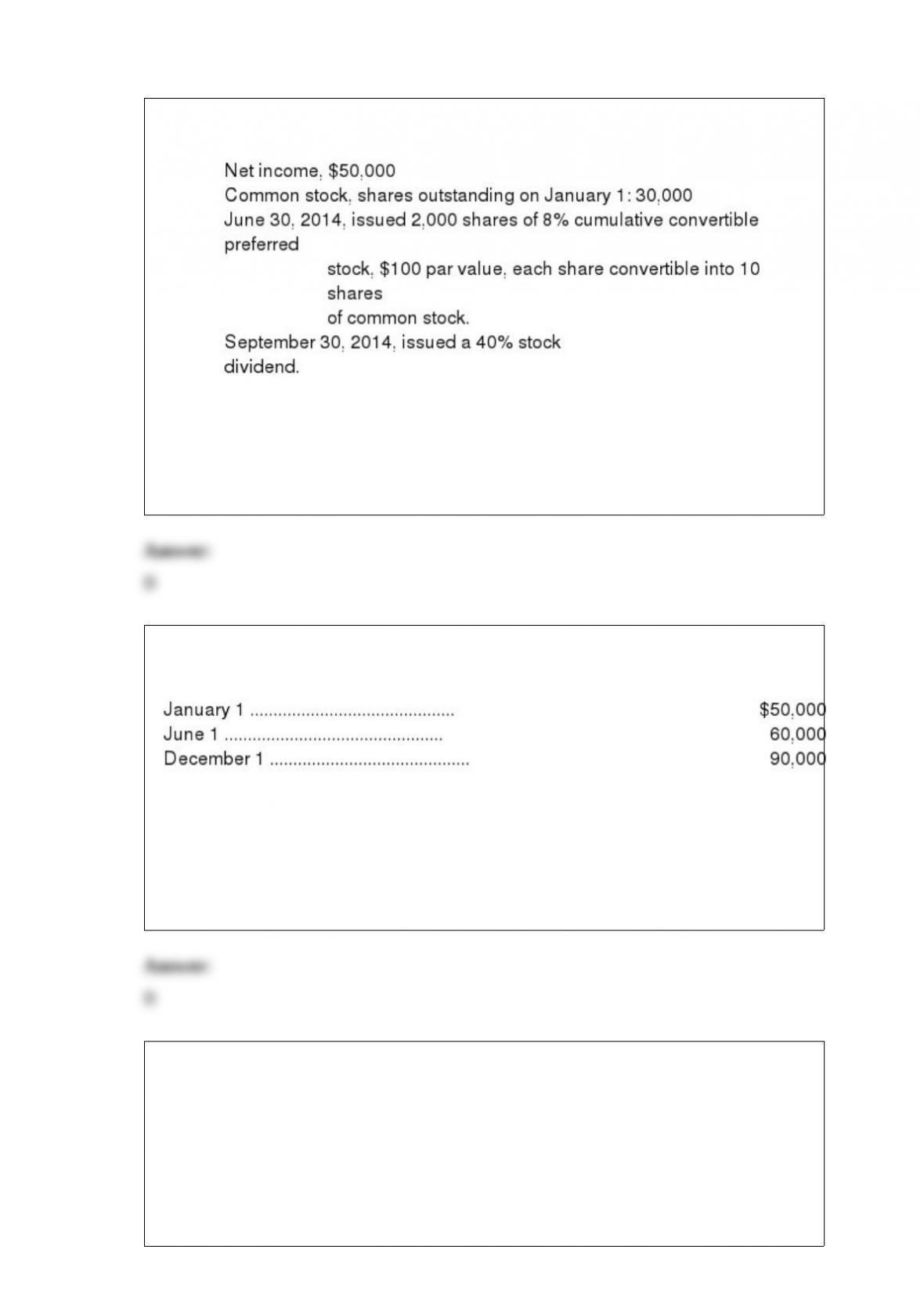
1) The following information relates to the Tykex Company for 2014:
What is diluted earnings per share?
a. $1.00
b. $0.89
c. $0.81
d. $0.76
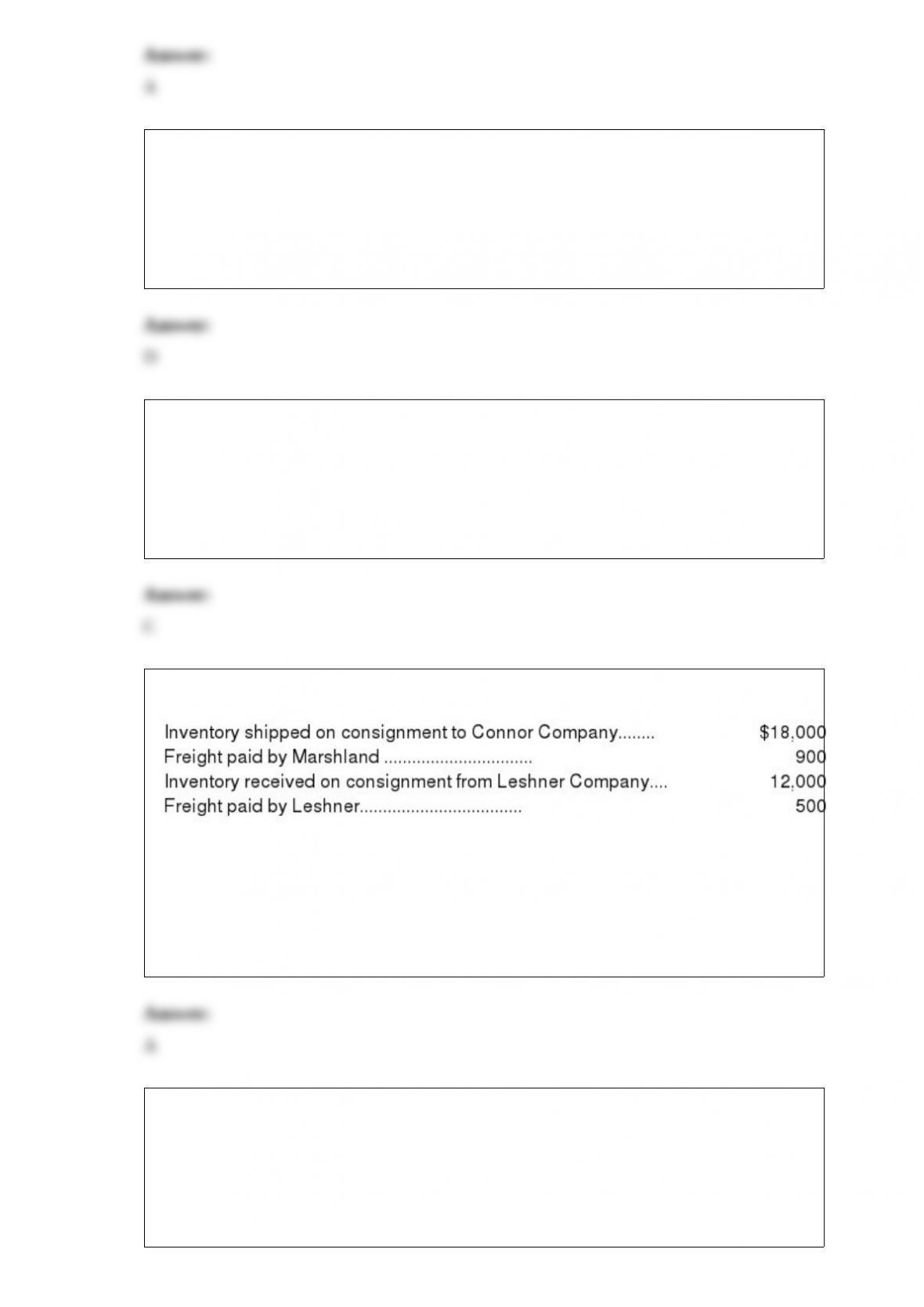
2) A company made the following cash expenditures on a self-constructed building
begun January 1 of the current year:
The building is still under construction at year-end. What is the amount of the average
accumulated expenditures for the purpose of capitalizing interest?
a. $87,500
b. $92,500
c. $100,000
d. $200,000
3) Each full-time employee of Hydroponics Greenhouse is entitled to ten paid sick days
each year. The sick pay is not vested, but any unused sick days can be carried over to
subsequent years. Under FASB ASC Topic 710, Hydroponics Greenhouse should
a. recognize sick pay as an expense when actually paid
b. recognize an estimated current liability for unused sick pay at the end of each period
c. recognize an estimated noncurrent liability for unused sick pay at the end of each
period
d. accrue or not accrue sick pay based on historical rates of absenteeism
4) If the bonds were issued on April 1, 2014, the amount of accrued interest on the date
of sale is
a. $20,000
b. $10,000
c. $2,500
d. $5,000
5) The primary current source of generally accepted accounting principles for
governmental operations is the
a. Financial Accounting Standards Board
b. Securities and Exchange Commission
c. Governmental Accounting Standards Board
d. Government Accounting Office
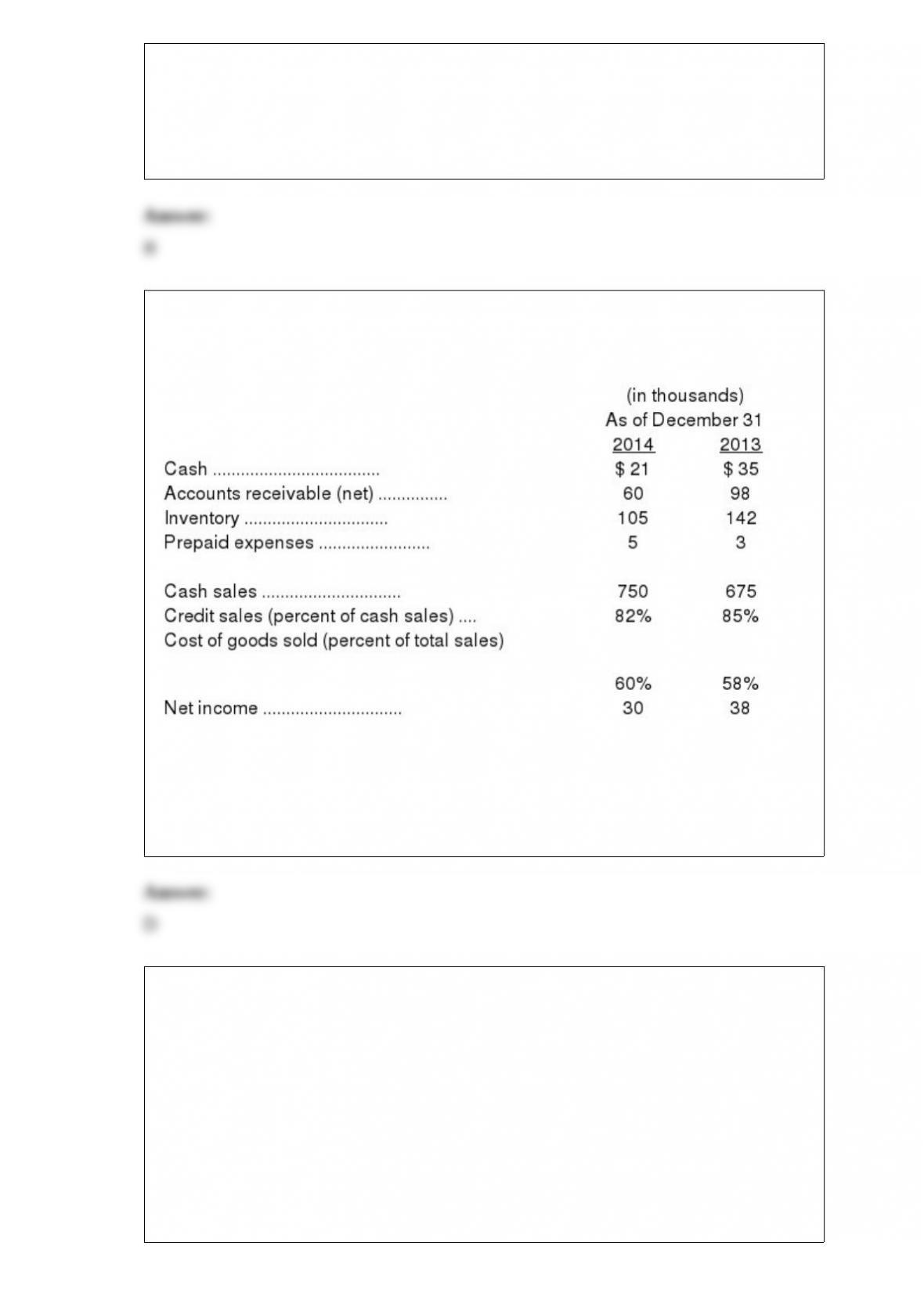
6) Marshland, Inc. had the following consignment transactions during December:
No sales of consigned goods were made through December 31. Marshland’s December
31 balance sheet should include consigned inventory at
a. $18,900
b. $18,000
c. $12,500
d. $12,000
7) The Bromley Company purchased a tooling machine in 2004 for $120,000. The
machine was being depreciated on the straight-line method over an estimated useful life
of 20 years, with no salvage value. At the beginning of 2014, when the machine had
been in use for ten years, the company paid $20,000 to overhaul the machine. As a
result of this improvement, the company estimated that the useful life of the machine
would be extended an additional five years. What would be the depreciation expense
recorded for the machine in 2014?
a. $4,000
b. $5,333
c. $6,000
d. $7,333
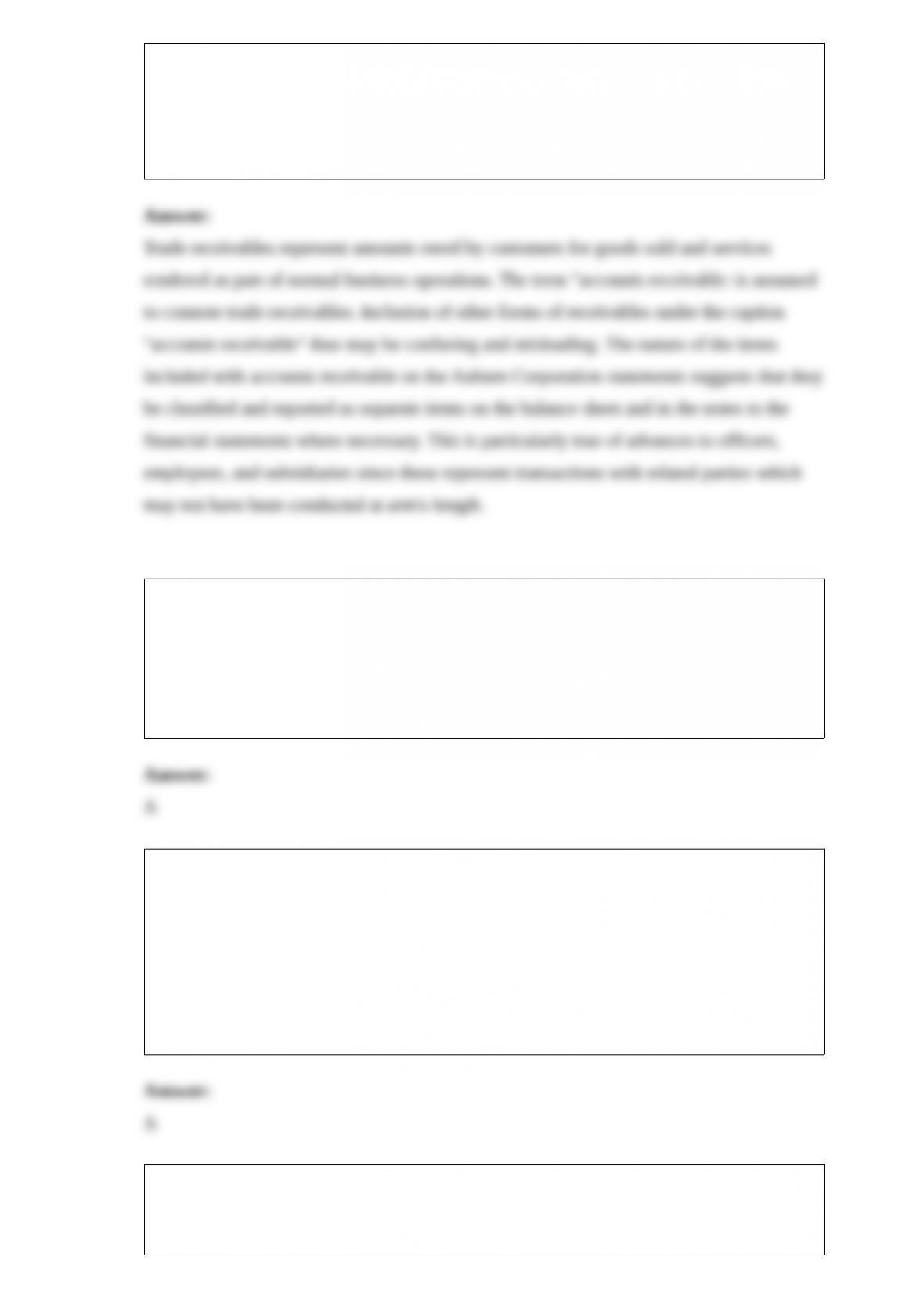
8) Selected information from the 2011 and 2010 financial statements of Bin Company is
presented below:
Bin Company’s merchandise inventory turnover for 2014 is
a. 3.43
b. 5.68
c. 6.79
d. 6.63
9) As a member of the audit staff of Redman & Co., CPAs, you have been assigned to
the audit of a new client, Auburn Corporation. Upon arriving at the client’s offices, the
controller provides you with copies of the company’s annual financial statements. You
quickly observe that the balance of accounts receivable has increased materially over
the amount reported on the prior year’s balance sheet. Your inquiry of the controller
produces the following response:
“This year we have included several other items with our trade receivables. All of these
items represent receivables and include:
(a) Advances made to officers and employees,
(b) Advances to our subsidiary company, and
(c) A refund from the Internal Revenue Service resulting from the favorable resolution
of a disputed tax matter.
I have included a description of the tax item in the note to the financial statements.
Since the other two items represent internal matters, I saw no reason to disclose them or
present them as separate items on the balance sheet.”
Do you concur with the controller’s treatment of these items? Explain.
10) A translation adjustment resulting from the translation process is disclosed on the
financial statements as
a. a separate component of stockholders’ equity
b. a below-the-line item on the income statement
c. an adjustment to retained earnings
d. a part of income from operations on the income statement
11) Which of the following statements best describes the use of financial statement
analysis?
a. Financial statement analysis techniques are merely guides to interpretation of
financial data
b. Financial statement analysis can eliminate the risk in investment decisions
c. Measurements for a specific company should be compared only with data from past
periods
d. All of these are correct
12) Which of the following is true?
a. Cash flow data is superior to earnings under the accrual basis in predicting long-term
performance of an entity

b. Earnings under the accrual basis is superior to cash flow data in predicting short-term
performance of an entity
c. Earnings under the accrual basis is superior to cash flow data in predicting long-term
performance of an entity
d. Cash flow data is superior to earnings under the accrual basis in predicting both
short- and long-term performance of an entity
13) A company issued rights to its existing shareholders to acquire, at $15 per share,
5,000 unissued shares of common stock with a par value of $10 per share. Common
Stock will be credited at
a. $15 per share when the rights are exercised
b. $15 per share when the rights are issued
c. $10 per share when the rights are exercised
d. $10 per share when the rights are issued
14) See information regarding the four products above. Using the
lower-of-cost-or-market procedure, what is the reported inventory value at December
31 for one unit of Product IV?
a. $60
b. $80
c. $90
d. $70
15) Hondo Co. has total debt of $252,000 and stockholders’ equity of $420,000. Hondo
is seeking capital to fund an expansion. Hondo is planning to issue an additional
$180,000 in common stock, and is negotiating with a bank to borrow additional funds.
The bank requires a maximum debt ratio of .75. What is the maximum additional
amount Hondo will be able to borrow after the common stock is issued?
a. $639,000
b. $852,000
c. $1,236,000
d. $1,548,000

16) On January 1, 2014, Gravel Company lent $17,800 cash to Paver Company. The
promissory note made by Paver for $20,000 did not bear explicit interest and was due
on December 31, 2016. No other rights or privileges were exchanged. The prevailing
interest rate for a loan of this type was six percent.
Assume that the present value of $1 for two periods at six percent is .89. Paver should
recognize interest expense in 2014 of
a. $0
b. $1,068
c. $1,100
d. $1,200
17) Which of the following accounting changes requires the restatement of financial
statements presented for prior years?
a. A change in depreciation method from the straight-line method to the
double-declining-balance method
b. A change from the LIFO to the FIFO inventory valuation method
c. A change from the FIFO to the LIFO inventory valuation method
d. A change in the useful life used in the depreciation calculations for a company’s
manufacturing equipment
18) Under international accounting standards, if a sale-leaseback results in an operating
lease then
a. any profit on the original sale is deferred and recognized over the life of the
subsequent lease
b. any profit on the original sale is not recognized in the financial statements
c. any profit on the original sale is deferred and recognized over the life of the leased
asset
d. assuming the original sale was clearly at fair value, any profit is recognized
immediately even when the leaseback results in an operating lease
19) Large business enterprises employ financial accountants who are primarily
concerned with__________ financial reporting.
a. corporate tax
b. management
c. external
d. international

20) Chips-n-Bits Company sells service contracts for personal computers. The service
contracts are for a one-year, two-year, or three-year period. All sales are for cash and all
receipts are credited to Unearned Service Contract Revenues. This account had a
balance of $144,000 at December 31, 2012, before year-end adjustment. Service
contract costs are charged as incurred to the Service Contract Expense account, which
had a balance of $36,000 at December 31, 2012. Service contracts still outstanding at
December 31, 2012, expire as follows:
What amount should be reported as unearned service contract revenues in Chips-n-Bits
December 31, 2012, balance sheet?
a. $49,000
b. $59,000
c. $95,000
d. $108,000
21) Outstanding bonds payable are converted into common stock. Under either the book
value or market value method, the same amount would be debited to
Bonds Premium on
Payable Bonds Payable
a. No No
b. No Yes
c. Yes No
d. Yes Yes
22) On January 2, 2014, Nora Co. acquired 2,000 shares of Stonewall Co. common
stock for $8,000 and classified these shares as available-for-sale securities. During
2014, Nora received $6,000 of cash dividends. Nora’s share of Stonewall’s 2014
earnings (net income) was $5,000. The fair value of Stonewall’s stock on December 31,
2014, was $7 per share. Nora should report what amount in 2014 related to Stonewall
Co.?
a. Revenue of $6,000
b. Revenue of $12,000
c. A $1,000 decrease in the investment account
d. A $1,000 increase in the investment account
23) Financial statements issued for the use of parties external to the enterprise are the
primary responsibility of the
a. management of the enterprise
b. stockholders of the enterprise
c. independent auditors of the enterprise
d. creditors of the enterprise
24) For 2014, Celestion should report interest revenue of
a. $317,964
b. $344,000
c. $413,964
d. $517,455
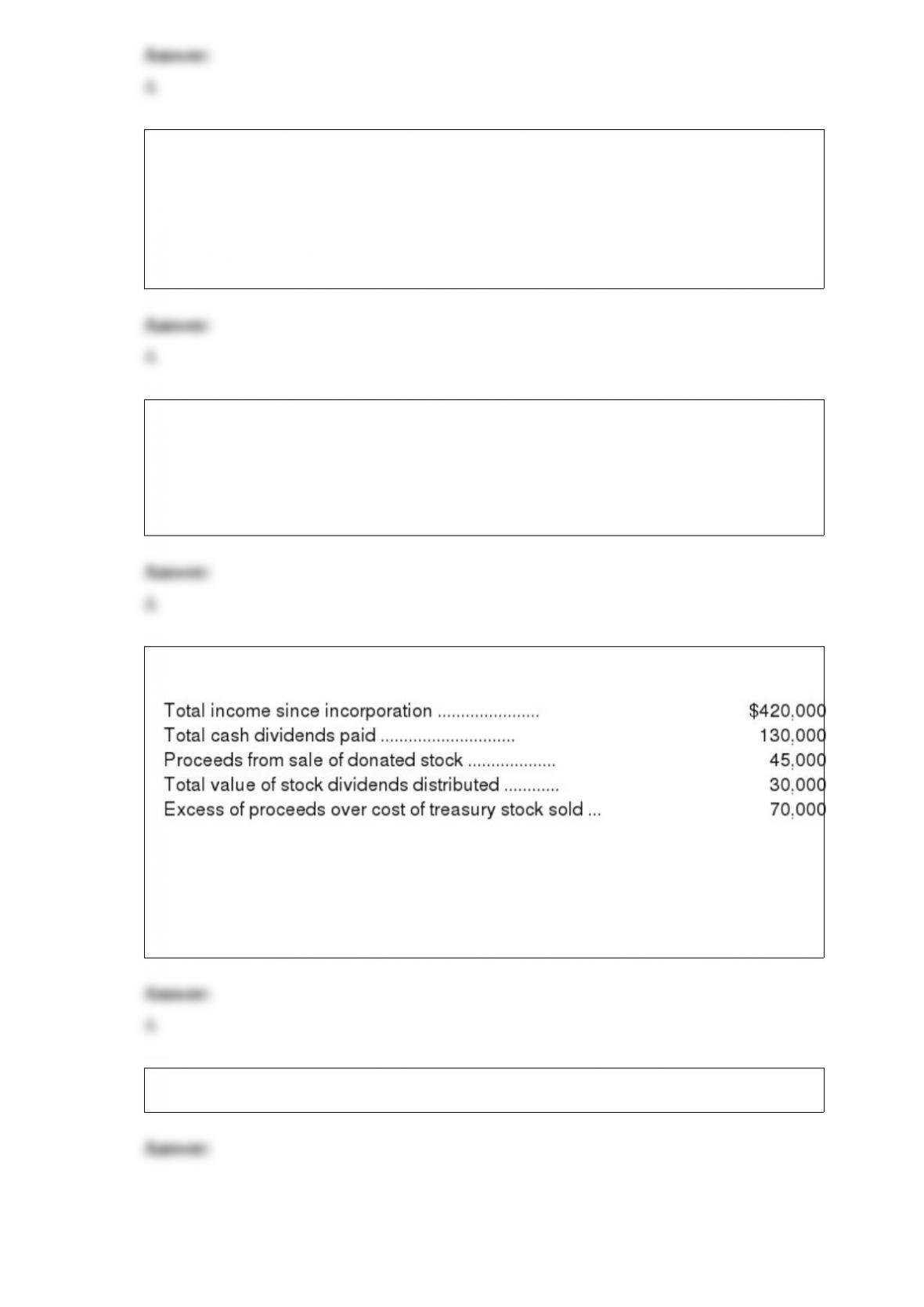
25) The following was abstracted from the accounts of the Aspen Corp. at year-end:
What should be the current balance of Retained Earnings?
a. $260,000
b. $290,000
c. $305,000
d. $335,000
26)

27) Goods on consignment are
a. recorded in a consignment out account which is an inventory account
b. included in the consignee’s inventory
c. recorded in a consignment in account which is an inventory account
d. all of these
28) Which of the following is true regarding Statement of Financial Accounting
Standards No. 144, Accounting for the Impairment or Disposal of Long-Lived Assets,
accounting and reporting standards for discontinued operations?
a. A component of a business always represents the same concept as a segment of a
business used in reporting disaggregate information
b. A test for, and recognition of, an impairment loss would be necessary for a
component that had not been sold by year-end if the fair value of the component was
determined to be less than the book value
c. Discontinued operations should follow extraordinary items on the face of the income
statement
d. The gain or loss recognized for reported in the discontinued operation section of the
income statement includes only the gain or loss on disposal of the component and not
the income or loss from operating the discontinued operation
29) A company that receives 10 percent or more of its revenue from sales to a single
customer must disclose the
a. identity of the customer
b. identity of the customer and the amount of revenue from that customer
c. type of revenues earned from that customer only
d. amount of revenue from that customer only
30) Which of the following circumstances would require recording an accrual for a loss
contingency under current generally accepted accounting principles?
a. Event is unusual in nature and occurrence of event is probable
b. Event is unusual in nature and event occurs infrequently
c. Amount of loss is reasonably estimable and occurrence of event is probable
d. Amount of loss is reasonably estimable and event occurs infrequently

31) Which of the following statements characterizes defined benefit plans?
a. They are comparatively simple in construction and raise few accounting issues for
employers
b. Retirement benefits depend on how well pension fund assets have been managed
c. Retirement benefits are based on the plan’s benefit formula
d. All of these
32) When the allowance method of recognizing bad debt expense is used, the entries at
the time of collection of a small account previously written off would
a. increase net income
b. increase the allowance for doubtful accounts
c. decrease net income
d. decrease the allowance for doubtful accounts
33) Raptor Company owns a tract of land that it purchased in 2008 for $200,000. The
land is held as a future plant site and has a fair market value of $280,000 on July 1,
2014. Talon Company also owns a tract of land held as a future plant site. Talon paid
$360,000 for the land in 2013 and the land has a fair market value of $380,000 on July
1, 2014. On this date, Raptor exchanged its land and paid $100,000 cash for the land
owned by Talon. The exchange had commercial substance. At what amount should
Raptor record the land acquired in the exchange?
a. $280,000
b. $300,000
c. $320,000
d. $380,000
34) The reported identifiable assets of a reportable segment exclude which of the
following?
a. Segment patents
b. Segment receivables
c. Portion the segment uses of corporate assets used by all segments
d. Allowance for doubtful accounts on segment receivables
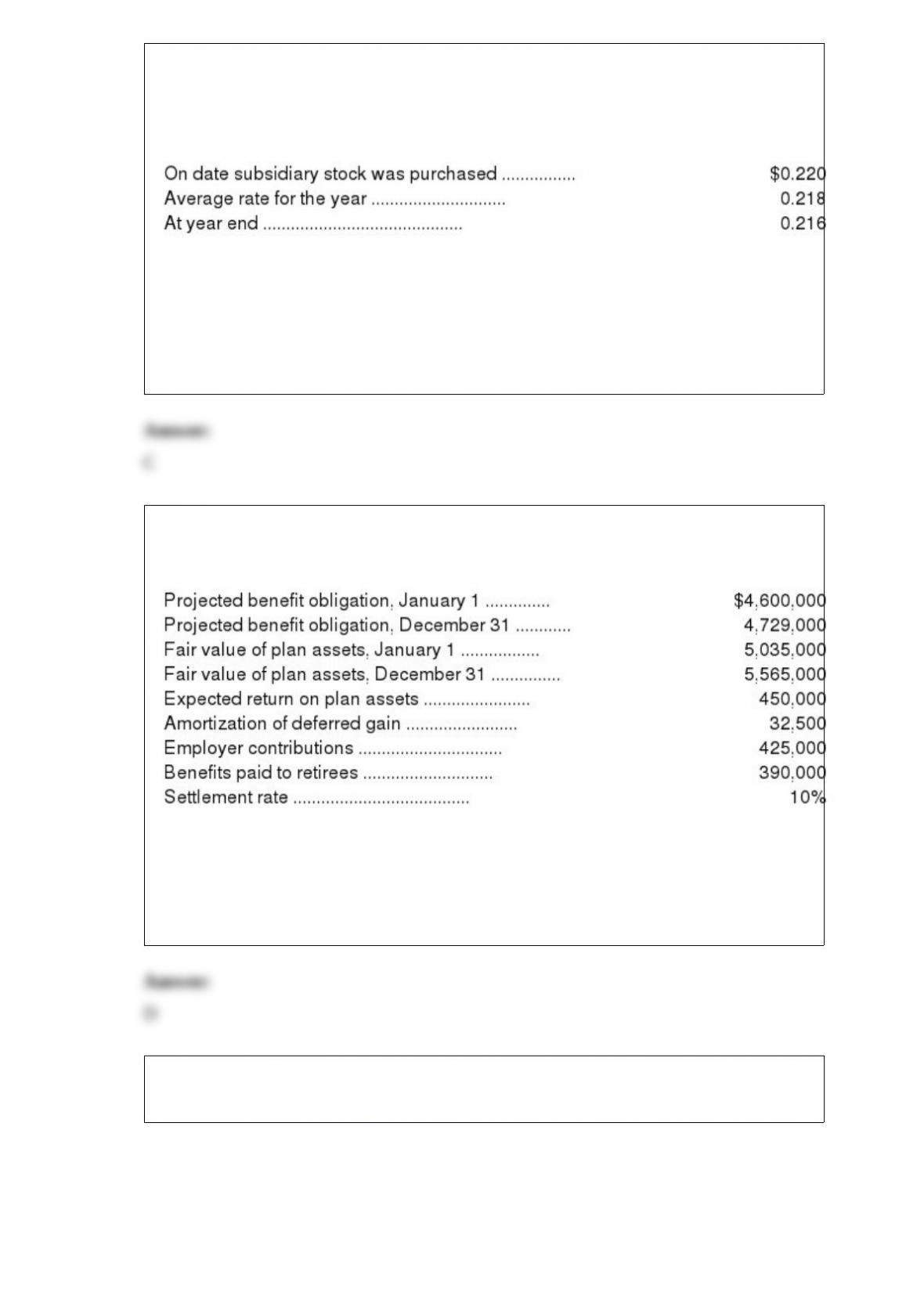
35) DeGaulle Enterprises, a subsidiary of Clinton Company based in New York,
reported the following information at the end of its first year of operations (all in French
francs): assets–4,790,000; expenses–6,500,000; liabilities–2,950,000; capital
stock–1,200,000, revenues–7,140,000. Relevant exchange rates are as follows:
As a result of the translation process, what amount is recorded on the financial
statements as the translation adjustment?
a. $1,287 debit adjustment
b. $1,287 credit adjustment
c. $6,080 debit adjustment
d. $6,080 credit adjustment
36) The following information relates to the defined benefit pension plan for the
Moldor Company for the year ending December 31, 2014.
Using the information above, service cost for the year would be
a. $390,000
b. $129,000
c. $94,000
d. $59,000
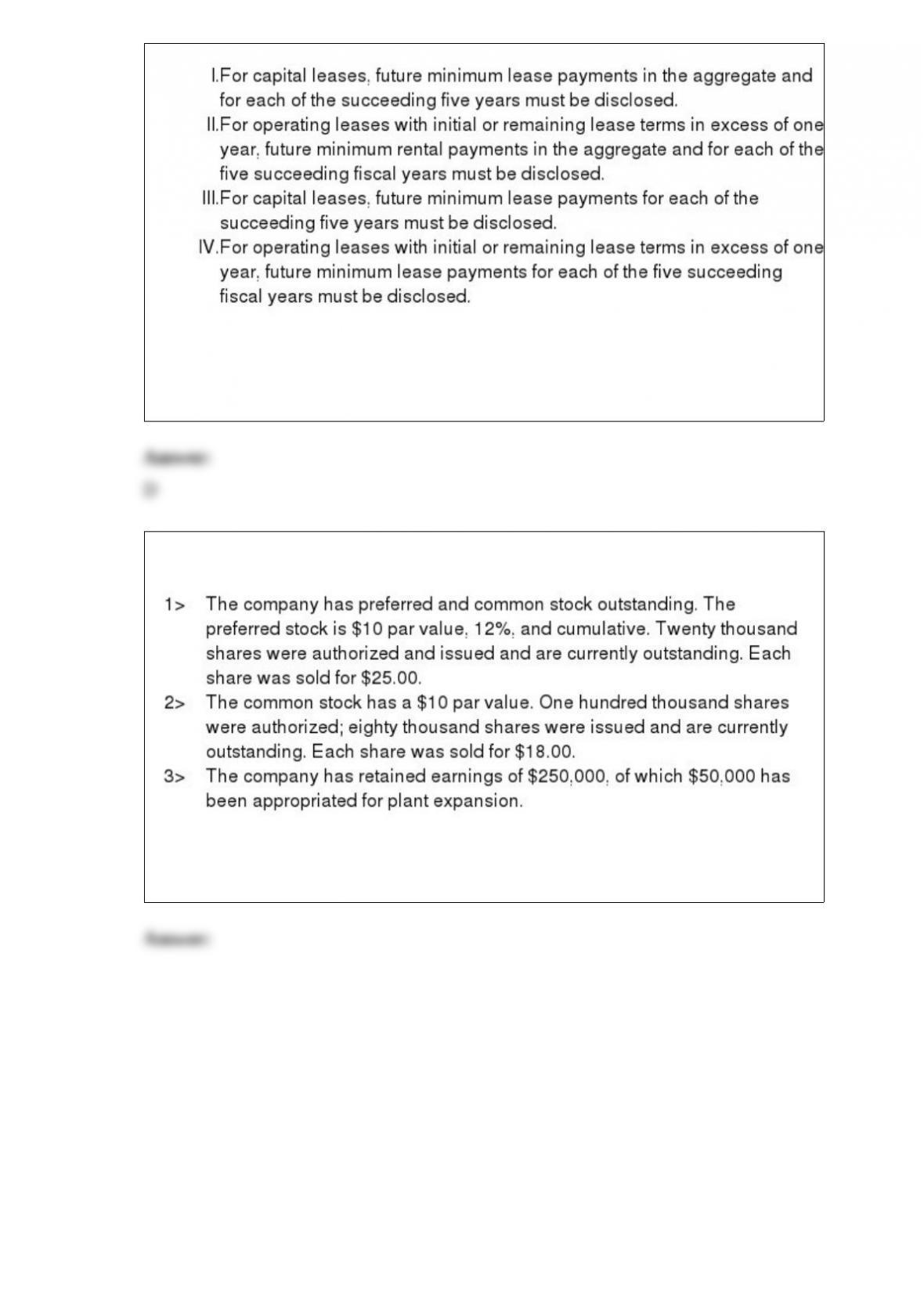
37) Which of the following is (are) NOT correct regarding disclosure requirements
lessees?
a. I only
b. II only
c. Both I and II
d. Both III and IV
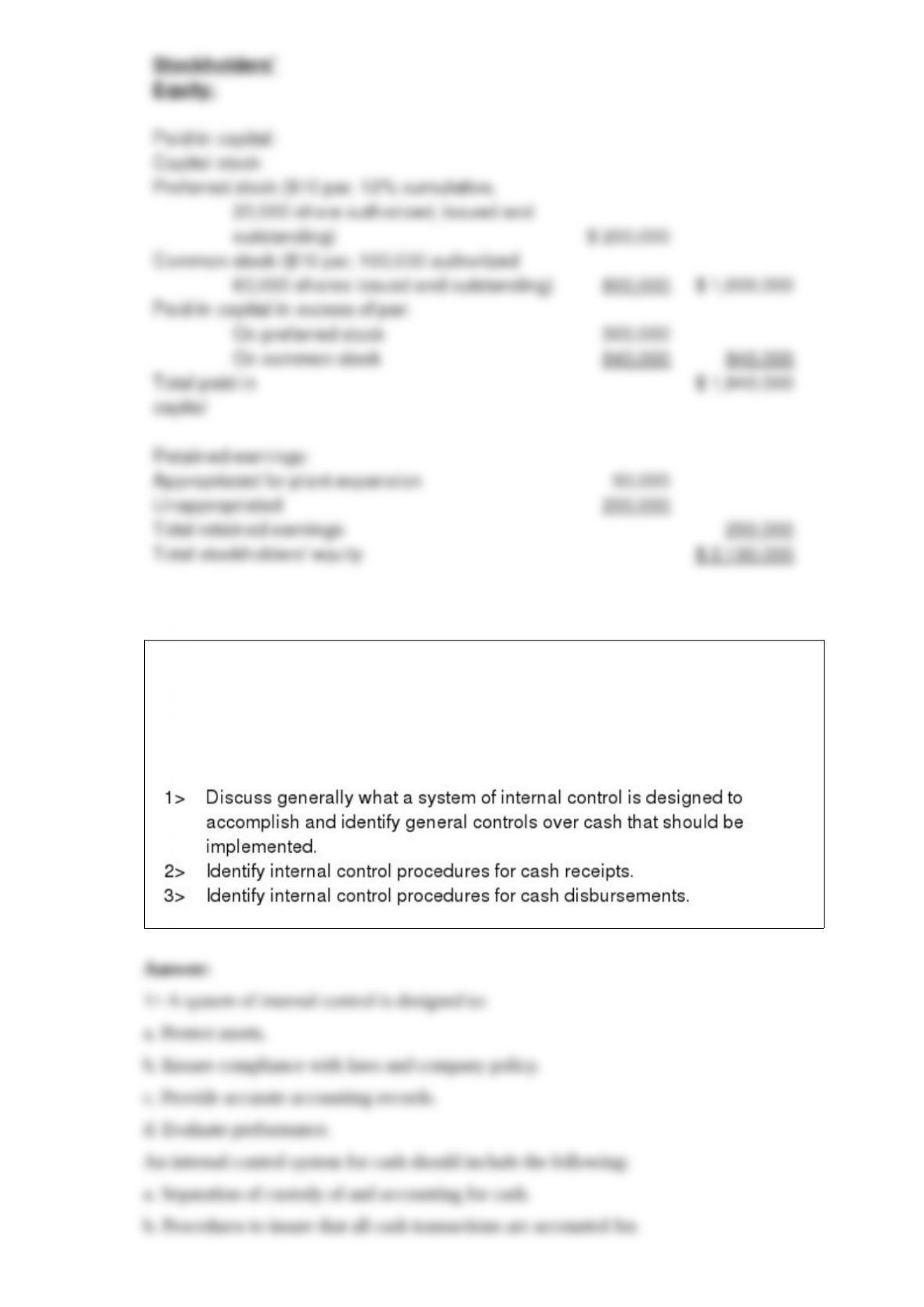
38) The following information pertains to Tanya Company on December 31, 2014:
Required:
Prepare the stockholders equity section of Tanya Companys balance sheet on December
31, 2014.
39) Cash, the most liquid of all assets, must be safeguarded. Cash can be easily
concealed and transported, bears no marks of ownership, and is universally valued and
accepted. Risk of theft of cash is directly correlated to the accessibility of cash and cash
records. Businesses address these problems through a system of internal control.
Required:
40) A portion of the statement of cash flows for Stealth Airlines is show below:
Stealth Airlines
Statement of Cash Flows
For the year ended December 31, 2014
(in millions of dollars)
Operating Activities:
Net income $14,500
Adjustments to reconcile net income to cash
provided by continuing operations:
Depreciation and amortization 29,330
The business section of a newspaper referred to the $29,330 amount as cash provided
by depreciation and amortization.
Required:
Evaluate the newspapers description of the amount shown on the statement of cash
flows for depreciation and amortization.
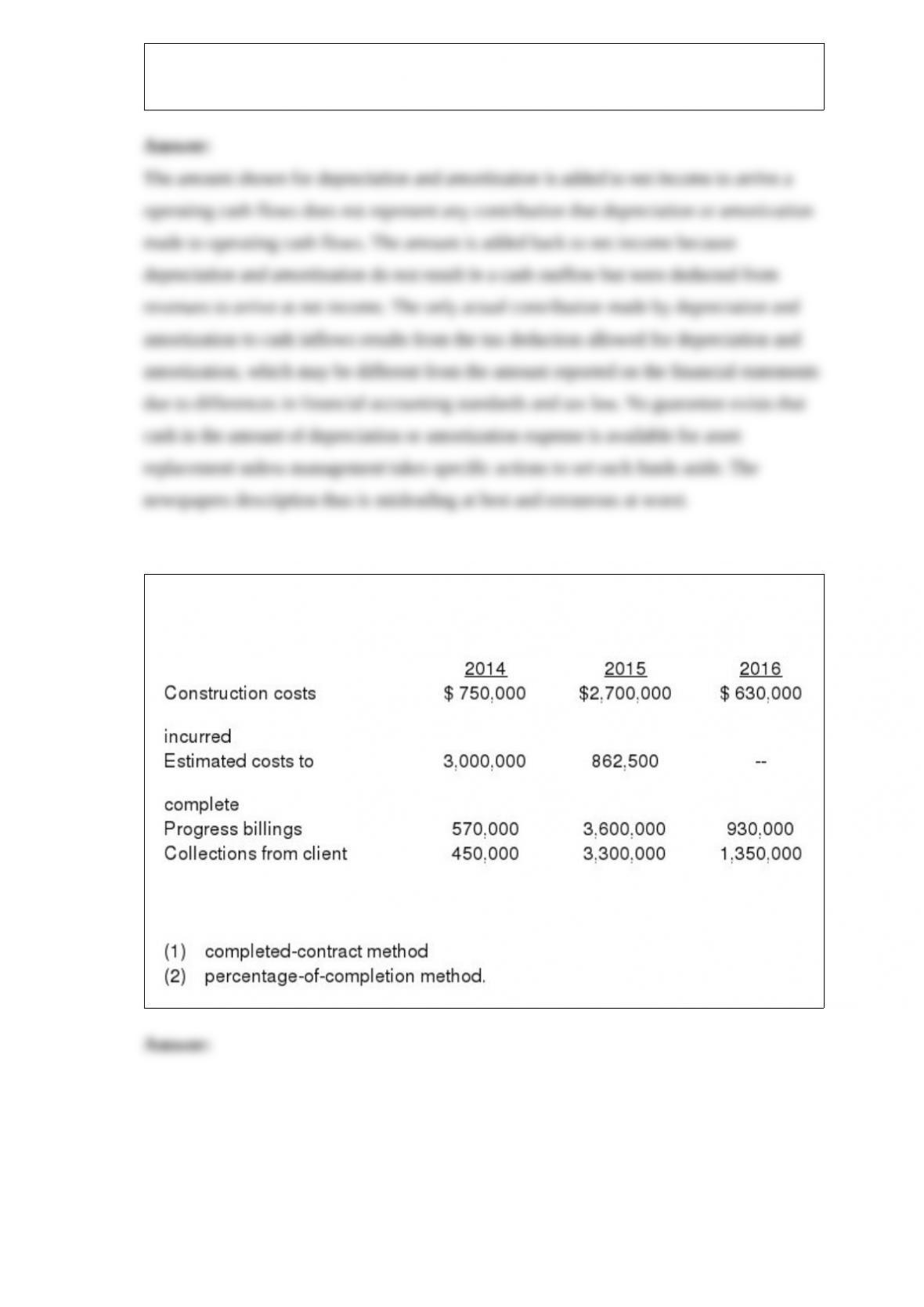
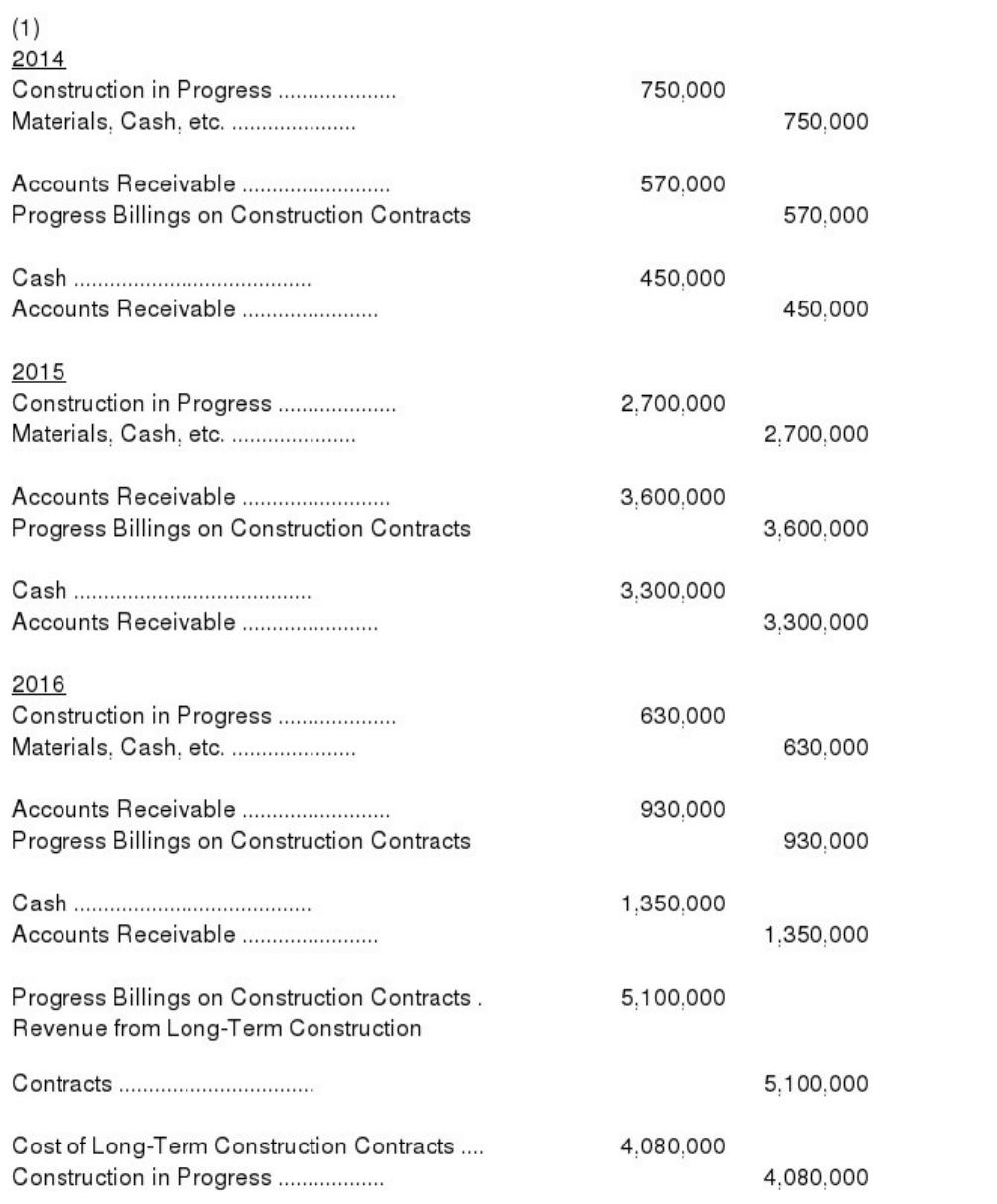
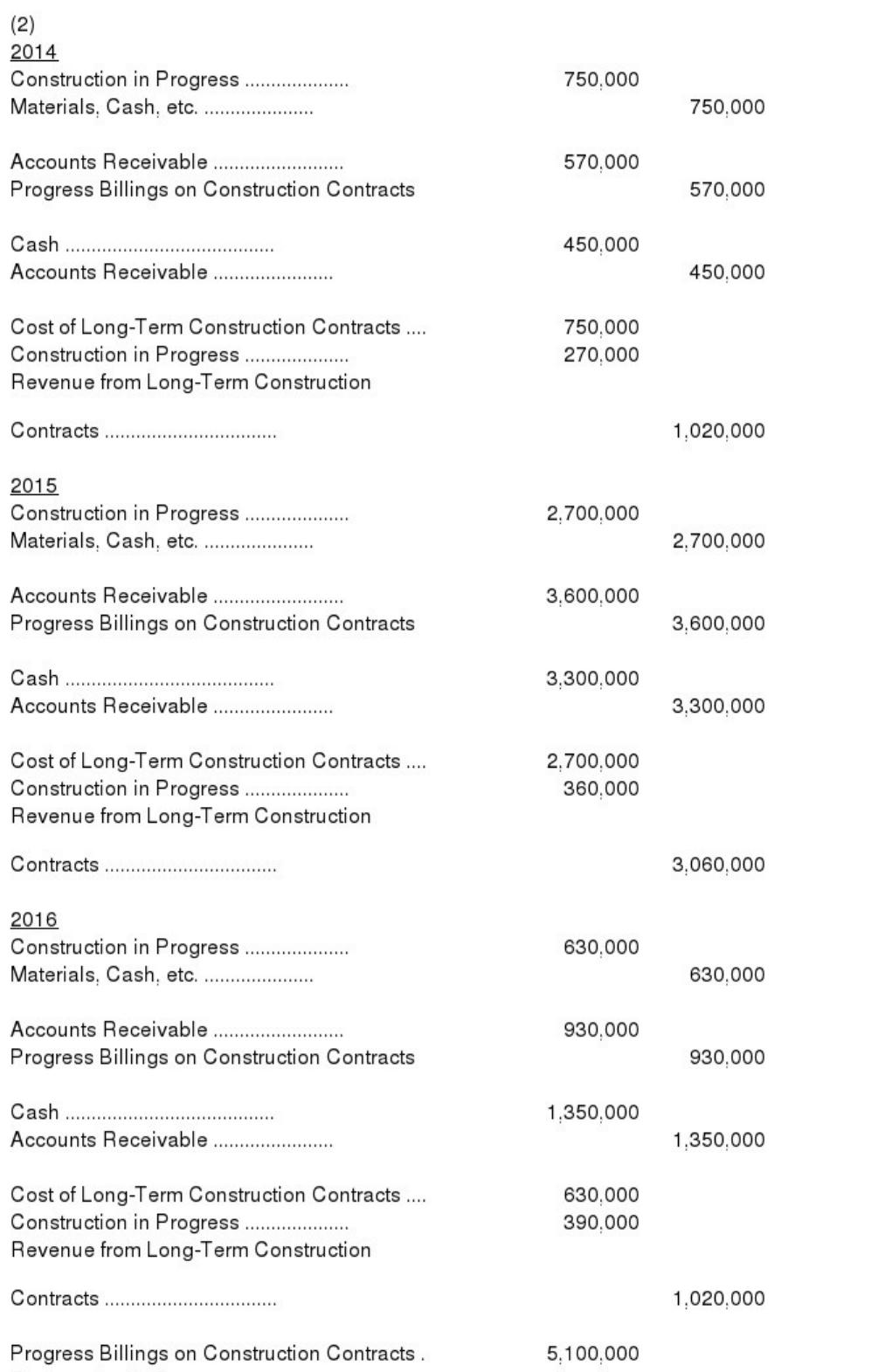
41) In 2014, Charlotte Engineering entered into an agreement to construct an office
building at a contract price of $5,100,000. Construction data were as follows:
Prepare the necessary entries for each year, assuming the firm uses the:
42) You are the auditor of Browning, Inc., a manufacturer of plastic products. In
reviewing the balance sheet of the company, you notice several receivables from the
officers of the company. You report your findings to the president of the company and
inform him that these receivables will be considered related party transactions for
purposes of financial accounting and reporting. The president seems somewhat annoyed
by your comments and asks you to explain what you mean by “related party”
transactions and how the financial statements will be affected by these transactions.
Prepare a brief response to the president’s question.