1) A company incurs research and development costs of $200,000 in 2013 of which
$50,000 of these costs relate to development activities because certain criteria have
been met which suggest that an intangible asset has been created.
As a result of research and development costs, what is the difference in income between
reporting using U.S. GAAP and IFRS in 2013?
A.U.S. GAAP income is $50,000 higher.
B.U.S. GAAP income is $50,000 lower.
C.IFRS income is $50,000 lower.
D.IFRS income is $150,000 lower.
E.IFRS income is $150,000 higher.
2) Webb Co. acquired 100% of Rand Inc. on January 5, 2013. During 2013, Webb sold
goods to Rand for $2,400,000 that cost Webb $1,800,000. Rand still owned 40% of the
goods at the end of the year. Cost of goods sold was $10,800,000 for Webb and
$6,400,000 for Rand. What was consolidated cost of goods sold?
A) $17,200,000.
B) $15,040,000.
C) $14,800,000.
D) $15,400,000.
E) $14,560,000.
3) Cleary, Wasser, and Nolan formed a partnership on January 1, 2012, with
investments of $100,000, $150,000, and $200,000, respectively. For division of income,
they agreed to (1) interest of 10% of the beginning capital balance each year, (2) annual
compensation of $10,000 to Wasser, and (3) sharing the remainder of the income or loss
in a ratio of 20% for Cleary, and 40% each for Wasser and Nolan. Net income was
$150,000 in 2012 and $180,000 in 2013. Each partner withdrew $1,000 for personal use

every month during 2012 and 2013.
What was Wasser’s capital balance at the end of 2012?
A.$150,000.
B.$160,000.
C.$165,000.
D.$213,000.
E.$201,000.
4) A partnership began its first year of operations with the following capital balances:
Young, Capital: $143,000
Eaton, Capital: $104,000
Thurman, Capital: $143,000
The Articles of Partnership stipulated that profits and losses be assigned in the
following manner:
Young was to be awarded an annual salary of $26,000 with $13,000 salary assigned to
Thurman.
Each partner was to be attributed with interest equal to 10% of the capital balance as of
the first day of the year.
The remainder was to be assigned on a 5:2:3 basis to Young, Eaton, and Thurman,
respectively.
Each partner withdrew $13,000 per year.
Assume that the net loss for the first year of operations was $26,000 with net income of
$52,000 in the second year.
What was Young’s total share of net income for the second year?
A.$17,160 income.
B.$4,160 income.
C.$19,760 income.
D.$17,290 income.
E.$28,080 income.
5) How much difference would there have been in Franel’s income with regard to the
effect of the investment, between using the equity method or using the partial equity
method of internal recordkeeping?
A) $170,000.
B) $354,000.
C) $164,000.
D) $ 6,000.
E) $174,000.
6) The capital account balances for Donald & Hanes LLP on January 1, 2013, were as
follows:
Donald and Hanes shared net income and losses in the ratio of 3:2, respectively. The
partners agreed to admit May to the partnership with a 35% interest in partnership
capital and net income. May invested $100,000 cash, and no goodwill was recognized.
What is the new total balance of the partnership accounts?
A.$84,000.
B.$140,000.
C.$176,000.
D.$200,000.
E.$400,000.
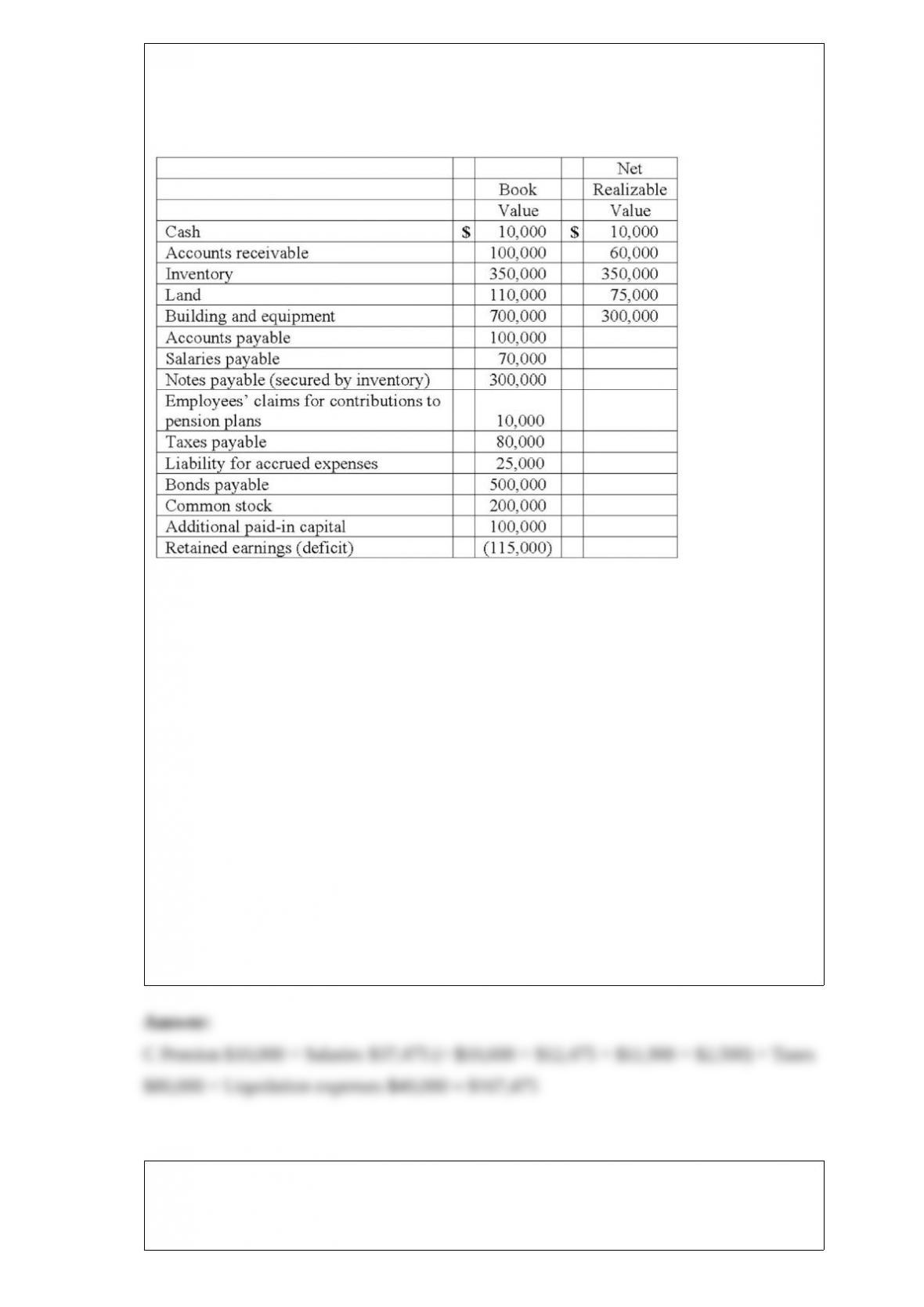
7) Mandich Co. had the following amounts for its assets, liabilities, and stockholders’
equity accounts just before filing a bankruptcy petition and requesting liquidation:
Of the salaries payable, $30,000 was owed to an officer of the company. The remaining
amount was owed to salaried employees who had not been paid within the previous 80
days: John Webb was owed $10,600, Samantha Jones was owed $15,000, Sandra
Johnson was owed $11,900, and Dennis Roberts was owed $2,500. The maximum
owed for any one employee’s claims for contributions to benefit plans was $800.
Estimated expense for administering the liquidation amounted to $40,000.
What was the total amount of unsecured liabilities with priority?
A.$130,000.
B.$155,000.
C.$167,475.
D.$170,000.
E.$200,000.
8) River Co. owned 80% of Boat Inc. The two companies filed a consolidated income
tax return and River used the initial value method to account for the investment. The
following information was available from the two companies’ financial statements:
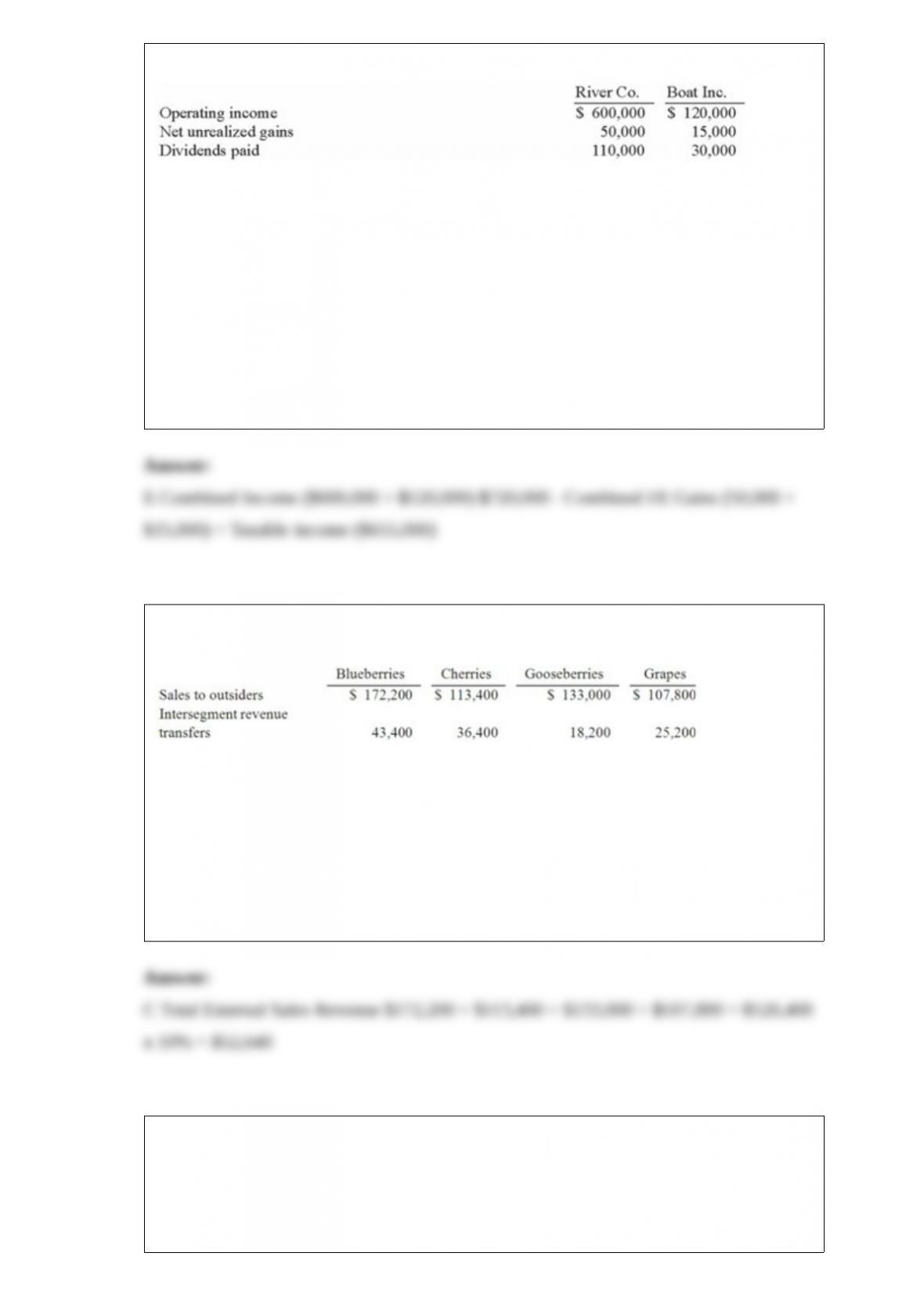
Operating income included net unrealized gains, which are associated with transfers of
inventories between the two companies, but it did not include dividends received from a
subsidiary. The income tax rate was 30%.
What is the amount of taxable income reported on the consolidated income tax return?
A.$720,000.
B.$625,000.
C.$621,000.
D.$665,000.
E.$655,000.
9) The Rivers Co. had four separate operating segments:
What amount of revenues must be generated from one customer before that party must
be identified as a major customer?
A.$57,680
B.$64,960
C.$52,640
D.$78,960
E.$63,560
10) On January 1, 2013, Pride, Inc. acquired 80% of the outstanding voting common
stock of Strong Corp. for $364,000. There is no active market for Strong’s stock. Of this
payment, $28,000 was allocated to equipment (with a five-year life) that had been
undervalued on Strong’s books by $35,000. Any remaining excess was attributable to
goodwill which has not been impaired.
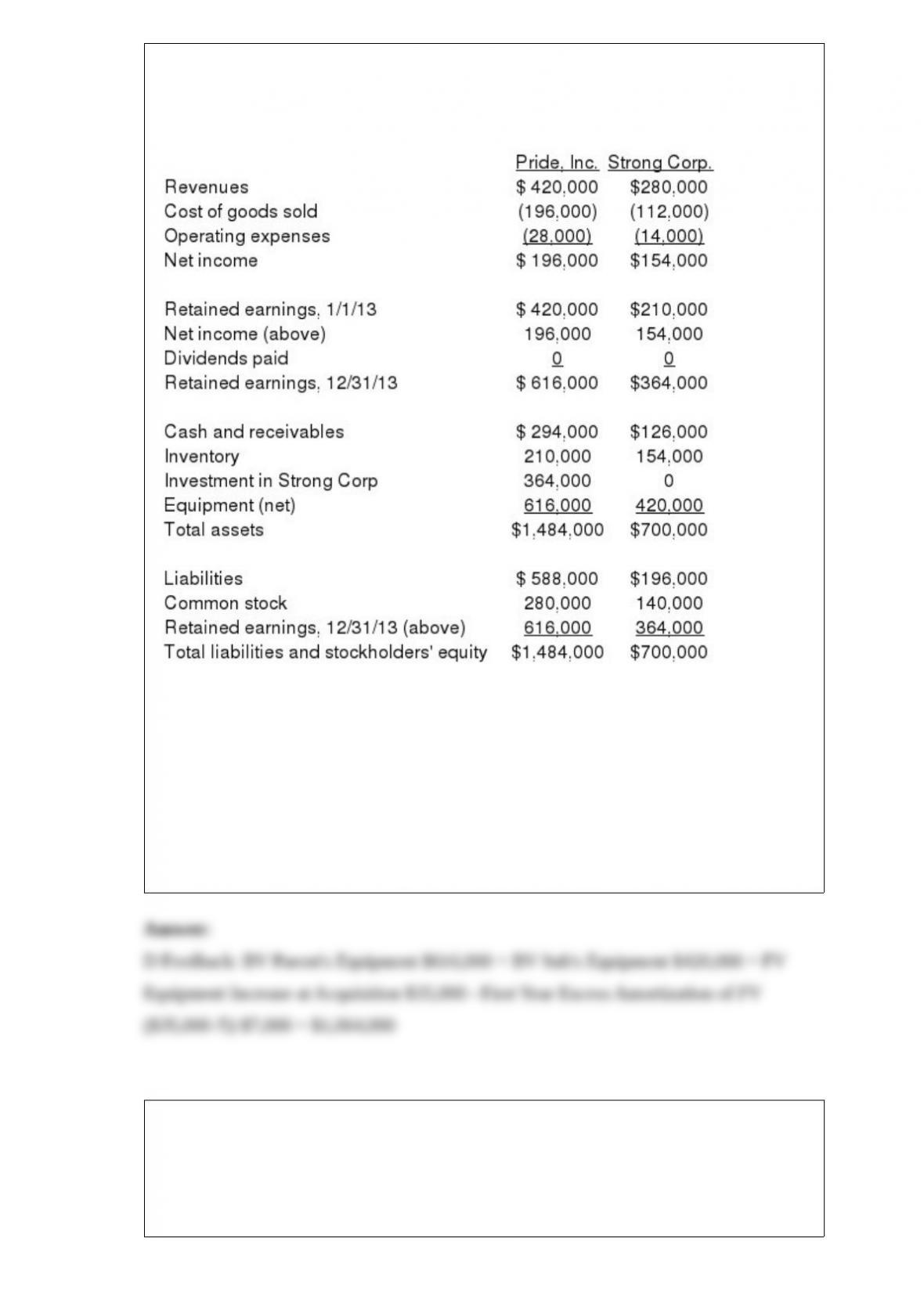
As of December 31, 2013, before preparing the consolidated worksheet, the financial
statements appeared as follows:
During 2013, Pride bought inventory for $112,000 and sold it to Strong for $140,000.
Only half of this purchase had been paid for by Strong by the end of the year. 60% of
these goods were still in the company’s possession on December 31, 2013. What is the
consolidated total for equipment (net) at December 31, 2013?
A) $ 952,000.
B) $1,058,400.
C) $1,069,600.
D) $1,064,000.
E) $1,066,800.
11) On January 1, 2013, Nichols Company acquired 80% of Smith Company’s common
stock and 40% of its non-voting, cumulative preferred stock. The consideration
transferred by Nichols was $1,200,000 for the common and $124,000 for the preferred.
Any excess acquisition-date fair value over book value is considered goodwill. The
capital structure of Smith immediately prior to the acquisition is:
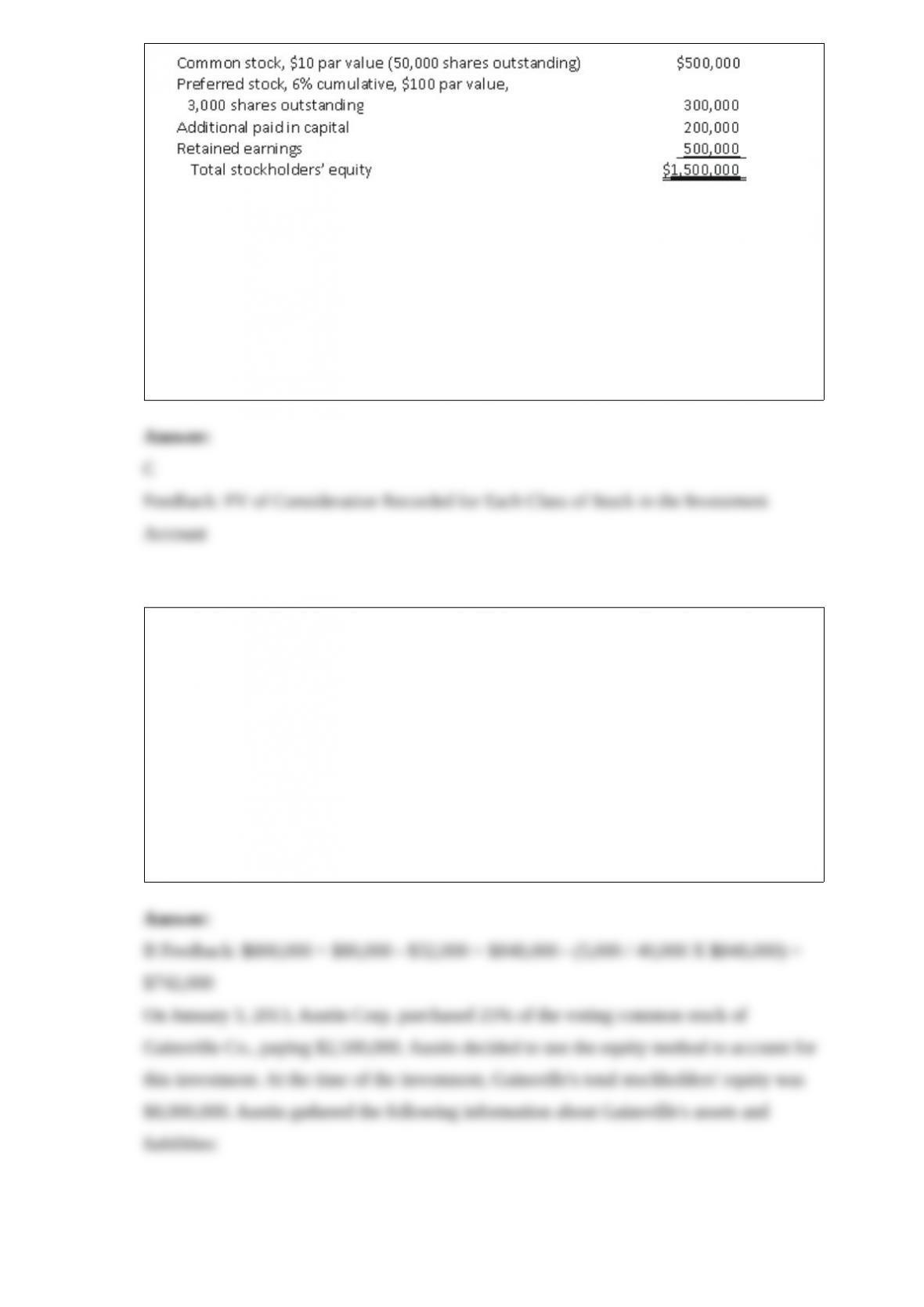
Determine the amount and account to be recorded for Nichols€ investment in Smith.
A) $1,324,000 for Investment in Smith.
B) $1,200,000 for Investment in Smith.
C) $1,200,000 for Investment in Smith’s Common Stock and $124,000 for Investment
in Smith’s Preferred Stock.
D) $1,200,000 for Investment in Smith’s Common Stock and $120,000 for Investment
in Smith’s Preferred Stock.
E) $1,448,000 for Investment in Smith’s Common Stock.
12) On January 4, 2013, Watts Co. purchased 40,000 shares (40%) of the common stock
of Adams Corp., paying $800,000. There was no goodwill or other cost allocation
associated with the investment. Watts has significant influence over Adams. During
2013, Adams reported income of $200,000 and paid dividends of $80,000. On January
2, 2014, Watts sold 5,000 shares for $125,000. What was the balance in the investment
account after the shares had been sold?
A) $848,000.
B) $742,000.
C) $723,000.
D) $761,000.
E) $925,000.
13) On January 1, 2013, Deuce Inc. acquired 15% of Wiz Co.’s outstanding common
stock for $62,400 and categorized the investment as an available-for-sale security. Wiz
earned net income of $96,000 in 2013 and paid dividends of $36,000. On January 1,
2014, Deuce bought an additional 10% of Wiz for $54,000. This second purchase gave
Deuce the ability to significantly influence the decision making of Wiz. During 2014,
Wiz earned $120,000 and paid $48,000 in dividends. As of December 31, 2014, Wiz
reported a net book value of $468,000. For both purchases, Deuce concluded that Wiz
Co.’s book values approximated fair values and attributed any excess cost to goodwill.
On Deuce’s December 31, 2014 balance sheet, what balance was reported for the
Investment in Wiz Co. account?
A) $139,560.
B) $143,400.
C) $310,130.
D) $186,080.
E) $182,250.
14) Pell Company acquires 80% of Demers Company for $500,000 on January 1, 2014.
Demers reported common stock of $300,000 and retained earnings of $210,000 on that
date. Equipment was undervalued by $30,000 and buildings were undervalued by
$40,000, each having a 10-year remaining life. Any excess consideration transferred
over fair value was attributed to goodwill with an indefinite life. Based on an annual
review, goodwill has not been impaired.
Demers earns income and pays dividends as follows:
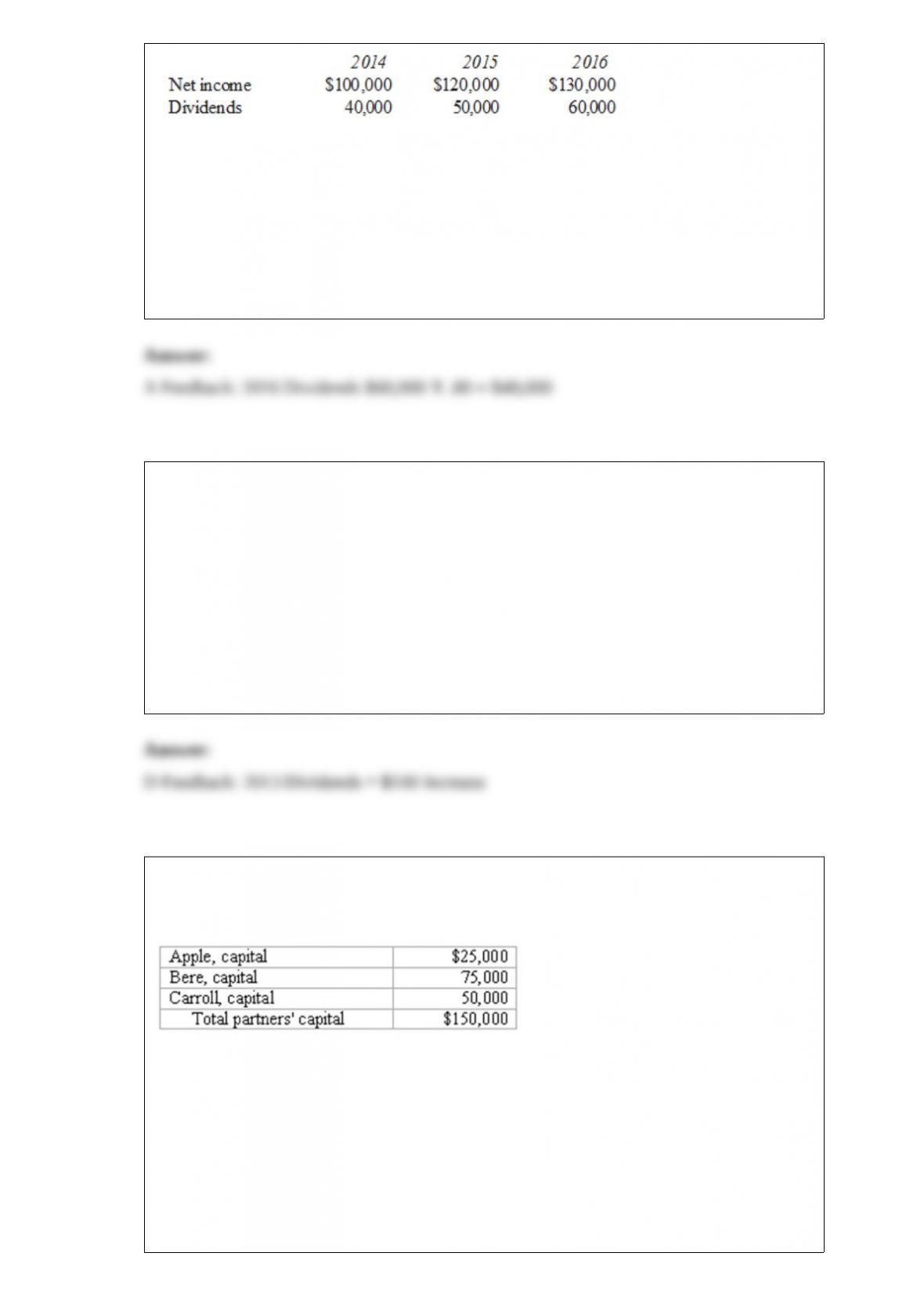
Assume the INITIAL VALUE is applied.
How much does Pell record as Income from Demers for the year ended December 31,
2016?
A) $48,000.
B) $56,000.
C) $98,400.
D) $97,000.
E) $50,400.
15) Kaye Company acquired 100% of Fiore Company on January 1, 2013. Kaye paid
$1,000 excess consideration over book value which is being amortized at $20 per year.
Fiore reported net income of $400 in 2013 and paid dividends of $100.
Assume the initial value method is applied. How much will Kaye’s income increase or
decrease as a result of Fiore’s operations?
A) $400 increase.
B) $300 increase.
C) $380 increase.
D) $100 increase.
E) $210 increase.
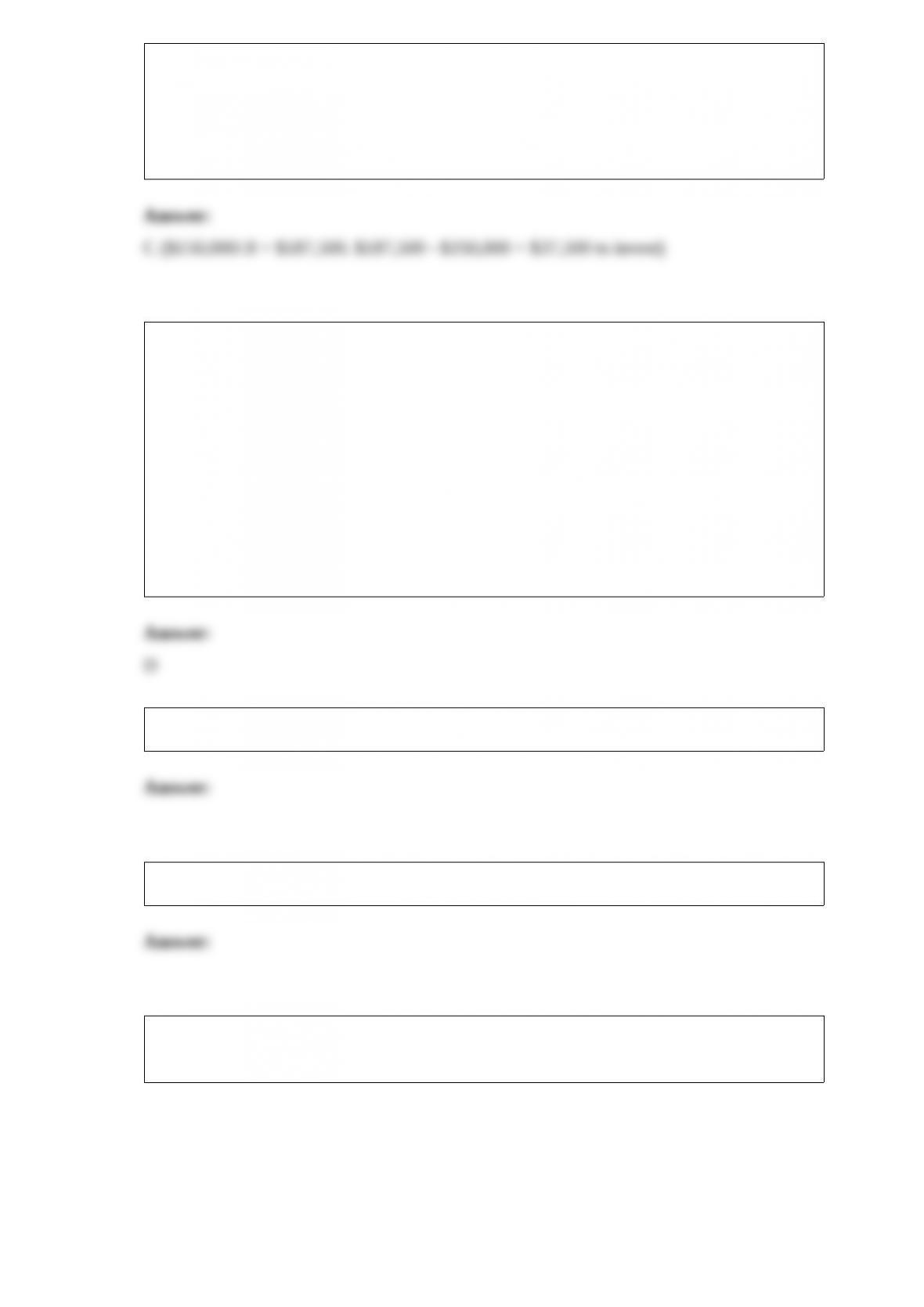
16) The partners of Apple, Bere, and Carroll LLP share net income and losses in a 5:3:2
ratio, respectively. The capital account balances on January 1, 2013, were as follows:
The carrying amounts of the assets and liabilities of the partnership are the same as their
current fair values. Dorr will be admitted to the partnership with a 20% capital interest
and a 20% share of net income and losses in exchange for a cash investment. The
amount of cash that Dorr should invest in the partnership is:
A.$25,000.
B.$30,000.
C.$37,500.
D.$75,000.
E.$90,000.
17) Walsh Company sells inventory to its subsidiary, Fisher Company, at a profit during
2012. One-third of the inventory is sold by Walsh uses the equity method to account for
its investment in Fisher.
In the consolidation worksheet for 2013, which of the following choices would be a
debit entry to eliminate unrealized intra-entity gross profit with regard to the 2012
intra-entity sales?
A) Retained earnings.
B) Cost of goods sold.
C) Inventory.
D) Investment in Fisher Company.
E) Sales.
20) Following are selected accounts for Green Corporation and Vega Company as of
December 31, 2015. Several of Green’s accounts have been omitted.
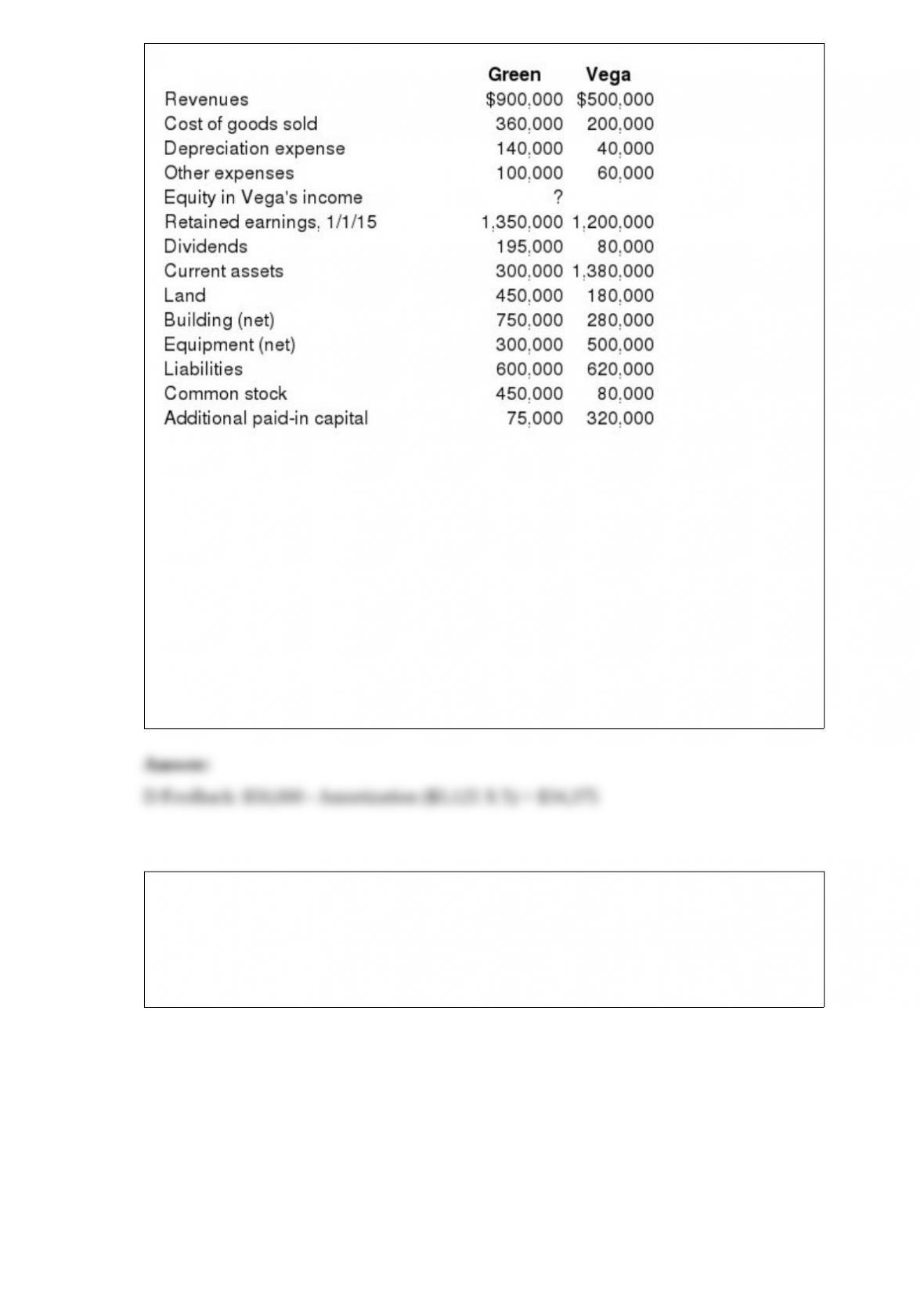
Green acquired 100% of Vega on January 1, 2011, by issuing 10,500 shares of its $10
par value common stock with a fair value of $95 per share. On January 1, 2011, Vega’s
land was undervalued by $40,000, its buildings were overvalued by $30,000, and
equipment was undervalued by $80,000. The buildings have a 20-year life and the
equipment has a 10-year life. $50,000 was attributed to an unrecorded trademark with a
16-year remaining life. There was no goodwill associated with this investment.
Compute the December 31, 2015, consolidated trademark.
A) $50,000.
B) $46,875.
C) $ 0.
D) $34,375.
E) $37,500.
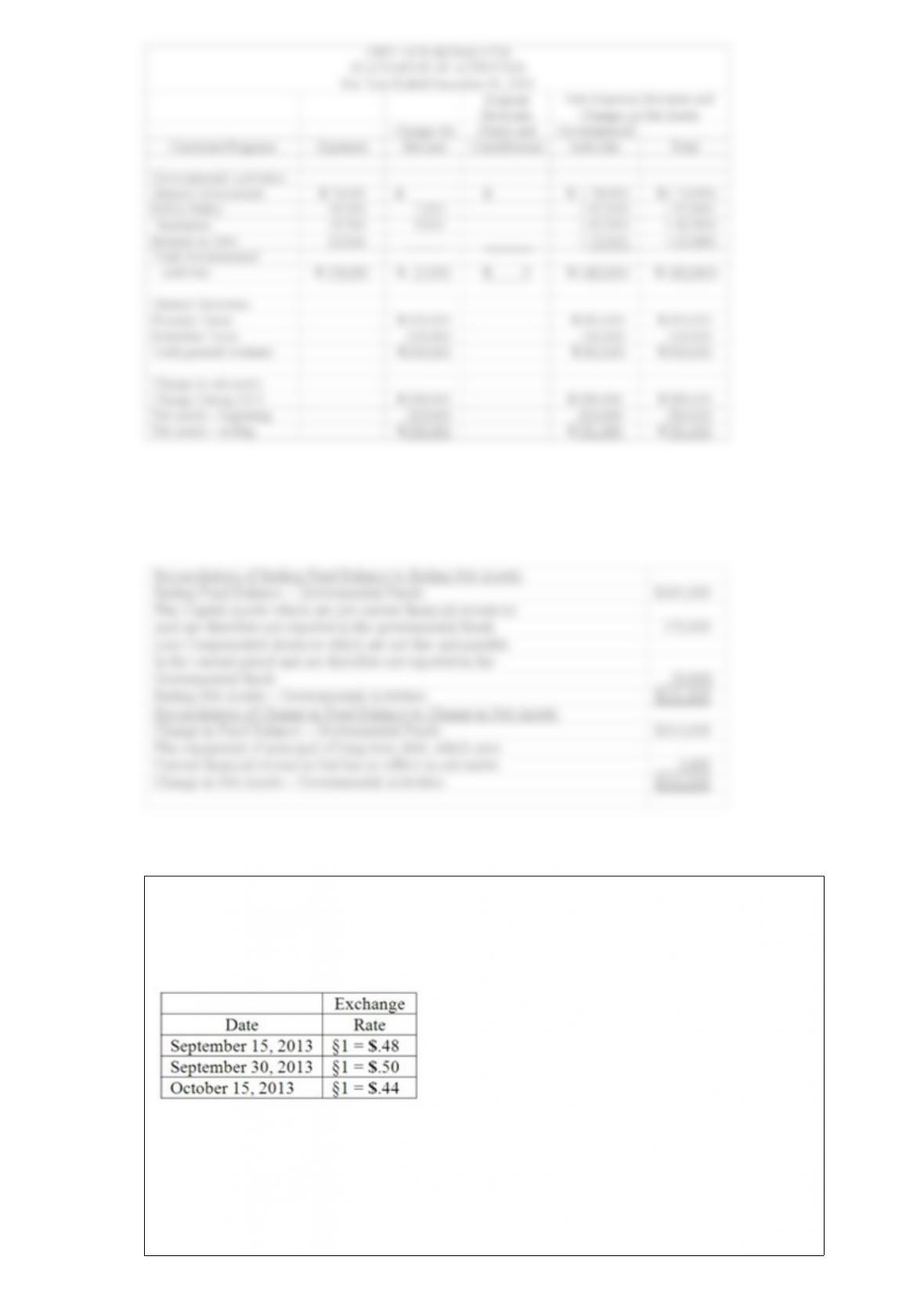
21) The Town of Portsmouth has at the beginning of the year a $213,000 Net Asset
balance, and a $52,000 Fund Balance.
The following information relates to the activities within the Town of Portsmouth for
the year of 2013.
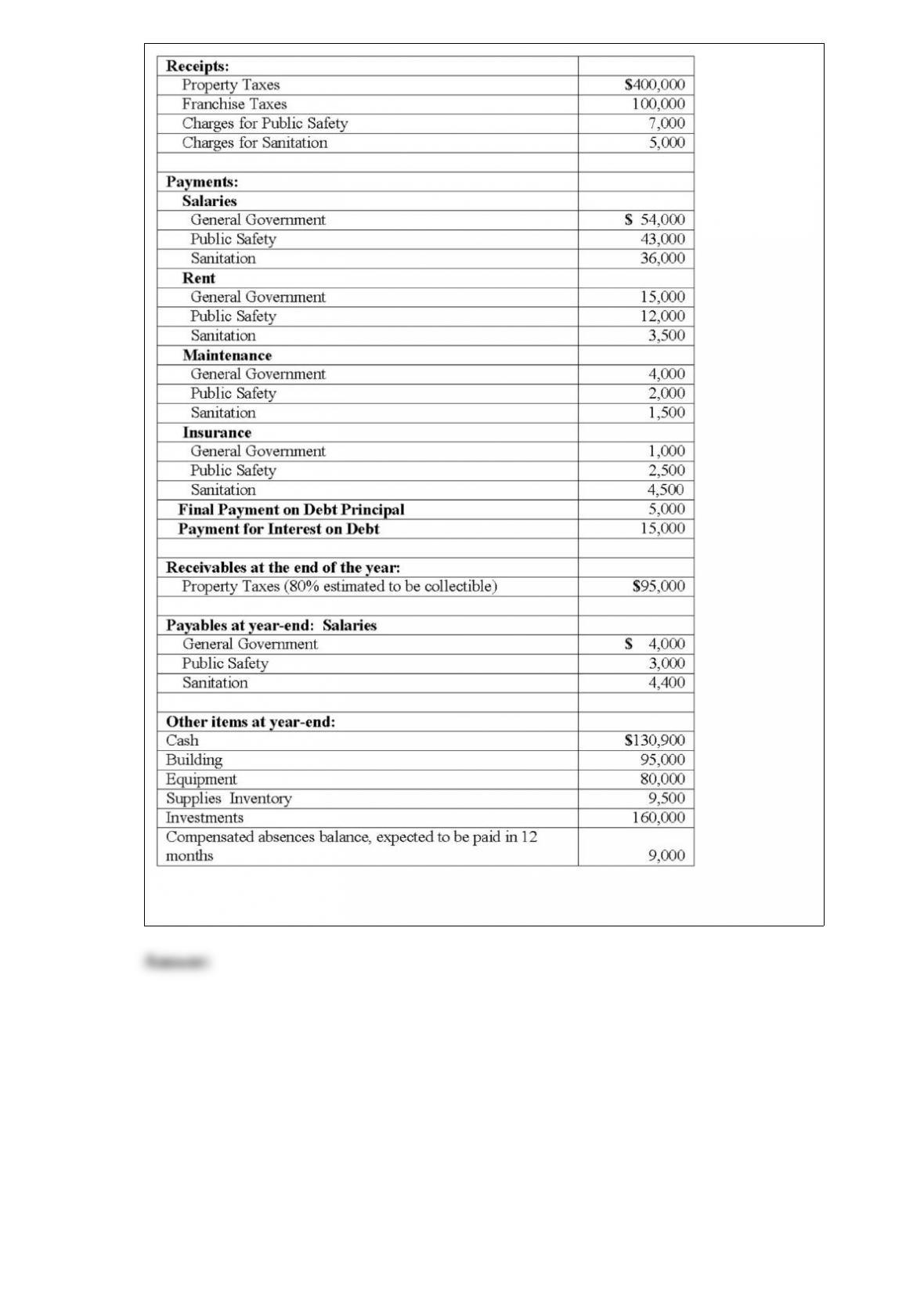
Prepare a Statement of Activities
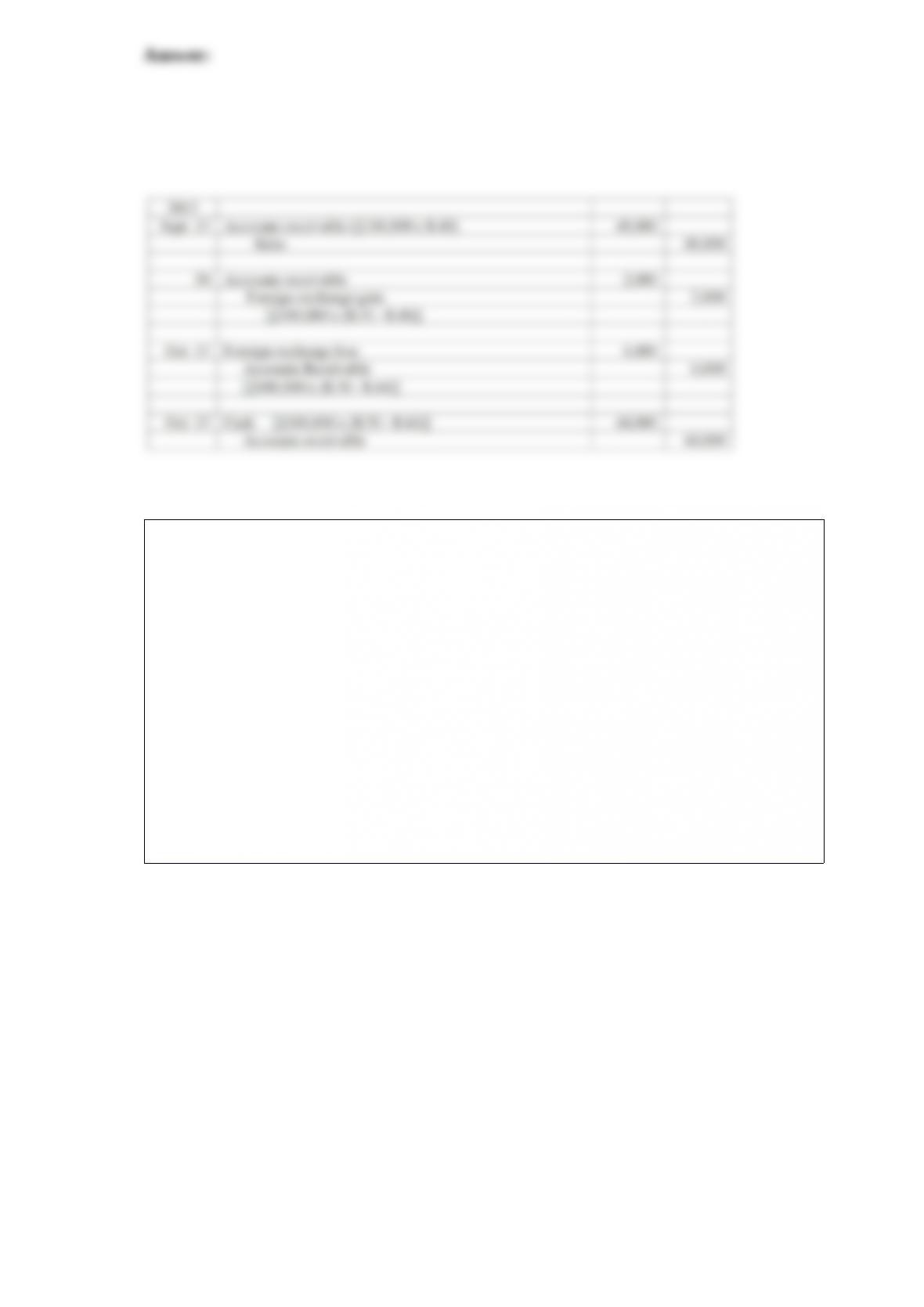
22) Old Colonial Corp. (a U.S. company) made a sale to a foreign customer on
September 15, 2013, for 100,000 stickles. Payment was received on October 15, 2013.
The following exchange rates applied:
Required:
Prepare all journal entries for Old Colonial Corp. in connection with this sale assuming
that the company closes its books on September 30 to prepare interim financial
statements.
23) Jet Corp. acquired all of the outstanding shares of Nittle Inc. on January 1, 2011, for
$644,000 in cash. Of this price, $42,000 was attributed to equipment with a ten-year
remaining useful life. Goodwill of $56,000 had also been identified. Jet applied the
partial equity method so that income would be accrued each period based solely on the
earnings reported by the subsidiary.
On January 1, 2014, Jet reported $280,000 in bonds outstanding with a book value of
$263,200. Nittle purchased half of these bonds on the open market for $135,800.
During 2014, Jet began to sell merchandise to Nittle. During that year, inventory
costing $112,000 was transferred at a price of $140,000. All but $14,000 (at Jet’s selling
price) of these goods were resold to outside parties by year’s end. Nittle still owed
$50,400 for inventory shipped from Jet during December.
The following financial figures were for the two companies for the year ended
December 31, 2014.
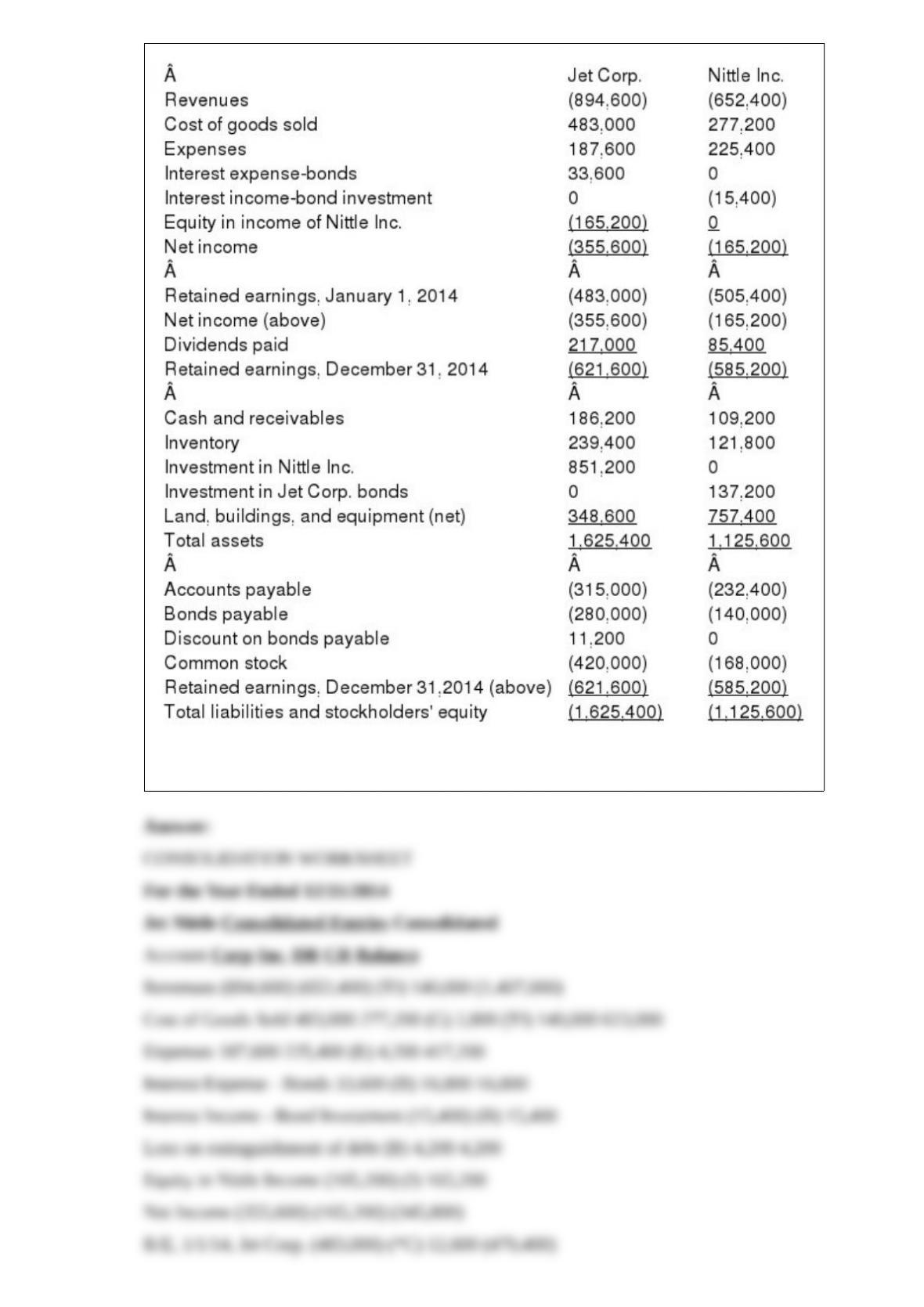
Required:
Prepare a consolidation worksheet for the year ended December 31, 2014.
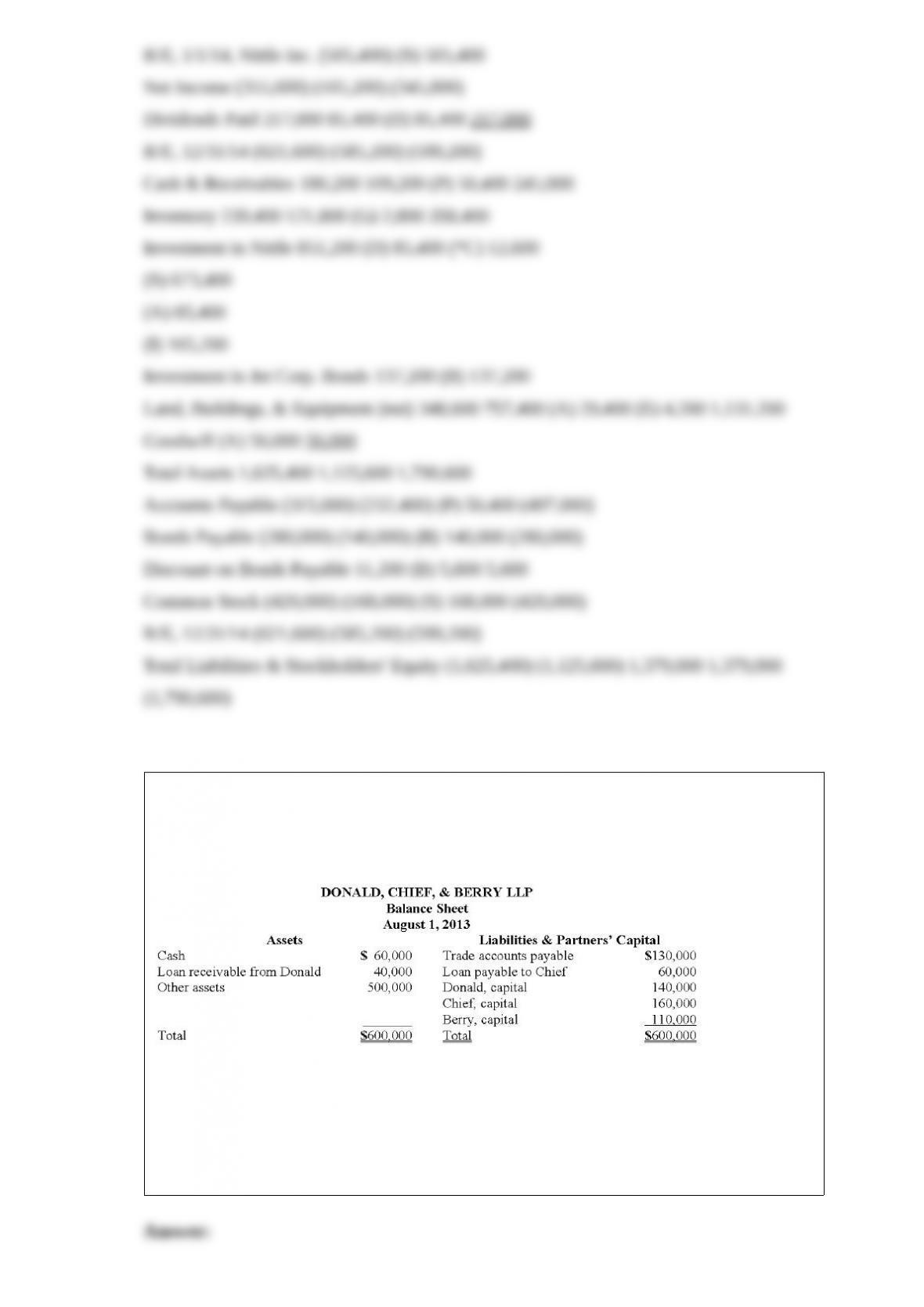
24) The partners of Donald, Chief & Berry LLP decided to liquidate on August 1, 2013.
The balance sheet of the partnership is as follows, with the profit and loss ratio of 25%,
45%, and 30%, respectively.
The disposal of Other Assets with a carrying amount of $200,000 realized $140,000,
and all available cash was distributed.
Prepare the journal entry for Donald, Chief & Berry LLP on August 1, 2013, to record
payment of liabilities.

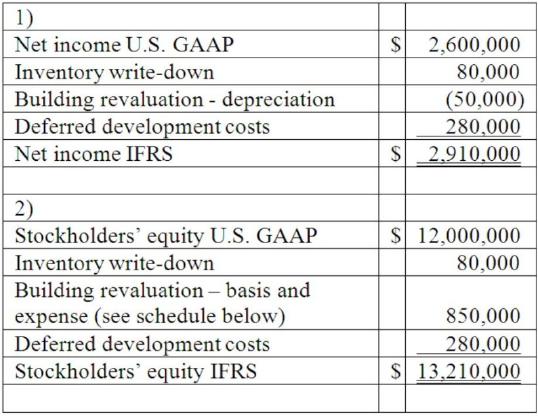
25) Principal Company is a U.S.-based company that prepares its consolidated financial
statements in accordance with U.S. GAAP. Principal reported net income of $2,600,000
in 2013 and stockholders’ equity of $12,000,000 at December 31, 2013. Principal wants
to determine the reporting impact of switching to IFRS. The following three items
would create differences in financial reporting:
1) At December 31, 2013, inventory had a historical cost of $850,000, a replacement
cost of $700,000, and a net realizable value of $800,000. The normal profit margin was
10%.
2) Principal acquired a building at the beginning of 2011 at a cost of $5,000,000. The
building has an estimated useful life of 20 years, an estimated residual value of
$1,000,000, and is being depreciated on a straight-line basis. On January 1, 2013, the
building has a fair value of $5,500,000. There is no change in the estimated useful life
or residual value. In a switch to IFRS, Principal would use the revaluation model in IAS
16 to determine the carrying value of property, plant, and equipment subsequent to
acquisition.
3) In 2013, Principal incurred $800,000 of research and development for a new product,
of which 35% relates to development activities subsequent to the point at which criteria
indicating the creation of an intangible asset had been met. As of the end of 2013,
development of the new product had not been completed.
Required:
1) Prepare a schedule reconciling net income under U.S. GAAP to net income under
IFRS for the year ended December 31, 2013.
2) Prepare a schedule reconciling stockholders’ equity under U.S. GAAP to
stockholders’ equity under IFRS at December 31, 2013.