1) On January 1, 2014, Emont Enterprises purchased 35 percent of the outstanding
shares of stock of Leshner Corp.for $175,000 cash. The investment will be accounted
for by the equity method. On that date, Leshner’s net assets (book and fair value) were
$300,000. Emont has determined that the excess of the cost of its investment in Leshner
over its share of Leshner’s net assets is attributable to equipment whose market value
exceeds its carrying value by $150,000 and to an operating license whose market value
exceeds its carrying value by $125,000. The remaining useful life of the equipment is
ten years and the remaining useful life of the operating license is 20 years.
Leshners net income for the year ended December 31, 2014, was $80,000. During 2014,
Emont received $3,500 cash dividends from Leshner. There were no other transactions
between the two companies.
Compute the amount that would be reported on Emont Associates’ books for the
investment in Leshner Corp. at December 31, 2014.
2) Lennor Company sold inventory to Myers Incorporated and recorded the sale as
revenue. Part of the agreement of the sale is that Lennor will repurchase the
merchandise at a specified price over a specified period of time. Meanwhile, Myers
uses the inventory purchased from Lennor as collateral for a loan. Myers uses the
proceeds from the loan to pay Lennor for the inventory purchased. Lennor ultimately
repurchases the inventory from Myers. Myers then uses the proceeds of the repayment
to pay its loan obligation.
Required:

3) McGovern Corporation, a U.S. company, owns a 100% interest in its subsidiary,
Dukakis Limited., located in the United Kingdom. Dukakis began operations on
January 1, 2013. All revenues and expenses are received and paid in British pounds.
The subsidiary maintains its accounting records in British pounds. In light of these
facts, management of the U.S. parent has determined that the British pound is the
functional currency of the subsidiary.
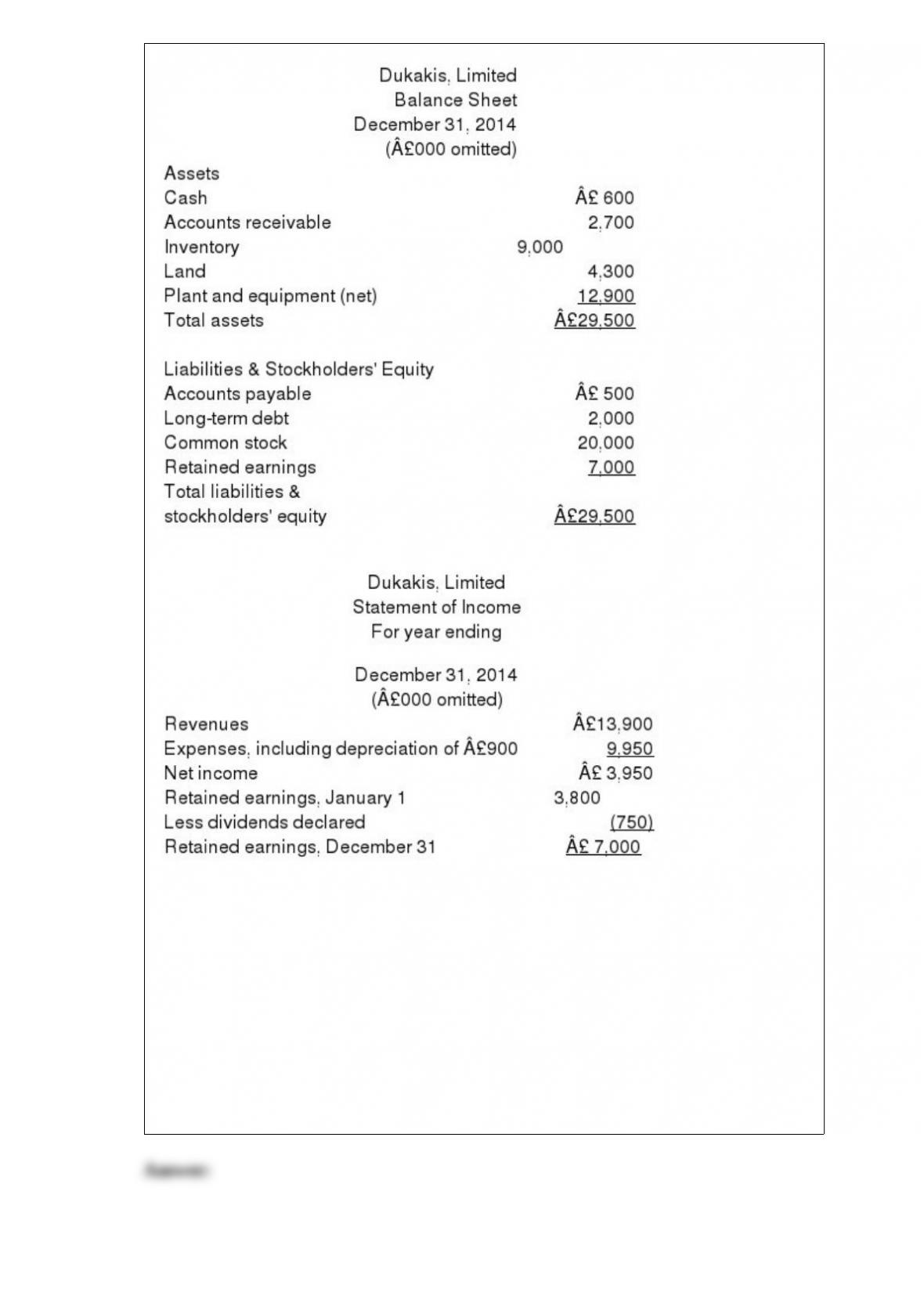
The subsidiarys balance sheet at December 31, 2014, and income statement for the year
then ended, are presented below in British pounds:
The following are relevant exchange rates for the year 2014:
£1 = $1.51 at the beginning of 2013, at which time the common stock
was issued.
£1 = $1.55 weighted average for 2014.
£1 = $1.58 at the date the dividends were declared and paid.
£1 = $1.53 at the end of 2014.
£1 = $1.56 at the beginning of 2014.
The balance of the cumulative translation account at January 1, 2014, was $1,157.
Required:
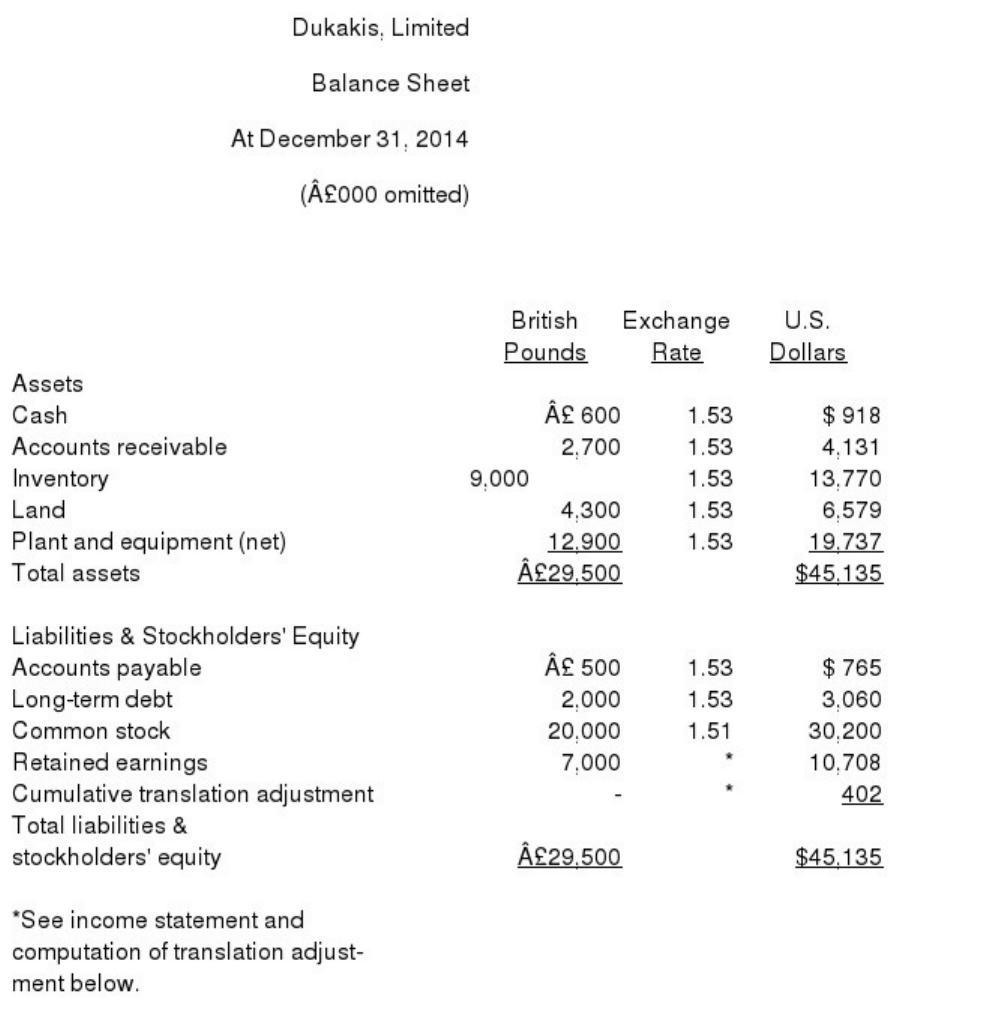
Prepare in U.S. dollars a balance sheet at December 31, 2014, and an income statement
for the year then ended for Dukakis, Limited.
4) The following financial information is available for Simmer Company, a hypothetical
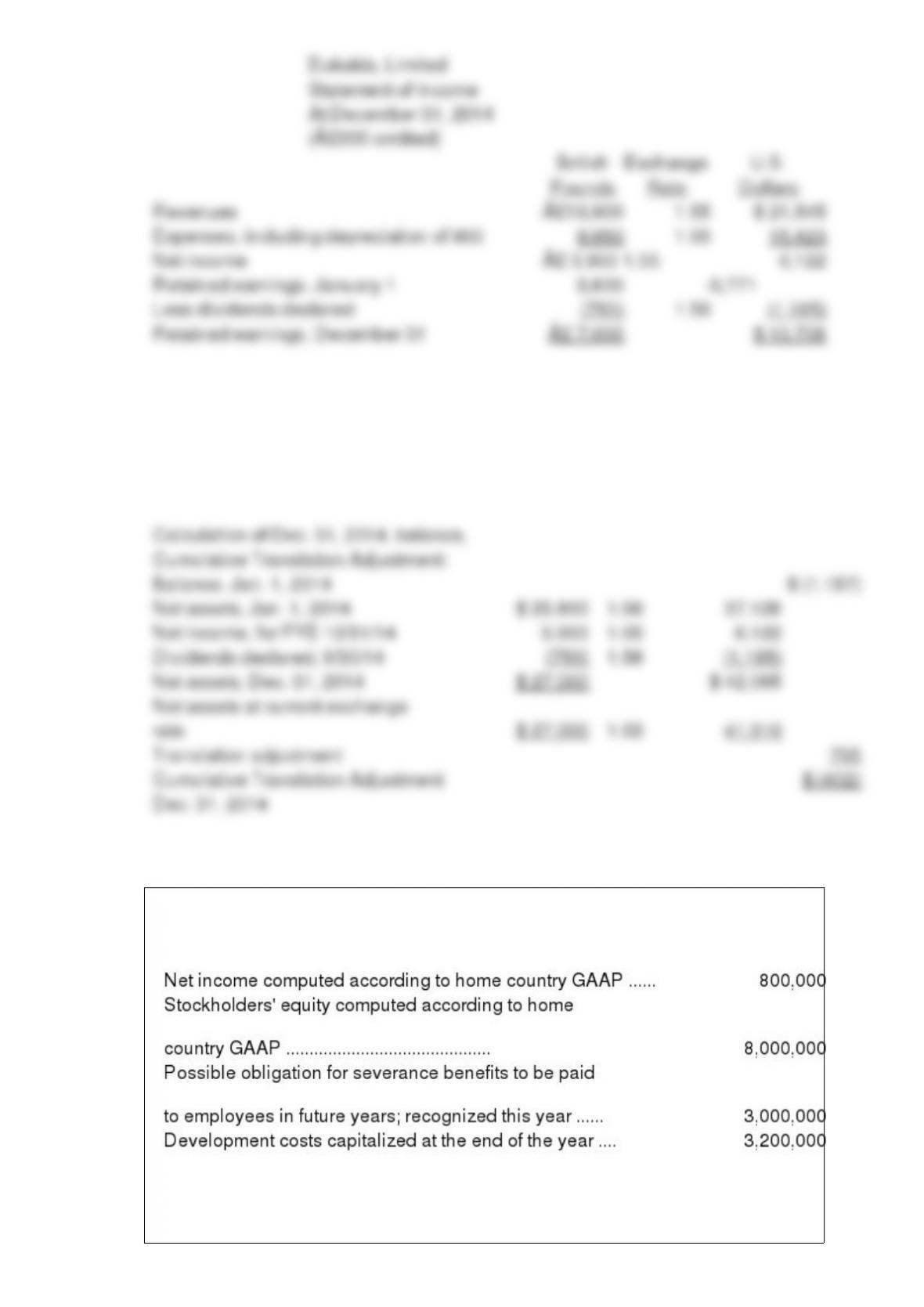
non-U.S. firm with shares listed on a U.S. stock exchange:
If Simmer were following U.S. GAAP, development costs would be expensed when
incurred.
According to U.S. GAAP, the possible obligation for severance benefits would not be
recognized until it had become probable.
Prepare a reconciliation of Simmer’s reported stockholders’ equity and net income to the
amounts of these items under U.S. GAAP.
5) The following information for Connor Company is available at December 31, 2014,
and for the year then ending:
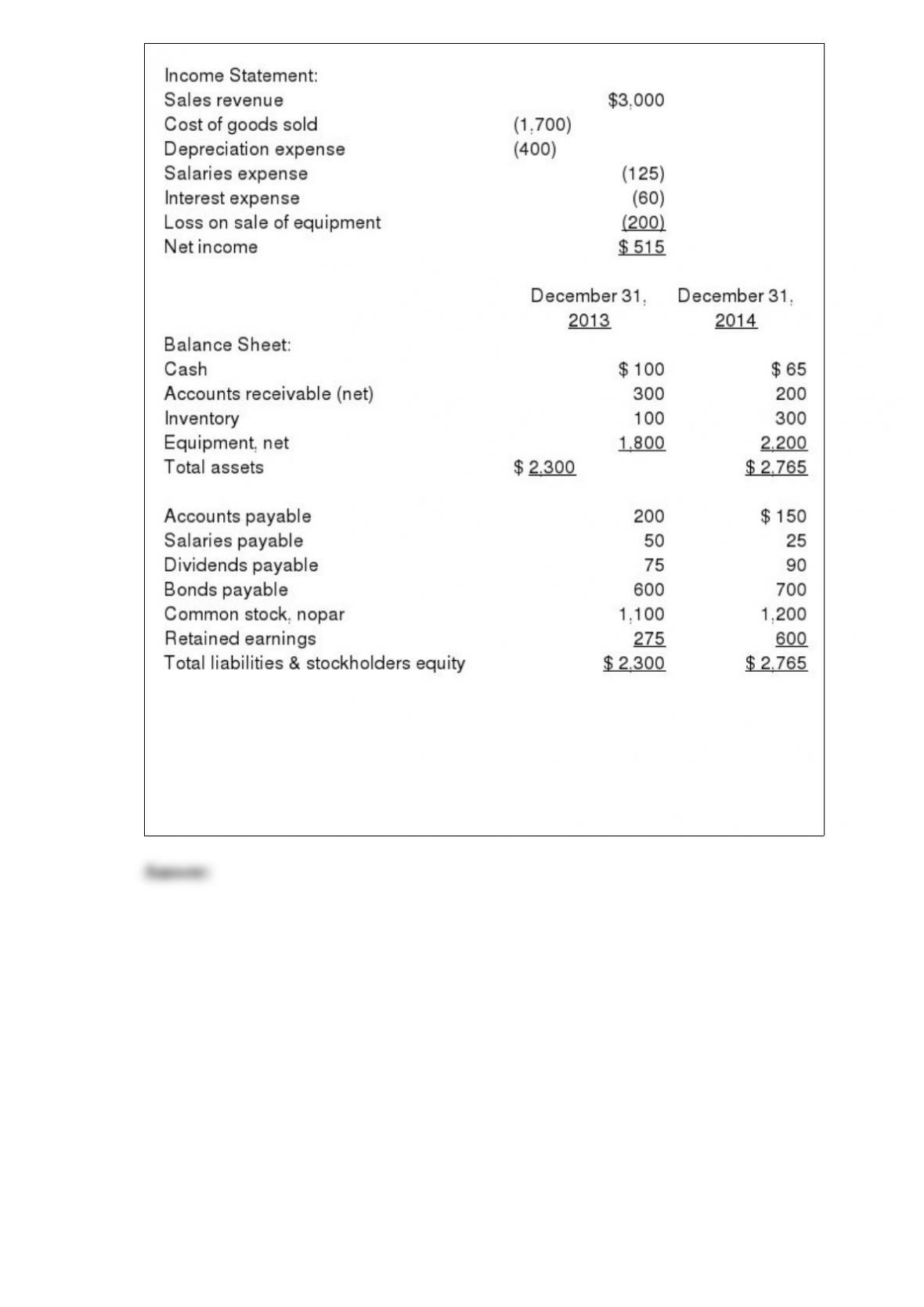
The book value of equipment sold was $300. All dividends declared were cash
dividends.
Required:
Prepare a statement of cash flows for Connor Company for the year ending December
31, 2014, using the direct method.
6) Use-factor depreciation methods view asset consumption as related primarily to asset
use or output. These methods provide periodic depreciation charges based on the
amount of use of the asset in a given period. The service life of assets under the
use-factor methods may be expressed either as hours of service or units of production.
Required:
Identify the general limitations of the use-factor depreciation methods.
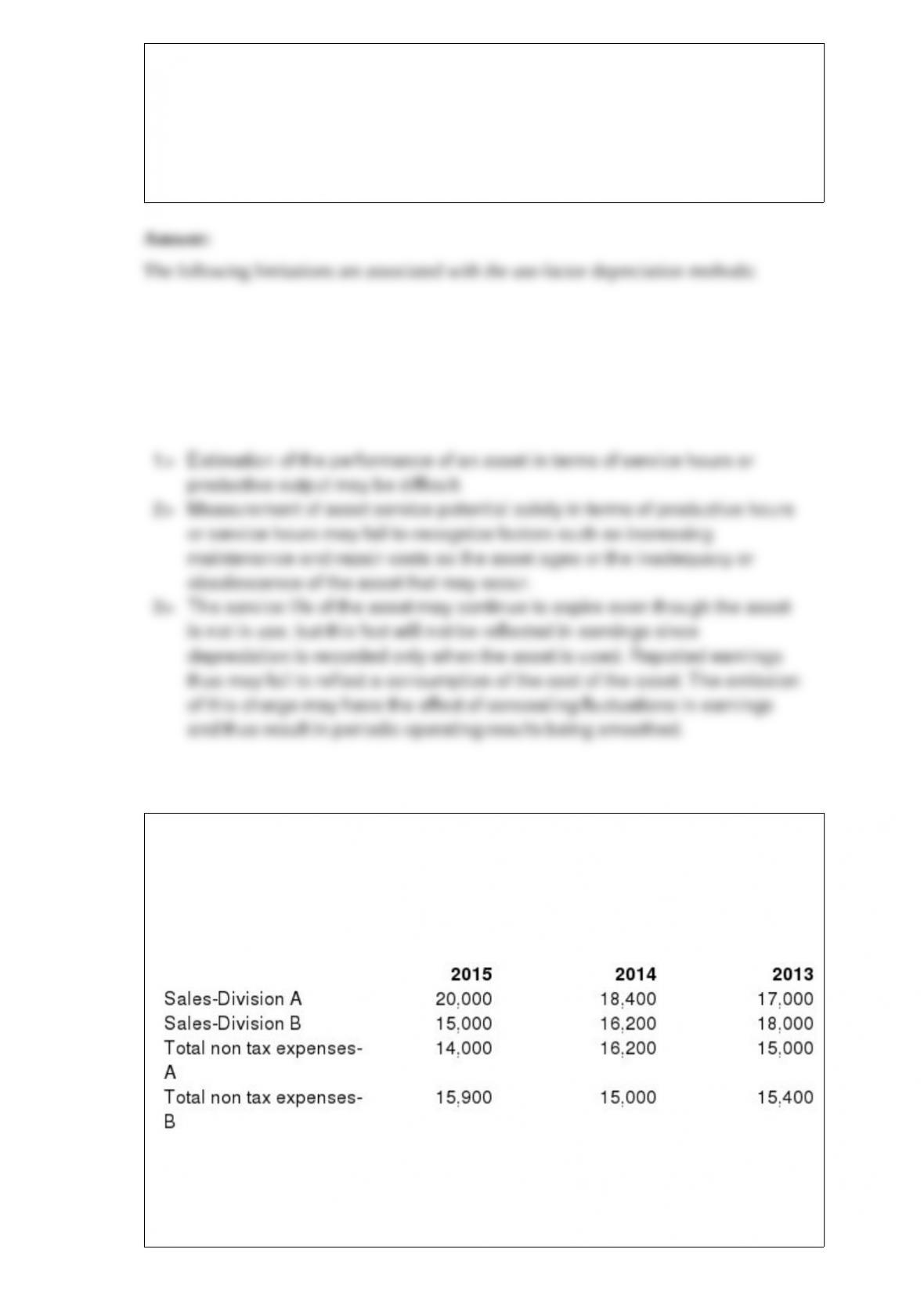
7) Jonathan L.Supreme Company has two divisions,A and B. The operations and cash
flows of these two divisions are clearly distinguishable. On July 1, 2015, the company
decided to dispose of the assets and liabilities of Division B. It is probable that the
disposal will be completed early next year. The revenues and expenses of Jonathan
L.Supreme Company for 2015 and for the preceding two years are as follows:
During the latter part of 2015, Jonathan L.Supreme disposed of a portion of Division B
and recognized a pretax loss of $8,000 on the disposal. The income tax rate for
Jonathan L.Supreme Company is 40%.
Prepare the comparative income statements for Jonathan L.Supreme Company for the
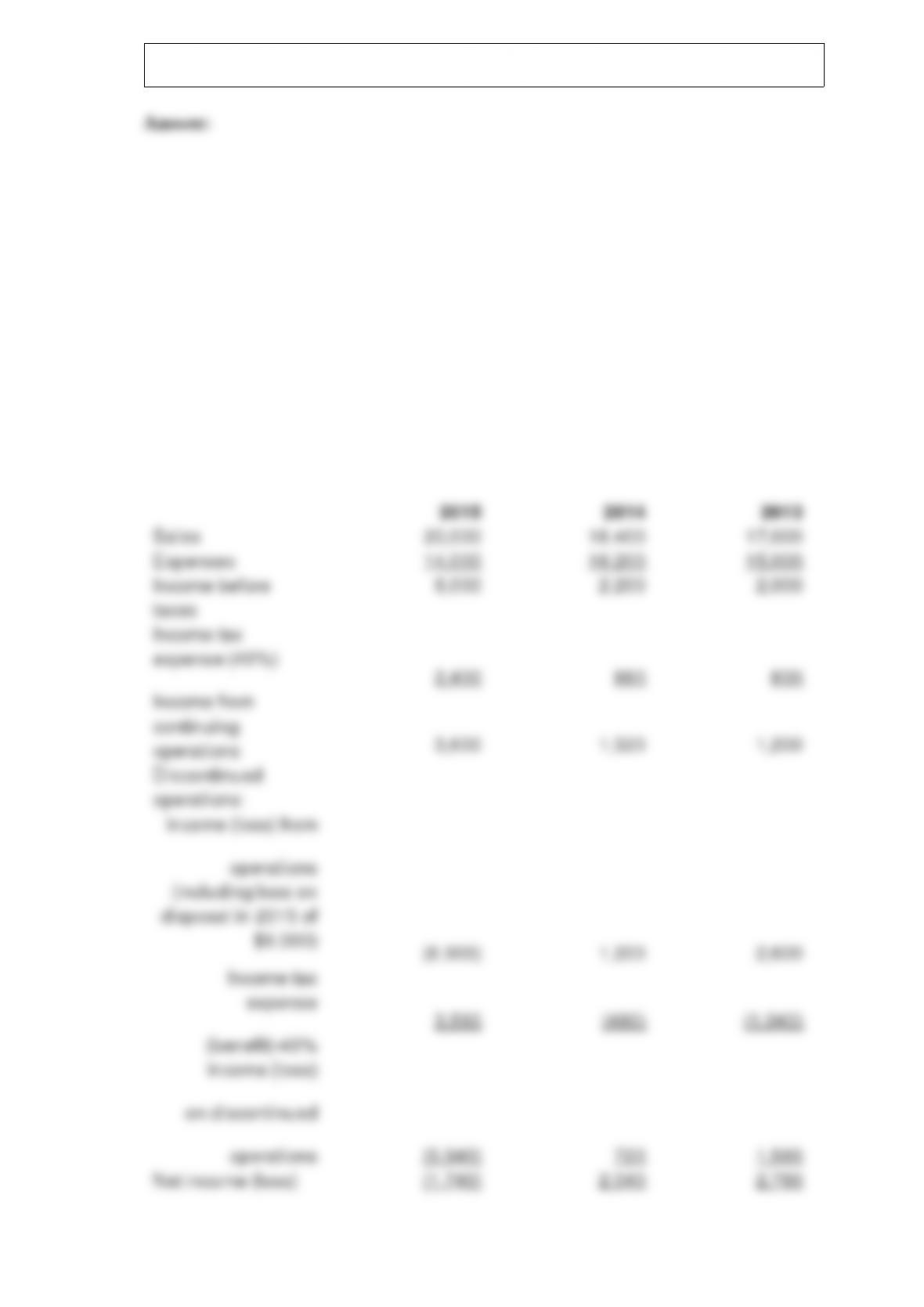
years 2013, 2014, and 2015.
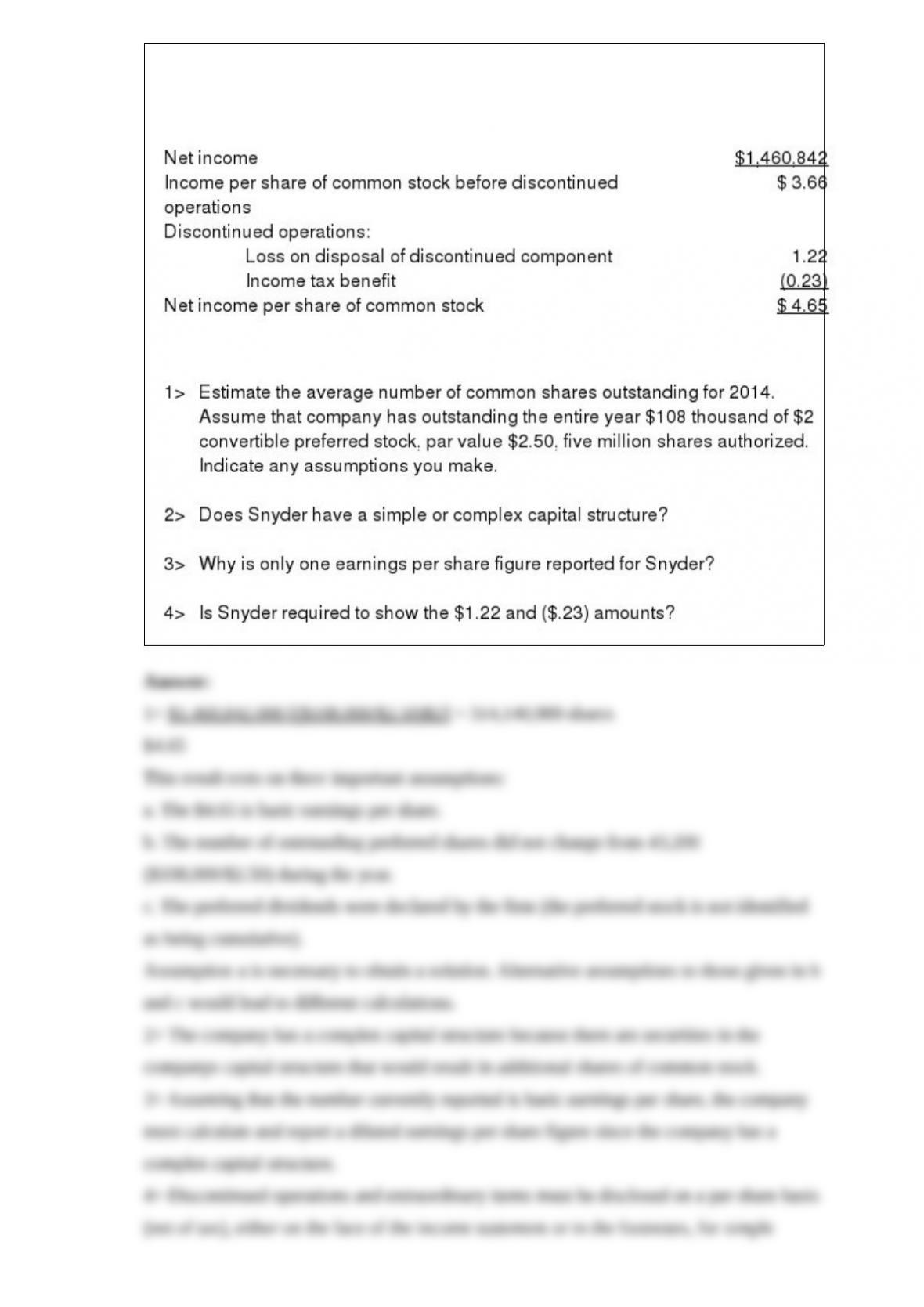
8) Snyder Home Products, a manufacturer of sinks, bath tubs, and faucets, reported the
following information (all dollar amounts in thousands of dollars) for December 31,
2014, in a draft version of its consolidated statement of income:
Required:
9) The term earnings quality refers to the ability of reported earnings to predict an
entitys future earnings. To enhance predictability, financial analysts attempt to
distinguish between a companys transitory earnings (transactions or events not likely to
occur in the future) and its permanent earnings.
It is tempting to assume that transitory earnings are represented primarily by
discontinued operations and extraordinary items. All items of revenue and expense
included in operating income may not be permanent, however. Restructuring costs often
are included in determining operating income, yet may or may not continue in the
future.
Required:
Do you think restructuring costs represent transitory earnings or permanent earnings?
Explain.