
1) ifrs and u.s. gaap
a.are diametrically opposed in their accounting for impairments of assets held for
disposal
b.are similar in the accounting for impairments of assets held for disposal
c.are moving toward common ground in their accounting for impairments of assets held
for disposal
d.are moving further apart in their accounting for impairments of assets held for
disposal
2) rs corporation, a manufacturer of ethnic foods, contracted in 2012 to purchase 500
pounds of a spice mixture at $5.00 per pound, delivery to be made in spring of 2013. by
12/31/12, the price per pound of the spice mixture had risen to $5.40 per pound. in
2012, aj should recognize
a.a loss of $2,500
b.a loss of $200
c.no gain or loss
d.a gain of $200
3) which of the following differences would result in future taxable amounts?
a.expenses or losses that are tax deductible after they are recognized in financial income
b.revenues or gains that are taxable before they are recognized in financial income
c.revenues or gains that are recognized in financial income but are never included in
taxable income
d.expenses or losses that are tax deductible before they are recognized in financial
income
4) a company issues $10,000,000, 7.8%, 20-year bonds to yield 8% on january 1, 2011.
interest is paid on june 30 and december 31. the proceeds from the bonds are
$9,802,072. using straight-line amortization, what is the carrying value of the bonds on
december 31, 2013?
a.$9,835,116
b.$9,970,312
c.$9,816,916
d.$9,831,762
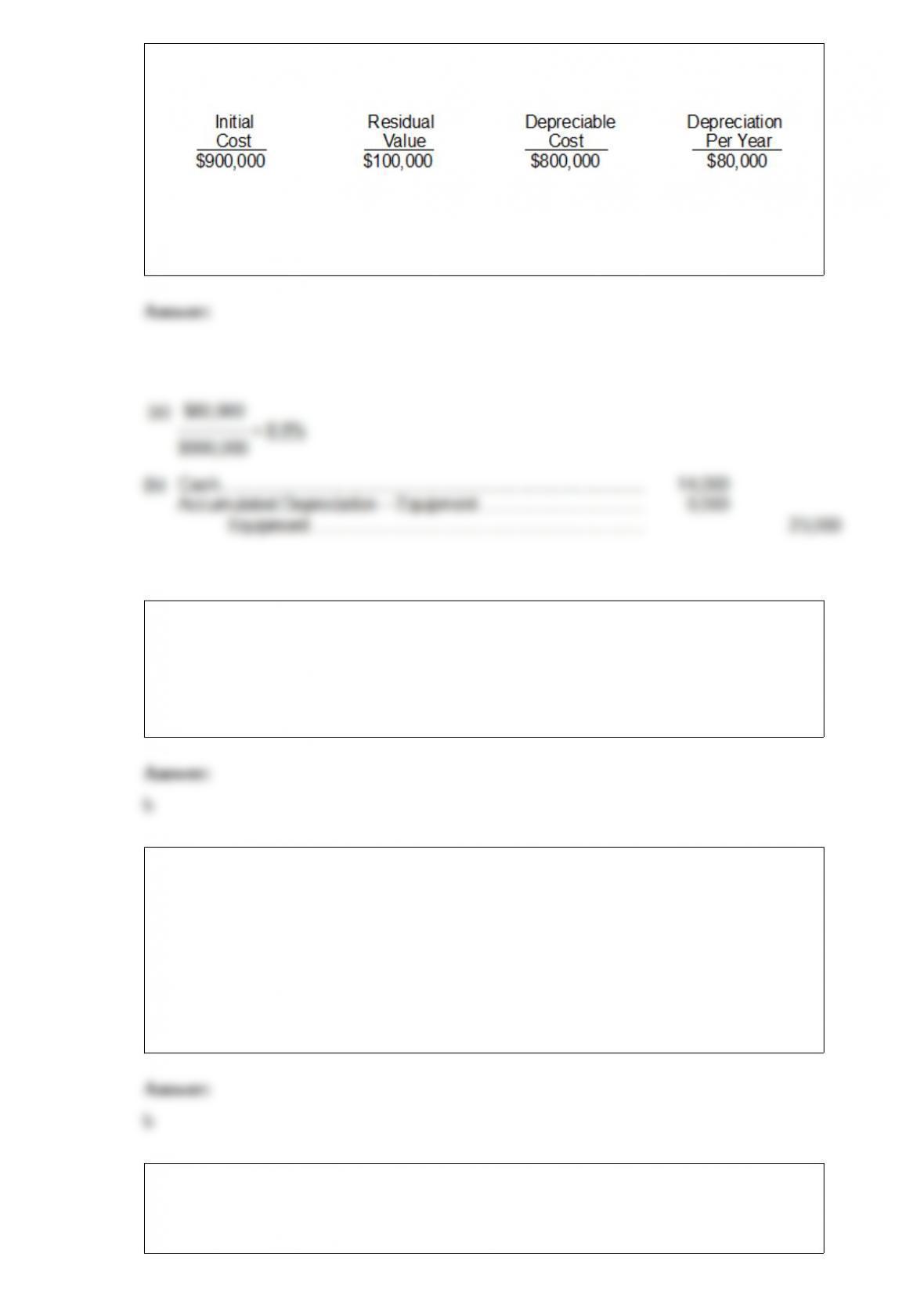
5) kemp co. uses the composite method to depreciate its equipment. the following totals
are for all of the equipment in the group:
instructions
(a)what is the composite rate of depreciation? (to nearest tenth of a percent.)
(b)a machine with a cost of $23,000 was sold for $14,000 at the end of the third year.
what entry should be made?
6) which of the following are the two components of the revenue recognition principle?
a.cash is received and the amount is material
b.recognition occurs when and earned realized or realizable
c.production is complete and there is an active market for the product
d.cash is realized or realizable and production is complete
7) manning company issued 10,000 shares of its $5 par value common stock having a
fair value of $25 per share and 15,000 shares of its $15 par value preferred stock having
a fair value of $20 per share for a lump sum of $520,000. how much of the proceeds
would be allocated to the common stock?
a.$54,167
b.$236,364
c.$270,833
d.$276,250
8) research and development costs
a.are intangible assets
b.may result in the development of a patent
c.are easily identified with specific projects
d.all of the above
9) huffman corporation constructed a building at a cost of $20,000,000. average
accumulated expenditures were $8,000,000, actual interest was $1,200,000, and
avoidable interest was $800,000. if the salvage value is $1,600,000, and the useful life
is 40 years, depreciation expense for the first full year using the straight-line method is
a.$480,000
b.$490,000
c.$520,000
d.$680,000
10) information in the income statement helps users to
a.evaluate the past performance of the enterprise
b.provide a basis for predicting future performance
c.help assess the risk or uncertainty of achieving future cash flows
d.all of these
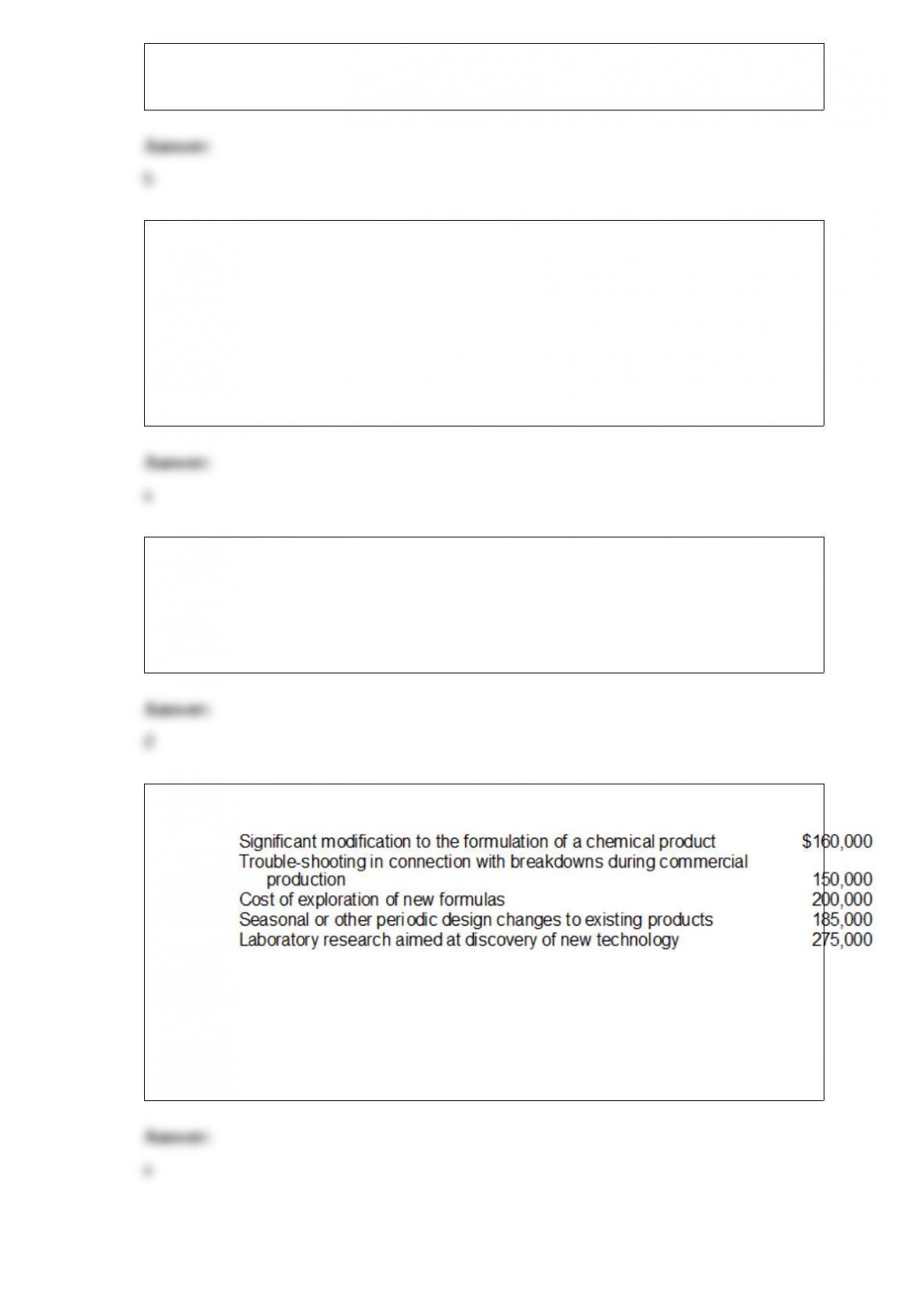
11) riley co. incurred the following costs during 2013:
in its income statement for the year ended december 31, 2013, riley should report
research and development expense of
a.$635,000
b.$785,000
c.$820,000
d.$970,000

12) jenks company financed the purchase of a machine by making payments of $10,000
at the end of each of five years. the appropriate rate of interest was 8%. the future value
of one for five periods at 8% is 1.46933. the future value of an ordinary annuity for five
periods at 8% is 5.8666. the present value of an ordinary annuity for five periods at 8%
is 3.99271. what was the cost of the machine to jenks?
a.$14,794
b.$39,927
c.$50,000
d.$58,667