6-13
© 2018 Cengage. May not be scanned, copied or duplicated, or posted to a publicly accessible website, in whole or in part.
3. Managers want to reduce risk in order to create a more optimal lending environment and to
manage debt restrictions and covenants.
4. Managers want to influence short-term stock price movements for their advantage.
5. Managers want to manage earnings in order to thwart industry-specific and anti-trust actions
against the firm.
6. Healy and Wahlen state that one type of earnings management occurs when managers use judgement
in financial reporting to alter financial reports in order to mislead some stakeholder about the
economic performance of the company. Earnings management is a consequence of a judgement by
management which results in lower economic information content of the financial reports.
Discuss four reasons that discourage managers from practicing earnings management.
ANS:
Reasons to NOT manage earnings:
7. Achieving comparability in financial reporting is important to the analysis of multinational firms.
However, the data from the reconciliation of foreign firm’s financial statement to U.S. GAAP must be
carefully interpreted. What types of things complicate the analysis of multinational firms?
ANS:
8. A company may try to paint a favorable picture of itself by accelerating the timing of revenues or
estimating the collectible amounts too aggressively. In these cases the quality of accounting
information declines because it does not represent the company’s true economic condition and may
not be sustainable. List four conditions which might suggest that a company is recognizing revenues
too early?
ANS:
6-14
© 2018 Cengage. May not be scanned, copied or duplicated, or posted to a publicly accessible website, in whole or in part.
9. Many users of financial statements believe that the quality of accounting information for intangible
assets is low because firms seldom report intangible asset resources on the balance sheet. However,
from the perspective of accounting quality what are arguments in favor of expensing most intangibles
and not recording them on the balance sheet?
10. Penny Corp. manufactures telecommunication equipment and has been profitable each year for the
past ten years. During 2014 the company saw its core market decline sharply when a competitor
introduced a significant new product technology. In response to the decline in business Penny Corp.
announced a major restructuring of its operations. The restructuring plan which would be implemented
in 2010 would involve the following changes (all of the charges are material):
a. Severance payments to reduce work force $ 9 million
b. Write-down of inventory $13 million
c. Penalty payment for termination of lease on manufacturing facility $ 6 million
d. Write-down of equipment associated with manufacturing facility $12 million
Total 2010 restructuring charge $40 million
Penny Corp. has never previously restructured its operations and believes that it can return to
profitability within two years based on its current research and development activity.
Required:
1. Discuss whether or not you would eliminate the restructuring charge from the 2010 income
statement of Penny Corp. when using earnings to forecast future profitability.
2. Penny Corp.’s restructuring charges cover a wide range of different cost categories; identify those
that entail a cash payment and those that do not require a cash payment. For those charges not
requiring a cash payment how would they be treated in the Statement of Cash Flows?
ANS:
1. From the information provided it appears that this would be a case in which the restructuring
2. The following two charges would require a cash payment:
Severance payments to reduce work force $ 9 million
11. In the empirical research on earnings manipulation discussed in the chapter, a number of firm
characteristics are found to be associated with the likelihood of engaging in earnings manipulation. For
each of the characteristics listed below, discuss the rationale for their inclusion in the model:
a. Gross Margin Index
b. Asset Quality Index
c. Sales Growth Index
d. Depreciation Index
e. Leverage Index
ANS:
a. Gross Margin Index – Firms with weaker profitability in a given year are more likely to engage in
earnings manipulation in the future.
12. For each of the following factors, determine if the given change or level of that factor would lead an
analyst to believe that managers of a firm are more or less likely to engage in earnings manipulation:
Earnings Manipulation
More likely/less likely
1. Days Sales in Receivable Index increases
2. Gross Margin Index decreases below 1
3. Asset Quality Index increases
4. Depreciation Index decreases to below 1
5. Leverage Index increases
ANS:
Earnings Manipulation
More likely/less likely
13. A. Listed below are 12 accounting liabilities:
1. Insurance paid in advance
2. Interest payable
3. Unsettled lawsuits where a reasonable estimate of loss can be determined and the loss is
probable
4. Accounts payable
5. Warranties payable
6. Bonds payable
7. Accrued liabilities
8. Taxes payable
9. Employment commitments
10. Notes payable
11. Purchase commitments
12. Salaries payable
Place each of these accounting liabilities into one of the following six categories:
a. Obligations with fixed payment dates and amounts
b. Obligations with fixed payment amounts but estimated payment dates
c. Obligations for which the firm must estimate both timing and amount of payment
d. Obligations arising from advances from customers on unexecuted contracts and agreements
e. Obligations under mutually executed contracts
f. Contingent obligations
B. In addition, determine which of the liabilities would be recognized on the balance sheet as liabilities
and which would not be recognized.
Suggestion: format your answer as follows (this is not a correct sample answer):
a. Obligations with fixed payment dates and amounts (not generally recognized):
1. Rent Payable
6-17
ANS:
a. Obligations with fixed payment dates and amounts
b. Obligations with fixed payment amounts but estimated payment dates
c. Obligations for which the firm must estimate both timing and amount of payment
d. Obligations arising from advances from customers on unexecuted contracts and agreements
e. Obligations under mutually unexecuted contracts – NOT GENERALLY RECOGNIZED
f. Contingent obligations
PROBLEM
1. On September 1, 2012, Ramos Inc. approved a plan to dispose of a segment of its business. Ramos
expected that the sale would occur on March 31, 2013, at an estimated gain of $375,500. The segment
had actual and estimated operating profits (losses as follows):
Realized loss from 1/1/12 to 8/31/12 $200,000
Realized loss from 9/1/12 to 12/31/12 (135,000
Expected profit from 1/1/13 to 3/31/13 475,000
Assume a marginal tax rate of 35%
Required:
A) In its 2012 income statement, what should Ramos report as profit or loss from discontinued
operations (net of tax effects)?
B) Calculate the amount of income that should be shown on the 2013 income statement as a result of
the operating profit and the gain on disposal (net of tax)
6-18
Under U.S. GAAP, results of operations on an operating segment or component of an entity
classified as held for sale are to be reported in discontinued operations in the periods in
None of the expected profit from operating the segment or component for Ramos in 2013 or
2. Motor Corporation’s income statements for the years ended December 31, 2012 and 2011 included the
following information before adjustments:
2012 2011
Operating income $900,000 $600,000
Gain on sale of division 450,000 —0——
$1,350,000 $600,000
Provision for income taxes (405,000) (180,000)
Net income $945,000 $420,000
On January 1, 2012, Motor Corporation agreed to sell the assets and product line of one of its
operating divisions for $1,600,000. The sale was consummated on December 31, 2012, and it resulted
in a gain on disposition of $450,000. This division’s pre-tax net losses were $320,000 in 2012 and
$250,000 in 2011. The income tax rate for both years was 30%.
Required:
Starting with operating income (before tax), prepare revised comparative income statements for 2012
and 2011 showing appropriate details for gain (loss) from discontinued operations.
ANS:
6-19
2012 2011
2012 2011
3. On November 15, 2012, Jacobs Co. sold a segment of its business for $2,750,000. The net book value
of the segment at the time of its disposal was $3,000,000. Jacobs had pretax operating income of
$1,750,000 for 2012 which included $380,000 earned by the discontinued segment prior to its
disposal. Assume Jacobs’ tax rate is 30%.
Required:
Prepare a partial income statement for Jacobs Co. beginning with pretax income from continuing
operations.
ANS:
6-20
© 2018 Cengage. May not be scanned, copied or duplicated, or posted to a publicly accessible website, in whole or in part.
Income from continuing operations after tax 959,000
Discontinued operations:
Operating income (net of taxes of $114,000) from 1/1/12 through 11/15/12 266,000
Loss on disposal of discontinued operation (net of tax benefit of $75,000) (175,000)
Net income $1,050,000
Sale price of segment – book value of segment = gain (loss) on disposal = $2,750,000 – $3,000,000 =
$(250,000) pretax loss.
PTS: 1
4. On July 15, 2009 Time Services decided to sell its agricultural business and focus on its landscape
equipment business. The sale of the agricultural business qualifies for discontinued operations
accounting treatment. On November 11, 2009 Time Services signs a firm contract to sell the
agricultural business to Acme Inc. on March 10, 2010. For each of the situations listed discuss how
Time Services would report the discontinued operations in its December 31, 2009 income statement.
(You may disregard tax issues with respect to the sale.)
Situation 1: For the period January 1, 2009 to July 15, 2009 Time Services reports that the agricultural
business lost $3.2M. From July 16, 2009 to November 11, 2009 Time Services reports that the
agricultural business loses an addition $1.4 million dollars. At the end of the 2009 Time estimates that
it will lose an additional $800,000 on the sale of the agricultural business when it is finally completed
in 2010.
Situation 2: For the period January 1, 2009 to July 15, 2009 Time Services reports that the agricultural
business had a profit of $1.5M. From July 16, 2009 to November 11th, 2009 Time Services reports
that the net income from the agricultural business was $600,000 dollars. At the end of the 2009 Time
estimates that the sale of the agricultural business will result in a gain of $1.7 million dollars when it is
finally completed in 2010.
Situation 3: For the period January 1, 2009 to July 15, 2009 Time Services reports that the agricultural
business lost $3.2M. From July 16, 2009 to November 11th, 2009 Time Services reports that the
agricultural business loses an addition $1 million dollars. However, at the end of the 2009 Time
estimates that the sale of the agricultural business will result in a gain of $1.3 million dollars when it is
finally completed in 2010.
ANS:
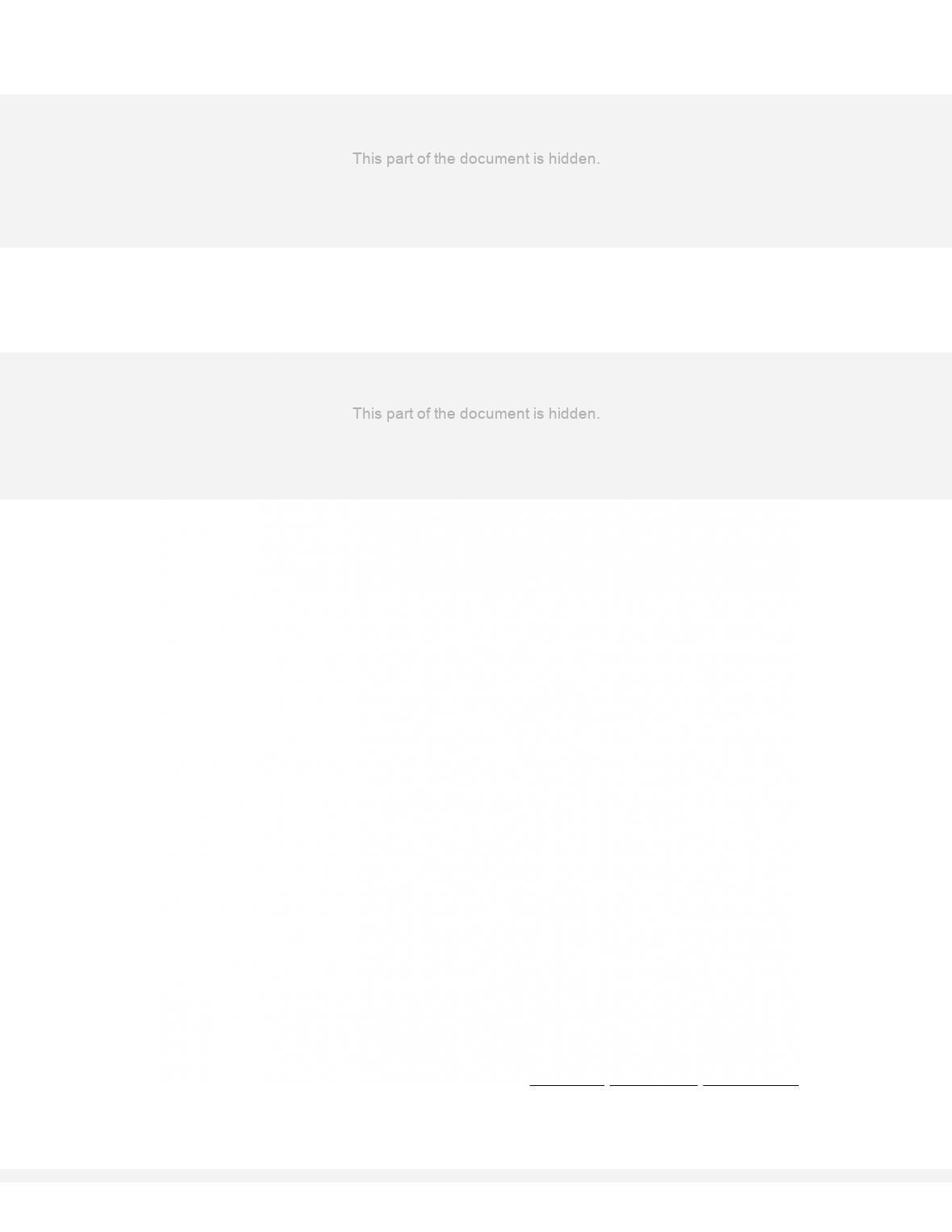
Situation 1:
Situation 2:
Time Services
6-21
© 2018 Cengage. May not be scanned, copied or duplicated, or posted to a publicly accessible website, in whole or in part.
Selected Information Related to Discontinued Operations
Year Ended 2009
Income from Discontinued Operations
Net Earnings of Discontinued Business $1,500,000
Gain on Disposal of Discontinued Business $ 600,000
Income from Discontinued Business $2,100,000
Situation 3:
Time Services
Selected Information Related to Discontinued Operations
Year Ended 2009
5. Mattel, Inc. designs, manufactures and markets various toy products worldwide through sales to
retailers and directly to consumers. Among the company’s many products are Barbie, GI Joe, and
American Girls. Below is an income statement for Mattel for years 2002, 2001 and 2000. Notes to the
financial statements reveal the following information.
1. Discontinued Operations – In 1999 Mattel merged with Learning Company, with Mattel being the
surviving company. The Learning Company, which produced consumer software, represented a
separate line of business for Mattel. In 2000 Mattel’s Board of Directors committed to dispose of the
Learning Company and its consumer software operations. In 2000 the Learning Company was
reported as a discontinued operation and the company was sold to Gores Technology on October 18,
2000.
In 2002 Mattel received a contractual payment from Gores Technology based on the sale of assets of
Learning Company and other liquidation events.
2. Accounting Change – In 2001 Mattel changed the manner in which it accounted for derivative
instruments consistent with the issuance of SFAS No. 133 Accounting for Derivative Instruments and
hedging Activities. The change resulted in Mattel recording a one-time adjustment of $12 million.
3. Accounting Change – In 2002 the FASB issued SFAS No. 142 Goodwill and Other Intangible
Assets. The standard requires that management estimate the value of its goodwill and, if necessary,
record an impairment charge. Consistent with SFAS No. 142 Mattel recorded a one-time adjustment of
$252.2 million, net of tax, as the cumulative effect of the change in accounting principle.
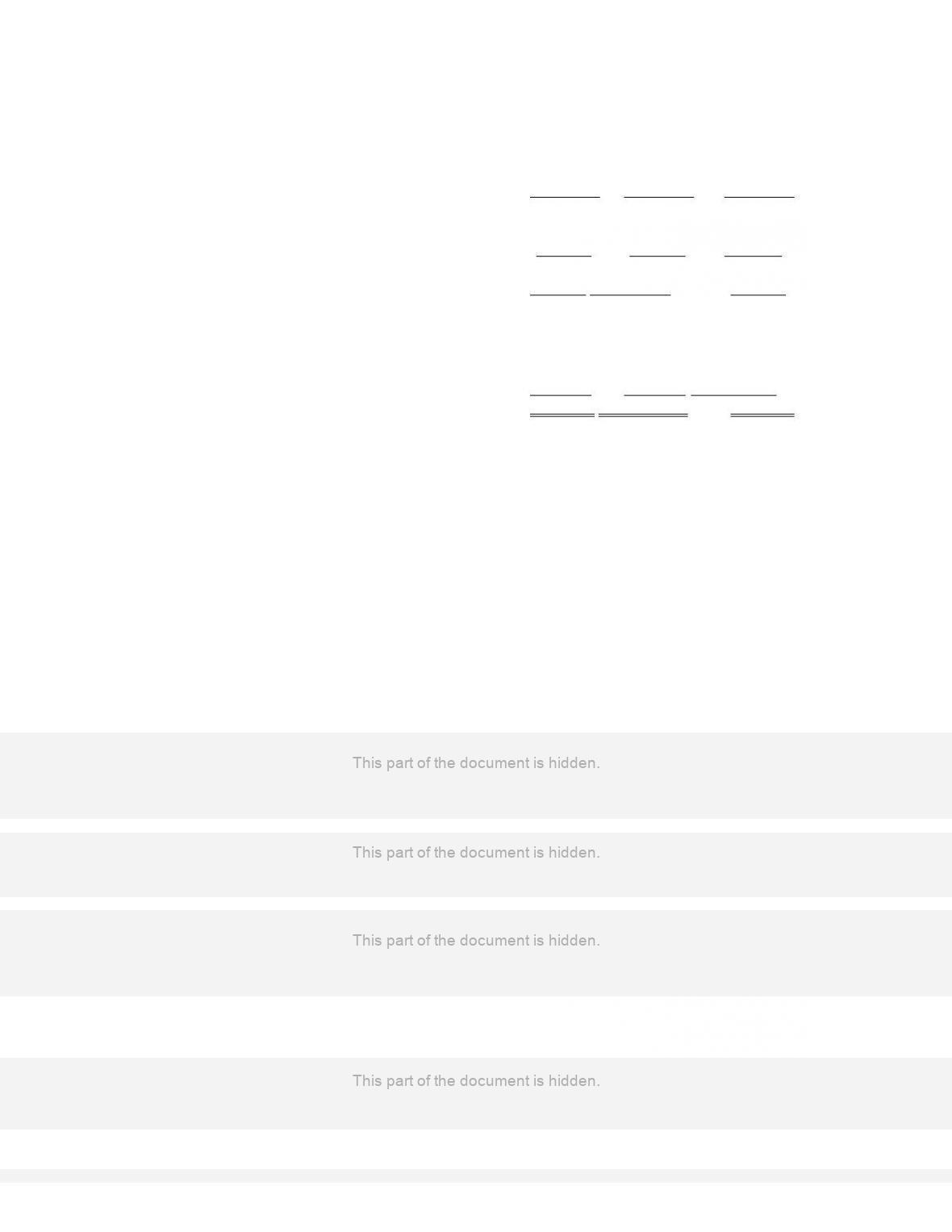
Mattel, Inc.
Selected Income Statement data
Fiscal year end 12/31/2002 12/31/2001 12/31/2000
(amounts in thousands of dollars)
Net sales $4,885,340 $4,687,924 $4,565,489
Cost of Goods Sold (2,524,353) (2,538,990) (2,572,247)
Gross profit 2,360,987 2,148,934 1,993,242
6-22
Selling and Administrative Expenses (1,602,846) (1,507,793) (1,560,157)
Amortization of Goodwill 0 (46,121) (46,561)
Non-operating income/expense (22,747) (9,878) (8,121)
Interest expense (113,897) (155,132) (152,979)
Income from Continuing Operations
before Income Taxes 621,497 430,010 225,424
Provision for income taxes (166,455) (119,090) (55,247)
Income from Continuing Operations 455,042 310,920 170,177
Gain (Loss) from Discontinued Oper., net of tax 27,253 (601,146)
Income (Loss) before Cumulative Effect of
Change in Accounting Principles 482,295 310,920 (430,969)
Cumulative Effect of Change in Accounting
Principles, net of tax (252,194) (12,001) 0
Net Income (Loss) $230,101 $298,919 ($430,969)
Required:
a. Discuss whether or not you would adjust for each of the following items when using earnings to
forecast the future profitability of Mattel:
(1) Discontinuance of the Consumer Software operations.
(2) The change in accounting for derivative instruments.
(3) The change in accounting for goodwill and other intangible assets.
b. Indicate the adjustment you would make to Mattel’s net income for each of the items in part a.
c. Prepare a common size income statement for 2002, 2001, and 2000 for Mattel.
d. Repeat part c after making the income statement adjustments in part b.
e. Assess the changes in profitability of Mattel during the three-year period.
ANS:
SUGGESTED ANSWER
a. The case for eliminating the discontinued operations amounts is that the gain and loss relate to a
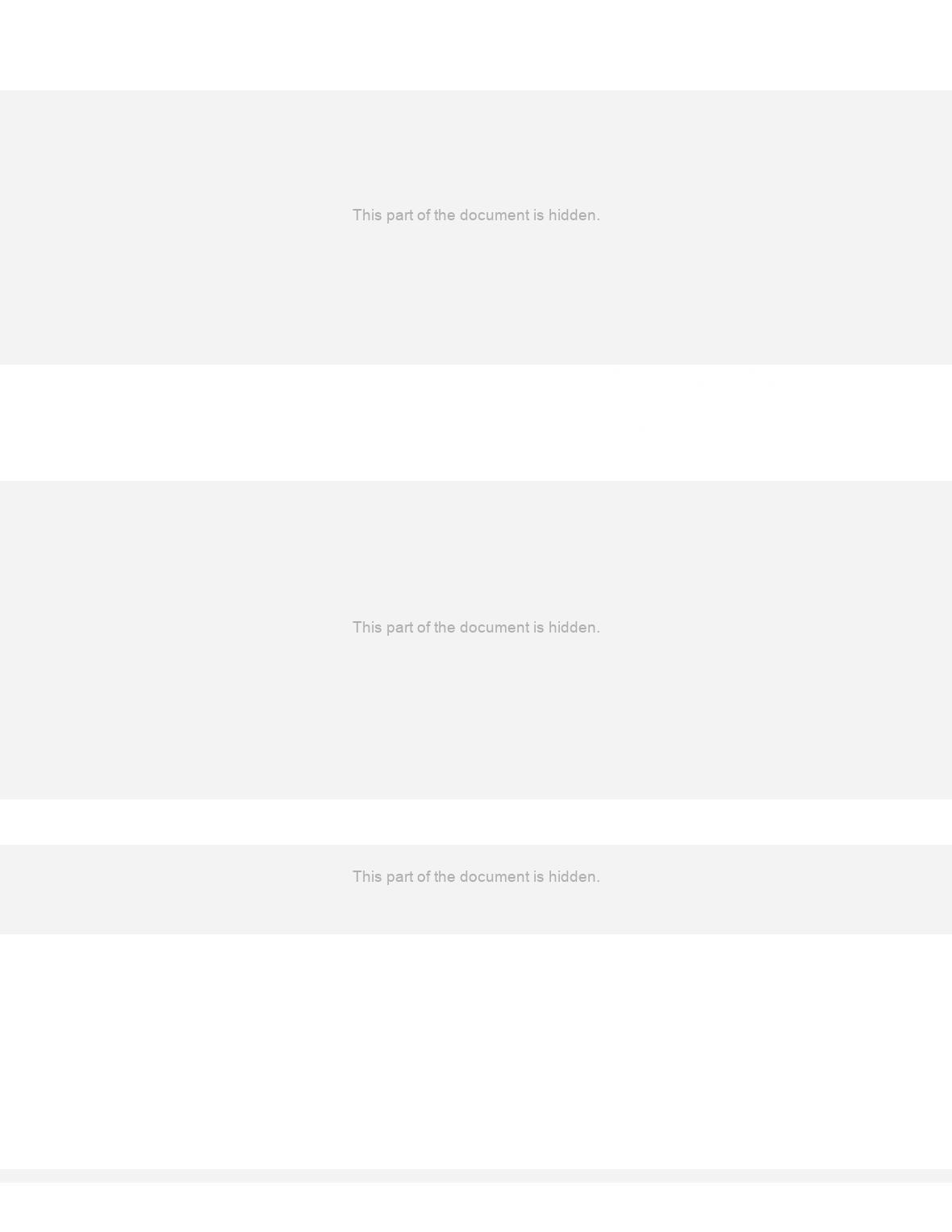
Mattel, Inc.
Selected Income Statement data
Fiscal year end 12/31/2002 12/31/2001 12/31/2000
6-23
© 2018 Cengage. May not be scanned, copied or duplicated, or posted to a publicly accessible website, in whole or in part.
d. Common size financial statements adjusted for removal of discontinued operations and changes
in accounting principles:
Mattel, Inc.
Selected Income Statement data
Fiscal year end 12/31/2002 12/31/2001 12/31/2000
e. When examining the common size financial statements without the discontinued operations or
accounting change data it appears that Mattel’s business is doing better. The net income to sales ratio is