
Chapter 12
© 2018 Cengage. All Rights Reserved. May not be scanned, copied or duplicated, or posted to a publicly accessible website, in whole or in part.
Page 1
1. The statement of cash flows summarizes the operating, investing, and financing activities of a business for a period of
time.
a. True
b. False
2. The accrual-based income statement is considered to be a good indicator of current cash inflows and outflows.
a. True
b. False
3. Depreciation is a noncash expense that is added back to net income in determining cash provided from operating
activities under the indirect method.
a. True
b. False

© 2018 Cengage. All Rights Reserved. May not be scanned, copied or duplicated, or posted to a publicly accessible website, in whole or in part.
Page 2
4. Most experts now agree that there has been a tendency to rely far too heavily on net income and its companion,
earnings per share, and in many cases to ignore a company’s cash flows.
a. True
b. False
5. In terms of the statement of cash flows, cash includes actual cash items plus certain cash equivalents such as
commercial paper, money market funds, and Treasury bills.
a. True
b. False
6. To be classified as a cash equivalent, an item must be readily convertible to a known amount of cash and have an
original maturity to the investor of three months or more.
a. True
b. False

© 2018 Cengage. All Rights Reserved. May not be scanned, copied or duplicated, or posted to a publicly accessible website, in whole or in part.
Page 3
7. Under certain conditions, an investment in common stock can be considered a cash equivalent.
a. True
b. False
8. Cash equivalents are reported in the Operating Activities section of the statement of cash flows.
a. True
b. False
9. It is not possible for Cash to decrease from Year 1 to Year 2 if income rises over this period.
a. True
b. False

© 2018 Cengage. All Rights Reserved. May not be scanned, copied or duplicated, or posted to a publicly accessible website, in whole or in part.
Page 4
10. The investment in stock of another company is considered a significant activity and thus is reported on the statement
of cash flows.
a. True
b. False
11. The repurchase of a company’s own stock should be reported on the statement of cash flows as an investing activity.
a. True
b. False
12. For the statement of cash flows, companies are required to classify their cash activities into three categories: operating,
investing, and borrowing.
a. True
b. False

© 2018 Cengage. All Rights Reserved. May not be scanned, copied or duplicated, or posted to a publicly accessible website, in whole or in part.
Page 5
13. Operating activities involve the acquiring and selling of goods and services for cash or on account.
a. True
b. False
14. Cash flows from purchases of merchandise are classified as investing activities.
a. True
b. False
15. Issuance of stock results in cash inflows that appear in the Financing section of the statement of cash flows.
a. True
b. False

© 2018 Cengage. All Rights Reserved. May not be scanned, copied or duplicated, or posted to a publicly accessible website, in whole or in part.
Page 6
16. Cash flows from operating activities usually relate to an increase or decrease in either a current asset or a current
liability.
a. True
b. False
17. A building with a cost of $163,000 and accumulated depreciation of $32,000 was sold for an $11,000 gain. When
using the indirect method, the cash generated from this investing activity was $131,000.
a. True
b. False
18. Net income was $61,000 for the year. The accumulated depreciation balance increased by $14,000 over the year.
There were no sales of fixed assets or changes in noncash current assets or liabilities. Under the indirect method, the cash
flow from operations is $47,000.
a. True
b. False

© 2018 Cengage. All Rights Reserved. May not be scanned, copied or duplicated, or posted to a publicly accessible website, in whole or in part.
Page 7
19. Companies can use two different methods to report the amount of cash flow from their investing and financing
activities.
a. True
b. False
20. The direct method of reporting cash flows from operating activities involves reconciling net income and cash flow
from operations.
a. True
b. False
21. Under the indirect method, the first line in the Operating Activities section of the statement of cash flows is the net
income or loss for the period.
a. True
b. False

© 2018 Cengage. All Rights Reserved. May not be scanned, copied or duplicated, or posted to a publicly accessible website, in whole or in part.
Page 8
22. The issuance of common stock in exchange for a building would appear both as a cash inflow in the Financing
Activities section of the cash flow statement and also as a cash outflow in the Investing Activities section.
a. True
b. False
23. Significant noncash transactions are not reported on the statement of cash flows, but either in a separate schedule or in
a note to the financial statements.
a. True
b. False
24. The statement of cash flows emphasizes explanations for the change in net income.
a. True
b. False

© 2018 Cengage. All Rights Reserved. May not be scanned, copied or duplicated, or posted to a publicly accessible website, in whole or in part.
Page 9
25. The Financial Accounting Standards Board (FASB) has expressed a strong preference for the indirect method, but
allows companies to use the direct method in calculating the cash flow from operating activities.
a. True
b. False
27. Determining the cash flows from operating activities generally requires analyzing each item on the income statement
as well as the current asset (except cash) and current liability accounts.
a. True
b. False

© 2018 Cengage. All Rights Reserved. May not be scanned, copied or duplicated, or posted to a publicly accessible website, in whole or in part.
Page 10
28. If the December 31, 2017, balance of accounts receivable is higher than the January 1, 2017, balance, then the amount
of cash collections will be less than the sales on account for the year.
a. True
b. False
29. If the December 31, 2017, balance of accounts payable is higher than the January 1, 2017, balance, then the amount of
cash payments will exceed the purchases on account for the year.
a. True
b. False
30. Because the cash received from the sale of long-term assets is reported in the Investing Activities section of the
statement of cash flows, any gain or loss is built into the cash received under the direct method.
a. True
b. False

© 2018 Cengage. All Rights Reserved. May not be scanned, copied or duplicated, or posted to a publicly accessible website, in whole or in part.
Page 11
31. A decrease in retained earnings indicates that a cash dividend has been paid.
a. True
b. False
32. Under the direct method, depreciation expense is treated as an outflow in the Investing Activities section of the
statement of cash flows.
a. True
b. False
33. Under the indirect method, instead of reporting cash receipts and payments, net income is reconciled with net cash
from operating activities.
a. True
b. False
© 2018 Cengage. All Rights Reserved. May not be scanned, copied or duplicated, or posted to a publicly accessible website, in whole or in part.
Page 12
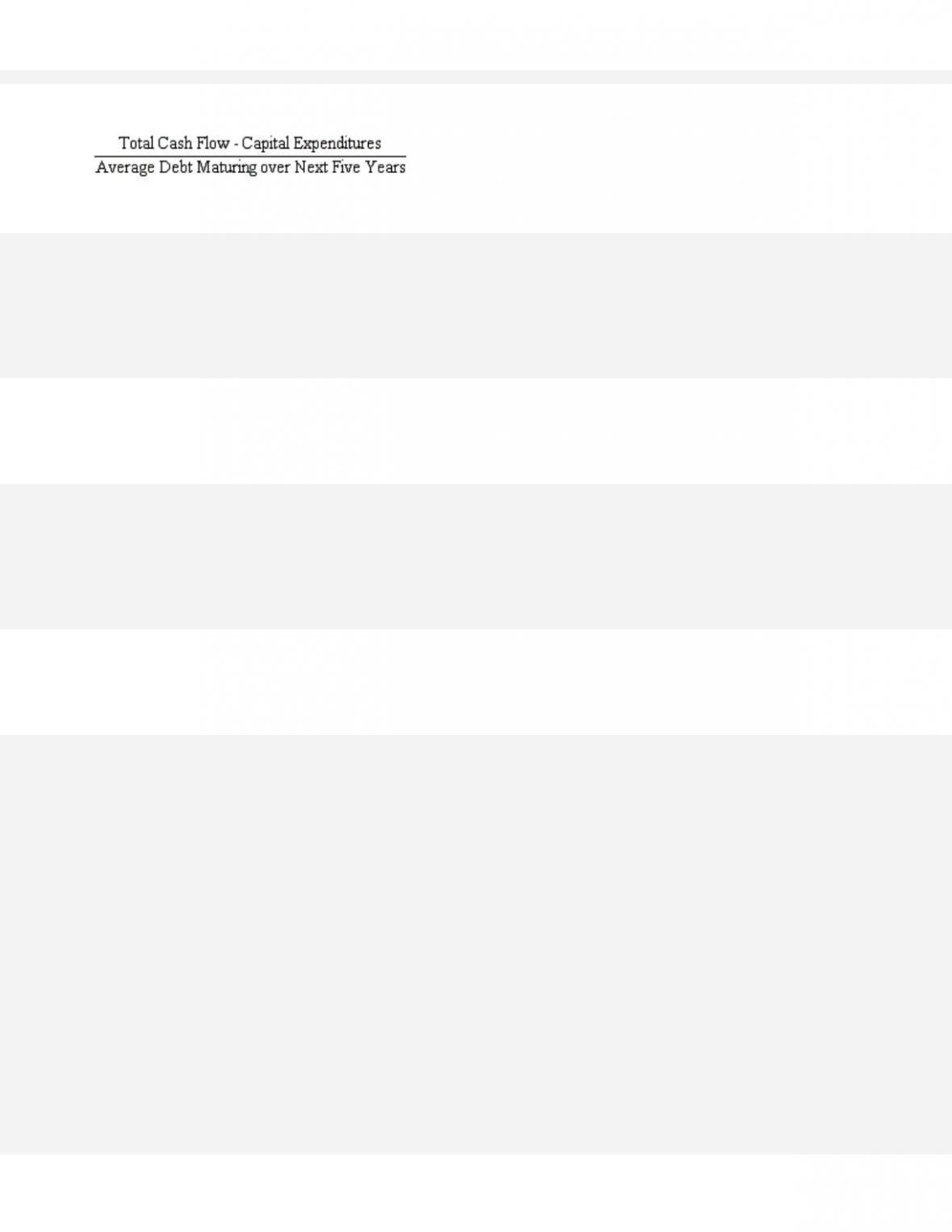
34. The cash flow adequacy ratio is defined as:
a. True
b. False
35. Many companies report cash flow per common share on the statement of cash flows.
a. True
b. False
36. All the information needed to compute the cash flow adequacy ratio is found on the balance sheet.
a. True
b. False

© 2018 Cengage. All Rights Reserved. May not be scanned, copied or duplicated, or posted to a publicly accessible website, in whole or in part.
Page 13
37. The cash flow adequacy ratio can only be calculated if a company uses the direct method to report cash flows from
operating activities.
a. True
b. False
38. Cash flow per share is computed by dividing cash on the balance sheet by the number of shares outstanding.
a. True
b. False
39. Some companies use a work sheet approach, which functions like the T account approach, as a tool to aid in preparing
the statement of cash flows.
a. True
b. False

© 2018 Cengage. All Rights Reserved. May not be scanned, copied or duplicated, or posted to a publicly accessible website, in whole or in part.
Page 14
40. The work sheet used to prepare a statement of cash flows (indirect method to determine cash flows from operating
activities) should have a total in the Changes column equal to total assets.
a. True
b. False
41. A work sheet is an alternative method to help in the preparation of a statement of cash flows.
a. True
b. False
42. Which of the following statements is true?
a. If a company reports net income on its income statement, it should report an increase in cash on its statement of
cash flows.
b. If a company reports a net loss on its income statement, it should report a decrease in cash on its statement of cash
flows.
c. If a company uses the accrual basis of accounting, it will improve its cash position if it reports net income for the
same period.
d. If a company uses the accrual basis of accounting, its cash balance can increase even if it reports a net loss.

© 2018 Cengage. All Rights Reserved. May not be scanned, copied or duplicated, or posted to a publicly accessible website, in whole or in part.
Page 15
43. Which of the following statements is false?
a. A balance sheet reports a company‘s cash balance at a specific date.
b. An income statement reports the amounts of revenue and expense on an accrual basis, not the amount of cash
received from revenues or paid for expenses.
c. A statement of retained earnings reports the amount of cash received from operating activities and the amount of
cash paid for dividends.
d. A statement of cash flows explains the changes in cash from operating, investing, and financing activities.
44. Nordic Exports Inc. reported net income of $150,000 for 2017, but its cash balance decreased $40,000. Which
financial statement should Nordic Exports’ management refer to for an explanation of this situation?
a. Balance sheet
b. Income statement
c. Statement of retained earnings
d. Statement of cash flows
© 2018 Cengage. All Rights Reserved. May not be scanned, copied or duplicated, or posted to a publicly accessible website, in whole or in part.
Page 16
45. Zack Co. reported a net loss of $50,000 for 2017, yet its cash balance increased during the year. Which financial
statement should Zack’s management refer to for an explanation of this situation?
a. Balance sheet
b. Income statement
c. Statement of retained earnings
d. Statement of cash flows
46. Planet & Co. reported net income for the current year. Which of the following business transactions would cause cash
from operating activities to be higher than the amount of net income?
a. Cash dividends were paid to stockholders during the year.
b. Depreciation expense was recorded for the year.
c. A bank loan was repaid during the year.
d. Equipment was purchased for cash during the year.
47. Which of the following statements regarding the statement of cash flows is true?
a. The statement of cash flows analyzes the changes in consecutive balance sheets in conjunction with the income
statement.
b. The statement of cash flows is organized as cash inflows less cash outflows.
c. The statement of cash flows analyzes only the changes in current assets and current liabilities.
d. The statement of cash flows is an optional financial statement.
48. The primary purpose of the statement of cash flows is to provide information about
a. the financial position of the company.
b. the cash inflows and outflows of the company.
c. the investing and financing activities of the company.
d. the profitability of the company.

Chapter 12
© 2018 Cengage. All Rights Reserved. May not be scanned, copied or duplicated, or posted to a publicly accessible website, in whole or in part.
Page 17
49. The statement of cash flows
a. along with the balance sheet and income statement is prepared on the accrual basis.
b. along with the balance sheet and statement of retained earnings is dated as of a specific year-end date.
c. along with the balance sheet is used to analyze liquidity.
d. ties the balance sheet to the statement of retained earnings.
50. Which of the following is not a current reporting requirement for a statement that reports changes in cash over a
period of time?
a. This statement must classify cash flows into three categories: operating, investing, and financing activities.
b. Cash equivalents must be combined with cash in preparing this statement.
c. Working capital may be used as a substitute for cash in preparing this statement.
d. The title for this statement is “Statement of Cash Flows.”
51. Which of the following items would be considered a cash equivalent if it was held at the balance sheet date?
a. U.S. Treasury bill purchased when there were 90 days until maturity
b. Commercial paper with a six-month maturity that was purchased at the issue date
c. The common stock of a company traded on the New York Stock Exchange that was purchased 30 days before the
balance sheet date
d. U.S. Treasury note that matures two years after it is issued and that was purchased four months before the balance
sheet date


© 2018 Cengage. All Rights Reserved. May not be scanned, copied or duplicated, or posted to a publicly accessible website, in whole or in part.
Page 19
53. Which of the following items is treated as a cash equivalent?
a. Commercial paper with a six-month maturity when purchased and four months until maturity at the balance sheet
date
b. Investment in corporate stocks that management intends to sell within three months after the balance sheet date
c. Money market funds that can be obtained overnight from a bank or brokerage firm
d. Investments in corporate bonds that have five years until maturity when they are purchased
54. Which of the following items is not a cash equivalent?
a. Commercial paper
b. A three-year Treasury note purchased two months before its maturity
c. Money market funds
d. A corporate bond investment that has five years until maturity when it is purchased
© 2018 Cengage. All Rights Reserved. May not be scanned, copied or duplicated, or posted to a publicly accessible website, in whole or in part.
Page 20
55. Which of the following statements is false?
a. Cash equivalents are included in cash on the balance sheet and on the statement of cash flows.
b. Investments in cash equivalents and investments in stock have the same economic effect—assets increase and
decrease by the same amount.
c. An investment is a cash equivalent if it is convertible into a known amount of cash and has an original maturity of
three months or less when purchased.
d. Investments in stock are reported as a financing activity on the statement of cash flows.
56. Cash flows from acquiring and selling products are classified as
a. operating activities.
b. investing activities.
c. financing activities.
d. distribution activities.
57. Cash flows from acquiring and disposing of long-term assets are classified as
a. operating activities.
b. investing activities.
c. financing activities.
d. purchasing activities.
58. Cash flows from borrowing and paying off a 90-day bank loan are classified as