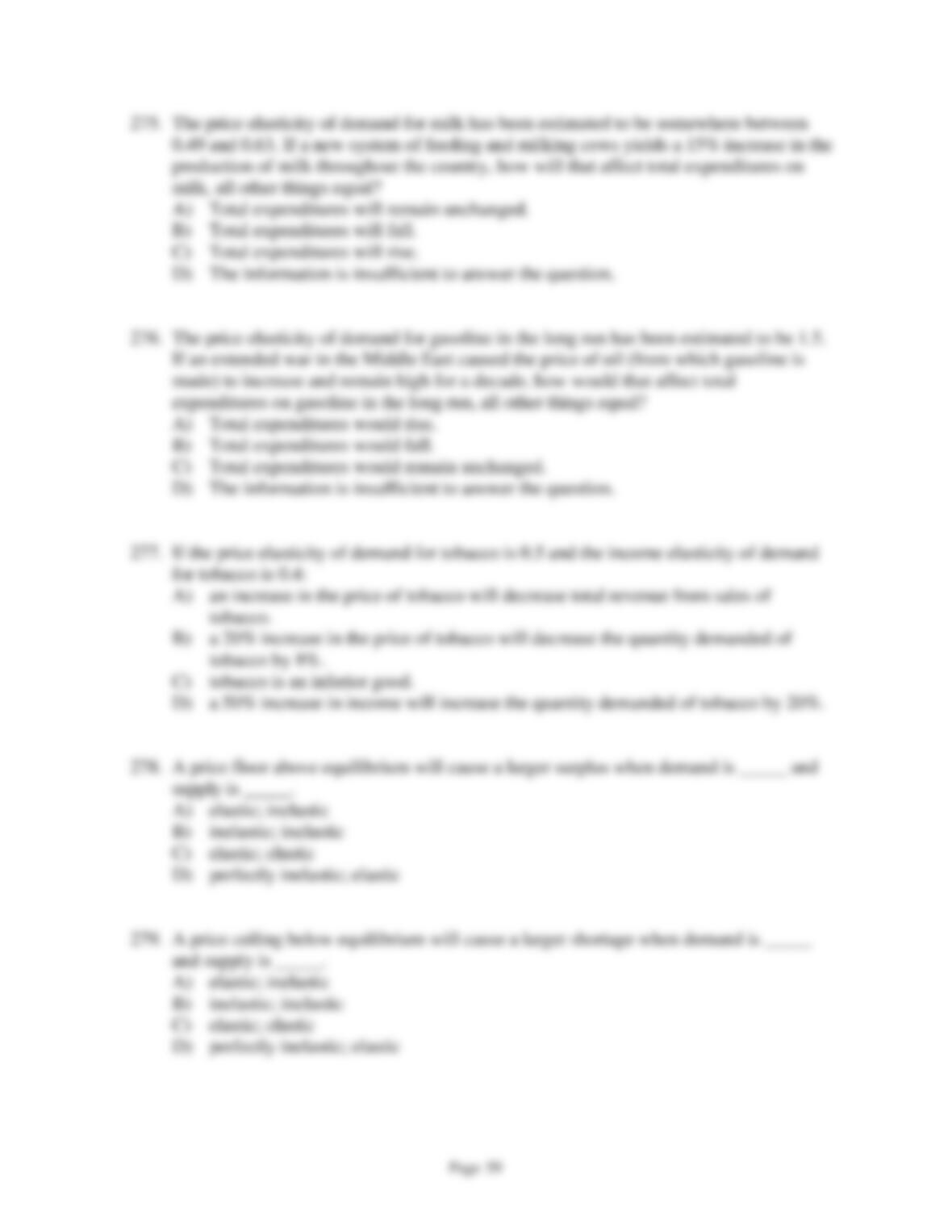
Page 59
275.
The price elasticity of demand for milk has been estimated to be somewhere between
0.49 and 0.63. If a new system of feeding and milking cows yields a 15% increase in the
production of milk throughout the country, how will that affect total expenditures on
milk, all other things equal?
A)
Total expenditures will remain unchanged.
B)
Total expenditures will fall.
C)
Total expenditures will rise.
D)
The information is insufficient to answer the question.
276.
The price elasticity of demand for gasoline in the long run has been estimated to be 1.5.
If an extended war in the Middle East caused the price of oil (from which gasoline is
made) to increase and remain high for a decade, how would that affect total
expenditures on gasoline in the long run, all other things equal?
A)
Total expenditures would rise.
B)
Total expenditures would fall.
C)
Total expenditures would remain unchanged.
D)
The information is insufficient to answer the question.
277.
If the price elasticity of demand for tobacco is 0.5 and the income elasticity of demand
for tobacco is 0.4:
A)
an increase in the price of tobacco will decrease total revenue from sales of
tobacco.
B)
a 20% increase in the price of tobacco will decrease the quantity demanded of
tobacco by 8%.
C)
tobacco is an inferior good.
D)
a 50% increase in income will increase the quantity demanded of tobacco by 20%.
278.
A price floor above equilibrium will cause a larger surplus when demand is _____ and
supply is _____.
A)
elastic; inelastic
B)
inelastic; inelastic
C)
elastic; elastic
D)
perfectly inelastic; elastic
279.
A price ceiling below equilibrium will cause a larger shortage when demand is _____
and supply is _____.
A)
elastic; inelastic
B)
inelastic; inelastic
C)
elastic; elastic
D)
perfectly inelastic; elastic
Page 60
280.
There is NO total revenue test for price elasticity of supply because:
A)
price and quantity supplied are usually inversely related.
B)
price and quantity supplied are usually positively related.
C)
total revenue will not usually change in the direction of a supply price change.
D)
price and quantity supplied are always negatively related.
281.
Assume the supply curve shifts to the right by a given amount at each price. The price in
the market will decline the most if demand is more price-_____ and supply is more
price-_____.
A)
elastic; elastic
B)
inelastic; elastic
C)
elastic; inelastic
D)
inelastic; inelastic
282.
The price elasticity of demand is the ratio of the percent change in quantity demanded to
the percent change in price as one moves along the demand curve.
A)
True
B)
False
283.
A perfectly inelastic demand curve for insulin would mean that the quantity demanded
does NOT respond at all to changes in the price of insulin.
A)
True
B)
False
284.
If funeral homes discover that the price elasticity of demand for caskets equals 0.55 at
the current price, funeral homes could increase revenue by increasing the price.
A)
True
B)
False
285.
Sarah has been told she has only one week to finish some pottery for a show. Sarah has
exhausted her supply of clay, and new clay is absolutely necessary for finishing her
products. For Sarah, the price elasticity of demand for new clay right now is elastic.
A)
True
B)
False
286.
If demand is perfectly inelastic, changes in price leave total revenue unchanged.
A)
True
B)
False
Page 61
287.
The director of River City Public Transport recently stated, “The last seven times we
increased bus fares, revenues dropped.” This remark suggests the demand for bus
service is elastic.
A)
True
B)
False
288.
The mayor advocates raising the entrance fee at the city’s pools to increase revenue for
the city. The mayor is right only if the price effect dominates the quantity effect.
A)
True
B)
False
289.
Local cable companies recently increased the price of basic services. A news expert
reporting on the increase stated, “While prices have increased 40%, the cable company
reports only a 20% increase in revenue.” This remark suggests the demand for basic
cable service is elastic.
A)
True
B)
False
290.
Given a price increase for any good, the price effect on revenue is always larger than the
quantity effect on revenue.
A)
True
B)
False
291.
The price elasticity of demand for gasoline is likely to be higher in the long run than in
the short run.
A)
True
B)
False
292.
A major determinant of the price elasticity of demand is the availability of substitutes.
A)
True
B)
False
293.
Demand for Wendy’s hamburgers is more inelastic than the demand for all fast food.
A)
True
B)
False
Page 62
294.
Since for most people, eating in restaurants is a luxury and eating at home is a necessity,
the price elasticity of demand for food eaten at home is lower than the price elasticity of
demand for eating in restaurants.
A)
True
B)
False
295.
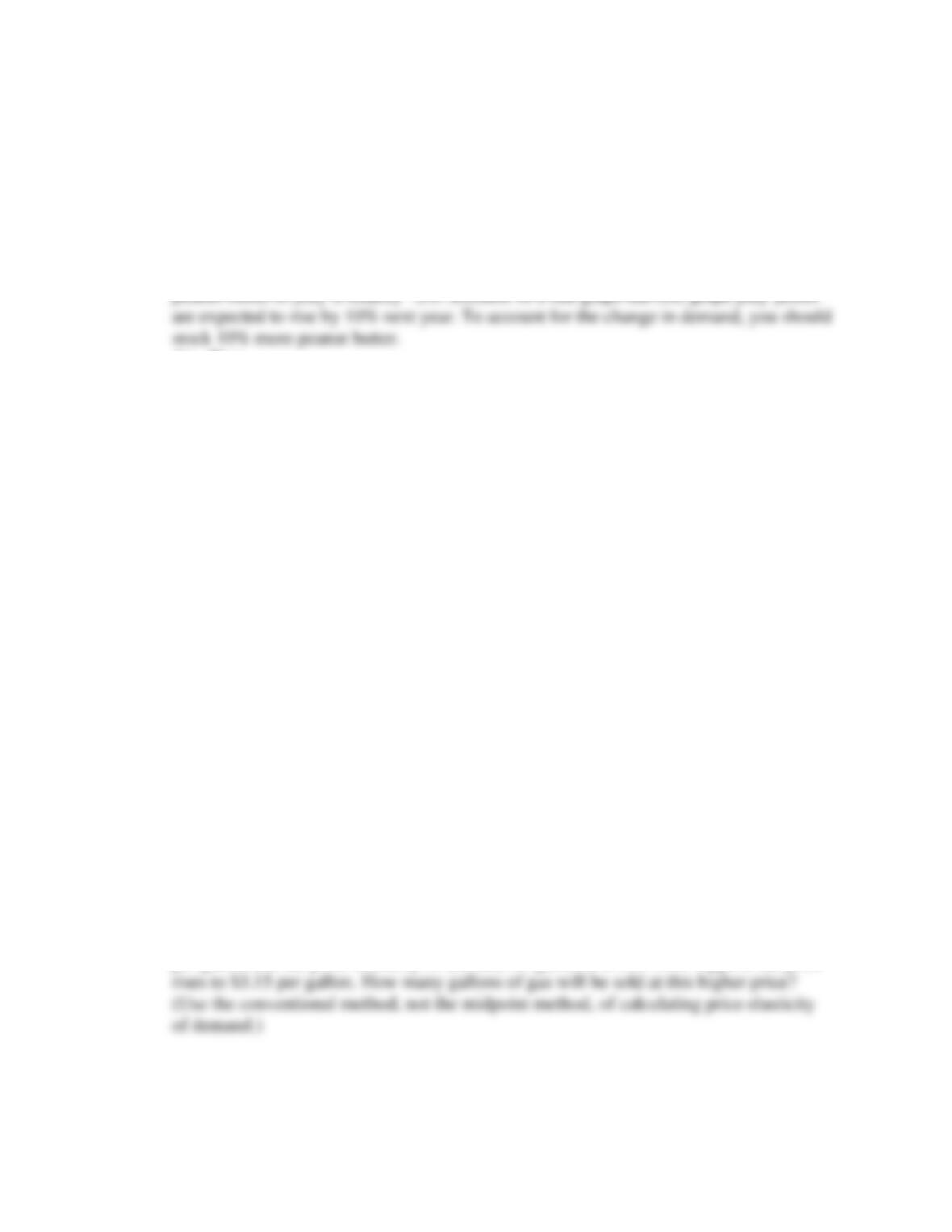
You are the manager of a supermarket, and you know that the cross-price elasticity of
peanut butter to jelly is exactly –2.0. Because of a bad grape harvest, grape jelly prices
are expected to rise by 10% next year. To account for the change in demand, you should
stock 10% more peanut butter.
A)
True
B)
False
296.
If the cross-price elasticity of demand between hamburgers and cheese is positive, these
two goods must be complements.
A)
True
B)
False
297.
If the cross-price elasticity of demand between rice and beans is –0.25, rice and beans
are complements.
A)
True
B)
False
298.
The income elasticity of demand for an inferior good, such as a macaroni and cheese
dinner, is negative.
A)
True
B)
False
299.
The price elasticity of the supply of paintings by Rembrandt is greater than 1.
A)
True
B)
False
300.
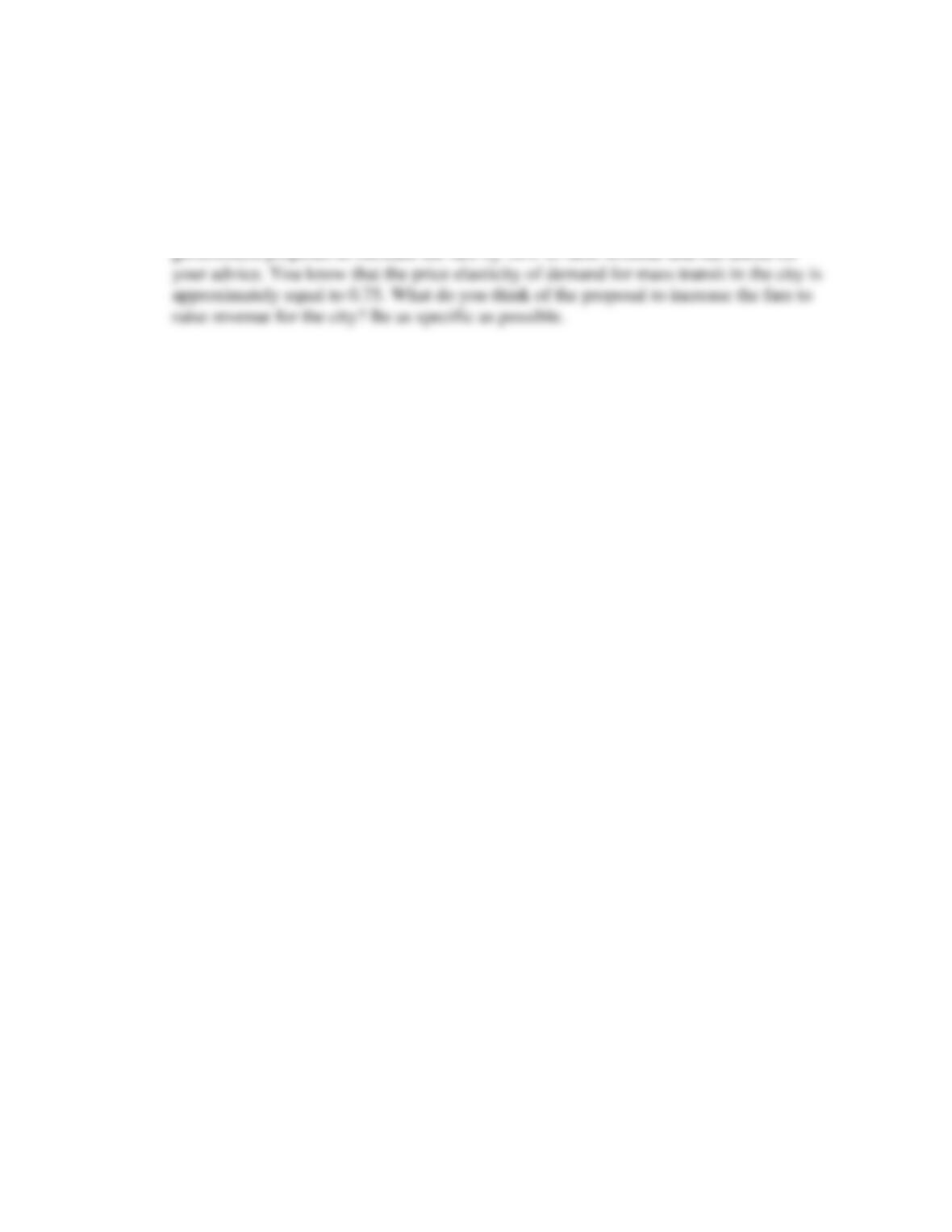
Consider the gasoline market. Suppose the quantity demanded is 5,000 gallons at $3.00
per gallon and the price elasticity of demand for gasoline is 0.5. Now suppose the price
rises to $3.15 per gallon. How many gallons of gas will be sold at this higher price?
(Use the conventional method, not the midpoint method, of calculating price elasticity
of demand.)
Page 63
301.
A university bookstore decreased the price of a sweatshirt from $20 to $18 and
discovered that sweatshirt sales increased from 100 per week to 120 per week. Use the
midpoint formula to compute the price elasticity of demand for sweatshirts.
302.
The city government is losing millions of dollars on its buses and subways. The
government proposes to increase the fare by 20% to raise revenue and has asked for
your advice. You know that the price elasticity of demand for mass transit in the city is
approximately equal to 0.75. What do you think of the proposal to increase the fare to
raise revenue for the city? Be as specific as possible.
303.
Suppose the price elasticity of demand for electricity is equal to 0.15 in the short run but
is equal to 0.5 in the long run. What explains this difference, and what does this imply
about the demand curve for electricity in the short run versus the long run?
304.
Suppose the cross-price elasticity of demand for pork with respect to the price of
chicken is equal to +0.4. What does this tell you about the relation between pork and
chicken? What will happen to consumption of pork if the price of chicken falls by 20%?
305.
Suppose the cross-price elasticity between two goods is zero. What does this tell you
about these two goods?
306.
Suppose the income elasticity for cross-country bus trips is –2 and the income elasticity
for cross-country plane trips is +2. Does this make sense? Explain your answer.
307.
Suppose you are told that the short-run price elasticity of supply for a movie theater is
zero. Does this make sense?
308.
All else equal, when the demand for oil increases, the price will increase. Some
economists say that this is only a short-run worry because in the long run a more elastic
supply curve will benefit consumers. Do you agree? Explain.
Page 64
309.
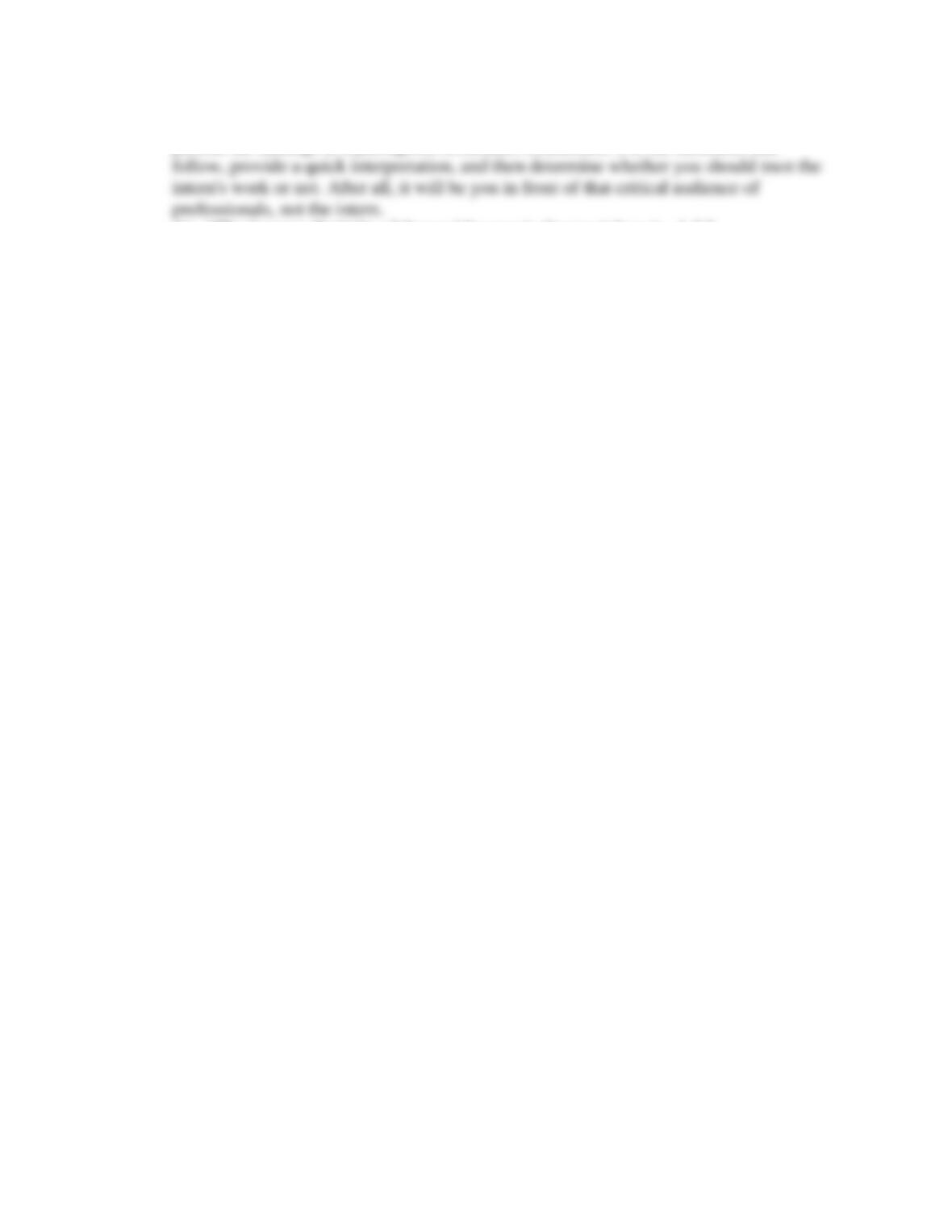
You have hired a student intern to calculate some elasticity measures so that you can
present the findings at a prestigious economics conference. For the measures that
follow, provide a quick interpretation, and then determine whether you should trust the
intern’s work or not. After all, it will be you in front of that critical audience of
professionals, not the intern.
A) “The income elasticity of demand for movie theater tickets is –1.5.”
B) “The price elasticity of demand for milk is 0.4 in the short run and 0.9 in the long
run.”
C) “The cross-price elasticity of demand for Cheerios with respect to the price of
Wheaties is –2.”
310.
When the absolute value of the percentage change in quantity demanded is less than the
absolute value of the percentage change in price, demand is:
A)
inelastic.
B)
elastic.
C)
unit-elastic.
D)
unknown.
311.
If the price elasticity of demand between two points on a demand curve is 0.75, then the
demand between those two points is:
A)
price unit-elastic.
B)
price-inelastic.
C)
price-elastic.
D)
unknown.
312.
If the absolute value of the price elasticity of demand is greater than 1:
A)
small percentage changes in the price will lead to much larger percentage changes
in the quantity demanded.
B)
small percentage changes in the price will lead to even smaller changes in the
percentage change in the quantity demanded.
C)
percentage changes in the price will lead to equal percentage changes in the
quantity demanded.
D)
changes in the price will have no impact on changes in the quantity demanded.
313.
Suppose the price of e-books is initially $20 but decreases to $15. The absolute value of
the percentage change in price (by the midpoint method) is approximately _____%.
A)
28
B)
10
C)
5
D)
15
Page 65
314.
If you wanted to make sure that your calculation of elasticity between two points was
the same, regardless of your initial point, you would use:
A)
the absolute value of elasticity.
B)
supply elasticity.
C)
the midpoint formula calculation of elasticity.
D)
the point formula calculation of elasticity.
315.
A demand curve that is perfectly inelastic is:
A)
horizontal.
B)
vertical.
C)
downward sloping.
D)
upward sloping.
316.
If the price elasticity of demand equals 0, the demand curve is:
A)
horizontal.
B)
vertical.
C)
upward sloping.
D)
unit-elastic.
317.
The price of a gallon of gasoline increases 10% this year. As a result, which event is
MOST likely to occur?
A)
More people will drive their cars.
B)
Public transportation usage will decrease.
C)
Gasoline expenditures will increase if gasoline is an inelastic good.
D)
Fewer people will ride bicycles, a substitute for car travel.
Use the following to answer questions 318-320:
Page 66
318.
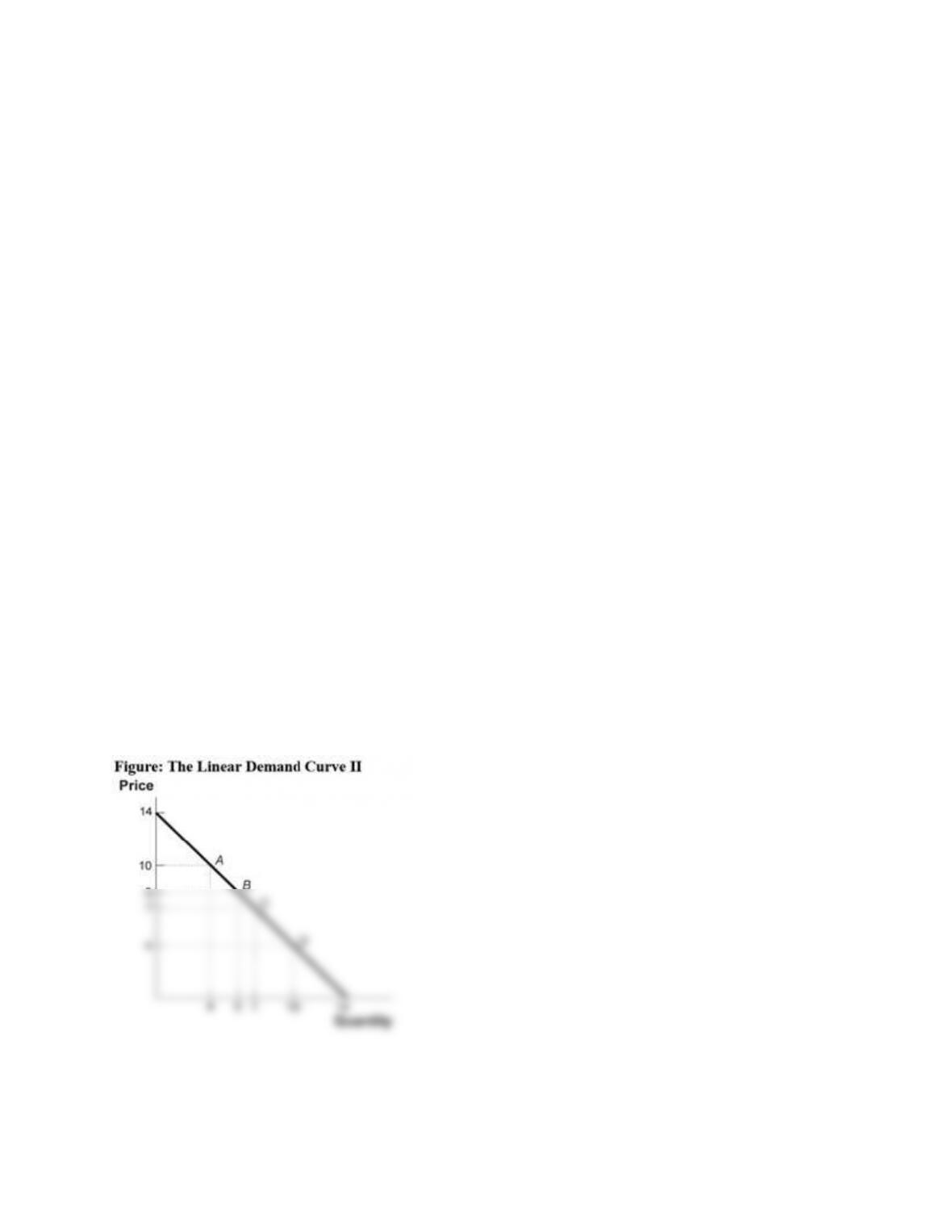
(Figure: The Linear Demand Curve) Use Figure: The Linear Demand Curve. If the price
is initially $10, then falls to $9, this will result in a(n) _____ in quantity demanded and
a(n) _____ in total revenue.
A)
decrease; decrease
B)
decrease; increase
C)
increase; decrease
D)
increase; increase
319.
(Figure: The Linear Demand Curve) Use Figure: The Linear Demand Curve. As a
producer, you are interested in maximizing your total revenues in this market. At what
price should you sell your good? What is the corresponding total revenue?
A)
$10; $100
B)
$20; $200
C)
$0; $100
D)
$5; $100
320.
(Figure: The Linear Demand Curve) Use Figure: The Linear Demand Curve. Suppose
this is the demand curves for scarves in your scarf shop. If you increase the price of your
scarves from $7 to $8, your total revenue will _____, and you notice that your price
elasticity of demand is _____.
A)
increase; elastic
B)
decrease; elastic
C)
increase; inelastic
D)
decrease; inelastic
Use the following to answer questions 321-322:
Page 67
321.
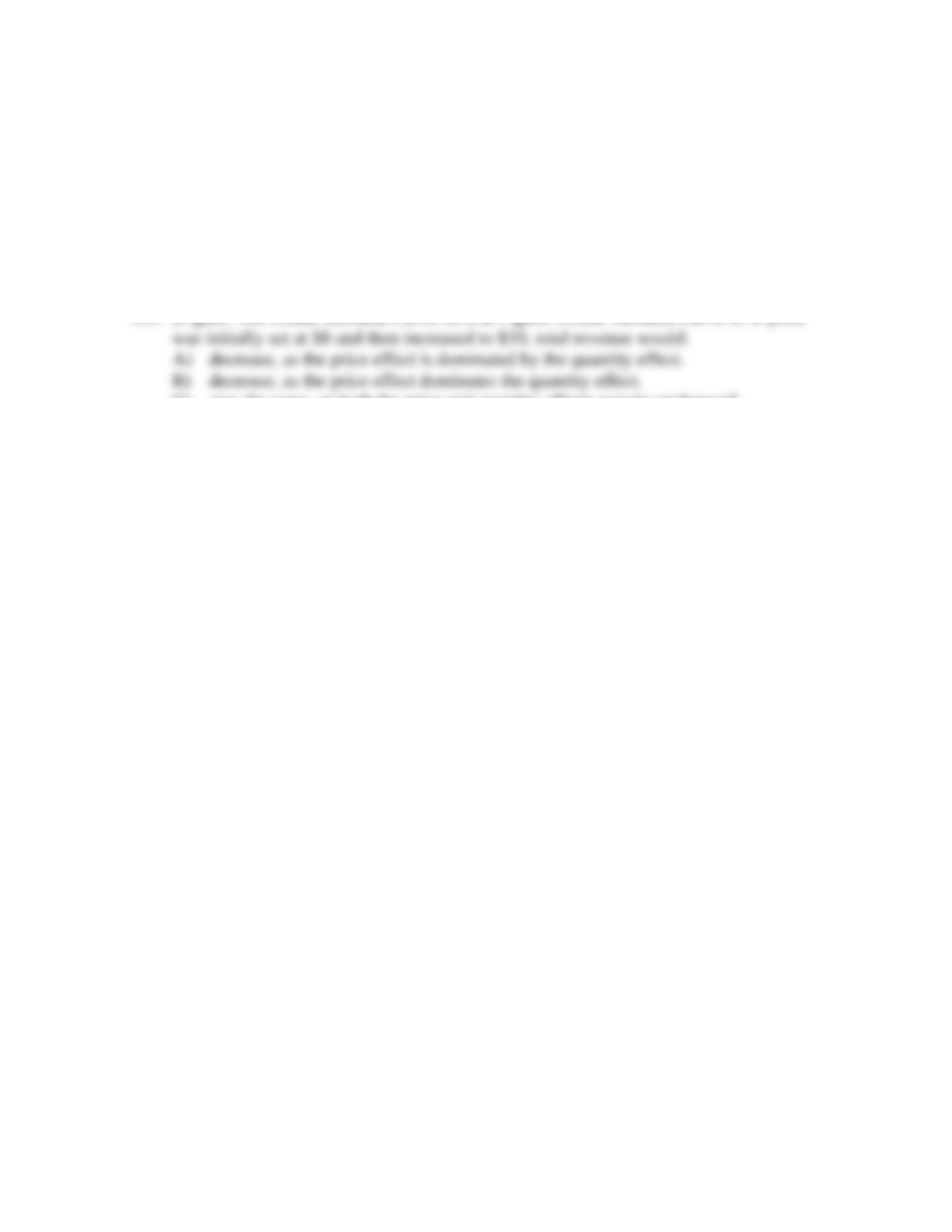
(Figure: The Linear Demand Curve II) Use Figure: Linear Demand Curve II. At prices
greater than $7, demand is _____; at prices below $7, demand is _____; and at $7,
demand is _____.
A)
elastic; inelastic; unit-elastic
B)
inelastic; elastic; unit-elastic
C)
unit-elastic; inelastic; elastic
D)
equal to 0; elastic; inelastic
322.
(Figure: The Linear Demand Curve II) Use Figure: Linear Demand Curve II. If price
was initially set at $8 and then increased to $10, total revenue would:
A)
decrease, as the price effect is dominated by the quantity effect.
B)
decrease, as the price effect dominates the quantity effect.
C)
stay the same, as both the price and quantity effects remain unchanged.
D)
increase, as the price effect is dominated by the quantity effect.
323.
Which characteristic is NOT true of a good with elastic demand?
A)
There is only a short time to adjust to price changes.
B)
There are a large number of substitutes.
C)
It is a luxury good.
D)
It is a specific brand.
324.
Goods A and B have a positive cross-price elasticity of demand. This means that goods
A and B are:
A)
normal.
B)
substitutes.
C)
complements.
D)
inferior.
325.
Suppose the cross-price elasticity between two goods is 1.5. If the price of one good
increases by 10%, then the quantity demanded of the other good will:
A)
decrease by 15%.
B)
increase by 15%.
C)
decrease by 1.5%.
D)
increase by 1.5%.
Page 68
326.
Jessica’s income increased by 10% this year. In the same year, Jessica’s quantity
demanded of milk increased by 10% and her quantity demanded for bread increased by
5%. This means that, for Jessica:
A)
both milk and bread are inferior goods.
B)
both milk and bread are normal goods.
C)
milk is an inferior good, but bread is a normal good.
D)
milk is a normal good, but bread is an inferior good.
327.
If the percentage change in the quantity demanded of a good is greater than the
percentage change in income and in the same direction, then this good will have an
income elasticity _____1, and it is a(n) _____ good.
A)
greater than; normal
B)
less than; normal
C)
equal to; normal
D)
greater than; inferior
328.
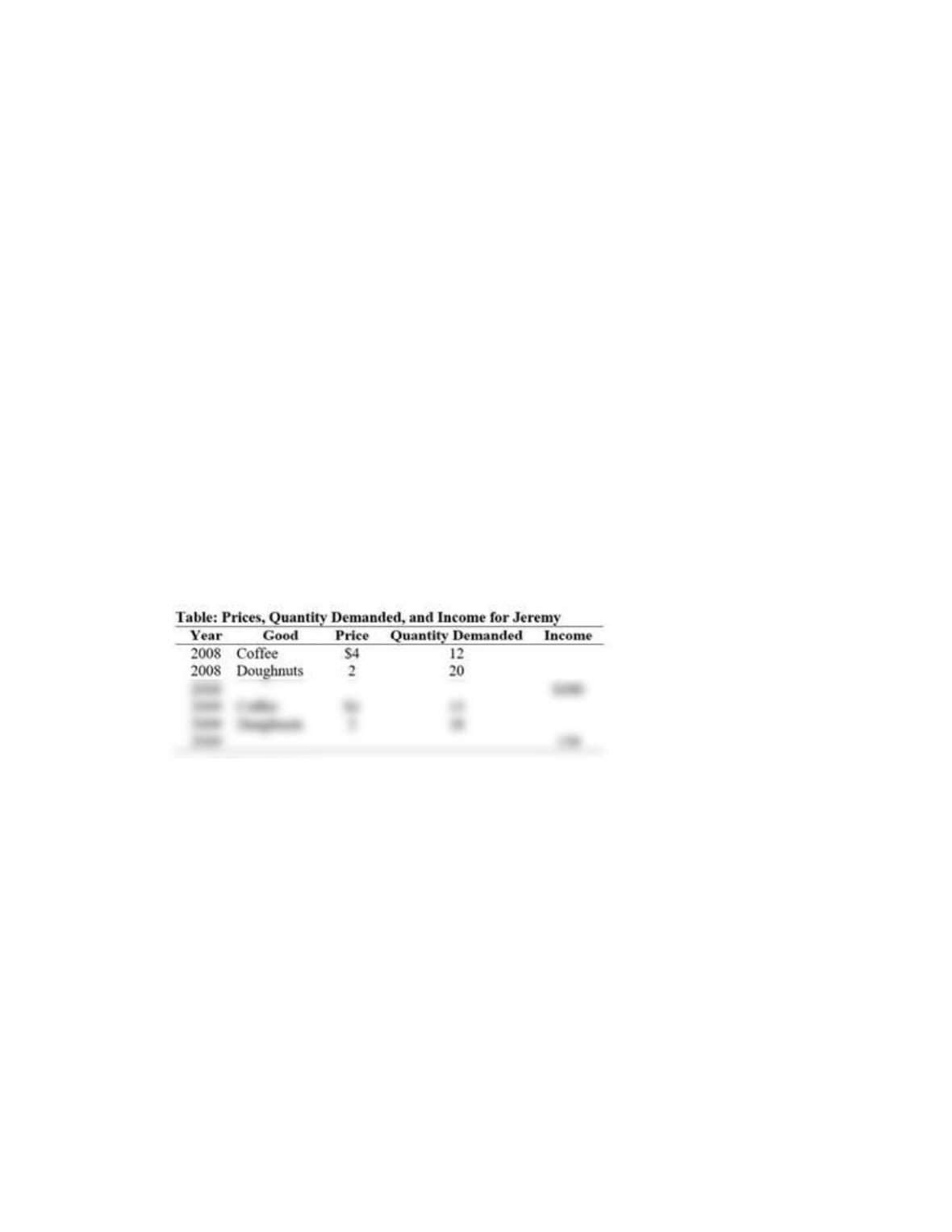
(Table: Prices, Quantity Demanded, and Income for Jeremy) Use Table: Prices,
Quantity Demanded, and Income for Jeremy. Between the two years listed, by the
midpoint method, Jeremy’s income elasticity of demand for coffee equals _____ and
doughnuts are a(n) _____ good.
A)
0.20; inferior
B)
2; normal
C)
2; inferior
D)
0.20; normal
329.
The price of coffee increases by 10%, and as a result, Alex purchases fewer doughnuts.
For Alex, coffee and doughnuts are:
A)
complements.
B)
substitutes.
C)
inferior goods.
D)
normal goods.
Page 69
330.
Tomas produces 100 cartons of free range eggs when the price is $5 and 150 cartons of
free range eggs when the price is $7. What is the value of Tomas’s price elasticity of
supply?
A)
1.2
B)
2.0
C)
1.0
D)
3.2
331.
Decreases in input costs and a longer time since a price change will tend to:
A)
increase the price elasticity of supply.
B)
decrease price elasticity of supply.
C)
have no impact on the price elasticity of supply.
D)
increase price elasticity of supply with decreases in input costs but decrease price
elasticity of supply with length of time.
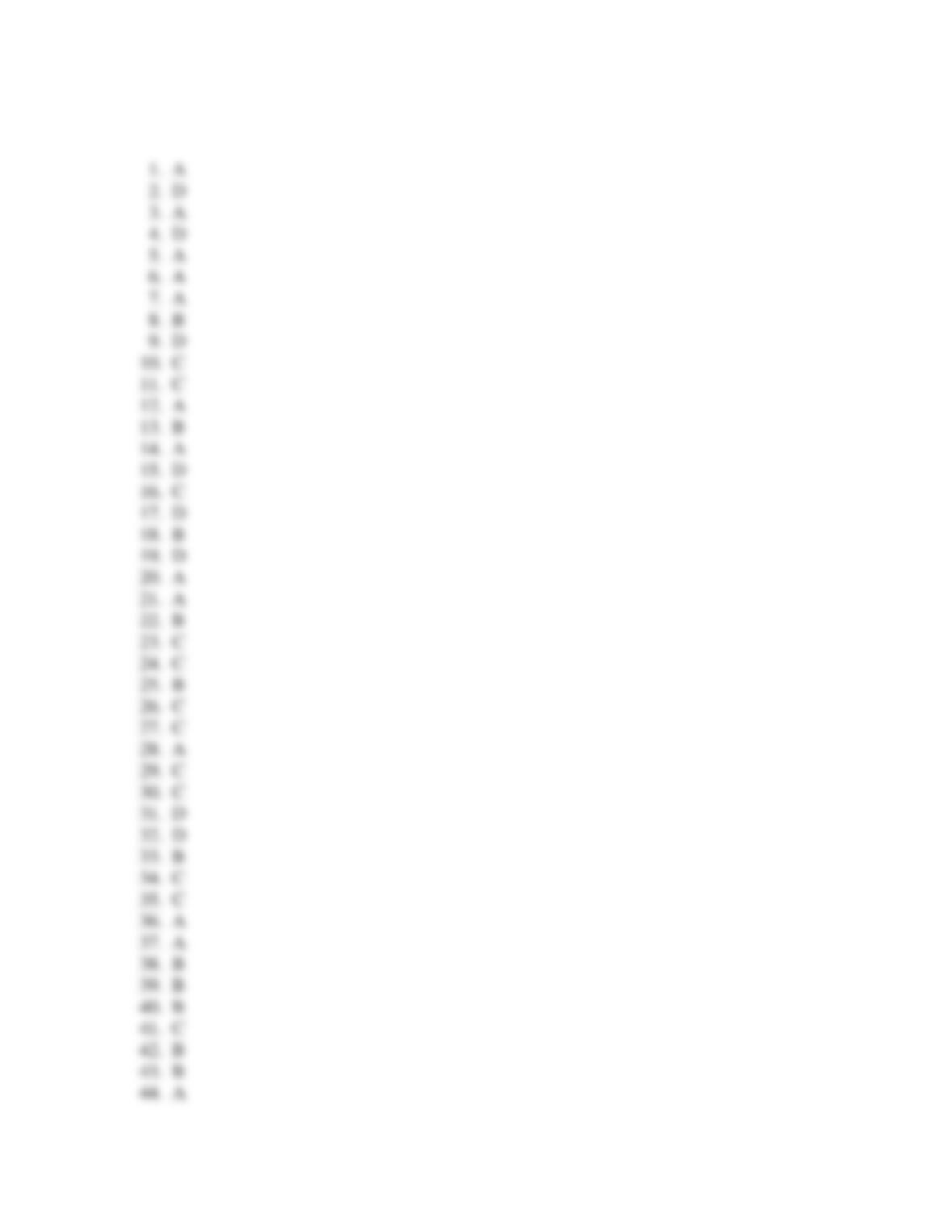
Answer Key
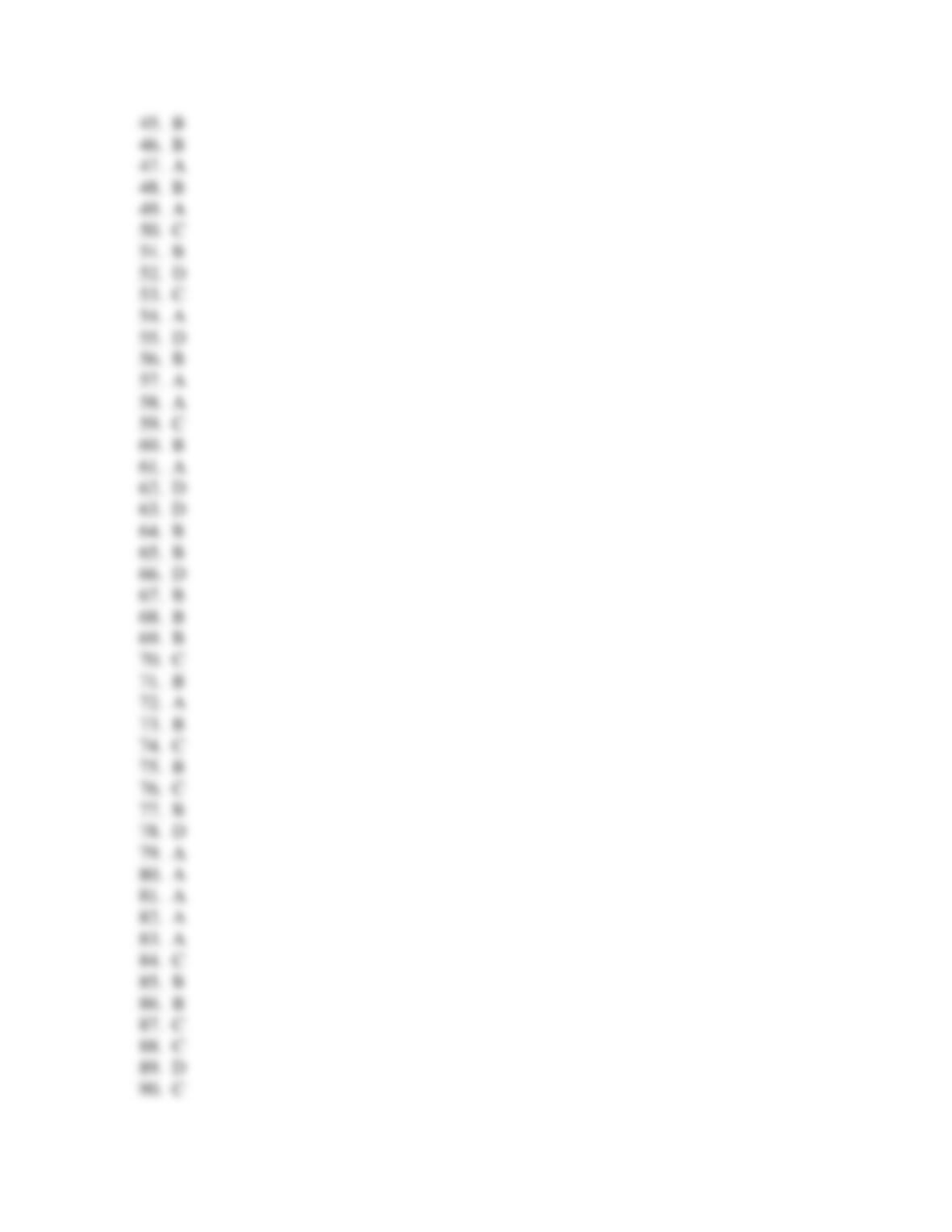
Page 71
45.
B
46.
B
47.
A
48.
B
49.
A
50.
C
51.
B
52.
D
53.
C
54.
A
55.
D
56.
B
57.
A
58.
A
59.
C
60.
B
61.
A
62.
D
63.
D
64.
B
65.
B
66.
D
67.
B
68.
B
69.
B
70.
C
71.
B
72.
A
73.
B
74.
C
75.
B
76.
C
77.
B
78.
D
79.
A
80.
A
81.
A
82.
A
83.
A
84.
C
85.
B
86.
B
87.
C
88.
C
89.
D
90.
C
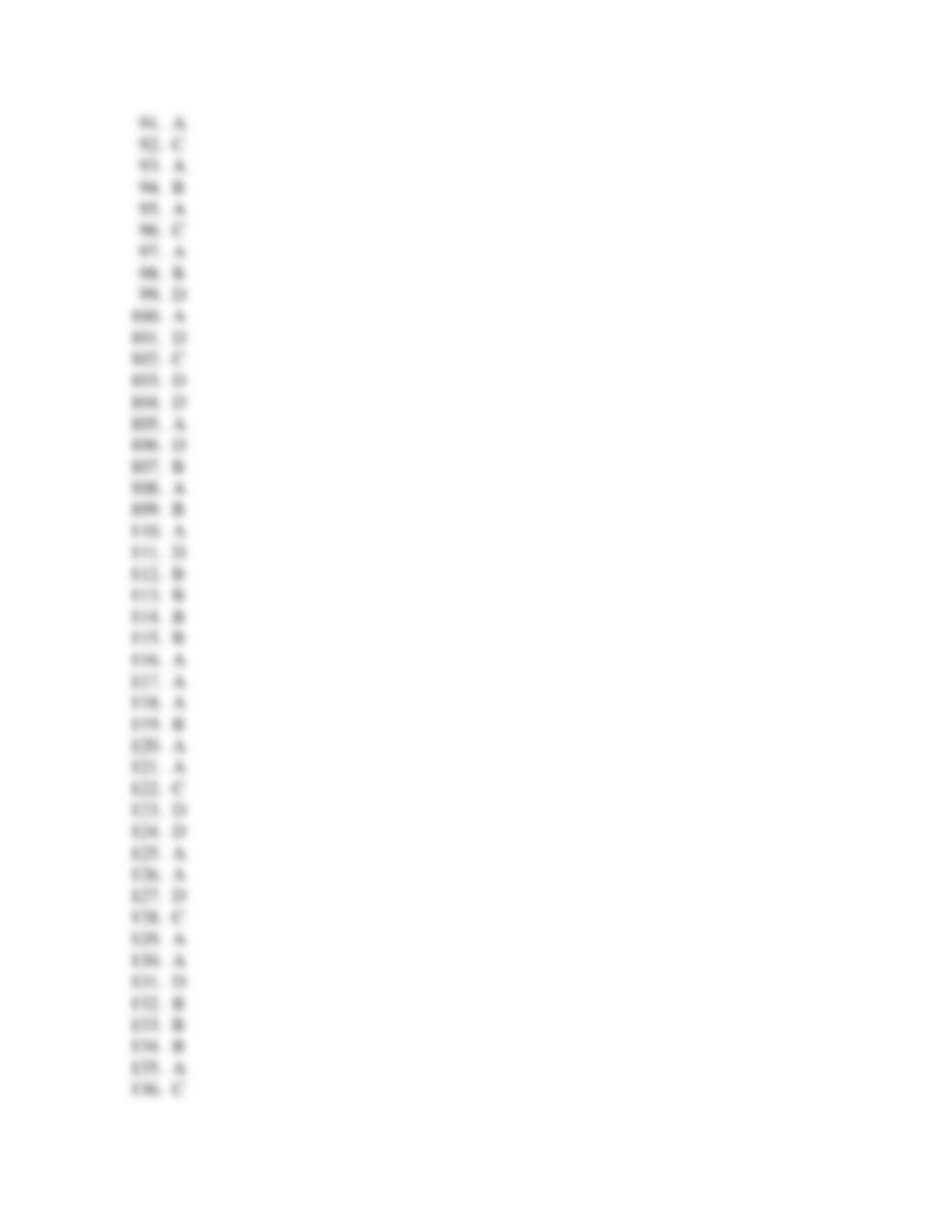
Page 72
91.
A
92.
C
93.
A
94.
B
95.
A
96.
C
97.
A
98.
B
99.
D
100.
A
101.
D
102.
C
103.
D
104.
D
105.
A
106.
D
107.
B
108.
A
109.
B
110.
A
111.
D
112.
B
113.
B
114.
B
115.
B
116.
A
117.
A
118.
A
119.
B
120.
A
121.
A
122.
C
123.
D
124.
D
125.
A
126.
A
127.
D
128.
C
129.
A
130.
A
131.
D
132.
B
133.
B
134.
B
135.
A
136.
C
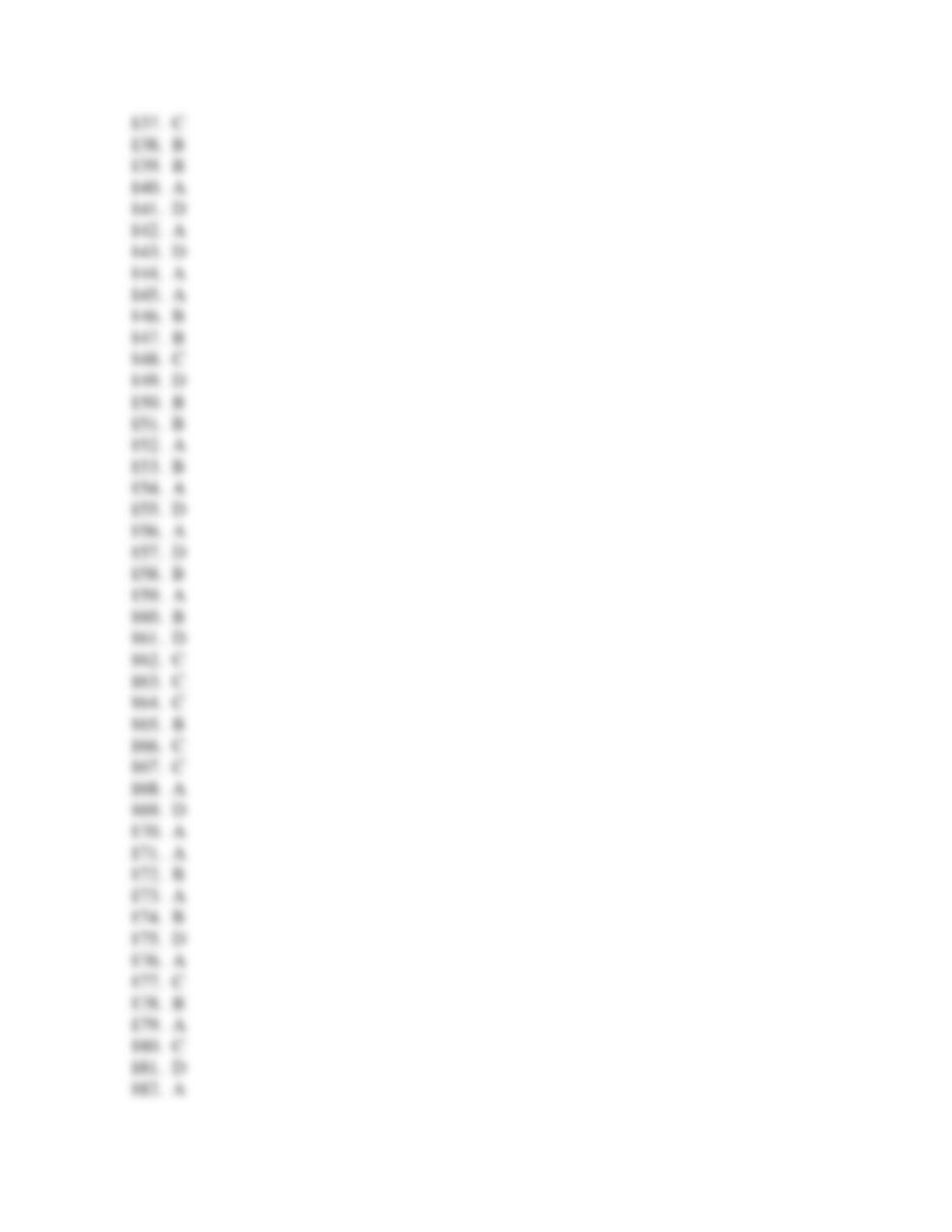
Page 73
137.
C
138.
B
139.
B
140.
A
141.
D
142.
A
143.
D
144.
A
145.
A
146.
B
147.
B
148.
C
149.
D
150.
B
151.
B
152.
A
153.
B
154.
A
155.
D
156.
A
157.
D
158.
B
159.
A
160.
B
161.
D
162.
C
163.
C
164.
C
165.
B
166.
C
167.
C
168.
A
169.
D
170.
A
171.
A
172.
B
173.
A
174.
B
175.
D
176.
A
177.
C
178.
B
179.
A
180.
C
181.
D
182.
A
Page 74
183.
D
184.
B
185.
C
186.
C
187.
D
188.
D
189.
A
190.
A
191.
D
192.
D
193.
D
194.
C
195.
A
196.
B
197.
A
198.
D
199.
D
200.
C
201.
C
202.
B
203.
A
204.
A
205.
D
206.
C
207.
A
208.
B
209.
A
210.
A
211.
B
212.
B
213.
C
214.
C
215.
B
216.
A
217.
D
218.
B
219.
C
220.
A
221.
A
222.
B
223.
B
224.
B
225.
B
226.
A
227.
B
228.
C
Page 75
229.
B
230.
B
231.
C
232.
A
233.
D
234.
D
235.
B
236.
C
237.
D
238.
D
239.
A
240.
C
241.
B
242.
C
243.
B
244.
D
245.
C
246.
A
247.
C
248.
C
249.
C
250.
A
251.
B
252.
D
253.
D
254.
A
255.
B
256.
C
257.
C
258.
D
259.
C
260.
A
261.
C
262.
D
263.
D
264.
B
265.
A
266.
B
267.
B
268.
B
269.
D
270.
A
271.
C
272.
A
273.
B
274.
C
Page 76
275.
B
276.
B
277.
D
278.
C
279.
C
280.
B
281.
D
282.
A
283.
A
284.
A
285.
B
286.
B
287.
A
288.
A
289.
B
290.
B
291.
A
292.
A
293.
B
294.
A
295.
B
296.
B
297.
A
298.
A
299.
B
300.
301.
302.
303.
304.
305.
306.
307.
308.
309.
310.
A
311.
B
312.
A
313.
A
314.
C
315.
B
316.
B
317.
C
318.
C
319.
A
320.
C

Page 77
321.
A
322.
A
323.
A
324.
B
325.
B
326.
B
327.
A
328.
A
329.
A
330.
A
331.
A