Page 52
196.
(Table: The Market for Hamburger Flippers) Use Table: The Market for Hamburger
Flippers. For hamburger flippers with a minimum wage of $8 per hour, can you imagine
a scenario in which the deadweight loss from the minimum wage is lessened or even
eliminated?
197.
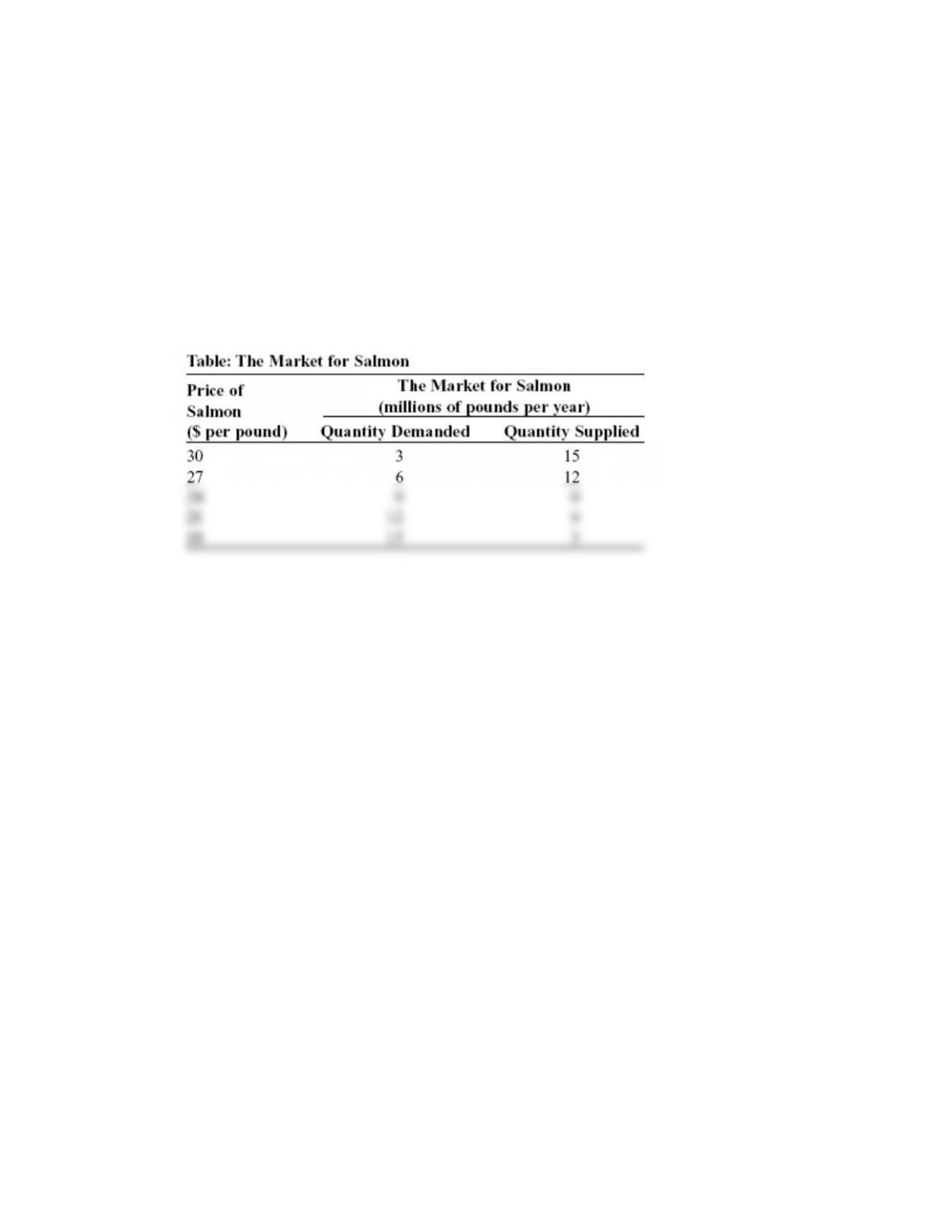
(Table: The Market for Salmon) Use Table: The Market for Salmon. The state
government has imposed a quota of 6 million pounds and has licensed commercial
fishing boats to harvest the salmon. When the quota is reached, the season is over. What
is the quota rent per pound of salmon when 6 million pounds is harvested and sold?
198.
How is a quota limit different from or similar to a price control?
199.
A price floor or a price ceiling is an example of:
A)
a quantity control.
B)
a price control.
C)
market equilibrium price.
D)
a quota.
200.
The minimum wage, which sets a lower limit on the wages that workers can earn, is
often above the equilibrium price. The minimum wage is an example of a(n):
A)
price floor.
B)
price ceiling.
C)
quota.
D)
equilibrium price.
Page 53
201.
The government might impose a price floor if _____ in a market can make a strong
moral or political argument for _____ prices.
A)
consumers; lower
B)
producers; lower
C)
consumers; higher
D)
producers; higher
202.
The government might impose a price ceiling if _____ in a market can make a strong
moral or political argument for _____ prices.
A)
consumers; lower
B)
producers; lower
C)
consumers; higher
D)
producers; higher
203.
A rent-control scheme that sets the maximum allowable rent at a price below the
equilibrium rental price would MOST likely be supported by:
A)
people who wish to rent an apartment.
B)
people who own rental apartments.
C)
both renters and owners.
D)
neither renters nor owners.
204.
In the rental housing market with price controls, the quantity of rental houses demanded
exceeds the quantity of rental housing supplied. This price control must be a:
A)
price ceiling.
B)
price floor.
C)
quota.
D)
quantity control.
205.
An effective price ceiling will MOST likely result in:
A)
an increase in the price.
B)
a decrease in deadweight loss.
C)
a decrease in producer surplus.
D)
no change in either producer or consumer surplus.
206.
A binding price ceiling results in:
A)
inefficiency resulting from overproduction of the good.
B)
inefficiency because transactions are held below the equilibrium quantity.
C)
a decrease in wasted resources, as consumers find such goods more easily.
D)
surpluses in the market, which eventually lead to inefficient production costs.
Page 54
207.
A price ceiling on a good often results in:
A)
a black market, or underground transactions of the good.
B)
a surplus of the product.
C)
more communication between buyers and sellers about the appropriate price.
D)
a more efficient allocation of the good to buyers.
208.
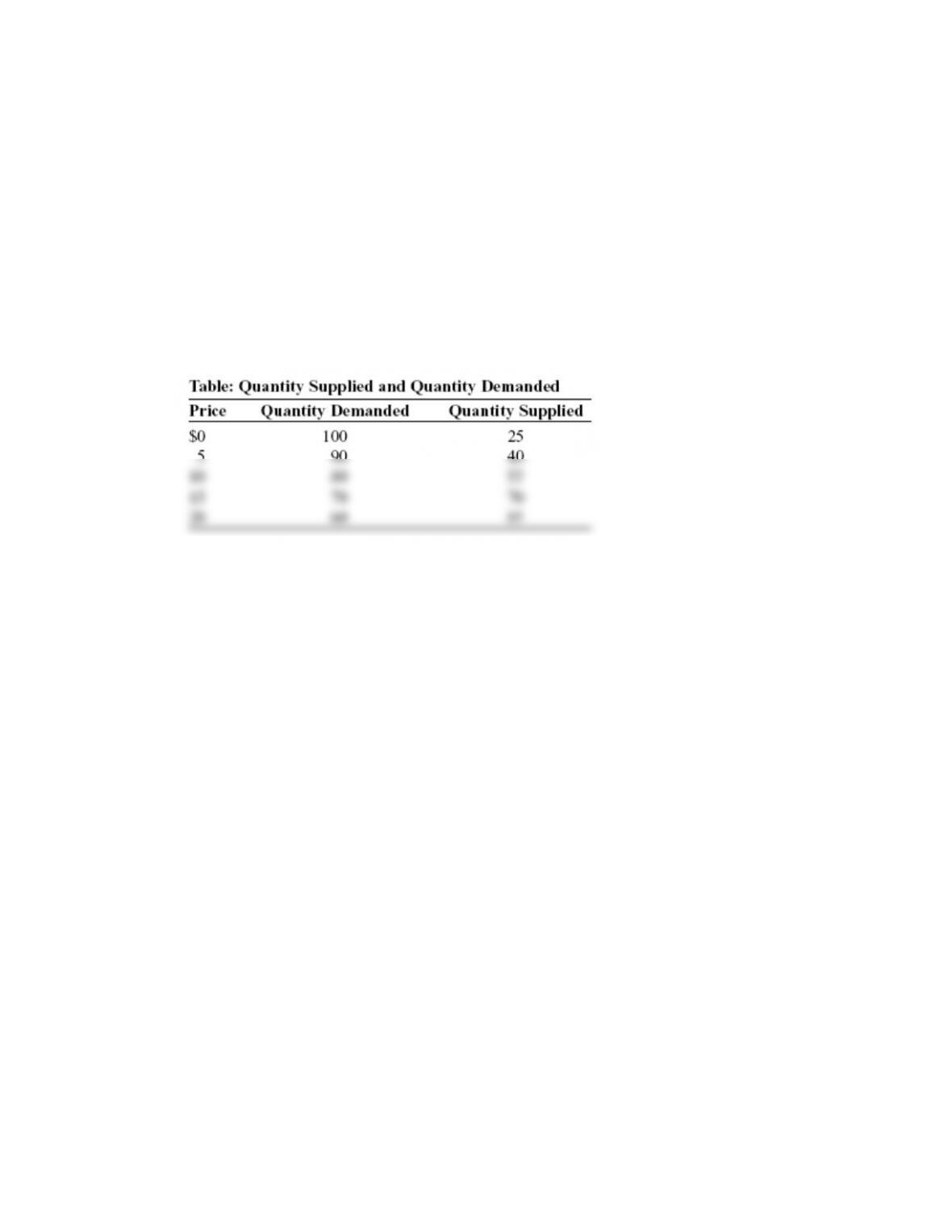
(Table: Quantity Supplied and Quantity Demanded) Use Table: Quantity Supplied and
Quantity Demanded. The government institutes a price floor, and as a result, too many
resources are allocated for the production of the good. Given this, which dollar amount
is a possible value of the price floor in this market?
A)
$5.
B)
$10.
C)
$15.
D)
$20.
209.
An increase in producer surplus would most likely occur if:
A)
an effective price floor was imposed.
B)
an effective price ceiling was imposed.
C)
the market price of the good decreased.
D)
no changes occurred in the market.
210.
An effective price floor would result in a(n):
A)
surplus of the good.
B)
shortage of the good.
C)
quantity control.
D)
equilibrium price.
Page 55
211.
If minimum wages are set above the equilibrium wage in the market, then the number of
workers hired will be _____ the number of people who are willing to work at the
prevailing wage.
A)
less than
B)
greater than
C)
equal to
D)
less than, greater than, or equal to
212.
An effective minimum wage ultimately means that:
A)
some unskilled workers have a difficult time finding a job.
B)
employers must encourage workers to apply for positions.
C)
employers will have difficulty finding enough workers for their positions.
D)
workers are generally guaranteed employment.
213.
An effective price floor will lead to:
A)
quantity demanded being greater than quantity supplied.
B)
an excess supply or a surplus.
C)
the need for government to produce more of the good.
D)
suppliers determining the amount of the good bought and sold in the market.
214.
If government decides to control the amount of a good allowed to be transacted in a
market, this will:
A)
always result in an increase in efficiency in the market.
B)
increase incentives for market participants to engage in black market activities.
C)
result in the equilibrium quantity being produced if the quota is binding.
D)
lead to more of the good being produced.
215.
A quota is a:
A)
quantity restriction.
B)
price control.
C)
form of consumer surplus.
D)
means to combat black markets.
216.
Quotas often:
A)
result in the elimination of incentives to engage in illegal activities.
B)
lead to deadweight losses.
C)
lead to efficient market outcomes.
D)
are necessary to increase the quantity of the goods in the market.
Page 56
217.
Which statement(s) is/are TRUE?
I. Quantity controls set below the market equilibrium quantity drive a wedge between
the demand price and the supply price of the good.
II. The difference between the demand price and the supply price at the quota limit is
consumer surplus.
III. Quantity controls have no undesirable side effects.
A)
I only
B)
II only
C)
II and III
D)
I, II, and III
218.
Government intervention in the form of binding price floors or binding price ceilings
will:
A)
always enhance the efficiency of the market.
B)
result in either surpluses or shortages.
C)
move the market toward its equilibrium quantity more quickly.
D)
often be seen as necessary to decrease the activity of black markets.
219.
Inefficient allocations of goods to consumers often result from:
A)
price ceilings.
B)
producer surpluses.
C)
increases in income.
D)
market transactions.
Use the following to answer questions 220-222:
220.
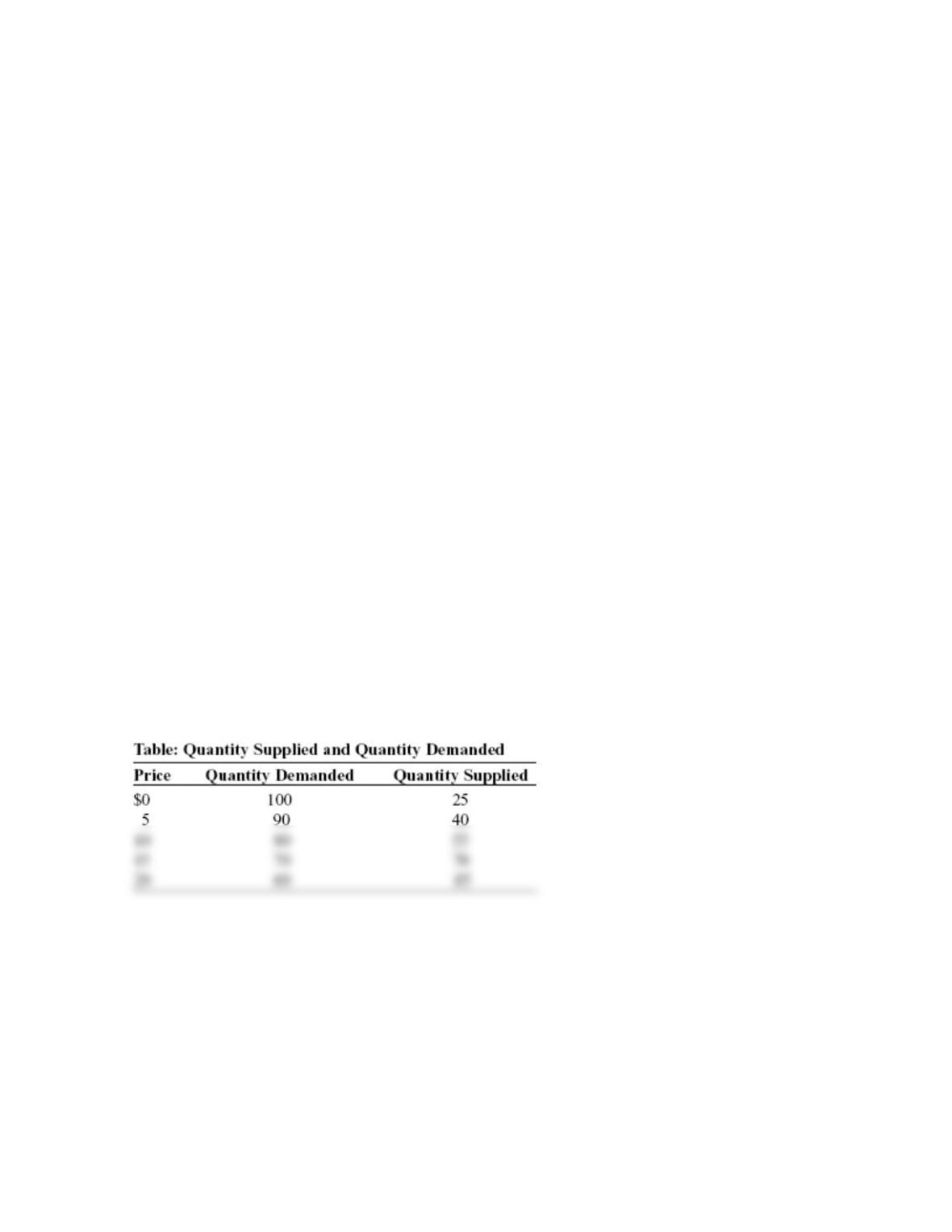
(Table: Quantity Supplied and Quantity Demanded) Use Table: Quantity Supplied and
Quantity Demanded. A government-imposed price ceiling equal to $5 would result in:
A)
the equilibrium quantity being bought and sold in this market.
B)
excess demand.
C)
excess supply.
D)
a surplus occurring in this market.
Page 57
221.
(Table: Quantity Supplied and Quantity Demanded) Use Table: Quantity Supplied and
Quantity Demanded. If a price ceiling of $10 is imposed in this market:
A)
the quantity demanded will be greater than the quantity supplied.
B)
the quantity supplied will be greater than the quantity demanded.
C)
an equilibrium quantity will result.
D)
excess supply equal to 25 units will result.
222.
(Table: Quantity Supplied and Quantity Demanded) Use Table: Quantity Supplied and
Quantity Demanded. A price floor equal to _____ would produce excess supply in this
market.
A)
$5
B)
$10
C)
$15
D)
$20
Use the following to answer questions 223-226:
223.
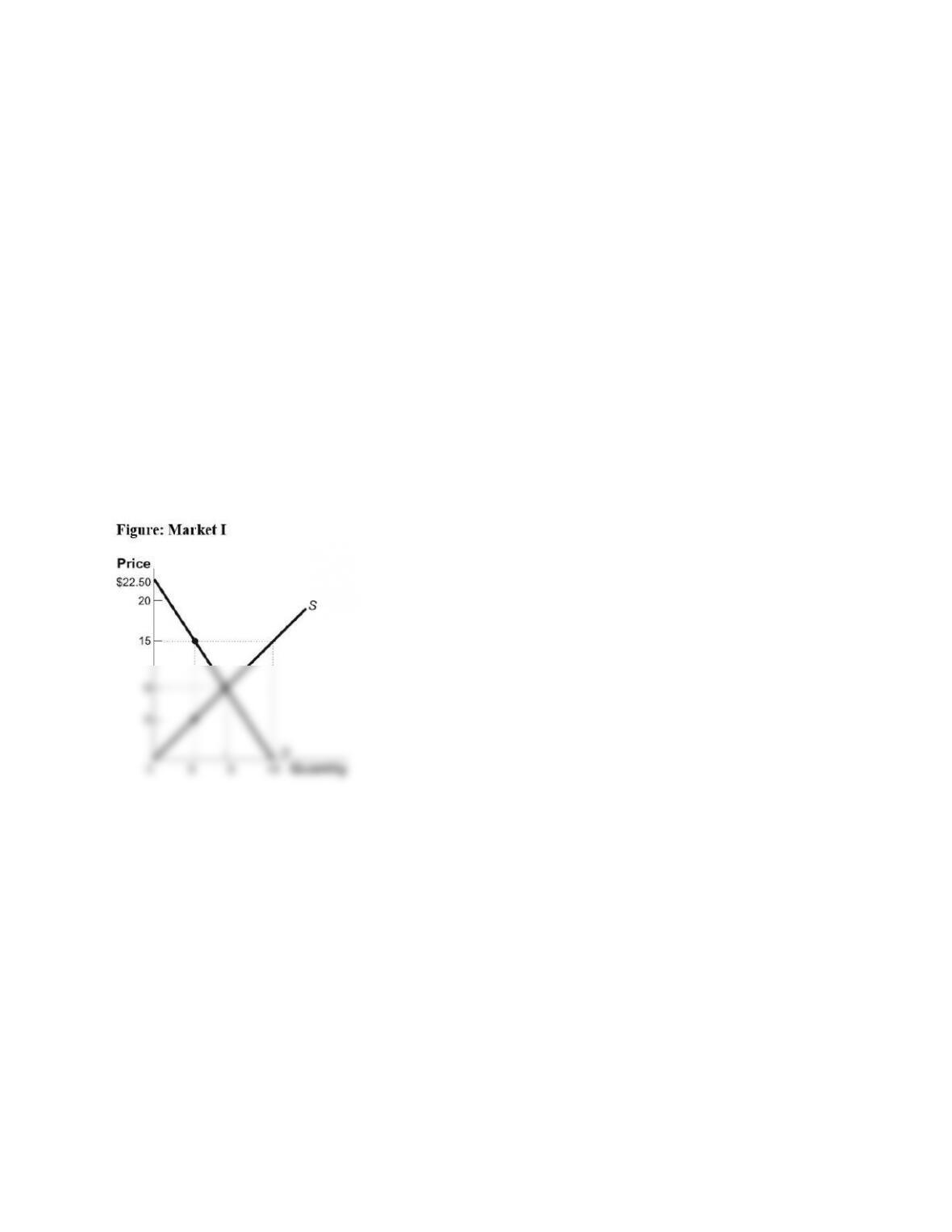
(Figure: Market I) Use Figure: Market I. A surplus of the good will result if the price is:
A)
$15.
B)
$9.
C)
$6.
D)
$0.
Page 58
224.
(Figure: Market I) Use Figure: Market I. If a price floor of $15 is imposed on this
market and the government chooses to purchase the surplus, the government must buy
_____ units of the good and spend a total amount of _____ on its purchase.
A)
5; $75
B)
10; $150
C)
9; $135
D)
9; $81
225.
(Figure: Market I) Use Figure: Market I. A price floor of $5 imposed on this market
would:
A)
result in a surplus of the good.
B)
have no immediate effect.
C)
increase production of this good.
D)
increase consumer spending on this good.
226.
(Figure: Market I) Use Figure: Market I. A price floor at $15 would result in deadweight
loss of:
A)
$9.
B)
$10.
C)
$20.
D)
$40.50.
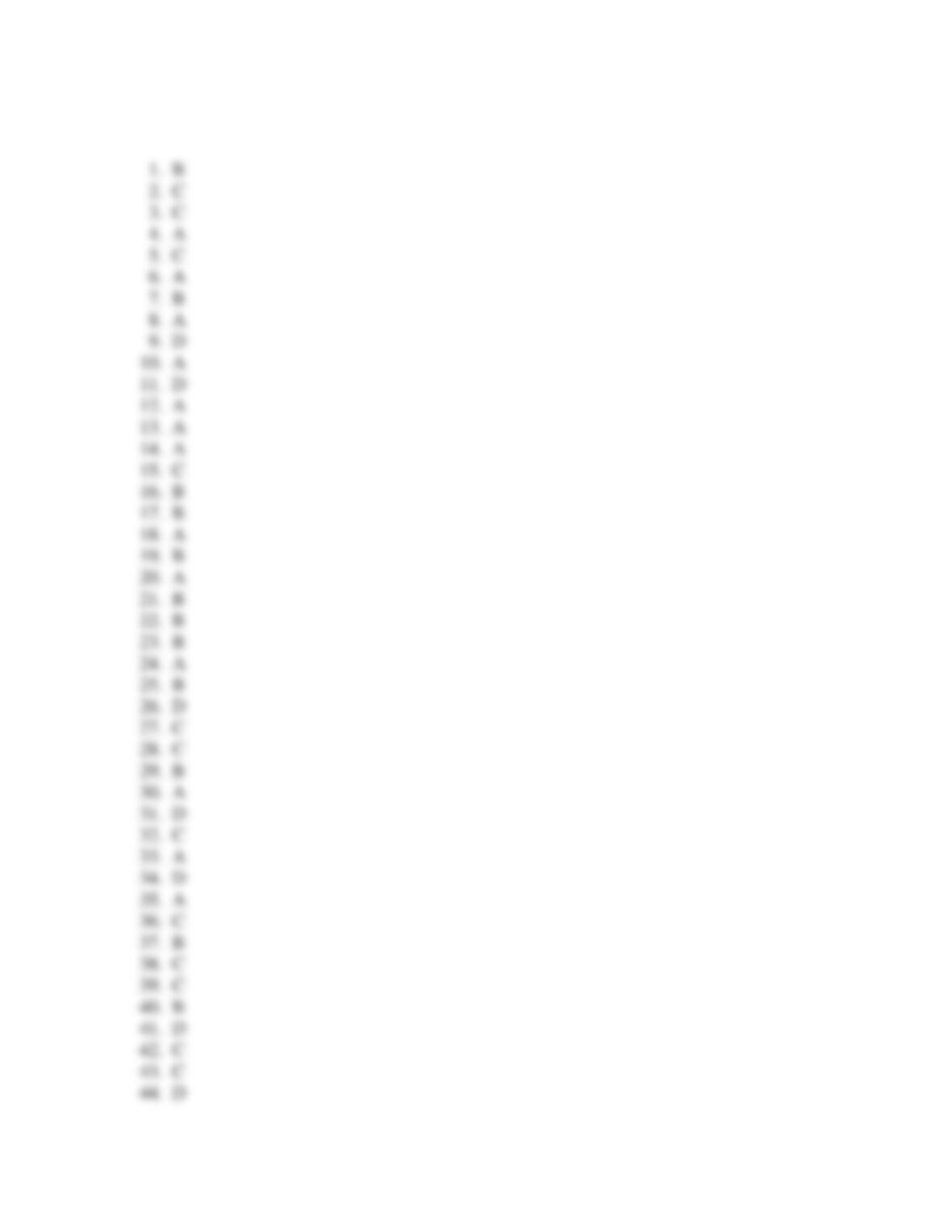
Answer Key
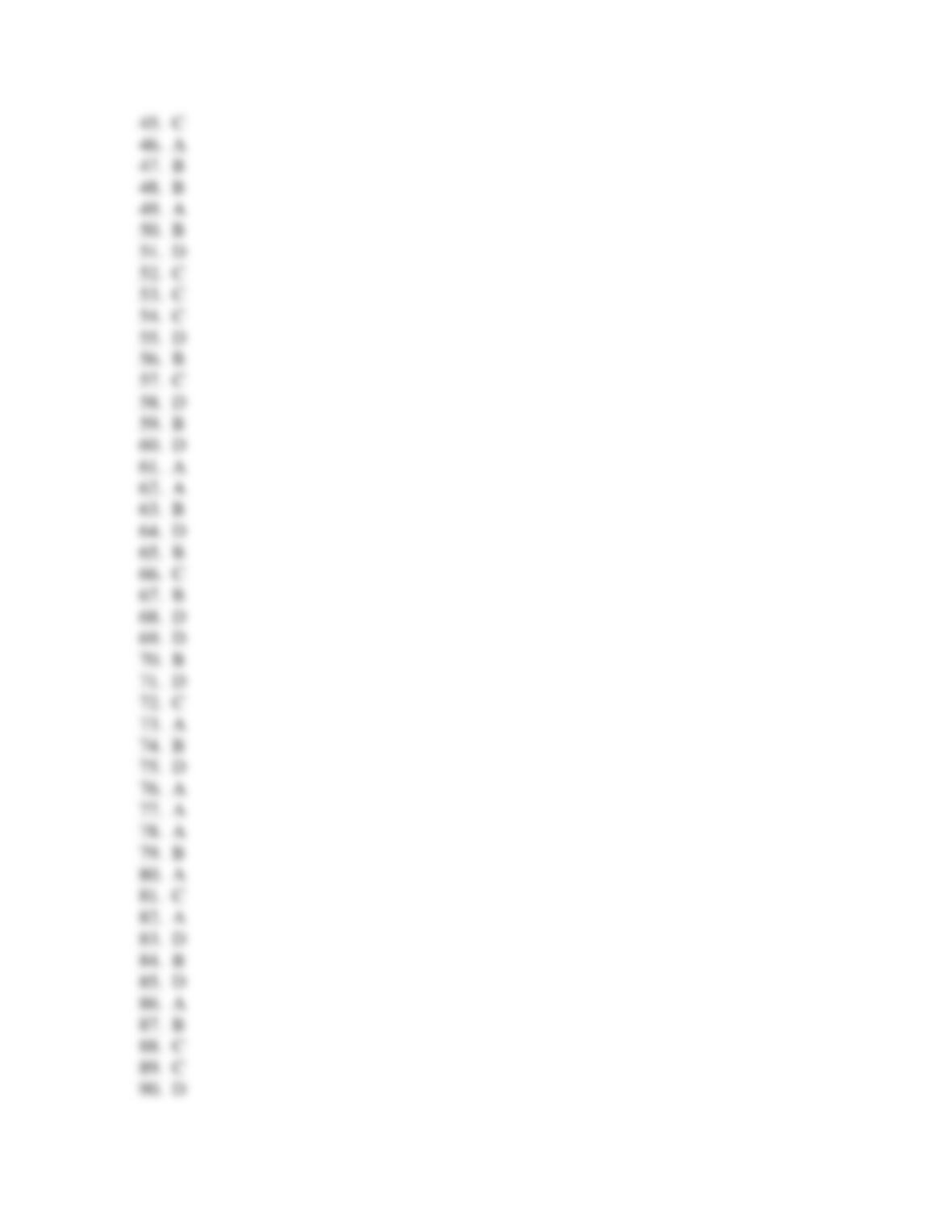
Page 60
45.
C
46.
A
47.
B
48.
B
49.
A
50.
B
51.
D
52.
C
53.
C
54.
C
55.
D
56.
B
57.
C
58.
D
59.
B
60.
D
61.
A
62.
A
63.
B
64.
D
65.
B
66.
C
67.
B
68.
D
69.
D
70.
B
71.
D
72.
C
73.
A
74.
B
75.
D
76.
A
77.
A
78.
A
79.
B
80.
A
81.
C
82.
A
83.
D
84.
B
85.
D
86.
A
87.
B
88.
C
89.
C
90.
D
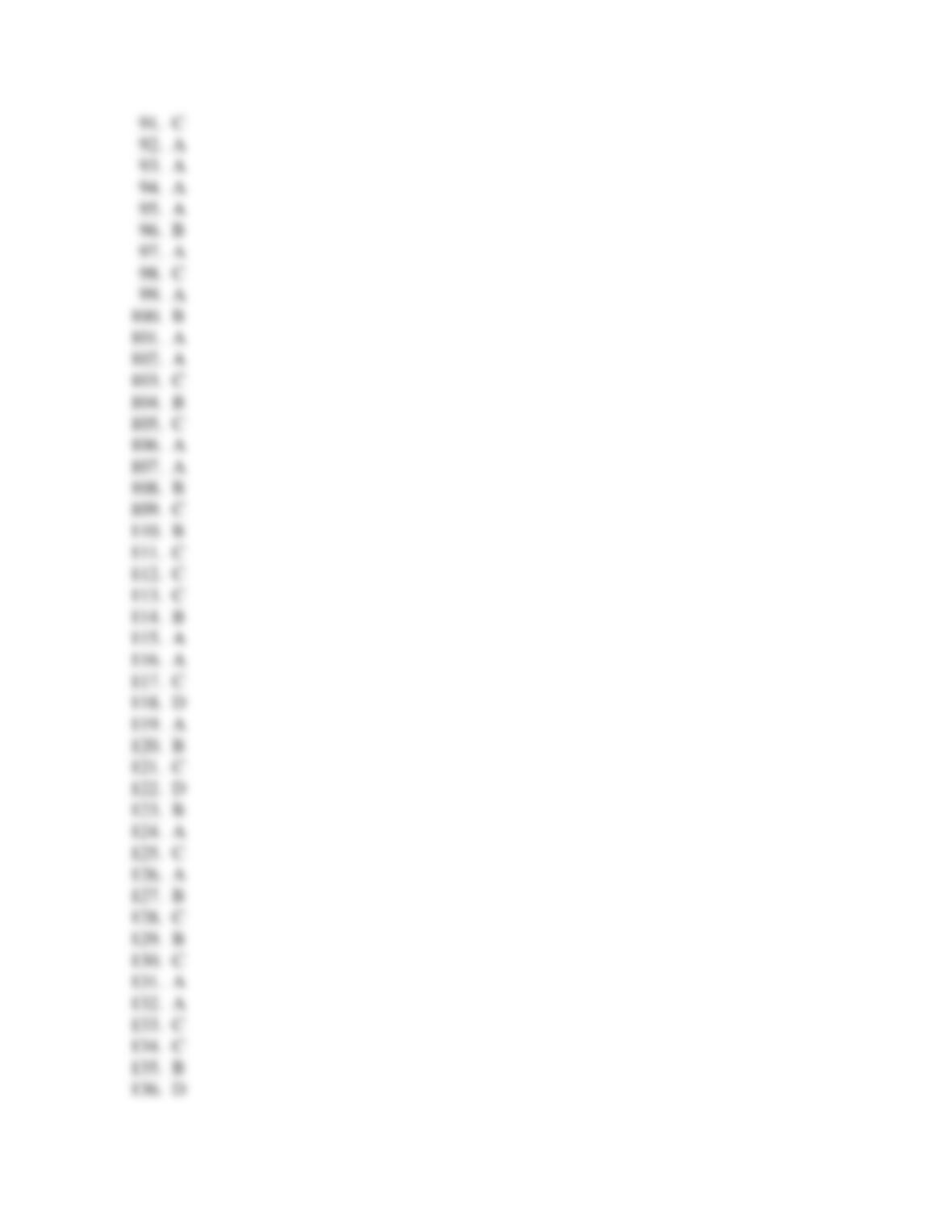
Page 61
91.
C
92.
A
93.
A
94.
A
95.
A
96.
B
97.
A
98.
C
99.
A
100.
B
101.
A
102.
A
103.
C
104.
B
105.
C
106.
A
107.
A
108.
B
109.
C
110.
B
111.
C
112.
C
113.
C
114.
B
115.
A
116.
A
117.
C
118.
D
119.
A
120.
B
121.
C
122.
D
123.
B
124.
A
125.
C
126.
A
127.
B
128.
C
129.
B
130.
C
131.
A
132.
A
133.
C
134.
C
135.
B
136.
D
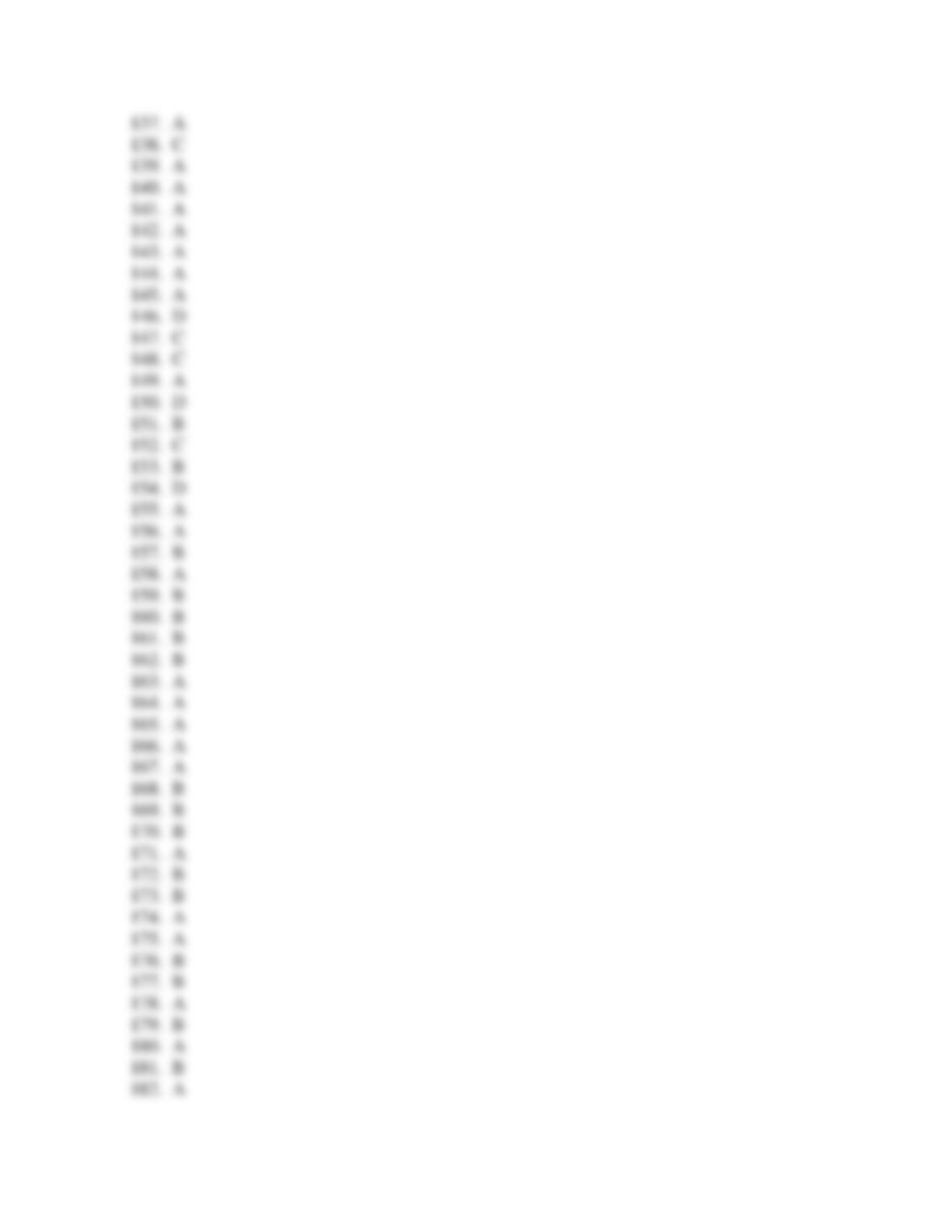
Page 62
137.
A
138.
C
139.
A
140.
A
141.
A
142.
A
143.
A
144.
A
145.
A
146.
D
147.
C
148.
C
149.
A
150.
D
151.
B
152.
C
153.
B
154.
D
155.
A
156.
A
157.
B
158.
A
159.
B
160.
B
161.
B
162.
B
163.
A
164.
A
165.
A
166.
A
167.
A
168.
B
169.
B
170.
B
171.
A
172.
B
173.
B
174.
A
175.
A
176.
B
177.
B
178.
A
179.
B
180.
A
181.
B
182.
A
Page 63
183.
A
184.
A
185.
B
186.
B
187.
B
188.
A
189.
190.
191.
192.
193.
194.
195.
196.
197.
198.
199.
B
200.
A
201.
D
202.
A
203.
A
204.
A
205.
C
206.
B
207.
A
208.
D
209.
A
210.
A
211.
A
212.
A
213.
B
214.
B
215.
A
216.
B
217.
A
218.
B
219.
A
220.
B
221.
A
222.
D
223.
A
224.
B
225.
B
226.
C