Page 1
Name: __________________________ Date: _____________
1.
When the dollar value of the Swiss franc was very high following the financial crisis in
2008:
A)
Swiss exports were more expensive in the United States.
B)
Swiss exports were less expensive in the United States.
C)
the Swiss National Bank sold Swiss francs to increase its value.
D)
the Swiss National Bank bought francs to decrease its value.
2.
International macroeconomics deals with:
A)
reducing regulations on business.
B)
the relationships between economies of different nations.
C)
reducing employment discrimination.
D)
providing financial information to investors.
3.
Economists summarize a country’s transactions with other countries with a(n) _____
account.
A)
circular flow
B)
balance of payments
C)
exchange rate
D)
purchasing power parity
4.
If the United States imports more goods from Japan than it exports to Japan, how will
the difference be financed?
A)
U.S. consumers will borrow money from domestic banks.
B)
The United States will buy more Japanese assets.
C)
The United States will sell assets, generating a liability that obligates Americans to
pay for those imports in the future.
D)
The United States will sell assets to the Japanese, which would reduce its
liabilities.
5.
When the United States gives foreign aid to developing nations in Africa, the _____
account is affected.
A)
current
B)
financial
C)
reserve
D)
foreign exchange
Page 2
6.
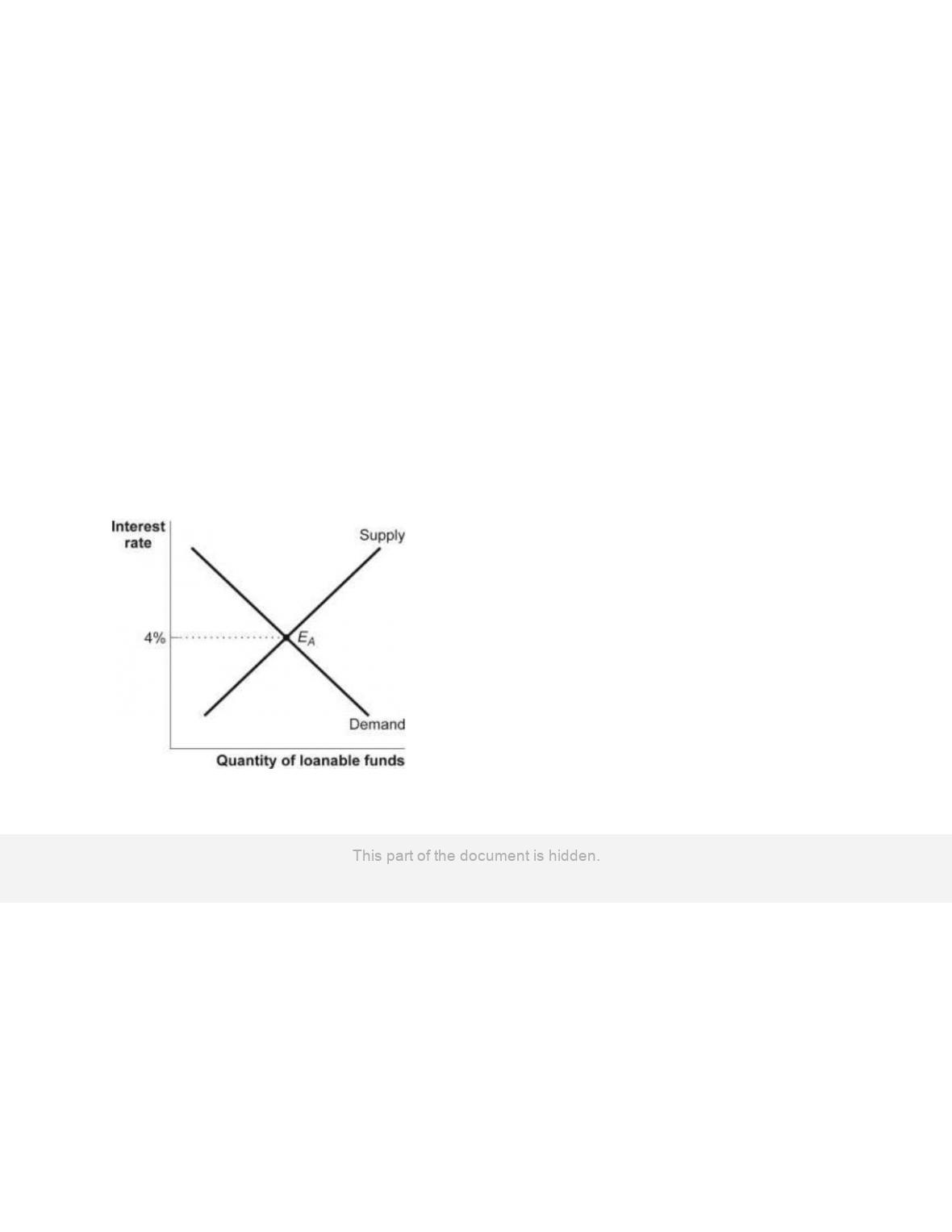
The difference between a country’s exports and imports of goods alone (not including
services) is the:
A)
merchandise trade balance.
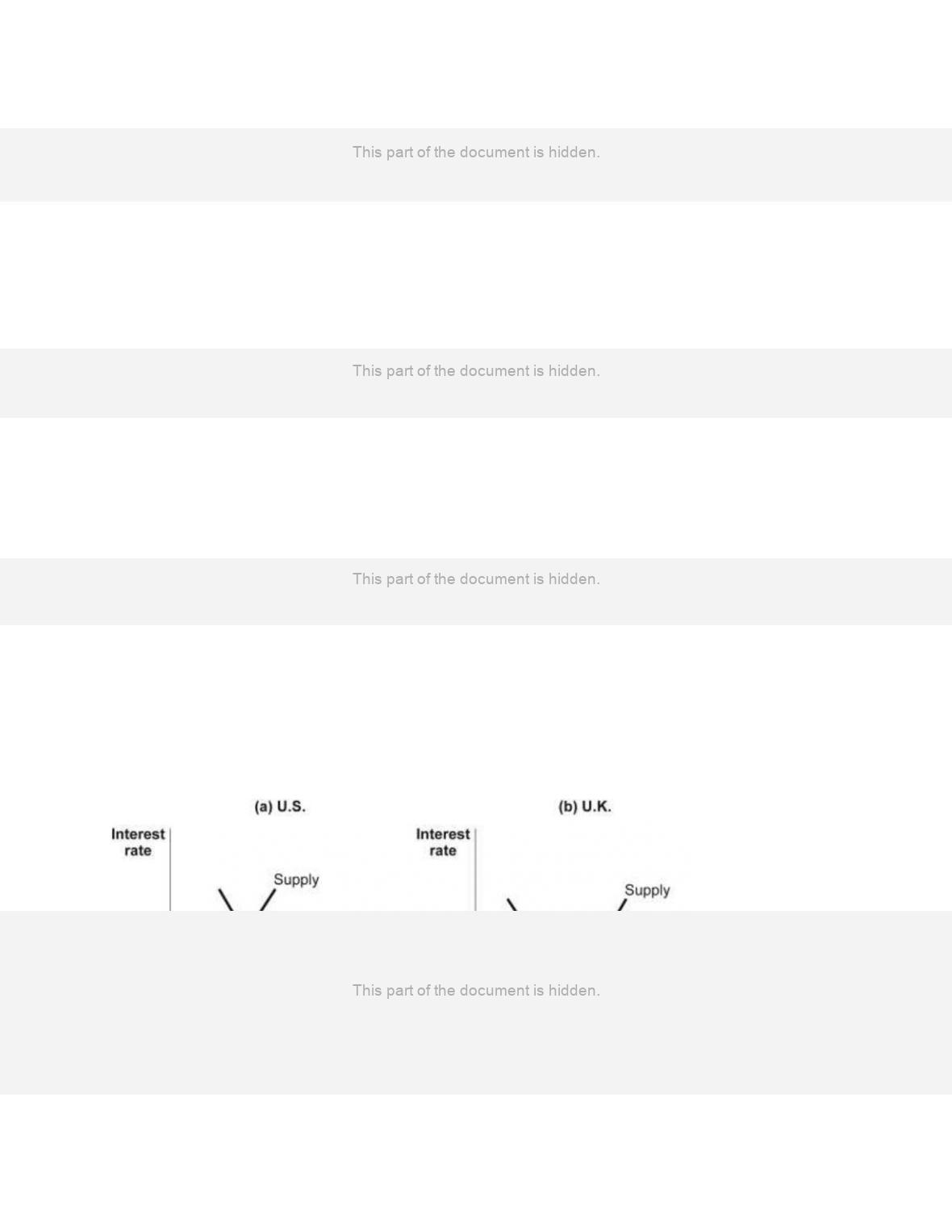
B)
balance of payments on good and services.
C)
balance of payments on current account.
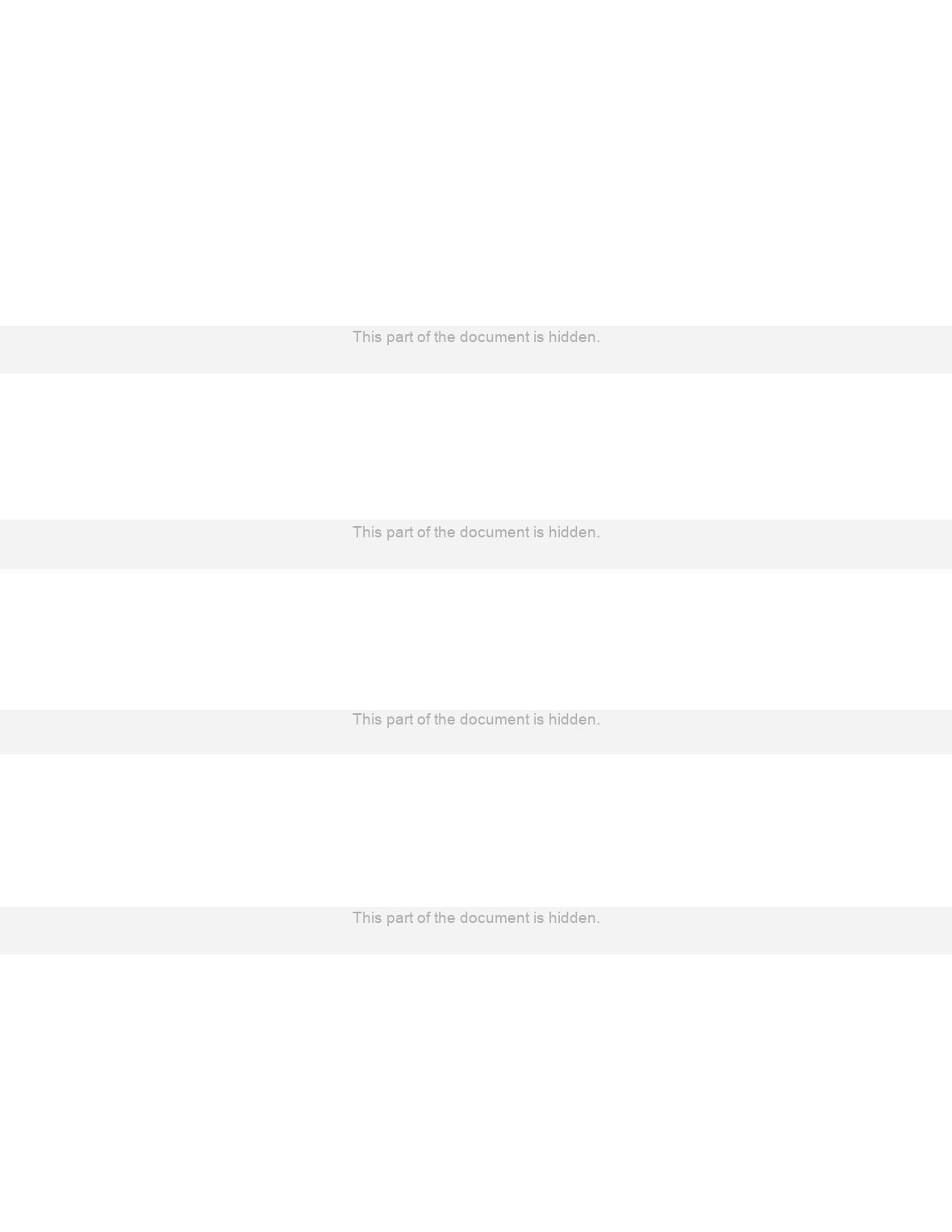
D)
current account.
Use the following to answer questions 7-10:
7.
(Table: International Transactions) Refer to Table: International Transactions. The
merchandise trade balance is:
A)
$51,000.
B)
$48,000.
C)
$46,000.
D)
$2,000.
8.
(Table: International Transactions) Refer to Table: International Transactions. The
balance of payments on goods and services is:
A)
$51,000.
B)
$48,000.
C)
$3,000.
D)
–$29,000.
9.
(Table: International Transactions) Refer to Table: International Transactions. The
balance on current account is:
A)
$29,000.
B)
$22,000.
C)
–$8,000.
D)
–$29,000.
Page 3
10.
(Table: International Transactions) Refer to Table: International Transactions. What
additional capital inflows are needed to equilibrate the balance of payments?
A)
–$29,000
B)
$20,000
C)
$29,000
D)
$80,000
11.
If the balance of payments on financial account is $25, the balance of payments on
goods and services is –$20, and the statistical discrepancy in the financial account is $2,
then the sum of net international transfer payments and net international factor income
is:
A)
–$7.
B)
–$5.
C)
$7.
D)
$47.
12.
Which asset would be included in the U.S. current account?
A)
a factory in Japan purchased by a firm in the United States
B)
stock in a U.S. company sold to someone in Japan
C)
a dividend on stock in a U.S. company paid to someone in Japan
D)
a bond issued by a firm in Japan sold to someone in the United States
13.
When a Japanese investor buys stock in General Motors, the _____ account is affected.
A)
current
B)
financial
C)
reserve
D)
foreign exchange
14.
If the United States exports $100 billion of goods and services and imports $150 billion
of goods and services and there is no other factor income or transfers, the balance on the
current account is:
A)
$250 billion.
B)
–$250 billion.
C)
$50 billion.
D)
–$50 billion.
Page 4
15.
If the United States exports $100 billion of goods and services and imports $150 billion
of goods and services and there is no other factor income or transfers, the balance on the
financial account is:
A)
$250 billion.
B)
–$250 billion.
C)
$50 billion.
D)
–$50 billion.
16.
Assume that Tom sells a crate of Florida oranges to a retailer in Canada and Susan sells
a U.S. bond to a customer in Britain. Which statement illustrates the difference and/or
similarity between these two transactions?
A)
Only Tom will actually receive U.S. dollars as a result of this transaction.
B)
The sale of the bond generates a liability, while the sale of the oranges does not.
C)
Both sales generate an asset for the United States.
D)
Both sales generate a liability for the United States.
17.
If a country has a current account deficit, it must have a:
A)
financial account surplus.
B)
balance of payment surplus.
C)
financial account deficit.
D)
balance of payments deficit.
18.
Which asset would be included in the U.S. financial account?
A)
a computer made in the United States and exported to Britain
B)
a computer made in Britain and imported into the United States
C)
interest on a U.S. bond sold to someone living overseas
D)
the value of a bond from a U.S. company sold to someone living in Britain
19.
Which asset would NOT be included in the U.S. financial account?
A)
a Japanese factory purchased by a U.S. company
B)
U.S. stock sold to someone in Japan
C)
a Japanese bond sold to someone in the United States
D)
a Chinese video game imported into the United States
20.
Which of the following would be included in the U.S. current account?
A)
public purchases and sales of financial assets
B)
trade balance
C)
financial account balance
D)
private purchases and sales of financial assets
Page 5
21.
If a country has a positive balance of payments on the current account, then it must:
A)
be exporting too much.
B)
be importing too much.
C)
have a surplus on the financial account.
D)
have a deficit on the financial account.
22.
Money flows into the United States from other countries as a result of:
A)
U.S. purchases of foreign goods and services.
B)
payments to foreign owners of U.S. assets.
C)
domestic purchases of U.S. goods and services.
D)
transfer payments from foreign sources to U.S. residents.
23.
Money flows into the United States from other countries as a direct result of:
A)
foreign purchases of U.S. goods and services.
B)
U.S. purchases of foreign goods and services.
C)
U.S. investment in foreign companies.
D)
U.S. purchases of foreign assets.
24.
The balance between spending flowing into a country from other countries and spending
flowing out of that country to other countries is the:
A)
singular account.
B)
euro–dollar account.
C)
universal exchange account.
D)
balance of payments.
25.
A family from New York City eats in a restaurant in Mexico City. In the accounting for
U.S. international transactions, this transaction would appear in the _____, and it would
be entered as a payment _____ foreigners.
A)
current account; to
B)
current account; from
C)
financial account; to
D)
financial account; from
26.
A Peruvian financial investor purchases a sporting goods store in Colorado Springs. In
the accounting for U.S. international transactions, this transaction would appear in the
_____, and it would be entered as a payment _____ foreigners.
A)
current account; from
B)
current account; to
C)
financial account; from
D)
financial account; to
Page 6
27.
A family from Peru eats in a restaurant in Salt Lake City. In the accounting for U.S.
international transactions, this transaction would appear in the _____, and it would be
entered as a payment _____ foreigners.
A)
current account; from
B)
current account; to
C)
financial account; from
D)
financial account; to
28.
A financial investor from Los Angeles purchases bonds issued by the government of
Peru. In the accounting for U.S. international transactions, this transaction would appear
in the _____, and it would be entered as a payment _____ foreigners.
A)
current account; from
B)
current account; to
C)
financial account; from
D)
financial account; to
29.
A statement of spending that flows into and out of the country for purchases of assets
during a particular period is the nation’s:
A)
current account.
B)
financial account.
C)
universal exchange position.
D)
statistical discrepancy.
30.
A country has a financial account surplus if the balance on the:
A)
financial account is negative.
B)
financial account is positive.
C)
current account is zero.
D)
current account is positive.
31.
A country has a capital account deficit if the balance on the:
A)
financial account is negative.
B)
financial account is positive.
C)
current account is negative.
D)
current account is zero.
Page 7
32.
A deficit in the current account means there will be:
A)
a surplus in the financial account.
B)
a deficit in the financial account.
C)
a balanced financial account.
D)
either a surplus or a deficit in the financial account.
33.
A current account surplus occurs when:
A)
the balance on the current account is positive.
B)
net exports are negative.
C)
spending flowing out of the country exceeds spending flowing into the country.
D)
imports exceed exports.
34.
A current account deficit exists when:
A)
the balance on current account is negative.
B)
spending flowing out of the country is less than spending flowing into the country.
C)
net exports are positive.
D)
an economy buys less from foreigners than it sells to them.
35.
A _____ balance on the financial account means a _____.
A)
positive; financial account surplus
B)
negative; financial account surplus
C)
positive; financial account deficit
D)
positive; current account surplus
36.
A current account deficit is generally a result of:
A)
imports exceeding exports.
B)
U.S. purchases of bonds issued by foreign corporations.
C)
a large amount of U.S. purchases of foreign real estate.
D)
exports exceeding imports.
37.
A current account surplus is generally a result of:
A)
imports exceeding exports.
B)
sales of stock in U.S. companies to citizens of foreign countries.
C)
a large influx of foreign investment income.
D)
exports exceeding imports.
Page 8
38.
When there is a deficit in the U.S. balance of payments on the current account, we pay
for the difference by:
A)
allowing the price of currency to rise.
B)
allowing the price of currency to fall.
C)
buying assets from other countries.
D)
selling assets to other countries.
39.
In 2016, the $481 billion deficit on the U.S. current account was offset by a surplus of
$406 billion on financial account. This difference is the result of a:
A)
budget deficit.
B)
statistical discrepancy.
C)
trade deficit.
D)
national debt.
40.
If the merchandise trade balance is –$15, net international transfer payments and net
international factor income are $4, the balance of payments on goods and services is
–$25, and the balance of payments on the financial account is $18, then the statistical
discrepancy in the financial account is:
A)
$15.
B)
$3.
C)
–$3.
D)
–$1.
41.
The difference between a country’s exports and its imports of goods and services is
known as the:
A)
trade balance.
B)
balance of payments on goods and services.
C)
balance of payments on current account.
D)
balance of exchange.
42.
The difference between a country’s balance of payments on goods and services and the
merchandise trade balance is that:
A)
the merchandise trade balance does not include exports and imports of services.
B)
the balance of payments does not include exports and imports of services.
C)
the merchandise trade balance does not include imports of goods and services.
D)
the balance of payments does not include imports of goods and services.
Page 9
43.
A country’s balance of payments on financial account is the:
A)
difference between the dollar value of a country’s exports and its imports of goods
and services.
B)
difference between the dollar value of a country’s exports and its imports of goods
only.
C)
difference between the country’s sale of assets to foreigners and its purchases of
assets from foreigners.
D)
same value as the country’s merchandise trade balance.
Use the following to answer questions 44-46:
44.
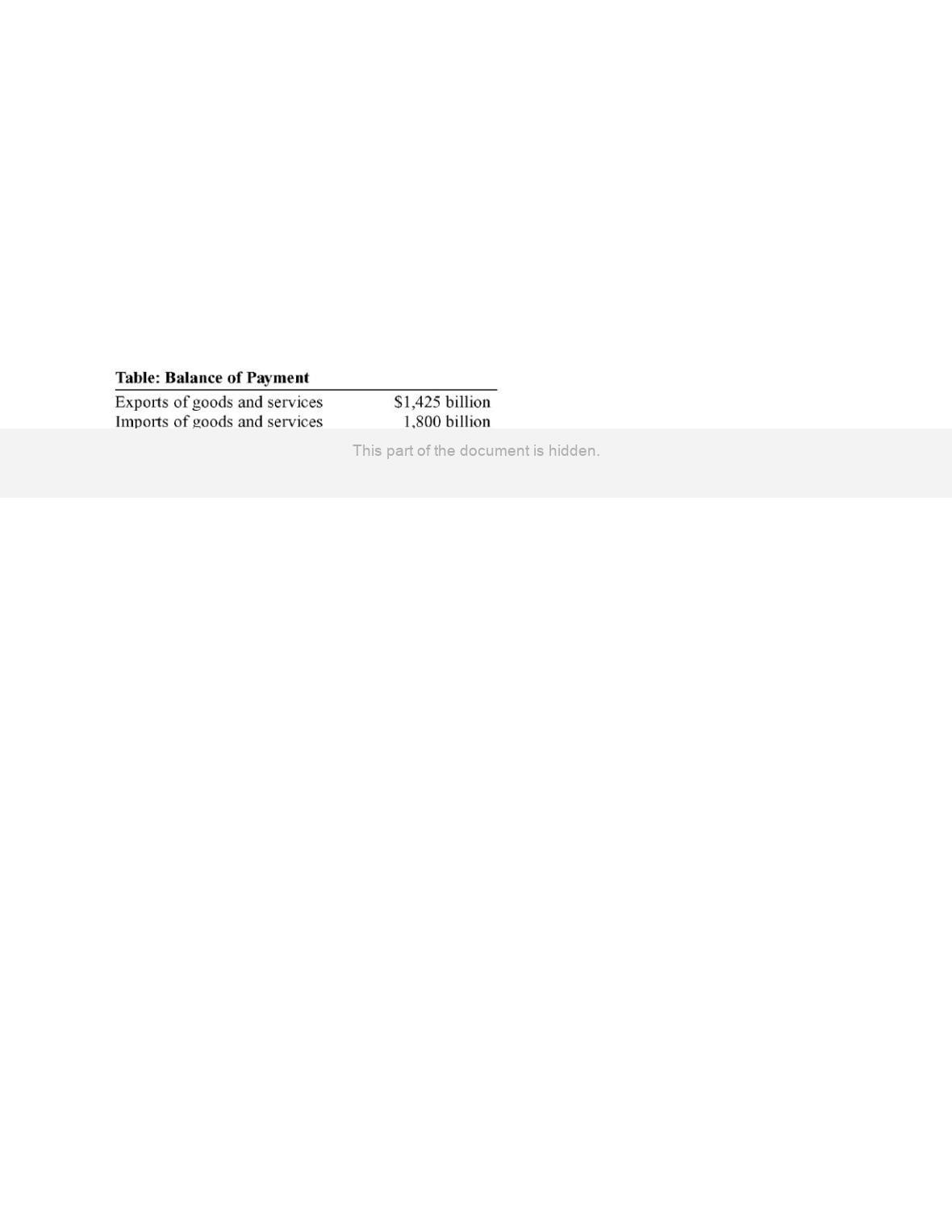
(Table: Balance of Payments) Refer to Table: Balance of Payments. In this case, the
country’s balance of payments on goods and services is:
A)
$375 billion.
B)
–$375 billion.
C)
$4,045 billion.
D)
$355 billion.
45.
(Table: Balance of Payments) Refer to Table: Balance of Payments. The country’s
balance of payments on current account is:
A)
$355 billion.
B)
–$395 billion.
C)
$375 billion.
D)
–$355 billion.
46.
(Table: Balance of Payments) Refer to Table: Balance of Payments. The country’s
balance of payments on financial account is:
A)
zero.
B)
$375 billion.
C)
$355 billion.
D)
–$355 billion.
Page 10
47.
If a country runs a deficit on its balance of payments for goods and services, to pay for
its imports, it must:
A)
raise taxes.
B)
print new money.
C)
sell assets to foreigners.
D)
decrease its exports.
48.
The relationship between a country’s balance of payments on current account (CA) and
its balance of payments on financial account (FA) is NOT described by:
A)
CA + FA = 0.
B)
CA = FA.
C)
CA = –FA.
D)
FA = –CA.
49.
The United States exports corn to other nations. In the U.S. balance of payments
account, this transaction is entered as a payment _____ foreigners in the _____ account.
A)
from; current
B)
from; financial
C)
to; current
D)
to; financial
50.
A Japanese banker buys some newly issued U.S. Treasury bonds. In the U.S. balance of
payments account, this transaction is entered as a payment _____ foreigners in the
_____ account.
A)
from; current
B)
to; current
C)
to; financial
D)
from; financial
51.
Microsoft, a Seattle software company, purchases a new office building in Vancouver,
Canada. In the U.S. balance of payments account, this transaction is entered as a
payment _____ foreigners in the _____ account.
A)
from; current
B)
to; financial
C)
to; current
D)
from; financial
Page 11
52.
U.S. retailers import toys from China. In the U.S. balance of payments account, this
transaction is entered as a payment _____ foreigners in the _____ account.
A)
to; financial
B)
from; financial
C)
to; current
D)
from; current
53.
A U.S. firm buys a new Volvo, built in Sweden. In the U.S. balance of payments, this
transaction causes the balance on the _____ account to _____.
A)
current; decrease
B)
current; increase
C)
financial; decrease
D)
financial; increase
54.
After a hurricane devastates New Orleans, a Canadian charity sends $1 million to the
United States to help the survivors rebuild their homes. In the U.S. balance of payments,
this transaction causes the balance on the _____ account to _____.
A)
current; decrease
B)
current; increase
C)
financial; decrease
D)
financial; increase
55.
A Brazilian bank buys shares of stock in Intel, a U.S. high-tech company. In the U.S.
balance of payments, this transaction causes the balance on the _____ account to _____.
A)
current; decrease
B)
current; increase
C)
financial; decrease
D)
financial; increase
56.
A person from the U.S. deposits $10,000 in an account in a London bank. In the U.S.
balance of payments, this transaction causes the balance on the _____ account to _____.
A)
financial; increase
B)
financial; decrease
C)
current; decrease
D)
current; increase
Page 12
57.
The difference between GDP and GNP is that:
A)
GNP includes international factor income.
B)
GDP includes international factor income.
C)
GNP includes the money supply.
D)
GDP includes the money supply.
58.
Economists usually use GDP rather than GNP because they are tracking:
A)
only transactions on the current account.
B)
only transactions on the financial account.
C)
production rather than income.
D)
income rather than production.
59.
Suppose that the equilibrium interest rate in the U.S. market for loanable funds is 3%
prior to any international capital flows in the United States. The equilibrium interest rate
in the Japanese market for loanable funds is 7%. If lenders in both nations believe that
loans to foreigners are just as good as loans to their own citizens, capital will flow from
_____, making interest rates _____ in Japan and _____ in the United States.
A)
the United States to Japan; rise; fall
B)
Japan to the United States; fall; rise
C)
Japan to the United States; rise; fall
D)
the United States to Japan; fall; rise
60.
Scenario: Japan and the United States
Suppose that the interest rate in the United States is 4%, in Japan it is 7%, and financial
assets in the two countries are equal in risk. Assuming that loans in Japan and the
United States carry equal risk, this implies that:
A)
U.S. lenders will lend to borrowers in Japan.
B)
Japanese lenders will lend to U.S. borrowers.
C)
the interest rate in Japan will increase further as compared to the U.S. interest rate.
D)
the central bank of Japan has adopted a more expansionary monetary policy.
61.
Scenario: Japan and the United States
Suppose that the interest rate in the United States is 4%, in Japan it is 7%, and financial
assets in the two countries are equal in risk. As a result:
A)
capital will flow from Japan to the United States.
B)
capital will flow from the United States to Japan.
C)
capital will not flow between Japan and the United States.
D)
Japan will export more goods to the United States.
Page 13
62.
Scenario: Japan and the United States
Suppose that the interest rate in the United States is 4%, in Japan it is 7%, and financial
assets in the two countries are equal in risk. The implication is that:
A)
interest rates in Japan will increase.
B)
interest rates in the United States will decrease.
C)
the capital flow between Japan and the United States eventually will render the
interest rates equal.
D)
the interest rates in both countries will remain unchanged.
63.
Direct foreign investment means the purchase of:
A)
stock in foreign companies.
B)
bonds of a foreign country.
C)
bank loans in a foreign country.
D)
factories in a foreign country.
Use the following to answer questions 64-67:
64.
(Figure: The Loanable Funds Model in the U.S. Market) Refer to Figure: The Loanable
Funds Model in the U.S. Market. If the actual interest rate is higher than 4% in the U.S.
market, then the quantity supplied of loanable funds will be _____ the quantity of
loanable funds demanded.
A)
greater than
B)
less than
C)
equal to
D)
unrelated to
Page 14
65.
(Figure: The Loanable Funds Model in the U.S. Market) Refer to Figure: The Loanable
Funds Model in the U.S. Market. If the actual interest rate is less than 4% in the U.S.
market, then the quantity supplied of loanable funds will be _____ the quantity of
loanable funds demanded.
A)
greater than
B)
less than
C)
equal to
D)
unrelated to
66.
(Figure: The Loanable Funds Model in the U.S. Market) Refer to Figure: The Loanable
Funds Model in the U.S. Market. If the actual interest rate is equal to 4% in the U.S.
market, then the quantity supplied of loanable funds will be _____ the quantity of
loanable funds demanded.
A)
greater than
B)
less than
C)
equal to
D)
unrelated to
67.
(Figure: The Loanable Funds Model in the U.S. Market) Refer to Figure: The Loanable
Funds Model in the U.S. Market. Assume that each country’s equilibrium interest rate is
4%. To reconcile the apparent disequilibrium in both markets, assuming that assets and
liabilities are viewed as homogeneous, capital _____ will _____ interest rates.
A)
outflow from the United States; lower U.S.
B)
outflow from Britain; lower British
C)
outflow from Britain; raise British
D)
inflow to the United States; raise U.S.
Use the following to answer questions 68-74:
Page 15
68.
(Figure: International Capital Flows) Refer to Figure: International Capital Flows. At an
interest rate of 4%, the quantity of loanable funds demanded by U.S. borrowers is _____
the quantity of loanable funds supplied by U.S. lenders.
A)
greater than
B)
less than
C)
equal to
D)
not related to
69.
(Figure: International Capital Flows) Refer to Figure: International Capital Flows. At an
interest rate of 4%, the quantity of loanable funds supplied by U.S. lenders is _____ the
quantity of loanable funds demanded by U.S. borrowers.
A)
greater than
B)
less than
C)
equal to
D)
not related to
70.
(Figure: International Capital Flows) Refer to Figure: International Capital Flows. At an
interest rate of 4%, the quantity of loanable funds supplied by British lenders is _____
the quantity of loanable funds demanded by British borrowers.
A)
greater than
B)
less than
C)
equal to
D)
not related to
71.
(Figure: International Capital Flows) Refer to Figure: International Capital Flows. At an
interest rate of 4%, the quantity of loanable funds demanded by British borrowers is
_____ the quantity of loanable funds supplied by British lenders.
A)
greater than
B)
less than
C)
equal to
D)
not related to
72.
(Figure: International Capital Flows) Refer to Figure: International Capital Flows. At an
interest rate of 4%, the total quantity of loanable funds demanded across the two
markets is _____ the total quantity of loanable funds supplied by lenders.
A)
greater than
B)
less than
C)
equal to
D)
not related to
Page 16
73.
(Figure: International Capital Flows) Refer to Figure: International Capital Flows. At an
interest rate of 4%, the excess of loanable funds supplied by _____ lenders will be
exported to _____ borrowers.
A)
U.S.; British
B)
British; U.S.
C)
U.S. or British; British or U.S.
D)
U.S.; worldwide
74.
(Figure: International Capital Flows) Refer to Figure: International Capital Flows. At an
interest rate of 4%, the shortage of loanable funds available to _____ borrowers will be
satisfied by _____ lenders.
A)
U.S.; British
B)
British; U.S.
C)
U.S. or British; British or U.S.
D)
British; worldwide
75.
In the absence of international capital flows, the equilibrium interest rate in the U.S.
market for loanable funds is 3%, while in Germany it is 7%. International borrowing
and lending between the United States and Germany could result in a common interest
rate of _____% and _____.
A)
5; capital inflows to the United States matching the capital outflows from Germany
B)
3; massive capital inflows from Germany to the United States
C)
4; capital outflows from the United States matching the capital inflows to Germany
D)
7; massive capital inflows from the United States to Germany
76.
Interest rates between two countries tend to converge if:
A)
both countries have a financial account surplus.
B)
both countries have a current account surplus.
C)
the residents of the two countries believe that a foreign asset is as good as a
domestic one.
D)
the residents of the two countries prefer domestic assets to foreign assets.
77.
If asset owners in Japan and the United States consider Japanese and U.S. assets as good
substitutes for each other and if the U.S. interest rate is 5% and the Japanese interest rate
is 2%, what will NOT occur?
A)
Financial inflows will reduce the U.S. interest rate.
B)
Financial outflows will increase the Japanese interest rate.
C)
The interest rate gap between the United States and Japan will diminish.
D)
Loanable funds will be exported from the United States to Japan.
Page 17
78.
If asset owners in Japan and the United States consider Japanese and U.S. assets as good
substitutes for each other and if the U.S. interest rate is 5% while the Japanese interest
rate is 2%:
A)
financial inflows will reduce the U.S. interest rate.
B)
financial outflows will reduce the Japanese interest rate.
C)
the interest rate gap between the United States and Japan will grow.
D)
financial inflows will increase the U.S. interest rate.
79.
When interest rates are higher in country A than in other countries:
A)
other countries will borrow more from country A.
B)
capital will flow into country A.
C)
capital will flow out of country A.
D)
country A will lend more to other countries.
80.
In countries with rapidly growing economies, like China and India, the demand for
loanable funds is _____ and interest rates are _____ than in countries with slowly
growing economies.
A)
larger; higher
B)
larger; lower
C)
smaller; higher
D)
smaller; lower
81.
Capital tends to move from:
A)
less developed to more developed countries.
B)
poorer countries to wealthier countries.
C)
slow-growing countries to fast-growing countries.
D)
fast-growing countries to slow-growing countries.
82.
The underlying motives behind capital flows reflect international differences in:
A)
savings.
B)
investment opportunities.
C)
technology.
D)
both savings and investment opportunities.
83.
In the early twenty-first century, the United States has had a current account:
A)
surplus.
B)
deficit.
C)
balance equal to zero.
D)
deficit and a capital account deficit.
Page 18
84.
According to Ben Bernanke, the primary cause of the U.S. current account deficit of the
early 2000s was:
A)
political unrest in developing African nations.
B)
the war against terror.
C)
the decreasing productivity of U.S. workers.
D)
a global savings glut that decreased interest rates and led to an excess of investment
over savings in the United States.
85.
The global savings glut of the early 2000s was caused primarily by:
A)
financial crises in the late 1990s and early 2000s that led to an increase in savings
in some relatively poor countries.
B)
the high price of oil.
C)
the impact of global warming on agriculture.
D)
trade restrictions.
86.
Capital tends to:
A)
flow toward countries with high political risk.
B)
flow toward countries with low political risk.
C)
ignore political risk and focus on returns.
D)
ignore political risk in the current time frame.
87.
Capital flows as a share of world savings and investment today are much smaller than
they were over a century ago. Which explanation is likely?
A)
lack of restrictions on migration
B)
the absence of political risks
C)
higher political risks and restrictions on migration
D)
greater economic integration in the present
88.
Foreign currencies are traded in the _____ market.
A)
stock
B)
bond
C)
commodities
D)
foreign exchange
89.
Currencies can be exchanged for each other in the _____ market.
A)
loanable funds
B)
foreign exchange
C)
resource
D)
goods and services
Page 19
90.
The behavior of the balance of payments on goods and services is determined in the
international _____ market.
A)
goods and services
B)
loanable funds
C)
money
D)
stock
91.
The behavior of the financial accounts is determined in the international _____ market.
A)
goods and services
B)
loanable funds
C)
money
D)
stock
92.
Suppose that the value of the euro fell from $1.32 on April 30, 2012, to $1.24 on July 5,
2012. This implies that during this period the euro _____ and the dollar _____.
A)
depreciated; appreciated
B)
appreciated; depreciated
C)
depreciated; fluctuated
D)
appreciated; did not change
93.
If the rate of exchange is €1 = US$2, then US$1 =
A)
€0.50.
B)
€2.
C)
$0.50.
D)
$2.00.
94.
The exchange rate is the _____ between countries.
A)
interest rate differential
B)
balance of trade differential
C)
relative price of currencies
D)
relative price of gold
95.
If the exchange rate is $1 = ¥110, a $20,000 Ford truck costs _____ in Japan.
A)
¥20,000
B)
¥18,182
C)
¥2.2 million
D)
¥3 million
Page 20
96.
When the value of a pound sterling changes from US$1.50 to US$2, it follows that the:
A)
U.S. dollar has depreciated.
B)
pound sterling has depreciated.
C)
U.S. dollar has appreciated.
D)
value of a U.S. dollar has gone from £0.5 to £0.6.
97.
If the value of a U.S. dollar changes from ¥120 to ¥110, it follows that:
A)
the yen is depreciating and the dollar is appreciating.
B)
U.S. goods become cheaper for Japanese consumers.
C)
Japanese goods become cheaper for U.S. consumers.
D)
U.S. services become more expensive for Japanese firms.
98.
If the U.S. dollar changes from $1 = €1 to $0.80 = €1:
A)
the dollar has depreciated relative to the euro.
B)
the dollar has been fixed by the United States and the euro bloc.
C)
the dollar has appreciated relative to the euro.
D)
U.S. goods are now cheaper in the eurozone.
99.
If the U.S. dollar changes from $1 = ¥200 to $1 = ¥100, then:
A)
the dollar has depreciated relative to the yen.
B)
the dollar has been fixed by the United States and Japan.
C)
the dollar has appreciated relative to the yen.
D)
U.S. goods are now more expensive in Japan.
100.
If the exchange rate is $1 = 12.95 Mexican pesos, then the price of a $10,000 Harley
Davidson motorcycle is _____ pesos in Mexico.
A)
10,000
B)
772.2
C)
12,950
D)
129,500
101.
If the exchange rate is initially $1 = 12.95 pesos but changes to $1 = 15 pesos, then the
dollar has _____ and the price in Mexico of a $10,000 U.S.-built Harley Davidson
motorcycle has _____.
A)
depreciated; decreased
B)
depreciated; increased
C)
appreciated; increased
D)
appreciated; decreased