Page 1
Name: __________________________ Date: _____________
1.
The Federal Reserve can influence financial crises because it:
A)
determines tax rates.
B)
determines government spending.
C)
conducts monetary policy.
D)
is responsive to the people who elected its members to office.
2.
Janet Yellen is:
A)
chair of the Board of Governors of the Federal Reserve System.
B)
an AIG executive who received large bonuses.
C)
a Supreme Court justice who ruled that budget deficits are unconstitutional.
D)
a financial adviser on CNBC.
3.
In 2014, Ben Bernanke was succeeded as chair of the Board of Governors of the Federal
Reserve by:
A)
Janet Yellen.
B)
Paul Ryan.
C)
Joe Biden.
D)
Nancy Pelosi.
4.
The chair of the Board of Governors during the 2008 financial crisis was:
A)
Barack Obama.
B)
Ben Bernanke.
C)
J. P. Morgan.
D)
John McCain.
5.
Generally, the more liquid an asset is, the:
A)
lower its purchasing power.
B)
lower its rate of return.
C)
higher its capacity to store value over time.
D)
higher its rate of return.
6.
The short-term interest rate applies to financial assets that mature:
A)
in less than a year.
B)
within a year or more.
C)
within 2 years.
D)
within 5 years.
Page 2
7.
If during 2016 the interest rate on one-month Treasury bills was 2.5% and during 2017
it was 2%, the opportunity cost of holding money, assuming the inflation rate remained
constant,:
A)
decreased.
B)
became negative.
C)
increased.
D)
did not change.
8.
If a checking account has an interest rate of 1% and a Treasury bill has an interest rate
of 3%, the opportunity cost of holding cash in a checking account is:
A)
zero.
B)
0.02%.
C)
1%.
D)
2%.
9.
People forgo interest and hold money:
A)
because they are required to.
B)
to reduce their transaction costs.
C)
because there are no substitutes for money.
D)
because banks are too risky.
10.
If a checking account has an interest rate of 1% and a Treasury bill has an interest rate
of 2%, the opportunity cost of holding the checking account as money is:
A)
zero.
B)
0.02%.
C)
1%.
D)
2%.
11.
The opportunity cost of holding money is:
A)
zero.
B)
the interest rate when someone uses a credit card.
C)
the difference between interest rates on monetary assets and on nonmonetary
assets.
D)
the discount rate.
12.
We hold money to:
A)
earn interest.
B)
reduce transaction costs.
C)
increase transaction costs.
D)
protect our purchasing power.
Page 3
13.
Short-term interest rates apply to financial assets due within:
A)
24 hours.
B)
three months.
C)
six months.
D)
one year.
14.
The interest earnings one gives up to hold more liquid assets are a(n):
A)
opportunity cost.
B)
transaction cost.
C)
asset of the company.
D)
liability of the company.
15.
An individual who decides to hold money instead of other assets:
A)
is giving up the interest that other assets could have earned.
B)
is likely to be subject to money illusion.
C)
is not affected by unanticipated inflation.
D)
can maintain a higher standard of living.
16.
When the short-term interest rate _____, the opportunity cost of holding money _____,
and the quantity of money individuals want to hold _____.
A)
falls; falls; falls
B)
falls; falls; rises
C)
rises; falls; falls
D)
rises; falls; rises
17.
In a graph of a money demand curve, the _____ is plotted on the vertical axis.
A)
interest rate on liquid assets such as short-term CDs
B)
interest rate on 30-year Treasury bills
C)
rate of inflation
D)
rate of return in the stock market
18.
The money demand curve is _____ because the opportunity cost of holding money is
_____ related to the interest rate.
A)
downward sloping; inversely
B)
downward sloping; directly
C)
upward sloping; inversely
D)
upward sloping; directly
Page 4
19.
The amount of money that people demand is:
A)
positively related to the interest rate.
B)
independent the interest rate.
C)
negatively related to the interest rate.
D)
positively or negatively related to the interest rate depending on the state of the
economy.
20.
The money demand curve is _____ because a lower interest rate _____ the opportunity
cost of holding money.
A)
upward sloping; increases
B)
downward sloping; increases
C)
upward sloping; decreases
D)
downward sloping; decreases
21.
The slope of the demand curve for money is:
A)
vertical.
B)
horizontal.
C)
positive.
D)
negative.
22.
A decrease in the demand for money would result from a(n):
A)
increase in income.
B)
decrease in real GDP.
C)
increase in the price level.
D)
increase in nominal GDP.
23.
A decrease in the demand for money would result from a(n):
A)
increase in income.
B)
increase in real GDP.
C)
decrease in the price level.
D)
increase in nominal GDP.
24.
An increase in the demand for money would result from a(n):
A)
decrease in nominal GDP.
B)
decrease in real GDP.
C)
decrease in the price level.
D)
increase in the price level.
Page 5
25.
An increase in the aggregate price level _____ the demand for money.
A)
increases
B)
decreases
C)
does not affect
D)
left-shifts
26.
A 20% increase in the aggregate price level will increase the quantity of money
demanded by:
A)
20%.
B)
the money multiplier.
C)
10%.
D)
half of the money multiplier.
27.
An increase in interest rates causes the demand for money to:
A)
increase.
B)
decrease.
C)
stay the same.
D)
shift to the right.
28.
U.S. banks did not offer interest on checking accounts until the beginning of the 1980s.
As a result, before the early 1980s:
A)
the opportunity costs of keeping funds in checking accounts was zero.
B)
the opportunity costs of keeping funds in checking accounts was lower.
C)
the opportunity costs of keeping funds in checking accounts was higher.
D)
people kept money under their mattress.
29.
If inflation increases from 2% to 5%, the money demand curve will:
A)
remain constant.
B)
remain constant, but the quantity of money demanded will decrease.
C)
shift to the left.
D)
shift to the right.
30.
If Congress imposes a $5 tax on each ATM transaction, the demand for money will
likely:
A)
increase.
B)
decrease.
C)
fluctuate randomly.
D)
be unaffected.
Page 6
31.
If Congress places a $5 tax on each ATM transaction, there will likely be a:
A)
movement up a stationary money demand curve.
B)
movement down a stationary money demand curve.
C)
shift to the left of the money demand curve.
D)
shift to the right of the money demand curve.
32.
A 30% increase in the aggregate price level will:
A)
increase money demand by 30%.
B)
increase money demand by the money multiplier.
C)
decrease money demand by 30%.
D)
not affect the demand for money.
33.
An increase in real aggregate spending will shift the money:
A)
demand curve rightward.
B)
demand curve leftward.
C)
supply curve rightward.
D)
supply curve leftward.
34.
Improvements in information technology have:
A)
shifted the demand for cash to the right.
B)
decreased the demand for money.
C)
not affected the demand for money.
D)
increased the demand for money.
35.
The fact that many stores in the United States have found it economical to accept credit
cards has:
A)
increased the demand for money.
B)
decreased the demand for money.
C)
increased the demand for credit card transactions but has not affected the demand
for money.
D)
decreased the demand for credit card transactions but has not affected the demand
for money.
36.
The introduction of ATMs:
A)
increased the demand for cash because it made cash easier to get.
B)
decreased the demand for cash because it reduced the cost of moving from other
assets into cash.
C)
did not change the demand for cash because it is proportional to the price level.
D)
did not change the demand for cash, as ATMs do not affect public spending habits.
Page 7
37.
Which one event does NOT decrease the demand for money?
A)
an increase in the aggregate price level
B)
the emergence of ATMs
C)
the ability of the stores to process credit cards
D)
a fall in real GDP
38.
Now that fast food places such as McDonald’s are accepting credit card payments, the:
A)
demand for money has increased.
B)
demand for money has decreased.
C)
demand for money has not been affected.
D)
supply of money has increased, as some cash is unused.
39.
U.S. banks did not offer interest on checking accounts until the beginning of the 1980s.
Then banking regulations changed, allowing banks to pay interest on checking account
funds. As a result, the _____ money _____ and shifted the money demand curve to the
_____.
A)
supply of; fell; left
B)
demand for; fell; left
C)
demand for; rose; right
D)
supply of; rose; right
40.
If the aggregate price level doubles:
A)
the money supply will also double.
B)
neither money demand nor the money supply will rise.
C)
both money demand and the money supply will rise proportionally.
D)
money demand at any given interest rate will also double.
41.
Suppose that a typical basket of goods is now more expensive than it used to be. All else
equal, we would expect:
A)
the demand for money to shift inward.
B)
a downward movement along a fixed money demand curve.
C)
the demand for money to shift outward.
D)
an upward movement along a fixed money demand curve.
42.
Suppose that the economy enters a recession and real GDP falls. All else equal, we
would expect:
A)
the money demand curve to shift inward.
B)
the money demand curve to shift outward.
C)
a downward movement along a fixed money demand curve.
D)
an upward movement along a fixed money demand curve.
Page 8
43.
Every year more and more purchases are made with credit cards on the Internet. Given
this trend, all else equal, we would expect:
A)
the money demand curve to shift outward.
B)
the money demand curve to shift inward.
C)
a downward movement along a fixed money demand curve.
D)
an upward movement along a fixed money demand curve.
44.
The demand for money is higher in Japan than in the United States because:
A)
Japanese banks pay interest on checking accounts.
B)
most stores in Japan do not accept credit cards.
C)
the ATMs are open all night.
D)
the average price level is lower in Japan.
45.
The demand for money is higher in Japan than in the United States because:
A)
telecommunications and information technology is more advanced in the United
States than in Japan.
B)
Japanese consumers use credit cards more than people in the United States.
C)
Japanese interest rates are higher than those in the United States.
D)
Japanese interest rates are lower than those in the United States.
46.
Which reason is NOT one for which the Japanese tend to keep large amounts of cash?
A)
Banks have invested heavily in credit card technology.
B)
Japan has a low crime rate.
C)
Interest rates in Japan have been below 1% since the 1990s.
D)
Japan’s retail sector is dominated by mom-and-pop stores that don’t accept credit
cards.
47.
A high demand for money (as in Japan) would result from:
A)
a decrease in nominal GDP and a high crime rate.
B)
a decrease in real GDP and a preference from businesses to accept only debit cards.
C)
a decrease in the price level.
D)
low crime rates and widespread lack of capacity to accept noncash payments.
48.
If the interest rate on CDs rises from 5% to 10%, the opportunity cost of holding money
will _____ and the quantity demanded of money will _____.
A)
increase; decrease
B)
increase; increase
C)
decrease; increase
D)
decrease; decrease
Page 9
49.
The quantity demanded of money is negatively related to _____, and the demand for
money is positively related to _____.
A)
the interest rate; real GDP
B)
the interest rate; unemployment
C)
real GDP; the interest rate
D)
real GDP; the money supply
50.
A change in _____ does NOT shift the money demand curve.
A)
the interest rate
B)
the price level
C)
banking technology
D)
real GDP
51.
The demand curve for money will shift to the right because of a:
A)
fall in the interest rate.
B)
rise in real GDP.
C)
rise in the interest rate.
D)
fall in real GDP.
52.
The factors that could cause money demand to shift do NOT include:
A)
real aggregate spending.
B)
institutional constraints in the banking system.
C)
technology of transactions.
D)
interest rates.
53.
Changes in _____ will NOT shift the money demand curve.
A)
inflation
B)
the real GDP
C)
the aggregate price level
D)
the interest rate
54.
The federal funds rate is the interest rate on _____, and it is influenced by the _____.
A)
loans from the Federal Reserve to banks; Federal Open Market Committee
B)
reserves that banks lend to each other; Federal Open Market Committee
C)
loans from the Federal Reserve to banks; president and Congress
D)
reserves that banks lend to each other; president and Congress
Page 10
55.
If the equilibrium interest rate in the money market is 5%, then at an interest rate of 2%,
the quantity of money demanded is _____ than quantity of money supplied.
A)
less than
B)
greater than
C)
equal to
D)
It is impossible to predict which is greater, money demanded or money supplied.
56.
In the liquidity preference model, the money supply is represented by a(n):
A)
vertical line.
B)
upward-sloping curve with a slope of 1/V.
C)
horizontal line.
D)
downward-sloping curve with a slope of 1/k.
57.
According to the liquidity preference model, if the interest rate rises above its
equilibrium value, the quantity demanded of nonmonetary interest-bearing financial
assets _____, and this leads to a _____ in the interest rate.
A)
decreases; rise
B)
increases; fall
C)
decreases; fall
D)
increases; rise
58.
If the quantity of money demanded is $100 billion and the quantity of money supplied is
$200 billion, then the interest rate will:
A)
fall.
B)
rise.
C)
remain unchanged.
D)
be in equilibrium.
59.
If the quantity of money demanded is $300 billion and the quantity of money supplied is
$200 billion, then the interest rate will:
A)
fall.
B)
rise.
C)
remain unchanged.
D)
be in equilibrium.
60.
The liquidity preference model uses the demand for and supply of money to determine:
A)
GDP.
B)
the price level.
C)
the interest rate.
D)
nominal output.
Page 11
61.
At interest rates below equilibrium, people will want to:
A)
shift their wealth into Treasury bills.
B)
shift their wealth into money.
C)
decrease the amount of money that they hold.
D)
make no changes to their assets.
62.
If the equilibrium interest rate in the money market is 5%, at an interest rate of 2% the
quantity of nonmonetary interest-bearing financial assets demanded is _____ the
quantity supplied.
A)
less than
B)
greater than
C)
equal to
D)
irrelevant to
63.
If the equilibrium interest rate in the money market is 5%, then at an interest rate of 2%
sellers of interest-bearing financial assets _____ interest rates to find willing buyers.
A)
must offer higher
B)
can offer lower
C)
can offer 2%
D)
Sales of financial assets do not depend on the rate offered.
64.
According to the liquidity preference model, the equilibrium interest rate is determined
by the:
A)
supply of and demand for loanable funds.
B)
supply of and demand for money.
C)
level of investment spending and saving.
D)
International Monetary Fund.
65.
If the interest rate is below the equilibrium rate, the:
A)
quantity supplied of nonmonetary financial assets is greater than the quantity
demanded.
B)
quantity demanded for nonmonetary financial assets is greater than the quantity
supplied.
C)
quantity of money demanded equals the quantity of money supplied.
D)
quantity of money supplied is greater than the quantity of money demanded.
Page 12
Use the following to answer questions 66-68:
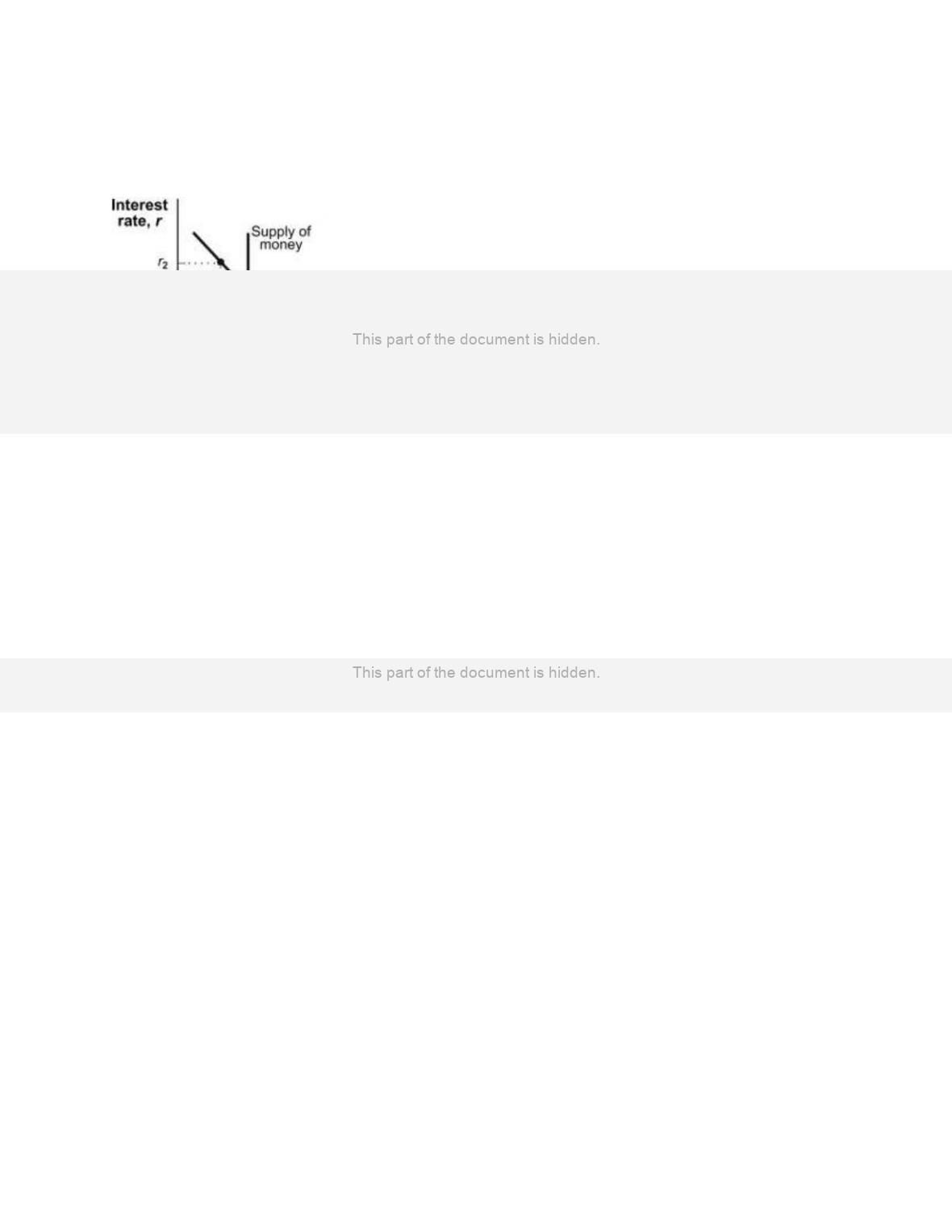
Figure: Equilibrium in the Money Market
66.
(Figure: Equilibrium in the Money Market) Refer to Figure: Equilibrium in the Money
Market. Equilibrium will occur at interest rate _____ and quantity of money _____.
A)
r2; Q0
B)
r0; Q2
C)
r1; Q1
D)
r1; Q2
67.
(Figure: Equilibrium in the Money Market) Refer to Figure: Equilibrium in the Money
Market. If the interest rate is above equilibrium, there will be an excess _____ money
and the interest rate will _____.
A)
demand for; rise
B)
supply of; fall
C)
demand for; fall
D)
supply of; rise
68.
(Figure: Equilibrium in the Money Market) Refer to Figure: Equilibrium in the Money
Market. If the rate of interest is below equilibrium, there will be an excess _____ money
and the interest rate will _____.
A)
demand for; rise
B)
supply of; fall
C)
demand for; fall
D)
supply of; rise
Page 13
69.
An increase in the demand for money with no change in supply will lead to _____ in the
equilibrium quantity of money and _____ in the equilibrium interest rate.
A)
no change; a rise
B)
no change; a fall
C)
a decrease; a rise
D)
an increase; a fall
70.
The idea that the interest rate is determined by the supply and demand for money is
known as:
A)
the liquidity preference model.
B)
the quantity theory of money.
C)
the monetarist theory.
D)
the loanable funds theory.
71.
The money supply curve is:
A)
downward sloping.
B)
vertical.
C)
upward rising.
D)
horizontal.
72.
An increase in the supply of money with no change in demand will lead to a(n) _____ in
the equilibrium quantity of money and a _____ in the equilibrium interest rate.
A)
increase; rise
B)
increase; fall
C)
decrease; rise
D)
decrease; fall
73.
A decrease in the supply of money with no change in demand for money will lead to
a(n) _____ in the equilibrium quantity of money and a _____ in the equilibrium interest
rate.
A)
increase; rise
B)
increase; fall
C)
decrease; rise
D)
decrease; fall
Page 14
74.
A sale of Treasury bills by the Federal Reserve _____ interest rates and _____ the
money supply.
A)
raises; increases
B)
raises; reduces
C)
lowers; reduces
D)
lowers; increases
75.
Suppose that the Federal Reserve buys Treasury bills. We can expect this transaction to
_____ the money supply, _____ Treasury bill prices, and _____ interest rates.
A)
reduce; increase; lower
B)
increase; lower; lower
C)
increase; raise; lower
D)
reduce; reduce; raise
76.
Suppose that the Federal Reserve sells Treasury bills. We can expect this transaction to
_____ the money supply, _____ Treasury bill prices, and _____ interest rates.
A)
reduce; increase; lower
B)
increase; lower; lower
C)
increase; raise; lower
D)
reduce; reduce; raise
Use the following to answer questions 77-78:
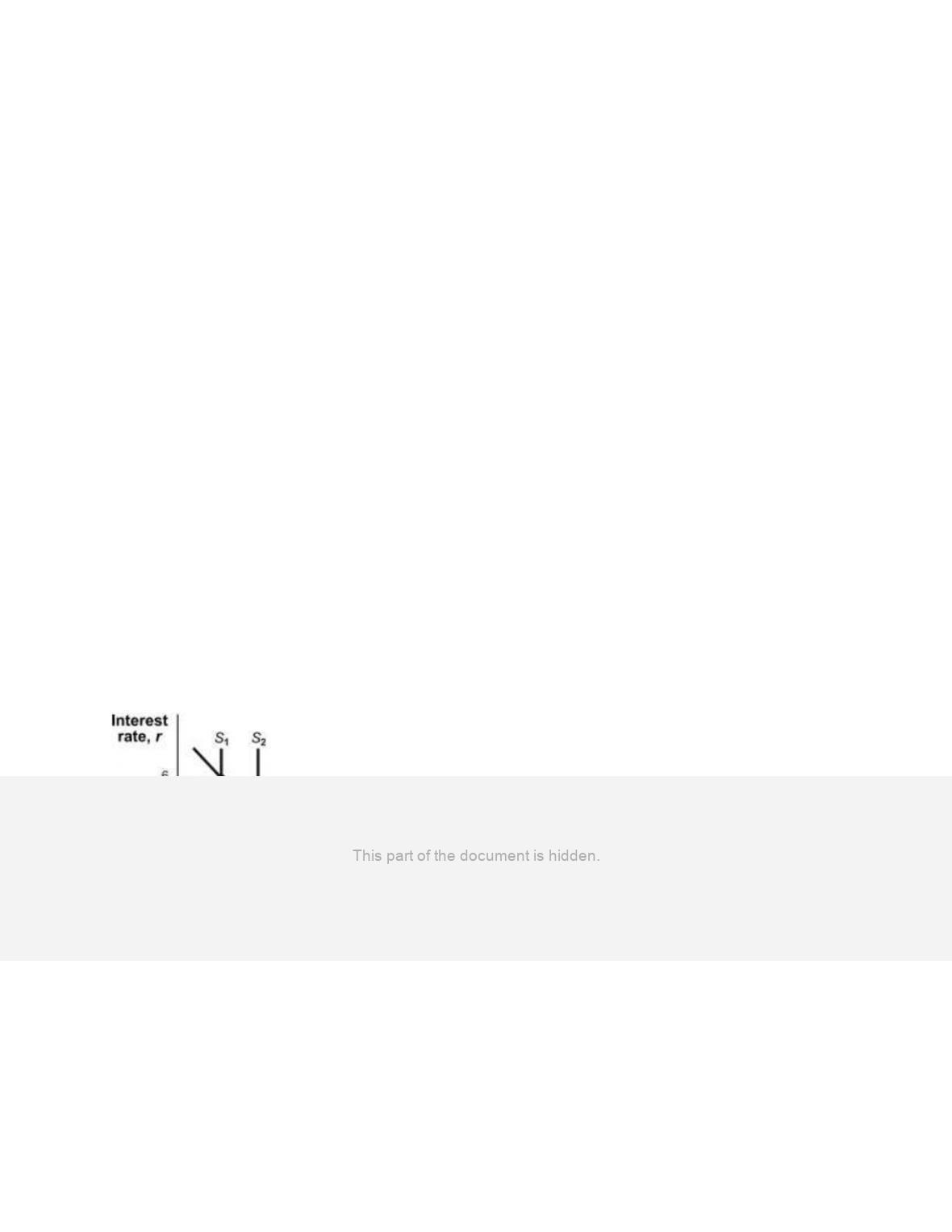
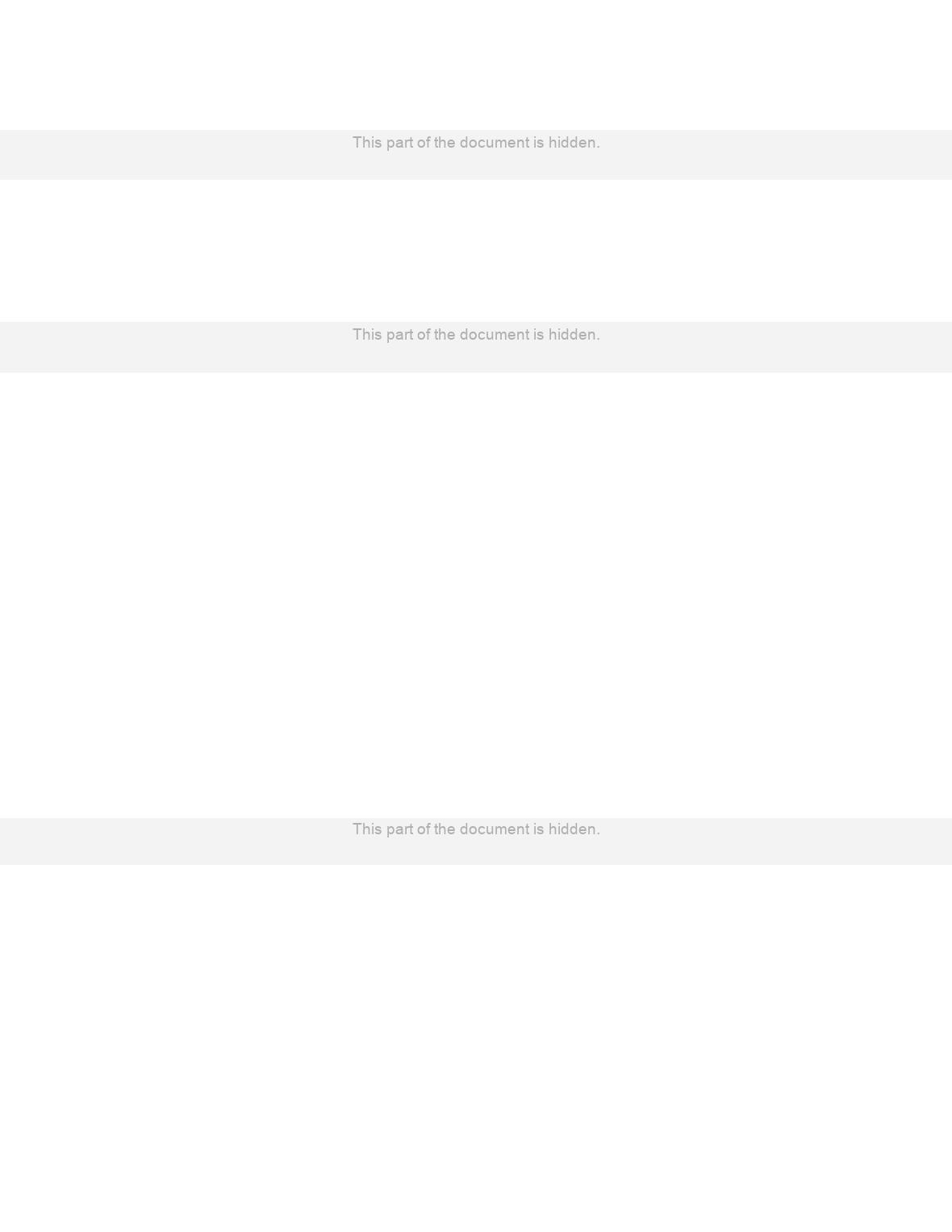
Figure: Changes in the Money Supply
Page 15
77.
(Figure: Changes in the Money Supply) Refer to Figure: Changes in the Money Supply.
If the supply of money shifts from S1 to S2, the Federal Reserve must have _____
Treasury bills in the open market.
A)
sold
B)
bought
C)
issued new
D)
borrowed
78.
(Figure: Changes in the Money Supply) Refer to Figure: Changes in the Money Supply.
Federal Reserve policy to increase the supply of money, hence to lower the interest rate
from 6% to 4%, is accomplished by action that ________ Treasury bills.
A)
lowers the price of
B)
increases the interest rate on
C)
increases the demand for
D)
increases the supply of
79.
According to the liquidity preference model:
A)
an increase in the money supply lowers the equilibrium rate of interest.
B)
a decrease in the money supply lowers the equilibrium rate of interest.
C)
the money supply curve is a horizontal line.
D)
the demand for money curve is a vertical line.
80.
If the Federal Reserve wants to lower the interest rate, it will:
A)
decrease the money supply.
B)
increase the money supply.
C)
keep the money supply unchanged.
D)
mandate a lower interest rate.
81.
If the target rate of interest is higher than the equilibrium interest rate, the Federal
Reserve will _____ Treasury bills in the open market, _____ the supply of money, and
_____ the interest rate to the target rate.
A)
sell; increase; lower
B)
buy; increase; lower
C)
sell; decrease; raise
D)
buy; decrease; raise
Page 16
82.
Suppose that the Federal Reserve has set a target for the federal funds rate. If initially
the equilibrium interest rate happens to be higher than the target interest rate, then the
Federal Reserve should _____ Treasury bills in the open market, _____ the money
supply, shift the supply of money curve to the _____, and _____ the interest rate to the
target rate.
A)
sell; decrease; left; raise
B)
purchase; decrease; left; lower
C)
purchase; increase; right; lower
D)
sell; increase; left; raise
83.
The federal funds rate is:
A)
determined by the supply of and demand for money.
B)
set by Congress.
C)
determined in the real market by the aggregate supply and aggregate demand
curves.
D)
the interest rate that banks pay when they borrow directly from the Fed.
84.
If the Federal Reserve wants to lower interest rates, it can _____ the money supply by
_____ Treasury bills.
A)
decrease; selling
B)
decrease; buying
C)
increase; selling
D)
increase; buying
85.
To expand the money supply, the Federal Reserve would have to:
A)
make an open purchase of Treasury bills.
B)
have an open sale of Treasury bills.
C)
raise interest rates.
D)
get approval from Congress.
86.
According to the liquidity preference model, a(n) _____ in the money supply shifts the
money supply curve to the _____ and increases the equilibrium interest rate.
A)
decrease; right
B)
increase; left
C)
decrease; left
D)
increase; right
Page 17
87.
The Federal Reserve affects interest rates by:
A)
setting them with regulations.
B)
open market operations that shift the money demand curve.
C)
open market operations that shift the money supply curve.
D)
changing tax rates.
88.
The Federal Open Market Committee sets the target interest rate for the next:
A)
three months.
B)
six months.
C)
three weeks.
D)
six weeks.
89.
To lower the short-term interest rate, the Federal Reserve can:
A)
buy Treasury bills.
B)
sell Treasury bills.
C)
tell the banks to make more loans.
D)
tell the banks to make fewer loans.
90.
When the Federal Reserve buys Treasury bills, this leads to a(n):
A)
decrease in the money supply.
B)
increase in the money supply.
C)
increase in short-term interest rates.
D)
increase in the Federal Reserve funds rate.
91.
Assume the money market is in equilibrium. The Federal Reserve Bank has decided to
purchase Treasury bills in an open market operation. The result of this action will be a
_____ in the interest rate as the money _____ shifts _____.
A)
fall; supply curve; outward
B)
fall; supply curve; inward
C)
fall; demand curve; inward
D)
rise; demand curve; outward
92.
The Federal Open Market Committee has decided that the federal funds rate should be
2% rather than the current rate of 1.5%. The appropriate open market action is to _____
Treasury bills to _____ money _____.
A)
sell; decrease; demand
B)
sell; decrease; supply
C)
buy; decrease; supply
D)
buy; increase; demand
Page 18
93.
The Federal Open Market Committee has decided that the federal funds rate should be
0.5% rather than the current rate of 1.25%. The appropriate open market action is to
_____ Treasury bills to _____ money _____.
A)
buy; decrease; demand
B)
buy; decrease; supply
C)
sell; decrease; demand
D)
buy; increase; supply
94.
When long-term interest rates are higher than short-term rates, as they were in 2010, it:
A)
implies that short-term interest rates are expected to fall.
B)
has no implication for short-term interest rates.
C)
implies that inflation will fall.
D)
implies that short-term interest rates are expected to rise.
95.
If long-term interest rates are 8% and short-term rates are 3%, the market expects:
A)
short-term rates to fall.
B)
short-term rates to rise.
C)
short-term rates to remain the same.
D)
there is no relationship between long-term and short-term rates.
96.
Long-term interest rates and short-term interest rates:
A)
usually move in lockstep.
B)
always move closely together.
C)
don’t always move closely together.
D)
are independent of one another.
97.
Long-term interest rates are higher than short-term rates. This reflects a belief that:
A)
short-term rates will fall.
B)
short-term rates will rise.
C)
short-term rates will remain the same.
D)
the Federal Reserve is undergoing a change in policy.
98.
In September 2007, reversing its course, the Federal Reserve began a series of:
A)
interest rate increases, reversing its previous policy of lowering interest rates to
fight the financial crisis.
B)
interest rate increases to combat inflation.
C)
cuts in the reserve requirements, reversing its previous policy of increasing the
reserve requirement, to stop bank failures.
D)
cuts in the federal funds target rate to lower the interest rate, reversing its previous
policy of raising interest rates, to fight the financial crisis.
Page 19
Use the following to answer questions 99-101:
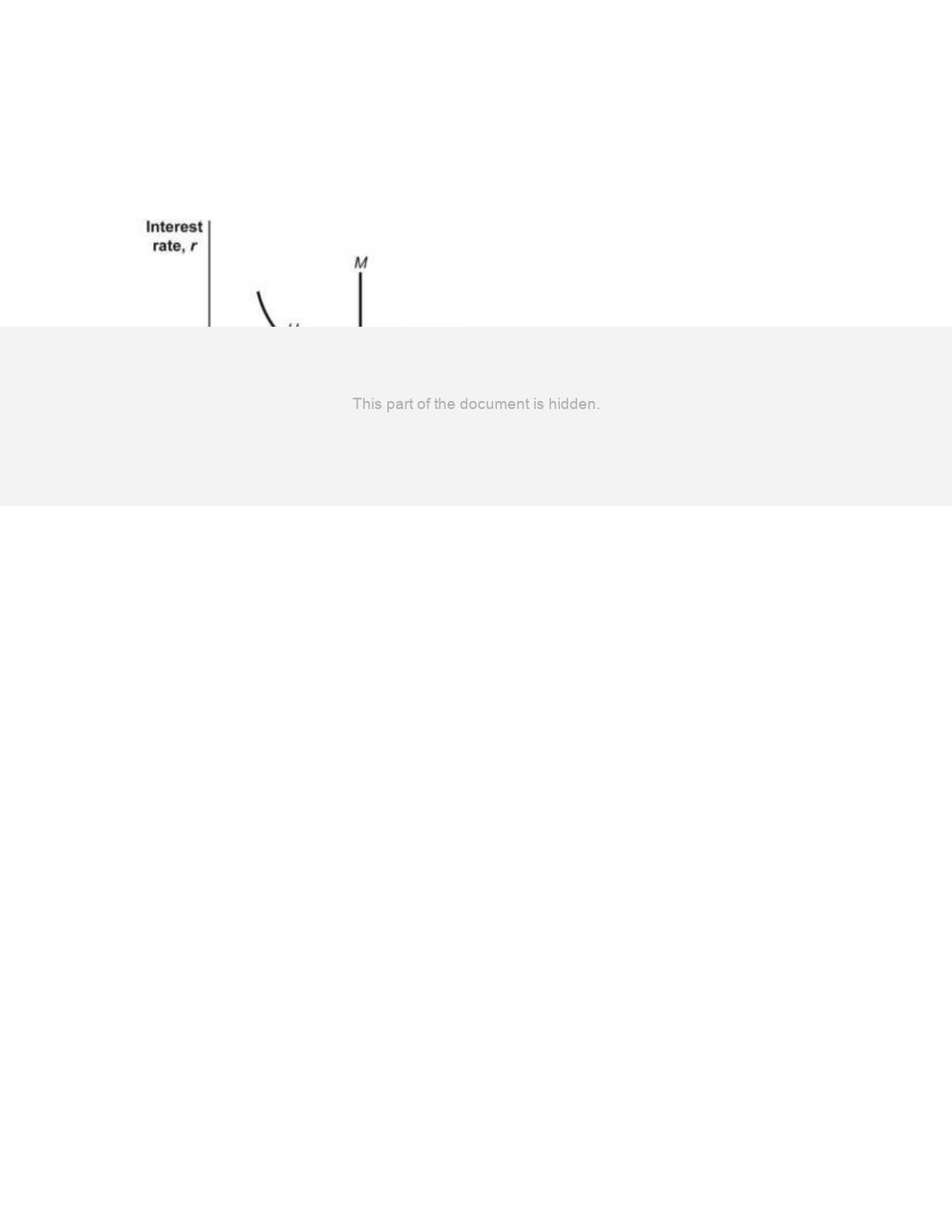
Figure: Money Market I
99.
(Figure: Money Market I) Refer to Figure: Money Market I. If the money market is
initially in equilibrium at point E and the central bank sells Treasury bills, then the
interest rate will:
A)
move toward rH.
B)
move toward rL
C)
remain at rE.
D)
shift rightward.
100.
(Figure: Money Market I) Refer to Figure: Money Market I. If the money market is
initially in equilibrium at point E and the central bank buys Treasury bills, then the
interest rate will:
A)
move toward rH.
B)
move toward rL.
C)
remain at rE.
D)
shift leftward.
101.
(Figure: Money Market I) Refer to Figure: Money Market I. If the interest rate is at rL
and the central bank neither buys nor sells Treasury bills, then the interest rate will:
A)
move toward rH.
B)
move toward rL.
C)
move toward rE.
D)
not change.
Page 20
102.
According to the liquidity preference model, if the Federal Reserve increases the money
supply, the equilibrium interest rate _____, and this leads to a(n) _____ in the quantity
demanded of nonmonetary interest-bearing financial assets.
A)
rises; increase
B)
falls; decrease
C)
rises; decrease
D)
falls; increase
103.
Other things equal, rising interest rates lead to a _____ in investment spending and a
_____ in _____ spending.
A)
fall; fall; consumer
B)
rise; rise; consumer
C)
fall; rise; consumer
D)
fall; rise; investment
104.
Expansionary monetary policy _____ the money supply, _____ interest rates, and _____
consumption and investment spending.
A)
increases; increases; increases
B)
decreases; decreases; decreases
C)
increases; decreases; increases
D)
decreases; increases; decreases
105.
Monetary policy that lowers the interest rate is called _____ because it _____.
A)
contractionary; aims to head off inflation
B)
expansionary; increases short-run aggregate supply
C)
contractionary; reduces saving and increases consumption
D)
expansionary; increases aggregate demand
106.
The main objective of contractionary monetary policy is to:
A)
decrease aggregate demand.
B)
close a recessionary gap.
C)
increase investment.
D)
raise the level of potential output.
107.
Monetary policy affects GDP and the price level by:
A)
changing aggregate supply.
B)
changing aggregate demand.
C)
changing the aggregate amount of labor supplied.
D)
changing exports.