Page 76
442.
Traveler’s checks and checkable deposits are:
A)
part of M1.
B)
considered near-moneys.
C)
part of the monetary base.
D)
not considered part of the M grouping.
443.
M2 is made up of:
A)
M1 plus near-moneys.
B)
M1 plus stocks and bonds.
C)
only near-moneys.
D)
any assets that are not very liquid.
444.
Currency held in bank vaults and bank deposits held at the Federal Reserve are:
A)
part of M1.
B)
part of M2.
C)
part of M3.
D)
not part of the money supply.
445.
When a person deposits money in a bank, it is:
A)
only an asset for the bank.
B)
only a liability for the bank.
C)
a liability and an asset for the bank.
D)
most likely to result in a decrease in the money supply.
446.
Suppose a bank faces a 10% required reserve ratio and it has $100 in required reserves.
If it is fully loaned out, what is the amount of deposits in this bank?
A)
$900
B)
$10
C)
$1,000
D)
$10,000
447.
A bank’s capital is the:
A)
sum of its total assets and total liabilities.
B)
difference between its total assets and its total liabilities.
C)
difference between its total assets and its total required reserves.
D)
sum of its liabilities.
Page 77
448.
Deposit insurance:
A)
can increase the possibility of bank runs.
B)
often makes banks more accountable for their actions and less likely to engage in
risky behavior.
C)
essentially serves the same function as a fractional reserve system.
D)
leads depositors to be less inclined to monitor bank operations.
449.
Deposit insurance:
A)
is essentially the same as a bank’s required reserves.
B)
provides depositors with assurances that they will receive their deposits up to
$250,000, even if there are questions about a bank’s soundness.
C)
can be used only if depositors lose deposits in excess of $250,000.
D)
encourages banks to carefully consider to whom they lend funds.
450.
When a bank lends excess reserves to a customer:
A)
this does not affect the money supply.
B)
the money supply is increased.
C)
the money supply is decreased.
D)
it has the same effect as when one customer writes a check to another customer at a
different bank.
451.
When banks extend loans:
A)
the money supply decreases.
B)
the money supply increases.
C)
the money supply is unaffected, since no new money was printed.
D)
they do so with their required reserves.
452.
If the required reserve ratio rises:
A)
the money multiplier will also rise.
B)
the banking system must keep more of a deposit in its reserves.
C)
the amount of reserves in the banking system will decrease.
D)
excess reserves will also rise.
453.
Currency in circulation plus bank reserves:
A)
forms the monetary base.
B)
is equal to M1 plus M2.
C)
equals the required reserves for a bank.
D)
equals the excess reserves for a bank.
Page 78
454.
If banks decide to hold some of their excess reserves instead of lending them all out:
A)
the money multiplier will be less than 1 divided by the required reserve ratio.
B)
a loan of $1 will lead to a change in the money supply by a multiple amount equal
to 1 divided by the required reserve ratio.
C)
the money multiplier becomes 1 divided by the excess reserves.
D)
depositors will have to borrow more to increase the money supply.
455.
Between 1929 and 1933, bank deposits fell:
A)
as consumers spent more money to buy goods.
B)
as fears of bank failures compelled depositors to withdraw their deposits.
C)
and M1 rose as the currency holdings by customers decreased.
D)
and banks lent more money to customers.
456.
Holding everything else constant, if the required reserve ratio falls:
A)
the money multiplier increases.
B)
a $1 loan can lead to a smaller change in the money supply than before the change
in the required reserve ratio.
C)
the amount of excess reserves falls also.
D)
the money multiplier decreases.
457.
When a bank borrows from the Federal Reserve, it pays the:
A)
required reserve ratio.
B)
discount rate.
C)
federal funds rate.
D)
prime rate.
458.
The federal funds rate is the rate:
A)
a private borrower would pay a bank for a loan.
B)
one bank would pay another bank for a loan of reserves.
C)
a bank would pay the Federal Reserve for a loan of reserves.
D)
the Federal Reserve would pay to borrow money from government.
459.
Suppose the required reserve ratio increased from 10% to 20%. This would:
A)
reduce the money multiplier from 10 to 5.
B)
increase the amount of excess reserves available.
C)
increase the money multiplier from 5 to 10.
D)
not change the money multiplier.
Page 79
460.
If the Federal Reserve wanted to increase the money supply, it could _____ the required
reserve ratio, _____, and _____ bonds on the open market.
A)
decrease; increase the federal funds rate; sell
B)
decrease; decrease the discount rate; buy
C)
increase; increase the personal tax rate; sell
D)
decrease; increase the personal tax rate; buy
461.
The financial crisis of 2008 in the United States required:
A)
the Fed to solve the problem independent of government assistance.
B)
more government involvement and funding for troubled industries.
C)
tighter supervision by the Federal Reserve Bank of New York.
D)
the Treasury to solve the problems independently since the Fed was unwilling to
help.
462.
In the United States, financial crises have often resulted in:
A)
increased calls for tighter financial regulation.
B)
more competition in the financial industry.
C)
no changes in the financial industry since such crises are rare.
D)
less financial regulation.
463.
If the required reserve ratio is 10% and the Fed conducts an open market purchase of
$100, what is the maximum possible change in the money supply?
A)
$100
B)
$1,000
C)
$10,000
D)
$10
464.
Suppose an economy uses a monetary system of checkable deposits only and it has a
required reserve ratio of 20%. If the central bank in this economy conducts an open
market purchase of $5 million of Treasury bills, this will potentially _____ the money
supply by _____.
A)
increase; $25 million
B)
decrease; $25 million
C)
increase; $10 million
D)
decrease; $10 million
Answer Key
Page 81
45.
D
46.
C
47.
A
48.
A
49.
D
50.
D
51.
D
52.
B
53.
C
54.
D
55.
A
56.
A
57.
B
58.
C
59.
B
60.
D
61.
A
62.
B
63.
A
64.
D
65.
C
66.
D
67.
B
68.
D
69.
C
70.
D
71.
D
72.
C
73.
B
74.
D
75.
C
76.
C
77.
B
78.
B
79.
C
80.
B
81.
C
82.
B
83.
C
84.
D
85.
C
86.
A
87.
B
88.
A
89.
D
90.
C
Page 82
91.
B
92.
B
93.
D
94.
B
95.
C
96.
B
97.
D
98.
B
99.
A
100.
C
101.
D
102.
C
103.
D
104.
C
105.
D
106.
C
107.
A
108.
A
109.
A
110.
C
111.
D
112.
D
113.
B
114.
B
115.
C
116.
B
117.
A
118.
B
119.
B
120.
C
121.
A
122.
C
123.
C
124.
C
125.
D
126.
D
127.
C
128.
C
129.
B
130.
C
131.
D
132.
B
133.
C
134.
A
135.
A
136.
C
Page 83
137.
A
138.
B
139.
D
140.
B
141.
A
142.
A
143.
B
144.
C
145.
A
146.
C
147.
C
148.
C
149.
A
150.
A
151.
D
152.
C
153.
B
154.
C
155.
C
156.
A
157.
C
158.
C
159.
D
160.
B
161.
D
162.
C
163.
D
164.
B
165.
C
166.
A
167.
B
168.
C
169.
C
170.
D
171.
A
172.
D
173.
A
174.
A
175.
B
176.
C
177.
D
178.
C
179.
A
180.
C
181.
B
182.
D
Page 84
183.
B
184.
A
185.
A
186.
A
187.
B
188.
D
189.
D
190.
D
191.
B
192.
C
193.
A
194.
D
195.
C
196.
D
197.
D
198.
A
199.
D
200.
A
201.
D
202.
A
203.
D
204.
D
205.
D
206.
A
207.
A
208.
B
209.
C
210.
C
211.
B
212.
D
213.
D
214.
B
215.
D
216.
C
217.
C
218.
D
219.
C
220.
A
221.
D
222.
B
223.
B
224.
B
225.
D
226.
A
227.
B
228.
C
Page 85
229.
D
230.
B
231.
A
232.
A
233.
C
234.
C
235.
C
236.
A
237.
C
238.
B
239.
A
240.
A
241.
B
242.
C
243.
D
244.
D
245.
A
246.
C
247.
B
248.
C
249.
C
250.
A
251.
D
252.
C
253.
D
254.
C
255.
A
256.
B
257.
C
258.
D
259.
A
260.
A
261.
D
262.
C
263.
A
264.
C
265.
C
266.
D
267.
A
268.
B
269.
C
270.
D
271.
B
272.
C
273.
B
274.
B
Page 86
275.
B
276.
A
277.
A
278.
B
279.
A
280.
C
281.
C
282.
B
283.
D
284.
C
285.
D
286.
C
287.
D
288.
B
289.
B
290.
C
291.
A
292.
A
293.
D
294.
C
295.
A
296.
C
297.
B
298.
A
299.
A
300.
A
301.
A
302.
A
303.
B
304.
B
305.
A
306.
A
307.
A
308.
A
309.
B
310.
A
311.
A
312.
A
313.
B
314.
A
315.
B
316.
A
317.
B
318.
B
319.
A
320.
B
Page 87
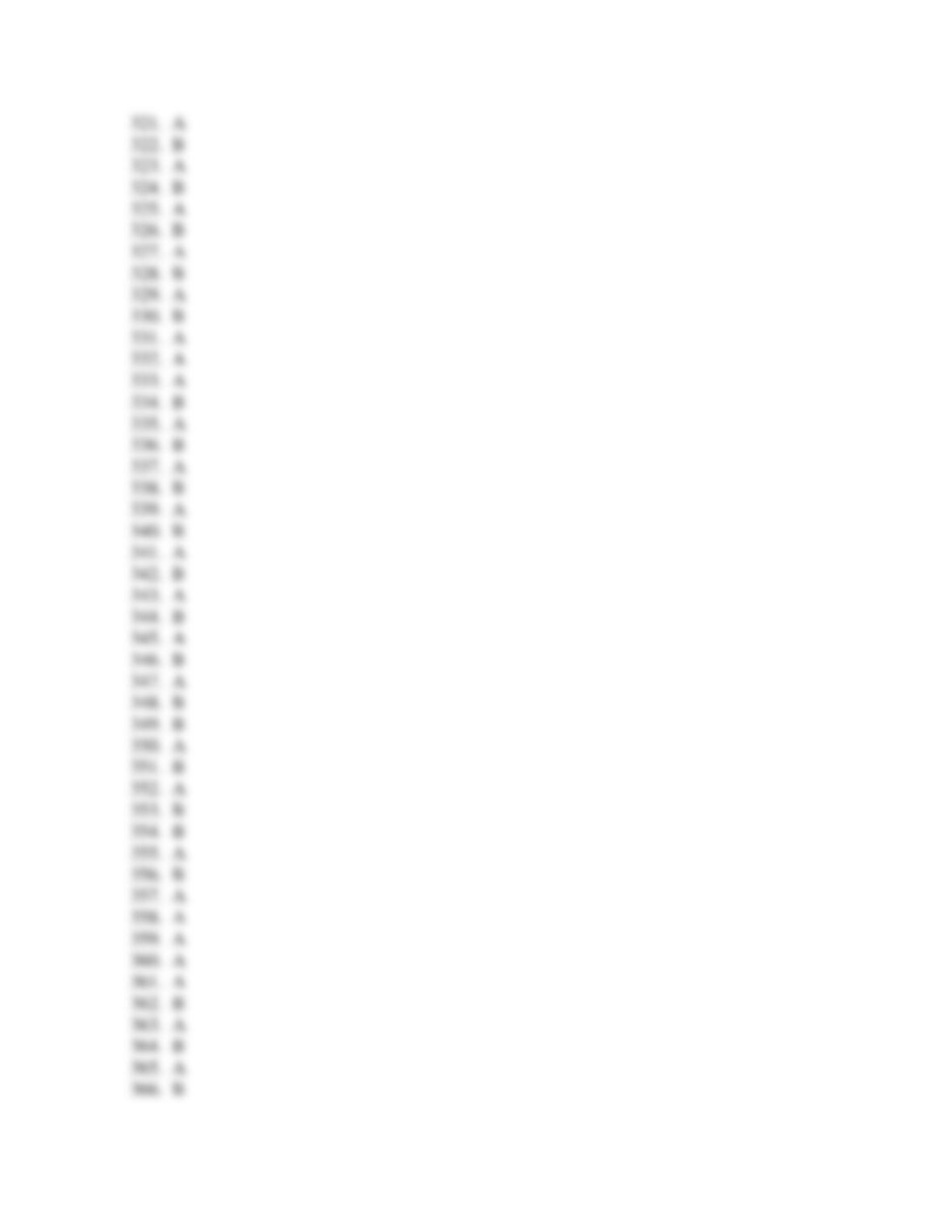
321.
A
322.
B
323.
A
324.
B
325.
A
326.
B
327.
A
328.
B
329.
A
330.
B
331.
A
332.
A
333.
A
334.
B
335.
A
336.
B
337.
A
338.
B
339.
A
340.
B
341.
A
342.
B
343.
A
344.
B
345.
A
346.
B
347.
A
348.
B
349.
B
350.
A
351.
B
352.
A
353.
B
354.
B
355.
A
356.
B
357.
A
358.
A
359.
A
360.
A
361.
A
362.
B
363.
A
364.
B
365.
A
366.
B
Page 88
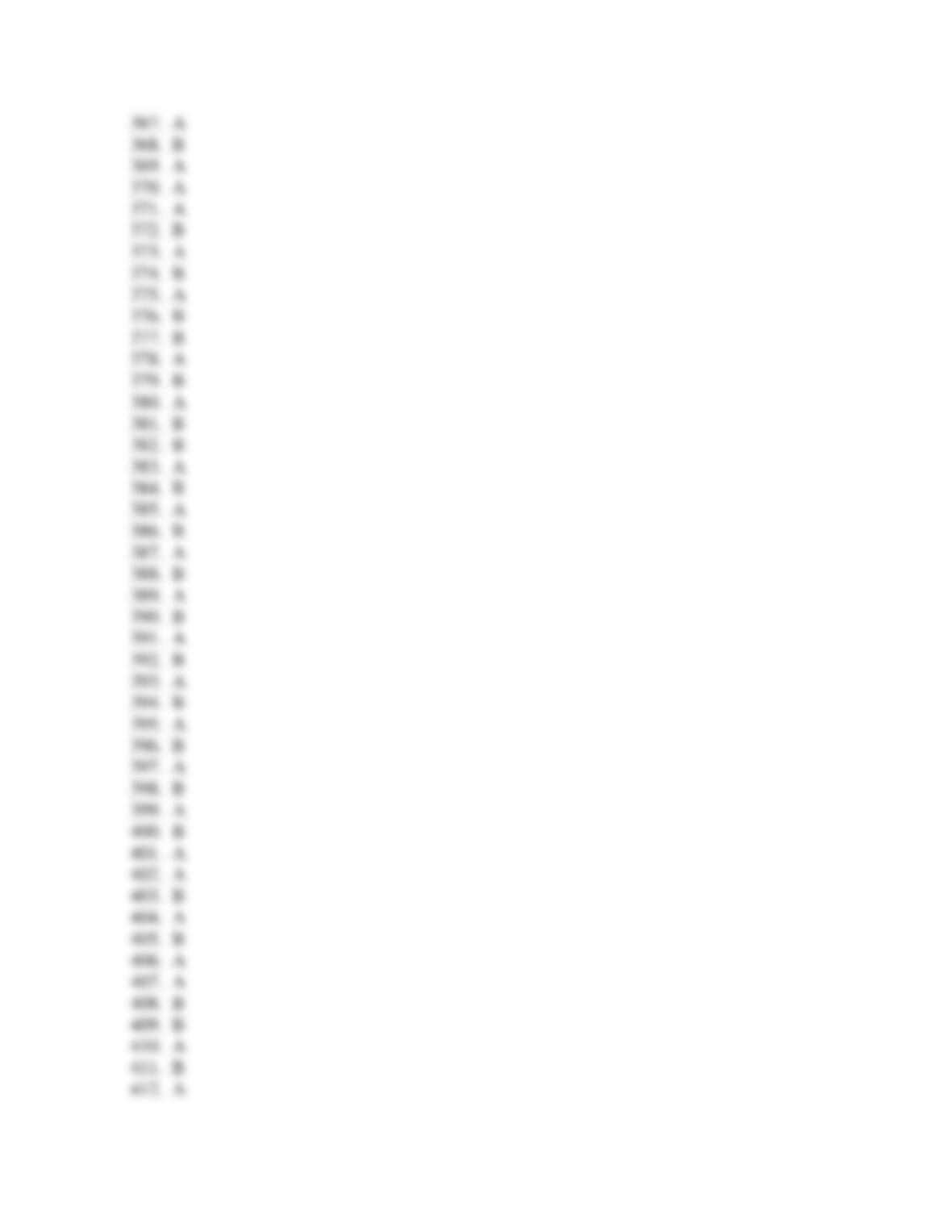
367.
A
368.
B
369.
A
370.
A
371.
A
372.
B
373.
A
374.
B
375.
A
376.
B
377.
B
378.
A
379.
B
380.
A
381.
B
382.
B
383.
A
384.
B
385.
A
386.
B
387.
A
388.
B
389.
A
390.
B
391.
A
392.
B
393.
A
394.
B
395.
A
396.
B
397.
A
398.
B
399.
A
400.
B
401.
A
402.
A
403.
B
404.
A
405.
B
406.
A
407.
A
408.
B
409.
B
410.
A
411.
B
412.
A
Page 89
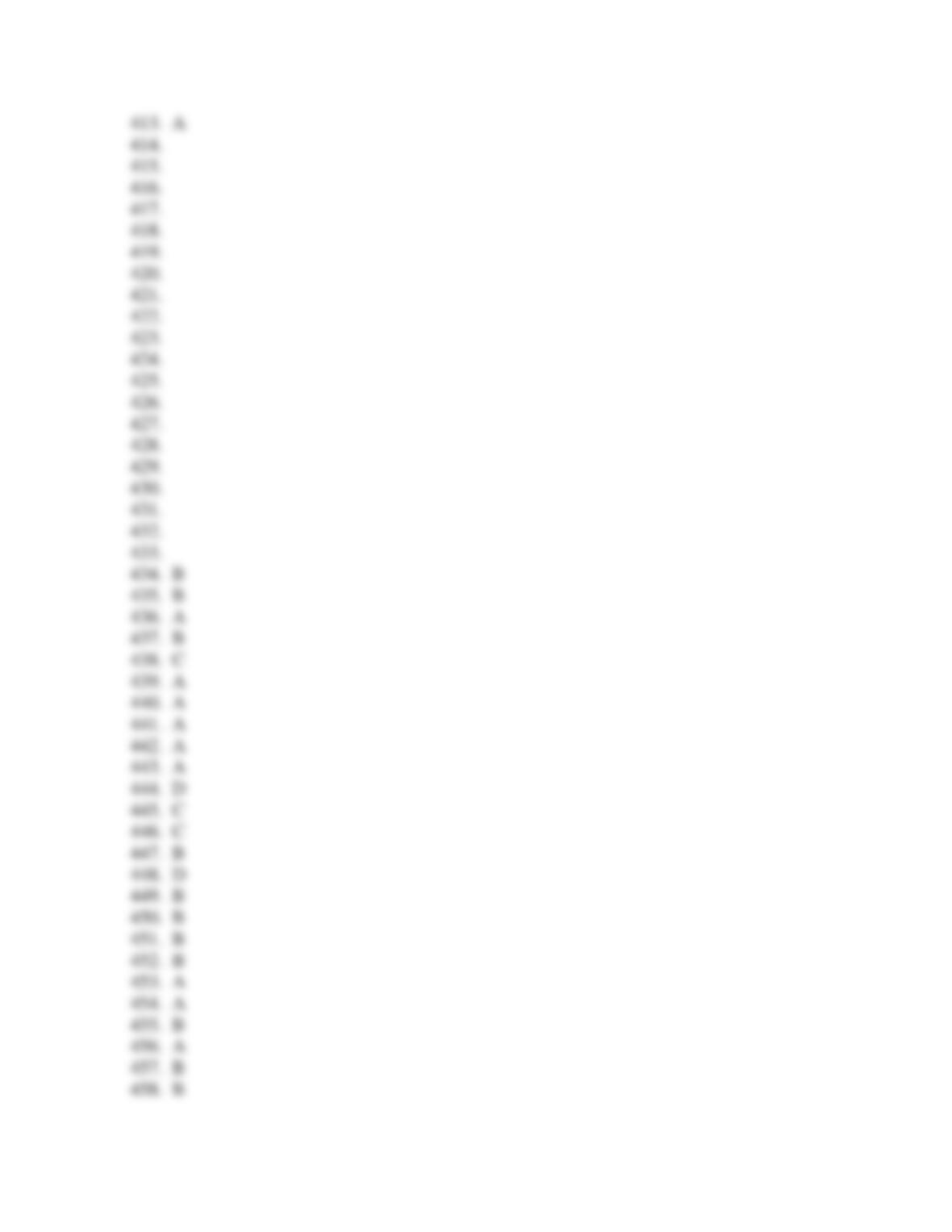
413.
A
414.
415.
416.
417.
418.
419.
420.
421.
422.
423.
424.
425.
426.
427.
428.
429.
430.
431.
432.
433.
434.
B
435.
B
436.
A
437.
B
438.
C
439.
A
440.
A
441.
A
442.
A
443.
A
444.
D
445.
C
446.
C
447.
B
448.
D
449.
B
450.
B
451.
B
452.
B
453.
A
454.
A
455.
B
456.
A
457.
B
458.
B

Page 90
459.
A
460.
B
461.
B
462.
A
463.
B
464.
A