
Page 41
215.
If the Fed conducts an open-market sale, bank reserves _____ and the money supply is
likely to _____.
A)
increase; increase
B)
increase; decrease
C)
decrease; increase
D)
decrease; decrease
216.
Most of the Fed’s income comes from:
A)
interest on its loans to commercial banks.
B)
payments from the U.S. government in return for the Fed serving as its fiscal agent.
C)
interest on the U.S. Treasury bills that it owns.
D)
fees that it charges commercial banks for clearing checks and electronic funds
transfers.
217.
Most of the interest on the Fed’s assets is:
A)
used to maintain the buildings and grounds of the 12 regional banks.
B)
used to purchase currency in the foreign exchange market.
C)
returned to the U.S. taxpayers.
D)
shared with banks that are members of the Federal Reserve System.
218.
The European Central Bank was established:
A)
during the French Revolution at the end of the eighteenth century.
B)
in 1913, at the same time as the U.S. Federal Reserve System.
C)
as part of the treaty ending World War II.
D)
in 1999, when the euro was adopted.
219.
The eurozone is
A)
another name for Scandinavia.
B)
the only countries in Europe that engage in free trade with the United States.
C)
the countries that use the euro as their common currency.
D)
made up of the communist countries in eastern Europe.
220.
The economy of the eurozone is:
A)
approximately the size of the U.S. economy.
B)
bigger than the economies of the rest of the world combined.
C)
about the size of the economy of New York state.
D)
smaller than the economy of California.
Page 42
221.
The supply of euros is controlled by:
A)
the Bank of England.
B)
the U.S. Federal Reserve System.
C)
the foreign exchange markets.
D)
the European Central Bank.
222.
The European Central Bank is the equivalent of:
A)
the Bank of Italy.
B)
the Board of Governors of the U.S. Federal Reserve.
C)
the Bank of Japan.
D)
the Federal Deposit Insurance Corporation.
223.
The responsibilities of the Federal Reserve do NOT include:
A)
control the monetary base.
B)
mint bills and coins.
C)
oversee and regulate the banking system.
D)
set the discount rate.
224.
Which action would allow banks to lend out more money?
A)
an increase in the required reserve ratio
B)
a decrease in the discount rate
C)
an increase in the federal funds rate
D)
an increase in the required reserve ratio coupled with an increase in the federal
funds rate
225.
The Federal Reserve controls:
A)
the discount rate only.
B)
the monetary base only.
C)
the reserve ratio only.
D)
the discount rate, the monetary base, and the reserve ratio.
226.
To _____ the money supply, the Federal Reserve could _____.
A)
increase; lower the reserve requirements
B)
decrease; lower the discount rate
C)
increase; raise the federal funds rate
D)
decrease; conduct open-market purchases
Page 43
227.
To _____ the money supply, the Federal Reserve could _____.
A)
decrease; lower the reserve requirements
B)
increase; lower the discount rate
C)
increase; conduct open-market sales
D)
decrease; lower the federal funds rate
228.
To _____ the money supply, the Federal Reserve could _____.
A)
increase; decrease the money multiplier
B)
decrease; lower the reserve requirements
C)
increase; conduct open-market purchases
D)
decrease; lower the discount rate
229.
To increase the money supply, the central bank could:
A)
raise the discount rate.
B)
make open-market sales.
C)
raise reserve requirements.
D)
lower the discount rate.
230.
To decrease the money supply, the central bank could:
A)
lower the discount rate.
B)
make open-market sales.
C)
decrease the discount rate.
D)
lower the federal funds rate.
231.
If the Federal Reserve wants to discourage banks from borrowing directly from the
Federal Reserve and thus decrease the monetary base, it will likely:
A)
increase the discount rate.
B)
increase the federal funds rate.
C)
increase the reserve requirement.
D)
sell U.S. Treasury bills in an open market operation.
232.
If the Federal Reserve wants to increase the monetary base, it might:
A)
engage in an open market purchase of Treasury bills.
B)
increase the discount rate.
C)
increase the reserve ratio.
D)
decrease personal income taxes.
Page 44
233.
If the Federal Reserve wants to increase the money supply, it could:
A)
sell U.S. Treasury bills.
B)
cut taxes across the board.
C)
lower the reserve requirement.
D)
increase the discount rate.
234.
The banking crisis of 1907 that preceded the Great Depression and the recent one in
2008 were both caused by:
A)
short-run business cycle fluctuations.
B)
lack of investment spending and high unemployment.
C)
risky speculation in real estate and in the stock market.
D)
low labor productivity in the United States combined with a huge trade deficit.
235.
The Panic of 1907 was caused by:
A)
national banks issuing too much currency.
B)
trusts’ memberships in the New York Clearinghouse.
C)
trusts’ losses due to their unsuccessful stock market speculation.
D)
excessive investment in collateralized debt obligations.
236.
The Panic of 1907 came to an end when:
A)
J. P. Morgan, John D. Rockefeller, and the Secretary of the Treasury increased
bank reserves.
B)
the Social Security Act was passed.
C)
the Federal Reserve was established.
D)
Franklin Delano Roosevelt declared a bank holiday.
237.
The main problem with the banking system from 1864 to 1913 was that:
A)
the Federal Reserve’s monetary policy was too restrictive.
B)
government budget deficits destabilized the system.
C)
the money supply was not sufficiently responsive to local economic changes.
D)
the currency was not uniform because each bank issued its own notes.
238.
Trusts _____ than national banks.
A)
were more closely regulated
B)
had lower reserve requirements
C)
had higher reserve requirements
D)
kept more capital
Page 45
239.
The Panic of 1907 began when:
A)
the Knickerbocker Trust failed.
B)
Teddy Roosevelt signed the Sherman Antitrust Act.
C)
the Federal Reserve was established.
D)
national banks were allowed to issue their own bank notes.
240.
Between 1864 and 1913, American banking was dominated by:
A)
a federally regulated system of national banks.
B)
an unregulated system of state banks, each issuing its own currency.
C)
the Federal Reserve System in Washington, D.C.
D)
European banks that supplied coins and paper money for the U.S. economy.
241.
Before 1864 American banking was dominated by:
A)
a federally regulated system of national banks.
B)
an unregulated system of state banks, each issuing its own currency, with little
regulation.
C)
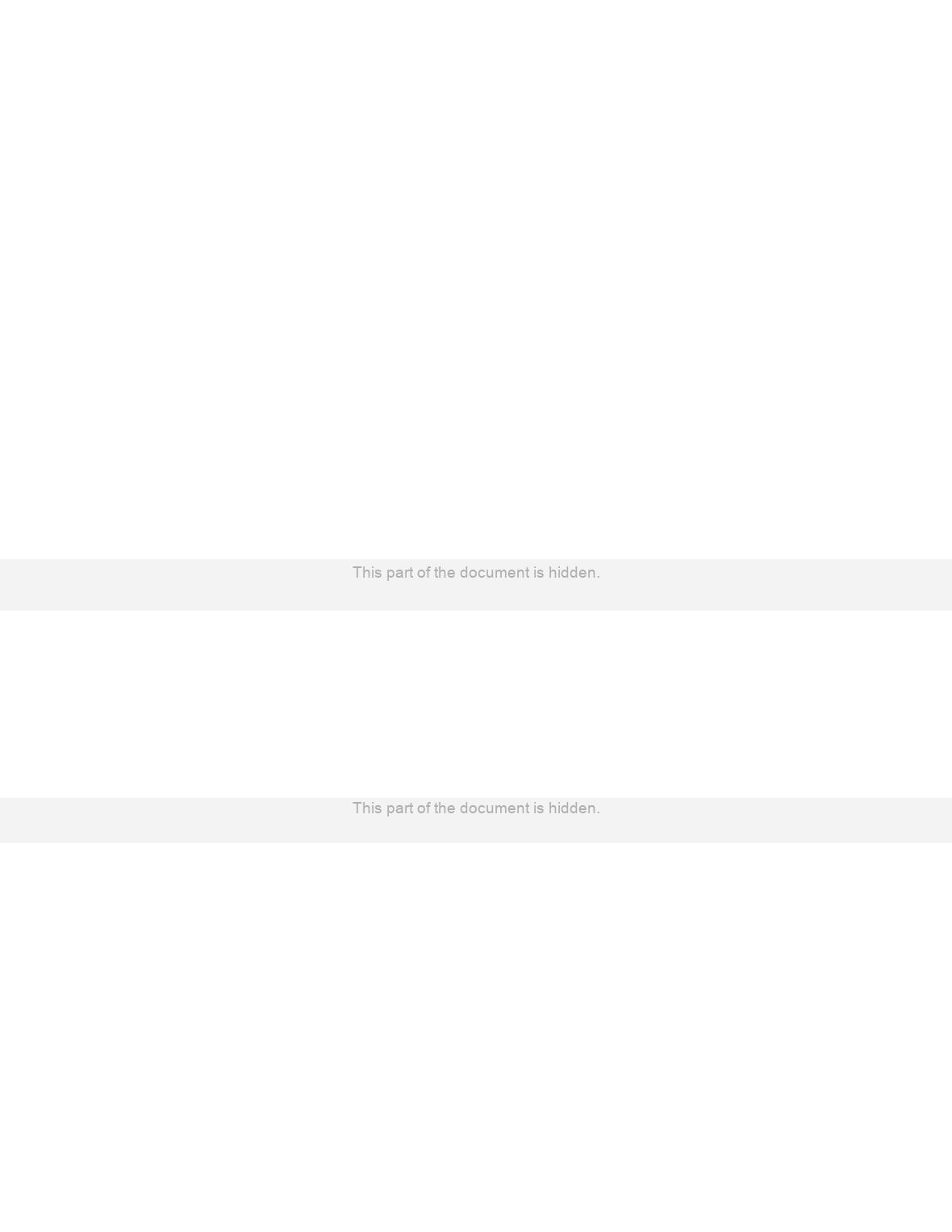
the Federal Reserve System in Washington D.C.
D)
European banks that supplied coins and paper money for the U.S. economy.
242.
The purpose of the local clearinghouses established by banks in the early 1900s was to:
A)
merge failing banks with healthy ones.
B)
facilitate the transfer of electronic funds between member banks.
C)
pool resources of several local banks so that the clearinghouse could guarantee a
member’s deposits in case of a bank run.
D)
help people who were unemployed find jobs.
243.
Before the Panic of 1907, trusts:
A)
issued their own currency.
B)
formed the New York Clearinghouse.
C)
had become very unprofitable.
D)
refused to join the New York Clearinghouse because it would have required the
trusts to hold higher cash reserves, which would have decreased their profits.
Page 46
244.
When the Federal Reserve was established in 1913, it was granted the authority to:
I. require all depository institutions to hold reserves.
II. inspect all deposit-taking institutions.
III. issue currency.
A)
I only
B)
II only
C)
III only
D)
I, II, and III
245.
The bank runs in 1930, 1931, and 1933 were caused primarily by:
A)
sharp decreases in farm commodity prices.
B)
excessive speculation in real estate.
C)
high energy prices.
D)
the failure of the Knickerbocker Trust.
246.
By 1933, banks were able to borrow from:
I. the Reconstruction Finance Corporation.
II. the Federal Reserve System.
A)
I only
B)
II only
C)
I and II
D)
neither I nor II
247.
The Federal Reserve:
A)
was established by Franklin Delano Roosevelt to disburse funds for the Works
Progress Administration.
B)
was established in 1913 in response to the Panic of 1907.
C)
conducts fiscal policy for state governments.
D)
was established by Ronald Reagan during the recession of 1982.
248.
When it was established in 1913, the Federal Reserve was NOT granted the authority to:
A)
require banks to hold reserves.
B)
inspect banks.
C)
prepare the federal budget.
D)
issue currency.
Page 47
249.
The Reconstruction Finance Corporation:
A)
was established to extract war reparations from the South after the Civil War.
B)
supervised the government assistance to AIG and Lehman Brothers.
C)
was established in the 1930s to make loans to banks and to buy their preferred
stock.
D)
supervised the rebuilding of Iraq.
250.
The purpose of the bank holiday declared by Franklin Roosevelt in 1933 was to:
A)
close all banks until regulators could determine how to solve the banking crisis.
B)
give overworked bank employees a rest.
C)
exempt banks from taxes until the Depression was over.
D)
encourage people to use cash instead of checks.
251.
The Glass-Steagall Act of 1933:
A)
established the Reconstruction Finance Corporation.
B)
limited interest rates that savings and loans could charge on mortgages.
C)
established the Federal Reserve.
D)
separated banks to two categories, commercial and investment.
252.
According to the Glass-Steagall Act of 1933:
A)
investment banks could accept deposits, which were covered by deposit insurance.
B)
commercial banks could set up and trade financial assets, such as stocks and bonds.
C)
investment banks could set up and trade financial assets, such as stocks and bonds,
but commercial banks could not trade stocks and bonds.
D)
there was no difference between commercial banks and investment banks.
253.
The purpose of Regulation Q was to:
A)
prevent commercial banks from trading stocks and bonds.
B)
require investment banks to purchase deposit insurance.
C)
prevent unhealthy competition between banks by limiting the number of customers
each bank could serve.
D)
prevent banks from paying interest on checking accounts.
254.
The original purpose of savings and loans was to:
A)
help businesses issue stocks and bonds.
B)
invest in money market mutual funds.
C)
accept deposits from state and local governments and loan them to businesses in
need of short-term loans.
D)
accept savings and loan them to home buyers for long-term mortgages.
Page 48
255.
Savings and loans’ difficulties began in the 1970s, when inflation _____ and interest
rates _____.
A)
increased; increased
B)
increased; decreased
C)
decreased; increased
D)
decreased; decreased
256.
Many S&Ls failed in the 1980s mainly because:
A)
foreign governments defaulted on bonds that the thrifts were holding.
B)
many of their risky real estate loans went bad.
C)
Congress gave the home mortgage business to two government agencies, Fannie
Mae and Freddie Mac.
D)
the Glass-Steagall Act was passed.
257.
High interest rates in the 1970s:
A)
helped S&Ls because it increased their return on investment.
B)
helped S&Ls because higher interest rates on their mortgages increased their
profitability.
C)
hurt S&Ls because they lost savings deposits to investments that paid higher
interest rates.
D)
hurt S&Ls because paying higher interest rates on their deposits decreased their
profits.
258.
As a result of the S&L crisis, in 1989 Congress:
A)
decreased regulation of thrifts.
B)
merged all remaining S&Ls with financially sound commercial banks.
C)
passed legislation prohibiting any financial institution other than S&Ls to make
mortgages.
D)
empowered two government agencies, Fannie Mae and Freddie Mac, to take over
much of the mortgage lending previously done by S&Ls.
259.
A private investment partnership open only to wealthy individuals and institutions is
a(n):
A)
hedge fund.
B)
investment bank.
C)
savings and loan.
D)
quasi-government agency.
Page 49
260.
Shadow banking:
A)
doesn’t look like traditional banking but serves similar purposes while posing
significantly more risk.
B)
is another name for traditional banking.
C)
looks like traditional banking but serves different purposes and imposes
significantly more risk.
D)
doesn’t look like traditional banking but serves similar purposes while not posing
any additional risk.
261.
_____ are MOST likely to be involved in shadow banking.
I. Investment banks
II. Insurance companies
III. Hedge funds
A)
I only
B)
I and III only
C)
II and III only
D)
I, II, and III
262.
Financial intermediaries involved in shadow banking typically:
A)
accept short-term deposits and make short-term loans.
B)
accept long-term deposits and make long-term loans.
C)
borrow money short term and lend or invest long term.
D)
borrow money long term and lend or invest short term.
263.
The reduction in a firm’s net worth from falling asset prices is called:
A)
the balance sheet effect.
B)
the income statement effect.
C)
leverage.
D)
securitization.
264.
Which statement is TRUE regarding shadow banks?
A)
They are subject to reserve requirements.
B)
They are required to have deposit insurance.
C)
They face much less regulation compared to traditional banks.
D)
They face much more regulation compared to traditional banks.
Page 50
265.
Interest rates were low in the United States in 2003 because of:
A)
a decrease in the money supply.
B)
capital outflows from the United States to China.
C)
capital inflows and monetary policy.
D)
increases in tax rates.
266.
Subprime loans are made:
A)
on houses that are below average value.
B)
with interest rates that are below the prime rate.
C)
with very short maturities.
D)
to buyers who don’t meet the usual criteria for getting a mortgage.
267.
Assembling a pool of loans and selling shares of the pool to investors is called:
A)
securitization.
B)
deleveraging.
C)
derivation.
D)
investment banking.
268.
The TED spread is:
A)
the interest rate charged on subprime loans.
B)
the difference between the interest rate at which banks lend to each other and the
interest rate on U.S. government debt.
C)
the rate of return in securitization.
D)
the difference between interest rates in the U.S. and interest rates in China.
269.
In the financial crisis of 2008, which firm failed?
A)
Bear Stearns, an investment bank
B)
AIG, an insurance company
C)
Lehman Brothers, an investment bank
D)
Bank of America, a commercial bank
270.
In return for injecting capital into banks, the U.S. government received:
A)
deposits at the bank.
B)
loans at an interest rate below the prime rate.
C)
bonds issued by the bank.
D)
shares of stock in the bank.
Page 51
271.
_____ occurs when financial institutions assemble pools of loans and sell shares in the
income from these pools.
A)
Loan origination
B)
Securitization
C)
Risk aversion
D)
Adverse selection
272.
In 2008, when the U.S. financial system collapsed, it led to:
A)
very high inflation, and the Federal Reserve followed a strict contractionary
monetary policy to bring prices down.
B)
the Federal Reserve lowering the interest rate, and the economy revived as
businesses and individuals secured low-interest loans.
C)
a severe cycle of deleveraging and a credit crunch for the economy as a whole.
D)
the Federal Reserve increasing the interest rate, which further destabilized the
economy.
273.
A firm uses financial leverage when it:
A)
replaces labor with capital.
B)
borrows money from a bank to enlarge a factory.
C)
raises the price of a product when demand is inelastic.
D)
gets a volume discount from a supplier.
274.
The Panic of 1907, the savings and loan crisis, and the financial crisis of 2008 were
similar in that they all:
A)
were caused by restrictive monetary policy.
B)
involved financial institutions that were not as strictly regulated as deposit-taking
banks.
C)
were caused by large budget deficits.
D)
were caused by excessive regulation by the Federal Reserve.
275.
The balance sheet effect is the:
A)
increase in a firm’s net worth from increasing asset prices.
B)
decrease in a firm’s net worth from decreasing asset prices.
C)
change in financial statements when firms borrow money.
D)
change in financial statements when firms buy their own stock.
Page 52
276.
A vicious cycle of deleveraging occurs when:
A)
asset sales to cover losses produce negative balance sheet effects and force
creditors to call in loans, forcing more sales of assets at decreasing prices.
B)
bank regulators take over a bank.
C)
deposit insurance is paid out.
D)
top executives at failing companies are forced to return bonuses.
277.
The law intended to reform the financial system after the crisis of 2008 was called the:
A)
Wall Street Reform and Consumer Protection Act.
B)
Glass-Steagall Act.
C)
Camp David Accords.
D)
Financial Modernization Act.
278.
The Wall Street Reform and Consumer Protection Act, or Dodd-Frank:
A)
decreases regulation of commercial banks and investment banks.
B)
subjects “systemically important” institutions to high capital requirements and
limits the risks they can take.
C)
requires all banks to become members of the Federal Reserve.
D)
makes securitization illegal.
Use the following to answer questions 279-280:
279.
(Table: ABC Bank’s Balance Sheet) Refer to Table: ABC Bank’s Balance Sheet. If the
minimum reserve ratio for ABC Bank is 10%, then the bank is required to maintain
minimum reserves of:
A)
$10 million.
B)
$15 million.
C)
$9.5 million.
D)
$7.5 million.
Page 53
280.
(Table: ABC Bank’s Balance Sheet) Refer to Table: ABC Bank’s Balance Sheet. The
bank is holding excess reserves of:
A)
$17 million.
B)
$15 million.
C)
$5 million.
D)
$25 million.
281.
Scenario: First National Bank
First National Bank has $80 million in checkable deposits, $15 million in deposits with
the Federal Reserve, $5 million cash in the bank vault, and $5 million in government
bonds. The bank has liabilities of:
A)
$105 million.
B)
$95 million.
C)
$80 million.
D)
$100 million.
282.
Scenario: First National Bank
First National Bank has $80 million in checkable deposits, $15 million in deposits with
the Federal Reserve, $5 million cash in the bank vault, and $5 million in government
bonds. If the minimum reserve ratio is 20%, how much is the bank required to keep in
reserves?
A)
$20 million
B)
$16 million
C)
$25 million
D)
$10 million
283.
Scenario: First National Bank
First National Bank has $80 million in checkable deposits, $15 million in deposits with
the Federal Reserve, $5 million cash in the bank vault, and $5 million in government
bonds. Given the bank’s minimum reserve ratio of 20% and a goal of holding zero
excess reserves, how much can the bank issue in additional loans?
A)
$76 million
B)
$8 million
C)
$6 million
D)
$4 million
Page 54
284.
If the Federal Reserve conducts a $10 million open-market sale and the reserve
requirement is 20%, the monetary base will:
A)
increase by $10 million.
B)
increase by $8 million.
C)
decrease by $10 million.
D)
decrease by $50 million.
285.
If the Federal Reserve conducts a $10 million open-market sale and the reserve
requirement is 20%, the maximum change in the money supply is:
A)
an increase of $10 million.
B)
a decrease of $10 million.
C)
a decrease of $8 million.
D)
a decrease of $50 million.
Use the following to answer questions 286-291:
286.
(Scenario: Assets and Liabilities of the Banking System) Suppose that the reserve ratio
is 10% and the Fed buys $25,000 worth of U.S. Treasury bills from the banking system.
If the banking system does NOT want to hold any excess reserves, _____ will be added
to the money supply.
A)
about $667,000
B)
about $111,000
C)
$250,000
D)
$1 million
287.
(Scenario: Assets and Liabilities of the Banking System) Suppose that the reserve ratio
is 10% and the Fed buys $100,000 worth of U.S. Treasury bills from the banking
system. If the banking system does NOT want to hold any excess reserves, _____ will
be added to the money supply.
A)
about $667,000
B)
about 111,000
C)
$250,000
D)
$1 million

Page 55
288.
(Scenario: Assets and Liabilities of the Banking System) Suppose that the reserve ratio
is 10% and the Federal Reserve buys $11,000 worth of U.S. Treasury bills from the
banking system. If the banking system does NOT want to hold any excess reserves,
_____ will be added to the money supply.
A)
about $667,000
B)
about 110,000
C)
$250,000
D)
$1 million
289.
(Scenario: Assets and Liabilities of the Banking System) Suppose that the reserve ratio
is 10% and the Federal Reserve sells $11,000 worth of U.S. Treasury bills to the
banking system. If the banking system does NOT have any excess reserves, _____ will
be _____ the money supply.
A)
$110,000; added to
B)
$110,000; subtracted from
C)
$250,000; subtracted from
D)
$250,000; added to
290.
(Scenario: Assets and Liabilities of the Banking System) Suppose that the reserve ratio
is 10% and the Federal Reserve sells $25,000 worth of U.S. Treasury bills to the
banking system. If the banking system does NOT have any excess reserves, _____ will
be _____ the money supply.
A)
$110,000; added to
B)
$110,000; subtracted from
C)
$250,000; subtracted from
D)
$250,000; added to
291.
(Scenario: Assets and Liabilities of the Banking System) Suppose that the reserve ratio
is 10% and the Federal Reserve sells $66,700 worth of U.S. Treasury bills to the
banking system. If the banking system does NOT have any excess reserves, _____ will
be _____ the money supply.
A)
$667,000; subtracted from
B)
$667,000; added to
C)
$250,000; subtracted from
D)
$250,000; added to
Page 56
292.
Suppose the Federal Reserve buys $50 million in Treasury bills from commercial banks.
If the reserve ratio is 10%, the monetary supply might eventually _____ by _____.
A)
increase; $500 million
B)
increase; $450 million
C)
decrease; $450 million
D)
decrease; $500 million
293.
If the reserve ratio is 25% and the money supply increases by $100,000, then the initial
reserve injection by Federal Reserve was:
A)
$2,500.
B)
$10,000.
C)
$4,000.
D)
$25,000.
294.
Suppose that the money supply increases by $150 million after the Federal Reserve
engages in an open market purchase of $50 million. Then the reserve ratio is:
A)
0.1.
B)
0.5.
C)
0.33.
D)
0.2.
295.
If the Federal Reserve buys $250 million worth of U.S. Treasury bills in the open
market and the reserve ratio is 10%, then the money supply will:
A)
have the potential to increase by $2,500 million.
B)
remain unchanged.
C)
increase by only $250 million.
D)
increase by only $25 million.
296.
Suppose that the Federal Reserve sells $500 in U.S. Treasury bills, and as a result the
money supply falls by $5,000. The reserve ratio can be as low as:
A)
100.
B)
10.
C)
0.1.
D)
0.5.
297.
Money is whatever the government decrees is money.
A)
True
B)
False
Page 57
298.
Money is the most liquid asset in the economy.
A)
True
B)
False
299.
Trade without money requires a double coincidence of wants.
A)
True
B)
False
300.
A debit card is money because it gives access to a bank account.
A)
True
B)
False
301.
An asset is liquid if it can be converted to cash quickly with little or no loss of value.
A)
True
B)
False
302.
Checkable deposits are bank accounts on which people can write checks.
A)
True
B)
False
303.
A gift certificate that can be used to buy goods at Walmart is money.
A)
True
B)
False
304.
Money is unique because it is the only asset that can be used as a store of value.
A)
True
B)
False
305.
When Angela puts cash in her desk drawer to save for Christmas shopping, she is using
money primarily as a store of value.
A)
True
B)
False
306.
Commodity-backed money is more efficient than commodity money because
commodity-backed money ties up fewer resources than commodity money.
A)
True
B)
False
Page 58
307.
Commodity-backed money’s value is guaranteed by a promise that it can be converted to
a useful good.
A)
True
B)
False
308.
Commodity-backed money is a medium of exchange with no intrinsic value, whose
ultimate value is guaranteed by a promise that it can be converted to valuable goods.
A)
True
B)
False
309.
Fiat money has value because the government has declared that it can be exchanged for
gold or silver.
A)
True
B)
False
310.
Included in the M2 definition of money are checkable bank deposits.
A)
True
B)
False
311.
All assets that are included in M1 are also included in M2.
A)
True
B)
False
312.
Before the Revolutionary War, clamshells were used by some of the European settlers
as commodity money.
A)
True
B)
False
313.
A dixie was the first gold coin issued by the U.S. Treasury.
A)
True
B)
False
314.
The problem with the paper money issued by private banks in the nineteenth century
was that if the issuing bank failed, the money was worthless.
A)
True
B)
False
Page 59
315.
Today U.S. dollars are redeemable for gold or silver.
A)
True
B)
False
316.
Before the Civil War, private banks, not the U.S. government, issued paper money that
could be redeemed for silver coins.
A)
True
B)
False
317.
In the United States, only the U.S. Treasury can create money.
A)
True
B)
False
318.
Bank reserves are the currency that banks hold in their vaults minus the deposits at the
Federal Reserve.
A)
True
B)
False
319.
Banks are financial intermediaries that use deposits of its customers, which are liquid
assets, to finance the illiquid investments of borrowers.
A)
True
B)
False
320.
Bank reserves are the sum of M1 and M2.
A)
True
B)
False
321.
Banks’ assets tend to be less liquid than their liabilities.
A)
True
B)
False
322.
A bank run occurs when shares of bank stocks become irrationally popular and their
price is bid up too high.
A)
True
B)
False

Page 60
323.
Bank runs today are not as frequent or as harmful to the economy as they were in the
1930s because today depositors are protected with FDIC deposit insurance.
A)
True
B)
False
324.
A bank’s capital is the sum of its assets, its deposits, and its other liabilities.
A)
True
B)
False
325.
In the U.S. banks are required to keep capital equal to at least 7% of the value of their
assets.
A)
True
B)
False
326.
The discount window is the branch of the Federal Reserve that monitors banks to be
sure that they are meeting reserve and capital requirements.
A)
True
B)
False
327.
If banks temporarily don’t have sufficient funds to pay their depositors, they can borrow
the needed funds at the Federal Reserve discount window.
A)
True
B)
False
328.
If a bank has excess reserves of $3,000 and the reserve requirement is 20%, the
maximum amount of potential increase in the money supply is $600.
A)
True
B)
False
329.
If a bank has deposits of $10,000 and reserves of $5,000 and if the reserve requirement
is 20%, its excess reserves are $3,000.
A)
True
B)
False
330.
If a bank has deposits of $10,000 and reserves of $5,000 and if the reserve requirement
is 20%, it can make loans of $5,000.
A)
True
B)
False