Page 60
282.
The purchasing power of money increased during the oil crisis of 1979 because the
aggregate price level increased but the growth rate of the money supply was faster than
the increase in the price level.
A)
True
B)
False
283.
In 1979 and 1980, because of the interest rate and wealth effects, the economy was
moving upward along the aggregate demand curve from right to left.
A)
True
B)
False
284.
The aggregate supply curve shows the relationship between the aggregate price level
and the quantity of aggregate output supplied.
A)
True
B)
False
285.
The short-run aggregate supply curve has a positive slope, showing that increases in the
price level will increase the quantity of aggregate output supplied by firms.
A)
True
B)
False
286.
Between 1929 and 1933, the U.S. economy moved upward from left to right along its
short-run aggregate supply curve.
A)
True
B)
False
287.
When aggregate demand decreased between 1929 and 1933, the GDP deflator
decreased.
A)
True
B)
False
288.
Between 1929 and 1933, real GDP increased by a large amount.
A)
True
B)
False
Page 61
289.
Between 1929 and 1933, as aggregate demand decreased, the unemployment rate
increased.
A)
True
B)
False
290.
The dollar amount of the wage paid is called the sticky wage.
A)
True
B)
False
291.
The nominal wage is the dollar amount of the wage paid.
A)
True
B)
False
292.
If it costs Betsy $10 to bake a cake and she sells the cake for $25, her profit per unit (per
cake) is $35.
A)
True
B)
False
293.
When the price level increases, firms in perfectly competitive markets usually have an
increase in profit per unit and increase output.
A)
True
B)
False
294.
When the price level increases, firms in imperfectly competitive markets usually have a
decrease in profit per unit and decrease output.
A)
True
B)
False
295.
Short-run aggregate supply increases when producers are willing to supply more at any
given price level.
A)
True
B)
False
296.
When short-run aggregate supply increases, it means that the short-run aggregate supply
curve shifts to the right, showing that producers are willing to produce more at each
price level.
A)
True
B)
False
Page 62
297.
An increase in the minimum wage would likely cause an increase in short-run aggregate
supply.
A)
True
B)
False
298.
An increase in health care insurance premiums would likely cause a decrease in
short-run aggregate supply and shift the short-run aggregate supply curve to the left.
A)
True
B)
False
299.
If the labor force becomes healthier and productivity increases, short-run aggregate
supply is likely to increase.
A)
True
B)
False
300.
An increase in the price of oil is likely to shift the short-run aggregate supply curve to
the right.
A)
True
B)
False
301.
In the long run, the aggregate price level has no effect on the quantity of aggregate
output supplied.
A)
True
B)
False
302.
Potential output is the level of real GDP that the economy would produce if all prices,
including nominal wages, were inflexible.
A)
True
B)
False
303.
An increase in the nominal wage will increase potential output.
A)
True
B)
False
Page 63
304.
The end of the Great Depression was due largely to increased government spending for
World War II.
A)
True
B)
False
305.
A positive short-run aggregate supply shock increases aggregate output and the
aggregate price level.
A)
True
B)
False
306.
A negative supply shock raises production costs and increases the quantity producers are
willing to supply at any given price level.
A)
True
B)
False
307.
When the economy is in stagflation, the price level is falling.
A)
True
B)
False
308.
Stagflation is the combination of inflation and rising aggregate output.
A)
True
B)
False
309.
The economy is in short-run macroeconomic equilibrium when the quantity of
aggregate output supplied is equal to the quantity of aggregate output demanded.
A)
True
B)
False
310.
In long-run macroeconomic equilibrium, actual aggregate output equals potential
output.
A)
True
B)
False
311.
An inflationary gap occurs when potential output is above actual aggregate output.
A)
True
B)
False
Page 64
312.
The economy is self-correcting in the long run.
A)
True
B)
False
313.
Shocks to aggregate demand do NOT affect aggregate output in the long run.
A)
True
B)
False
314.
What is meant by the interest rate effect, and why does it help explain the shape of the
aggregate demand curve?
315.
How does rising consumer optimism affect the aggregate demand curve? Explain your
response.
316.
Explain the difference between fiscal and monetary policy.
317.
What is meant by sticky wages, and how does this explain the shape of the short-run
aggregate supply curve?
318.
What is stagflation? How would stagflation show in the AD–AS model?
319.
If the economy is operating on its short-run aggregate supply curve at an output below
potential, what adjustment will occur?
320.
Suppose the economy is initially in long-run equilibrium and there is a negative demand
shock. Describe the short-run effects of this demand shock and how the economy will
adjust in the long run.
321.
Suppose the economy is initially in long-run equilibrium and there is a positive demand
shock. Describe the short-run effects of this demand shock and how the economy will
adjust in the long run.
322.
Suppose the economy is in short-run equilibrium. Use the AD–AS model to predict
short-run changes to real GDP and the aggregate price level if the U.S. stock market has
a prolonged fall in value. Explain your reasoning.
Page 65
323.
Suppose the economy is in short-run equilibrium. Use the AD–AS model to predict
short-run changes to real GDP and the aggregate price level if the stock of physical
capital is relatively small and falling. Explain your reasoning.
324.
Suppose the economy is in short-run equilibrium. Use the AD–AS model to predict
short-run changes to real GDP and the aggregate price level if commodity prices
suddenly increase. Explain your reasoning.
325.
A rise in the aggregate price level will, other things equal, lead to a(n):
A)
rightward shift in the AD curve.
B)
leftward shift in the AD curve.
C)
decrease in the quantity of aggregate output demanded.
D)
increase in the quantity of aggregate output demanded.
326.
A movement along the aggregate demand curve is caused by a(n):
A)
change in the aggregate price level.
B)
increase in consumer spending.
C)
reduction in taxes.
D)
reduction in government spending.
327.
When the aggregate price level falls, the purchasing power of assets rises, which leads
to:
A)
an increase in the quantity of aggregate output demanded.
B)
a decrease in the quantity of aggregate output demanded.
C)
a shift in the AD curve to the right.
D)
a shift in the AD curve to the left.
328.
If the aggregate price level rises, holding everything constant, consumers will:
A)
need more money to purchase the same basket of goods, which will lead to an
increase in the demand for money, hence to interest rate increases and a reduction
in the quantity of aggregate output demanded via a decrease in investment demand.
B)
find their purchasing power has increased and will purchase more goods and
services, leading to an increase in the aggregate output demanded.
C)
demand less aggregate output at all price levels, resulting in a shift right of the AD
curve.
D)
need less money to purchase the same basket of goods, which will lead to a
decrease in the demand for money, hence to interest rate decreases and an increase
in the quantity of aggregate output demanded via an increase in investment
demand.
Page 66
329.
The interest rate effect states that as the aggregate price level rises, holding everything
else constant, people demand _____ money, which drives the interest rate _____ and
investment _____.
A)
less; down; up
B)
more; up; down
C)
less; up; down
D)
more; down; down
330.
The wealth effect explains why the:
A)
aggregate demand curve slopes downward since changes in aggregate price levels
change the purchasing power of people’s assets.
B)
aggregate supply curve slopes upward since an increase in wealth leads to more
consumption.
C)
aggregate supply curve shifts since changes in wealth affect production.
D)
aggregate demand curve slopes upward since wealth allows consumers to purchase
more regardless of the price level.
331.
All else being equal, if the aggregate price level falls, the planned expenditure curve
will:
A)
slope downward.
B)
shift upward.
C)
shift downward.
D)
turn horizontal.
332.
An increase in wealth or an increase in government spending will result in a:
A)
left-shift of the aggregate supply curve.
B)
right-shift of the aggregate demand curve.
C)
right-shift of the aggregate supply curve.
D)
movement along the aggregate demand curve.
333.
The AD curve will shift to the left:
A)
because of the wealth and interest rate effects.
B)
if household wealth decreases.
C)
if the aggregate price level falls.
D)
if the government decreases taxes paid by households.
Page 67
334.
Which of the following will shift the AD curve to the right?
A)
an increase in wealth
B)
pessimism about the economy
C)
a supply shock
D)
a decrease in productivity
335.
Which of the following policies will shift the AD curve to the LEFT?
A)
The government spends more.
B)
The government raises tax rates.
C)
The Federal Reserve increases the money supply.
D)
The government cuts tax rates.
336.
When the aggregate price level rises:
A)
AD will shift right.
B)
SRAS will shift left.
C)
there will be a movement along the SRAS curve.
D)
AD will shift left.
337.
An increase in the prices of goods in the short run will:
A)
increase producers’ profit per unit.
B)
decrease producers’ profit per unit.
C)
lead to a movement along the AD curve.
D)
reduce output.
338.
A movement along the short-run AS curve occurs, holding everything else constant,
when there is a:
A)
change in commodity prices.
B)
supply shock.
C)
change in the aggregate price level.
D)
productivity change.
339.
Sticky wages and prices occur:
A)
in the long run.
B)
in the short run.
C)
in both the short and long run.
D)
only when the economy is operating above its potential real GDP.
Page 68
340.
An economy operating at a real GDP level below its potential will have:
A)
relatively high unemployment levels.
B)
nominal wages moving upward as the economy moves from the short run to the
long run.
C)
the SRAS curve shifting left as the economy corrects itself from the short run to the
long run.
D)
no change in price levels.
341.
When unemployment is high, in the short run, nominal wages will:
A)
be flexible.
B)
be inflexible.
C)
not be affected.
D)
be contracted at the minimum wage.
342.
Increased government spending in the short run will _____ aggregate output and _____
aggregate price levels.
A)
increase; increase
B)
increase; decrease
C)
decrease; decrease
D)
decrease; increase
343.
In the short run, when there is an increase in aggregate demand, the aggregate price
level will _____ and the aggregate output level will _____.
A)
rise; fall
B)
rise; rise
C)
fall; rise
D)
fall; fall
344.
A negative demand shock, holding everything else constant:
A)
shifts AD to the left and results in lower aggregate price levels and lower real GDP
in the short run.
B)
shifts AS to the left and results in lower aggregate price levels and lower real GDP
in the short run.
C)
moves the economy downward along the AD curve.
D)
moves the economy upward along the AD curve.

Page 69
345.
When wages rise, AS shifts _____ and aggregate price levels _____.
A)
left; fall.
B)
right; fall
C)
right; rise
D)
left; rise
346.
Stagflation occurs when the aggregate price level _____ and the aggregate output level
_____.
A)
falls; falls
B)
falls; rises
C)
rises; falls
D)
rises; rises
347.
A negative supply shock often results in:
A)
a leftward shift of the AD curve.
B)
an increase in the aggregate price level and a decrease in aggregate output.
C)
no change in the price level.
D)
a drop in the unemployment level.
348.
In the United States during the 1970s, oil prices increased dramatically and shifted:
A)
AD to the right.
B)
AD to the left.
C)
SRAS to the right.
D)
SRAS to the left.
349.
A sudden increase in commodity prices will lead to a shift in the _____ curve to the
_____, resulting in _____ aggregate _____.
A)
SRAS; right; higher; output
B)
AD; right; higher; prices
C)
SRAS ; left; lower; output
D)
AD; left; lower; prices
350.
If an economy is in short-run equilibrium such that the level of output is greater than the
potential output:
A)
nominal wages will rise after some time.
B)
the economy is in long-run equilibrium.
C)
the short run AS curve will shift right over time.
D)
unemployment is much higher than its natural rate.

Page 70
351.
If an economy is in short-run equilibrium and the level of actual real GDP is greater
than potential output, in the long run nominal wages will _____ and the _____ curve
will shift _____, bringing the economy back to its potential real GDP.
A)
rise; SRAS; left
B)
rise; AD; right
C)
fall; SRAS; right
D)
fall; AD; left
352.
In the long run, an increase in AD will result in:
A)
no change in the aggregate price level.
B)
increase in the aggregate output level.
C)
increases in both the aggregate price level and the aggregate output level.
D)
an increase in the aggregate price level but no change in the aggregate output level.
353.
In the long run, the aggregate price level falls. This could result from:
A)
a leftward shift in AD.
B)
a rightward shift in AD.
C)
a leftward shift in short-run AS.
D)
more spending by consumers.
354.
Starting from its potential output, an economy’s government increases spending. In the
long run, this economy will produce at:
A)
an output level above its potential output.
B)
its potential output.
C)
an output level below its potential output.
D)
its potential output level at a lower aggregate price level.
355.
In an inflationary gap:
A)
aggregate output is above potential output.
B)
aggregate output equals potential output.
C)
aggregate output is less than potential output.
D)
short-run flexibility will bring the economy back to its potential output without any
intervention.
356.
An economy is operating at an output level below potential real GDP. If the government
wishes to use fiscal policy to bring the economy back to its potential real GDP, it will:
A)
increase the money supply.
B)
increase its spending.
C)
increase taxation.
D)
decrease the money supply.
Page 71
Answer Key
Page 73
45.
C
46.
B
47.
A
48.
C
49.
A
50.
A
51.
D
52.
C
53.
A
54.
A
55.
C
56.
C
57.
C
58.
B
59.
C
60.
D
61.
B
62.
B
63.
D
64.
B
65.
D
66.
C
67.
A
68.
C
69.
D
70.
B
71.
A
72.
A
73.
B
74.
A
75.
A
76.
D
77.
D
78.
B
79.
A
80.
C
81.
A
82.
B
83.
A
84.
B
85.
D
86.
C
87.
B
88.
D
89.
B
90.
A
Page 74
91.
B
92.
A
93.
C
94.
A
95.
A
96.
B
97.
A
98.
B
99.
B
100.
A
101.
A
102.
B
103.
C
104.
D
105.
C
106.
A
107.
A
108.
C
109.
C
110.
C
111.
A
112.
D
113.
C
114.
C
115.
D
116.
A
117.
D
118.
B
119.
A
120.
B
121.
D
122.
C
123.
A
124.
B
125.
C
126.
D
127.
A
128.
C
129.
D
130.
B
131.
B
132.
B
133.
D
134.
C
135.
D
136.
B
Page 75
137.
A
138.
D
139.
B
140.
A
141.
C
142.
C
143.
A
144.
B
145.
C
146.
D
147.
D
148.
A
149.
C
150.
D
151.
B
152.
A
153.
C
154.
C
155.
D
156.
D
157.
D
158.
D
159.
A
160.
B
161.
C
162.
A
163.
B
164.
C
165.
C
166.
C
167.
D
168.
C
169.
D
170.
A
171.
C
172.
B
173.
D
174.
D
175.
C
176.
D
177.
D
178.
C
179.
A
180.
C
181.
C
182.
D
Page 76
183.
C
184.
A
185.
B
186.
C
187.
A
188.
B
189.
A
190.
A
191.
B
192.
A
193.
B
194.
D
195.
B
196.
D
197.
B
198.
B
199.
B
200.
B
201.
B
202.
A
203.
D
204.
D
205.
A
206.
A
207.
D
208.
A
209.
D
210.
D
211.
A
212.
C
213.
A
214.
D
215.
B
216.
B
217.
B
218.
A
219.
B
220.
A
221.
B
222.
C
223.
B
224.
C
225.
B
226.
B
227.
C
228.
B
Page 77
229.
B
230.
A
231.
B
232.
B
233.
A
234.
C
235.
B
236.
B
237.
A
238.
C
239.
D
240.
C
241.
D
242.
C
243.
B
244.
C
245.
A
246.
A
247.
B
248.
B
249.
A
250.
C
251.
D
252.
C
253.
D
254.
C
255.
A
256.
C
257.
A
258.
C
259.
A
260.
D
261.
C
262.
B
263.
C
264.
A
265.
D
266.
D
267.
C
268.
A
269.
D
270.
B
271.
A
272.
A
273.
A
274.
B
Page 78
275.
A
276.
B
277.
B
278.
A
279.
A
280.
B
281.
B
282.
B
283.
A
284.
A
285.
A
286.
B
287.
A
288.
B
289.
A
290.
B
291.
A
292.
B
293.
A
294.
B
295.
A
296.
A
297.
B
298.
A
299.
A
300.
B
301.
A
302.
B
303.
B
304.
A
305.
B
306.
B
307.
B
308.
B
309.
A
310.
A
311.
B
312.
A
313.
A
314.
315.
316.
317.
318.
319.
320.
Page 79
321.
322.
323.
324.
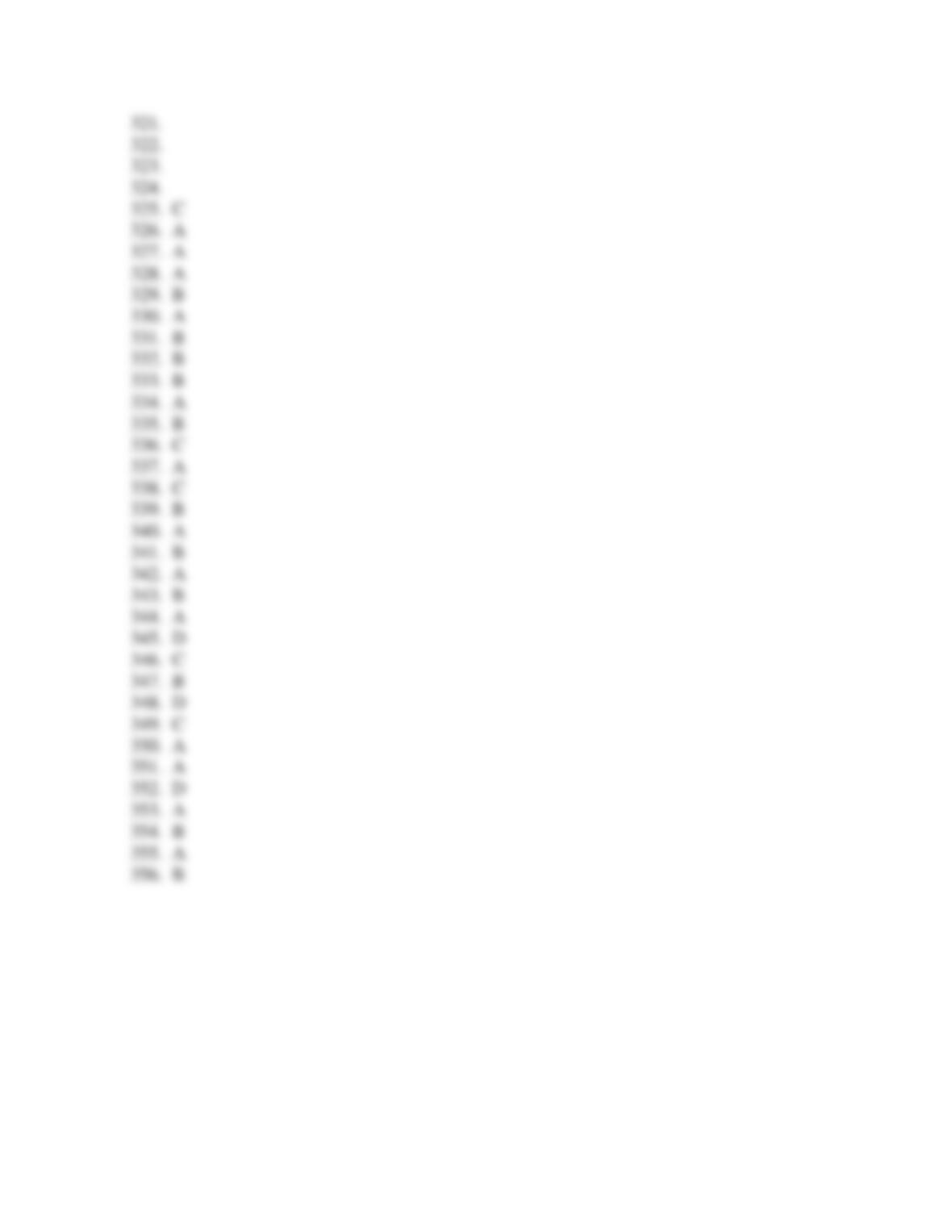
325.
C
326.
A
327.
A
328.
A
329.
B
330.
A
331.
B
332.
B
333.
B
334.
A
335.
B
336.
C
337.
A
338.
C
339.
B
340.
A
341.
B
342.
A
343.
B
344.
A
345.
D
346.
C
347.
B
348.
D
349.
C
350.
A
351.
A
352.
D
353.
A
354.
B
355.
A
356.
B