Page 56
306.
If a labor market is in equilibrium at a wage that sets the quantity of labor demanded
equal to the quantity of labor supplied, how can there still be unemployment?
307.
Minimum wages and efficiency wages are both above the equilibrium market wage.
Briefly describe each type of wage. Do they have similar results in the labor market?
308.
Kelli is a server at a casual restaurant in a small town. In each of the following
situations, explain Kelli’s type of unemployment.
a. The local economy is in a minor recession and the restaurant lays Kelli off. The
owner assures her that she will be rehired when business picks up again.
b. A large factory, the major employer in the town, permanently closes, and this hurts all
restaurants in town. The restaurant fires Kelli because the owner can only afford to stay
open on the weekends.
c. Kelli is dissatisfied with her schedule at the restaurant and quits her job. She is
qualified to work at other restaurants and immediately begins to send her résumé to
restaurants all over town.
309.
What do economists mean by the natural rate of unemployment? How would it be
affected by a permanent influx of younger, predominantly unskilled immigrant workers?
310.
Explain the difference between shoe-leather costs and menu costs of inflation.
311.
Ted is looking to borrow money from a bank. He is told that the nominal rate is 8%; that
includes expected inflation of 5% and a real interest rate of 3%. If there is unexpectedly
high inflation over the term of this loan, will Ted be hurt or will the bank be hurt?
Explain your answer.
312.
Suppose you have estimated the supply curve for the local labor market as Qs = W – 5,
where W is the hourly wage and Qs is the quantity of workers willing to work at each
wage. You have estimated the demand curve for the local labor market as Qd, = 25 – W,
where W is the hourly wage and Qd is the quantity of workers demanded by employers
at each wage.
a. Solve for the equilibrium wage and quantity of labor.
b. If the government imposes a minimum wage of $18, what are the size of the labor
force, the number of unemployed workers (assuming all workers without a job are
searching), and the unemployment rate?
Page 57
313.
Two primary goals for macroeconomists are price stability and _____ unemployment.
A)
no
B)
no frictional
C)
low
D)
no structural
314.
Unemployment rates tend to:
A)
be the same across geographic areas.
B)
vary between age groups and ethnicities.
C)
increase when the economy expands.
D)
stay the same only when there is cyclical unemployment.
315.
Sally works 20 hours a week for an accounting firm. She would like to work full time
and expects that she will in the future. Sally is a(n) _____ worker.
A)
discouraged
B)
unemployed
C)
underemployed
D)
full-time
316.
Low unemployment rates are often:
A)
associated with recessions.
B)
associated with an ability to find a job with relative ease.
C)
an indicator that finding a job is extremely difficult.
D)
the result of high cyclical unemployment rates.
317.
Unemployment rates tend to decrease when:
A)
the economy expands.
B)
discouraged workers become active job seekers.
C)
underemployed workers become unemployed.
D)
the economy contracts.
318.
When the unemployment rate increased, the annual growth rate of real GDP has usually:
A)
increased.
B)
decreased.
C)
not changed.
D)
shown no relationship with changes in the unemployment rate.
319.
Scenario: Employment in Xenia
Xenia has 10,000 people. Of this population, 1,000 residents are below age 16, and
2,000 have given up looking for work. Currently, 500 people are unemployed but are
actively looking for work; 2,500 work part time, and the rest are fully employed.
What is the unemployment rate?
A)
7.14%
B)
4.25%
C)
11.11%
D)
2%
320.
Scenario: Employment in Xenia
Xenia has 10,000 people. Of this population, 1,000 residents are below age 16, and
2,000 have given up looking for work. Currently, 500 people are unemployed but are
actively looking for work; 2,500 work part time, and the rest are fully employed.
Suppose some of those who had given up looking for work start looking again. The
unemployment rate will:
A)
increase.
B)
decrease.
C)
not be affected.
D)
rise, fall, or stay the same.
321.
Scenario: The Employment Rate
A group of 10 people includes 3 retirees, 2 part-time workers, 2 discouraged workers, 1
unemployed worker, and 2 full-time workers.
The unemployment rate is _____%.
A)
10
B)
30
C)
20
D)
50
322.
Scenario: The Employment Rate
A group of 10 people includes 3 retirees, 2 part-time workers, 2 discouraged workers, 1
unemployed worker, and 2 full-time workers.
The labor force participation rate is _____%.
A)
30
B)
50
C)
70
D)
80
Page 59
323.
Scenario: The Employment Rate
A group of 10 people includes 3 retirees, 2 part-time workers, 2 discouraged workers, 1
unemployed worker, and 2 full-time workers.
If the discouraged workers in this group became active job searchers, the:
A)
unemployment rate would fall.
B)
unemployment rate and the labor force participation rate would rise.
C)
labor force participation rate would fall.
D)
unemployment rate and the labor force participation rates would both fall.
324.
Structural changes in an economy and changes in consumer tastes are reasons for:
A)
job creation and job destruction.
B)
job searches.
C)
unemployment during recessions.
D)
unemployment during expansions.
325.
Frictional unemployment:
A)
occurs only during expansions.
B)
is due to time workers spend in job search.
C)
is the difference between cyclical unemployment and the natural rate of
unemployment.
D)
hasn’t occurred since the 1930s.
326.
Radhika just graduated from college. She recently quit her part-time job to focus on
finding a full-time job that better uses the skills she acquired in college. Radhika is
considered to be:
A)
structurally unemployed.
B)
frictionally unemployed.
C)
cyclically unemployed.
D)
employed since she is focusing on finding a full-time job.
327.
Structural unemployment occurs when:
A)
new workers enter the work force.
B)
there is a shortage of labor.
C)
the economy expands.
D)
there is cyclical unemployment.
328.
An effective minimum wage can lead to:
A)
frictional unemployment.
B)
structural unemployment.
C)
a decrease in wages.
D)
a shortage of workers in that labor market.
329.
When labor unions successfully bargain for wage rates that are _____ the equilibrium
wage rate, they may cause _____.
A)
lower than; frictional unemployment
B)
equal to; shortages in that labor market
C)
higher than; an increase in structural unemployment
D)
higher than; shortages in that labor market
330.
A wage offered by an employer as an incentive for more work effort and performance
and that exceeds the equilibrium wage rate is known as a(n) _____ wage.
A)
minimum
B)
equilibrium
C)
efficiency
D)
union
331.
In a particular labor market, the demand for labor is given by W = 20 – (1 / 100)L, and
the supply of labor is given by W = 4 + (1 / 100)L, where W is the wage rate and L is the
number of workers. The equilibrium wage is _____, and the equilibrium number of
workers is _____.
A)
$10; 1,000
B)
$12; 800
C)
$8; 1,200
D)
$20; 1,000
332.
In a particular labor market, the demand for labor is given by W = 20 – (1 / 100)L, and
the supply of labor is given by W = 4 + (1 / 100)L, where W is the wage rate, and L is
the number of workers. Suppose that the government decides to impose a minimum
wage of $15. The wage will:
A)
have no effect since it is below the equilibrium wage.
B)
cause a shortage of workers since it is above the equilibrium wage.
C)
cause a surplus of workers since it is above the equilibrium wage.
D)
result in increases in wages for workers who were employed at the equilibrium
wage only.
Page 61
333.
A binding minimum wage results in:
A)
higher wages for those who were working prior to the minimum wage
implementation.
B)
an increase in structural unemployment.
C)
a decrease in the amount of cyclical unemployment.
D)
lower actual unemployment rates since higher wages encourage more people to
enter the labor force.
334.
An efficiency wage:
A)
can be secured only with the help of a labor union.
B)
is one that causes greater frictional unemployment.
C)
is offered by an employer to encourage workers to work harder.
D)
results in a less productive work force.
335.
The sum of frictional and structural unemployment is the:
A)
actual unemployment level.
B)
cyclical amount of unemployment.
C)
natural rate of unemployment.
D)
amount of unemployment in an economy during a recession.
336.
The natural rate of unemployment:
A)
equals zero.
B)
equals the actual rate of unemployment when cyclical unemployment equals zero.
C)
equals the cyclical plus the actual rate of unemployment.
D)
fluctuates around the actual rate of unemployment.
337.
Analysts believe that generous unemployment benefits in Europe are associated with:
A)
low unemployment rates in Europe.
B)
high unemployment rates in Europe.
C)
weak labor unions in Europe.
D)
relatively constant levels of unemployment in Europe.
338.
The natural rate of unemployment changes when:
A)
the cyclical unemployment changes.
B)
the actual rate of unemployment changes.
C)
labor market institutions change.
D)
government policies remain the same.
Page 62
339.
High rates of inflation often result in people spending inordinate amounts of time trying
to make transactions and finding ways to keep the real value of their money from
decreasing. This example illustrates _____ costs.
A)
shoe-leather
B)
menu
C)
efficiency-wage
D)
unit-of-account
340.
Unit-of-account costs refer to the problem associated with high inflation rates that:
A)
cause people to expend extra effort to reduce their holdings of money.
B)
result in increased costs associated with necessary changes in the list price of items.
C)
makes money a less reliable unit of measurement.
D)
decrease the costs associated with holding less money.
341.
Anticipated inflation affects:
A)
borrowers only.
B)
lenders only.
C)
all aspects of the economy.
D)
only business firms involved in investment spending.
342.
Alex expects the inflation rate to be 4%. If Alex borrows money at a nominal interest
rate of 5%, his real interest rate is:
A)
greater than the nominal interest rate.
B)
less than the nominal interest rate.
C)
equal to the nominal interest rate.
D)
negative.
343.
In periods of unexpected inflation:
A)
borrowers benefit since they repay their loans in dollars with lower real value.
B)
lenders benefit since they are repaid in dollars with a higher real value.
C)
neither borrowers nor lenders are affected by the inflation rate since their nominal
interest rate stays the same.
D)
lenders benefit since the nominal interest rate does not change.
344.
When disinflation occurs:
A)
the natural rate of unemployment rises.
B)
and inflationary expectations do not change, an economy may have a recession.
C)
and inflationary expectations do not change, unemployment rates will fall.
D)
with inflationary expectations unchanging, aggregate output will rise.
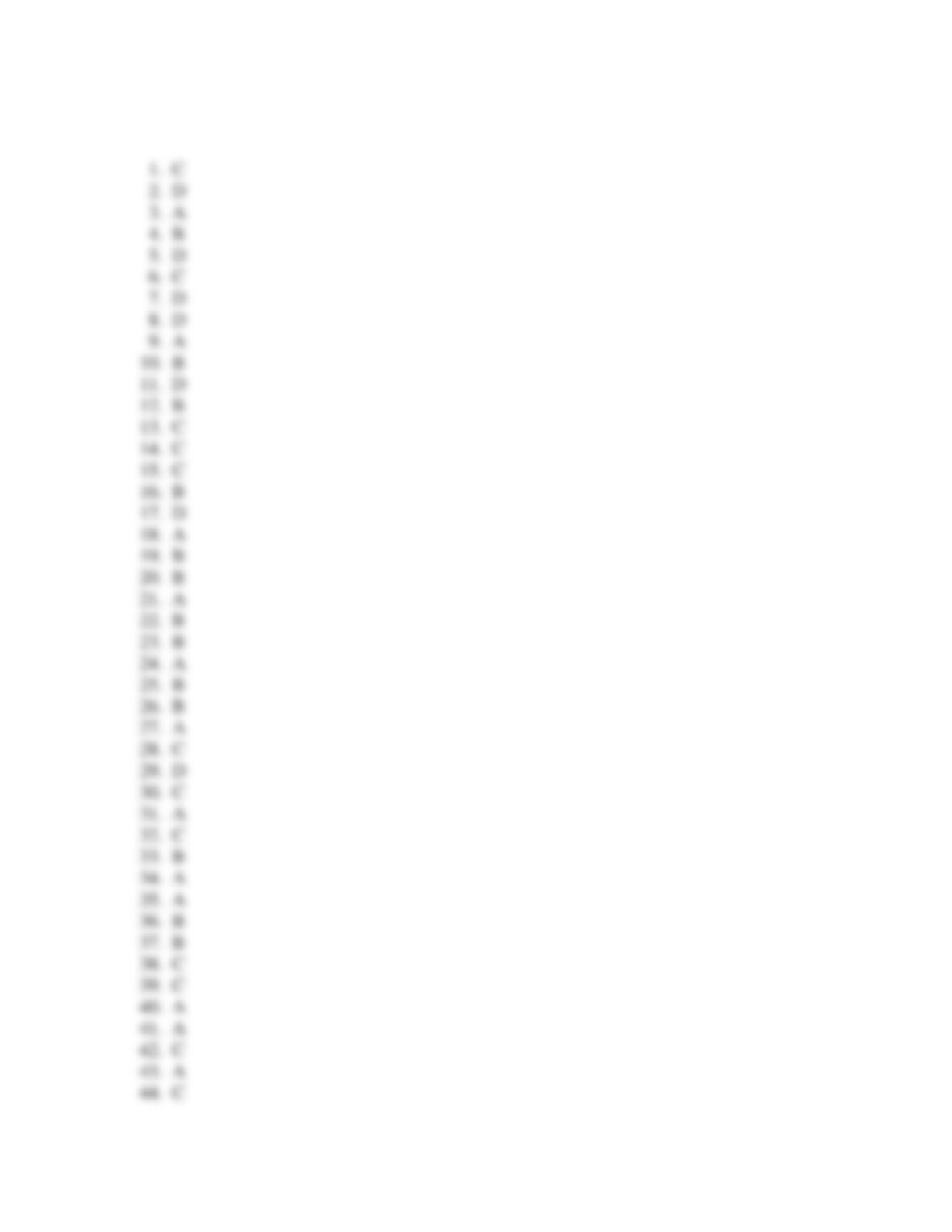
Answer Key
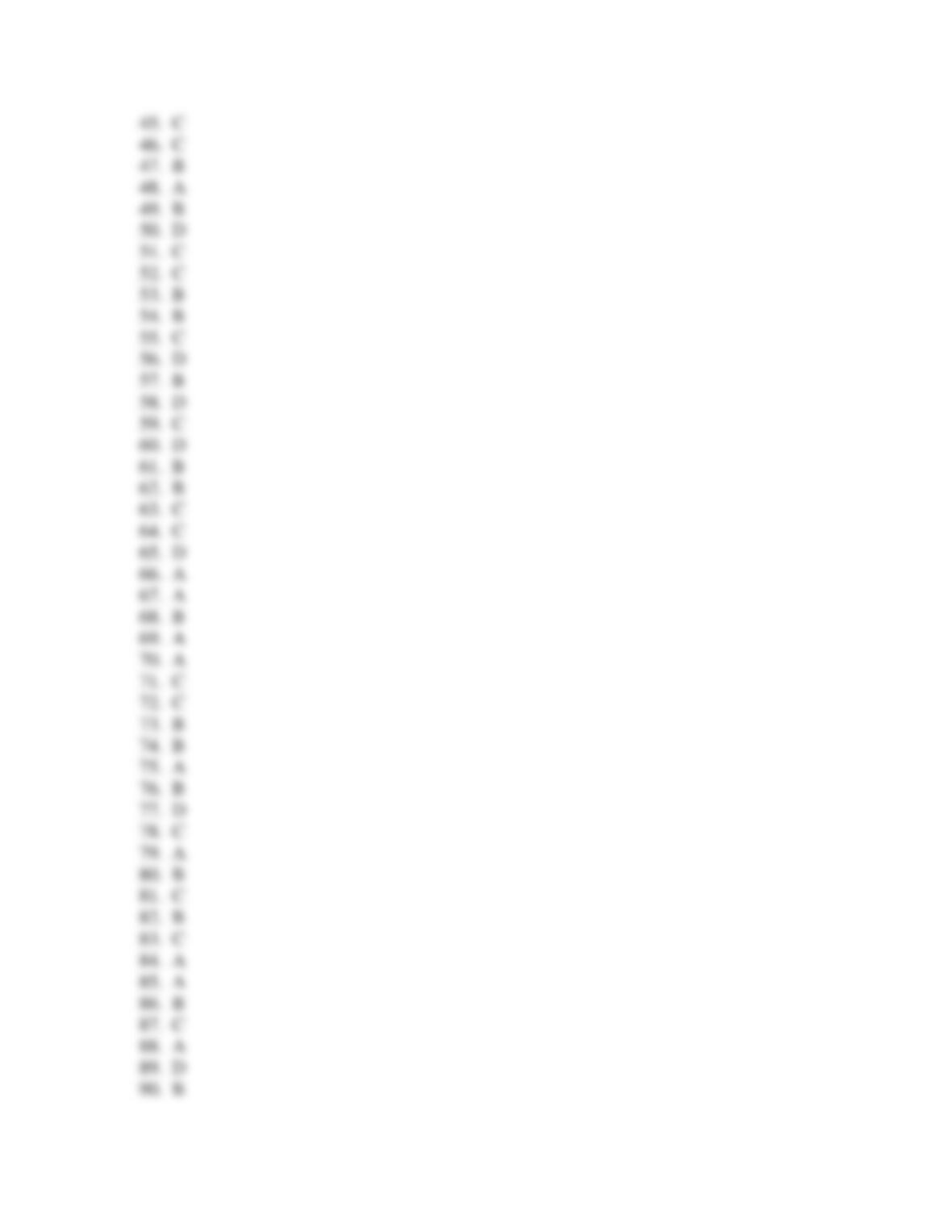
Page 64
45.
C
46.
C
47.
B
48.
A
49.
B
50.
D
51.
C
52.
C
53.
B
54.
B
55.
C
56.
D
57.
B
58.
D
59.
C
60.
D
61.
B
62.
B
63.
C
64.
C
65.
D
66.
A
67.
A
68.
B
69.
A
70.
A
71.
C
72.
C
73.
B
74.
B
75.
A
76.
B
77.
D
78.
C
79.
A
80.
B
81.
C
82.
B
83.
C
84.
A
85.
A
86.
B
87.
C
88.
A
89.
D
90.
B
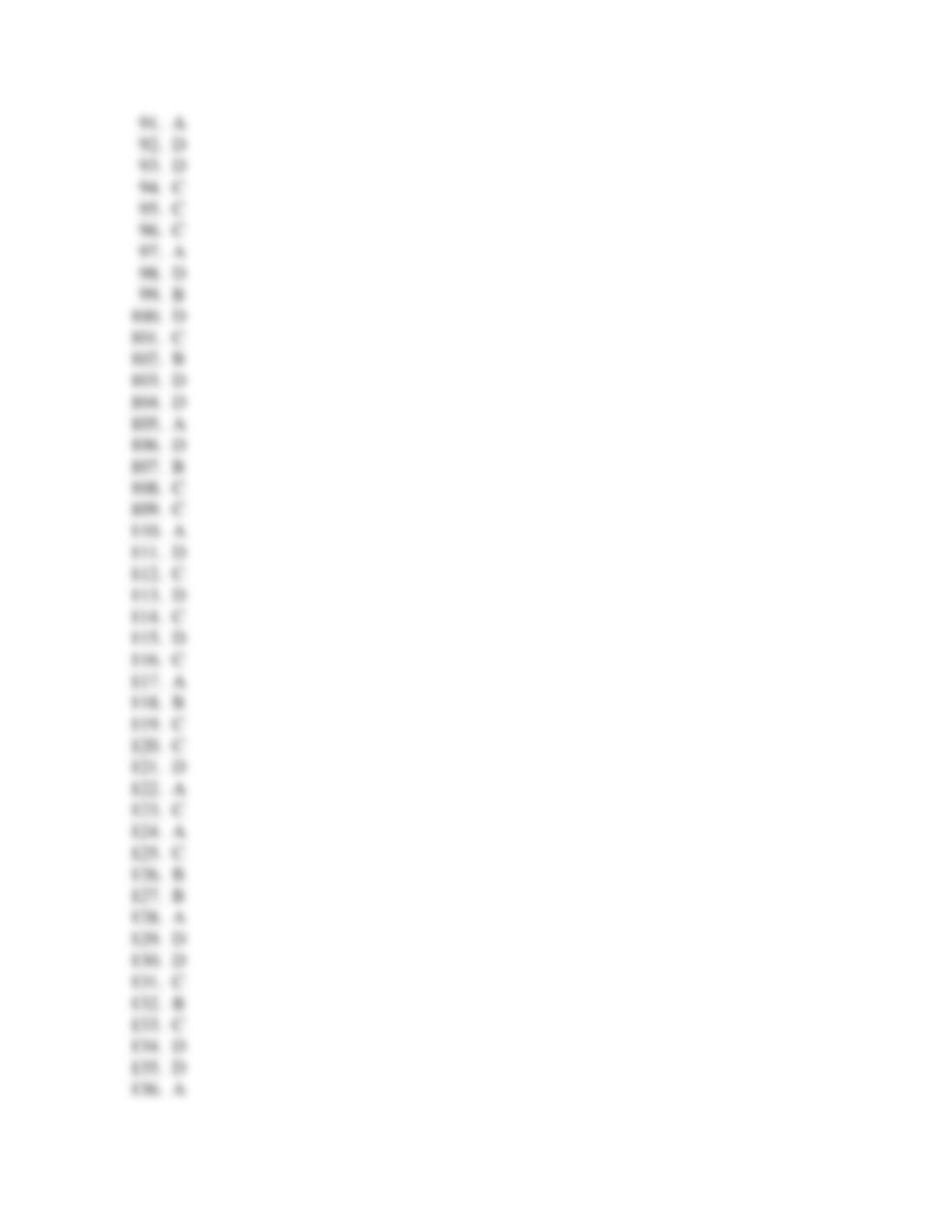
Page 65
91.
A
92.
D
93.
D
94.
C
95.
C
96.
C
97.
A
98.
D
99.
B
100.
D
101.
C
102.
B
103.
D
104.
D
105.
A
106.
D
107.
B
108.
C
109.
C
110.
A
111.
D
112.
C
113.
D
114.
C
115.
D
116.
C
117.
A
118.
B
119.
C
120.
C
121.
D
122.
A
123.
C
124.
A
125.
C
126.
B
127.
B
128.
A
129.
D
130.
D
131.
C
132.
B
133.
C
134.
D
135.
D
136.
A
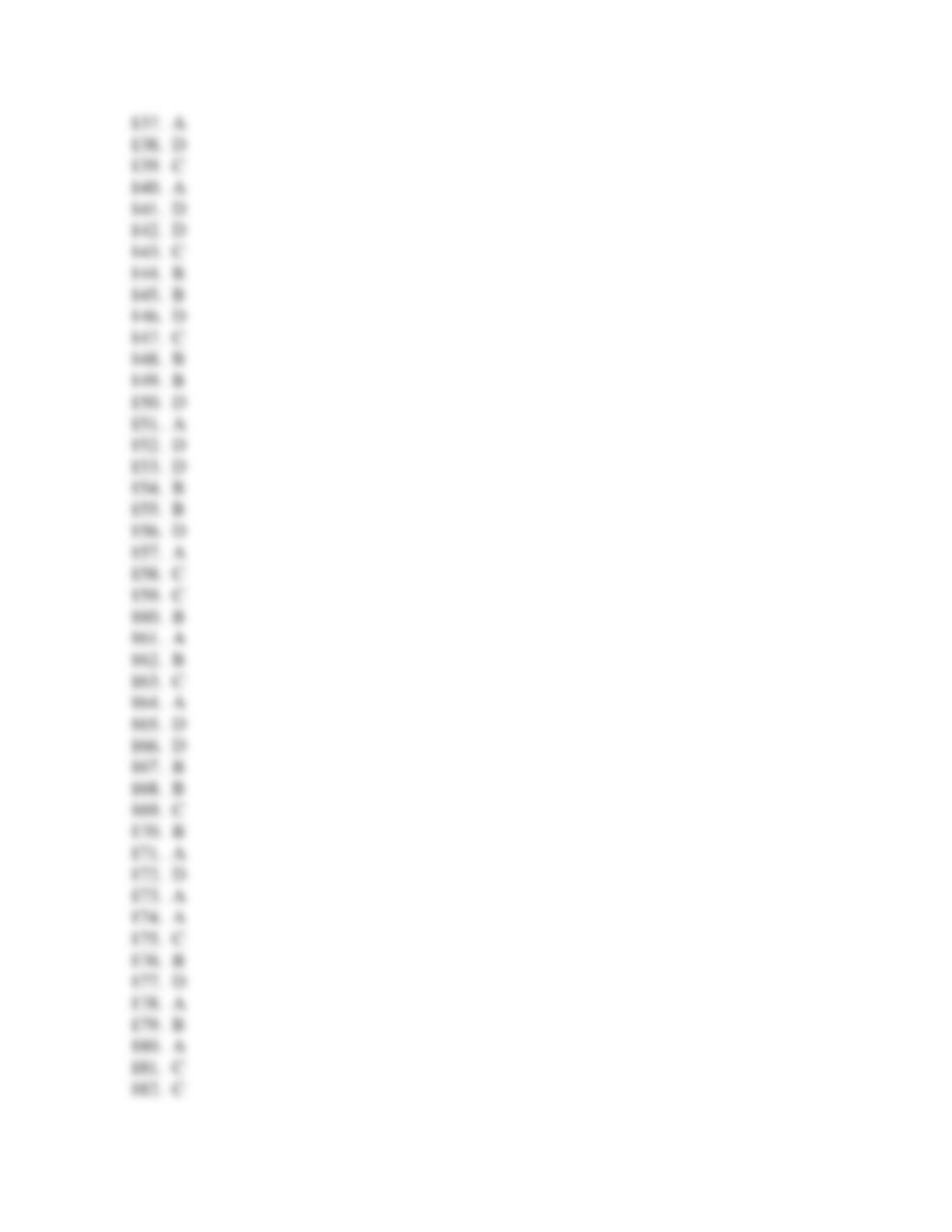
Page 66
137.
A
138.
D
139.
C
140.
A
141.
D
142.
D
143.
C
144.
B
145.
B
146.
D
147.
C
148.
B
149.
B
150.
D
151.
A
152.
D
153.
D
154.
B
155.
B
156.
D
157.
A
158.
C
159.
C
160.
B
161.
A
162.
B
163.
C
164.
A
165.
D
166.
D
167.
B
168.
B
169.
C
170.
B
171.
A
172.
D
173.
A
174.
A
175.
C
176.
B
177.
D
178.
A
179.
B
180.
A
181.
C
182.
C
Page 67
183.
C
184.
A
185.
B
186.
C
187.
A
188.
B
189.
B
190.
C
191.
B
192.
D
193.
C
194.
D
195.
A
196.
B
197.
B
198.
D
199.
A
200.
A
201.
C
202.
D
203.
C
204.
C
205.
B
206.
A
207.
C
208.
A
209.
D
210.
A
211.
A
212.
B
213.
C
214.
D
215.
A
216.
B
217.
B
218.
B
219.
C
220.
D
221.
C
222.
B
223.
A
224.
B
225.
B
226.
C
227.
D
228.
A
Page 68
229.
C
230.
A
231.
C
232.
A
233.
B
234.
C
235.
C
236.
A
237.
A
238.
C
239.
C
240.
A
241.
A
242.
B
243.
A
244.
B
245.
A
246.
B
247.
A
248.
B
249.
B
250.
B
251.
A
252.
A
253.
B
254.
A
255.
A
256.
A
257.
B
258.
B
259.
B
260.
A
261.
B
262.
A
263.
B
264.
B
265.
A
266.
A
267.
B
268.
A
269.
B
270.
A
271.
B
272.
A
273.
B
274.
A
Page 69
275.
A
276.
B
277.
B
278.
A
279.
B
280.
A
281.
B
282.
A
283.
B
284.
A
285.
B
286.
A
287.
B
288.
A
289.
B
290.
A
291.
A
292.
A
293.
B
294.
B
295.
B
296.
A
297.
A
298.
B
299.
A
300.
B
301.
A
302.
303.
304.
305.
306.
307.
308.
309.
310.
311.
312.
313.
C
314.
B
315.
C
316.
B
317.
A
318.
B
319.
A
320.
A
Page 70
321.
C
322.
B
323.
B
324.
A
325.
B
326.
B
327.
B
328.
B
329.
C
330.
C
331.
B
332.
C
333.
B
334.
C
335.
C
336.
B
337.
B
338.
C
339.
A
340.
C
341.
C
342.
B
343.
A
344.
B