
Page 1
Name: __________________________ Date: _____________
1.
The national accounts do NOT keep track of:
A)
the spending of consumers and the government.
B)
the sales of producers.
C)
business investment.
D)
exchange rates.
2.
The national income and product accounts keep track of:
A)
consumer spending.
B)
interest rates.
C)
rates of inflation.
D)
exchange rates.
3.
The national income and product accounts keep track of:
A)
consumer debt.
B)
sales and investment spending by businesses.
C)
worker productivity.
D)
unemployment rates.
4.
The national income and product accounts are calculated by the:
A)
Congressional Budget Office.
B)
Federal Reserve.
C)
Bureau of Economic Analysis.
D)
Office of Management and Budget.
5.
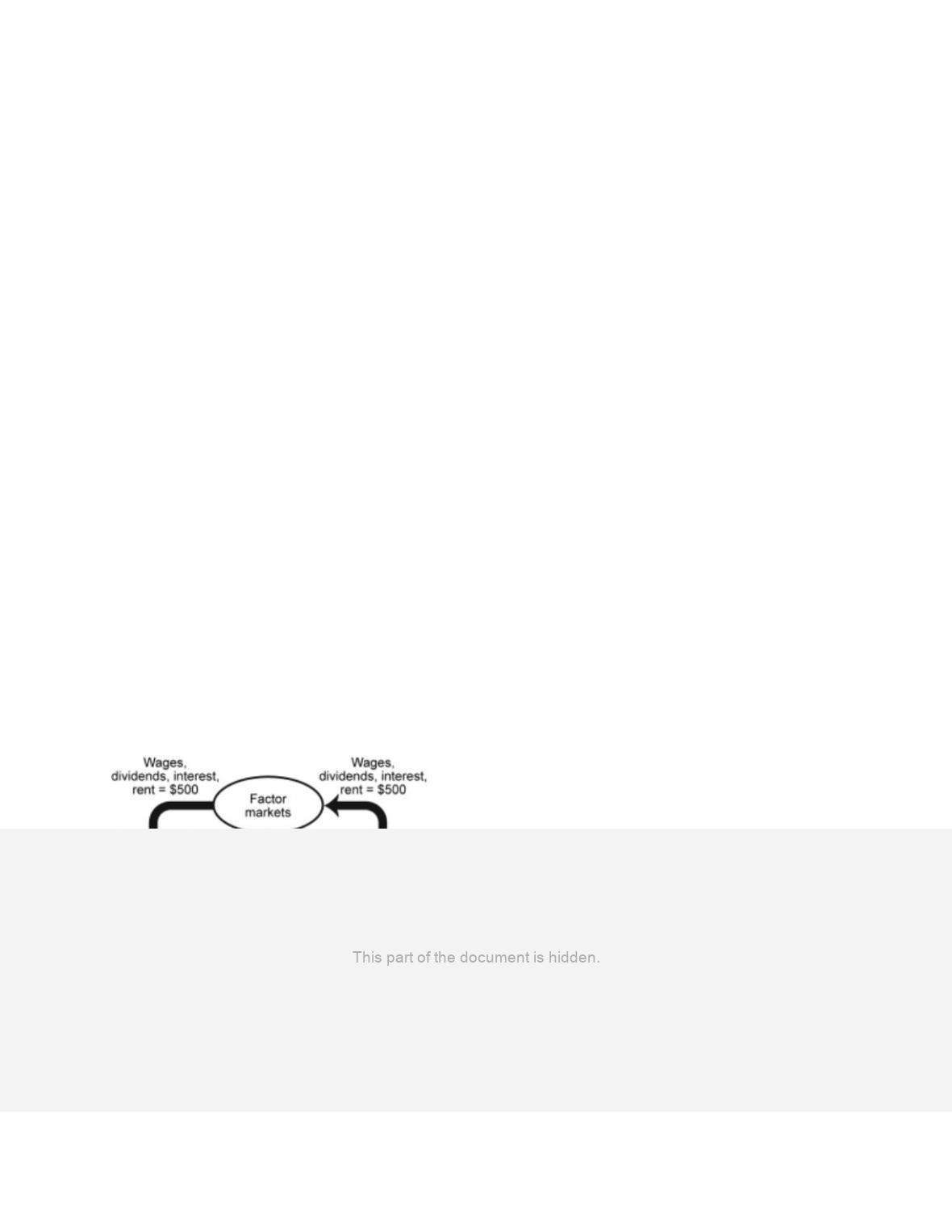
The circular-flow diagram illustrates:
A)
the minimum wage state by state.
B)
fluctuations in exchange rates.
C)
changes in worker productivity.
D)
the key concepts in the national accounts.
6.
In the U.S. economy, the circular-flow diagram does NOT illustrate:
A)
growing income inequality.
B)
flows of money.
C)
flows of goods and services.
D)
the purchase and sale of factors of production.

Page 2
7.
The circular-flow diagram is important because it shows that the flow of money into
each market or sector of the economy is _____ the flow of money coming out of that
sector.
A)
greater than
B)
equal to
C)
less than
D)
unrelated to
8.
In the circular-flow diagram, a person or a group of people who share income is a:
A)
government.
B)
factor.
C)
household.
D)
firm.
9.
In the circular-flow diagram, an organization that produces goods and services for sale
is a:
A)
government.
B)
factor.
C)
household.
D)
firm.
10.
In the circular-flow diagram, the places where goods and services are bought and sold
are the:
A)
product markets.
B)
factor markets.
C)
households.
D)
firms.
11.
In the circular-flow diagram, the places where resources, especially capital and labor,
are bought and sold are the:
A)
product markets.
B)
factor markets.
C)
households.
D)
firms.
12.
In the circular-flow diagram, households:
A)
supply goods.
B)
supply services.
C)
supply resources.
D)
buy resources.

Page 3
13.
In the circular-flow diagram, households:
A)
supply goods.
B)
supply services.
C)
buy resources.
D)
buy goods and services.
14.
In the circular-flow diagram, firms:
A)
demand goods.
B)
demand services.
C)
supply resources.
D)
demand resources.
15.
In the circular-flow diagram, firms:
A)
supply goods and services.
B)
demand goods.
C)
supply resources.
D)
demand services.
16.
In the product markets:
A)
households supply goods and services.
B)
households demand goods and services.
C)
firms demand resources.
D)
firms supply resources.
17.
In the product markets:
A)
households supply goods and services.
B)
households supply resources.
C)
firms demand goods and services.
D)
firms supply goods and services.
18.
In the factor markets:
A)
households supply goods and services.
B)
households demand goods and services.
C)
firms demand resources.
D)
firms supply resources.

Page 4
19.
In the factor markets:
A)
households supply goods and services.
B)
households supply resources.
C)
firms demand goods and services.
D)
firms supply goods and services.
20.
According to the circular-flow diagram, which economic agents engage in consumer
spending?
A)
firms
B)
households
C)
factor markets
D)
financial markets
21.
A share in the ownership of a company is a(n):
A)
bond.
B)
stock.
C)
dividend.
D)
IOU.
22.
The portion of a firm’s profit paid to the owner of one share of its stock would
accurately be characterized as:
A)
an interest payment.
B)
a dividend.
C)
a stock.
D)
a bond.
23.
_____ is considered to be an IOU.
A)
A tock
B)
A bond
C)
Interest
D)
A dividend
24.
Households do NOT derive income from:
A)
wages or labor income.
B)
interest from lending.
C)
rent from allowing firms to use their land.
D)
imports.
Page 5
25.
The total income of households after taxes and government transfers is called:
A)
disposable income.
B)
private savings.
C)
aggregate spending.
D)
investment.
26.
Private savings is equal to:
A)
disposable income less taxes.
B)
disposable income less consumption.
C)
wealth.
D)
wealth plus government transfer payments.
27.
Stock in a company is:
A)
a share of ownership of the company.
B)
an IOU that pays interest.
C)
a portion of a firm’s profits paid to shareholders.
D)
a component of private savings.
28.
A bond is:
A)
a share of ownership of a company.
B)
an IOU that pays interest.
C)
a portion of a firm’s profits paid to shareholders.
D)
a component of private savings.
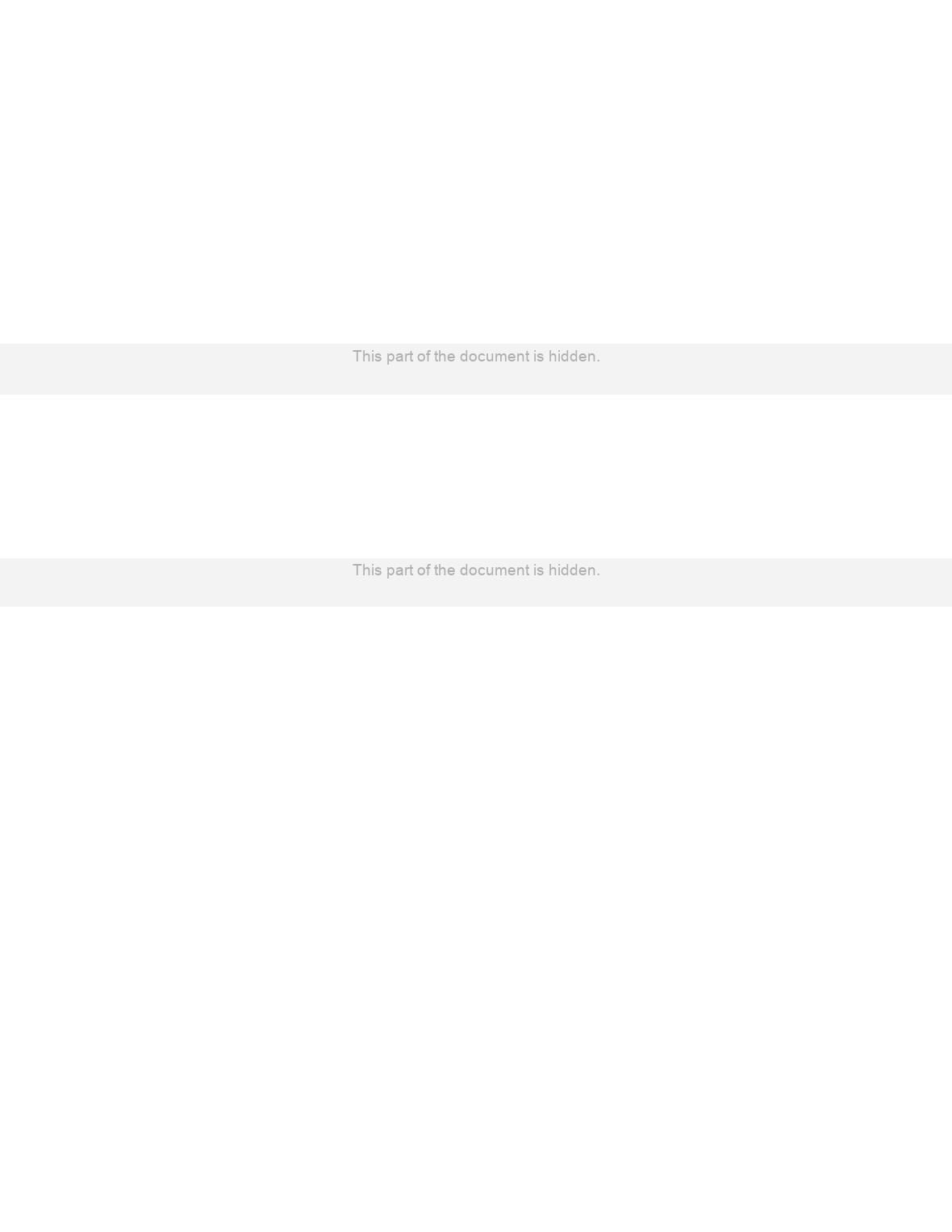
Use the following to answer questions 29-40:
Page 6
29.
(Figure 7-1: Circular-Flow Model) Use Figure 7-1: Circular-Flow Model. What is the
value of GDP in this economy?
A)
$100
B)
$400
C)
$500
D)
$600
30.
(Figure 7-1: Circular-Flow Model) Use Figure 7-1: Circular-Flow Model. If the
circular-flow model is in equilibrium (the sum of money flowing into each box is equal
to the sum of the money flowing out of it) and there is an increase in consumer
spending, holding everything else constant, which outcome is likely to occur?
A)
an increase in GDP
B)
a decrease in GDP
C)
an increase in the unemployment rate
D)
a decrease in the inflation rate
31.
(Figure 7-1: Circular-Flow Model) Use Figure 7-1: Circular-Flow Model. If the
circular-flow model is in equilibrium (the sum of money flowing into each box is equal
to the sum of the money flowing out of it) and there is a decrease in consumer spending,
holding everything else constant, which outcome is likely to occur?
A)
an increase in nominal GDP
B)
an increase in real GDP
C)
an increase in the unemployment rate
D)
an increase in the inflation rate
32.
(Figure 7-1: Circular-Flow Model) Use Figure 7-1: Circular-Flow Model. If the
circular-flow model is in equilibrium (the sum of money flowing into each box is equal
to the sum of the money flowing out of it) and there is an increase in investment
spending, holding everything else constant, which outcome is likely to occur?
A)
a decrease in GDP
B)
an increase in GDP
C)
an increase in the unemployment rate
D)
a decrease in the inflation rate

Page 7
33.
(Figure 7-1: Circular-Flow Model) Use Figure 7-1: Circular-Flow Model. If the
circular-flow model is in equilibrium (the sum of money flowing into each box is equal
to the sum of the money flowing out of it) and there is a decrease in investment
spending, holding everything else constant, which outcome is likely to occur?
A)
an increase in the nominal GDP
B)
an increase in the real GDP
C)
an increase in the unemployment rate
D)
an increase in the inflation rate
34.
(Figure 7-1: Circular-Flow Model) Use Figure 7-1: Circular-Flow Model. If the
circular-flow model is in equilibrium (the sum of money flowing into each box is equal
to the sum of the money flowing out of it) and there is an increase in government
spending, holding everything else constant, which outcome is likely to occur?
A)
an increase in the nominal GDP
B)
a decrease in the real GDP
C)
an increase in the unemployment rate
D)
a decrease in the inflation rate
35.
(Figure 7-1: Circular-Flow Model) Use Figure 7-1: Circular-Flow Model. If the
circular-flow model is in equilibrium (the sum of money flowing into each box is equal
to the sum of the money flowing out of it) and there is a decrease in government
spending, holding everything else constant, which outcome is likely to occur?
A)
an increase in the nominal GDP
B)
an increase in the real GDP
C)
an increase in the unemployment rate
D)
an increase in the inflation rate
36.
(Figure 7-1: Circular-Flow Model) Use Figure 7-1: Circular-Flow Model. If the
circular-flow model is in equilibrium (the sum of money flowing into each box is equal
to the sum of the money flowing out of it) and there is an increase in exports, holding
everything else constant, which outcome is likely to occur?
A)
a decrease in the nominal GDP
B)
a decrease in the real GDP
C)
a decrease in the unemployment rate
D)
a decrease in the inflation rate

Page 8
37.
(Figure 7-1: Circular-Flow Model) Use Figure 7-1: Circular-Flow Model. If the
circular-flow model is in equilibrium (the sum of money flowing into each box is equal
to the sum of the money flowing out of it) and there is a decrease in exports, holding
everything else constant, which outcome is likely to occur?
A)
a decrease in the nominal GDP
B)
an increase in the real GDP
C)
a decrease in the unemployment rate
D)
an increase in the inflation rate
38.
(Figure 7-1: Circular-Flow Model) Use Figure 7-1: Circular-Flow Model. What are net
exports?
A)
$0
B)
$30
C)
$60
D)
$100
39.
(Figure 7-1: Circular-Flow Model) Use Figure 7-1: Circular-Flow Model. What is
disposable income?
A)
$0
B)
$100
C)
$400
D)
$500
40.
(Figure 7-1: Circular-Flow Model) Use Figure 7-1: Circular-Flow Model. How does the
government finance its purchases of goods and services?
A)
by printing money
B)
by taxes
C)
by borrowing
D)
by taxes and borrowing
41.
In the circular-flow model, households:
A)
receive transfer payments from the government.
B)
buy resources in the factor markets.
C)
sell products in the market for goods and services.
D)
issue stocks and bonds to raise capital.
Page 9
42.
The indirect ownership of physical capital refers to households owning:
A)
cash.
B)
stocks.
C)
savings accounts.
D)
their house.
43.
The money spent on domestically produced final goods and services is:
A)
equal to GDP.
B)
equal to exports minus imports.
C)
subtracted in the circular-flow model.
D)
equal to GDP, equal to exports minus imports, and subtracted in the circular-flow
model.
44.
Most households derive the bulk of their income from:
A)
wages.
B)
interest.
C)
profit.
D)
rent.
45.
An example of a government transfer is a(n):
A)
expenditure on an interstate highway.
B)
bequest from a deceased relative.
C)
Social Security payment.
D)
salary for a member of the armed forces.
46.
Which example is NOT a government transfer?
A)
unemployment compensation
B)
food stamps
C)
payments by the Defense Department for a new weapons system
D)
Social Security benefits paid to someone who is retired
47.
Disposable income equals:
A)
income plus government transfers minus taxes.
B)
income plus government spending minus taxes.
C)
income minus taxes plus government spending.
D)
income minus taxes minus government transfers.
Page 10
48.
Goods that are produced domestically but sold abroad are:
A)
imports.
B)
exports.
C)
part of domestic consumption.
D)
investment.
49.
Investment spending is spending on:
A)
productive physical capital.
B)
stocks.
C)
mutual funds.
D)
corporate bonds.
50.
Disposable income in a particular period is:
A)
total earned income.
B)
earned income plus government transfer payments.
C)
earned income plus government transfer payments less taxes.
D)
earned income plus government transfer payments less taxes and savings.
51.
Domestically produced goods and services sold to people in other countries are known
as:
A)
imports.
B)
investments.
C)
exports.
D)
transfer payments.
52.
Investment spending is spending on:
A)
productive physical capital.
B)
bonds.
C)
shares of stock.
D)
productive physical capital, bonds, and shares of stock.
53.
An example of investment spending is the purchase of a:
A)
bond by a banker.
B)
loaf of bread by your aunt.
C)
new tractor by a farmer.
D)
ticket to a football game by a student.

Page 11
54.
Government borrowing is:
A)
the amount of funds raised by government in financial markets.
B)
government spending on goods and services.
C)
government tax revenues.
D)
the amount of funds raised by government in the financial markets, government
spending on goods and services, and government tax revenues.
55.
If we add up the consumer spending on goods and services, investment spending,
government purchases of goods and services, and the value of exports, then subtract the
value of imports, we have measured the nation’s:
A)
disposable income.
B)
gross domestic product.
C)
trade deficit.
D)
budget deficit.
56.
Which factor causes an outflow of funds from a domestic economy?
A)
household savings
B)
government tax collections
C)
government transfer payments
D)
imports
57.
Which transaction is included in a current year’s GDP as investment spending?
A)
ABC company purchased 10,000 shares of IBM stock.
B)
Ronnie bought a new BMW.
C)
Anton purchased his friend’s condo.
D)
Maggie bought a play-gym set for her day-care business.
58.
Which example illustrates consumption expenditure?
A)
Samantha bought an oven for her cooking show on Food Network.
B)
Stephanie bought a laptop for her brother.
C)
Jim purchased 200 shares of Google stock.
D)
Herman Smith spent $1,500 to buy a used car for his son.
59.
A transfer payment is a payment for:
A)
a military transfer to a war zone.
B)
which no services were rendered by the government.
C)
transfer of a debt to a different person.
D)
being transferred to a different city by your employer.
Page 12
60.
Purchases of foreign-produced goods and services are:
A)
net exports.
B)
exports.
C)
imports.
D)
transfer payments.
61.
Goods that are produced in a particular period but NOT sold in that period:
A)
go into inventory and are called consumption.
B)
end up in inventory and are included in investment.
C)
are finally included in depreciation when they are sold.
D)
are classified as intermediate goods.
62.
Which example illustrates consumption?
A)
a new computer purchased by Federal Express for one of its corporate executives
B)
a storage facility for a moving company
C)
a new car purchased for personal use
D)
a dump truck purchased by a demolition company
63.
Inventory is counted as investment because it:
A)
is used for future production.
B)
is a source of future sales.
C)
has no opportunity cost.
D)
is tax deductible.
64.
Which factor is NOT included in investment spending in the national income accounts?
A)
new residential construction
B)
the purchase of machinery and other productive physical capital
C)
the purchase of stocks and bonds by a business
D)
spending on inventories
65.
A laptop computer that is purchased by an accounting firm is considered to be:
A)
consumption spending.
B)
investment spending.
C)
private saving.
D)
a pretax dividend.
Page 13
66.
An example of investment spending is the:
A)
amount of funds raised by the government in the financial markets.
B)
purchase of government bonds by a private household.
C)
purchase of a freezer by an ice-cream parlor.
D)
purchase of stock shares by a mutual fund.
67.
A laptop computer purchased by a private individual for personal use is considered to
be:
A)
consumption spending.
B)
investment spending.
C)
private saving.
D)
a transfer of income.
68.
Households do NOT receive income in the form of:
A)
wages.
B)
dividends.
C)
interest and rent.
D)
investment spending.
Page 14
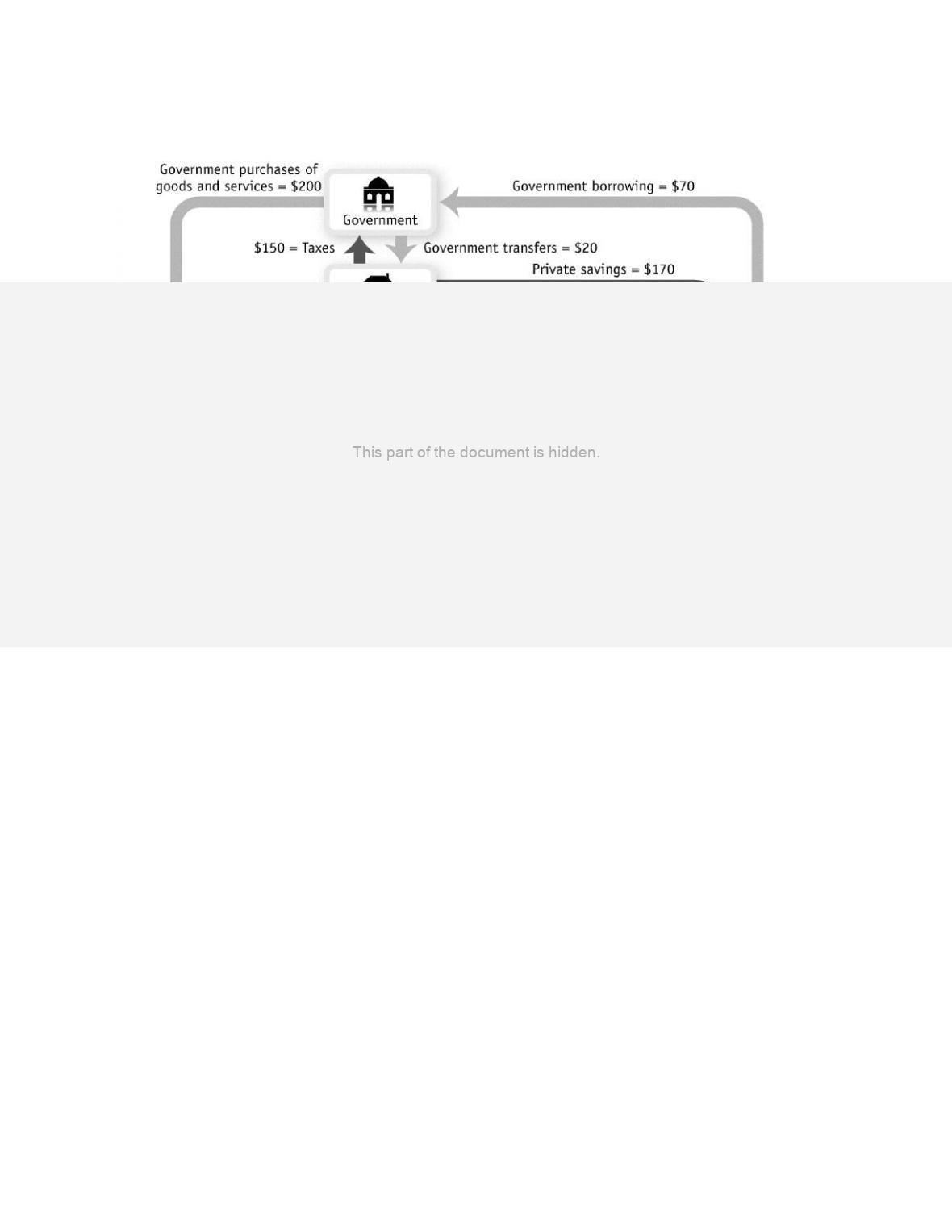
Use the following to answer questions 69-77:
69.
(Figure 7-2: Expanded Circular-Flow Model) Use Figure 7-2: Expanded Circular-Flow
Model. What is GDP?
A)
$200
B)
$700
C)
$1,000
D)
$1,080
70.
(Figure 7-2: Expanded Circular-Flow Model) Use Figure 7-2: Expanded Circular-Flow
Model What is the value of net exports?
A)
–$20
B)
$20
C)
$50
D)
$130
Page 15
71.
(Figure 7-2: Expanded Circular-Flow Model) Use Figure 7-2: Expanded Circular-Flow
Model. What is the value of disposable income?
A)
$1,020
B)
$1,000
C)
$870
D)
$850
72.
(Figure 7-2: Expanded Circular-Flow Model) Use Figure 7-2: Expanded Circular-Flow
Model How much is total government spending?
A)
$20
B)
$220
C)
$370
D)
$200
73.
(Figure 7-2: Expanded Circular-Flow Model) Use Figure 7-2: Expanded Circular-Flow
Model The government has a budget:
A)
surplus of $150.
B)
surplus of $220.
C)
deficit of $70.
D)
deficit of $200.
74.
(Figure 7-2: Expanded Circular-Flow Model) Use Figure 7-2: Expanded Circular-Flow
Model. How does the government finance its spending?
A)
taxes of $150 plus borrowing of $70
B)
foreign borrowing and sales of stock of $110
C)
investment spending of $120
D)
net exports of $80
75.
(Figure 7-2: Expanded Circular-Flow Model) Use Figure 7-2: Expanded Circular-Flow
Model The flow of funds into and out of financial markets is:
A)
$70.
B)
$110.
C)
$170.
D)
$300.
Page 16
76.
(Figure 7-2: Expanded Circular-Flow Model) Use Figure 7-2: Expanded Circular-Flow
Model The flow of funds into and out of households is:
A)
$1,020.
B)
$1,000.
C)
$850.
D)
$700.
77.
(Figure 7-2: Expanded Circular-Flow Model) Use Figure 7-2: Expanded Circular-Flow
Model The flow of funds into and out of the rest of the world is:
A)
$30.
B)
$80.
C)
$160.
D)
$240.
78.
The value, at current market prices, of the final goods and services produced within a
country during a particular period is:
A)
disposable personal product.
B)
gross foreign factor output.
C)
gross personal product.
D)
gross domestic product.
79.
The total of the values added at every stage of production for a good leads to the:
A)
total cost of the labor used to produce the good.
B)
prices of the factors of production used to produce the good.
C)
final value of the good.
D)
intermediate value of the good.
80.
Gross domestic product is defined as:
A)
consumer spending + government purchases of goods and services + financial
spending + exports – imports.
B)
consumer spending + government transfers + investment spending + exports –
imports.
C)
disposable income + taxes + investment spending + exports + imports.
D)
consumer spending + government purchases of goods and services + investment
spending + exports – imports.
Page 17
81.
Which definition BEST describes GDP?
A)
the total value of all final goods and services produced in the economy during a
given year
B)
the total value of all goods and services produced in the economy during a given
year
C)
the total value of all primary, intermediate, and final goods and services produced
in the economy during a given year
D)
the total value of all goods and services produced and sold in the economy during a
given year
82.
GDP is the total dollar value of all:
A)
intermediate goods and services produced in the economy in a given period.
B)
wages paid to producing workers in a given period.
C)
final goods and services produced in the economy in a given period.
D)
government production in a given period.
83.
GDP is the:
A)
total market value of all final goods and services produced in an economy in one
year.
B)
total accumulated wealth of an economy.
C)
volume of all dollar transactions made in an economy in one year.
D)
dollar amount of all sales made in the economy in one year.
84.
Gross domestic product is the economy’s total production of _____ for a given period.
A)
goods and services
B)
final goods and services
C)
intermediate goods and services
D)
consumer goods and services
85.
Which statement about gross domestic product is FALSE?
A)
It is aggregate output.
B)
It is the total production of final goods and services.
C)
It grows during an expansion.
D)
It is the total production of all final and intermediate goods and services.
86.
Intermediate goods are NOT counted in GDP because:
A)
doing so would result in double counting.
B)
these goods are not produced for the market.
C)
these goods are produced in the underground economy.
D)
these goods involve financial transactions.

Page 18
87.
An intermediate good would be:
A)
a new boat to be used for vacations.
B)
lumber used to build a house.
C)
payments to military personnel.
D)
a professor’s salary.
88.
Which example illustrates an intermediate good?
A)
stocks and bonds purchased by a business executive
B)
a cellular telephone purchased by a college student
C)
a wedding ring purchased by an engineer for his fiancée
D)
tires General Motors purchased from Goodyear for new electric cars
89.
The equation that breaks GDP down by the four sources of aggregate spending is:
A)
GDP = C + I + G + X + IM.
B)
GDP = C + I + G – X – IM.
C)
GDP = C – I – G – X + IM.
D)
GDP = C + I + G + X – IM.
90.
GDP is the total:
A)
value of all transactions in a year.
B)
value of all final goods and services produced in a year.
C)
value of all final goods and services produced by Americans at home and abroad in
a year.
D)
value of all goods produced in the economy in a year.
Page 19
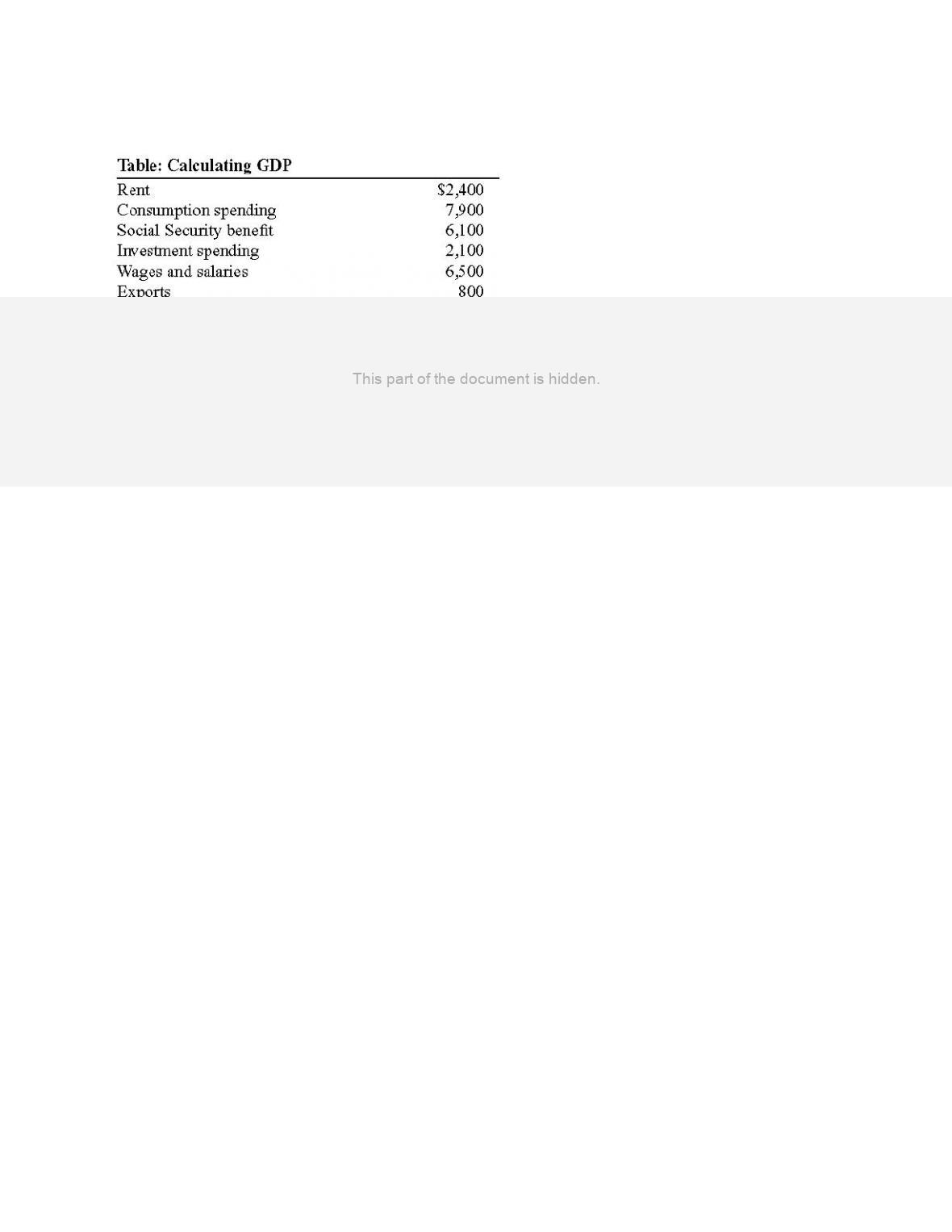
Use the following to answer question 91:
91.
According to the information in Table: Calculating GDP, what is GDP?
A)
$47,475
B)
$12,200
C)
$21,485
D)
$34,085
92.
GDP is the sum of:
A)
personal consumption, investment, government purchases of goods and services,
exports, and imports.
B)
personal consumption, investment, government purchases of goods and services,
and net exports.
C)
personal consumption, investment, government purchases of goods and services,
and net imports.
D)
value added, net imports, and government purchases of goods and services.
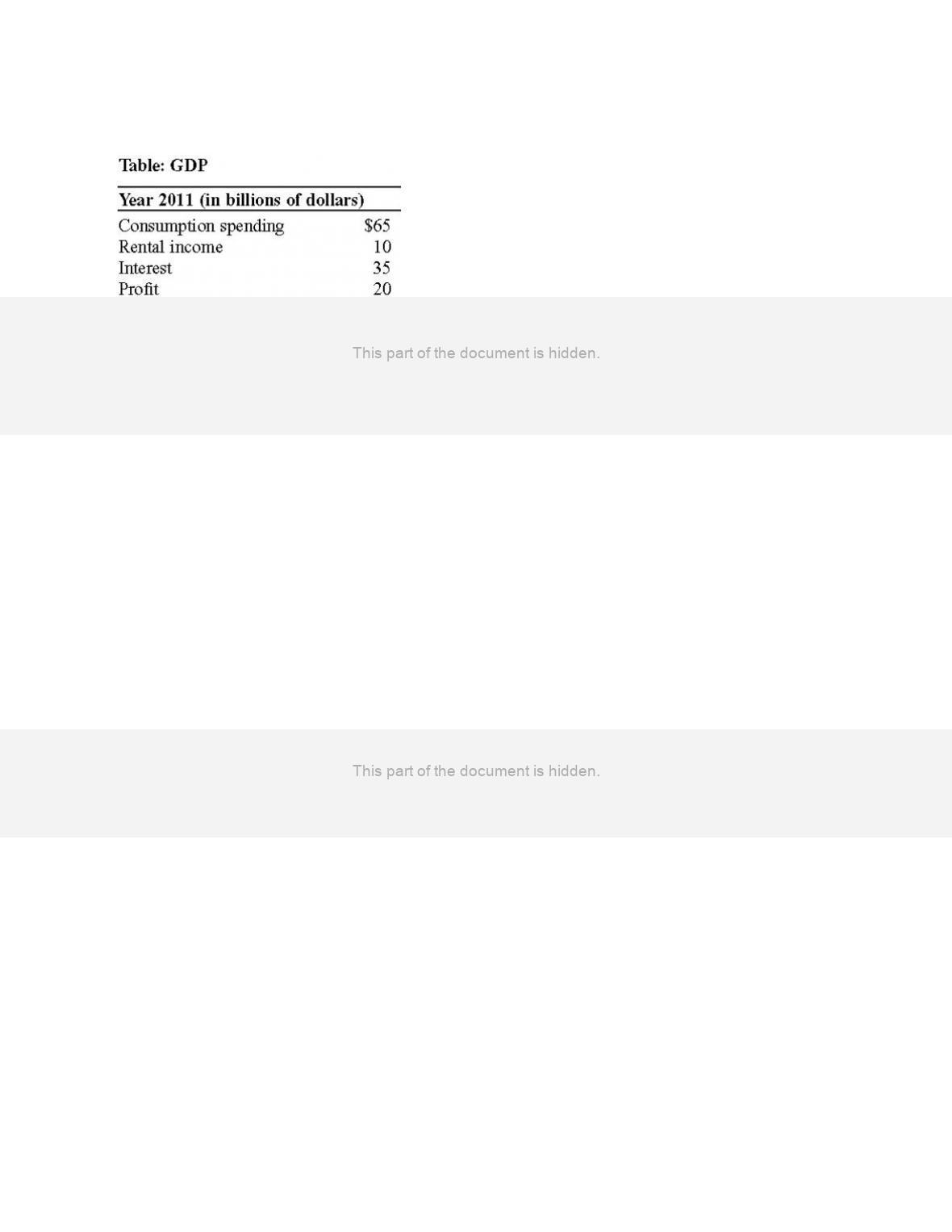
Page 20
Use the following to answer question 93:
93.
According to the information in Table: GDP. GDP in the table is:
A)
$94 billion.
B)
$188 billion.
C)
$168 billion.
D)
$139 billion.
94.
The Arcadia Entertainment Co. produced 20,000 DVDs of the movie Thor in 2011.
Only 4,000 copies remained unsold at the end of 2011. As a result:
A)
only 16,000 DVDs should be included in GDP in 2011 as consumption
expenditure.
B)
all 20,000 DVDs will be included in GDP in 2011, 16,000 as consumption
expenditure and 4,000 as investment expenditure.
C)
only 16,000 DVDs are included in GDP of 2011; the remaining 4,000 are counted
in GDP of 2012.
D)
all 20,000 DVDs are initially counted in 2011 GDP as consumption expenditure,
but they will be subtracted and added to 2012 GDP as the merchandise gets sold.
95.
In 2011, consumption spending is $7,000, government purchases of goods and services
is $2,000, and investment spending is $1,500. If GDP for 2011 is $10,300, exports are
_____ and imports are _____.
A)
$400; $200
B)
$100; $200
C)
$600; $800
D)
$500; $300