Page 53
221.
Diminishing marginal utility is the reason most indifference curves:
A)
slope upward.
B)
slope downward.
C)
are vertical.
D)
are horizontal.
Use the following to answer questions 222-224:
222.
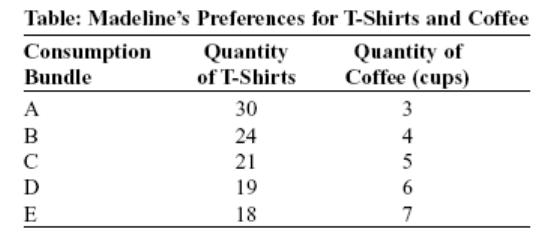
(Table: Madeline’s Preferences for T-Shirts and Coffee) Use Table Madeline’s
Preferences for T-Shirts and Coffee. Assume each consumption bundle provides the
same level of utility for Madeline. Suppose Madeline is consuming bundle C. If she
changes her purchases to bundle D, this means that she:
A)
gives up 2 T-shirts to obtain 1 more cup of coffee.
B)
gives up 1 cup of coffee to obtain 2 more T-shirts.
C)
will now have 11 cups of coffee and 40 T-shirts.
D)
doesn’t give up any T-shirts to obtain more coffee.
223.
(Table: Madeline’s Preferences for T-Shirts and Coffee) Use Table Madeline’s
Preferences for T-Shirts and Coffee. Assume each consumption bundle provides the
same level of utility. Suppose Madeline is consuming bundle A but then changes her
consumption and slowly moves along her indifference curve to bundles B, C, D, and
finally E. As she moves toward bundle E, she gives up:
A)
the same number of T-shirts to obtain another cup of coffee.
B)
an increasing numbers of T-shirts to obtain another cup of coffee.
C)
a decreasing numbers of T-shirts to obtain another cup of coffee.
D)
no T-shirts to obtain another cup of coffee.
Page 54
224.
(Table: Madeline’s Preferences for T-Shirts and Coffee) Use Table Madeline’s
Preferences for T-Shirts and Coffee. Assume each consumption bundle provides the
same level of utility. As Madeline moves from bundle A to bundle E, her total utility:
A)
decreases.
B)
increases.
C)
stays the same.
D)
is zero regardless of which bundle she chooses.
225.
Ellen consumes goods X and Y. As she consumes less X, she must be compensated with
additional units of Y, and her marginal rate of substitution of X for Y decreases as she
consumes more Y. This means that goods X and Y are:
A)
ordinary.
B)
unique.
C)
complements.
D)
substitutes.
226.
A typical indifference curve is _____, and its slope is the _____ of the good on the
horizontal axis divided by the marginal utility of the good on the vertical axis.
A)
downward-sloping; negative of the marginal utility
B)
upward-sloping; negative of the marginal utility
C)
downward-sloping; negative of the total utility
D)
downward-sloping; total cost
227.
The ratio of the prices of two goods is equal to the ratio of the marginal utilities of the
two goods at:
A)
the vertical intercept of the budget line.
B)
the optimal consumption bundle.
C)
the horizontal intercept of the budget line.
D)
the intersection of the budget line with the highest indifference curve.
228.
Since indifference curves depend on the _____ for individuals, this means that two
consumers with the same income _____.
A)
utility function; must consume different amounts of the two goods
B)
utility function; may consume different amounts of the two goods
C)
optimal utility rule; must consume different amounts of the two goods
D)
marginal utility function; have the same marginal utility for two goods.
Page 55
229.
(Scenario: Music Downloads and Streamed Movies) Read the scenario Music
Downloads and Streamed Movies. Which of the following equations expresses Phillip’s
budget line?
Scenario: Music Downloads and Streamed Movies
Phillip has an income of $300 per month, which he uses to purchase music downloads
(MD) and streamed movies (SM). Each music download costs $1 and each streamed
movie costs $5.
A)
300 = 1MD + 5SM
B)
SM = 300 – 1X
C)
300 = 1 / MD + 5 / SM
D)
SM = 300 + 5SM
230.
(Scenario: Music Downloads and Streamed Movies) Read the scenario Music
Downloads and Streamed Movies. Suppose Phillip’s income falls by half, and the prices
for both music downloads and streamed movies also fall by half. As a result of this,
Phillip:
Scenario: Music Downloads and Streamed Movies
Phillip has an income of $300 per month, which he uses to purchase music downloads
(MD) and streamed movies (SM). Each music download costs $1 and each streamed
movie costs $5.
A)
can buy fewer music downloads if he spends all of his income on music
downloads.
B)
can buy fewer streamed movies if he spends all of his income on streamed movies.
C)
will not notice any change in his budget line.
D)
will undergo a parallel shift out of his budget line.
231.
(Scenario: Music Downloads and Streamed Movies) Read the scenario Music
Downloads and Streamed Movies. Phillip’s optimal consumption bundle will be one
whose:
Scenario: Music Downloads and Streamed Movies
Phillip has an income of $300 per month, which he uses to purchase music downloads
(MD) and streamed movies (SM). Each music download costs $1 and each streamed
movie costs $5.
A)
budget line is tangent to his highest indifference curve.
B)
budget line intersects his highest indifference curve.
C)
budget line intersects the music download axis.
D)
indifference curve intersects the streamed movies axis.
Page 56
232.
(Scenario: Music Downloads and Streamed Movies) Read the scenario Music
Downloads and Streamed Movies. For Phillip, the horizontal (music download)
intercept is:
Scenario: Music Downloads and Streamed Movies
Phillip has an income of $300 per month, which he uses to purchase music downloads
(MD) and streamed movies (SM). Each music download costs $1 and each streamed
movie costs $5.
A)
20.
B)
300.
C)
30.
D)
10.
233.
(Scenario: Music Downloads and Streamed Movies) Read the scenario Music
Downloads and Streamed Movies. The slope of Phillip’s budget line is equal to:
Scenario: Music Downloads and Streamed Movies
Phillip has an income of $300 per month, which he uses to purchase music downloads
(MD) and streamed movies (SM). Each music download costs $1 and each streamed
movie costs $5.
A)
–0.2.
B)
–5.
C)
–0.4.
D)
–2.5.
234.
Two goods in an individual’s consumption bundle are perfect substitutes. For a given
amount of income, the individual’s optimal consumption bundle will contain:
A)
exactly 50% of each of the two goods.
B)
only the good with the lower price.
C)
only the good with the higher price.
D)
all of the good on the horizontal axis.
235.
For some people, coffee and milk are perfect complements. Their indifference curves
are:
A)
right angles.
B)
straight lines between the X and Y axis.
C)
straight lines out of the origin.
D)
regular downward-sloping indifference curves, but their budget lines are right
angles.
Page 57
236.
Paola gets 50 units of utility when she consumes 4 cupcakes and 2 glasses of milk. She
also gets 50 units of utility when she consumes 3 cupcakes and 2 glasses of milk. This
means that:
A)
Paola likes milk better than cupcakes.
B)
Paola likes cupcakes better than milk.
C)
these combinations lie on the same indifference curve.
D)
one of these combinations lies on a higher indifference curve.
237.
(Scenario: E-Books and Sports Tickets) Read the scenario E-Books and Sports Tickets.
Measure e-books on the horizontal axis and sports tickets on the vertical axis. Suppose
the price of e-books decreases. Holding everything else constant, Phillip’s budget line
has become _____, and his optimal consumption bundle will be on a _____ indifference
curve.
Scenario: E-Books and Sports Tickets
Phillip has an income of $300 per month, which he uses to purchase two goods, e-books
and sports tickets. Each e-book costs $10, and each ticket costs $15.
A)
flatter higher
B)
steeper; lower
C)
flatter; lower
D)
steeper; higher
238.
(Scenario: E-Books and Sports Tickets) Read the scenario E-Books and Sports Tickets.
Suppose Phillip discovers that if he spends all of his money on sports tickets, he can buy
more sports tickets than he could previously because something changed. This is a result
of a(n) _____ in the price of _____.
Scenario: E-Books and Sports Tickets
Phillip has an income of $300 per month, which he uses to purchase two goods, e-books
and sports tickets. Each e-book costs $10, and each ticket costs $15.
A)
increase; tickets
B)
decrease; tickets
C)
increase; e-books
D)
decrease; e-books
Page 58
239.
(Scenario: E-Books and Sports Tickets) Read the scenario E-Books and Sports Tickets.
Phillip gets an increase in the amount of his monthly income allotted for e-books and
sports tickets. Holding everything else constant, Phillip’s budget line has:
Scenario: E-Books and Sports Tickets
Phillip has an income of $300 per month, which he uses to purchase two goods, e-books
and sports tickets. Each e-book costs $10, and each ticket costs $15.
A)
shifted parallel inward to the origin.
B)
rotated around the lower-priced good.
C)
rotated around the higher-priced good.
D)
shifted parallel outward away from the origin.
Use the following to answer questions 240-244:
240.
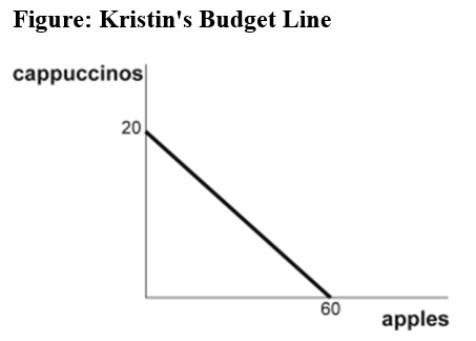
(Figure: Kristin’s Budget Line) Use Figure Kristin’s Budget Line. The price of a cup of
cappuccino is $3, and the price of an apple is $1. Kristin’s income is:
A)
$50.
B)
$120.
C)
$60.
D)
$20.
241.
(Figure: Kristin’s Budget Line) Use Figure Kristin’s Budget Line. The price of a cup of
cappuccino is $3, and the price of an apple is $1. Given her income and the prices of the
two goods, Kristin can consume _____ cappuccinos and _____ apples.
A)
20; 10
B)
15; 15
C)
15; 20
D)
10; 40
Page 59
242.
(Figure: Kristin’s Budget Line) Use Figure Kristin’s Budget Line. The price of a cup of
cappuccino is $3, and the price of an apple is $1. Suppose Kristin initially consumes 10
cups of cappuccino and 30 apples. Then the price of apples increases to $3 each and the
price of a cappuccino remains unchanged. As a result of this price change, Kristin’s
optimal consumption bundle changes, reflected by a decrease in the consumption of
both apples and cappuccinos. This suggests that:
A)
apples are a Giffen good.
B)
cappuccino is a Giffen good.
C)
both apples and cappuccino are normal goods.
D)
apples are an inferior good.
243.
(Figure: Kristin’s Budget Line) Use Figure Kristin’s Budget Line. The price of a cup of
cappuccino is $3, and the price of an apple is $1. Suppose Kristin initially consumes 10
cups of cappuccino and 30 apples. Then, the price of apples increases to $3 each and the
price of cappuccino remains unchanged. As a result of the price change, Kristin’s
optimal consumption bundle changes, reflected by a decrease in the consumption of
both apples and cappuccinos. If Kristin is to maintain the same level of utility as before
the price change, she must:
A)
increase her income.
B)
decrease her income.
C)
keep her income the same, since only one good’s price changed.
D)
increase her income by $2.
244.
(Figure: Kristin’s Budget Line) Use Figure Kristin’s Budget Line. The price of a cup of
cappuccino is $3, and the price of an apple is $1. Suppose Kristin initially consumes 10
cups of cappuccino and 30 apples. Then the price of apples increases to $3 each and the
price of cappuccino remains unchanged. As a result of this price change, Kristin’s
optimal consumption bundle is now 9 cups of cappuccino and 11 apples. If Kristin’s
income could be adjusted so that she could maintain her initial level of utility after the
price change, she would consume more cappuccino and more apples. This reflects:
A)
a substitution effect from the price change and an income effect from the income
change.
B)
the substitution effect alone.
C)
the income effect alone.
D)
neither a substitution nor an income effect.
Answer Key
Page 61
45.
A
46.
D
47.
D
48.
C
49.
B
50.
B
51.
C
52.
A
53.
A
54.
B
55.
A
56.
B
57.
C
58.
C
59.
B
60.
A
61.
C
62.
A
63.
A
64.
B
65.
C
66.
B
67.
B
68.
A
69.
A
70.
A
71.
D
72.
A
73.
B
74.
B
75.
A
76.
C
77.
C
78.
A
79.
A
80.
C
81.
C
82.
D
83.
A
84.
C
85.
B
86.
B
87.
C
88.
B
89.
B
90.
A
Page 62
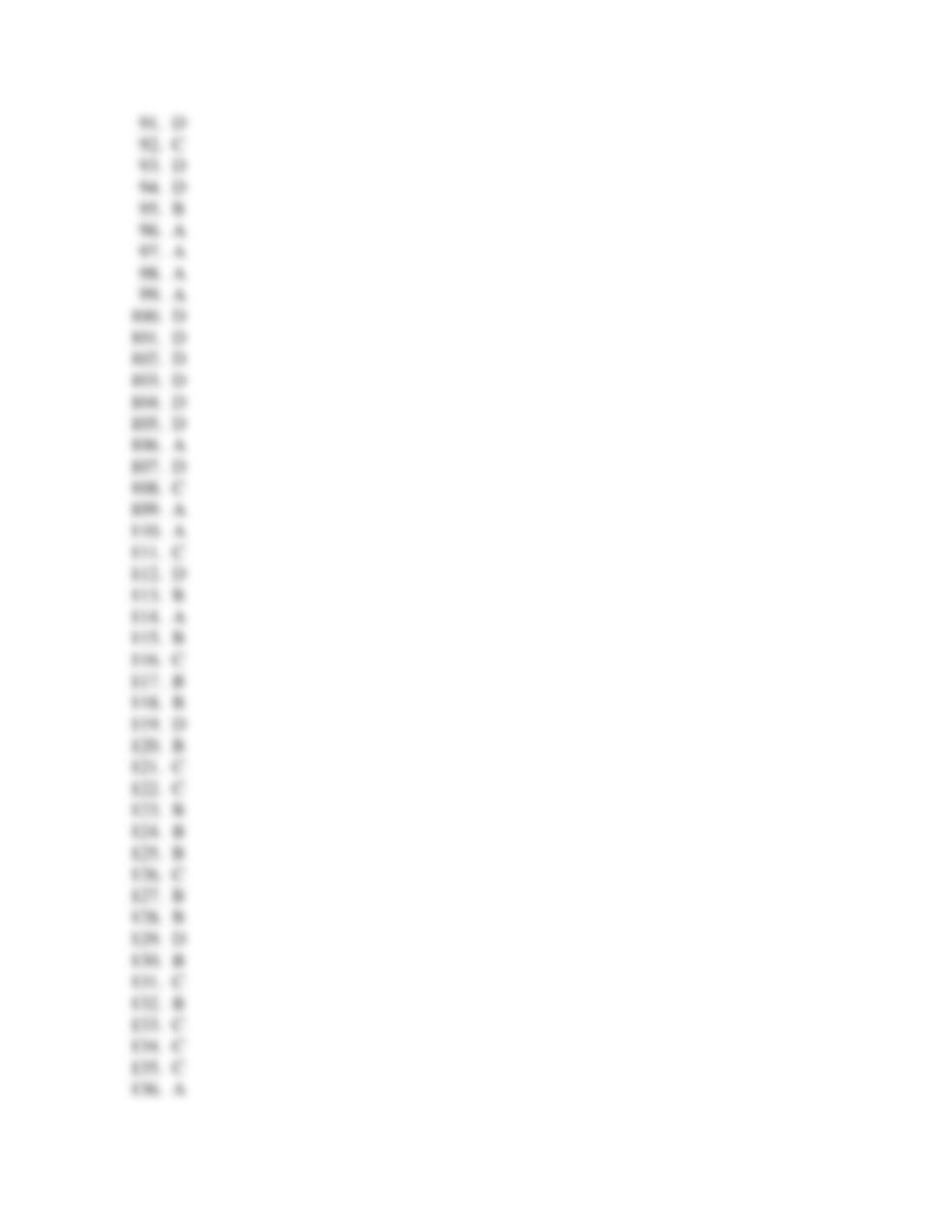
91.
D
92.
C
93.
D
94.
D
95.
B
96.
A
97.
A
98.
A
99.
A
100.
D
101.
D
102.
D
103.
D
104.
D
105.
D
106.
A
107.
D
108.
C
109.
A
110.
A
111.
C
112.
D
113.
B
114.
A
115.
B
116.
C
117.
B
118.
B
119.
D
120.
B
121.
C
122.
C
123.
B
124.
B
125.
B
126.
C
127.
B
128.
B
129.
D
130.
B
131.
C
132.
B
133.
C
134.
C
135.
C
136.
A
Page 63
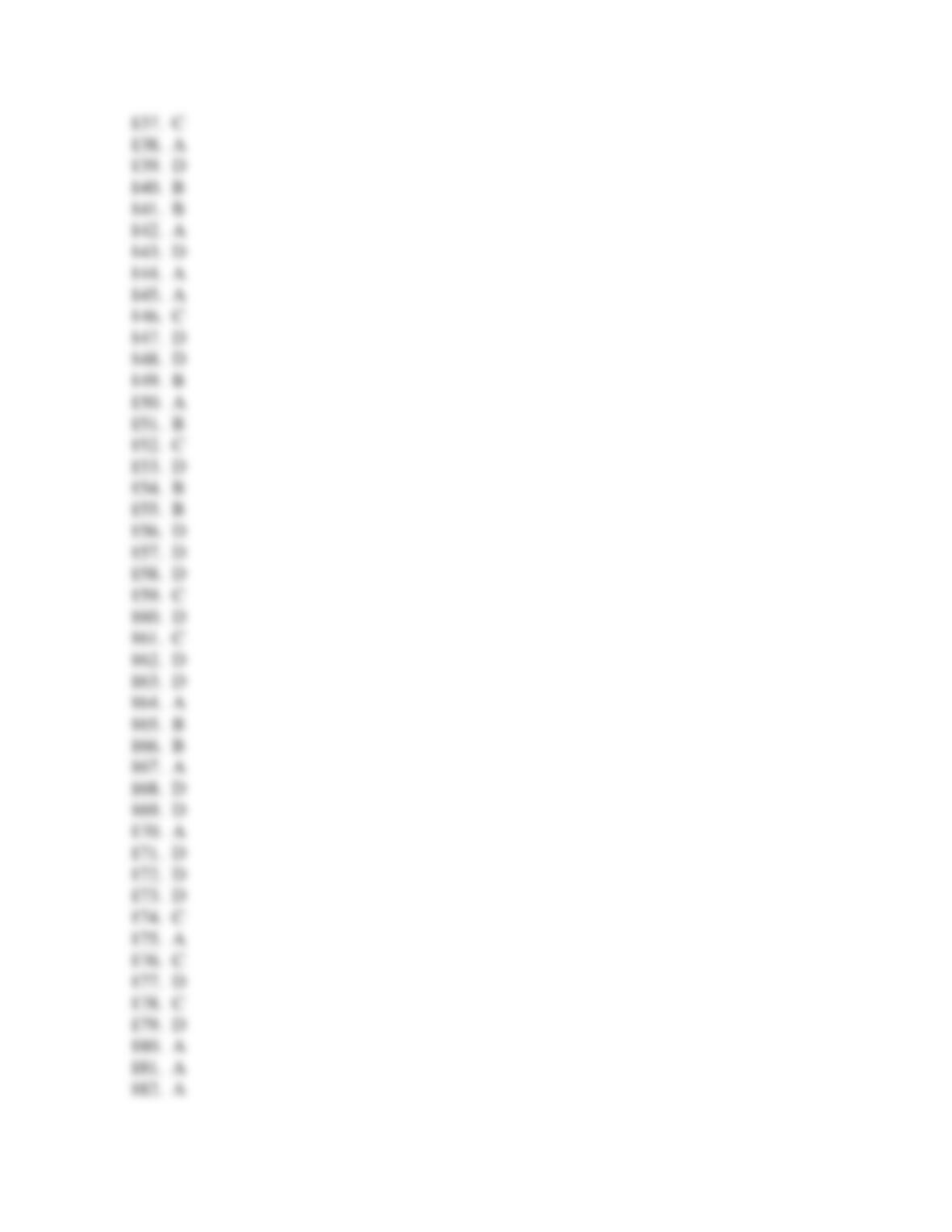
137.
C
138.
A
139.
D
140.
B
141.
B
142.
A
143.
D
144.
A
145.
A
146.
C
147.
D
148.
D
149.
B
150.
A
151.
B
152.
C
153.
D
154.
B
155.
B
156.
D
157.
D
158.
D
159.
C
160.
D
161.
C
162.
D
163.
D
164.
A
165.
B
166.
B
167.
A
168.
D
169.
D
170.
A
171.
D
172.
D
173.
D
174.
C
175.
A
176.
C
177.
D
178.
C
179.
D
180.
A
181.
A
182.
A
Page 64
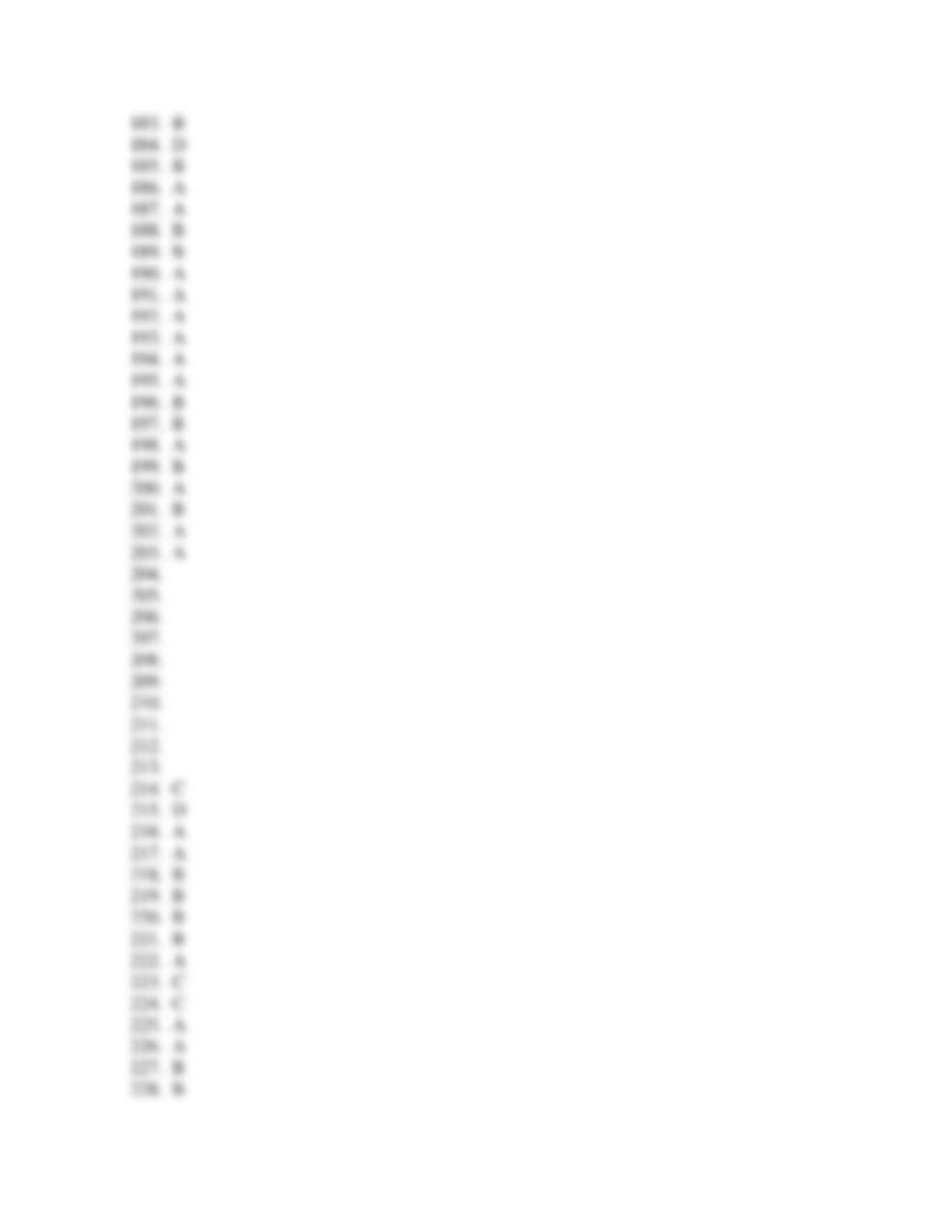
183.
B
184.
D
185.
B
186.
A
187.
A
188.
B
189.
B
190.
A
191.
A
192.
A
193.
A
194.
A
195.
A
196.
B
197.
B
198.
A
199.
B
200.
A
201.
B
202.
A
203.
A
204.
205.
206.
207.
208.
209.
210.
211.
212.
213.
214.
C
215.
D
216.
A
217.
A
218.
B
219.
B
220.
B
221.
B
222.
A
223.
C
224.
C
225.
A
226.
A
227.
B
228.
B
Page 65
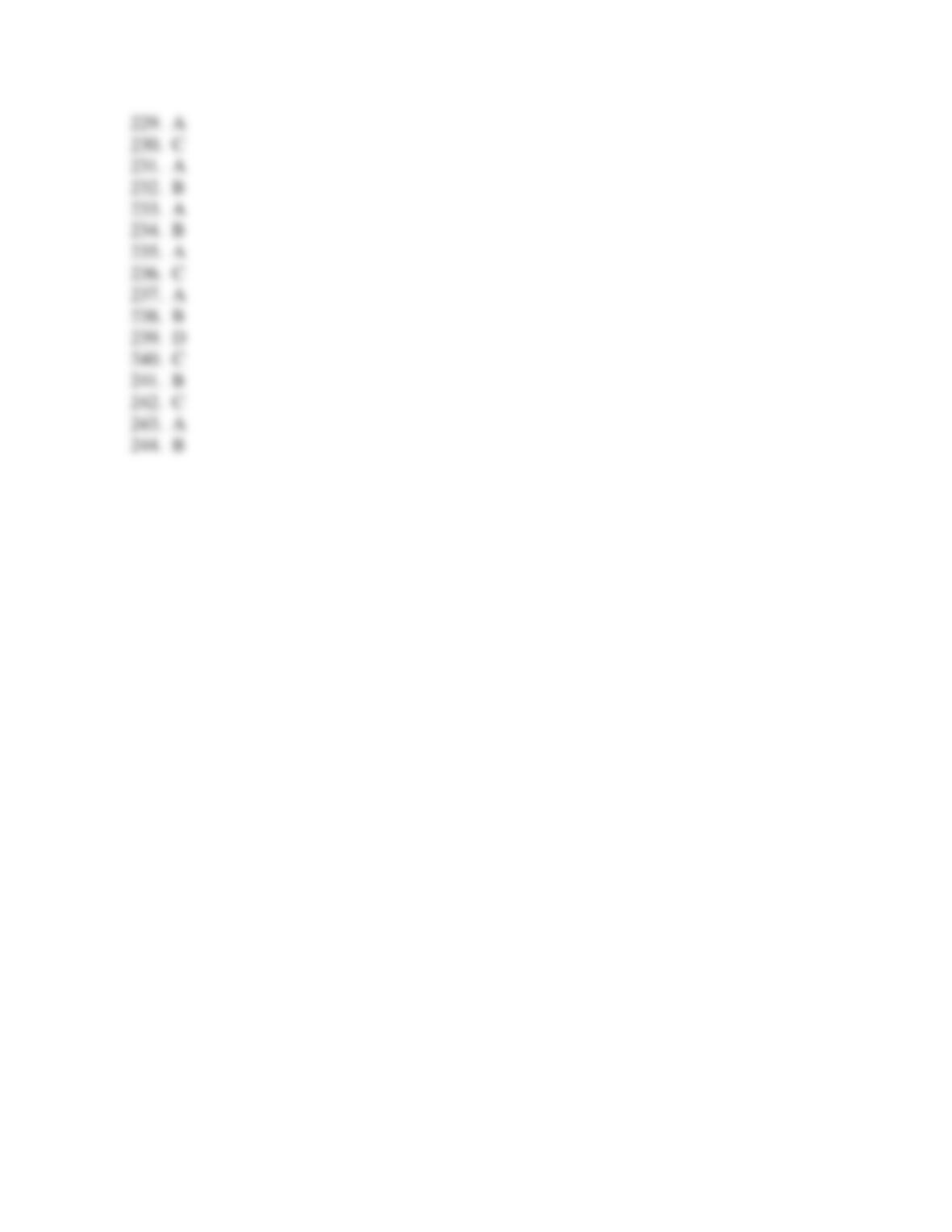
229.
A
230.
C
231.
A
232.
B
233.
A
234.
B
235.
A
236.
C
237.
A
238.
B
239.
D
240.
C
241.
B
242.
C
243.
A
244.
B