
Name:
Class:
Date:
Chapter 16: Expansion Processes
Copyright Cengage Learning. Powered by Cognero.
Page 1
1. An expanded plastics is similar to a sponge, bread, or whipped cream because all are ____ in structure.
a.
closed cell
b.
cellular
c.
dense
d.
open cell
ANSWER:
b
2. What method for turning resins into expanded plastics involves forcing pentanes, hexanes, halocarbons, or moistures of
these materials into the plastics particles under pressure?
a.
liquid vaporization
b.
whipping air into the resin and rapidly curing or cooling
c.
dissolving a gas that expands at room temperature
d.
thermal breakdown of a chemical blowing agent
ANSWER:
d
3. Vinyl esters, urea-formaldehyde (UF), phenolics, polyesters, and some dispersion polymers are made cellular by
utilizing ____ methods.
a.
mechanical
b.
microballoon
c.
vaporization
d.
blowing
ANSWER:
a
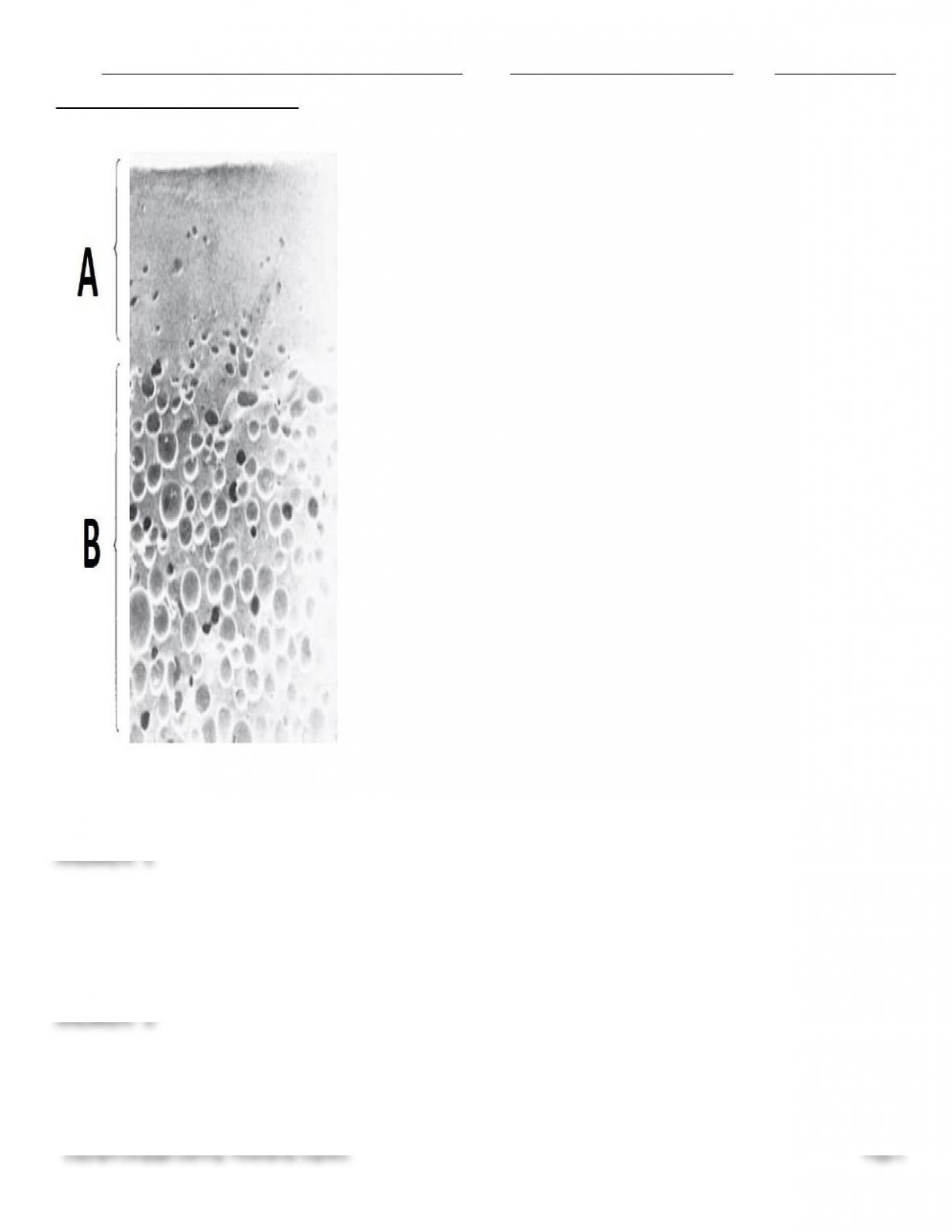
4. In molding, which part is represented by “A”?
Name:
Class:
Date:
Chapter 16: Expansion Processes
Copyright Cengage Learning. Powered by Cognero.
Page 2
a.
cellular core
b.
expanded phase
c.
solid skin
d.
collapsing bubbles
ANSWER:
c
5. Cellular plastics with an integral skin are known as ____.
a.
sandwich composites
b.
structural foam
c.
expanded plastics
d.
syntactic plastics
ANSWER:
b
6. The most popular and economical method used for large parts is ____.
a.
high-pressure processing
b.
steam chamber
c.
low-pressure processing
Name:
Class:
Date:
Chapter 16: Expansion Processes
Copyright Cengage Learning. Powered by Cognero.
Page 3
d.
dri-electric molding
ANSWER:
c
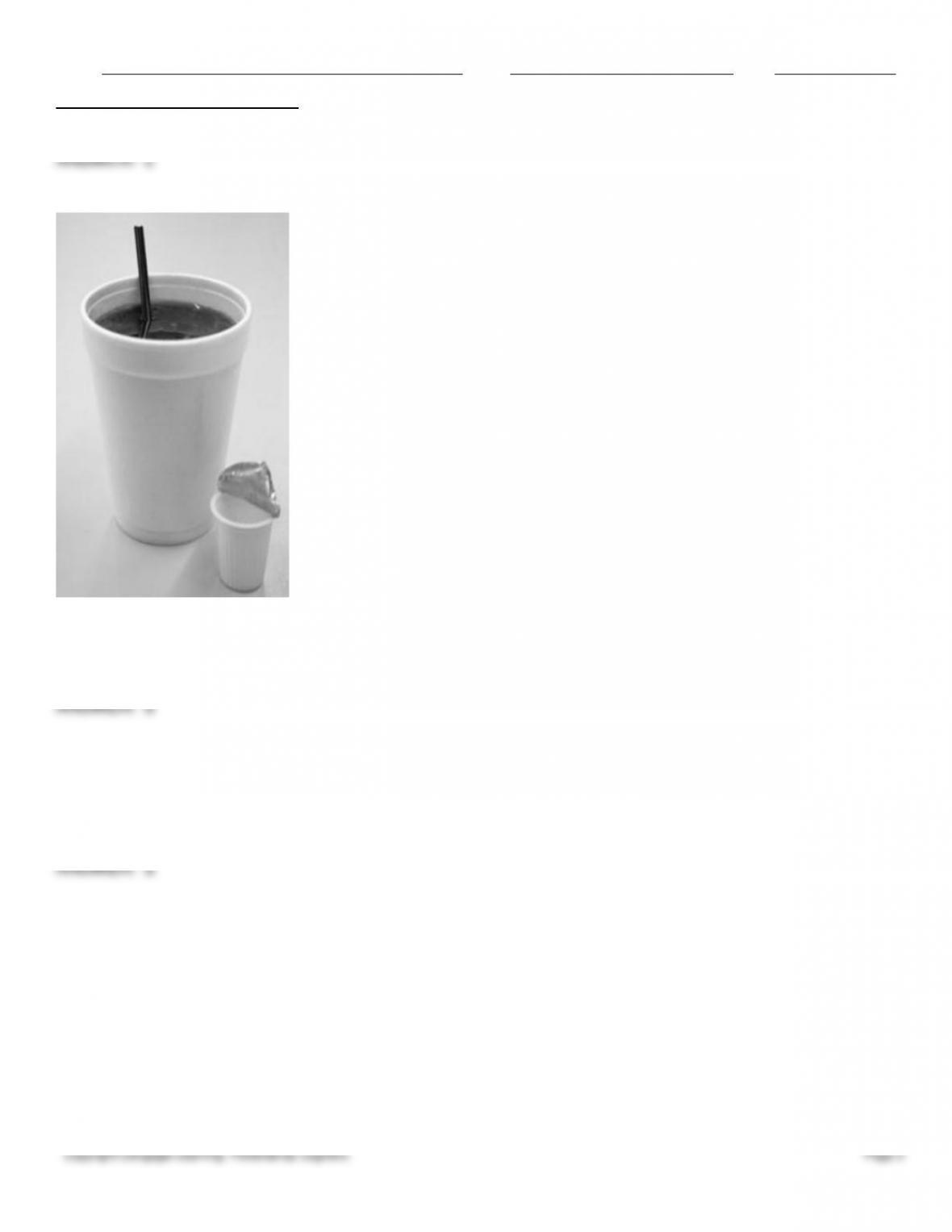
7. The ____ properties of cellular materials are particularly useful in food containers like this coffee cup.
a.
leaching
b.
conductive
c.
cryogenic
d.
insulating
ANSWER:
d
8. In ____ processing, the heated melt is forced into the mold with pressures of 30 to 140 MPa.
a.
high-pressure
b.
steam chamber
c.
extrusion
d.
low-pressure
ANSWER:
a
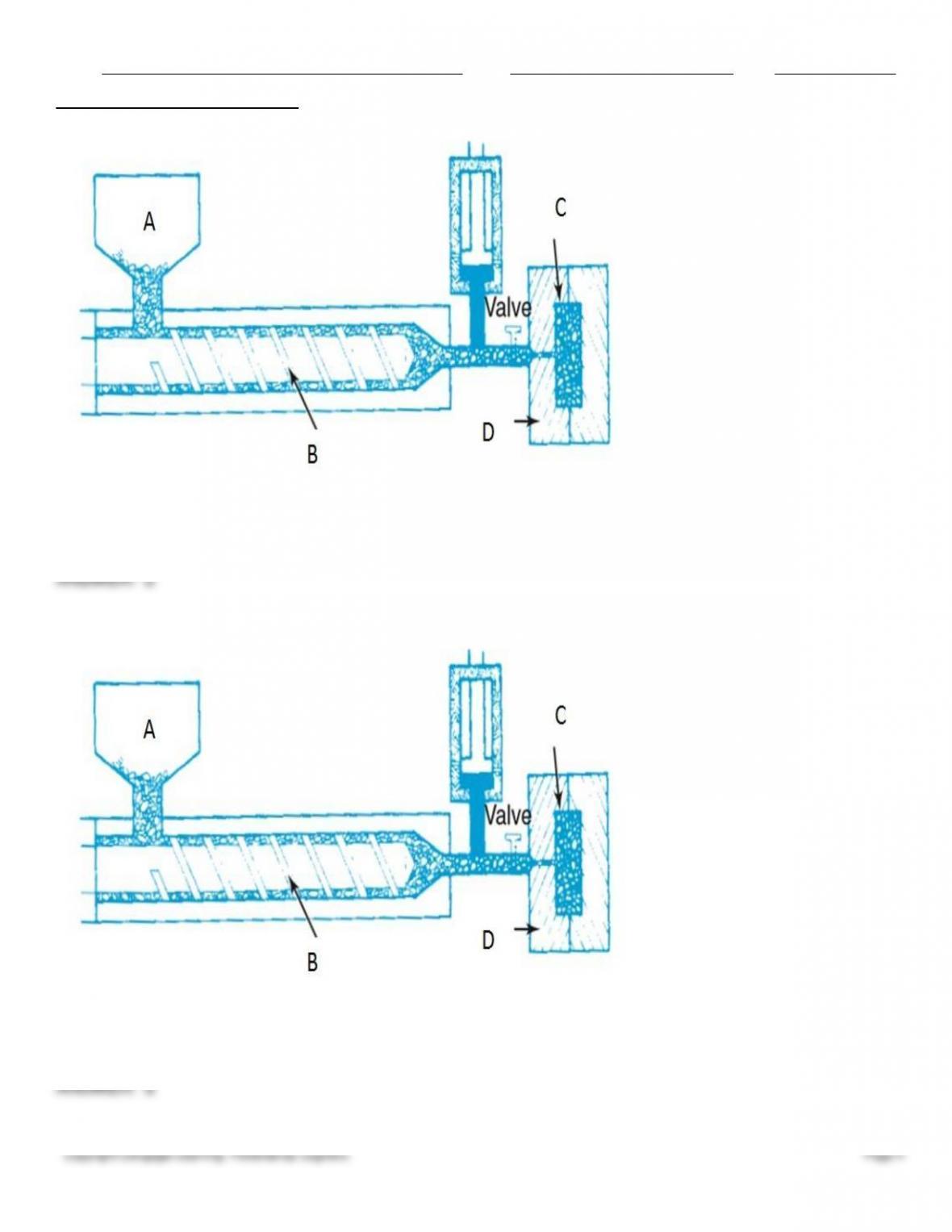
9. In one of the processes of high-pressure processing, what is represented by the letter “B”?
Name:
Class:
Date:
Chapter 16: Expansion Processes
Copyright Cengage Learning. Powered by Cognero.
Page 4
a.
hopper
b.
reciprocating screw
c.
expanded part
d.
split mold
ANSWER:
b
10. In one of the processes of high-pressure processing, what is represented by the letter “A”?
a.
hopper
b.
reciprocating screw
c.
expanded part
d.
split mold
ANSWER:
a
11. Astroturf consists of a foamed ___ pad beneath the turf.

Name:
Class:
Date:
Chapter 16: Expansion Processes
Copyright Cengage Learning. Powered by Cognero.
Page 5
a.
PVC
b.
ABS
c.
polyester
d.
acrylic
ANSWER:
a
12. What product is commonly produced in the form of small beads containing an expanding agent which are preheated
before placing them in the mold?
a.
polyethylene
b.
polyester
c.
polystyrene
d.
polypropylene
ANSWER:
c
13. Dielectric molding makes use of ____ to expand beads.
a.
electric current
b.
steam lines
c.
high-frequency radio energy
d.
external heat
ANSWER:
c
14. Polyurethanes, polyethers, urea-formaldehyde, polyvinyls, and phenolics are often processed by ____.
a.
high-frequency radio energy
b.
electric current
c.
dielectric molding
d.
cast expansion
ANSWER:
d
15. A product formed by expanding in place, in which the expanded plastics and the mold together become the finished
product is a(n) ____.
a.
refrigerator door
b.
Styrofoam cup
c.
artificial turf
d.
flotation device
ANSWER:
a
16. Large slabs or blocks of flexible polyurethanes are cast in open and closed molds and cut into slabs for _____.
a.
flotation material in boats
b.
coatings on fabrics
c.
mattress stock
d.
insulation in rail cars
ANSWER:
c
17. What type of product is made by blending microscopically small hollow balls of glass or plastics in a resin matrix

Name:
Class:
Date:
Chapter 16: Expansion Processes
Copyright Cengage Learning. Powered by Cognero.
Page 6
binder?
a.
syntactic plastics
b.
Styrofoam
c.
sandwich composites
d.
structural foam
ANSWER:
a
18. Extruded polyvinyl materials, which may be expanded as they emerge from the die or stored for future expansion, are
often used in the ____ industry.
a.
refrigeration
b.
transportation
c.
automotive
d.
garment
ANSWER:
d
19. Reaction injection molding (RIM) creates products that are greatly improved in terms of stability by the addition of
____.
a.
colorants
b.
reinforcements
c.
blowing agents
d.
expansion agents
ANSWER:
b
20. Fillers that are added to artificial turf products to prevent matting are usually ____ or olefin.
a.
nylon
b.
polyester
c.
polypropylene
d.
structural foam
ANSWER:
a