
Topic:
Does the Economy Self-Correct?
179.
New classical economics suggests that in the long-run, changes in aggregate demand will
cause
180.
If there is an unanticipated increase in aggregate demand, then according to new classical
economics, the economy will self-correct with a(n)
181.
Within the aggregate demand-aggregate supply framework, monetarists argue that a change
in aggregate
39–82
Copyright © 2018 McGraw-Hill Education. All rights reserved. No reproduction or distribution without the prior
written consent of McGraw-Hill Education.
D. supply will have a large effect on the price level but a temporary effect on output.
182.
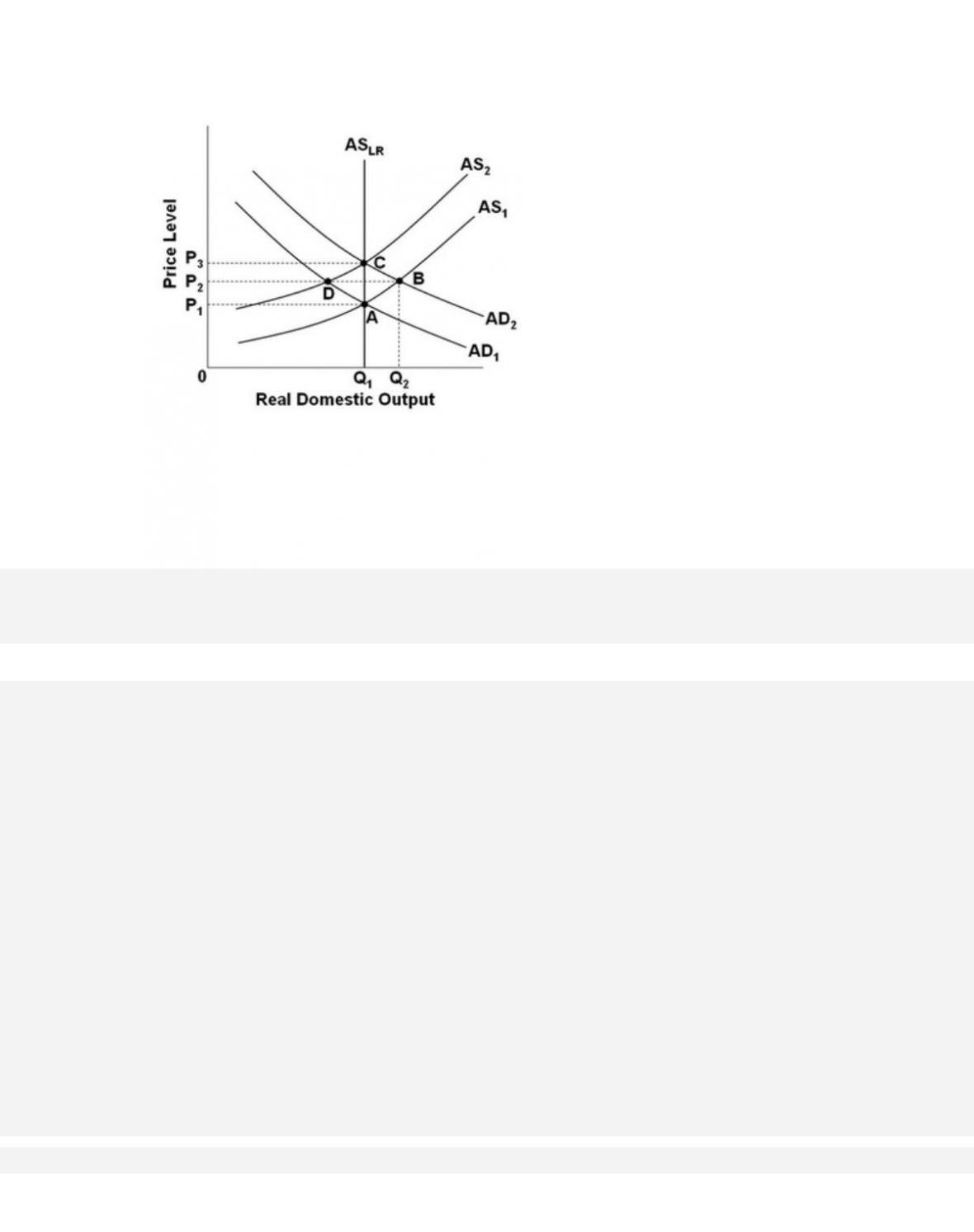
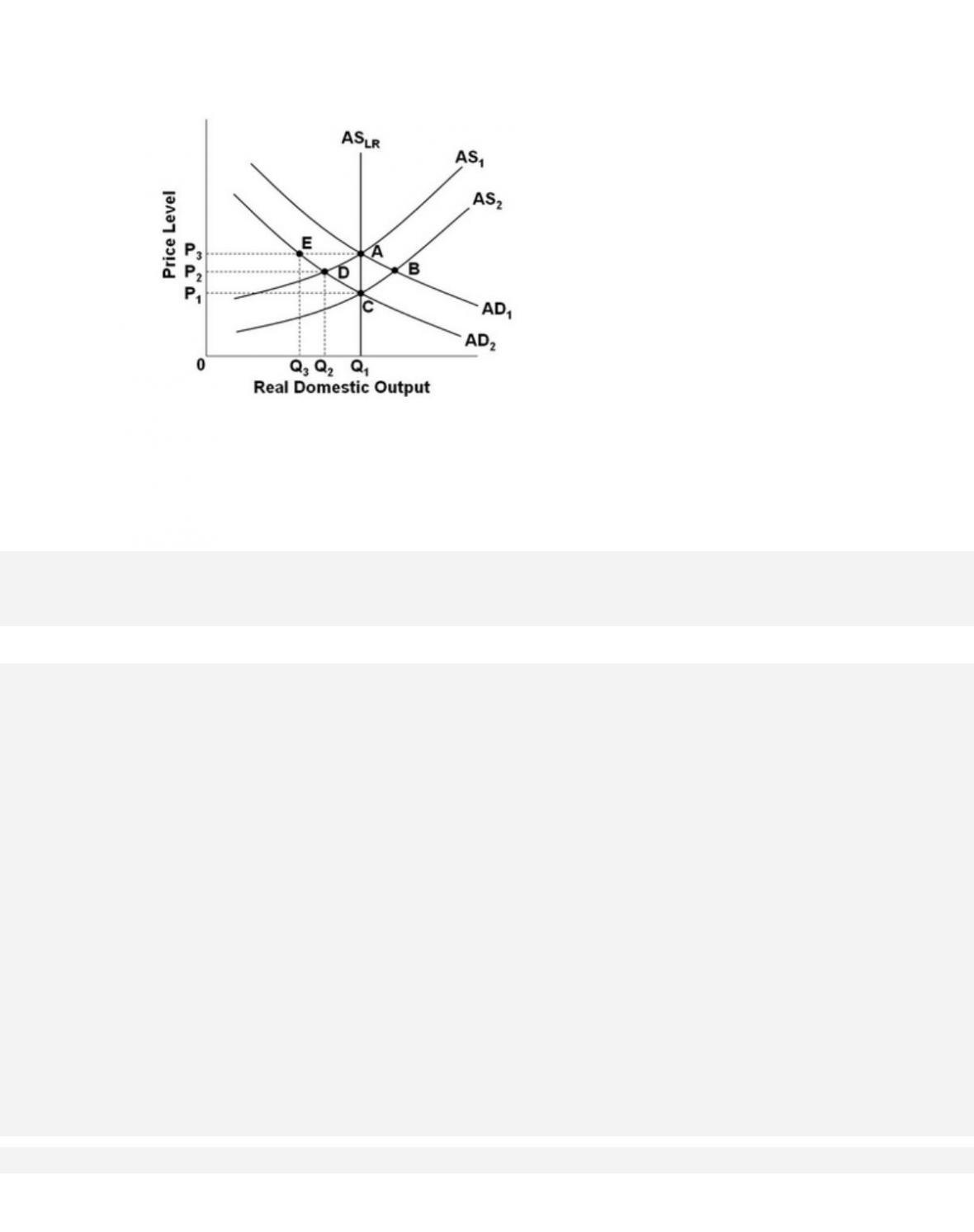
Refer to the graph. Assume that the economy is in initial equilibrium where AD1 intersects
AS1. If there is an unanticipated increase in aggregate demand, then according to new classical
economics, the economy will self-correct with a
183.
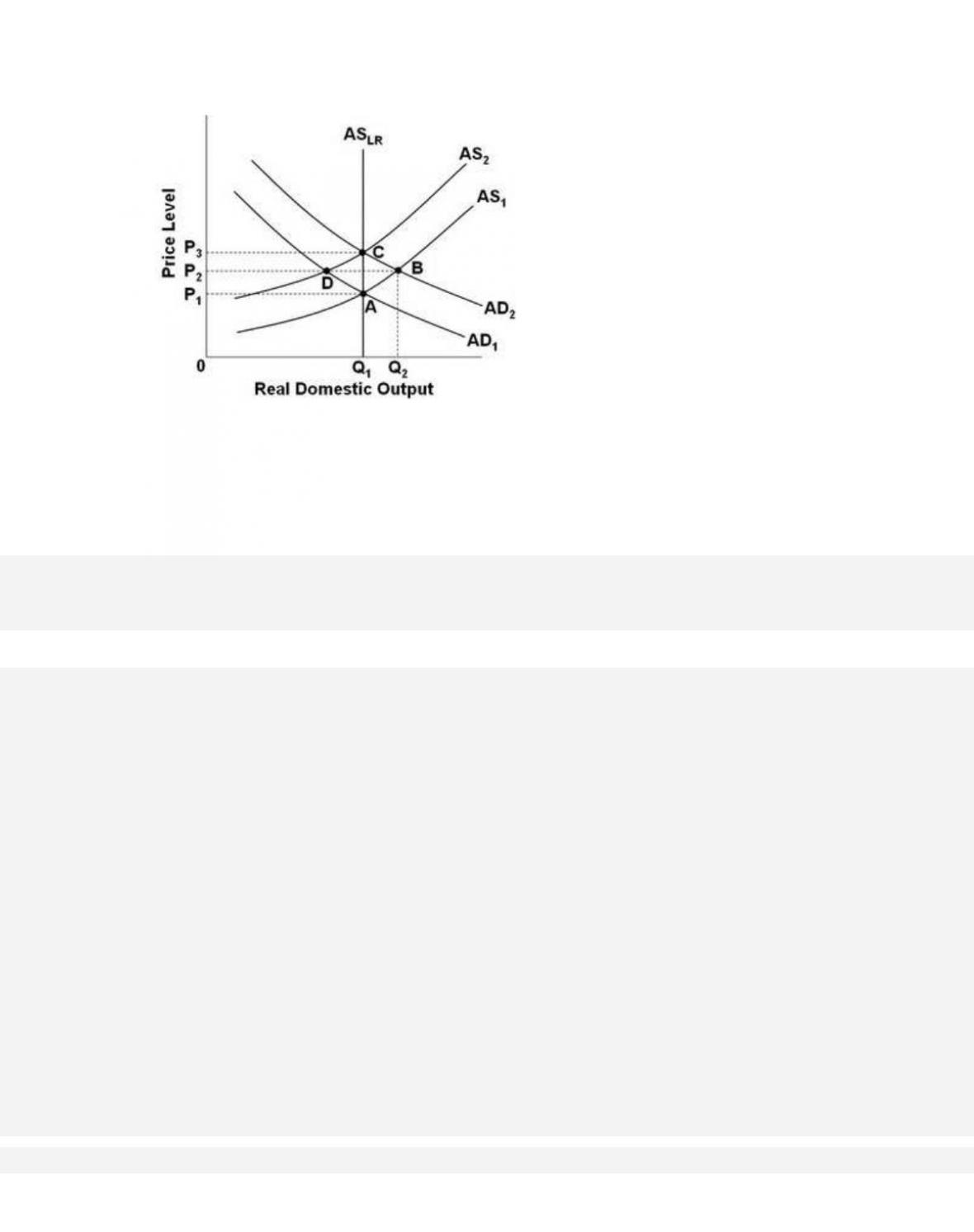
Refer to the graph. Assume that the economy is in initial equilibrium where AD1 intersects
AS1. If there is an unanticipated increase in aggregate demand and the economy self-corrects,
then the adaptive-expectations
adjustment path would go from point
184.
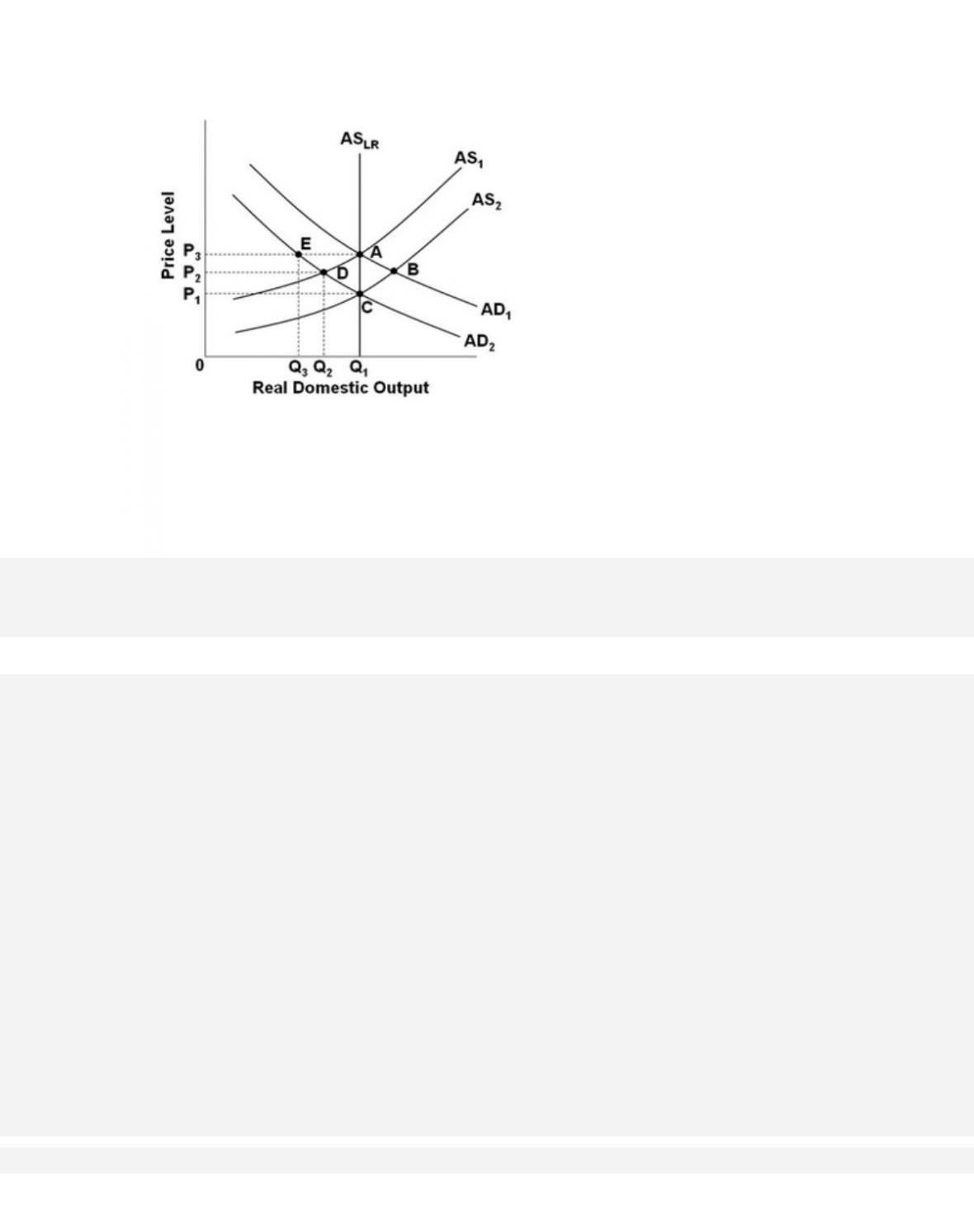
Refer to the graph. Assume that the economy is in initial equilibrium where AD1 intersects
AS1. If there is an anticipated increase in aggregate demand to AD2, then, according to the
rational expectations economists, the path for adjustment runs from point
185.
Refer to the graph. Assume that the economy is in initial equilibrium where AD1 intersects
AS1. If there is an unanticipated decrease in aggregate demand to AD2, then, in the view of
new classical economics, the economy will
186.
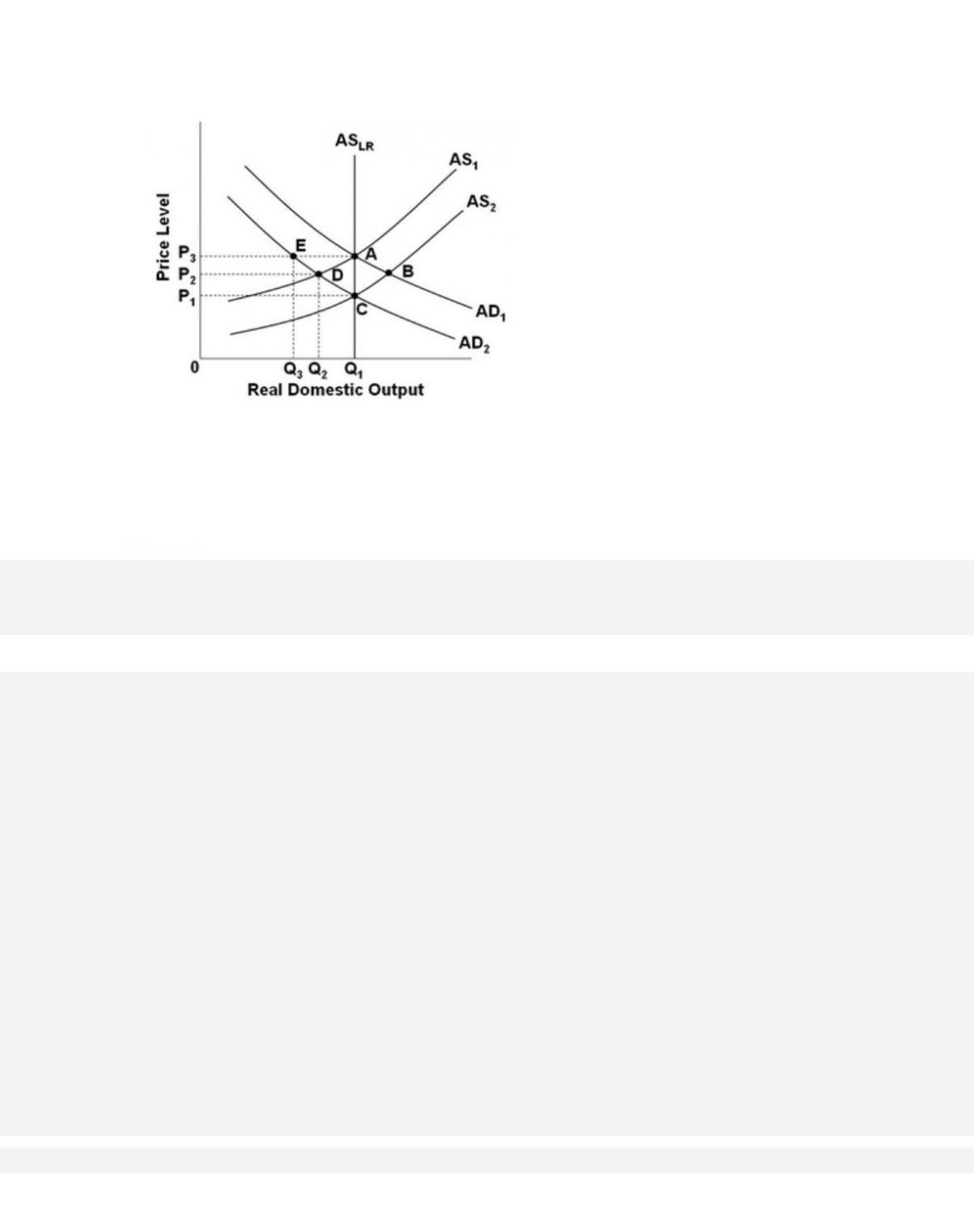
Refer to the graph. Assume that the economy is in initial equilibrium where AD1 intersects
AS1. If there is an anticipated decrease in aggregate demand to AD2, then, according to
rational expectations theory, the path
for adjustment runs from point
187.
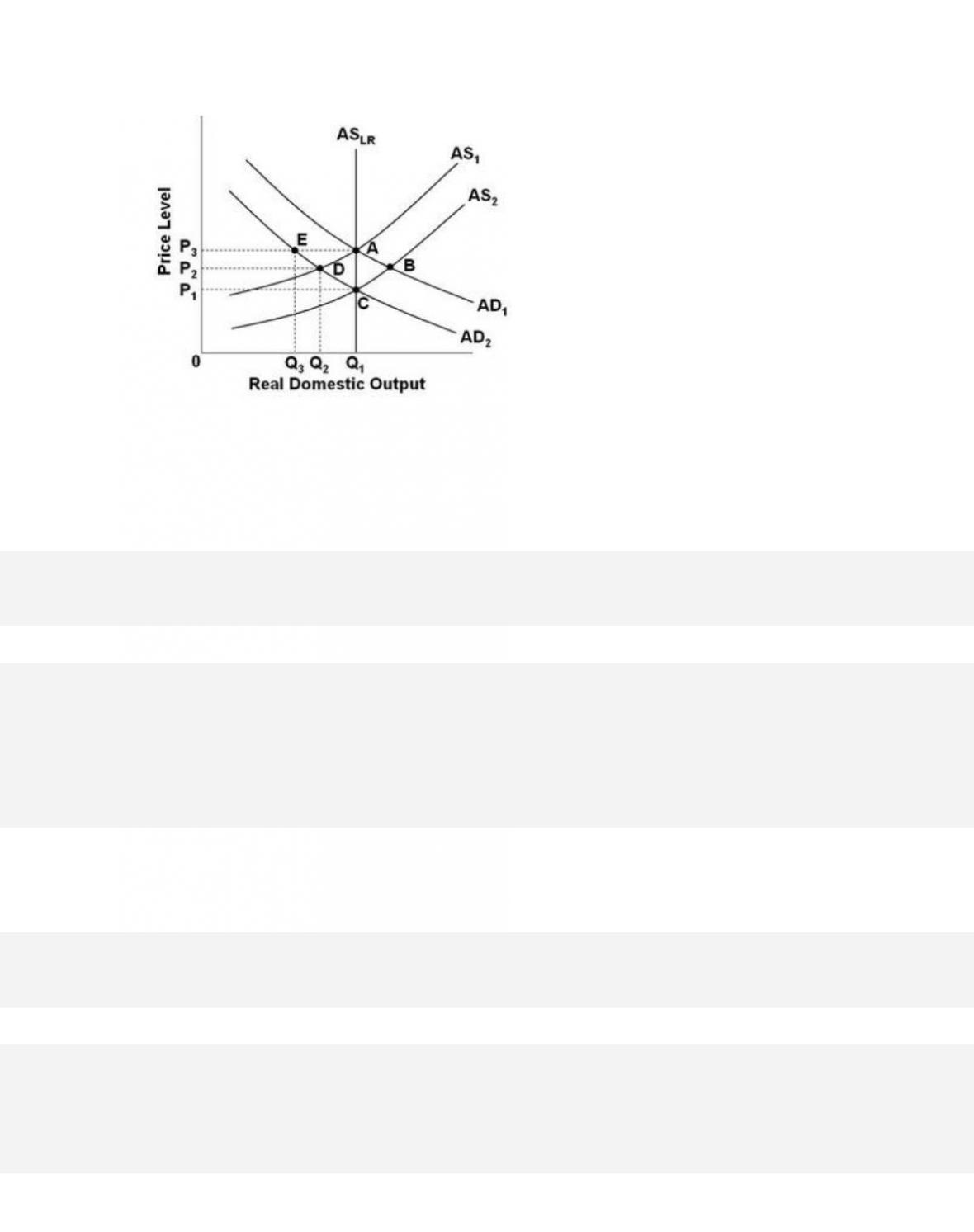
Refer to the graph. Assume that the economy is in initial equilibrium where AD1 intersects
AS1. If there is a decrease in aggregate demand to AD2, then, according to mainstream
economists, if prices are flexible and
wages are not, this will result in an equilibrium at point
188.
Refer to the graph. Assume that the economy is in initial equilibrium where AD1 intersects
AS1. If there is a decrease in aggregate demand to AD2, then, according to mainstream
economists, if prices and wages are not flexible, this will result in an equilibrium at point
189. Monetarists base their assessment of the speed of adjustment for self-correction in the
economy on

39–89
Copyright © 2018 McGraw-Hill Education. All rights reserved. No reproduction or distribution without the prior
written consent of McGraw-Hill Education.
Difficulty:
02 Medium
Learning Objective: 39-02 Discuss why new classical economists believe the economy
will ” self-correct” from aggregate demand and aggregate supply shocks.
Test Bank: II
Topic:
Does the Economy Self-Correct?
190. Which view of the macroeconomy suggests that the speed of adjustment for self-correction
would be very quick?
191. In the view of rational expectations theory,
192. In the rational expectations theory, a temporary change in real output could result from

193. One of the basic assumptions of rational expectations theory is that
194. From a rational expectations perspective, an easy money policy is likely to be completely

39–91
Copyright © 2018 McGraw-Hill Education. All rights reserved. No reproduction or distribution without the prior
written consent of McGraw-Hill Education.
Difficulty:
02 Medium
Learning Objective: 39-02 Discuss why new classical economists believe the economy
will ” self-correct” from aggregate demand and aggregate supply shocks.
Test Bank: II
Topic:
Does the Economy Self-Correct?
195. Within the aggregate demand-aggregate supply framework, a strict interpretation of
rational expectations theory suggests that a change in aggregate
196. Rational expectations theory considers the aggregate
197. Mainstream economists think that

39–92
Copyright © 2018 McGraw-Hill Education. All rights reserved. No reproduction or distribution without the prior
written consent of McGraw-Hill Education.
of real output.
C. the downward inflexibility of wages and prices may leave the economy stuck in a costly
recession for long periods.
D. significant changes in technology and resource availability cause macroeconomic
instability.
198. Which economic perspective typically views the market system as less than fully
competitive, and therefore subject to macroeconomic instability?
199. A mainstream criticism of rational expectations theory is that

39–93
Copyright © 2018 McGraw-Hill Education. All rights reserved. No reproduction or distribution without the prior
written consent of McGraw-Hill Education.
Learning Objective: 39-02 Discuss why new classical economists believe the economy
will ” self-correct” from aggregate demand and aggregate supply shocks.
Test Bank: II
Topic:
Does the Economy Self-Correct?
200. Which of the following contributes to the downward inflexibility of wages, according to
mainstream economists?
201. An efficiency wage is one that
202. Which of the following is a likely result of firms paying efficiency wages?

39–94
203. One reason the lowest wage rate is not necessarily the same as the efficiency wage is that
workers might
204. The key implication for macroeconomic instability is that efficiency wages
205. The key implication for macroeconomic instability is that insider-outsider relationships in

the labor market
206. The notion that the annual rate of increase in the money supply should be equal to the
potential annual growth rate of real GDP best describes the
207. If the economy’s real output is growing by 2.5 percent a year, then, in order to maintain
price stability, a monetarist would most likely recommend that money supply should be

39–96
Copyright © 2018 McGraw-Hill Education. All rights reserved. No reproduction or distribution without the prior
written consent of McGraw-Hill Education.
Di f f icul t y :
01 Easy
Learning Objective: 39-03 Identify and describe the variations of the debate over ” rules”
versus ” discretion” in conducting stabilization policy.
Test Bank: II
Topic:
Rules or Discretion?
208. The policy rule recommended by monetarists is that the money supply should be increased
at the same rate as the potential growth in
209. To stabilize the economy, monetarists and rational expectations economists
210. Monetarists take the position that monetary policy
39–97
Copyright © 2018 McGraw-Hill Education. All rights reserved. No reproduction or distribution without the prior
written consent of McGraw-Hill Education.
D. should be based on discretion rather than rules.
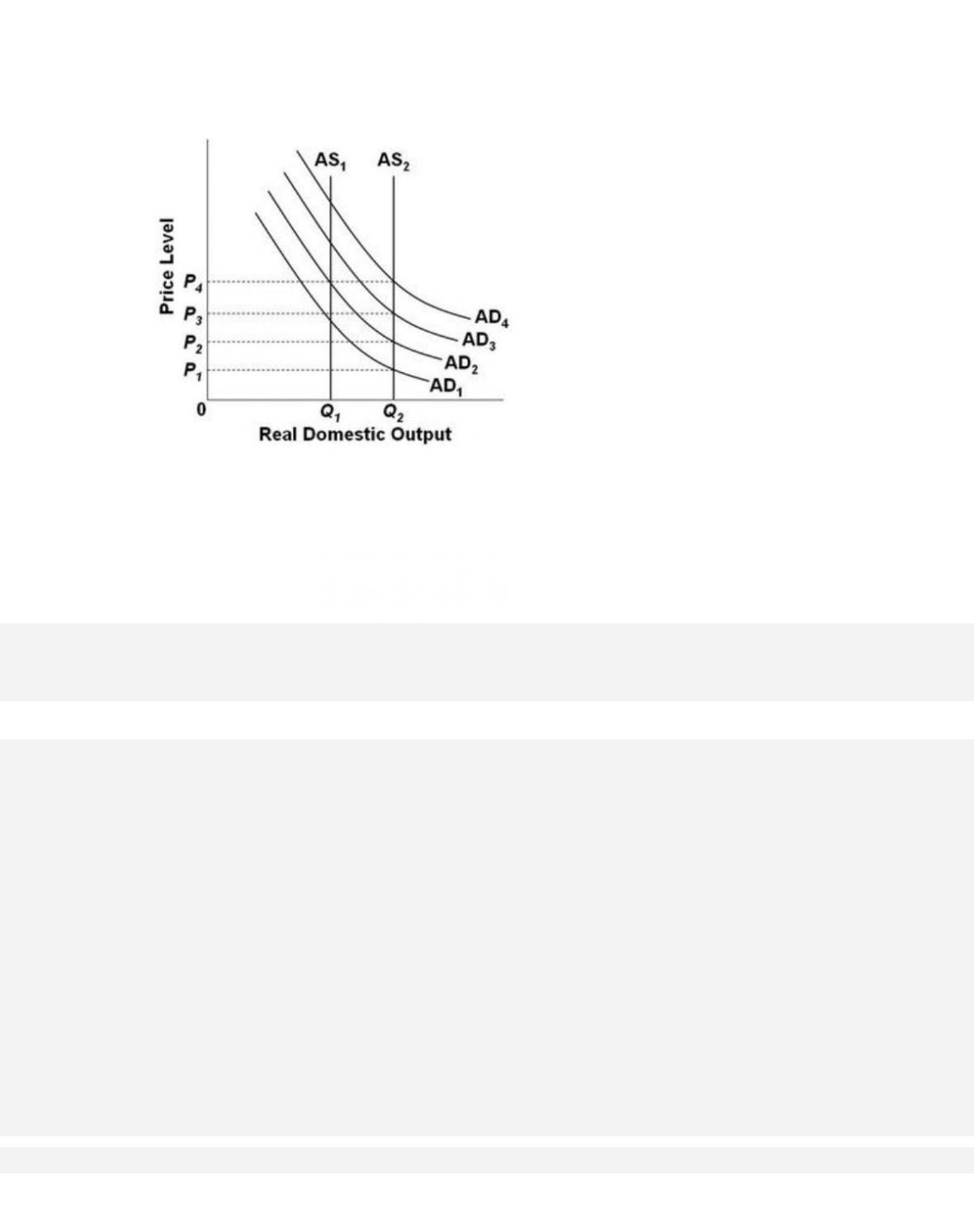
211.
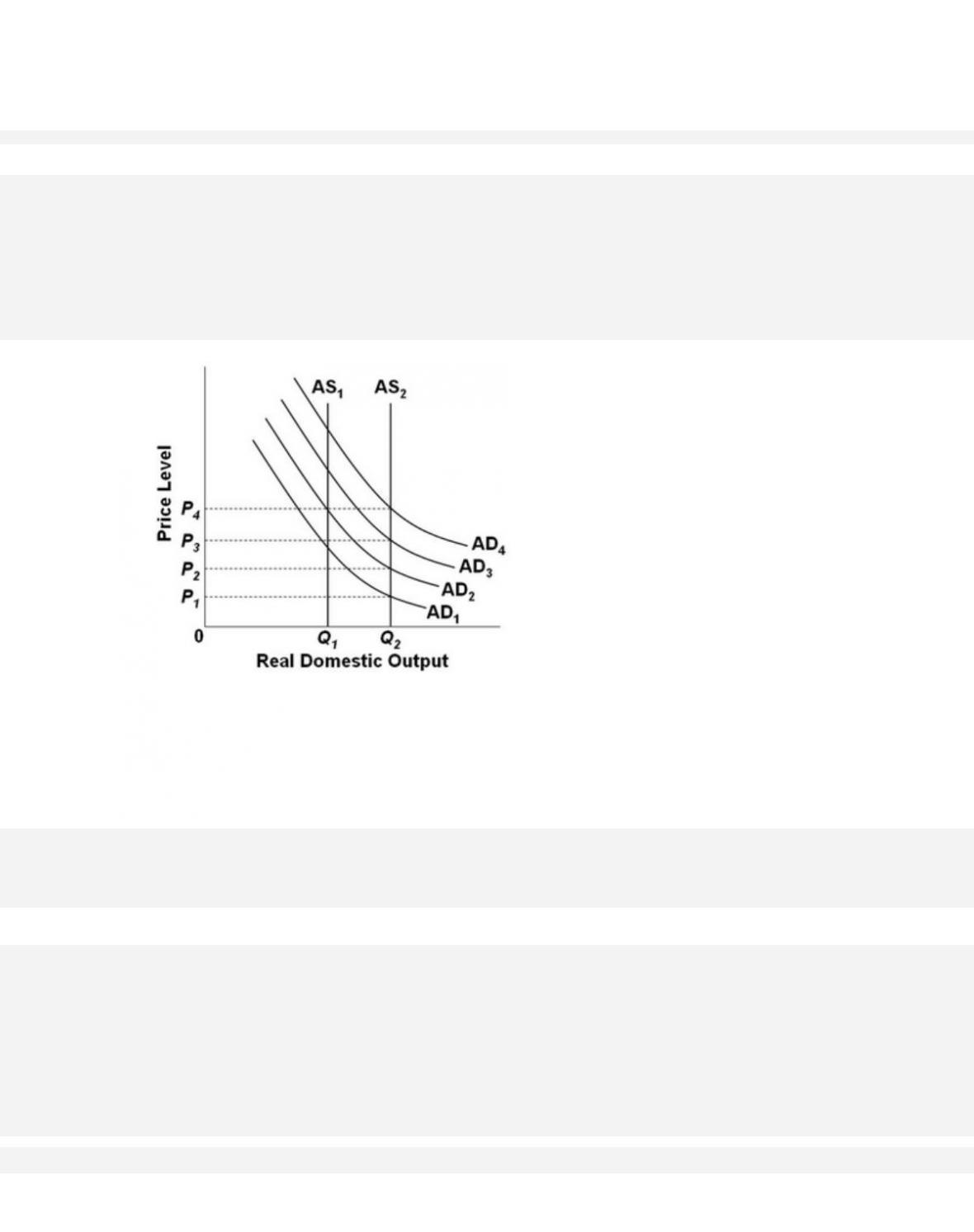
Refer to the graph. Assume that the economy is initially in equilibrium at the intersection of
AD1 and AS1. Suppose that there is economic growth that shifts AS1 to AS2. With the shift
from AS1 to AS2, the monetary rule would call for an increase in the money supply such that
212.
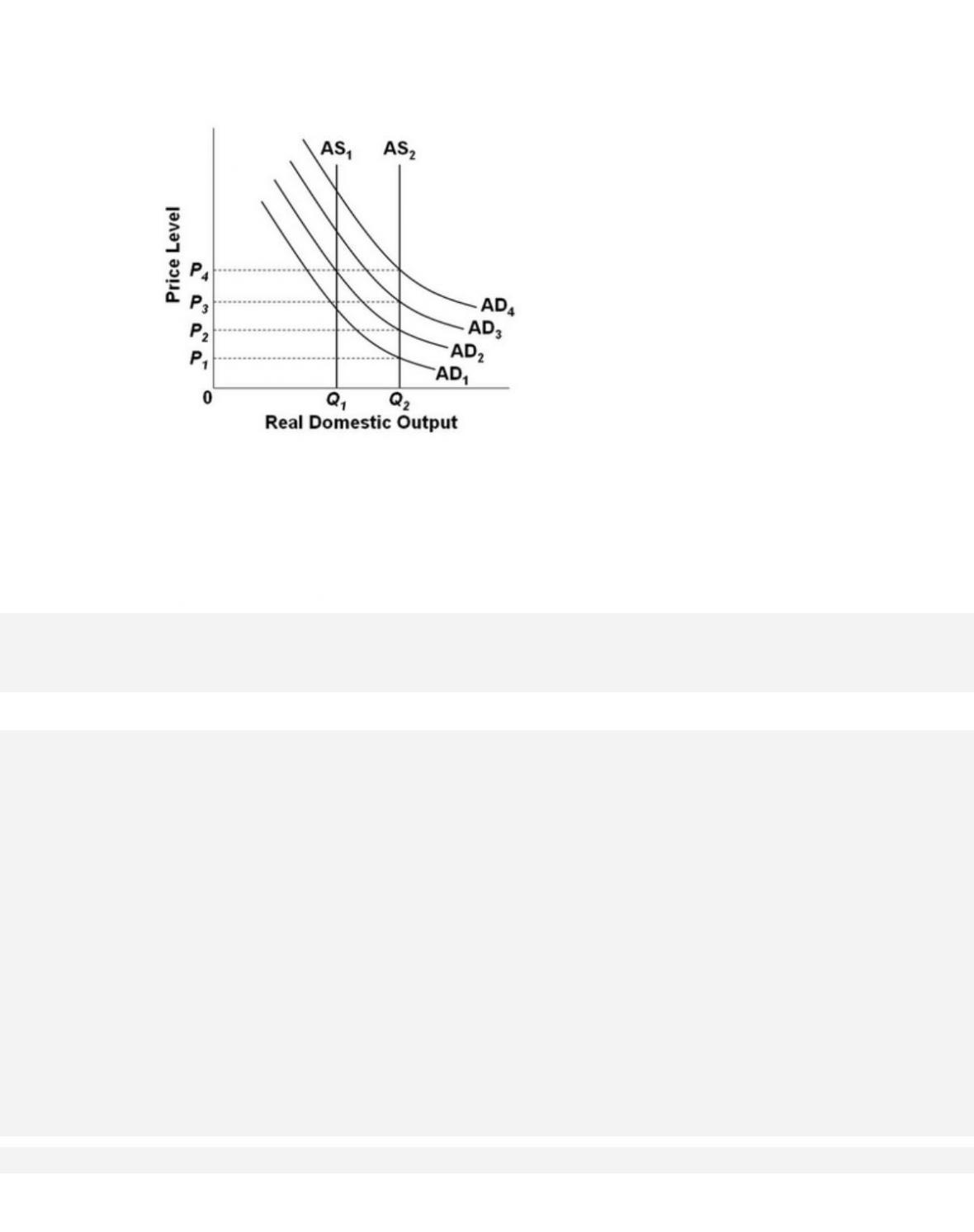
Refer to the graph. Assume that the economy is initially in equilibrium at the intersection of
AD1 and AS1. Suppose that there is economic growth that shifts AS1 to AS2. Because of the
shift from AS1 to AS2, a monetarist following a monetary rule would call for an increase in
aggregate demand such that the price level and quantity of real domestic output would be
213.
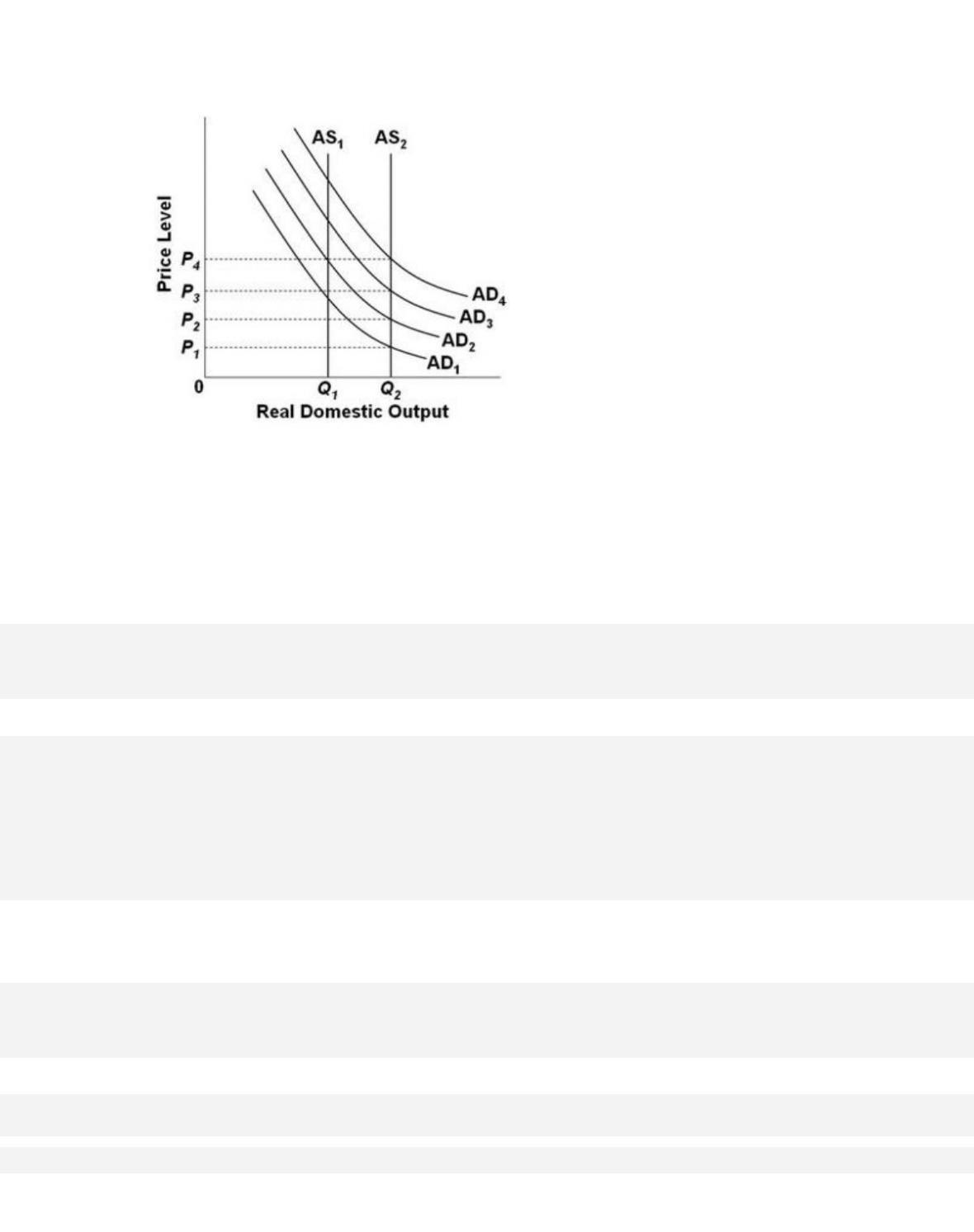
Refer to the graph. Assume that the economy is initially in equilibrium at the intersection of
AD1 and AS1. Suppose that there is economic growth that shifts AS1 to AS2. Mainstream
economists would suggest that the application of a monetary rule to keep prices constant
might produce demand-pull inflation because the investment spending might
214.
Refer to the graph. Assume that the economy is initially in equilibrium at the intersection of
AD1 and AS1. Suppose that there is economic growth that shifts AS1 to AS2. If the application
of a monetary rule is designed
to shift AD1 to AD3, but because of pessimistic business
expectations AD1 only shifts to AD2, then mainstream economists would suggest that the
actions to be taken to avoid deflation would be to implement a(n)
215.
Monetarists argue that when expansionary fiscal policy is financed through borrowing,