
267.
If GDP exceeds aggregate expenditures in a private closed economy,
D. injections will exceed leakages.
268.
When planned investment exceeds saving in a private closed economy,
A.
aggregate expenditures will equal GDP.
269.
If actual investment exceeds planned investment in a private closed economy, then
D. there is an unplanned decrease in inventories.

31-142
Copyright © 2018 McGraw-Hill Education. All rights reserved. No reproduction or distribution without the prior
written consent of McGraw-Hill Education.
Di ff i cu lty :
02 Medium
Learning Objective: 31-04 Discuss the two other ways to characterize the equilibrium level of
real GDP in a private closed economy: saving = investment, and no unplanned changes in
inventories.
Test Bank: II
To pi c:
Other Features of Equilibrium GDP
270.
When saving is less than planned investment in the aggregate expenditures model of a
private closed economy, then
A.
real GDP will decrease
271.
Which of the following is not true when there is an unplanned decrease in inventories?
A.
GDP is less than aggregate expenditures.
272.
Saving is $15 billion at the $125 billion equilibrium level of output in a closed, private
economy. Actual investment must be
A.
less than saving
273.
Planned investment is $20 billion and saving is $15 billion when GDP in the economy is
$180 billion. The economy
A.
is at the equilibrium level of GDP.
274.
Saving is $40 billion and planned investment is $28 billion at the $175 billion level of
output in a private closed economy. At this level,
A.
consumption will be $147 billion.

31-144
Copyright © 2018 McGraw-Hill Education. All rights reserved. No reproduction or distribution without the prior
written consent of McGraw-Hill Education.
Blooms: Understand
Di ff i cu lty :
02 Medium
Learning Objective: 31-04 Discuss the two other ways to characterize the equilibrium level of
real GDP in a private closed economy: saving = investment, and no unplanned changes in
inventories.
Test Bank: II
To pi c:
Other Features of Equilibrium GDP
275.
Actual investment is $28 billion and saving is $15 billion at the $166 billion level of
output in a private closed economy. At this level,
D. planned investment minus saving will be $38 billion.
276.
Consumption is $141 billion, planned investment is $15 billion, and saving is $15 billion
in a private, closed economy. At this level,
A.
actual investment does not equal planned investment.
277.
If the MPC in an economy is 0.75 and aggregate expenditures increase by $5 billion, then
equilibrium GDP will increase by
A.
$3.75 billion.
278.
Domestic Output or Income (GDP=DI)
Consumption
$540
$540
560
555
580
570
600
585
620
600
640
615
660
630
The table gives data for a private closed economy. All figures are in billions of dollars. The
MPC and multiplier are, respectively,
A. 0.80 and 5.
31-146
Copyright © 2018 McGraw-Hill Education. All rights reserved. No reproduction or distribution without the prior
written consent of McGraw-Hill Education.
Test Bank: II
To p i c :
Changes in Equilibrium GDP and the Multiplier
279.
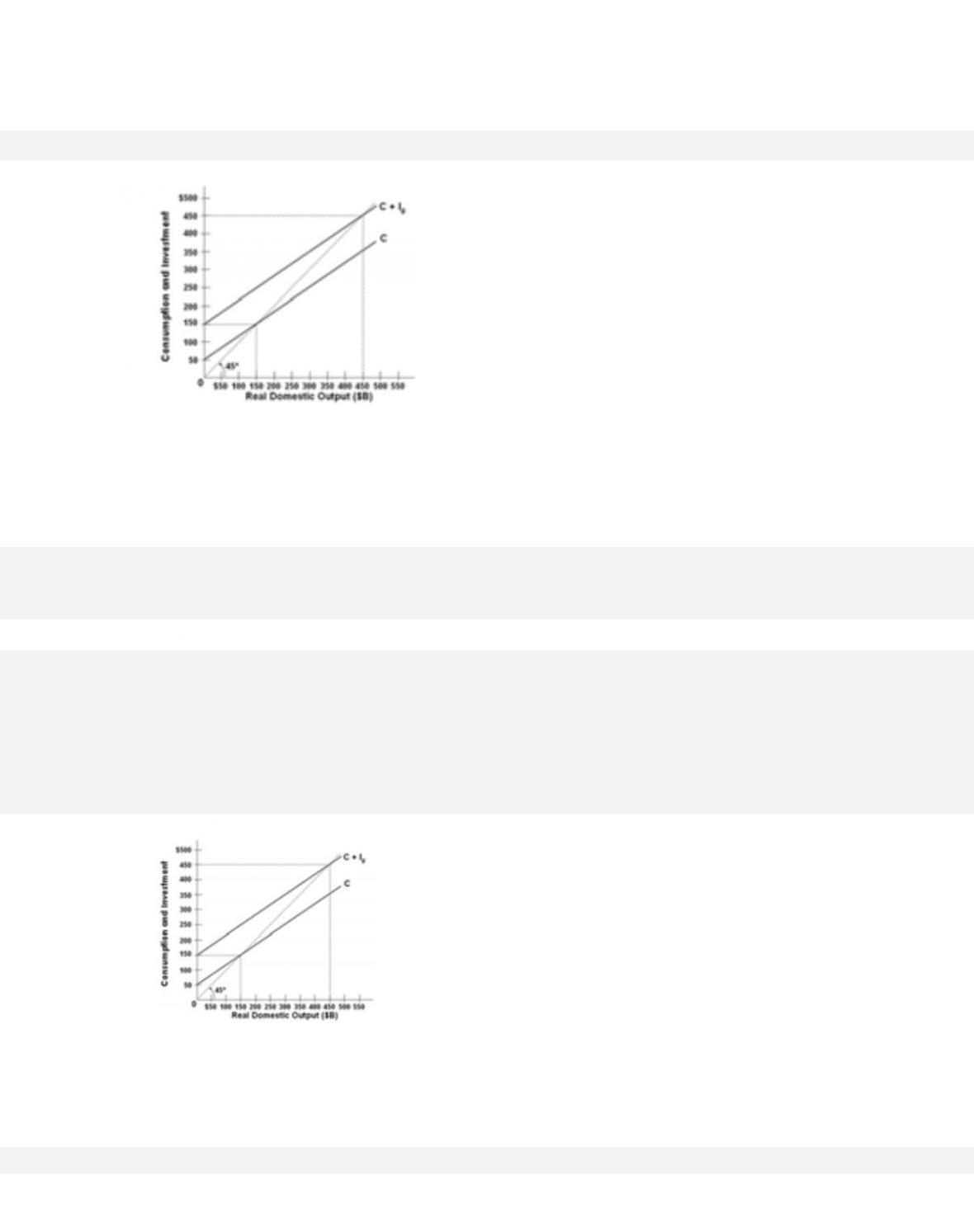
Refer to the graph for a private closed economy. The multiplier for the economy in the graph is
A. 2.
280.
Refer to the graph for a private closed economy. If the consumption schedule shifts up by $50
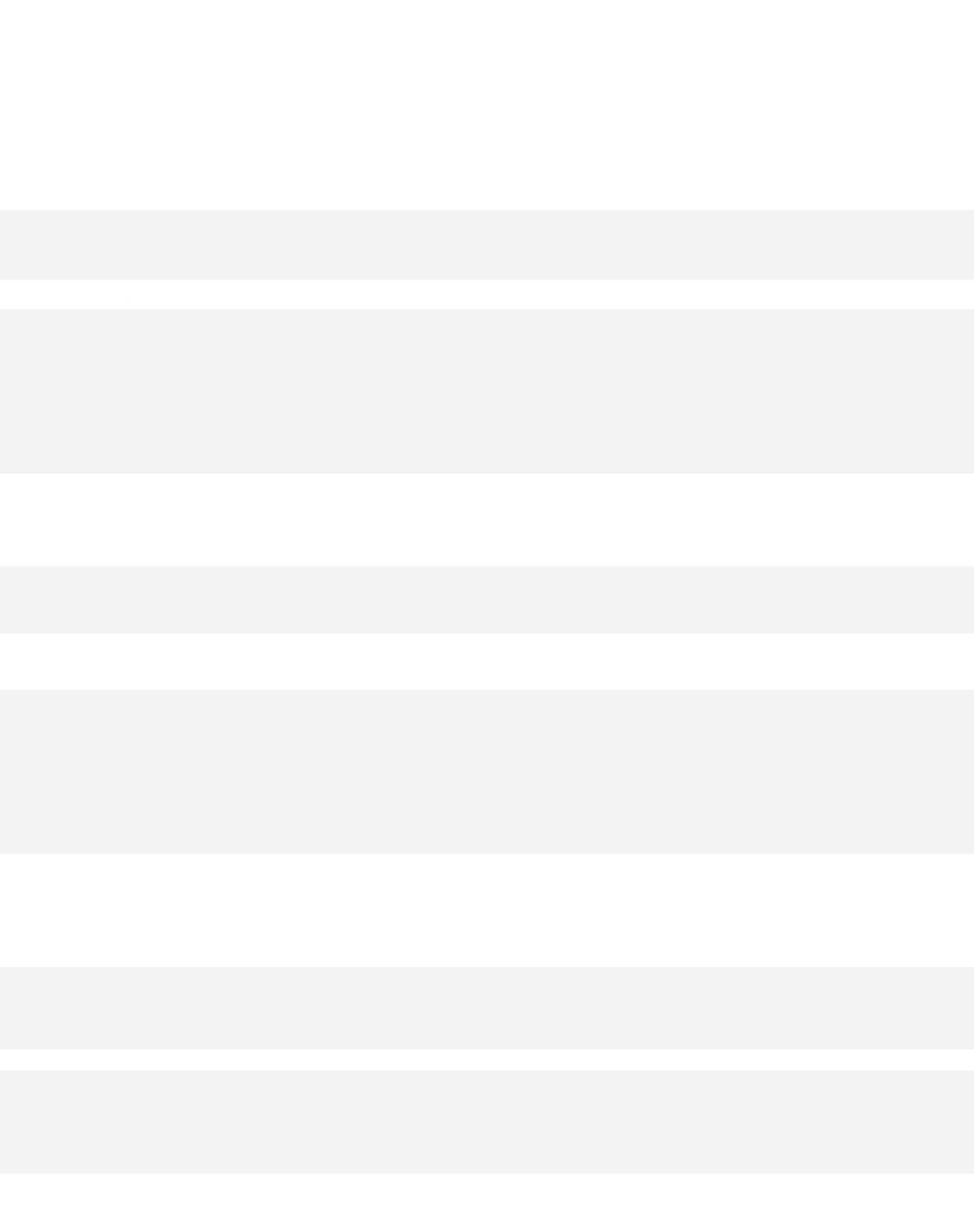
B at all levels of income or output, then the equilibrium GDP will increase to
A. $550 B.
281. In a private closed economy where MPC = 0.8, if consumers reduce their spending by $10
billion and firms cut investments by $5 billion, then equilibrium GDP will decrease by
D. $15 billion.
282. Recently, the level of GDP has declined by $60 billion in an economy where the marginal
propensity to consume is 0.75. Aggregate expenditures must have fallen by
A.
$45 billion.

31-148
Copyright © 2018 McGraw-Hill Education. All rights reserved. No reproduction or distribution without the prior
written consent of McGraw-Hill Education.
Blooms: Analyze
Difficul ty:
03 Hard
Learning Objective: 31-05 Analyze how changes in equilibrium real GDP can occur in the
aggregate expenditures model and describe how those changes relate to the multiplier.
Test Bank: II
To p i c :
Changes in Equilibrium GDP and the Multiplier
283. The marginal propensity to save is 0.2. Equilibrium GDP will decrease by $50 billion if
the aggregate expenditures schedule decreases by
D. $40 billion.
284. If aggregate expenditures increase by $12 billion and equilibrium GDP consequently
increases by $48 billion, then the marginal propensity to save in the economy must be
A. 0.75.
285. Net exports are negative when
A.
net exports exceed imports.

31-149
Copyright © 2018 McGraw-Hill Education. All rights reserved. No reproduction or distribution without the prior
written consent of McGraw-Hill Education.
B.
depreciation exceeds exports.
C.
exports exceed imports.
D. imports exceed exports.
286. Other things being equal, a decrease in an economy’s exports will
A.
increase domestic aggregate expenditures and the equilibrium level of GDP.
287. Other things constant, if domestic consumers purchase fewer foreign goods at each level
of GDP in the short run,
D. there will be no change in GDP in this country.
31-150
Copyright © 2018 McGraw-Hill Education. All rights reserved. No reproduction or distribution without the prior
written consent of McGraw-Hill Education.
To p i c :
Adding International Trade
288.
Real GDP
C + Ig
Net Exports
$400
$420
$20
450
460
20
500
500
20
550
540
20
600
580
20
650
620
20
700
660
20
The table shows a private open economy. All figures are in billions of dollars. The equilibrium
real GDP is
A. $550.
289.
Real GDP
C + Ig
Net Exports
$400
$420
$20
450
460
20
500
500
20
550
540
20
600
580
20
650
620
20
700
660
20
The table shows a private open economy. All figures are in billions of dollars. If net exports
increased by $10 billion at each level of GDP, the equilibrium real GDP would be
A. not determinate in the table.
290.
Real GDP
C + Ig
Net Exports
$400
$420
$20
450
460
20
500
500
20
550
540
20
600
580
20
650
620
20
700
660
20
The table shows a private open economy. All figures are in billions of dollars. If the investment
Ig in this economy is independent of income GDP, then a $10 increase in its net exports would
increase its equilibrium real GDP by
A. $25.

31-152
Copyright © 2018 McGraw-Hill Education. All rights reserved. No reproduction or distribution without the prior
written consent of McGraw-Hill Education.
Di ff i cu l ty :
02 Medium
Learning Objective: 31-06 Explain how economists integrate the international sector exports
and imports into the aggregate expenditures model.
Test Bank: II
To p i c :
Adding International Trade
291. Other things being equal, the effect of a downward shift of the economy’s net export
schedule on equilibrium GDP will be similar to a(n)
A.
rightward shift in the investment-demand schedule.
292. A newspaper story states, “For the fourth straight quarter, the nation purchased more
goods from abroad than ever before.” The event described would
A.
increase the equilibrium level of GDP.
293. Which of the following statements is correct?
31-153
Copyright © 2018 McGraw-Hill Education. All rights reserved. No reproduction or distribution without the prior
written consent of McGraw-Hill Education.
decrease, the equilibrium GDP.
B. An increase in exports and an increase in imports will both tend to increase the equilibrium
GDP.
C. An increase in exports and an increase in imports will both tend to decrease the equilibrium
GDP.
D. An increase in exports will tend to decrease, and an increase in imports will tend to
increase, the equilibrium GDP.
294.
GDP
Consumption + Investment
Exports
Imports
$500
$525
$15
$10
550
560
15
10
600
595
15
10
650
630
15
10
700
665
15
10
750
700
15
10
All figures in the table are in billions. The equilibrium level of GDP in this private open
economy is
A. $550 billion.
31-154
Copyright © 2018 McGraw-Hill Education. All rights reserved. No reproduction or distribution without the prior
written consent of McGraw-Hill Education.
To p i c :
Adding International Trade
295.
GDP
Consumption + Investment
Exports
Imports
$500
$525
$15
$10
550
560
15
10
600
595
15
10
650
630
15
10
700
665
15
10
750
700
15
10
All figures in the table are in billions. Assume that investment, Ig, is not affected by the income
GDP level. The multiplier for this private open economy is
A. 1.25.
296.
GDP
Consumption + Investment
Exports
Imports
$500
$525
$15
$10
550
560
15
10
600
595
15
10
650
630
15
10
700
665
15
10
750
700
15
10
All figures in the table are in billions. If exports increased by $15 billion at each level of GDP,
all other factors constant, then the equilibrium level of GDP would be
A.
$550 billion.
297.
GDP
Aggregate Expenditures (Closed Economy)
Exports
Imports
$400
$440
$50
$60
450
480
50
60
500
520
50
60
550
560
50
60
600
600
50
60
650
640
50
60
700
680
50
60
All figures in the table are in billions of dollars. If this economy were closed to international
trade, then the equilibrium GDP and the multiplier would be
A.
$500 billion and 5.
31-156
Copyright © 2018 McGraw-Hill Education. All rights reserved. No reproduction or distribution without the prior
written consent of McGraw-Hill Education.
and imports into the aggregate expenditures model.
Test Bank: II
To p i c :
Adding International Trade
298.
GDP
Aggregate Expenditures (Closed Economy)
Exports
Imports
$400
$440
$50
$60
450
480
50
60
500
520
50
60
550
560
50
60
600
600
50
60
650
640
50
60
700
680
50
60
All figures in the table are in billions of dollars. If this economy were an open economy, the
equilibrium GDP would be
A.
$650 billion.
299.
GDP
Aggregate Expenditures (Closed Economy)
Exports
Imports
$400
$440
$50
$60
450
480
50
60
500
520
50
60
550
560
50
60
600
600
50
60
650
640
50
60
31-157
700
680
50
60
All figures in the table are in billions of dollars of dollars. If exports should decrease by $20
billion at each level of GDP, other factors constant, then the equilibrium GDP for the economy
will be
300. Over time, an increase in the real output and incomes of the trading partners of the United
States will most likely
D. decrease imports of the United States.
301. Which event would most likely decrease an economy’s exports?
D. a depreciation of the nation’s currency relative to foreign currencies
302. What is the likely result from a depreciation of a nation’s currency when its economy is
already operating at its full-employment level of output?
A.
Net exports would fall and contribute to demand-pull inflation.
303. In the aggregate expenditures model of the economy, a downward shift in aggregate
expenditures can be caused by a
D. decrease in saving or an increase in government spending.
31-159
304. A tax cut will have a greater effect on equilibrium GDP if the
A.
marginal propensity to consume is smaller.
305. If a lump-sum tax of $40 billion is levied at each level of income and the MPC is 0.75,
then the saving schedule will shift
A.
upward by $10 billion.
306.
GDP
Consumption
$440
$450
490
490
540
530
590
570
640
610
Refer to the accompanying consumption schedule in an economy. All figures are in billions of
dollars. If a government sector is introduced and a lump-sum tax of $30 billion is imposed at
all levels of GDP, then the consumption column in the table becomes
A. $420, 460, 500, 540, 580.
307.
GDP
Consumption
$440
$450
490
490
540
530
590
570
640
610
Refer to the accompanying consumption schedule in an economy. All figures are in billions of
dollars. If gross investment is $34 billion, net exports are zero, and there is a lump-sum tax of
$30 billion at all levels of GDP, then the after-tax equilibrium level of GDP will be
A. $490 billion.