48.
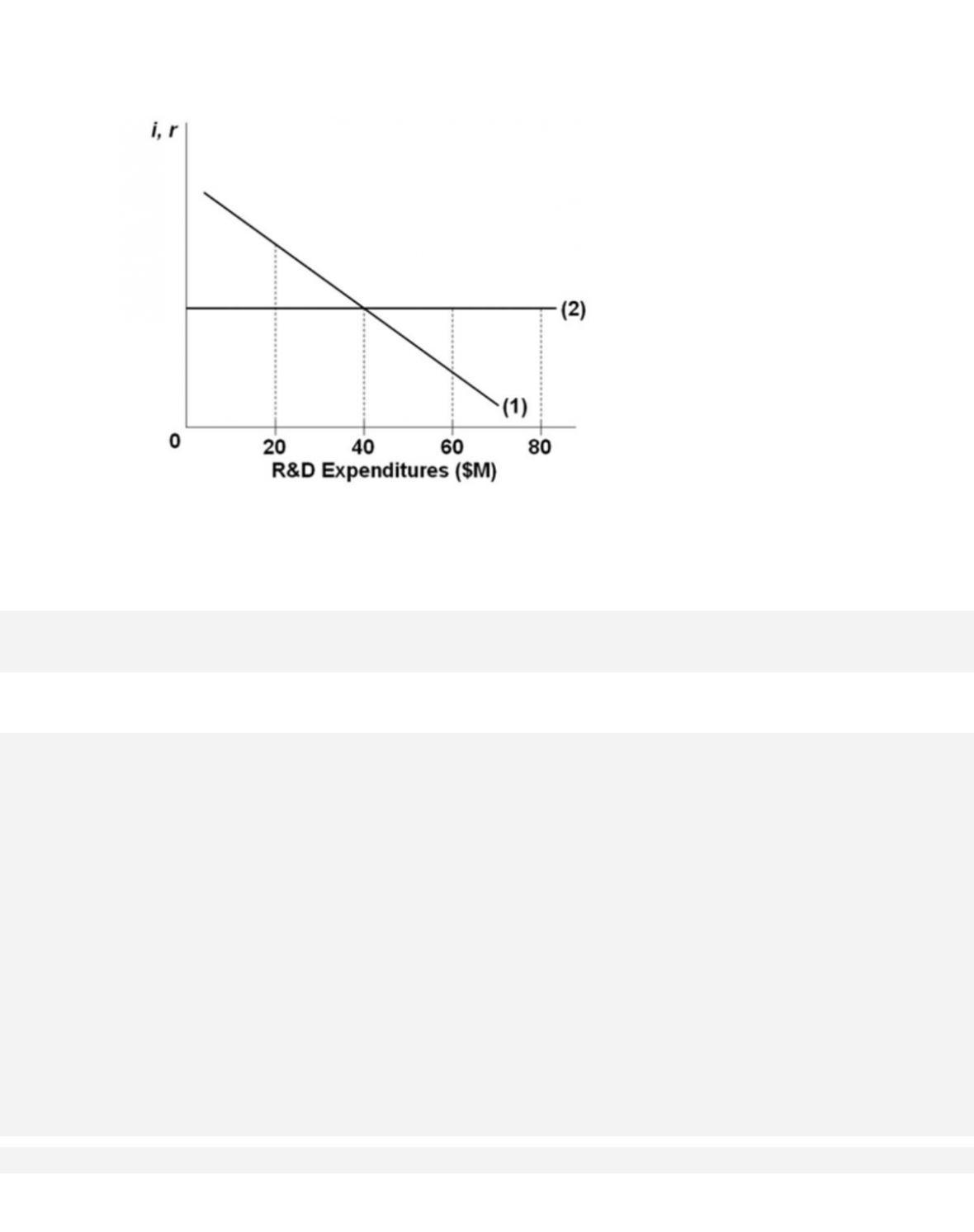
In the diagram, at $10 million of R&D expenditure, the
D.
marginal benefit of R&D is less than the marginal cost of R&D.
15–22
49.
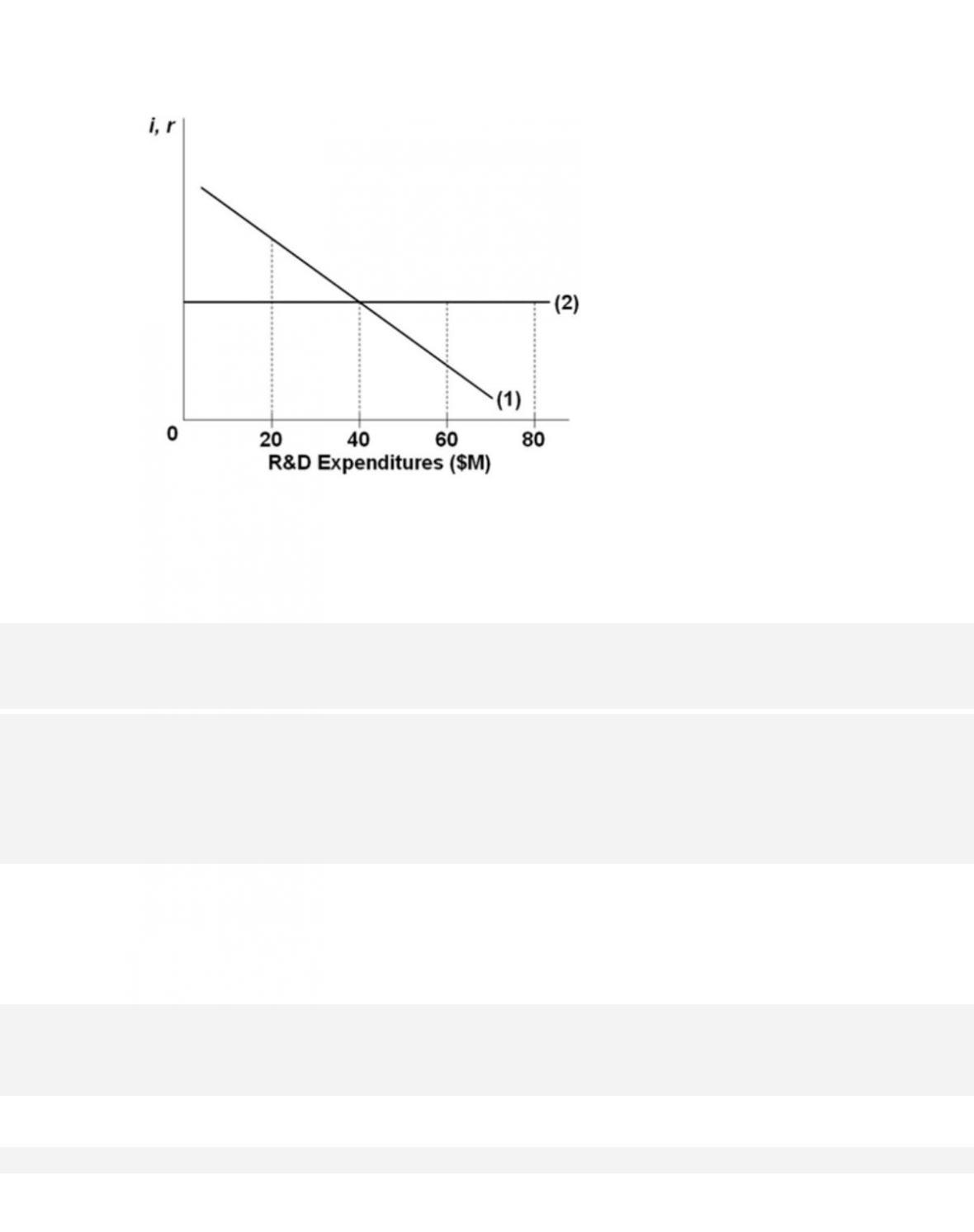
In the diagram, at $60 million of R&D expenditure, the
A.
expected rate of return exceeds the interest-rate cost of funds.
50.
Assume that a firm’s interest-rate cost-of-funds curve for R&D is perfectly elastic. Which of
the following would increase a firm’s optimal R&D expenditures and, in
equilibrium, reduce
the expected rate of return on the last dollar of R&D?
A.
a rightward shift of the expected-rate–of-return curve

15–23
Copyright © 2018 McGraw-Hill Education. All rights reserved. No reproduction or distribution without the prior
written consent of McGraw-Hill Education.
AACSB: Knowledge Application
Acc es sib ili ty: Keyboard Navigation
Blooms: Understand
Di ff iculty: 02 Medium
Learning Objective: 15–03 Summarize how a firm determines its optimal amount of
research and development (R
Test Bank: I
51.
Assume that a firm‘s interest-rate cost-of–funds curve for R&D is perfectly elastic. Which of
the following would decrease a firm’s optimal R&D expenditures and,
in equilibrium, increase
the expected rate of return on the last dollar of R&D?
A. a rightward shift of the expected-rate-of-return curve
52.
Assume that a firm’s interest-rate cost-of-funds curve for R&D is perfectly elastic. Which of
the following would increase a firm’s optimal R&D expenditures and, in
equilibrium, leave the
expected rate of return on the last dollar of R&D unchanged?
D.
a downward shift of the interest-rate cost–of–funds curve
53.
A consumer will buy a new product rather than an existing product

15–24
A. when the MU/P of the new product is less than the MU/P of the existing product.
54.
We know with certainty that a consumer will buy a newly introduced product rather than an
existing product when the
D.
law of diminishing marginal utility applies to the existing product.
55.
Units of
Product
Marginal Utility, X
(Price = $1)
Marginal Utility, Y
(Price = $1)
Marginal Utility, New
Product, Z (Price = $1)
First
12
16
20
Second
10
14
18
Third
8
12
16
Fourth
6
10
14
Fifth
4
8
12
Sixth
2
6
10
Seventh
0
4
8

Refer to the data for a utility–maximizing consumer whose income = $12. Assume that new
product Z doesn‘t exist. How many units of X and Y will this consumer
buy, given his or her
$12 budget?
D.
5 of X and 6 of Y
56.
Units of
Product
Marginal Utility, X
(Price = $1)
Marginal Utility, Y
(Price = $1)
Marginal Utility, New
Product, Z (Price = $1)
First
12
16
20
Second
10
14
18
Third
8
12
16
Fourth
6
10
14
Fifth
4
8
12
Sixth
2
6
10
Seventh
0
4
8
Refer to the data for a consumer whose income = $12. Assume new product Z is introduced. How
many units of Z will this consumer buy, given his or her $12
budget?
A.
zero units

15–26
Copyright © 2018 McGraw-Hill Education. All rights reserved. No reproduction or distribution without the prior
written consent of McGraw-Hill Education.
Blooms: Understand
Difficult y: 02 Medium
Learning Objective: 15–04 Discuss how technological change can increase profits by
raising revenues or lowering costs.
Test Bank: I
To pic: Increased Profit via Innovation
Type: Table
57.
Units of
Product
Marginal Utility, X
(Price = $1)
Marginal Utility, Y
(Price = $1)
Marginal Utility, New
Product, Z (Price = $1)
First
12
16
20
Second
10
14
18
Third
8
12
16
Fourth
6
10
14
Fifth
4
8
12
Sixth
2
6
10
Seventh
0
4
8
Refer to the data for a consumer whose income = $12. In equilibrium, the introduction of new
product Z has increased this consumer’s total utility by
A. 42 utils.
58.
Units of
Product
Marginal Utility, X
(Price = $1)
Marginal Utility, Y
(Price = $1)
Marginal Utility, New
Product, Z (Price = $1)
15–27
First
12
16
20
Second
10
14
18
Third
8
12
16
Fourth
6
10
14
Fifth
4
8
12
Sixth
2
6
10
Seventh
0
4
8
Refer to the data for a consumer whose income = $12. Suppose the price of new product Z is $10
rather than $1. This consumer would purchase
D.
more of X, Y, and Z than if the price were $1.
59.
Units of
Product
Marginal Utility, X
(Price = $1)
Marginal Utility, Y
(Price = $1)
Marginal Utility, New
Product, Z (Price = $1)
First
12
16
20
Second
10
14
18
Third
8
12
16
Fourth
6
10
14
Fifth
4
8
12
Sixth
2
6
10
Seventh
0
4
8
Refer to the data for a consumer whose income = $14. Suppose the price of product Z is $2
rather than $1. This consumer would purchase

A. three units of Z.
60.
For a new product to be profitable, it must
D.
embody process innovation.
61.
Suppose that a firm successfully introduces a highly profitable new product. If this new
product is priced higher than existing substitute products, then the
D.
existing products were unprofitable to produce.

15–29
Copyright © 2018 McGraw-Hill Education. All rights reserved. No reproduction or distribution without the prior
written consent of McGraw-Hill Education.
Di ff iculty: 02 Medium
Learning Objective: 15–04 Discuss how technological change can increase profits by
raising revenues or lowering costs.
Test Bank: I
Topic: Increased Profit via Innovation
62.
Suppose that a firm successfully introduces a highly profitable new product. If this new
product offers less marginal utility per unit to consumers than existing
substitute products, then
the
A.
laws of economics have been violated.
63.
Process innovation refers to
A. development of new products.
64.
Firm ABC designs and implements a lower-cost method of producing its product. This is an
example of
A.
product innovation.

15–30
Copyright © 2018 McGraw-Hill Education. All rights reserved. No reproduction or distribution without the prior
written consent of McGraw-Hill Education.
B.
the inverted U-theory.
C.
economies of scale.
D. process innovation.
65.
Process innovation causes an upward shift in a firm’s total product curve and
A. a decrease in its average product.
66.
Process innovation can be depicted as
D.
an increase in product demand.
67.
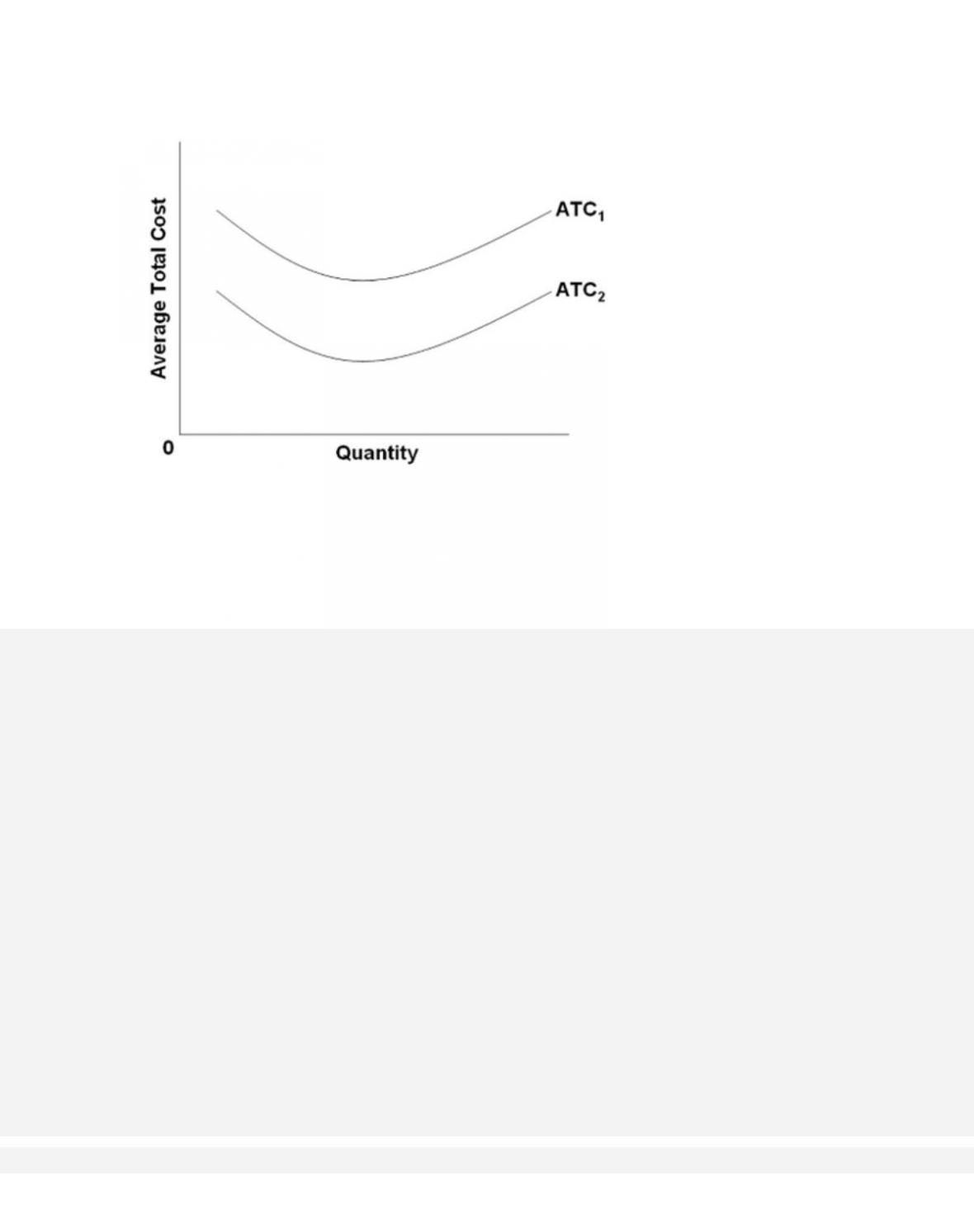
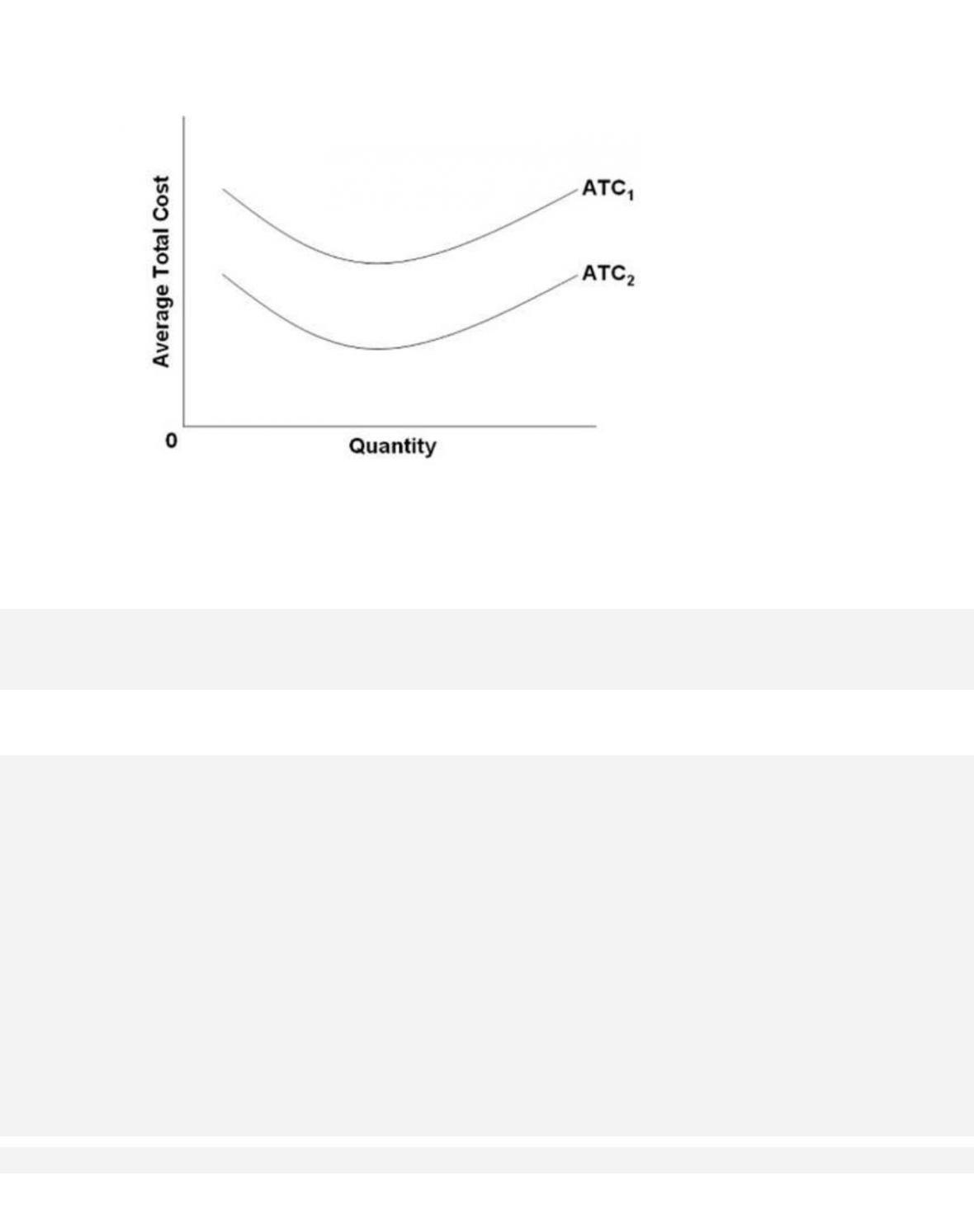
Refer to the diagram, which relates to Firm A. Which of the following would shift A’s average
total cost curve from ATC1 to ATC2?
A.
an increase in the price of a key component used by A in producing its product
68.
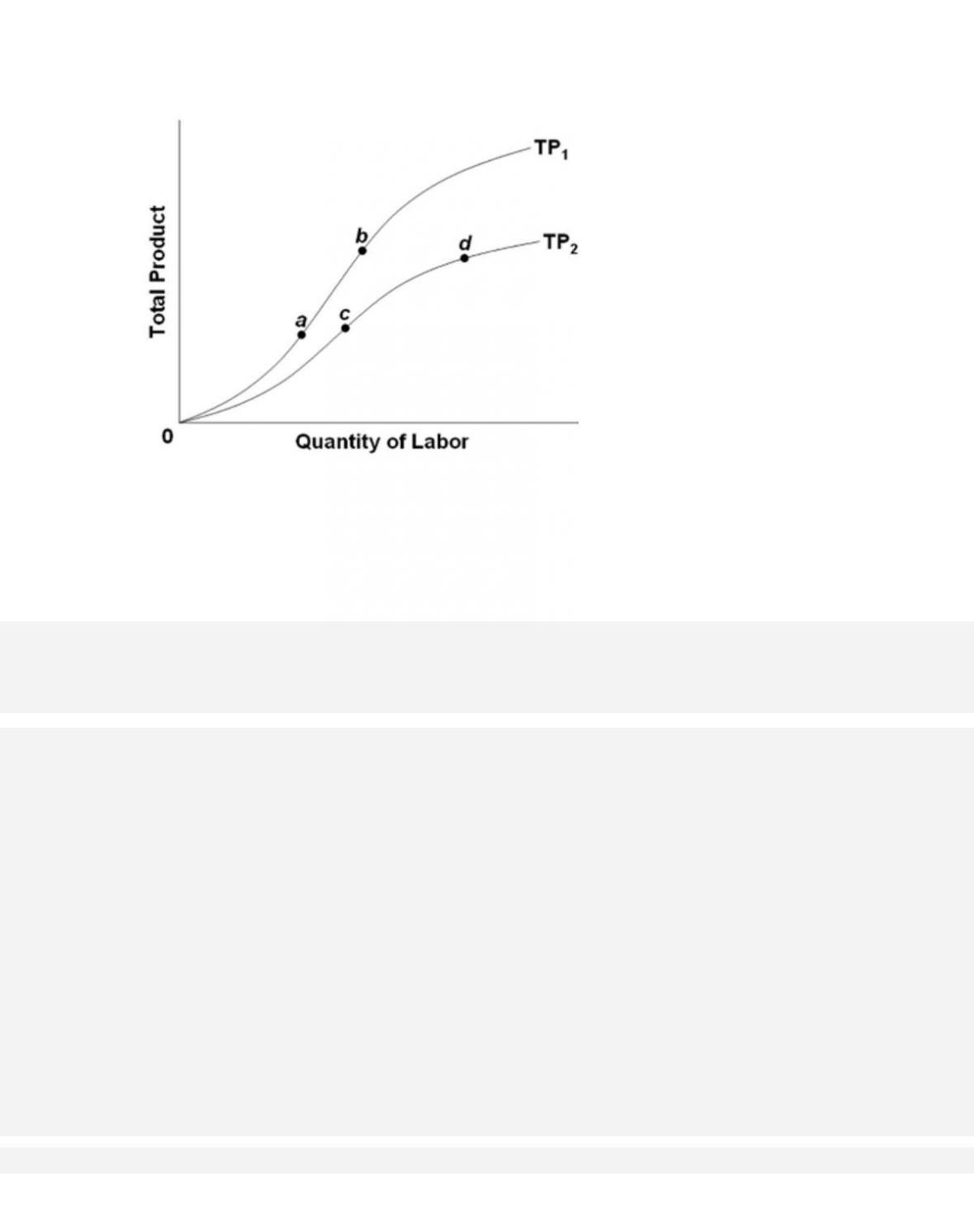
Refer to the diagram, which relates to Firm A. Which of the following would shift A’s average
total cost curve from ATC1 to ATC2?
C.
a move along A’s total product curve (not shown)
D.
the increase in the price of one of the major inputs used to produce A’s product
69.
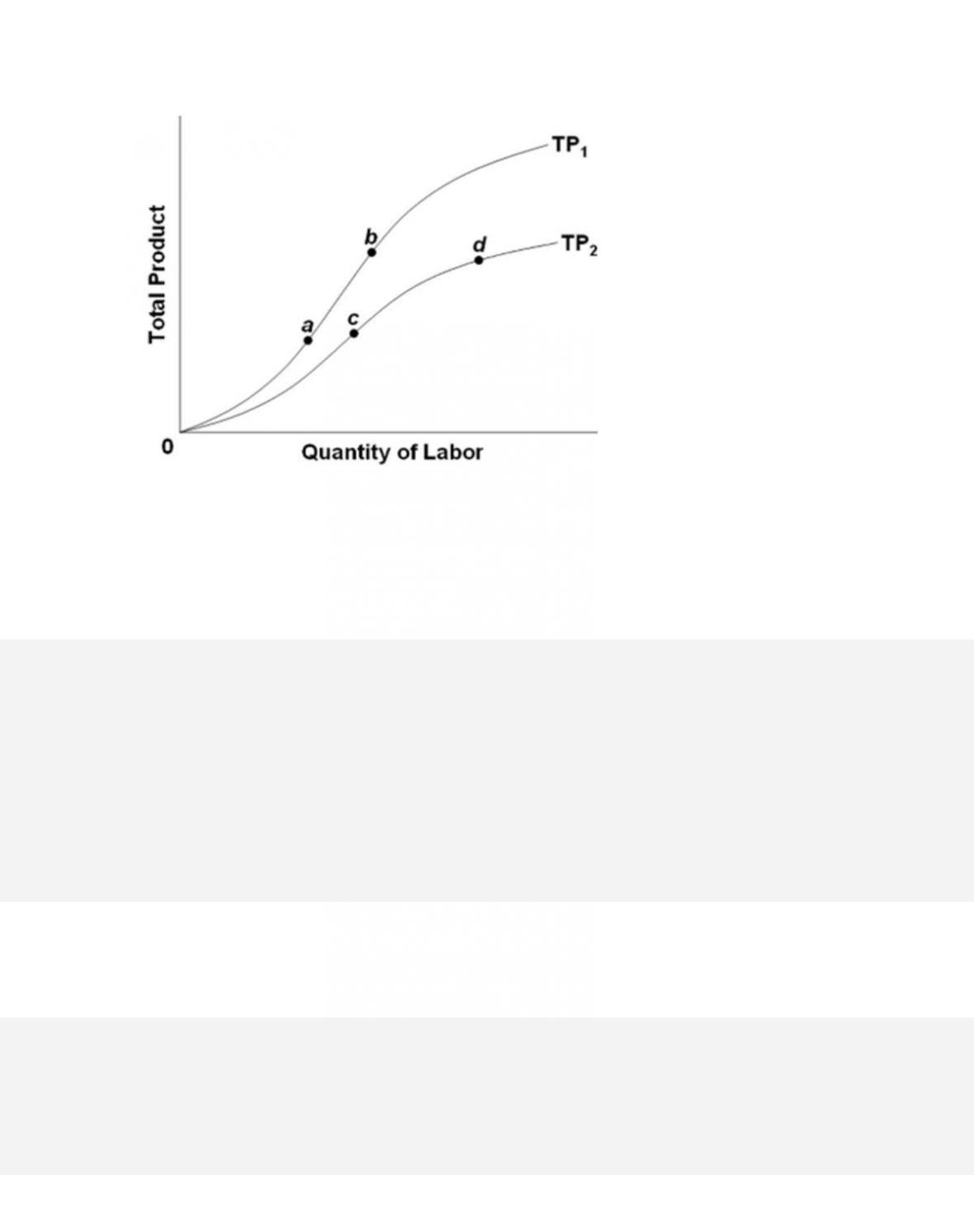
Refer to the diagram, which relates to Firm X. Which of the following would illustrate process
innovation by X?
A. a downward shift in the total product curve from TP1 to TP2
70.
Refer to the diagram, which relates to Firm X. Suppose X implements an innovative new
production method that shifts its total product curve from TP2 to TP1. Other
things equal,
A. the average product of X’s labor would fall.
71.
As it relates to R&D, the imitation problem is that
A.
patents, copyrights, and trademarks hinder imitation and thus limit economically desirable
diffusion.

15–35
72.
Gigantic Corporation follows a strategy of waiting for rivals to innovate, then quickly
imitating any successful innovations. This behavior is known as
A.
collusion.
73.
Fast-second strategies are more likely to be used by
D.
entrepreneurs rather than by corporations.
74.
Other things equal, the prospect of imitation by others

D.
decreases the interest-rate cost of funds used to finance R&D expenditures.
75.
All of the following increase the expected rate of return on R&D expenditures except
A.
patents.
76.
Legal protections against competitors producing and selling a product identical to the one
you invented are called ; legal protections against competitors
using your product’s name are
called .
D.
trademarks; patents

15–37
Copyright © 2018 McGraw-Hill Education. All rights reserved. No reproduction or distribution without the prior
written consent of McGraw-Hill Education.
Learning Objective: 15–05 Relate why firms can benefit from their innovation even though
rivals have an incentive to imitate it.
Test Bank: I
To pic: Imitation and R&D Incentives
77.
Suppose that Marlen Fisher has legal protection against anyone producing and selling a
fishing lure identical to his unique-action “MarFish” lure, whatever the
competitor might name
the lure. This legal protection is most likely to be a
A.
trademark.
78.
Suppose that Marlen Fisher has legal protection against anyone producing and selling a
fishing lure specifically named “MarFish.” This legal protection is most
likely to be a
D.
copyright.
79.
Suppose that Book-Cost Busters (BCB), without authorization, reproduced a best-selling
novel and placed it for downloading on the BCB pay-for-use website. This
action would violate
the publisher’s

A.
profit rights.
80.
Other things equal, patents
A. decrease the expected rate of return on an R&D expenditure.
81.
Other things equal, trademarks and brand names
A.
increase the interest-rate cost of funds used to finance R&D expenditures.

15–39
Copyright © 2018 McGraw-Hill Education. All rights reserved. No reproduction or distribution without the prior
written consent of McGraw-Hill Education.
Topic: Imitation and R&D Incentives
82.
Suppose that a firm‘s legal staff concludes that a new product that the firm is developing is
patentable. Graphically, this new information would shift the firm‘s
expected-rate–of-return
curve on R&D to the
A. right and reduce its optimal amount of R&D.
83.
Suppose that a firm’s legal staff concludes that a new production process that the firm is
developing is patentable. Graphically, this new information would shift the
firm‘s expected-
rate-of-return curve on R&D to the
A. right and reduce its optimal amount of R&D.
84.
A patent on a new product benefits the firm securing it by
D.
increasing the speed of diffusion of the new product.

85.
Even where imitation is possible, a firm may gain advantage from being the first to introduce
an innovative product because of
A.
long–lasting brand–name recognition.
86.
Which of the following supports the contention that pure competitors have a weak incentive
to engage in R&D?
D.
Pure competitors are happy to earn only a normal profit.