
39–767
CHAPTER 39
Current Issues in Macro Theory and Policy
A. Short-Answer, Essays, and Problems
1. Describe two basic differences between the mainstream and monetarist economic theories.
2. Give the basic symbolic equations for the mainstream view of the economy. Identify each symbol in the
equation with a brief explanation. Using this equation, what is one major explanation for instability in the
economy from a mainstream perspective?
3. What is the supply-side cause of instability according to the mainstream view?
4. Explain the equation of exchange.
5. Assume that M is $500 billion and V is 5. What is the level of nominal GDP according to the monetarist
equation? If V rises by 10%, then according to the monetarist equation, what will be the new level of nominal
GDP?
6. Assume that M is $200 billion and V is 6. If V increases by 15%, what will be the change in nominal GDP?
7. If nominal GDP is $848 billion, and velocity of money is 4, how much is the money supply? If the GDP price
index is 200, what is real GDP here?
8. Assume that M is $300 billion and V is 10. What is the level of nominal GDP according to the monetarist
equation? If V rises by 10%, then according to the monetarist equation, what will be the new level of nominal
GDP?
9. Assume that M is $250 billion and V is 8. If V increases by 15%, what will be the change in nominal GDP?
10. If nominal GDP is $1344 billion, and velocity of money is 6, how much is the money supply? If the GDP price
index is 160, what is real GDP here?
11. Answer the following questions for a hypothetical economy whose situation in year 1 was as follows: M =
$800 billion; long-term annual growth of real GDP = 3%; V = 4. The banking system has no excess reserves
and the reserve requirement is 10%. Assume that V is constant and the economy is at full employment.
(a) What is the nominal GDP in year 1?
(b) If the Federal Reserve adheres to the monetarist rule of increasing the money supply by a constant 5%
using open-market operations, explain whether it will have to buy or sell bonds and by how much between
years 1 and 2 in order to meet the rule.
(c) Based on the information given above and calculated in (b) above, what will be the nominal GDP in year
2?
(d) Is this change greater or less than the change in real GDP? Explain.
13. Does velocity change in response to changes in the money supply according to monetarists?
14. According to the monetarists, what is the main cause of macroeconomic instability?
15. How do theories of mainstream macroeconomics and monetarism differ in relation to monetary policy?
16. What are the four different views of the causes of macroeconomic instability in the economy?

39–768
18.What are “coordination failures” and why are they important for interpreting the macro economy?
19. (Consider This) How do economists with monetarist leaning explain the cause of the financial crisis that led to the
severe recession of 2007–2008?
20. (Consider This) How do mainstream economists explain the cause of the financial crisis that led to the severe
recession of 2007–2008?
22. Consider the following situations. Explain how prices and output will adjust according to the classical view of
self-correction and the rational expectation theory.
24. Describe the mainstream view of self-correction in the economy.
25. How can paying workers an above-market wage result in greater efficiency? What are the implications for the
26. What is insider–outsider theory? How does it explain the downward inflexibility of wages?
27. (Consider This) How did economist Abba Lerner use the analogy of a car on a highway to depict his view of
macroeconomic stability? How did economist Milton Friedman modify this depiction?
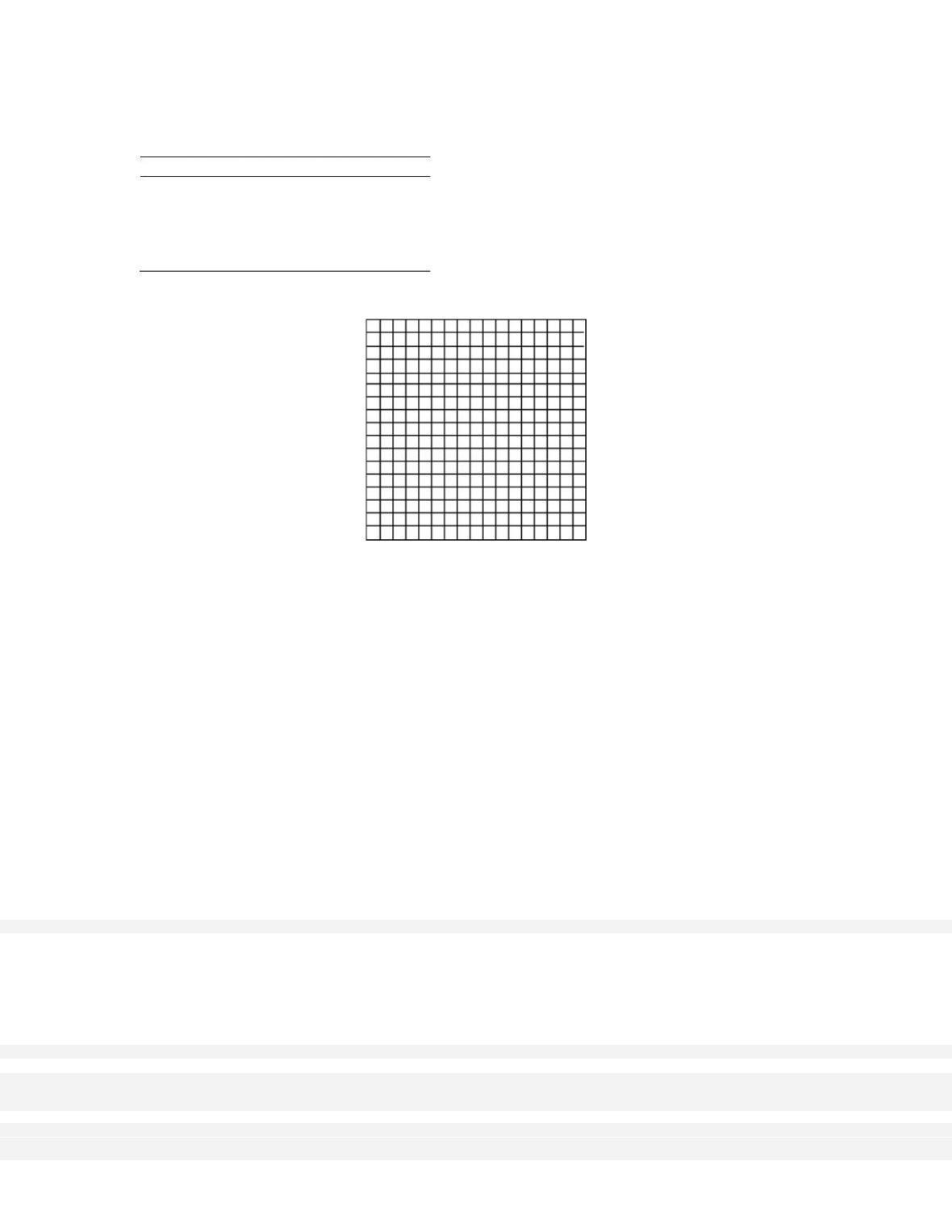
28. Below are price level (PL) and output (Q) combinations to describe aggregate demand and aggregate supply
curves: (1) PL and Q1 are AD1. (2) PL and Q2 are AD2. (3) PL and Q3 are ASLR1. (4) PL and Q4 are ASLR2.
PL
Q1
Q2
Q3
Q4
50
0
100
200
300
40
100
200
200
300
30
200
300
200
300
20
300
400
200
300
10
400
500
200
300
(a) Use the graph below to graph AD1, AD2, ASLR1, and ASLR2. Label the vertical axis as the price level and
the horizontal axis as real output (Q).
(b) If the economy is initially in equilibrium where AD1 and ASLR1 intersect, what will the price level and real
output be?
(c) If over time, the economy grows from ASLR1 to ASLR2, what will be the equilibrium price level and real
output?
(d) Assume a monetary rule is adopted that increases the money supply proportionate to the increase in
aggregate supply. Aggregate demand will increase from AD1 to AD2, so what will the equilibrium price
level and real output be?
(e) Mainstream economists would argue that velocity is unstable, so a constant increase in the money supply
might not shift AD1 all the way to AD2. It might also be the case that the constant increase in the money
supply might shift AD2 beyond its expected level of output. For both cases, explain what mainstream
economists think will happen to the price level.
29. How do new classical economists view the importance of policy rules and discretion in macroeconomic policy?
30. What reasons do monetarists give for downgrading the importance of fiscal policy relative to monetary policy?
31. Distinguish between discretionary monetary policy and monetary “rules.” How do the mainstream economists
and monetarists differ on their recommendations for the use of rules or discretionary policy?
32. Compare and contrast the views of new classical economists and mainstream economists on the issue of policy
33. What rationale does rational expectations theory provide for the ineffectiveness of discretionary policies?
34. What have been the changes or modifications in thinking about monetary rules in recent decades?
35. Explain the mainstream economists’ justification for the use of discretionary fiscal and monetary policy and

39–770
37. Which aspects, if any, of monetarist or rational expectations theory have been integrated into mainstream
macroeconomics?
38. Mainstream and new classical views are compatible perspectives on macroeconomic issues and policies. Do
you agree? Explain.
39. Compare and contrast the views of mainstream economics and monetarism on the following issues:
40. Compare and contrast the views of mainstream economics and rational expectations on the following issues:
41. Compare and contrast the views of monetarism and rational expectations on the following issues:
42. Discuss the Federal Reserve’s policy of inflation targeting.
43. (Last Word) Discuss the opinion of Market Monetarist using predictions to adjust monetary policy.
B. Answers to Short-Answer, Essays, and Problems
1. Describe two basic differences between the mainstream and monetarist economic theories.
Mainstream economists believe that the capitalist economy is inherently unstable due to price stickiness and
2. Give the basic symbolic equations for the mainstream view of the economy. Identify each symbol in the
equation with a brief explanation. Using this equation, what is one major explanation for instability in the
economy from a mainstream perspective?
3. What is the supply-side cause of instability according to the mainstream view?
4. Explain the equation of exchange.
5. Assume that M is $500 billion and V is 5. What is the level of nominal GDP according to the monetarist
equation? If V rises by 10%, then according to the monetarist equation, what will be the new level of nominal
GDP?
6. Assume that M is $200 billion and V is 6. If V increases by 15%, what will be the change in nominal GDP?
7. If nominal GDP is $848 billion, and velocity of money is 4, how much is the money supply? If the GDP price
index is 200, what is real GDP here?

8. Assume that M is $300 billion and V is 10. What is the level of nominal GDP according to the monetarist
equation? If V rises by 10%, then according to the monetarist equation, what will be the new level of nominal
GDP?
9. Assume that M is $250 billion and V is 8. If V increases by 15%, what will be the change in nominal GDP?
10. If nominal GDP is $1344 billion, and velocity of money is 6, how much is the money supply? If the GDP price
index is 160, what is real GDP here?
11. Answer the following questions for a hypothetical economy whose situation in year 1 was as follows: M =
$800 billion; long-term annual growth of real GDP = 3%; V = 4. The banking system has no excess reserves
and the reserve requirement is 10%. Assume that V is constant and the economy is at full employment.
(a) What is the nominal GDP in year 1?
(b) If the Federal Reserve adheres to the monetarist rule of increasing the money supply by a constant 5%
using open-market operations, explain whether it will have to buy or sell bonds and by how much between
years 1 and 2 in order to meet the rule.
(c) Based on the information given above and calculated in (b) above, what will be the nominal GDP in year
2?
(d) Is this change greater or less than the change in real GDP? Explain.
12. Define the velocity of money. Explain the monetarist view with regard to the stability of velocity.
13. Does velocity change in response to changes in the money supply according to monetarists?
14. According to the monetarists, what is the main cause of macroeconomic instability?
15. How do theories of mainstream macroeconomics and monetarism differ in relation to monetary policy?
16. What are the four different views of the causes of macroeconomic instability in the economy?
First, the mainstream view holds that instability in the economy arises from: (a) the volatility in investment
spending that makes aggregate demand unstable; and (b) occasional aggregate supply shocks which cause cost–
push inflation and recession. Second, monetarists focus on the money supply, think markets are highly
17. Use aggregate supply and demand analysis to explain real business cycle theory.
18. What are “coordination failures” and why are they important for interpreting the macro economy?
19. (Consider This) How do economists with monetarist leaning explain the cause of the financial crisis that led to the
severe recession of 2007–2008?
20. (Consider This) How do mainstream economists explain the cause of the financial crisis that led to the severe
recession of 2007–2008?
21. Explain the new classical view of self-correction in the economy.
The new classical view of economics, held by monetarists and rational expectation economists, is that the
economy may deviate from the full-employment level of output, but it eventually returns to this output level

39–775
22. Consider the following situations. Explain how prices and output will adjust according to the classical view of
self-correction and the rational expectation theory.
(a) Development of a new microchip improves computer efficiency and causes a boom in investment in the
technology.
(b) Congress approves a large tax rate increase for personal taxes. Consumers expect prices to decline as a
result.
(c) A recent political conflict causes a rise in anti-American sentiment and demand for U.S. goods abroad
declines.
23. Compare and contrast the new classical and the mainstream view of self-correction in the economy.
The new classical view of economics, held by monetarists and rational expectation economists, is that the
economy may deviate from the full-employment level of output, but it eventually returns to this output level
because there are self-corrective mechanisms in the economy. Graphically, if aggregate demand increases, it
24. Describe the mainstream view of self-correction in the economy.
The mainstream view of self-correction suggests that price and wages may be inflexible downward in the
economy. Graphically, a decrease in aggregate demand will decrease real output, but not the price level
25. How can paying workers an above-market wage result in greater efficiency? What are the implications for the
flexibility of wages?
26. What is insider–outsider theory? How does it explain the downward inflexibility of wages?
27. (Consider This) How did economist Abba Lerner use the analogy of a car on a highway to depict his view of
macroeconomic stability? How did economist Milton Friedman modify this depiction?
39–777
28. Below are price level (PL) and output (Q) combinations to describe aggregate demand and aggregate supply
curves: (1) PL and Q1 are AD1. (2) PL and Q2 are AD2. (3) PL and Q3 are ASLR1. (4) PL and Q4 are ASLR2.
PL
Q1
Q2
Q3
Q4
50
0
100
200
300
40
100
200
200
300
30
200
300
200
300
20
300
400
200
300
10
400
500
200
300
(a) Use the graph below to graph AD1, AD2, ASLR1, and ASLR2. Label the vertical axis as the price level and
the horizontal axis as real output (Q).
(b) If the economy is initially in equilibrium where AD1 and ASLR1 intersect, what will the price level and real
output be?
(c) If over time, the economy grows from ASLR1 to ASLR2, what will be the equilibrium price level and real
output?
(d) Assume a monetary rule is adopted that increases the money supply proportionate to the increase in
aggregate supply. Aggregate demand will increase from AD1 to AD2, so what will the equilibrium price
level and real output be?
(e) Mainstream economists would argue that velocity is unstable, so a constant increase in the money supply
might not shift AD1 all the way to AD2. It might also be the case that the constant increase in the money
supply might shift AD2 beyond its expected level of output. For both cases, explain what mainstream
economists think will happen to the price level.
(a) See graph.

29. How do new classical economists view the importance of policy rules and discretion in macroeconomic policy?
30. What reasons do monetarists give for downgrading the importance of fiscal policy relative to monetary policy?
31. Distinguish between discretionary monetary policy and monetary “rules.” How do the mainstream economists
and monetarists differ on their recommendations for the use of rules or discretionary policy?

32. Compare and contrast the views of new classical economists and mainstream economists on the issue of policy
rules versus the use of discretionary monetary and fiscal policy.
33. What rationale does rational expectations theory provide for the ineffectiveness of discretionary policies?
34. What have been the changes or modifications in thinking about monetary rules in recent decades?
39–780
35. Explain the mainstream economists’ justification for the use of discretionary fiscal and monetary policy and
their criticisms of policy rules.
36. Identify how ideas from monetarism and rational expectations have been incorporated into mainstream thinking
about macroeconomics.
37. Which aspects, if any, of monetarist or rational expectations theory have been integrated into mainstream
macroeconomics?
38. Mainstream and new classical views are compatible perspectives on macroeconomic issues and policies. Do
you agree? Explain.
It would be difficult to argue that these theories are compatible. One could list several major ways in which
they are incompatible: (1) mainstream economists believe the economy is inherently unstable while new
39–781
39.Compare and contrast the views of mainstream economics and monetarism on the following issues:
(a) The private economy.
(b) Assumptions about short-run prices and wage stickiness.
(c) How changes in the money supply affect the economy.
(d) How fiscal policy affects the economy.
40. Compare and contrast the views of mainstream economics and rational expectations on the following issues:
(a) The private economy.
(b) Assumptions about short-run prices and wage stickiness.
(c) How changes in the money supply affect the economy.
(d) How fiscal policy affects the economy.
41. Compare and contrast the views of monetarism and rational expectations on the following issues:
(a) The private economy.
(b) Cause of observed instability in the private economy.
(c) Assumptions about short-run prices and wage stickiness.
(d) How fiscal policy affects the economy.

42. Discuss the Federal Reserve’s policy of inflation targeting.
43. (Last Word) Discuss the opinion of Market Monetarist using predictions to adjust monetary policy.
Market Monetarists suggest using betting markets in order to predict the future level of nominal GDP. If the