
14–292
CHAPTER 14
Oligopoly and Strategic Behavior
A. Short-Answer, Essays, and Problems
1. What are the basic characteristics of oligopoly? How does oligopoly compare with the other market
structures?
2. Evaluate the statement: “A market that produces an identical product cannot be become an oligopoly.”
3. (Consider This) How is strategic behavior illustrated by the competition among three sellers of native arts and
crafts near a national park?
4. What are the shortcomings or limitations of the “four–firm” concentration ratios?
5. The Herfindahl index for bar soap is 2,250, while the index for gasoline pumps is 1,611. Which market is
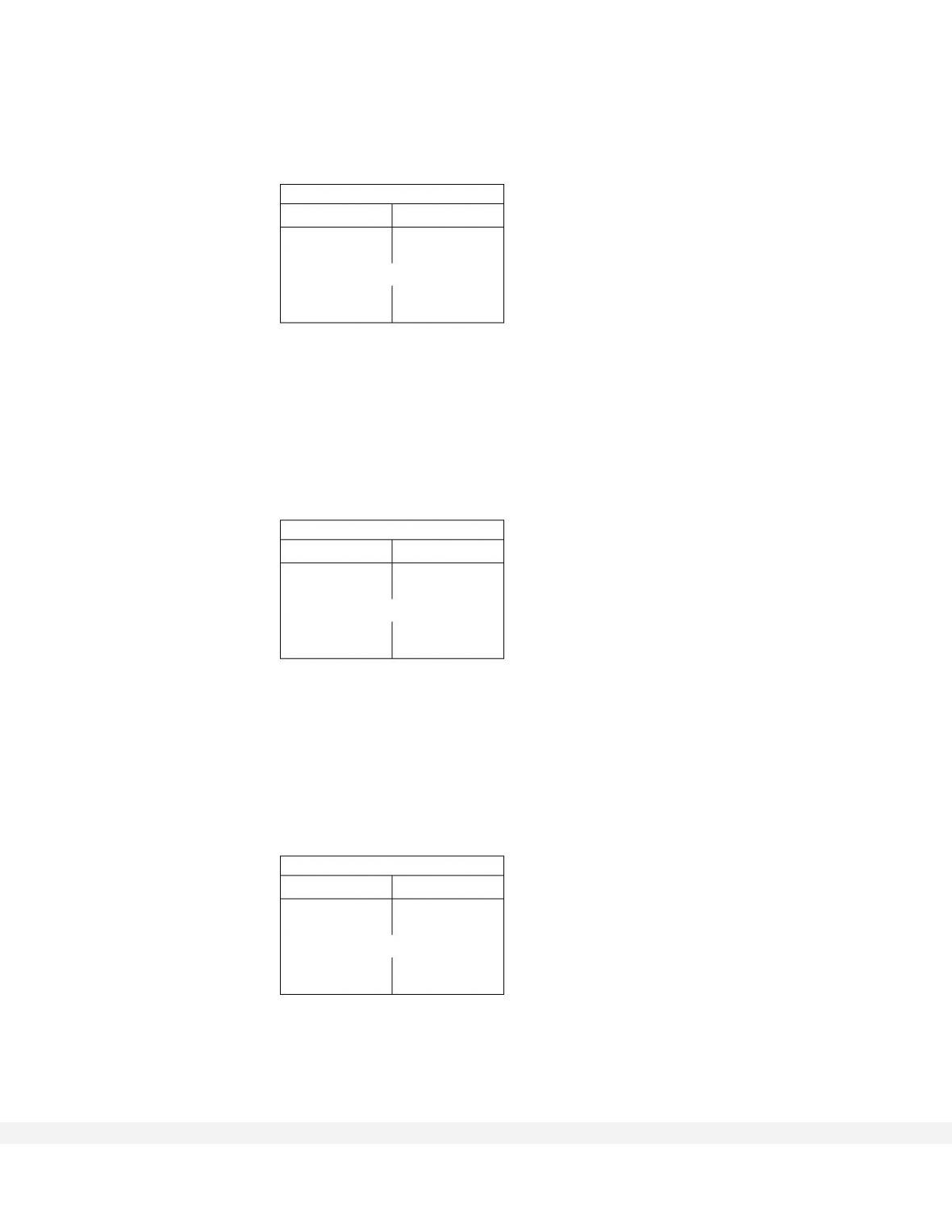
6. The market shares of firms in three different industries are listed in the table below. Use this information to
calculate the Herfindahl index for each industry.
Firms
Industry 1
Industry 2
Industry 3
1
65
70
35
2
15
15
35
3
10
10
30
4
5
5
–
5
5
–
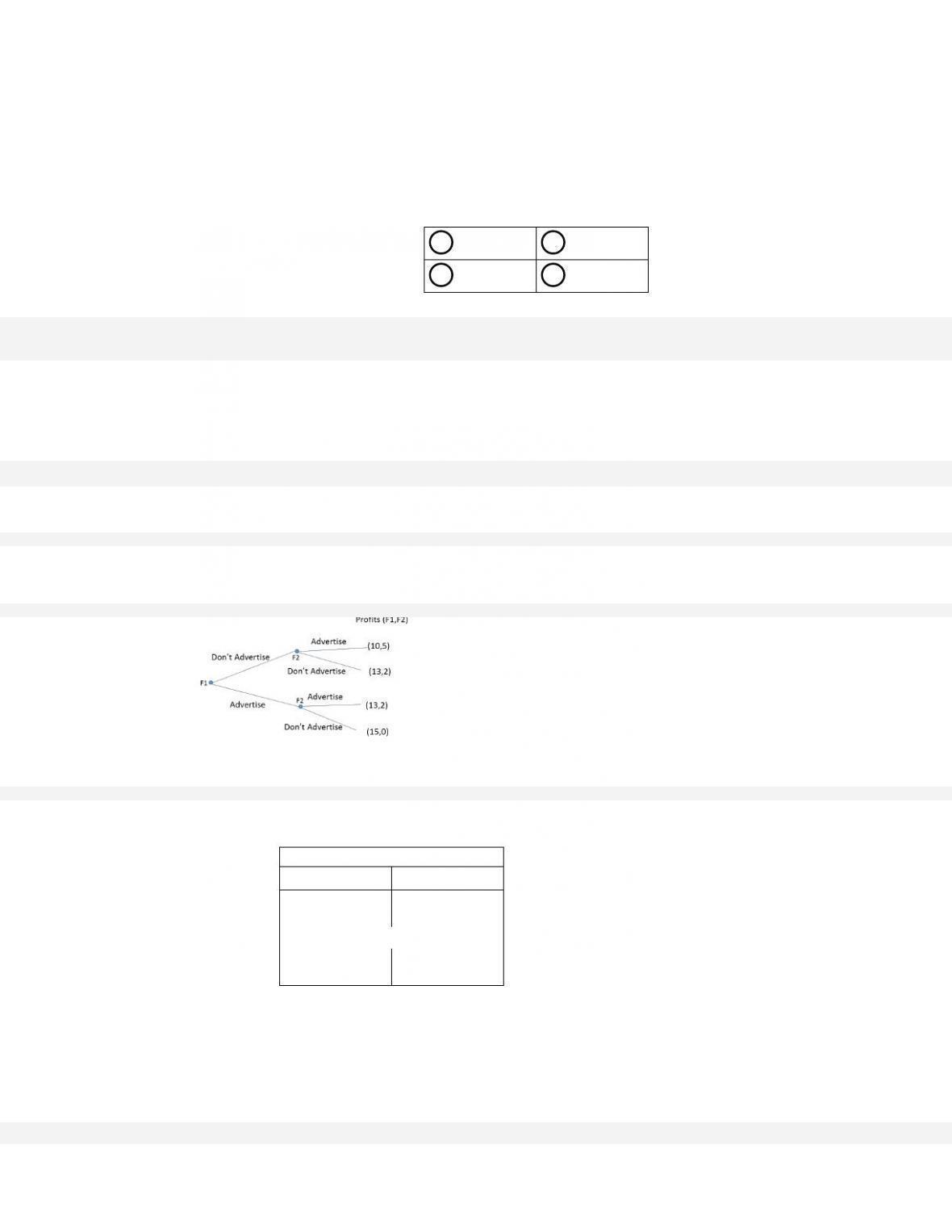
–
Herfindahl
Index
_____
_____
_____
7. The market shares of firms in three different industries are listed in the table below. Use this information to
answer the questions below.
Firms
Industry 1
Industry 2
Industry 3
1
30
250
75
2
25
250
75
3
25
75
75
4
20
75
75
5
20
20
75
Total
Output
2,000
1,000
1,500
8. What conclusions can be drawn from the game theory view of oligopoly?
14–293
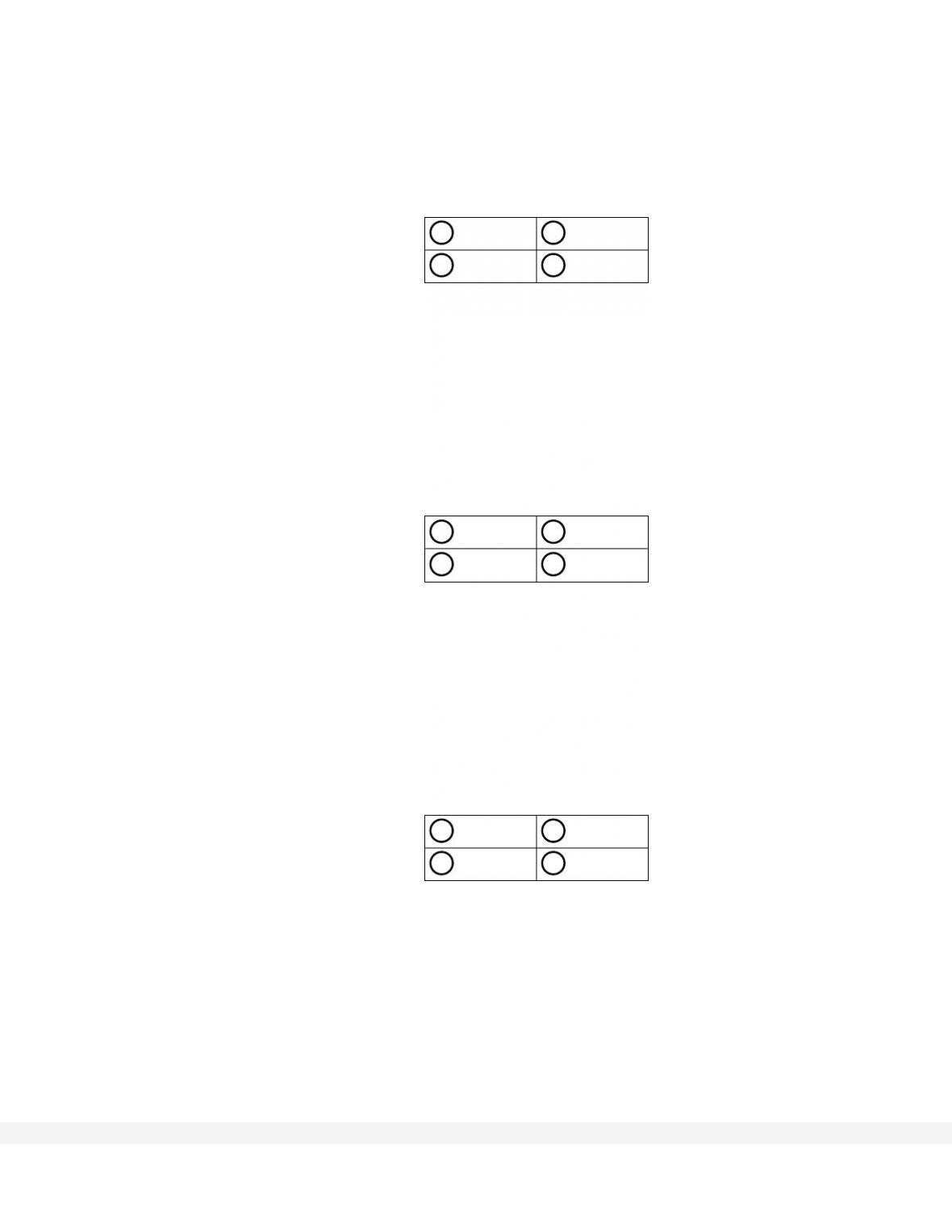
9. Consider the following payoff matrix in which the numbers indicate the profit in millions of dollars for a
duopoly based either on a high-price or a low-price strategy.
Firm A
High-price
Low-price
High-price
A = $500
B = $500
A = $650
B = $300
Firm B
Low-price
A = $300
B = $650
A = $400
B = $400
(a) What will be the result when each firm chooses a high-price strategy?
(b) What will be the result when Firm A chooses a low-price strategy while Firm B maintains a high-price
strategy?
(c) What will be the result when Firm B chooses a low-price strategy while Firm A maintains a high-price
strategy?
(d) What will be the result when each firm chooses a low-price strategy?
(e) What two conclusions can you draw about collusion?
10. Consider the following payoff matrix in which the numbers indicate the profit in millions of dollars for a
duopoly based either on a high-price or a low-price strategy.
Firm A
High-price
Low-price
High-price
A = $150
B = $150
A = $200
B = $ 90
Firm B
Low-price
A = $ 90
B = $200
A = $100
B = $100
(a) What will be the result when each firm chooses a high-price strategy?
(b) What will be the result when Firm A chooses a low-price strategy while Firm B maintains a high-price
strategy?
(c) What will be the result when Firm B chooses a low-price strategy while Firm A maintains a high-price
strategy?
(d) What will be the result when each firm chooses a low-price strategy?
(e) What two conclusions can you draw about collusion?
11. Consider the following payoff matrix in which the numbers indicate the profit in millions of dollars for a
duopoly based either on a high-price or a low-price strategy.
Firm A
High-price
Low-price
High-price
A = $350
B = $350
A = $500
B = $100
Firm B
Low-price
A = $100
B = $500
A = $250
B = $250
(a) What is the total profit and individual firm profits if the firms both choose a high-price strategy?
(b) What is the total profit and individual firm profits if Firm A chooses a low-price strategy while Firm B
maintains a high-price strategy?
(c) What is the total profit and individual firm profits if Firm B chooses a low-price strategy while Firm A
maintains a high-price strategy?

14–294
(d) What is the total profit and individual firm profits if the firms both choose a low-price strategy?
(e) Suppose the two firms decided to collude. What pricing scheme do you suspect the firms will agree to?
(f) What problem do you expect will arise from collusion?
12. (Consider This) What is the Prisoner’s Dilemma? How is the dilemma similar to one for two firms
13. Why is the economic analysis of oligopoly so difficult? What two generalizations can be made about the
14. Describe the essential features of the kinked-demand model of oligopoly pricing.
15. The kinked-demand schedule that an oligopolist believes confronts the firm is given in the table below.
Compute the oligopolist’s total revenue at each of the nine prices, and enter these figures in the table. Also
compute marginal revenue for each unit between the nine prices and enter these figures in the table.
Price
Quantity
demanded
Total
revenue
Marginal
revenue
per unit
$5.80
50
$_____
5.60
100
_____
$_____
5.40
150
_____
_____
5.20
200
_____
_____
5.00
250
_____
_____
4.80
264
_____
_____
4.60
279
_____
_____
4.40
288
_____
_____
4.20
300
_____
_____
(a) Where is the “kink” in the demand curve? What is the current selling price at that kink and how much
output will be demanded?
(b) What is the range of marginal cost that will keep the price set at the kink?
16. The kinked-demand schedule that an oligopolist believes confronts the firm is given in the table below.
Compute the oligopolist’s total revenue at each of the nine prices, and enter these figures in the table. Also
compute marginal revenue for each unit between the nine prices and enter these figures in the table.
Price
Quantity
demanded
Total
revenue
Marginal
revenue
per unit
$17.40
150
$_____
16.80
300
_____
$_____
16.20
450
_____
_____
15.60
600
_____
_____
15.00
750
_____
_____
14.40
792
_____
_____
13.80
837
_____
_____
13.20
864
_____
_____
12.60
900
_____
_____
(a) Where is the “kink” in the demand curve? What is the current selling price at that kink and how much
output will be demanded?
(b) What is the range of marginal cost that will keep the price set at the kink?

14–295
20. An oligopoly producing a homogeneous product is composed of three firms that act like a cartel. Assume
that these three firms have identical cost schedules. Assume also that if any one of these firms sets a price
for the product, the other two firms charge the same price. As long as they all charge the same price they
will share the market equally; and the quantity demanded of each will be the same.
Below are the total-cost schedule of one of these firms and the demand schedule that confronts it when the
other firms charge the same price as this firm. Complete the marginal-cost and marginal-revenue schedules
facing the firm.
Output
Total
cost
Marginal
cost
Price
Quantity
demanded
Marginal
revenue
0
$ 0
1
60
$_____
$260
1
$_____
2
100
_____
240
2
_____
3
160
_____
220
3
_____
4
240
_____
200
4
_____
5
340
_____
180
5
_____
6
460
_____
160
6
_____
7
600
_____
140
7
_____
8
760
_____
120
8
_____
(a) What price would be charged, what output would be produced, and what profit would be made by this
firm?
(b) If the firms collude to maximize joint profits, what would be the industry price, output, and profit?
21. An oligopoly producing a homogeneous product is comprised of three firms that act like a cartel. Assume
that these three firms have identical cost schedules. Assume also that if any one of these firms sets a price
for the product, the other two firms charge the same price. As long as they all charge the same price they
will share the market equally; and the quantity demanded of each will be the same.
Below are the total-cost schedule of one of these firms and the demand schedule that confronts it when the
other firms charge the same price as this firm. Complete the marginal-cost and marginal-revenue schedules
facing the firm.
Output
Total
cost
Marginal
cost
Price
Quantity
demanded
Marginal
revenue
0
$ 0
1
180
$_____
$780
1
$_____
2
300
_____
720
2
_____
3
180
_____
660
3
_____
4
720
_____
600
4
_____
5
1020
_____
540
5
_____
6
1380
_____
480
6
_____
7
1800
_____
420
7
_____
8
2280
_____
360
8
_____

14–296
(a) What price would be charged, what output would be produced, and what profit would be made by this
firm?
(b) If the firms collude to maximize joint profits, what would be the industry price, output, and profit?
22. What obstacles might a group of oligopolists encounter in forming a cartel or an informal understanding?
23. Explain why there is an incentive to cheat in collusive oligopoly. How does such behavior threaten
24. What is the price leadership model of oligopoly pricing and what are its tactics?
25. Why is there emphasis on nonprice competition in oligopoly?
26. Describe the positive and negative views of the economics of advertising.
29. What are three qualifications to the view that allocative and productive efficiency are not realized in
oligopoly?
30. Compare pure competition, pure monopoly, monopolistic competition, and oligopoly on each of the
following points:
31. Define a simultaneous one-time game.
32. What are the differences among positive-sum, negative-sum, and zero-sum games?
33. Describe and give an example of a dominant strategy.
34. Is a Nash equilibrium stable? Explain.
35. How does the use of credible threats or empty threats by firms affect outcomes and the Nash equilibrium in
one-period games?
14–297
36. Answer the following questions based on the payoff matrix for a single-period, two-firm game for firms,
Capoc and Caroc. The numbers in the matrix indicate the profit in billions of dollars for a national of
regional strategy. The profit outcome cells are A, B, C, and D.
Capoc Strategy
(a) Which strategies are the dominate ones for Capoc and Caroc?
(b) What is the Nash Equilibrium?
(c) What will be the total amount of profits for both firms if both firms decide their strategy
simultaneously?
(d) If Capoc makes a credible threat that determines the strategy for Caroc, which combination of
strategies will be selected and what will be the total amount of profits for both firms? 61.
Answer the following questions based on the payoff matrix for a single-period, two-firm
game for firms, Six, Inc. and Seven Corp. The numbers in the matrix indicate the profit in billions of
dollars for a large and small advertising strategy. The profit outcome cells are A, B, C, and D.
Six Inc Strategy
(a) Is the game a zero-sum game or a profit-sum game?
(b) Which strategies are the dominate ones for Six, Inc. and Seven Corp.?
(c) What is the Nash Equilibrium?
(d) What will be the total amount of profits for both firms if both firms decide their strategy
simultaneously?
37. Answer the following questions based on the payoff matrix for a single-period, two-firm game for firms,
Six, Inc. and Seven Corp. The numbers in the matrix indicate the profit in billions of dollars for a large and
small advertising strategy. The profit outcome cells are A, B, C, and D.
Six Inc Strategy
(a) Is the game a zero-sum game or a profit-sum game?
(b) Which strategies are the dominate ones for Six, Inc. and Seven Corp.?
(c) What is the Nash Equilibrium?
(d) What will be the total amount of profits for both firms if both firms decide their strategy
simultaneously?
Caroc Strategy
National
Regional
National
Caroc = $12
Capoc = $12
Caroc = $6
Capoc = $21
Regional
Caroc = $21
Capoc = $6
Caroc = $18
Capoc = $18
Seven Corp. Strategy
Small
Large
Small
Seven = $20
Six = $20
Seven = $25
Six = $0
Large
Seven = $0
Six = $25
Seven = $15
Six = $15
Seven Corp. Strategy
Small
Large
Small
Seven = $20
Six = $20
Seven = $25
Six = $0
Large
Seven = $0
Six = $25
Seven = $15
Six = $15
14–298
38. Answer the following questions based on the payoff matrix for a single-period, two-firm game for firms,
Firm X and Firm Z. The numbers in the matrix indicate the profit in billions of dollars for a traditional or
innovative strategy. The profit outcome cells are A, B, C, and D.
Firm Y Strategy
39. What are the effects of a reciprocity strategy on game outcomes?
40. Define a sequential game.
42. Discuss the difference between displaying a game using a strategic form and an extensive form. Do they
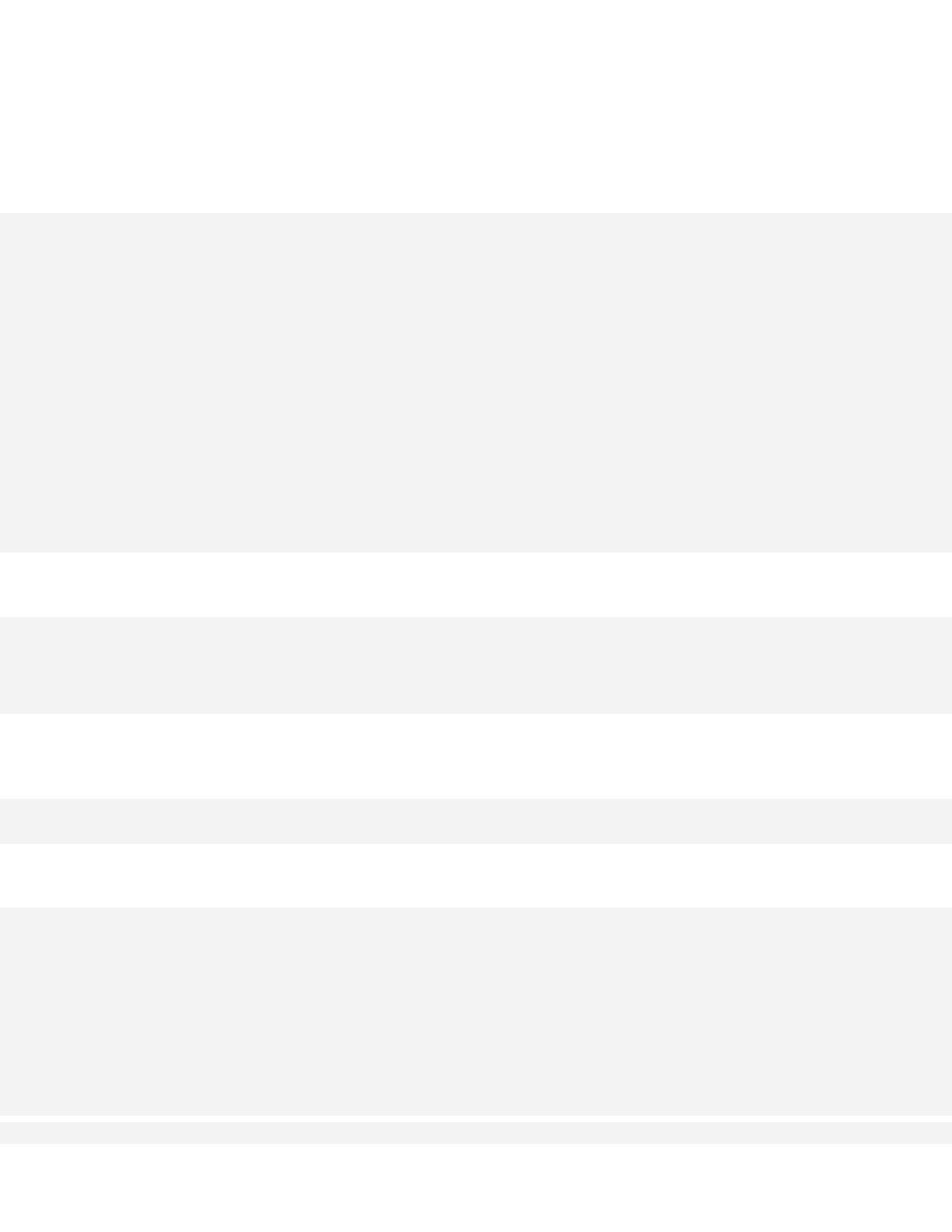
43. See the extensive form “game tree” between Firm 1 (F1) and Firm 2 (F2) below. Each firm must make the
decision to advertise or not advertise. Their profits associated with each decision are listed. What will be
44. Discuss the Stackelberg Duopoly. How can an extensive form game tree be used to determine the outcome
45. Using the game information on a Stackelberg duopoly to create an extended form game tree. Suppose Firm
A is the leader.
Firm A
High-price
Low-price
High-price
A = $350
B = $350
A = $500
B = $100
Firm B
Low-price
A = $100
B = $500
A = $250
B = $250
46 . (Last Word) What would you expect the concentration ratio and Herfindahl index of the internet search
industry to look like?
Firm X Strategy
Traditional
Innovative
Traditional
Firm X = $0
Firm Y= $0
Firm X = $25
Firm Y= $0
Innovative
Firm X = $0
Firm Y= $25
Firm X = $50
Firm Y= $-50

14–299
47. (Last Word) Describe how near-monopoly behavior in internet industries has fostered aggressive
competition.
B. Answers to Short-Answer, Essays, and Problems
1. What are the basic characteristics of oligopoly? How does oligopoly compare with the other market
structures?
2. Evaluate the statement: “A market that produces an identical product cannot be become an oligopoly.”
3. (Consider This) How is strategic behavior illustrated by the competition among three sellers of native arts and
crafts near a national park?
4. What are the shortcomings or limitations of the “four–firm” concentration ratios?

5. The Herfindahl index for bar soap is 2,250, while the index for gasoline pumps is 1,611. Which market is
more competitive?
6. The market shares of firms in three different industries are listed in the table below. Use this information to
calculate the Herfindahl index for each industry.
Firms
Industry 1
Industry 2
Industry 3
1
65
70
35
2
15
15
35
3
10
10
30
4
5
5
–
5
5
–
–
Herfindahl
Index
_____
_____
_____
Firms
Industry 1
Industry 2
Industry 3
1
65
70
35
2
15
15
35
3
10
10
30
4
5
5
–
5
5
–
–
Herfindahl
Index
4725
5250
3350
(a) Industry 2 has the greatest market power with a Herfindahl rating of 5250. Industry 3 has the lowest
market power with a Herfindahl rating of 3350.
(b) The number of firms in an industry is not a good predictor of the competitiveness of that industry. In
this problem, Industry 3 had the least number of firms but was most competitive. This is due to the
fact that although there are a small number of firms, the market is spread relatively evenly among the
firms, resulting in greater competition. In the other industries, market shares were unevenly skewed,
so the Herfindahl rating was higher. Thus, the market power ultimately depends on not only the
number of firms, but the way the market share is distributed among them.

7. The market shares of firms in three different industries are listed in the table below. Use this information to
answer the questions below.
Firms
Industry 1
Industry 2
Industry 3
1
30
250
75
2
25
250
75
3
25
75
75
4
20
75
75
5
20
20
75
Total
Output
2,000
1,000
1,500
8. What conclusions can be drawn from the game theory view of oligopoly?
9. Consider the following payoff matrix in which the numbers indicate the profit in millions of dollars for a
duopoly based either on a high-price or a low-price strategy.
Firm A
High-price
Low-price
High-price
A = $500
B = $500
A = $650
B = $300
Firm B
Low-price
A = $300
B = $650
A = $400
B = $400
14–304
10. Consider the following payoff matrix in which the numbers indicate the profit in millions of dollars for a
duopoly based either on a high-price or a low-price strategy.
Firm A
High-price
Low-price
High-price
A = $150
B = $150
A = $200
B = $ 90
Firm B
Low-price
A = $ 90
B = $200
A = $100
B = $100
(a) What will be the result when each firm chooses a high-price strategy?
(b) What will be the result when Firm A chooses a low-price strategy while Firm B maintains a high-price
strategy?
(c) What will be the result when Firm B chooses a low-price strategy while Firm A maintains a high-price
strategy?
(d) What will be the result when each firm chooses a low-price strategy?
(e) What two conclusions can you draw about collusion?
11. Consider the following payoff matrix in which the numbers indicate the profit in millions of dollars for a
duopoly based either on a high-price or a low-price strategy.
Firm A
High-price
Low-price
High-price
A = $350
B = $350
A = $500
B = $100
Firm B
Low-price
A = $100
B = $500
A = $250
B = $250
(a) What is the total profit and individual firm profits if the firms both choose a high-price strategy?
(b) What is the total profit and individual firm profits if Firm A chooses a low-price strategy while Firm B
maintains a high-price strategy?
(c) What is the total profit and individual firm profits if Firm B chooses a low-price strategy while Firm A
maintains a high-price strategy?
(d) What is the total profit and individual firm profits if the firms both choose a low-price strategy?
(e) Suppose the two firms decided to collude. What pricing scheme do you suspect the firms will agree to?
(f) What problem do you expect will arise from collusion?
12. (Consider This) What is the Prisoner’s Dilemma? How is this dilemma similar to the one for two firms
competing for market share as described in the text?
Assume there are two people who have committed a crime together and get arrested. The police put each
criminal in a separate cell and interrogate each one. A confession from a criminal will result a lighter
sentence for that criminal. If, however, each criminal does not confess then each criminal will be set free.
The dilemma for each criminal is whether to confess or not. If one criminal confesses, but the other
criminal does not, then the criminal that confesses will get a lighter sentence than the criminal that does not
confess. So each criminal has to make a decision about whether to confess based on what each one thinks
the other one will do. If a criminal is fearful that the other criminal will confess, then the best strategy
would be for that criminal to also confess. As a result, both criminals confess.
The Prisoner’s Dilemma is similar to two firms who must compete for market share using a high-price
strategy or low-price strategy. If both firms choose a high-price strategy, each firm can make more profit
than if both firms adopt a low-price strategy. But there is uncertainty about what the other firm will do that