c. vilification
d. eradication
e. brinksmanship
19. President Nixon’s plan to remove U.S. troops from Vietnam and equip the South
Vietnamese soldiers to take control of the war was called
a. the War Powers Resolution.
b. Vietnamization.
c. the Ho Chi Minh Trail.
d. brinksmanship.
e. glasnost.
20. To apply pressure on communist leaders to end the war in Vietnam, President Nixon
a. increased ground units.
b. threatened China.
c. expanded the air war.
d. removed troops from North Vietnam.
e. ordered no U.S. troops north of the 36th parallel.
21. Why did anti-war protests increase across America in the fall of 1969?
a. Nixon’s expansion of the air war
b. Egypt’s seizure of the Suez Canal
c. The CIA’s attempt to assassinate Fidel Castro
d. The execution of Cesar Chavez
e. The draft of college-aged men to fight in Vietnam
22. The anti-war movement gained increasing support after National Guard shootings killed
four students at
a. Texas University.
b. Bowling Green.
c. Northwestern University.
d. Kent State University.
e. Southern California University.
23. The publication of the __________ showed the American public that they had never been
informed of the full story on the Gulf of Tonkin incident of 1964.
a. Mai Lai Papers
b. White Papers
c. Pentagon Papers
d. War Power Resolution
e. Watergate Papers
24. The United States’ official involvement in Vietnam came to an end with the
a. War Powers Resolution.
b. Paris Peace Accords.
c. Armistice Agreement.
d. Pentagon Papers.
e. Treaty of Versailles.
25. Only months after the United States’ withdrawal from Vietnam,
a. South Vietnam was able to defeat North Vietnam.
b. war between North and South Vietnam resumed.
c. Korea invaded North Vietnam and defeated the communists there.
d. Russia began to provide weapons for South Vietnam.
e. Both South and North Vietnam agreed to a truce.
26. According to the textbook, Vietnam was the __________ war in U.S. history up to that
point and has left a bitter legacy.
a. most brutal
b. least controversial
c. least winnable
d. least successful
e. most misunderstood
27. President Nixon’s greatest successes as a president came in the area of
a. foreign policy.
b. domestic policy.
c. civil rights.
d. civil liberties.
e. women’s affairs.
28. During his administration, President Nixon authorized the __________ to work to thwart an
elected official in Chile from taking office.
a. FBI
b. CIA
c. NSA
d. NRA
e. OSS
29. The statement that the United States “cannot—and will not—conceive of all the plans,
design all the programs, execute all the decisions, and undertake all the defense of the free
nations of the world” is known as the
a. Nixon Doctrine.
b. Kennedy Doctrine.
c. War Powers Resolution.
d. Gulf of Tonkin Resolution.
e. Bush Doctrine.
30. President Nixon embraced a policy of __________ with communist nations rather than
continued confrontation.
a. escalation
b. brinksmanship
c. détente
d. glasnost
e. revenge
31. President Nixon was able to improve diplomatic relations with China because by the early
1970s China was eager to resist __________ expansion.
a. capitalist
b. British
c. Soviet
d. Korean
e. Japanese
32. Negotiations between President Nixon and Soviet Premier Brezhnev resulted in the
__________ treaty.
a. SALT I
b. War Powers Resolution
c. NAFTA
d. NRA
e. MEATO
33. The SALT Treaty of 1972
a. brought an end to the Cold War.
b. resulted in the demolition of the Berlin Wall.
c. meant that the Iron Curtain would be torn down.
d. removed Soviet missiles from Cuba and U.S. missiles from Turkey.
e. limited American and Soviet nuclear missiles and missile defense systems.
34. During the __________, Israel routed the armies of Egypt, Syria, and Jordan and seized
territory from all three nations.
a. Yom Kippur War
b. Ramadan War
c. Six-Day War
d. Mai Lai massacre
e. Tet offensive
35. In August 1972, President Richard Nixon disbanded the __________, making the U.S.
military an all-volunteer force.
a. Selective Service
b. Forced Impressment
c. Twenty-Fifth Amendment
d. Conscription Law
e. Martial Law
36. The Watergate scandal involved a break-in at the
a. Democratic National Committee Headquarters.
b. Republican National Committee Headquarters.
c. Brookings Institute.
d. Cato Institute.
e. Smithsonian Museum.
37. When Special Prosecutor Archibald Cox took Nixon to court over Watergate issues, Nixon
a. had him fired.
b. resigned.
c. turned over missing evidence.
d. was impeached and removed from office.
e. was able to clear his name of any wrongdoing.
38. What was the significance of the “Nixon tapes” in the Watergate scandal?
a. They had been secretly recorded at the order of the prosecutors without Nixon knowing,
proving to be an invasion of privacy.
b. They revealed Nixon’s willingness to cooperate with investigators, as he supplied them
early on in the case.
c. They confirmed Nixon’s active role in the cover-up and suggested that certain segments
had been erased.
d. They established a precedent for only providing transcriptions of recordings in court
cases, as the two versions matched.
e. They confirmed that the White House had not tried to offer “hush money” to witnesses
and protected all of Nixon’s advisors from time in prison.
39. The end of Richard Nixon’s presidency came when he
a. was impeached and removed from office.
b. was the first president to resign from office.
c. finished his second term.
d. died in office.
e. was appointed chief justice of the Supreme Court.
40. Which of the following was an effect of the Watergate scandal?
a. It gave the public reason to praise Nixon for his overwhelming support for and lack of
prejudice toward minorities, despite his other failings.
b. It caused Congress to pass several pieces of legislation to increase executive power,
such as the War Powers Act.
c. It showed that the press, Congress, and courts had failed to arouse public opinion in the
case and, for the most part, protected Nixon.
d. It demonstrated that government aides and officials could only be found guilty of the
original crimes and not of covering up evidence.
e. It suggested the lesson that not even a president is above the law, even though Nixon did
avoid jail time.
41. Fears in Congress of efforts to renew U.S. military assistance to Vietnam led to the passage
of the
a. Nixon Amendment.
b. Monroe Doctrine.
c. War Powers Act.
d. Roosevelt Corollary.
e. Pentagon Papers.
42. What did President Ford do early in his presidency that immediately led to controversy and
protest?
a. He pardoned Nixon for any possible federal crimes.
b. He sought to give the federal government more overall power.
c. He, unlike Nixon, developed unfriendly, borderline violent relations with China.
d. He refused to veto any bills from Congress.
e. He approved the CIA’s attempt to overthrow the Cuban president, Fidel Castro.
43. What was one reason James (Jimmy) Earl Carter won the election of 1976?
a. He was well known in national political circles.
b. He was strongly in favor of traditional “tax and spend” liberalism.
c. He was considered corruptible but highly intelligent.
d. He received many votes from groups such as southern whites, blacks, urban labor
unionists, Jews, and Hispanics.
e. There was a large turnout by eligible voters because Watergate had sparked political
interest.
ESSAY
1. Discuss the various aspects of President Nixon’s Vietnam policy. How was Nixon’s policy
different from those of his predecessors?
2. Why was there a “youth revolt” during the 1960s? What were the issues that led to the
creation of the SDC, the free speech movement, and a general “counterculture”?
3. What did the women’s movement, Hispanic movement, Native American movement, and
gay rights movement all have in common with the civil rights movement? What were the
various goals of each movement?
4. Discuss the origins of the Watergate crisis, how it grew, and how it brought an end to the
Nixon presidency.
5. Examine President Nixon’s foreign policy successes. What made Nixon’s approach different
from that of his predecessors?
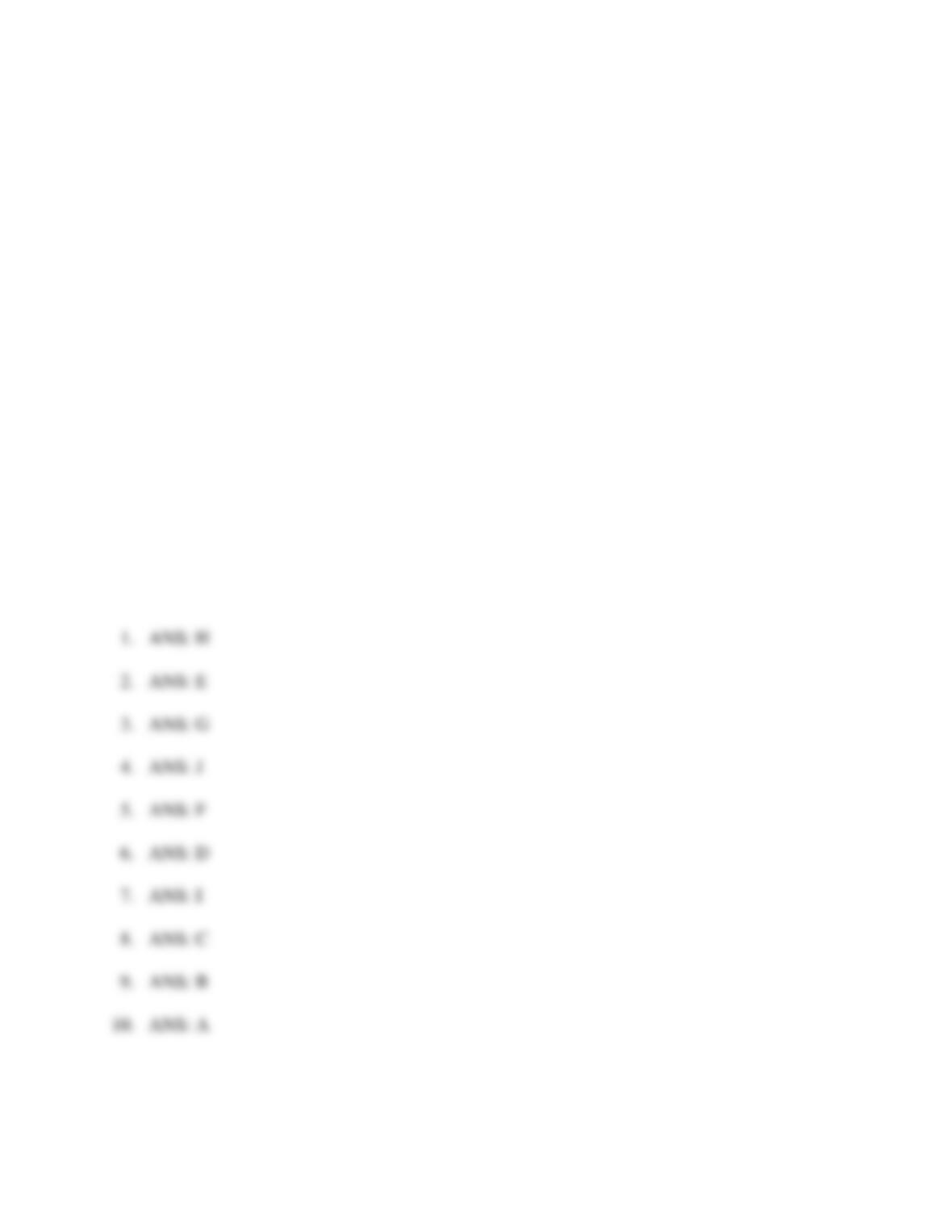
MATCHING
Match each person(s) or group with one of the following descriptions.
a. Founded AIM in 1968
b. Was secretary of state in 1975
c. Was one of the founders of NOW
d. Founded SDS and wrote the Port Huron Statement
e. Replaced Archibald Cox as special prosecutor in the Watergate investigation
f. Gave testimony before Senate committee that linked Nixon directly to Watergate cover-up
g. Leaked the Pentagon Papers to the New York Times
h. Were counterculture pranksters who rejected conventional laws and mocked capitalism
i. Was the only person to serve as both president and vice president without being elected
either
j. Was the prime minister of China during Nixon’s visit
1. Yippies
2. Leon Jaworski
3. Daniel Ellsberg
4. Zhou Enlai
5. John Dean
6. Tom Hayden
7. Gerald Ford
8. Betty Friedan
9. Henry Kissinger
10. George Mitchell and Dennis Banks