20. The __________ were a special regiment made up of good shots and good riders that
Theodore Roosevelt joined during the War of 1898.
a. insurrectos
b. guerrillas
c. Rough Riders
d. haoles
e. jingoists
21. The treaty that ended the War of 1898 and made Cuba independent was the
a. Taft-Katsura Agreement.
b. Treaty of Paris.
c. Treaty of Hispaniola.
d. Treaty of Portsmouth.
e. Hay-Herr‡n Treaty.
22. Which of the following statements regarding the consequences of the War of 1898 is
accurate?
a. The war boosted American self-confidence and reinforced racist attitudes.
b. The war made Americans realize imperialism was not necessary.
c. The war ushered in a period of isolationism.
d. The war was ultimately very unpopular.
e. Most Americans were ashamed of the country’s actions toward the Philippines.
23. Because of the Spanish-American War, Europeans agreed that
a. the U.S. should grant Cuban independence.
b. social Darwinist thinking had not yet influenced American politics.
c. the U.S. had made an entrance onto the world stage.
d. the war had harmed American trade.
e. American imperialism was no match for Spanish imperialism.
24. According to your textbook, at the very end of the War of 1898 the
a. Philippines was an American territory.
b. status of the Philippines was unresolved.
c. Philippines was an American colony.
d. Philippines was given back to Spain.
e. Philippines petitioned the United States for statehood.
25. After the United States took control of the Philippines, __________ became the official
language.
a. Spanish
b. German
c. French
d. English
e. Italian
26. What was a result of the Treaty of Paris?
a. The Spanish empire in the Americas ended.
b. The start of the Spanish-American War became more likely.
c. The Philippines gained its independence.
d. The prospect of a United States empire became far less likely.
e. Spain annexed Puerto Rico.
27. In 1899, the United States divided control of the Samoa Islands with
a. Great Britain.
b. France.
c. Germany.
d. Spain.
e. Russia.
28. The Philippines received their independence from the United States in what year?
a. 1865
b. 1899
c. 1920
d. 1946
e. 1970
29. What did the Platt Amendment mandate?
a. It required that the United States sell all of its existing coaling and naval stations in
Cuba back to Cuba.
b. It gave Cuba the power to sign treaties with several different competing countries.
c. It acknowledged the right of the United States to intervene in Cuba whenever it saw fit.
d. It officially ended the American presence in Cuba.
e. It prohibited Cuba from drafting any type of constitution.
30. What effect did the Spanish-American War have on the stance of the U.S. government on
Asia?
a. The U.S. government decided to assist the Boxer rebels in China, much as it had
assisted the Cuban rebels.
b. The U.S. government decided to pursue interests in Asia on its own rather than
collaborating with Great Britain.
c. The U.S. government successfully prevented Japanese military expansion throughout
the first half of the eighteenth century.
d. The U.S. government supported the plan of powerful European nations to split China
among themselves.
e. The U.S. government took measures to end most trade with Asia because it found
European trade to be more profitable.
31. The “Open Door” policy of __________ stated that China should remain open to European
and American trade.
a. William Seward
b. William McKinley
c. John Hay
d. Samuel Gompers
e. Grover Cleveland
32. After living for a time in the West, Theodore Roosevelt maintained that Indians were
a. a “lesser race.”
b. equal to whites.
c. much oppressed.
d. treated unfairly by the United States government.
e. clearly superior to whites.
33. In the presidential contest of 1900, Roosevelt’s enemies, the Democrats, claimed that the
Philippine conflict was
a. a war with a communistic and socialistic agenda.
b. “a splendid little war.”
c. “an unnecessary war.”
d. a way to strengthen alliances with Filipino nationalists.
e. a war that required greater numbers of troops.
34. Once Theodore Roosevelt became president, his motto became
a. “Speak softly, and carry a big stick.”
b. “The ends justify the means.”
c. “With malice towards none.”
d. “When one must, one can.”
e. “Avoid imperialism at all costs.”
35. For a $10 million down payment, the Roosevelt administration arranged the use in
perpetuity of
a. Hawaii.
b. Alaska.
c. Guam.
d. Wake Island.
e. the Panama Canal.
36. Why was the Roosevelt Corollary significant?
a. It was at odds with the Monroe Doctrine in that it created alliances between the United
States and European powers for various joint initiatives.
b. It asserted the right of the United States to intervene in Latin America to prevent the
military involvement of other countries there.
c. It granted the United States the resources needed to fight in the Russo-Japanese War as a
means of gaining control of Korea.
d. It released the United States from its role as an “international police power” and
emphasized the need to focus on domestic concerns.
e. It canceled the debt various Latin American countries owed to United States banks and
established new trade agreements between the countries.
37. In 1905, President Roosevelt helped negotiate a peace settlement between
a. China and Korea.
b. China and Cuba.
c. Russia and Cuba.
d. Japan and Russia.
e. Japan and Korea.
38. __________ was President Taft’s use of the State Department to help American companies
and banks invest in foreign countries.
a. “Dollar diplomacy”
b. “Big–stick diplomacy”
c. Taft’s Corollary
d. Roosevelt’s Corollary
e. The Monroe Doctrine
39. President __________ argued that it was necessary for the United States to intervene in and
stabilize weak governments in the Western Hemisphere to prevent European nations from
doing the same.
a. Roosevelt
b. Wilson
c. Taft
d. McKinley
e. Cleveland
40. Which of the following was a result of the intervention of the United States in Mexico?
a. Woodrow Wilson spent the rest of his presidency hunting down Pancho Villa and
virtually ignored the threat of war in Europe.
b. Mexicans celebrated the American troops as liberators who saved them from a terrible
dictator.
c. The Rough Riders suffered a terrible, final defeat during the Battle of San Juan Hill.
d. Until the 1940s, Americans maintained a strong military presence in Mexico and
governed Veracruz.
e. Mexicans saw American troops as invaders and participated in ongoing civil wars.
ESSAY
1. Write an essay discussing the results of the Spanish-American war. In what way did it
represent a significant turning point in American history?
2. What were the reasons for American imperialism at the turn of the twentieth century? What
justifications did Americans offer for expansionism?
3. What effect did American ownership of the Philippines have on U.S. foreign policy?
4. Trace Theodore Roosevelt’s climb to the presidency of the United States, and explain why
he was such an appealing vice presidential candidate in 1900.
5. Describe the controversy surrounding the building of the Panama Canal. How were the
obstacles in the canal controversy overcome?
6. Describe the status of U.S.–Japanese relations during President Theodore Roosevelt’s
administration. How did President Roosevelt’s policies toward Japan affect U.S. domestic
policy?
7. Write an essay tracing the changing nature of America’s interventionist foreign policy in the
early twentieth century from Roosevelt to Wilson. Discuss the various approaches
advocated and the results of that involvement. Whose approach seemed most effective?
Why?
8. Discuss the U.S. intervention in Mexico during the Wilson administration. What were the
events that caused this intervention, and how was it resolved?
9. Explain the potential causes of the Spanish-American War, including the economic,
political, and strategic elements of U.S. foreign policies during the 1890s.
10. How did the “Roosevelt Corollary” to the Monroe Doctrine affect U.S. relations with, and
opinions toward, Latin America.
MATCHING
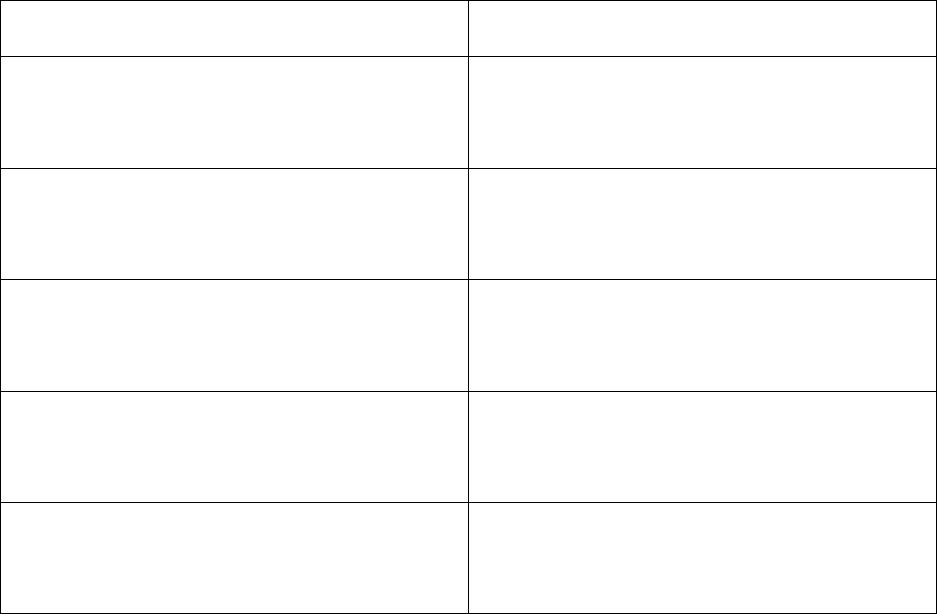
Match each person with one of the following descriptions.
a. Was secretary of state and known for
g. Wrote The Influence of Sea Power upon
coining the title “a splendid little war”
History
b. Was the Democratic presidential
candidate in 1900
h. Acquired Alaska for the United States
c. Became the first civil governor of the
Philippines in 1901
i. Captured Manila Bay
d. Was a Panamanian ambassador to the
United States
j. Claimed in 1893 as a historian that the
“frontier” in the West was gone
e. Owned the New York Journal
k. Led the Philippine insurrection against the
United States in 1899
f. Proposed to return Queen Liliuokalani to
Hawaiian throne
l. Wrote Our Country: Its Possible Future
and Its Present Crisis
1. William Jennings Bryan
2. Grover Cleveland
3. George Dewey
4. John Hay
5. William Randolph Hearst
6. Alfred Thayer Mahan
7. William H. Seward
8. Josiah Strong
9. Philippe Bunau-Varilla
10. Frederick Jackson Turner
11. Emilio Aguinaldo
12. William Howard Taft