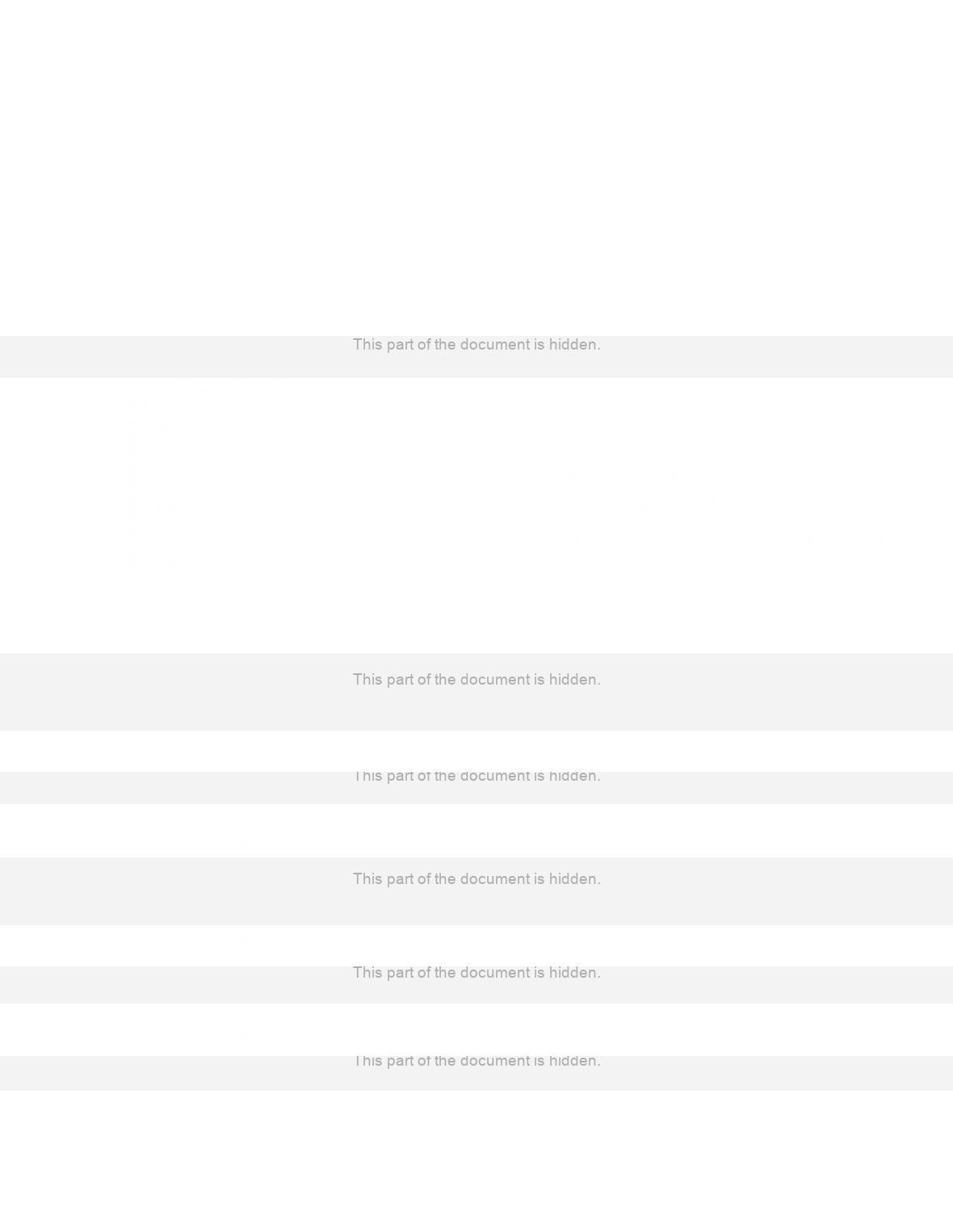
68)
m(x) = – x2– 6x – 8
A)
Standard form: m(x) = – (x – 3)2+ 1
(A) x–intercepts: – 4, –2; y–intercept: –8
(B) Vertex (–3, 1)
(C) Minimum: 1
(D) y 1
B)
Standard form: m(x) = – (x – 3)2+ 1
(A) x–intercepts: 2, 4; y–intercept: –8
(B) Vertex (–3, 1)
(C) Maximum: 1
(D) y 1
C)
Standard form: m(x) = – (x + 3)2+ 1
(A) x–intercepts: – 4, –2; y–intercept: –8
(B) Vertex (–3, 1)
(C) Maximum: 1
(D) y 1
D)
Standard form: m(x) = – (x + 3)2+ 1
(A) x–intercepts: – 4, –2; y–intercept: –8
(B) Vertex (3, –1)
(C) Maximum: 1
(D) y 1
Answer:
C
69)
n(x) = – x2+ 8x – 7
A)
Standard form: n(x) = – (x – 4)2+ 9
(A) x–intercepts: 1, 7; y–intercept: –7
(B) Vertex (4, 9)
(C) Maximum: 9
(D) y 9
B)
Standard form: n(x) = – (x + 4)2+ 9
(A) x–intercepts: 1, 7; y–intercept: –7
(B) Vertex (4, 9)
(C) Minimum: 9
(D) y 9
C)
Standard form: n(x) = – (x + 4)2+ 9
(A) x–intercepts: –7, – 1; y–intercept: –7
(B) Vertex (4, 9)
(C) Maximum: 9
(D) y 9
D)
Standard form: n(x) = – (x – 4)2+ 9
(A) x–intercepts: 1, 7; y–intercept: –7
(B) Vertex (–4, –9)
(C) Maximum: 9
(D) y 9
Answer:
A
Determine whether there is a maximum or minimum value for the given function, and find that value.
70)
f(x) =x2– 20x +104
A)
Minimum: 4
B)
Minimum: 0
C)
Maximum: –4
D)
Maximum: 10
Answer:
A
71)
f(x) = – x2– 18x – 90
A)
Minimum: 0
B)
Maximum: – 9
C)
Minimum: 9
D)
Minimum: –9
Answer:
B
Find the range of the given function. Express your answer in interval notation.
72)
f(x) = 4x2+ 16x + 19
A)
[ – 2,
)
B)
(–
, 2]
C)
(–
, –3]
D)
[3,
)
Answer:
D
73)
f(x) = – 2x2+ 12x – 23
A)
(–
, –3]
B)
[5,
)
C)
[–3,
)
D)
(–
, –5]
Answer:
D
21
SHORT ANSWER. Write the word or phrase that best completes each statement or answers the question.
Provide an appropriate response.
74)
Find the vertex and the maximum or minimum of the quadratic function f(x) = – x2– 4x + 5 by first writing f in
standard form. State the range of f and find the intercepts of f .
Answer:
f(x) = – (x + 2)2+ 9 ; vertex: (–2, 9); maximum: f(–2) = 9; Range of f = {y y 9} ; y–intercept: (0, 5);
x–intercepts: (–5, 0), (1, 0).
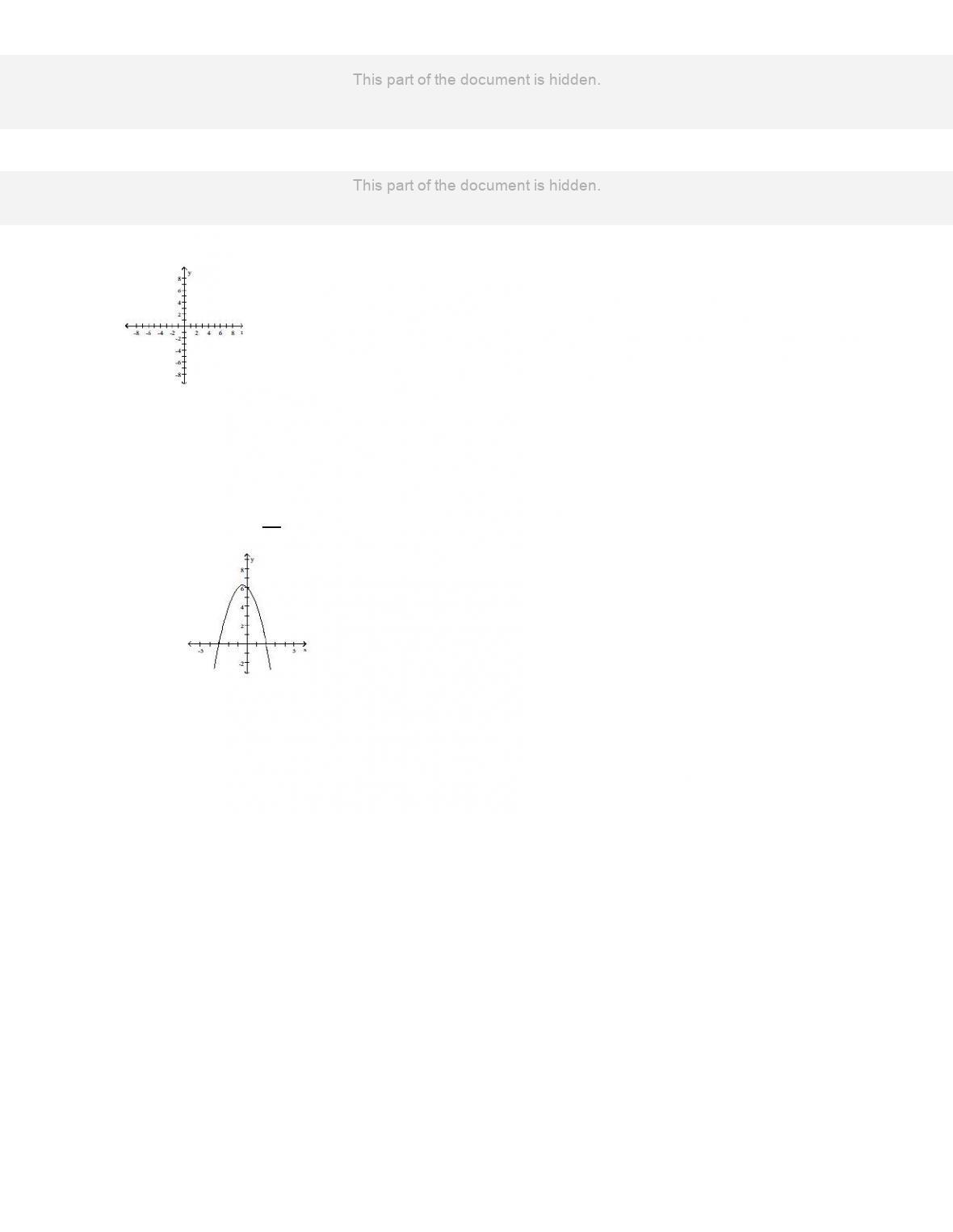
75)
Graph f(x) = – x2– x + 6 and indicate the maximum or minimum value of f(x), whichever exists.
Answer:
Max f(x) =25
4
22
MULTIPLE CHOICE. Choose the one alternative that best completes the statement or answers the question.
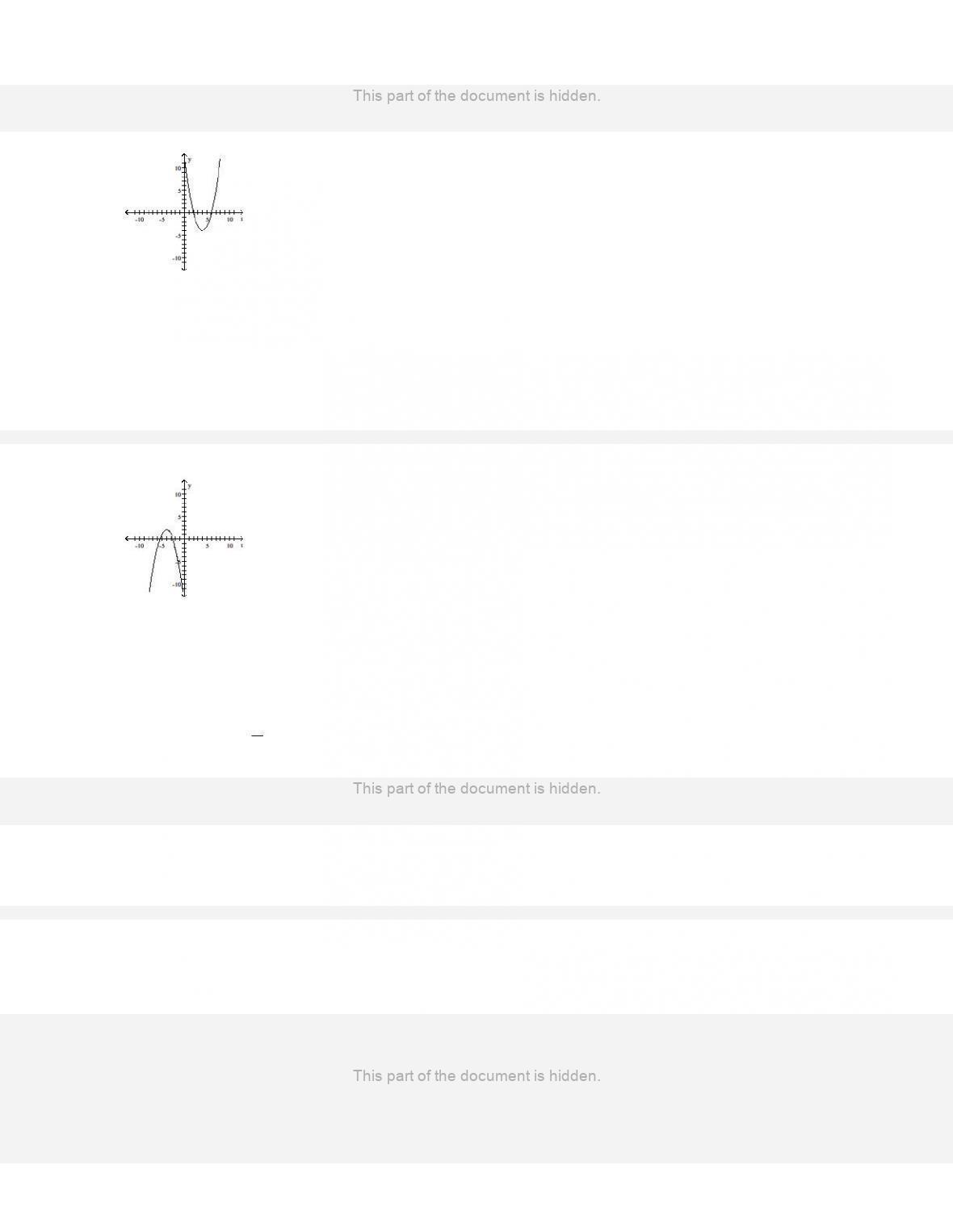
Write an equation for the graph in the form y = a(x – h)2+
k, where a is either 1 or –1 and h and k are integers.
76)
A)
y =(x – 4)2– 4
B)
y =(x – 4)2–6
C)
y =(x + 4)2+6
D)
y =(x – 6)2– 4
Answer:
A
77)
A)
y =(x + 4)2–1
3
B)
y = – (x + 4)2+ 2
C)
y =(x + 4)2+ 2
D)
y = – (x – 4)2– 2
Answer:
B
Solve graphically to two decimal places using a graphing calculator.
78)
1.7x2–2.6x –3.9 > 0
A)
–0.93 < x <2.46
B)
–2.46 < x <0.93
C)
x < – 2.46 or x >0.93
D)
x < – 0.93 or x >2.46
Answer:
D
79)
1.5x2–4.7x –2.9 0
A)
x < – 0.53 or x >3.66
B)
–0.53 < x <3.66
C)
–3.66 < x <0.53
D)
x < – 3.66 or x >0.53
Answer:
B
23
Solve the equation graphically to four decimal places.
80)
Let f(x) = – 0.6x2+3x +1, find f(x) =3.
A)
0.7922
B)
4.2078
C)
No solution
D)
0.7922, 4.2078
Answer:
D
81)
Let f(x) = – 0.4x2+2x +3, find f(x) = – 5.
A)
No solution
B)
–2.6235
C)
7.6235
D)
–2.6235, 7.6235
Answer:
D
82)
Let f(x) = – 0.5x2+4x +2, find f(x) =11.
A)
10.0000
B)
4.0000, 10.0000
C)
4.0000
D)
No solution
Answer:
D
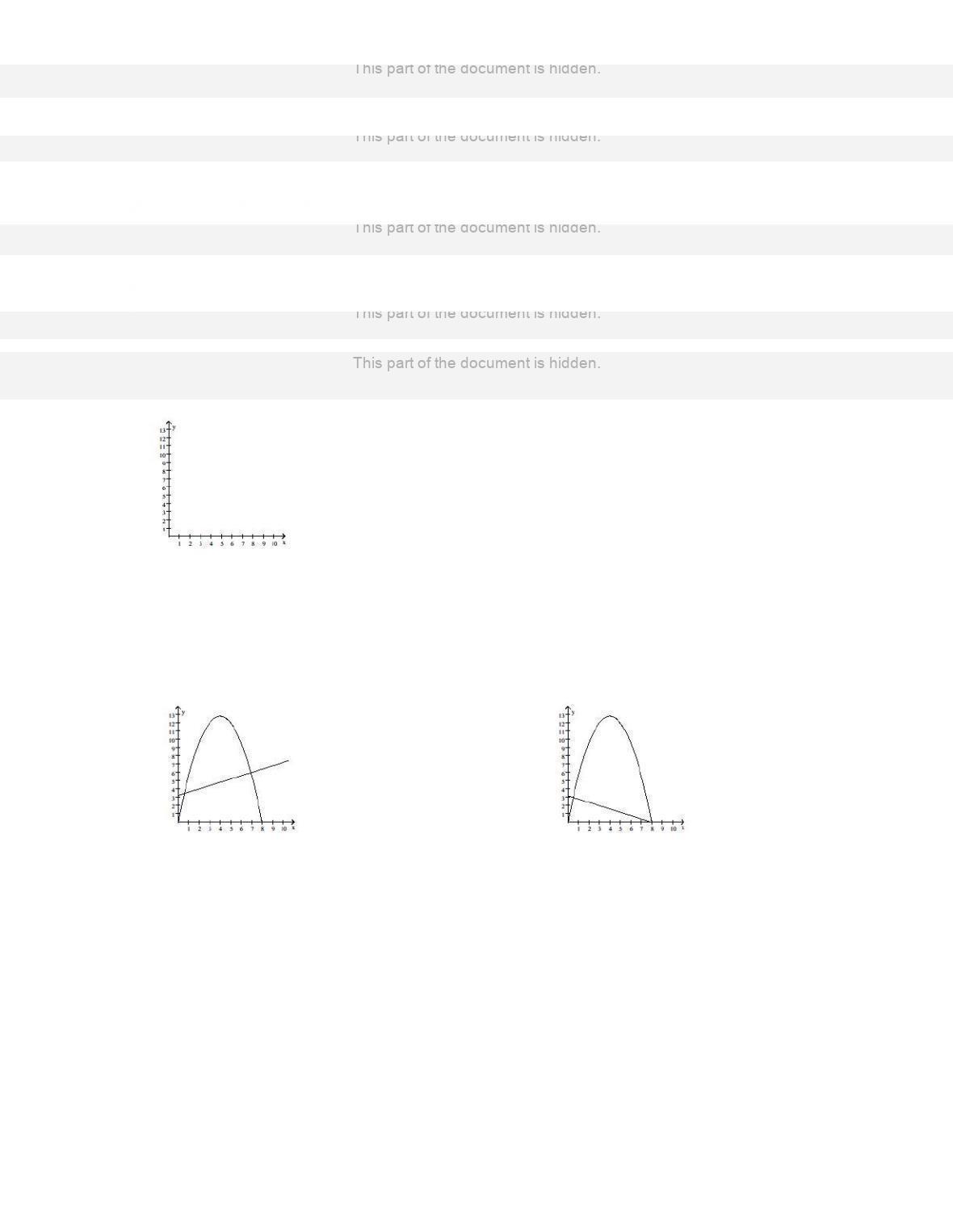
For the following problem, (i) graph f and g in the same coordinate system; (ii) solve f(x) = g(x) algebraically to two
decimal places; (iii) solve f(x) > g(x) using parts i and ii; (iv) solve f(x) < g(x) using parts i and ii.
83)
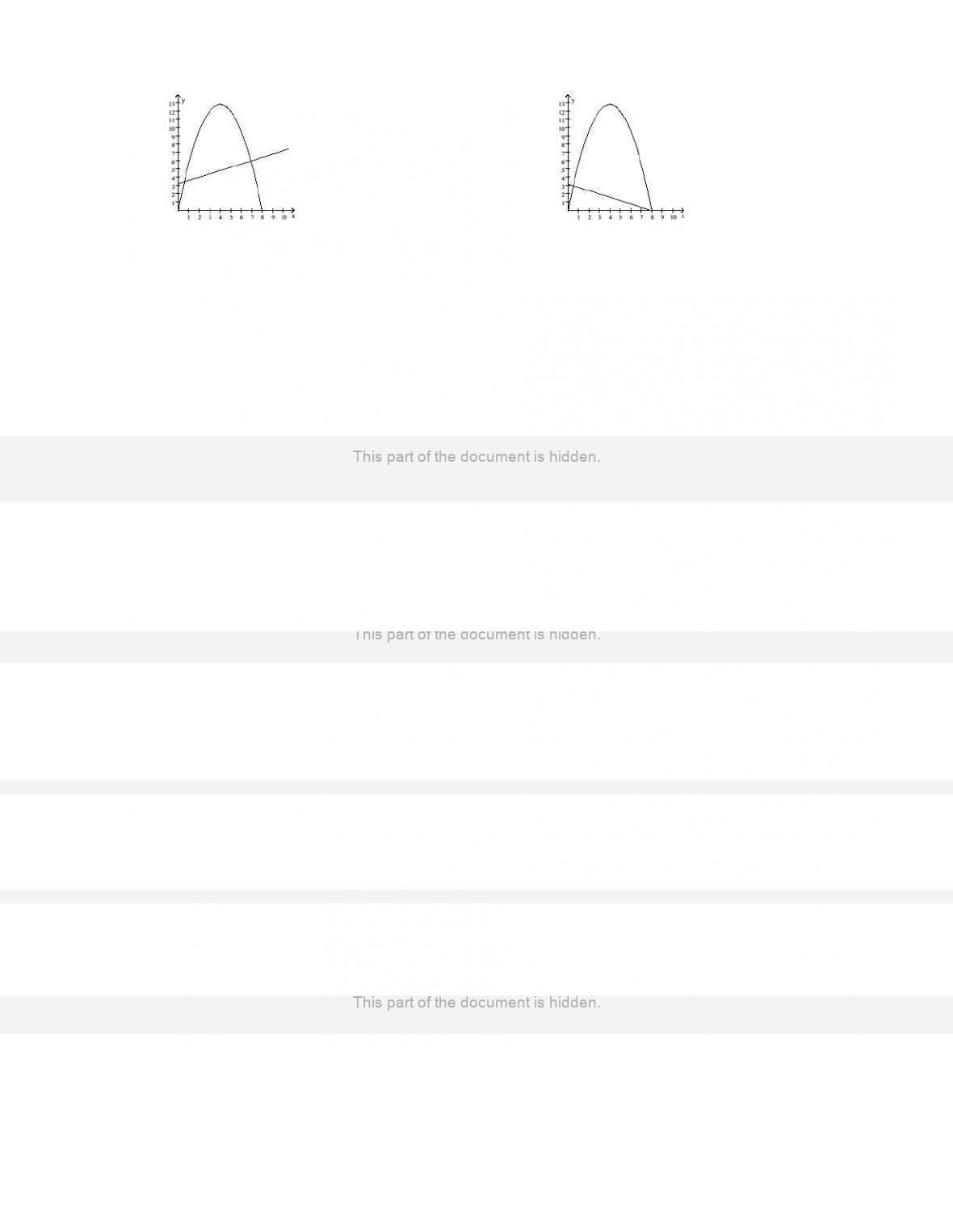
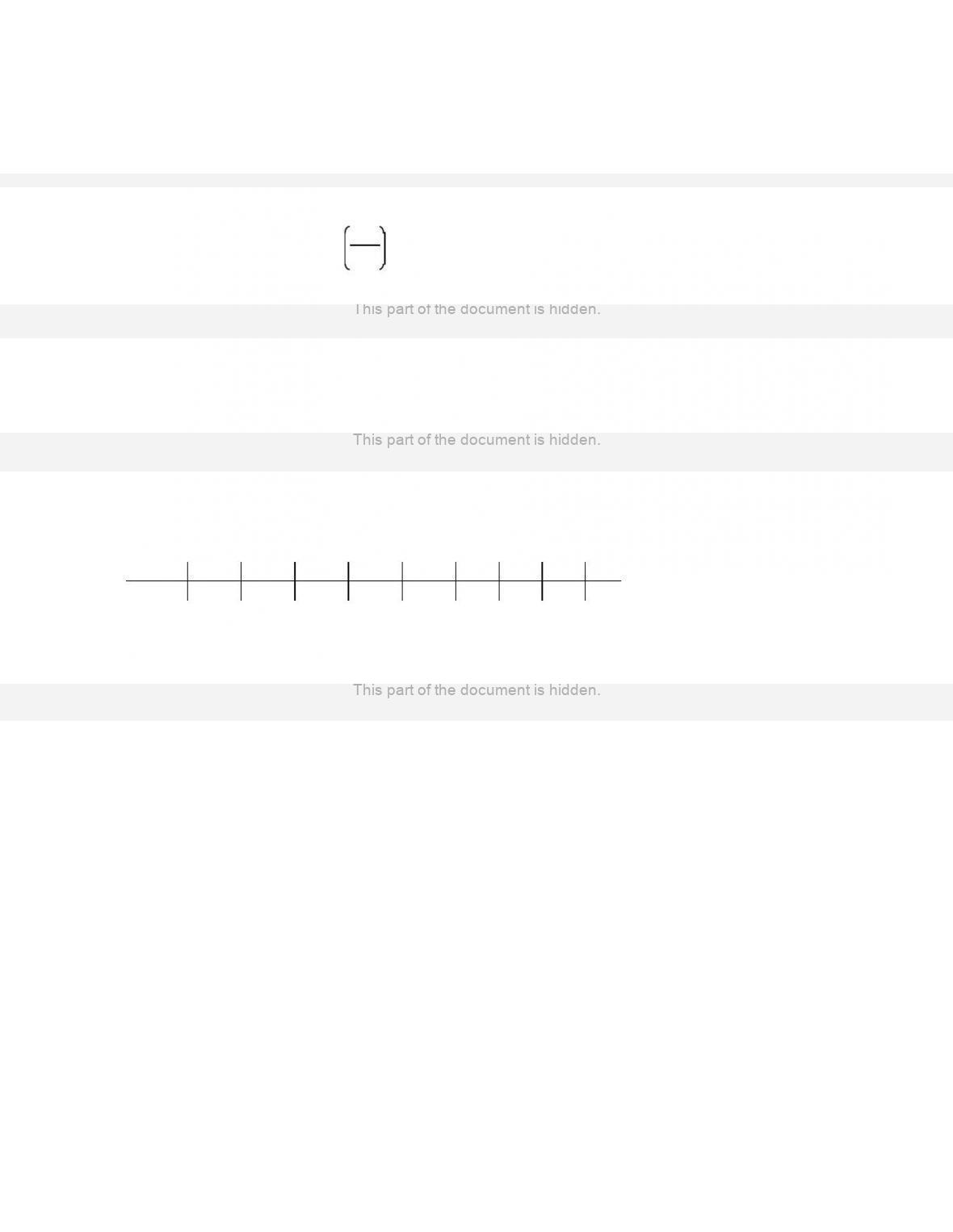
f(x) = – 0.8x(x – 8), g(x) = 0.4x + 3.2; 0 x 10
A)
(i) f is the curve, g is the line
(ii) 0.61, 7.02
(iii) 0.61 < x < 7.02
(iv) 0
x < 0.61 or 7.02 < x
8
B)
(i) f is the curve, g is the line
(ii) 0.61, 7.98
(iii) 0.61 < x < 7.98
(iv) 0
x < 0.61 or 7.98 < x
8
24
C)
(i) f is the curve, g is the line
(ii) 0.58, 6.92
(iii) 0.58 < x < 6.92
(iv) 0
x < 0.58 or 6.92 < x
8
D)
(i) f is the curve, g is the line
(ii) 0.58, 7.98
(iii) 0.58 < x < 7.98
(iv) 0
x < 0.58 or 7.98 < x
8
Answer:
C
Solve the problem.
84)
In economics, functions that involve revenue, cost and profit are used. Suppose R(x) and C(x) denote the total
revenue and the total cost, respectively, of producing a new high–tech widget. The difference P(x) = R(x) – C(x)
represents the total profit for producing x widgets. Given R(x) = 60x – 0.4 x2 and C(x) = 3x + 13, find the
equation for P(x).
A)
P(x) = – 0.4 x2+ 63x + 13
B)
P(x) = 60x – 0.4 x2
C)
P(x) = 3x + 13
D)
P(x) = – 0.4 x2+ 57x – 13
Answer:
D
85)
In economics, functions that involve revenue, cost and profit are used. Suppose R(x) and C(x) denote the total
revenue and the total cost, respectively, of producing a new high–tech widget. The difference P(x) = R(x) – C(x)
represents the total profit for producing x widgets. Given R(x) = 60x – 0.4 x2 and C(x) = 3x + 13, find P(100).
A)
55687
B)
313
C)
2000
D)
1687
Answer:
D
86)
A professional basketball player has a vertical leap of 37 inches. A formula relating an athlete’s vertical leap V,
in inches, to hang time T, in seconds, is V=48T2. What is his hang time? Round to the nearest tenth.
A)
0.8 sec
B)
1 sec
C)
0.9 sec
D)
0.6 sec
Answer:
C
87)
Under certain conditions, the power P, in watts per hour, generated by a windmill with winds blowing v miles
per hour is given by P(v) = 0.015v3. Find the power generated by 18–mph winds.
A)
58.32 watts per hour
B)
0.00006075 watts per hour
C)
4.86 watts per hour
D)
87.48 watts per hour
Answer:
D
25
88)
The U. S. Census Bureau compiles data on population. The population (in thousands) of a southern city can be
approximated by P(x) = 0.08x2– 13.08x + 927, where x corresponds to the years after 1950. In what calendar
year was the population about 804,200?
A)
2000
B)
1955
C)
1965
D)
1960
Answer:
D
89)
Assume that a person’s critical weight W, defined as the weight above which the risk of death rises
dramatically, is given by W(h) =h
11.9
3, where W is in pounds and h is the person’s height in inches.
Find the tcritical weight for a person who is 6 ft 11 in. tall. Round to the nearest tenth.
A)
377.4 lb
B)
221.5 lb
C)
339.3 lb
D)
212.4 lb
Answer:
C
90)
The polynomial 0.0053x3+ 0.003x2+ 0.108x + 1.54 gives the approximate total earnings of a company, in
millions of dollars, where x represents the number of years since 1996. This model is valid for the years from
1996 to 2000. Determine the earnings for 2000. Round to 2 decimal places.
A)
$2.36 million
B)
$2.03 million
C)
$2.26 million
D)
$2.82 million
Answer:
A
Use the REGRESSION feature on a graphing calculator.
91)
The average retail price in the Spring of 2000 for a used Camaro Z28 coupe depends on the age of the car as
shown in the following table.
Age, x 1 2 3 4 5 6 7 8 9
Price, y 18,325 15,925 13,685 11,805 10,490 8885 8015 6480 5710
Find the quadratic model that best estimates this data. Round your answer to whole numbers.
A)
y = 102x2– 2576x + 20,669
B)
y = – 1551x + 18,790x
C)
y = 102x2– 2576x
D)
y = – 9x3+ 235x2– 3134x + 21,252
Answer:
A
26
92)
As the number of farms has decreased in South Carolina, the average size of the remaining farms has grown larg
shown below.
YEAR
AVERAGE ACREAGE
PER FARM
1900 (x = 0)
1910 (x = 10)
127
119
1920
1930
135
137
1940 155
1950 196
1960 283
1970 353
1980 406
1990 440
2000 (x = 100) 420
Let x represent the number of years since 1900. Use a graphing calculator to fit a quadratic function to the data. Round
your answer to five decimal places.
A)
y = 0.02536x3+ 1.21114 + 102.58741
B)
y = 0.02536x2+ 1.21114 x + 102.58741
C)
y = – .00114x3+ 0.19605x2– 5.29775 + 143.55245
D)
y = 0.02536x3+ 1.21114 x + 102.58741
Answer:
B
93)
Since 1984 funeral directors have been regulated by the Federal Trade Commission. The average cost of a funeral for an
adult in a Midwest city has increased, as shown in the following table.
YEAR
AVERAGE COST
OF FUNERAL
1980 $ 1926
1985 $ 2841
1991 $ 3842
1995 $ 4713
1996 $ 4830
1998 $ 5120
2001 $ 5340
Let x represent the number of years since 1980. Use a graphing calculator to fit a quartic function to the data. Round
your answer to five decimal places.
A)
y = 170.5971x + 1991.5213
B)
y = – 0.04268x4
C)
y = – 2.047489x2+ 212.82699x + 1879.85469
D)
y = – 0.04268x4+ 1.53645x3– 16.76289x2+ 231.82723x + 1927.58518
Answer:
D
Solve the problem.
94)
The population P, in thousands, of Fayetteville is given by P(t) =300t
2t2+ 7 , where t is the time, in months. Find
the population at 9 months.
A)
30, 769
B)
15, 976
C)
40,000
D)
7988
Answer:
B
27

95)
If the average cost per unit C(x) to produce x units of plywood is given by C(x) =1200
x + 40 , what is the unit cost for
10 units?
A)
$3.00
B)
$24.00
C)
$80.00
D)
$120.00
Answer:
B
96)
Suppose the cost per ton, y, to build an oil platform of x thousand tons is approximated by C(x) =212,500
x + 425 .
What is the cost per ton for x = 30?
A)
$16.67
B)
$467.03
C)
$7083.33
D)
$425.00
Answer:
B
SHORT ANSWER. Write the word or phrase that best completes each statement or answers the question.
97)
The financial department of a company that produces digital cameras arrived at the following price–demand
function and the corresponding revenue function:
p(x) = 95.4 – 6x price–demand
R(x) = x · p(x) = x(95.4 – 6x) revenue function
The function p(x) is the wholesale price per camera at which x million cameras can be sold and R(x) is the correspond
revenue (in million dollars). Both functions have domain 1 x
15. They also found the cost function to be C(x) =
+ 15.1x (in million dollars) for manufacturing and selling x cameras. Find the profit function and determine the
approximate number of cameras, rounded to the nearest hundredths, that should be sold for maximum profit.
Answer:
P(x) = – 6x2+ 80.3x – 150, must sell approximately 6.69 million cameras.
28

98)
The financial department of a company that manufactures portable MP3 players arrived at the following daily
cost equation for manufacturing x MP3 players per day: C(x) = 1500 + 105x +x2. The average cost per unit at a
production level of players per day is C(x) =C(x)
x.
(A) Find the rational function C.
(B) Graph the average cost function on a graphing utility for 10
x 200.
(C) Use the appropriate command on a graphing utility to find the daily production level (to the nearest integer) at
which the average cost per player is a minimum. What is the minimum average cost (to the nearest cent)?
Answer:
(A) C(x) =1500
x+ 105 + x
(B)
(C) 39; $182.46
MULTIPLE CHOICE. Choose the one alternative that best completes the statement or answers the question.
For the polynomial function find the following: (i) Degree of the polynomial; (ii) All x intercepts; (iii) The y intercept.
99)
y =8x +5
A)
(i) 1
(ii) 5
(iii) 5
8
B)
(i) 1
(ii) 5
8
(iii) 5
C)
(i) 1
(ii) –5
8
(iii) 5
D)
(i) 1
(ii) –8
5
(iii) 8
Answer:
C
100)
y =x2–49
A)
(i) 1
(ii) 24.5
(iii) –49
B)
(i) 2
(ii) –7, 7
(iii) –49
C)
(i) 2
(ii) –8, 8
(iii) –49
D)
(i) 1
(ii) 7
(iii) –49
Answer:
B
101)
y =x2+ 5x – 50
A)
(i) 2
(ii) 10, –5
(iii) –50
B)
(i) 2
(ii) 10, 5
(iii) –50
C)
(i) 2
(ii) –10, 5
(iii) –50
D)
(i) 2
(ii) –10, 1
(iii) –50
Answer:
C
29
102)
y =18 –x2+ 3x
A)
(i) 2
(ii) 6, –3
(iii) 18
B)
(i) 2
(ii) 6, 3
(iii) 18
C)
(i) 2
(ii) –3, –6
(iii) –18
D)
(i) 2
(ii) 3, –6
(iii) –18
Answer:
A
103)
y = (x + 10)(x + 6)(x + 6)
A)
(i) 3
(ii) –10, –6, –6
(iii) –36
B)
(i) 3
(ii) –10, –6, –6
(iii) 360
C)
(i) 3
(ii) 10, 6, 6
(iii) 360
D)
(i) 3
(ii) 10, 6, 6
(iii) 36
Answer:
B
104)
f(x) = (x6+ 7)(x10 + 9)
A)
(i) 60
(ii) none
(iii) –63
B)
(i) 16
(ii) none
(iii) 63
C)
(i) 16
(ii) 7, 9
(iii) 63
D)
(i) 60
(ii) 7, 9
(iii) –63
Answer:
B
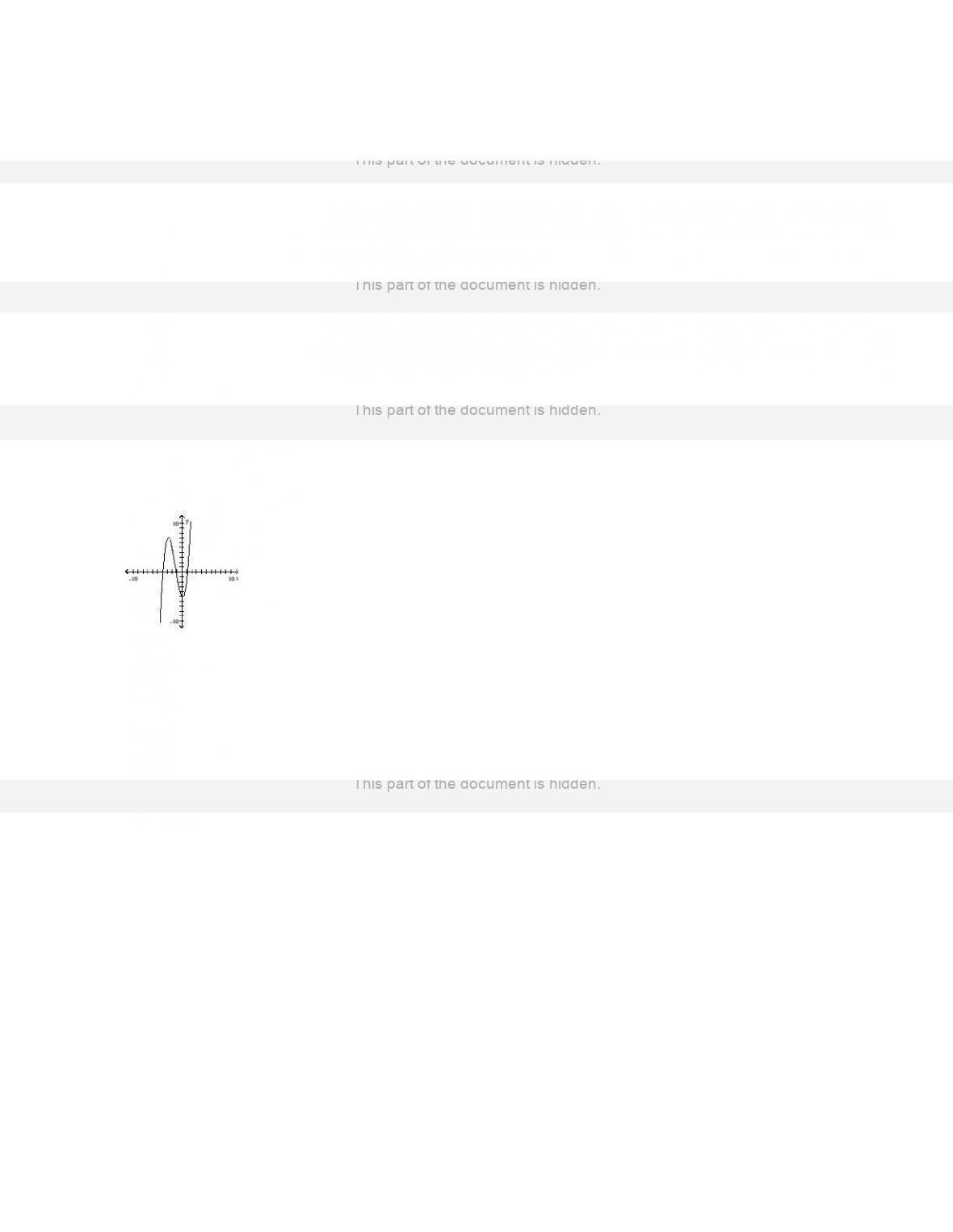
The graph that follows is the graph of a polynomial function. (i) What is the minimum degree of a polynomial function
that could have the graph? (ii) Is the leading coefficient of the polynomial negative or positive?
105)
A)
(i) 2
(ii) Negative
B)
(i) 3
(ii) Positive
C)
(i) 3
(ii) Negative
D)
(i) 2
(ii) Positive
Answer:
B
30
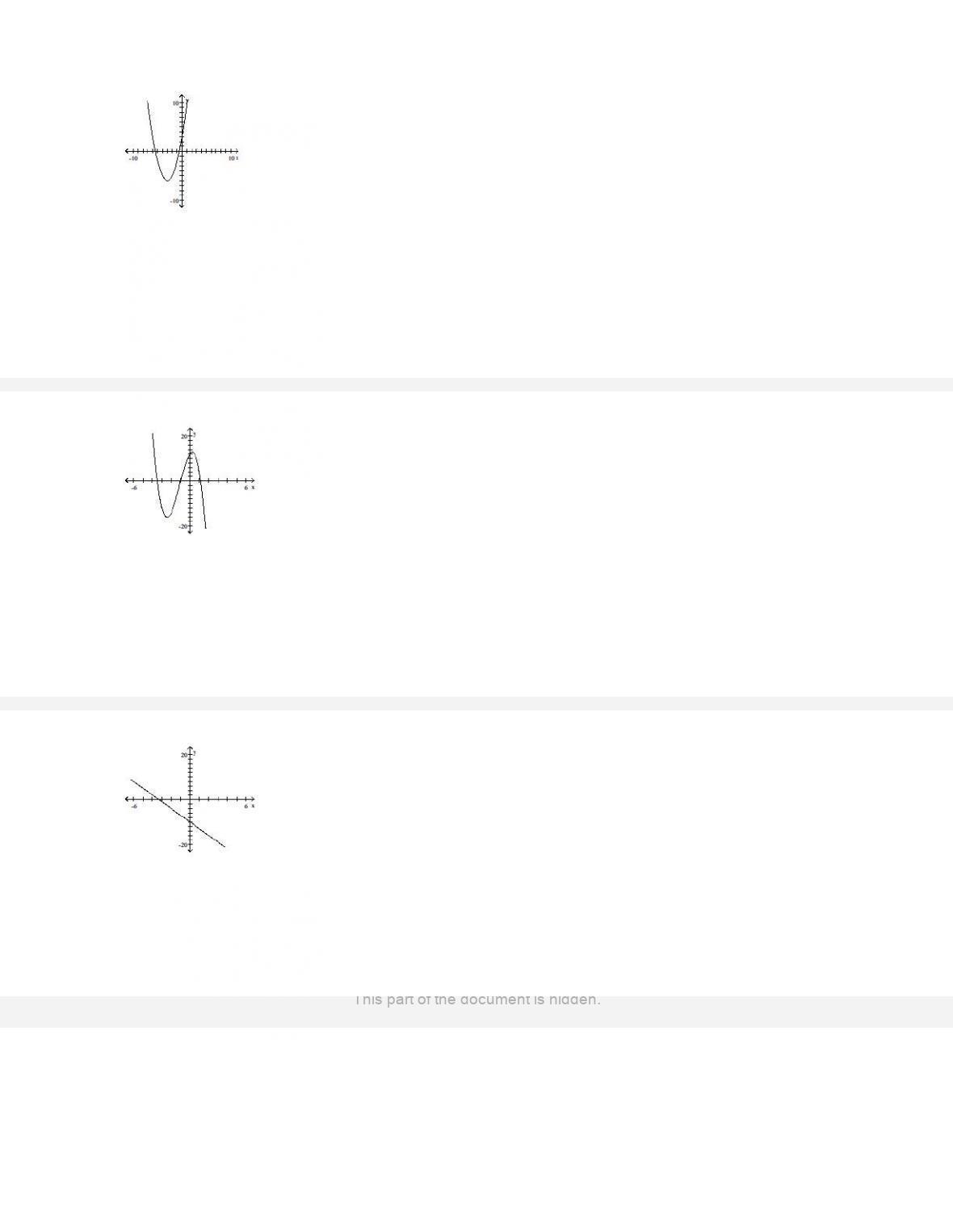
106)
A)
(i) 2
(ii) Negative
B)
(i) 3
(ii) Negative
C)
(i) 3
(ii) Positive
D)
(i) 2
(ii) Positive
Answer:
D
107)
A)
(i) 4
(ii) Negative
B)
(i) 3
(ii) Positive
C)
(i) 3
(ii) Negative
D)
(i) 4
(ii) Positive
Answer:
C
108)
A)
(i) 2
(ii) Positive
B)
(i) 2
(ii) Negative
C)
(i) 1
(ii) Negative
D)
(i) 1
(ii) Positive
Answer:
C
31
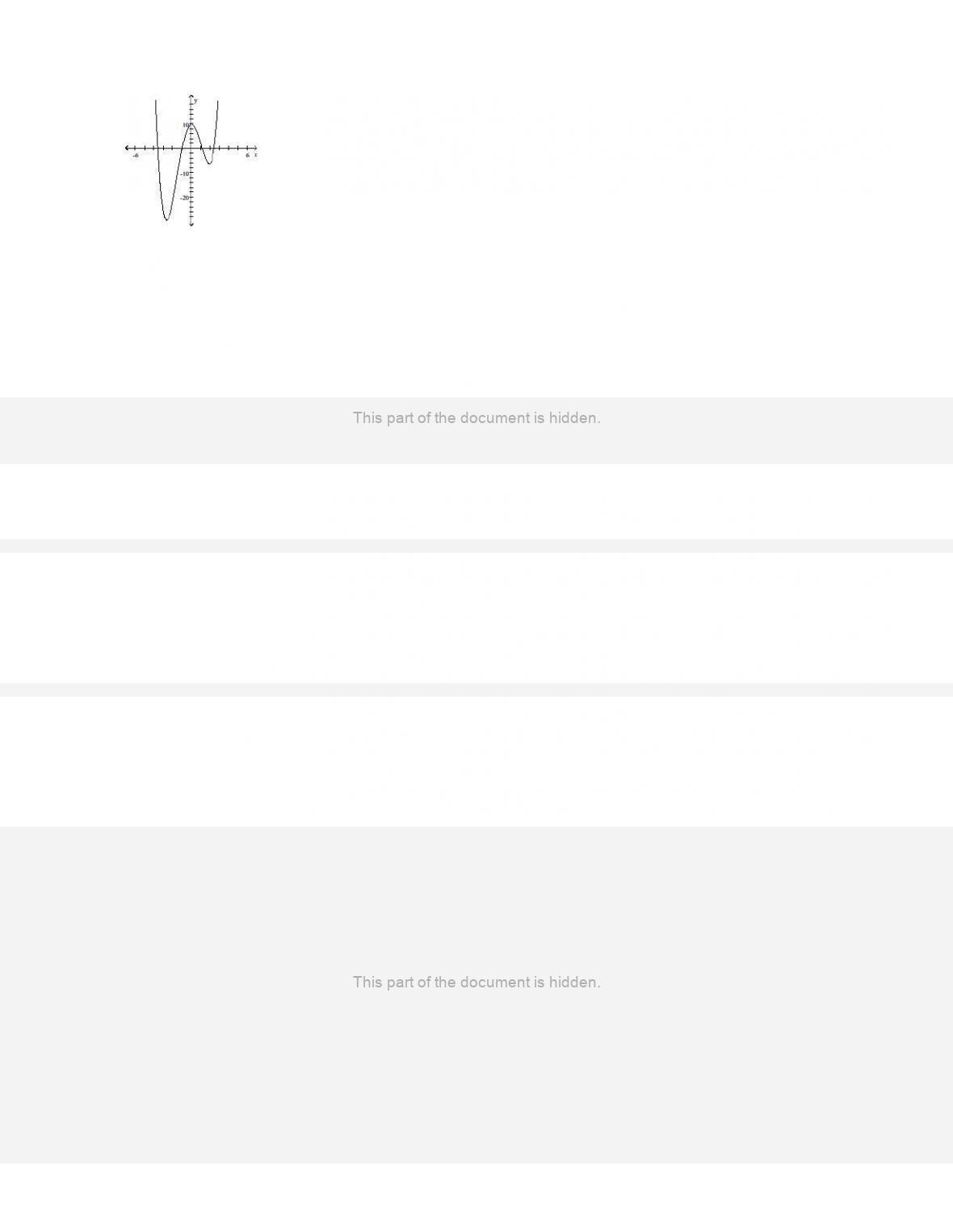
109)
A)
(i) 3
(ii) Negative
B)
(i) 4
(ii) Negative
C)
(i) 3
(ii) Positive
D)
(i) 4
(ii) Positive
Answer:
D
Provide an appropriate response.
110)
What is the maximum number of x intercepts that a polynomial of degree 10 can have?
A)
11
B)
10
C)
9
D)
Not enough information is given.
Answer:
B
111)
What is the minimum number of x intercepts that a polynomial of degree 11 can have? Explain.
A)
1 because a polynomial of odd degree crosses the x axis at least once.
B)
11 because this is the degree of the polynomial.
C)
0 because a polynomial of odd degree may not cross the x axis at all.
D)
Not enough information is given.
Answer:
A
112)
What is the minimum number of x intercepts that a polynomial of degree 8 can have? Explain.
A)
1 because a polynomial of even degree crosses the x axis at least once.
B)
0 because a polynomial of even degree may not cross the x axis at all.
C)
8 because this is the degree of the polynomial.
D)
Not enough information is given.
Answer:
B
For the rational function below (i) Find the intercepts for the graph; (ii) Determine the domain; (iii) Find any vertical or
horizontal asymptotes for the graph; (iv) Sketch any asymptotes as dashed lines. Then sketch the graph of y = f(x).
32
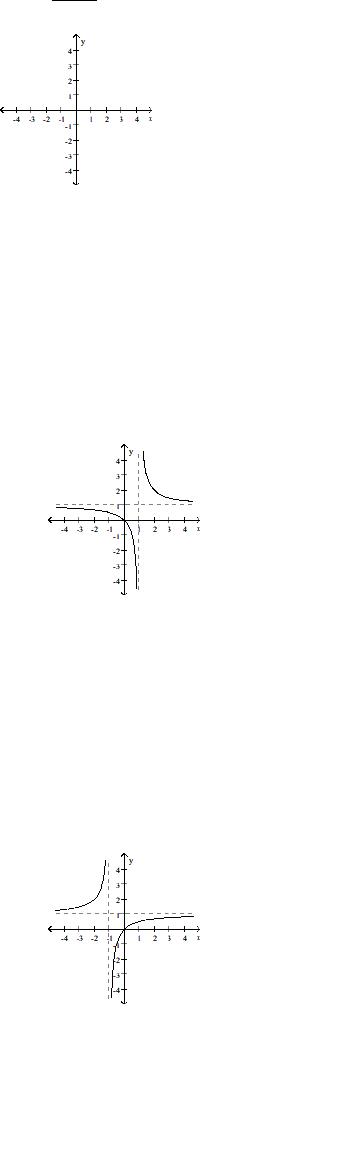
113)
f(x) =x + 2
x + 1
A)
(i) x intercept: 0; y intercept: 0
(ii) Domain: all real numbers except 1
(iii) Vertical asymptote: x = 1; horizontal asymptote: y = 1
(iv)
B)
(i) x intercept: 0; y intercept: 0
(ii) Domain: all real numbers except –1
(iii) Vertical asymptote: x = – 1; horizontal asymptote: y = 1
(iv)
33
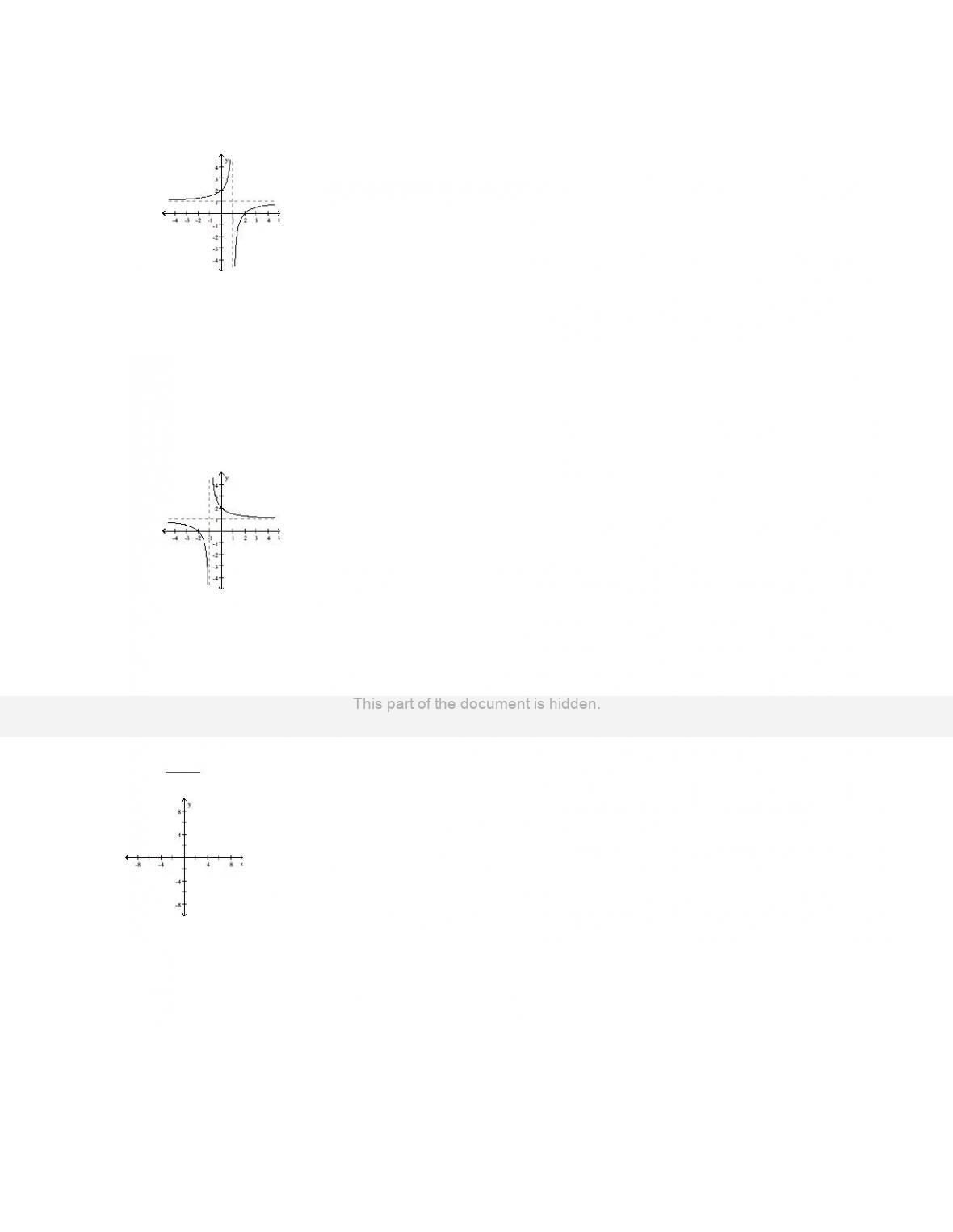
C)
(i) x intercept: 2; y intercept: 2
(ii) Domain: all real numbers except 1
(iii) Vertical asymptote: x = 1; horizontal asymptote: y = 1
(iv)
D)
(i) x intercept: –2; y intercept: 2
(ii) Domain: all real numbers except –1
(iii) Vertical asymptote: x = – 1; horizontal asymptote: y = 1
(iv)
Answer:
D
114)
f(x) =x – 3
x – 4
34

A)
(i) x intercept: –5; y intercept: 3
4
(ii) Domain: all real numbers except –4
(iii) Vertical asymptote: x = – 4; horizontal asymptote: y = 1
(iv)
B)
(i) x intercept: 5; y intercept: 3
4
(ii) Domain: all real numbers except 4
(iii) Vertical asymptote: x = 4; horizontal asymptote: y = 1
(iv)
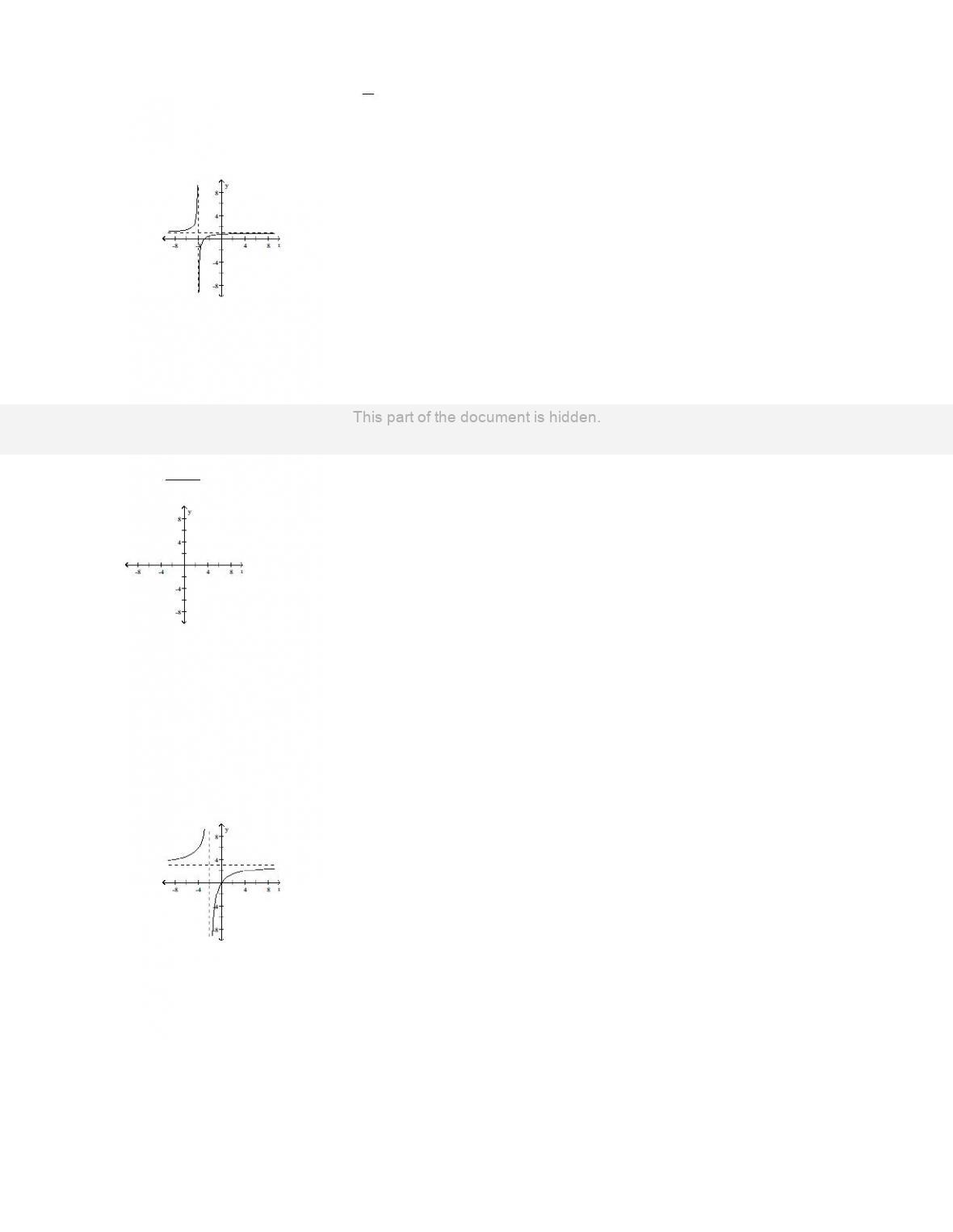
C)
(i) x intercept: 3; y intercept: 3
4
(ii) Domain: all real numbers except 4
(iii) Vertical asymptote: x = 4; horizontal asymptote: y = 1
(iv)
35
D)
(i) x intercept: –3; y intercept: 3
4
(ii) Domain: all real numbers except –4
(iii) Vertical asymptote: x = – 4; horizontal asymptote: y = 1
(iv)
Answer:
C
115)
f(x) =3x
x – 2
A)
(i) x intercept: 0; y intercept: 0
(ii) Domain: all real numbers except –2
(iii) Vertical asymptote: x = – 2; horizontal asymptote: y = 3
(iv)
36
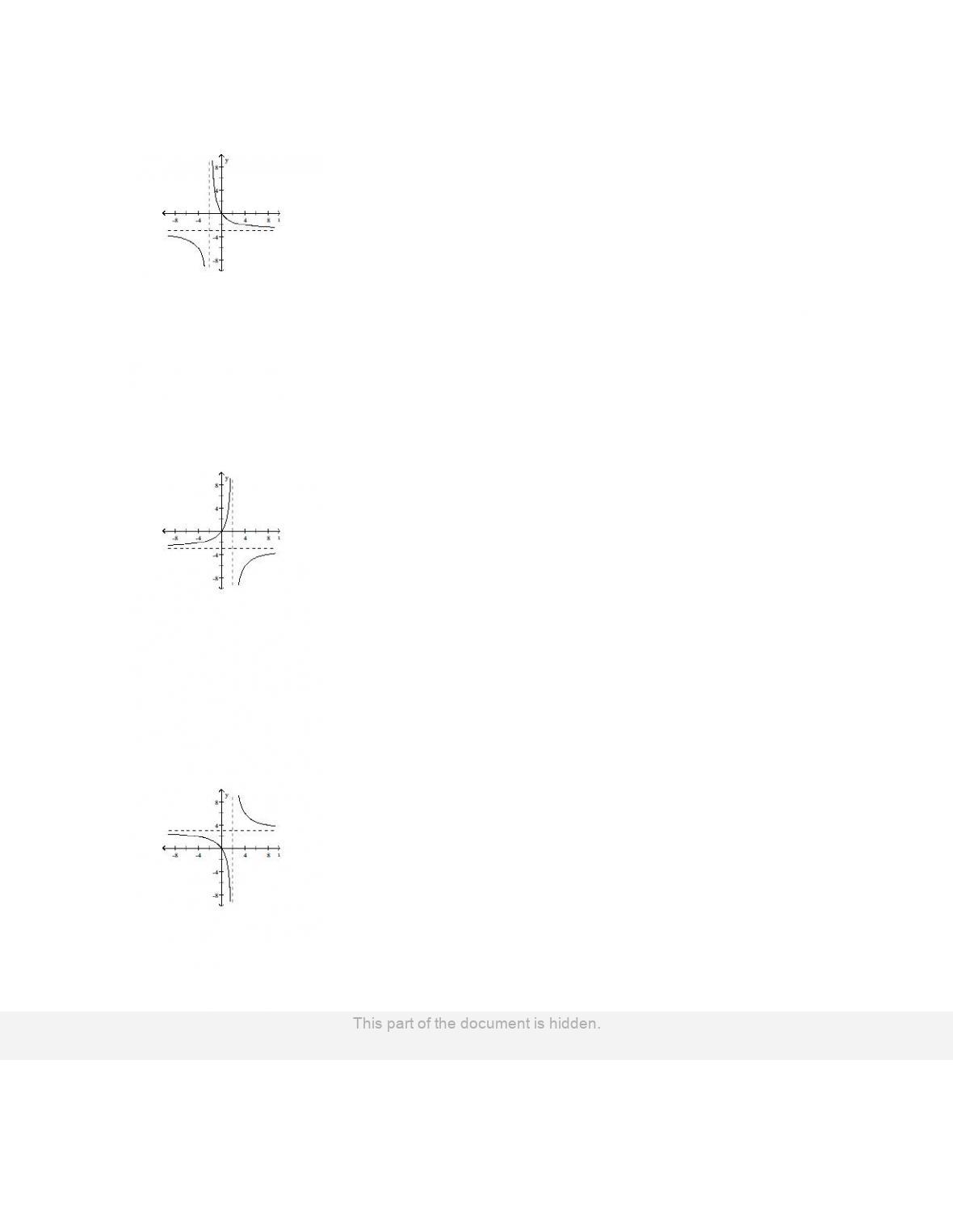
B)
(i) x intercept: 0; y intercept: 0
(ii) Domain: all real numbers except –2
(iii) Vertical asymptote: x = – 2; horizontal asymptote: y = – 3
(iv)
C)
(i) x intercept: 0; y intercept: 0
(ii) Domain: all real numbers except 2
(iii) Vertical asymptote: x = 2; horizontal asymptote: y = – 3
(iv)
D)
(i) x intercept: 0; y intercept: 0
(ii) Domain: all real numbers except 2
(iii) Vertical asymptote: x = 2; horizontal asymptote: y = 3
(iv)
Answer:
D
37
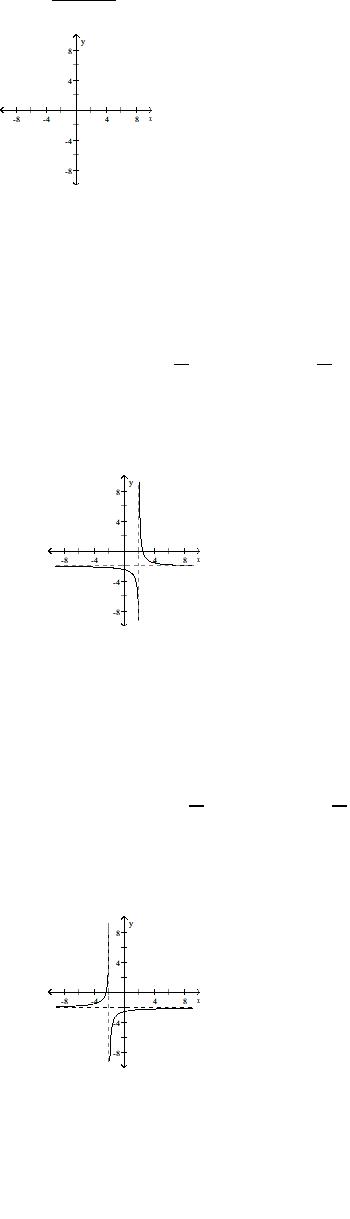
116)
f(x) =
–2x – 3
x + 2
A)
(i) x intercept: 3
2; y intercept: –3
2
(ii) Domain: all real numbers except 2
(iii) Vertical asymptote: x = 2; horizontal asymptote: y = – 2
(iv)
B)
(i) x intercept: –3
2; y intercept: –3
2
(ii) Domain: all real numbers except –2
(iii) Vertical asymptote: x = – 2; horizontal asymptote: y = – 2
(iv)
38
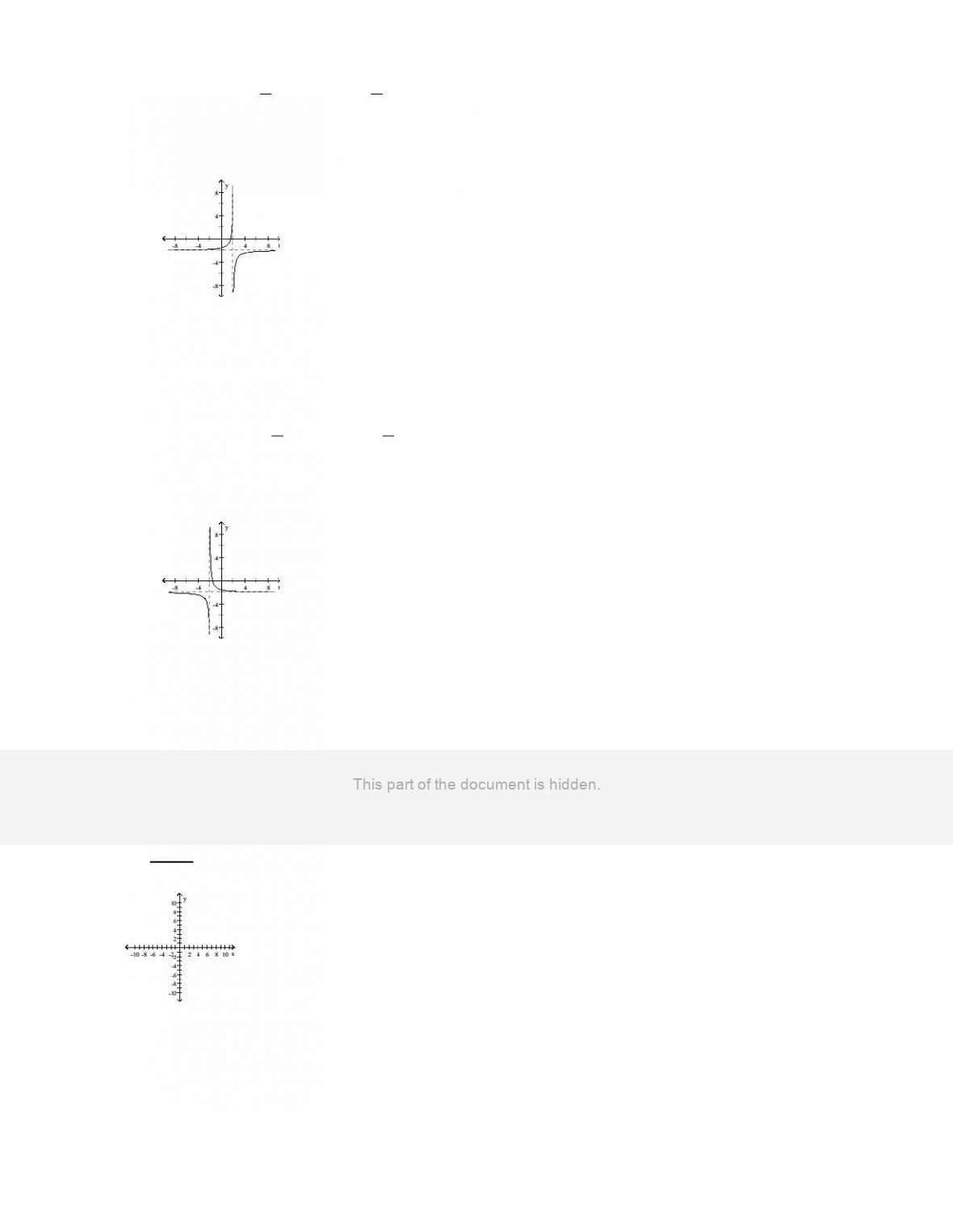
C)
(i) x intercept: 3
2; y intercept: –3
2
(ii) Domain: all real numbers except 2
(iii) Vertical asymptote: x = 2; horizontal asymptote: y = – 2
(iv)
D)
(i) x intercept: –3
2; y intercept: –3
2
(ii) Domain: all real numbers except –2
(iii) Vertical asymptote: x = – 2; horizontal asymptote: y = – 2
(iv)
Answer:
D
For the rational function below (i) Find any intercepts for the graph; (ii) Find any vertical and horizontal asymptotes for
the graph; (iii) Sketch any asymptotes as dashed lines. Then sketch a graph of f.
117)
y =18
x2–9
39

A)
(i) y intercept: – 2
(ii) horizontal asymptote: y = 0; vertical asymptotes: x =3 and x = – 3
(iii)
B)
(i) y intercept: –6
(ii) horizontal asymptote: y = 0; vertical asymptotes: x =6 and x = – 6
(iii)
C)
(i) y intercept: – 2
(ii) horizontal asymptote: y = 0
(iii)
40