Exam
Name___________________________________
MULTIPLE CHOICE. Choose the one alternative that best completes the statement or answers the question.
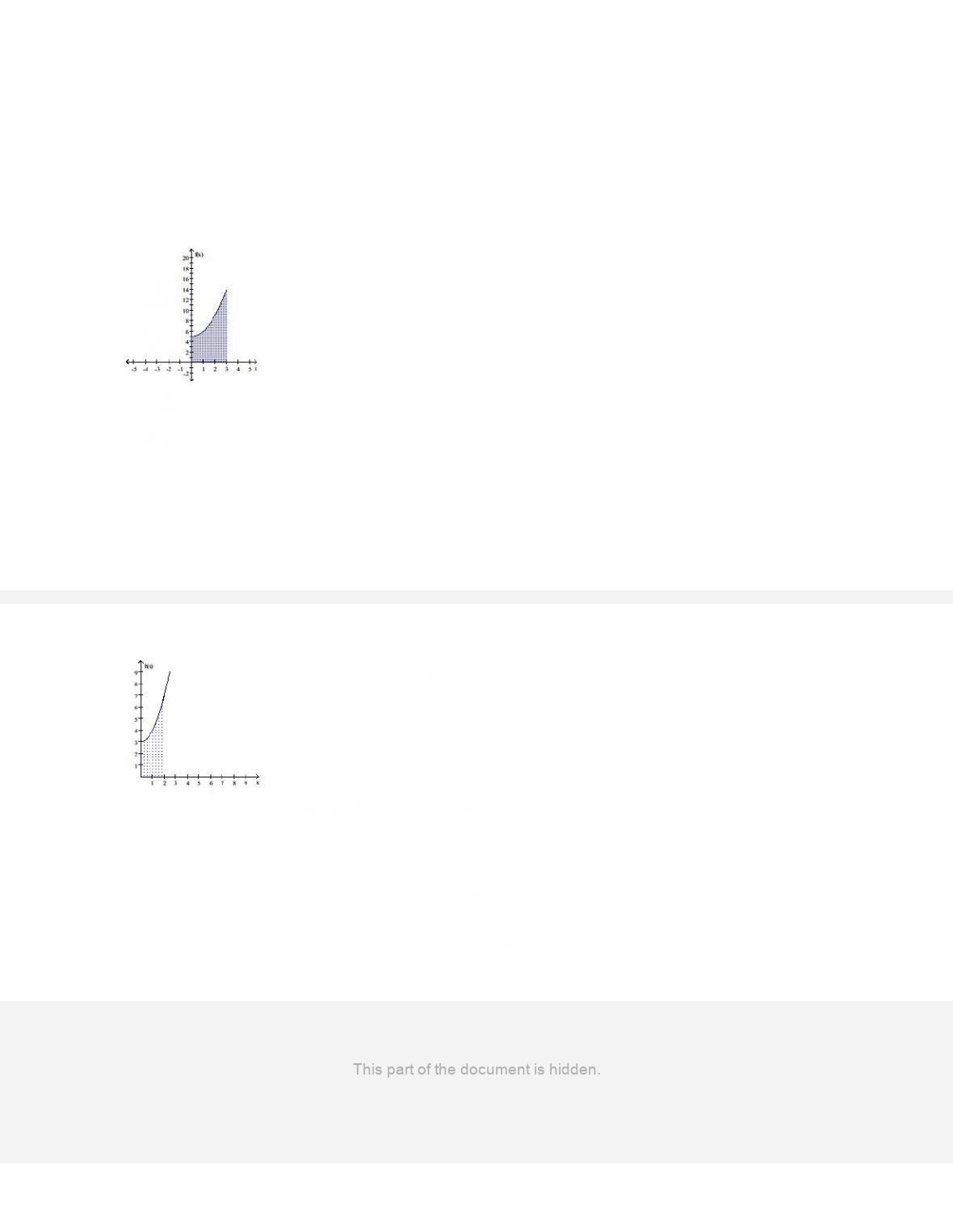
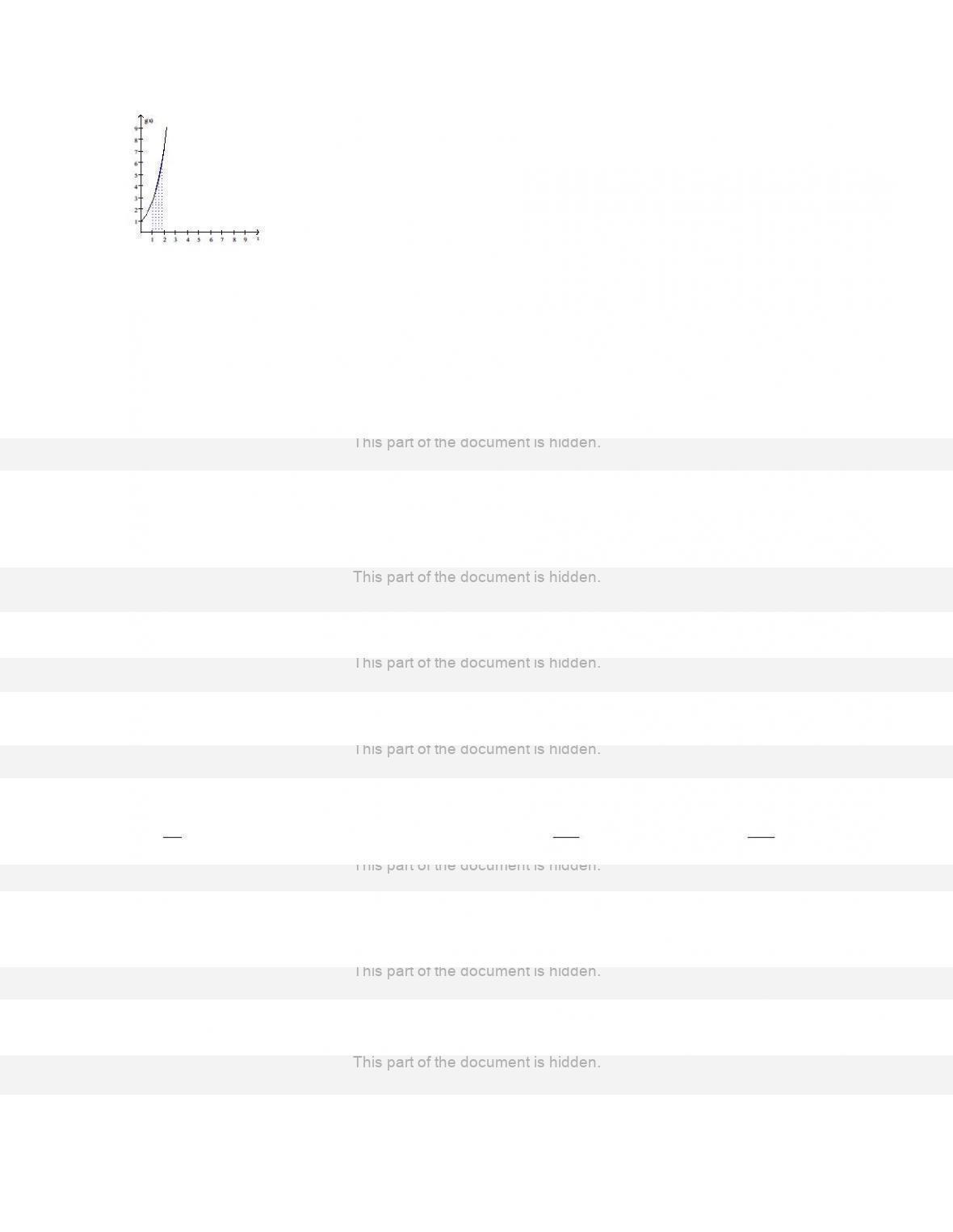
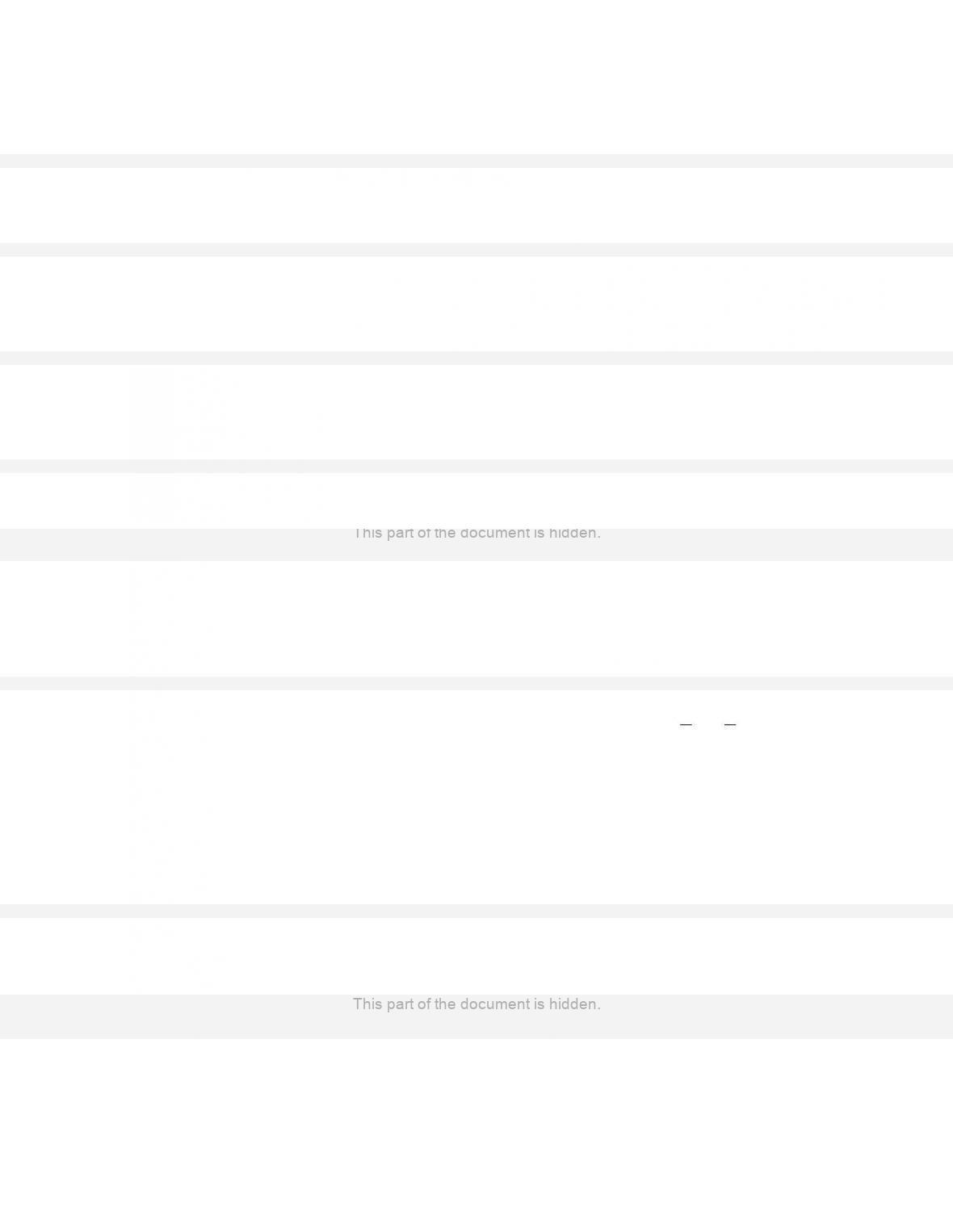
Set up a definite integral that represents the shaded area.
1)
y = f(x)
A)
3
1f(x)dx
B)
3
0f(x)dx
C)
20
5f(x)dx
D)
5
0f(x)dx
Answer:
B
2)
y = h(x)
A)
9
0h(x)dx
B)
7
3h(x)dx
C)
2
0h(x)dx
D)
7
0h(x)dx
Answer:
C
1
3)
y = g(x)
A)
2
1g(x)dx
B)
7
3g(x)dx
C)
9
0g(x)dx
D)
2
0g(x)dx
Answer:
A
Provide an appropriate response.
4)
Find the area between the graph of f(x) =e0.2x + 2 and the x–axis over the interval 2 x 5. (Round answer to
two decimal places, if necessary.)
A)
8.97
B)
3.22
C)
12.13
D)
20.13
Answer:
C
5)
Find the area between the graph of f(x) = 50 +3x2 and the x–axis over the interval [–2, 4].
A)
92
B)
269
C)
–92
D)
372
Answer:
D
6)
Find the area bounded by f(x) = 3x2– 4 and y = 0 for 0 x 1.
A)
2
B)
6
C)
1
D)
3
Answer:
D
7)
Find the area bounded by f(x) =x2– 4x – 5 and y = x + 1.
A)
23
6
B)
54
C)
301
6
D)
343
6
Answer:
D
8)
Find the area between the graph of f(x) = 100 – 4x2 and the x–axis over the interval [–5, 5]. (Round answer to
two decimal places.)
A)
66.67
B)
333.33
C)
666.67
D)
33.33
Answer:
C
9)
Find the area bounded by f(x) =x2– 3x + 7and g(x) = 2x + 7. (Round answer to two decimal places.)
A)
16.13
B)
32.65
C)
55.83
D)
20.83
Answer:
D
2
10)
Find the area between the graph of f(x) =x2– 4x and the x–axis over the interval –3 x 2. (Round answer to
two decimal places.)
A)
5.33
B)
32.33
C)
27
D)
21.67
Answer:
B
11)
Find the area (to three decimal places) bounded by f(x) =x2ex and q(x) = 4 –x2.
A)
7.676
B)
7.0
C)
7.333
D)
7.555
Answer:
A
12)
Find the area between the graph of f(x) =x2 and the x–axis over the interval [1, 3]. (Round answer to two
decimal places.)
A)
8
B)
8.67
C)
– 8.67
D)
10
Answer:
B
13)
Find the area lying above the x–axis and under the parabola y = 4x –x2. (Round answers to three decimal
places.)
A)
11
B)
10.667
C)
32
D)
– 10.667
Answer:
B
14)
Find the area bounded by the parabolas y = 6x –x2 and y =x2– 2x. (Round answer to three decimal places.)
A)
21.667
B)
22
C)
21.333
D)
– 21.333
Answer:
C
Solve the problem.
15)
The Lorenz curve for the income distribution in a small country is given by the function f(x) =x2.8. Find the
Gini index of income concentration. Round the answer to three decimal places.
A)
0.474
B)
0.35714
C)
0.143
D)
0.263
Answer:
A
16)
The Lorenz curve for the income distribution in a certain country is given by f(x) =3
4x2+1
4x.
I) Find the Gini index of income concentration.
II) Use the answer found in I) to determine if the income of this country is more equally distributed, less equally
distributed, or distributed the same as a second country having an index of income concentration of 0.2.
A)
I) 0.25
II) less equally distributed
B)
I) 0.33
II) less equally distributed
C)
I) 0.33
II) more equally distributed
D)
I) 0.25
II) more equally distributed
Answer:
A
17)
The Lorenz curve for the income distribution in a small country is given by the function f(x) =x3.8. Find the
Gini index of income concentration. Round the answer to three decimal places.
A)
0.292
B)
0.684
C)
0.584
D)
–0.584
Answer:
C
3
SHORT ANSWER. Write the word or phrase that best completes each statement or answers the question.
18)
The Lorenz curve for the income distribution in a certain country is given by the function f(x) =x3.2 . Find the
Gini index of income concentration. Round the answer to three decimal places and interpret the results.
Answer:
0.524, income is distributed more unequally than equally
MULTIPLE CHOICE. Choose the one alternative that best completes the statement or answers the question.
Evaluate the definite integral to two decimal places.
19)
5
1e–tdt
A)
147.41
B)
145.69
C)
0.99
D)
0.36
Answer:
D
20)
5
1e3(2 – t) dt
A)
6.70
B)
145.69
C)
27.29
D)
400.71
Answer:
A
21)
18
0e0.06t e0.14(15 – t)dt
A)
23.19
B)
53.64
C)
70.04
D)
77.89
Answer:
D
Solve the problem.
22)
The length of telephone calls (in minutes) in a public telephone booth has the probability density function:
f(t) =1
6e–t/6 t 0
0otherwise
Determine the probability that a call selected at random will last between 2 and 6 minutes. (Round answer to two
decimal places.)
A)
0.35
B)
0.65
C)
0.70
D)
0.95
Answer:
A
23)
The length of telephone calls (in minutes) in a public telephone booth has the probability density function:
f(t) =1
6e–t/6 t 0
0otherwise
Determine the probability that a call selected at random will last longer than seven minutes. (Round answer to two
decimal places.)
A)
0.54
B)
0.39
C)
0.31
D)
0.42
Answer:
C
4
24)
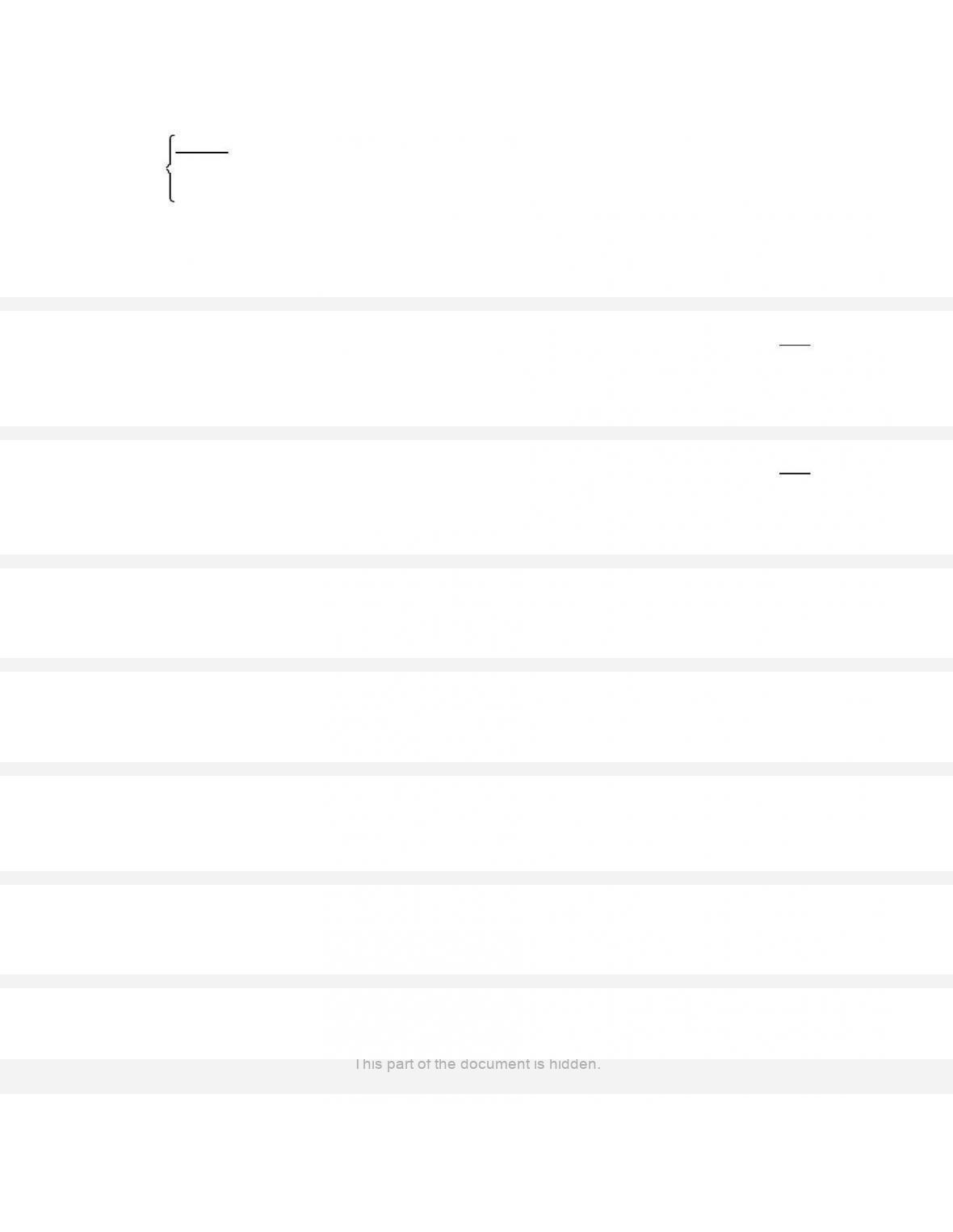
The life expectancy (in years) of a certain type of computer chip is a continuous random variable with
probability density function:
f(x) =4
(x +4)2x 0
0otherwise
Find the probability that a randomly selected chip will last from three to seven years. (Round answer to two decimal
places.)
A)
0.36
B)
0.33
C)
0.57
D)
0.21
Answer:
D
25)
The rate of flow of a continuous income stream (in thousands of dollars per day) is given by f(t) =1
t + 1. Find the
total income produced during the first ten days of operation.
A)
$58,874.14
B)
$239.79
C)
$2843.18
D)
$2397.90
Answer:
D
26)
The rate of flow of a continuous income stream (in thousands of dollars per day) is given by f(t) =1
t + 1. Find the
total income produced during the first thirty days of operation.
A)
$343.40
B)
$34,339.87
C)
$3433.99
D)
$34.34
Answer:
C
27)
Find the total income produced by a continuous income stream in the first nine years if the rate of flow is
f(t) = 3300.
A)
$27,000
B)
$29,700
C)
$9900
D)
$18,000
Answer:
B
28)
Find the total income produced by a continuous income stream in the first nine years if the rate of flow is
f(t) =5000.
A)
$90,000
B)
$4500
C)
$45,000
D)
$22.500
Answer:
C
29)
Find the total income produced by a continuous income stream in the first four years if the rate of flow is
f(t) = 500e0.03t. (Round answer to the nearest dollar.)
A)
$18,792
B)
$564
C)
$2125
D)
$2486
Answer:
C
30)
Find the future value at 8% interest compounded continuously for five years for the continuous income stream
with rate of flow f(t) = 560. (Round answer to the nearest dollar.)
A)
$3443
B)
$2308
C)
$2750
D)
$835
Answer:
A
31)
Find the future value at 9% interest compounded continuously for five years for the continuous income stream
with rate of flow f(t) = 750. (Round answer to the nearest dollar.)
A)
$4736
B)
$750
C)
$47,359
D)
$474
Answer:
A
5
32)
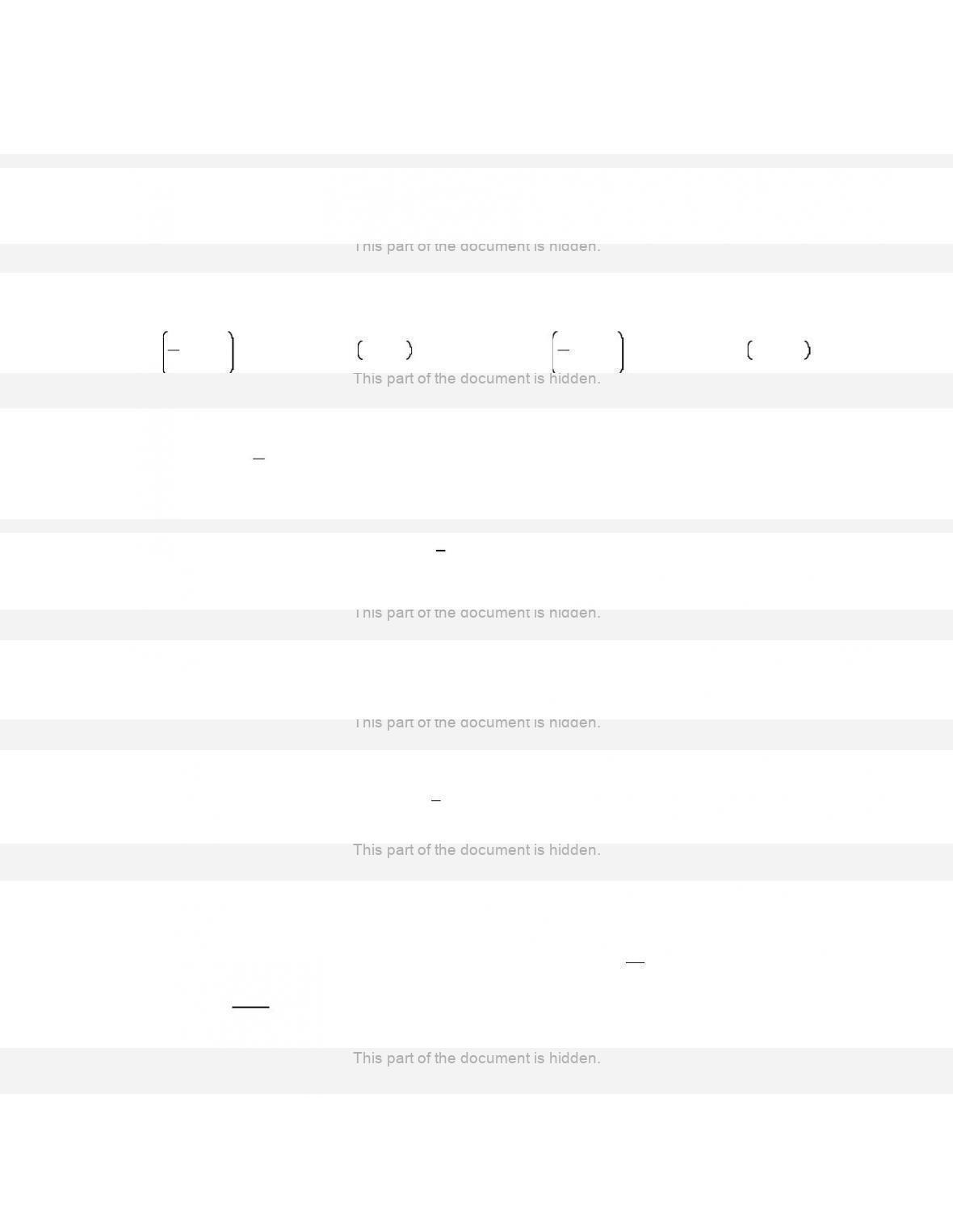
The rate of flow of income from a continuous income stream is given by f(t) = 500e0.045t. Find the future value
of this income stream at 8% compounded continuously for six years. (Round answer to the nearest dollar.)
A)
$2743
B)
$4375
C)
$2706
D)
$14,286
Answer:
A
33)
Find the interest earned at 5% compounded continuously for two years by a continuous income stream with
rate flow of f(t) = 1250. (Round answer to the nearest dollar.)
A)
$129
B)
$22,621
C)
$2379
D)
$2629
Answer:
A
Find the equilibrium point.
34)
D(x) =(x –6)2, S(x) =x2+ 2x + 1
A)
2
7, $32.65
B)
12, $36
C)
5
2, $12.25
D)
18, $144
Answer:
C
Find the consumer’s surplus for the following demand function at the given point.
35)
D(x) =(x – 3)2; x =3
2
A)
$3.25
B)
$7.28
C)
$4.50
D)
$4.33
Answer:
C
36)
Find the consumers’ surplus at a price level of p= $7 for the price–demand equation
p = D(x) = 25 – 0.4x.
A)
$720
B)
$29,250
C)
$405
D)
$4050
Answer:
C
Find the producer’s surplus for the following supply function at the given point.
37)
S(x) =x2+3; x = 1
A)
–$3
B)
$3
C)
$0.67
D)
–$1
Answer:
C
SHORT ANSWER. Write the word or phrase that best completes each statement or answers the question.
38)
Find the producers’ surplus at a price level of p= $30 for the price–supply equation
p = S(x) = 14 + 0.0004x2.
Answer:
$2133
MULTIPLE CHOICE. Choose the one alternative that best completes the statement or answers the question.
Solve the problem.
39)
Find the equilibrium price if the price–demand equation is p = D(x) = 23 –1
20x, and the price–supply equation
is p = S(x) = 8 +1
8,000x2.
A)
$13.00
B)
$20.00
C)
$60.00
D)
$7.00
Answer:
A
6
40)
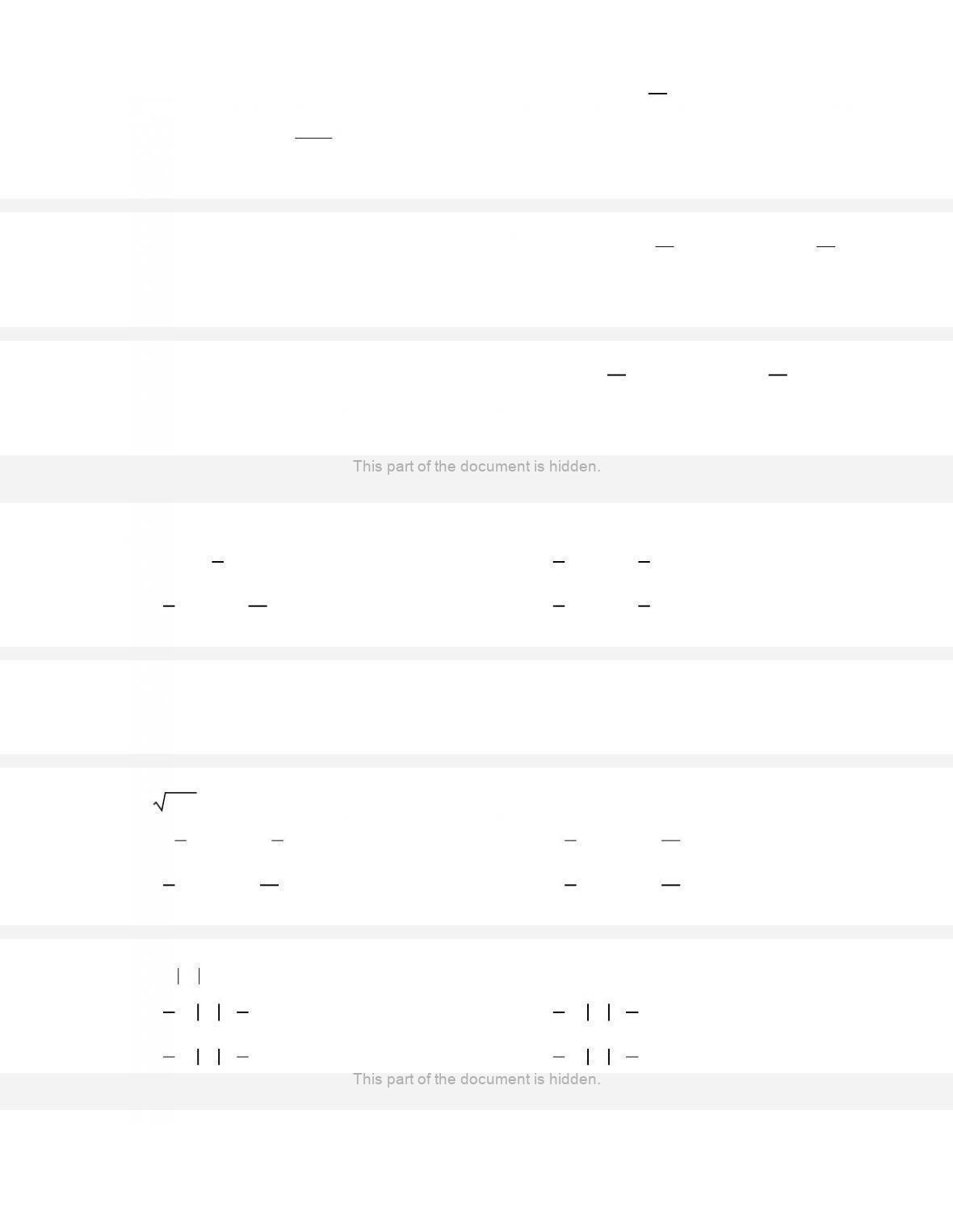
Find the equilibrium quantity if the price–demand equation is p = D(x) = 23 –1
20x, and the price–supply
equation is p = S(x) = 8 +1
8,000x2.
A)
–600
B)
200
C)
–600, 200
D)
13
Answer:
B
41)
Find the equilibrium price and quantity,producers’ surplus for p = D(x) = 71 –1
10x and p = S(x) = 35 +1
20x.
A)
p = 47
q = 240
B)
p = 50
q = 240
C)
p = 47
q = 288
D)
p = 47
q = 180
Answer:
A
42)
Find the consumers’ surplus and producers’ surplus for p = D(x) = 71 –1
10x and p = S(x) = 35 +1
20x.
A)
CS = $15,160
PS = $1440
B)
CS = $2880
PS = $1440
C)
CS = $14,160
PS = $1440
D)
CS = $2880
PS = $1660
Answer:
B
Evaluate using integration by parts.
43)
x2ln 4x dx
A)
ln 4x –1
3 x3+ C
B)
1
3 x3 ln 4x –1
9 x3+ C
C)
1
3x3 ln 4x –1
12 x4+ C
D)
1
3x3 ln 4x +1
9 x3+ C
Answer:
B
44)
7xex dx
A)
7ex– 7xex+ C
B)
7ex– ex+ C
C)
xex– 7ex+ C
D)
7xex– 7ex+ C
Answer:
D
45)
x 2 – x dx
A)
–2
3x(2 – x)3/2 –2
5(2 – x)5/2 + C
B)
–2
3x(2 – x)3/2 +4
15(2 – x)5/2 + C
C)
2
3x(2 – x)3/2 +4
15(2 – x)5/2 + C
D)
–2
3x(2 – x)3/2 –4
15(2 – x)5/2 + C
Answer:
D
46)
x2ln 4x dx
A)
4
3ln34x –1
3x3+ C
B)
1
3ln34x –1
9x3+ C
C)
1
3ln34x –1
3x3+ C
D)
4
3ln34x –1
9x3+ C
Answer:
B
7
47)
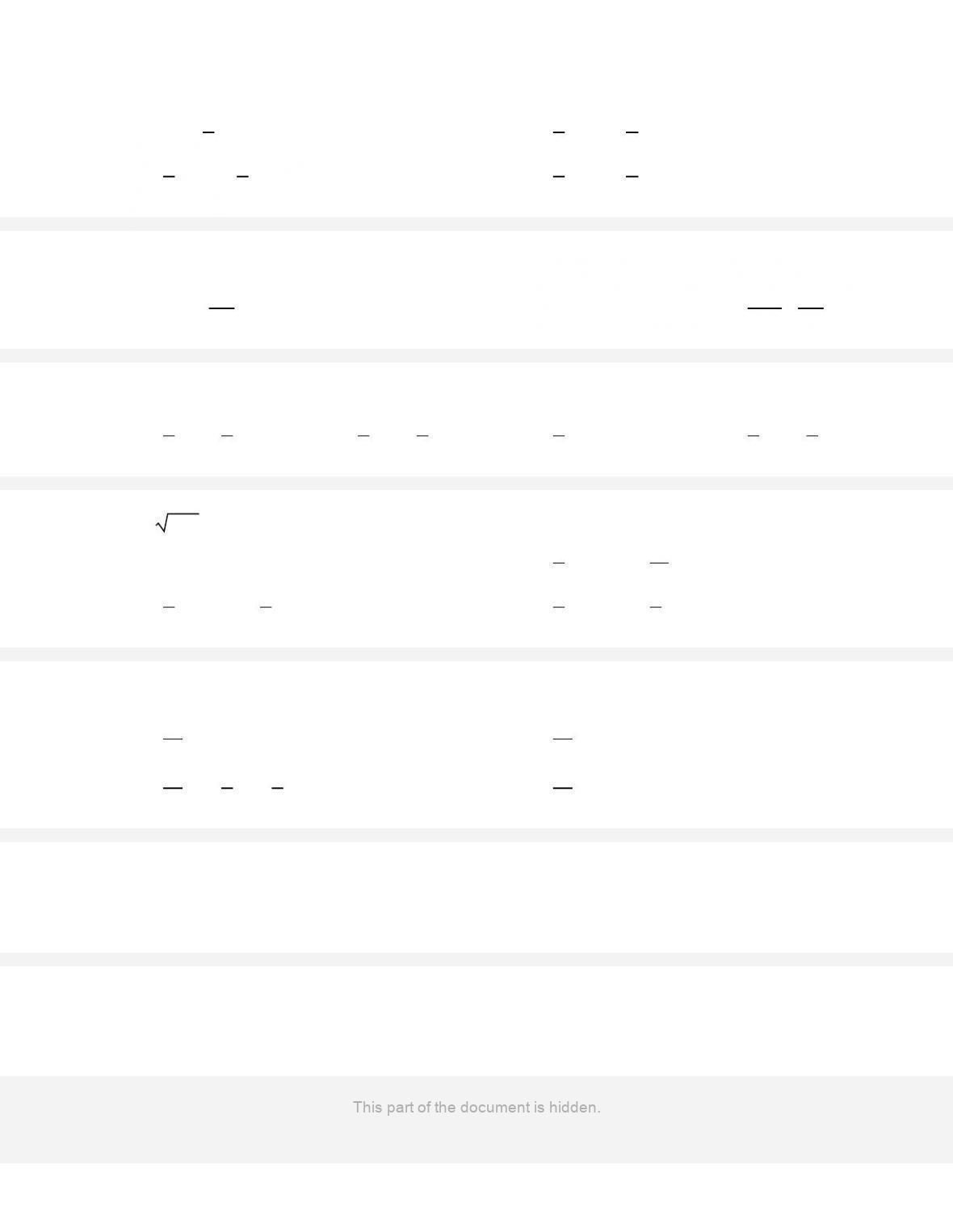
(x + 4) ln x dx
A)
ln x –1
4x2– 4x + C
B)
1
2x2 ln x –1
4x2+ C
C)
1
2x2 ln x –1
4x2+4x + C
D)
1
2x2 ln x –1
4x2– 4x + C
Answer:
D
48)
xe8xdx
A)
xe8x –e8x
8+ C
B)
xe8x + C
C)
e8x(8x – 1) + C
D)
xe8x
8–e8x
64 + C
Answer:
D
49)
xe2xdx
A)
1
2xe2x –1
2e2x + C
B)
1
2xe2x +1
2e2x + C
C)
1
2xe2x +e2x + C
D)
1
2xe2x –1
4e2x + C
Answer:
D
50)
xx + 3 dx
A)
2x(x + 3)3/2 – 4(x + 3)3/2 + C
B)
2
3x(x + 3)3/2 –4
15(x + 3)5/2 + C
C)
2
5x(x + 3)3/2 –4
5(x + 3)3/2 + C
D)
2
5x(x + 3)1/2 –4
5(x + 3)1/2 + C
Answer:
C
51)
x2e2xdx
A)
x2
2e2x – 2xe2x + C
B)
x2
2e2x – 2xe2x + 1 + C
C)
x2
2e2x –x
2e2x +1
4e2x + C
D)
x2
2e2x – xe2x + C
Answer:
C
52)
4
3ln 5x dx
A)
14.2939
B)
2.8588
C)
1.4597
D)
5.0213
Answer:
B
53)
4
26x ln x dx
A)
9.48
B)
40.2
C)
55.2
D)
6.70
Answer:
B
8
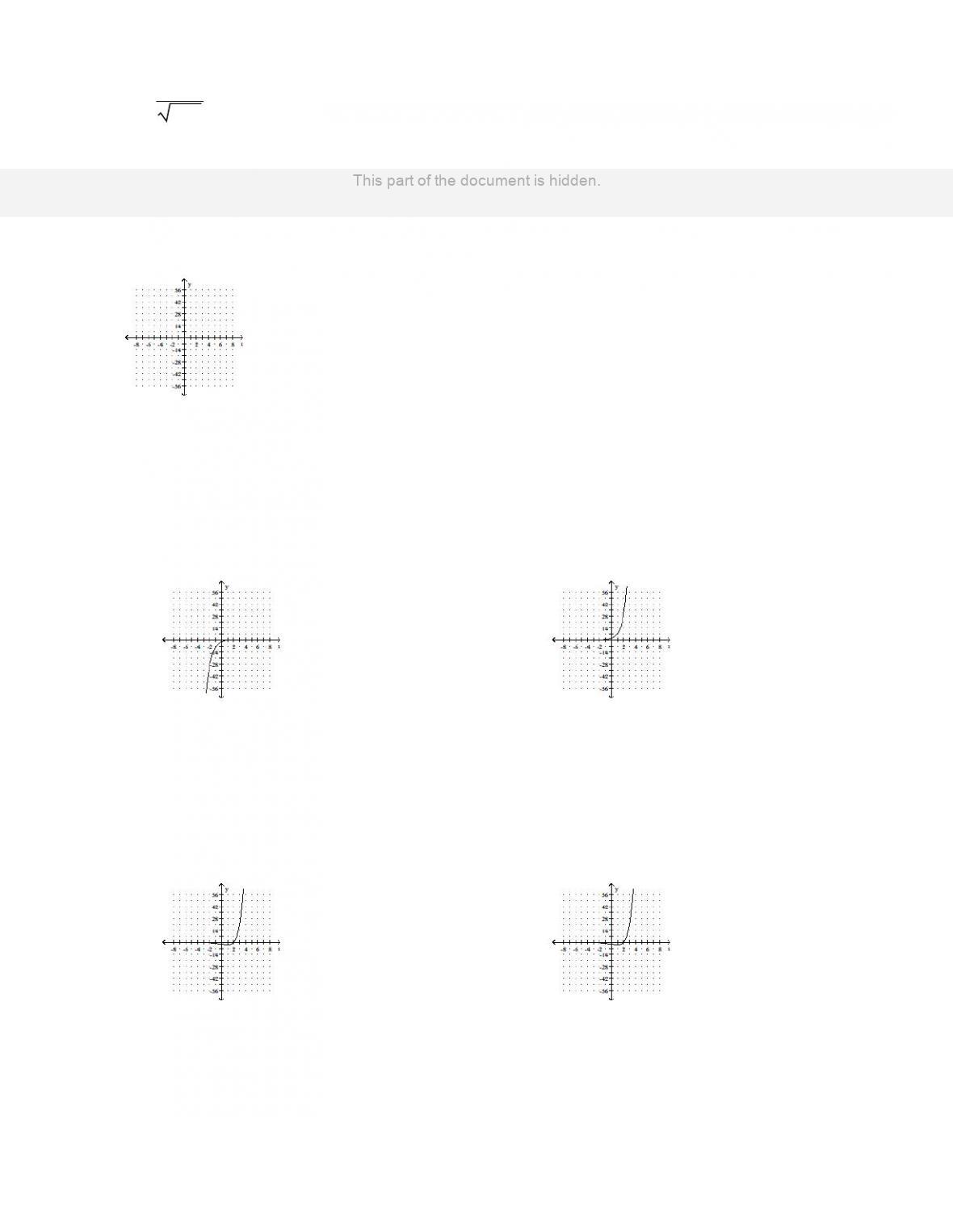
54)
1
0
x
x + 1 dx
A)
0.94
B)
–1.33
C)
0.39
D)
–2.27
Answer:
C
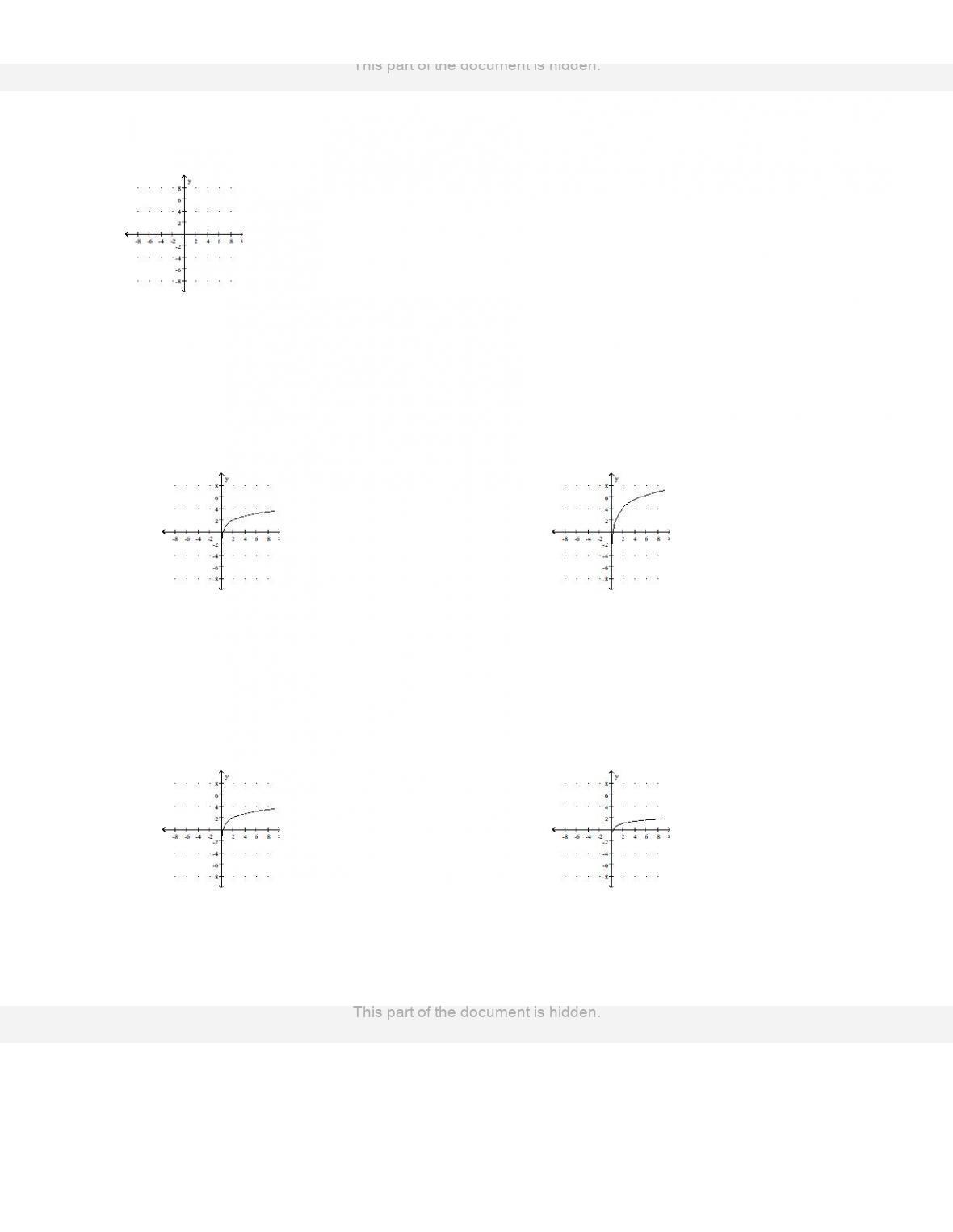
Illustrate the integral graphically and describe what the integral represents in terms of areas.
55)
1
0(x –2)exdx
A)
The integral represents the area between the
graph of y = (x –2)ex and the x axis from
x = 0 to x = 1.
B)
The integral represents the negative of the
area between the graph of y = (x –2)ex and
the x axis from x = 0 to x = 1.
C)
The integral represents the area between
the graph of y = (x –2)ex and the x axis
from x = 0 to x = 1.
D)
The integral represents the negative of the
area between the graph of y = (x –2)ex and
the x axis from x = 0 to x = 1.
9
Answer:
D
56)
4
2ln 4x dx
A)
The integral represents the negative of the
area between the graph of y = ln 4x and
the x axis from x = 2 to x = 4.
B)
The integral represents the area
between the graph of y = ln 4x and
the x axis from x = 2 to x = 4.
C)
The integral represents the area
between the graph of y = ln 4x and
the x axis from x = 2 to x = 4.
D)
The integral represents the area
between the graph of y = ln 4x and
the x axis from x = 2 to x = 4.
Answer:
C
10

Use a graphing calculator to graph the equation over the indicated interval and find the area between the curve and the x
axis over that interval. Find the answer to two decimal places.
57)
y = x – 4 – ln x; 1 x 8
A)
–6.14
B)
10.42
C)
2.14
D)
8.28
Answer:
B
58)
y = 2 – xex, 0 x 3
A)
–35.17
B)
37.27
C)
1.05
D)
–36.22
Answer:
B
Solve the problem.
59)
After a person takes a pill, the drug contained in the pill is assimilated into the bloodstream. The rate of
assimilation minutes after taking the pill is R(t) =te–0.4t. Find the total amount of the drug that is assimilated
into the bloodstream during the first 15 minutes after the pill is taken. Round your answer to 2 decimal places.
A)
6.25
B)
0.38
C)
0.23
D)
6.14
Answer:
D
60)
The rate of water usage for a business, in gallons per day, is given by W(t) =604te–t, where t = the number of
hours since midnight. Approximately how many gallons of water does the business use in the first 5 hours of
the day?
A)
628 gallons
B)
580 gallons
C)
24 gallons
D)
588 gallons
Answer:
B
Use the Trapezoidal Rule to approximate the integral using the indicated value of n.
61)
3
1(2x +1) dx ; n = 4, Write answer as a whole number or reduced fraction.
A)
5
B)
20
C)
10
D)
25
4
Answer:
C
62)
2
06x2 dx ; n = 4, Write answer as a whole number or reduced fraction.
A)
16
B)
33
C)
33
2
D)
45
2
Answer:
C
63)
1
01 +x3dx; n = 4, Round to two decimal places.
A)
1.12
B)
1.42
C)
1.02
D)
1.62
Answer:
A
64)
3
1x2+5 dx ; n = 4, Round to three decimal places.
A)
3.036
B)
3.809
C)
12.142
D)
6.071
Answer:
D
11
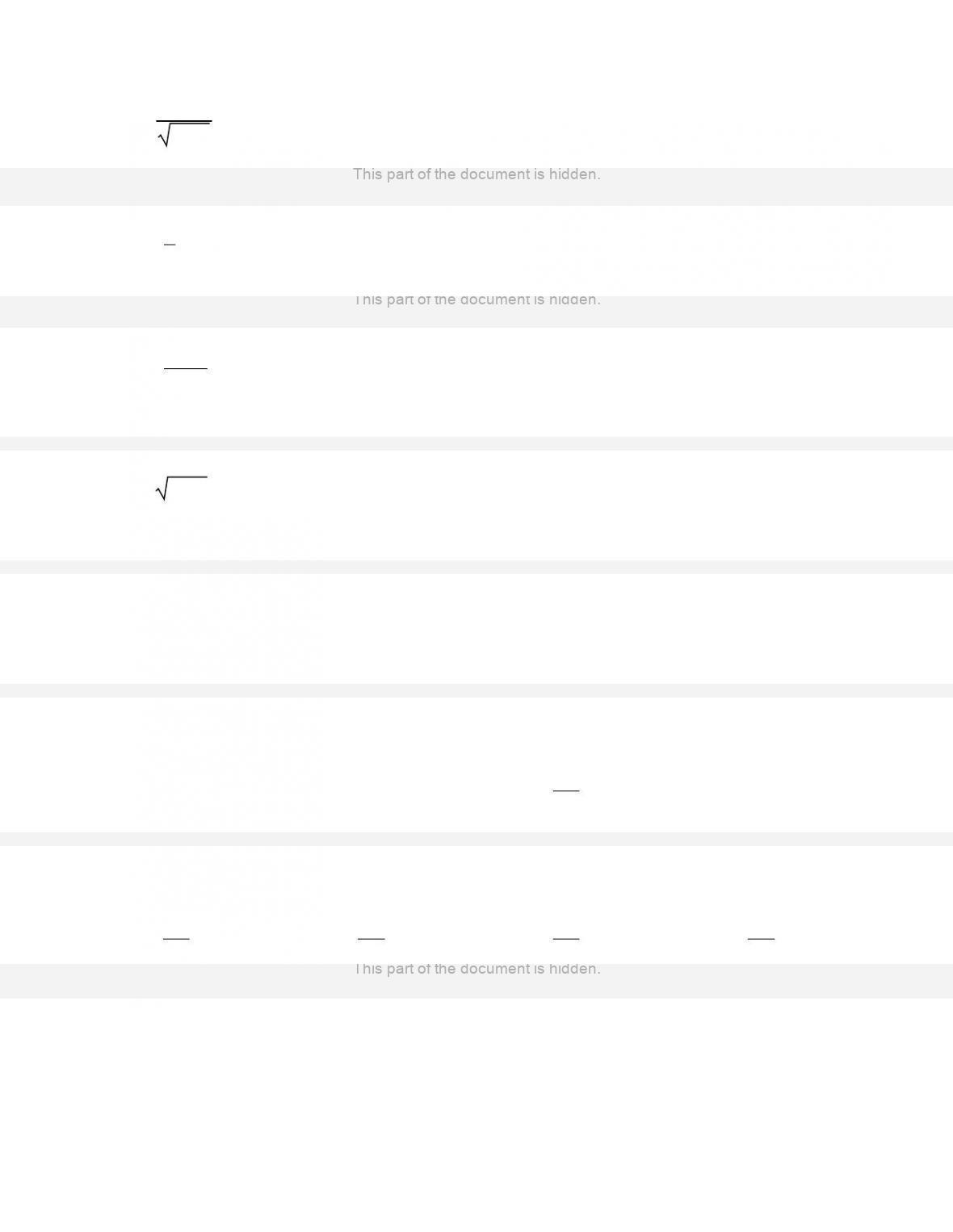
Use Simpson’s rule to approximate the integral using the indicated value of n (so there are 2n subintervals).
65)
6
2
4
x2+ 2 dx ; n = 4, Round to three decimal places.
A)
4.024
B)
4.236
C)
3.616
D)
4.424
Answer:
A
66)
3
1
1
x dx; n = 4, Round to two decimal places.
A)
0.89
B)
1.33
C)
1.24
D)
1.10
Answer:
D
67)
4
0
1
x2+ 1dx; n = 2, Round to two decimal places.
A)
1.46,
B)
1.33
C)
1.20
D)
1.29
Answer:
D
68)
1
01 +x3dx; n = 4, Round to two decimal places.
A)
1.11
B)
1.21
C)
1.13
D)
1.03
Answer:
A
69)
1
0x4dx; n = 4, Round to two decimal places.
A)
0.34
B)
0.30
C)
0.20
D)
0.24
Answer:
C
70)
3
1(10x +3) dx ; n = 4, Write answer as whole number or reduced fraction.
A)
46
B)
92
C)
115
3
D)
23
Answer:
A
71)
2
0(x4+1) dx ; n = 4, Write answer as whole number or reduced fraction.
A)
161
24
B)
101
12
C)
145
16
D)
101
24
Answer:
B
12
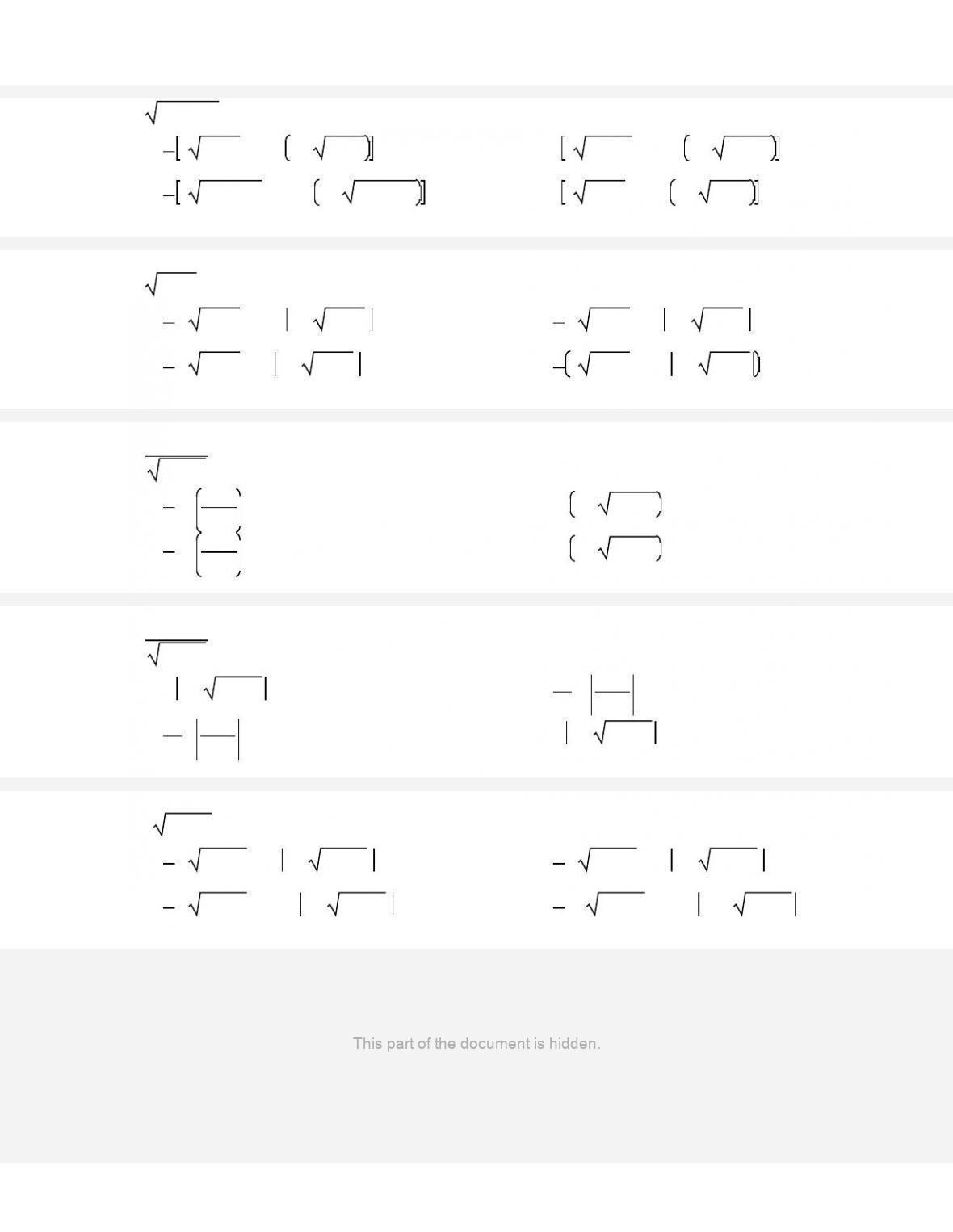
Find the indefinite integral using a table of integration formulas.
72)
16x2+96 dx
A)
1
2x x2+6+6 ln x +x2+6+ C
B)
2 x x2+96 +96 ln x +x2+96 + C
C)
1
2x16x2+96 +96 ln x +16x2+96 + C
D)
2 x x2+6+6 ln x +x2+6+ C
Answer:
D
73)
x2+ 9dx
A)
1
4(x x2+ 9 + 9 ln x +x2+ 9 ) + C
B)
1
4(x x2+ 9 + ln x +x2+ 9 ) + C
C)
1
2(x x2+ 9 + ln x +x2+ 9 ) + C
D)
1
2x x2+ 9 + 9 ln x +x2+ 9 + C
Answer:
D
74)
1
x2–16 dx
A)
1
8 ln x –4
x +4+ C
B)
ln x +x2–16 + C
C)
1
8 ln 4+ x
4– x + C
D)
ln x +x2+16 + C
Answer:
B
75)
1
x2– 49dx
A)
ln x +x2+ 49 + C
B)
1
14 ln 7 + x
7 – x + C
C)
1
14ln x – 7
x + 7 + C
D)
ln x +x2– 49 + C
Answer:
D
76)
x x4+ 81 dx
A)
1
4(x x4+ 81 + ln x +x4+ 81 ) + C
B)
1
2(x x4+ 81 + ln x +x4+ 81 ) + C
C)
1
4(x x4+ 81 + 81 ln x +x4+ 81 ) + C
D)
1
4(x2x4+ 81 + 81 ln x2+x4+ 81 ) + C
Answer:
D
13
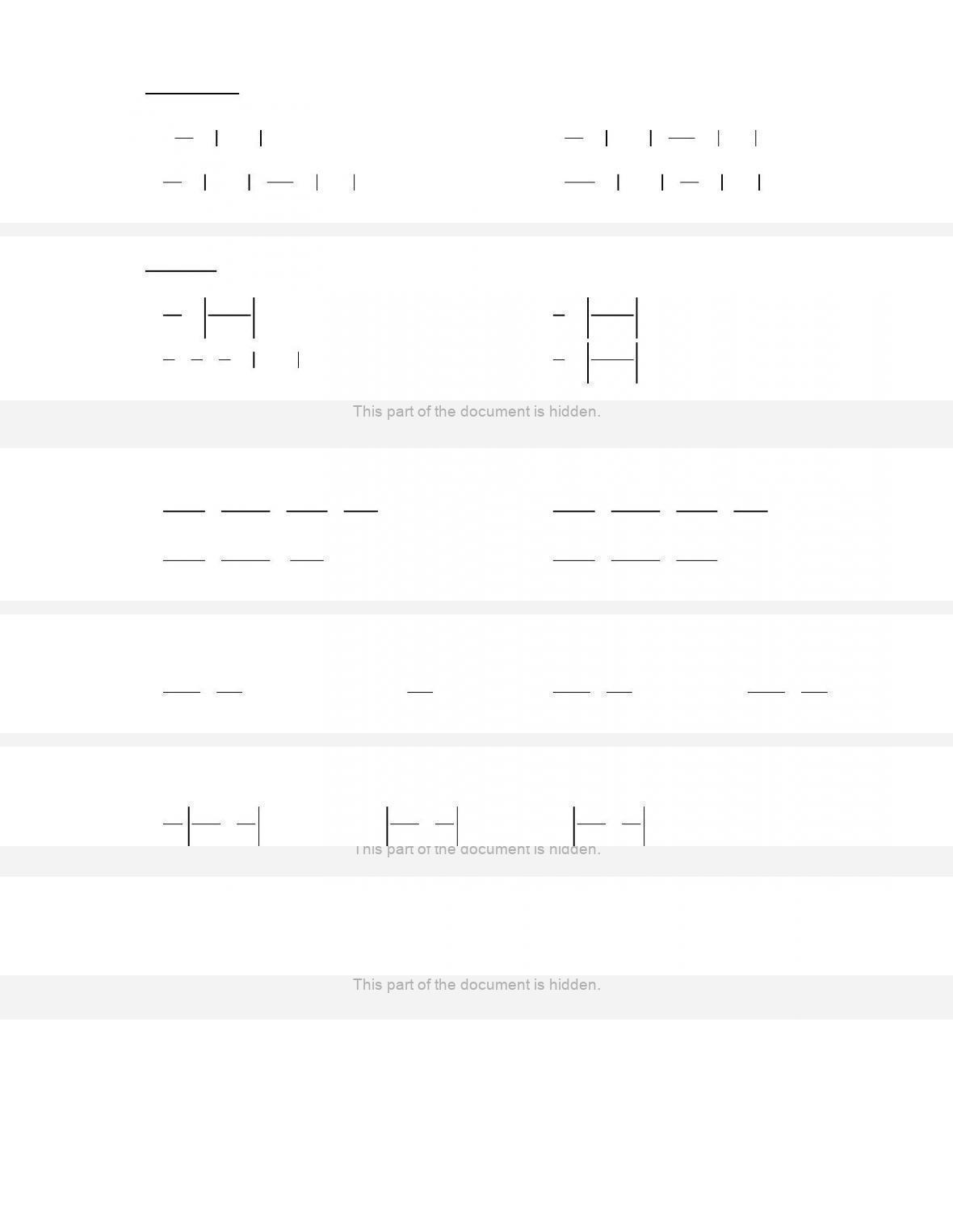
77)
x
(4 + 5x)(5 + x) dx
A)
–4
21 ln 4 + 5x + C
B)
–4
21 ln 4 + 5x +5
105 ln 5 + x + C
C)
4
21 ln 4 + 5x +5
105 ln 5 + x + C
D)
–4
105 ln 4 + 5x +5
21 ln 5 + x + C
Answer:
D
78)
2
5x (7x + 7) dx
A)
2
35 ln x
7x + 7 + C
B)
1
7 ln x
7x + 7 + C
C)
1
7+x
7–1
7 ln 7x + 7 + C
D)
2
7 ln x
7x + 7 + C
Answer:
A
Provide an appropriate response.
79)
Use an integral table to find x3e2x dx.
A)
x3e2x
2+3x2e2x
4–3xe2x
4–3e2x
8+ C
B)
x3e2x
2–3x2e2x
4–3xe2x
4–3e2x
8+ C
C)
x3e2x
2–3x2e2x
4–3e2x
8+ C
D)
x3e2x
2–3x2e2x
4–3xe2x
4+ C
Answer:
B
80)
Use the integral table to find x e3x dx .
A)
x e3x
3+e3x
9+ C
B)
x e3x –e3x
3+ C
C)
x e3x
3–e3x
9+ C
D)
x e3x
3–e3x
3+ C
Answer:
C
81)
Use an integral table to find 9x6 ln x dx.
A)
x7
9ln x
7–1
49 + C
B)
9x7ln x
7–1
49 + C
C)
x7ln x
7–1
49 + C
D)
9x ln x – 9x + C
Answer:
B
Solve the problem.
82)
The rate of growth of a microbe population is given by m'(x) = 30 x e2x, where x is time in days. What is the net
growth between day 3 and day 7?
A)
117,238,789
B)
222,613,544
C)
111,306,789
D)
222,613,533
Answer:
A
14