61
Copyright © 2018 Pearson Education, Inc.
Explanation:
Calculation of Retained Earnings balance:
Beginning balance, Retained Earnings $3,800
Plus: Net Income* 23,000
Dividends (1,000)
Ending balance, Retained Earnings $25,800
Calculation of Net Income*
Sales Revenue $86,900
Cost of Goods Sold 23,000
Salaries Expense 18,000
Rent Expense 12,000
Selling Expense 8,500
Delivery Expense 1,800
Supplies Expense 600
Net Income $23,000
Diff: 2
LO: 5-4
AACSB: Application of knowledge
AICPA Functional: Measurement
PE Question Type: Application
H2: Closing the Accounts of a Merchandiser
21) A merchandiser reports sales revenue of $25,000 and sales discounts forfeited of $1,500. The
merchandiser uses a perpetual inventory system. The first entry in the closing process would include
________.
A) a credit to Income Summary for $26,500
B) a credit to Income Summary for $25,000
C) a debit to Income Summary for $26,500
D) a debit to Income Summary for $25,000
22) A merchandiser has sales discounts forfeited of $100, cost of goods sold of $22,000, and other expenses
of $1,100. The merchandiser uses a perpetual inventory system. The second entry in the closing process
would include ________.
A) a debit to Income Summary for $23,100
B) a credit to Income Summary for $23,200
C) a debit to Income Summary for $23,200
D) a credit to Income Summary for $1,200
23) A merchandiser uses a perpetual inventory system. The third step in the process of closing the
accounts of a merchandiser is to ________.
A) make the revenue accounts equal to zero via the Income Summary account
B) make the Income Summary account equal to zero via the Dividends account
C) make the expense accounts equal to zero via the Income Summary account
D) make the Income Summary account equal to zero via the Retained Earnings account
24) A merchandiser uses a perpetual inventory system. The beginning Retained Earnings balance of the
merchandiser was $95,000. During the year, Sales Revenue amounted to $75,000, Cost of Goods Sold was
$30,000, and all other expenses totaled $12,000. The company declared and paid $19,000 as dividends. The
last step in the closing process would include ________.
A) a debit to Income Summary for $33,000
B) a credit to Income Summary for $19,000
C) a debit to the Retained Earnings account for $33,000
D) a debit to the Retained Earnings account for $19,000
25) A merchandiser uses a perpetual inventory system. The beginning Retained Earnings balance of the
merchandiser was $110,000. During the year, Sales Revenue amounted to $90,000, Cost of Goods Sold
was $40,000, and all other expenses totaled $12,000. The company declared and paid $27,000 as
dividends. The ending balance of Retained Earnings would be ________.
A) $148,000
B) $121,000
C) $175,000
D) $110,000
26) An adjusted trial balance for a merchandiser is given below.
Debit
Credit
Cash
$12,600
Accounts Receivable
2,400
Prepaid Rent
800
Merchandise Inventory
30,000
Accounts Payable
$4,200
Salaries Payable
1,000
Notes Payable
800
Common Stock
10,000
Retained Earnings
3,800
Dividends
1,000
Sales Revenue
96,000
Sales Discounts Forfeited
400
Cost of Goods Sold
23,000
Insurance Expense
2,400
Salaries Expense
21,000
Rent Expense
14,000
Selling Expense
8,500
Supplies Expense
500
________
Total
$116,200
$116,200
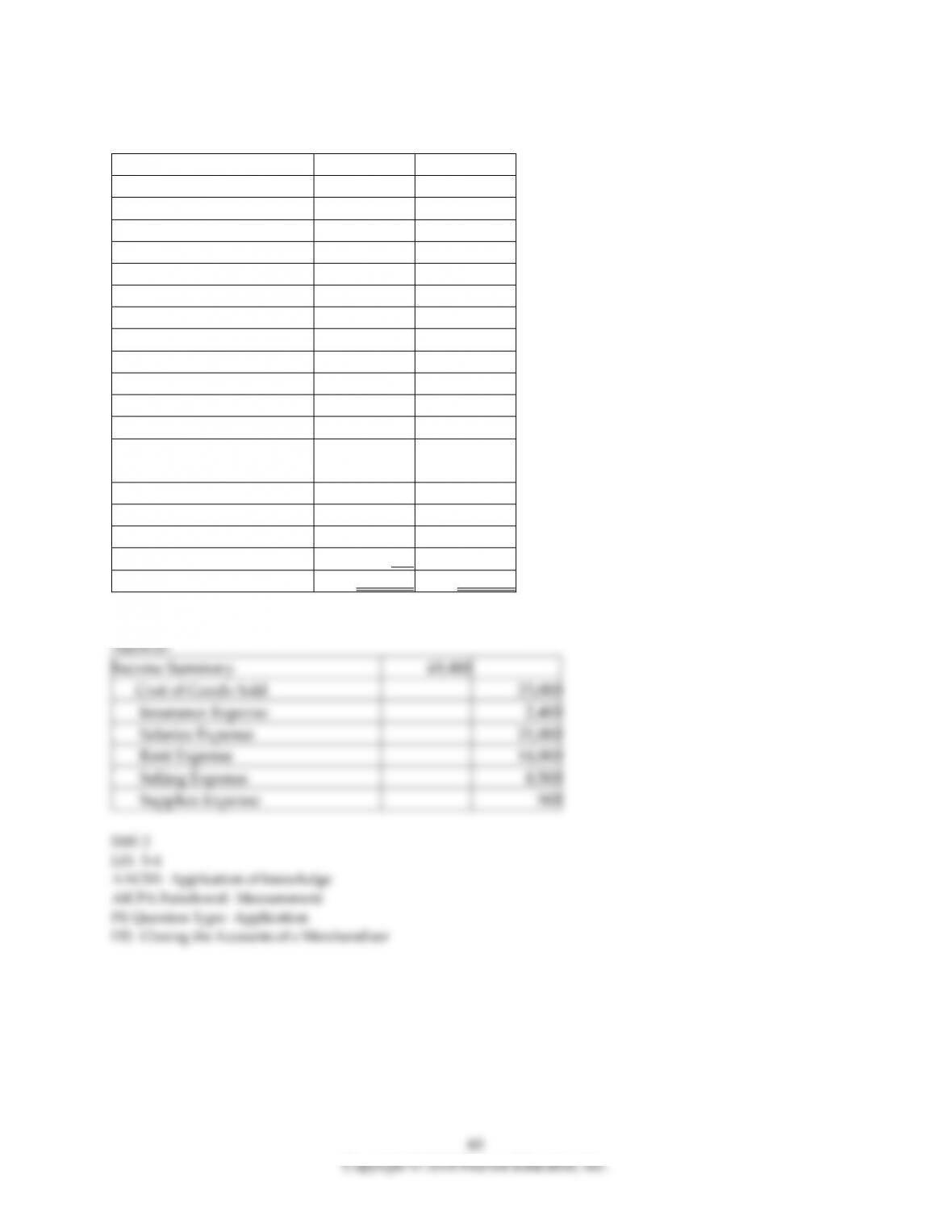
Prepare the journal entry to close the revenue and other income accounts. Omit explanation.
27) An adjusted trial balance for a merchandiser is given below.
Debit
Credit
Cash
$12,600
Accounts Receivable
2,400
Prepaid Rent
800
Merchandise Inventory
30,000
Accounts Payable
$4,200
Salaries Payable
1,000
Notes Payable
800
Common Stock
10,000
Retained Earnings
3,800
Dividends
1,000
Sales Revenue
96,000
Sales Discounts Forfeited
400
Cost of Goods Sold
23,000
Insurance Expense
2,400
Salaries Expense
21,000
Rent Expense
14,000
Selling Expense
8,500
Supplies Expense
500
________
Total
$116,200
$116,200
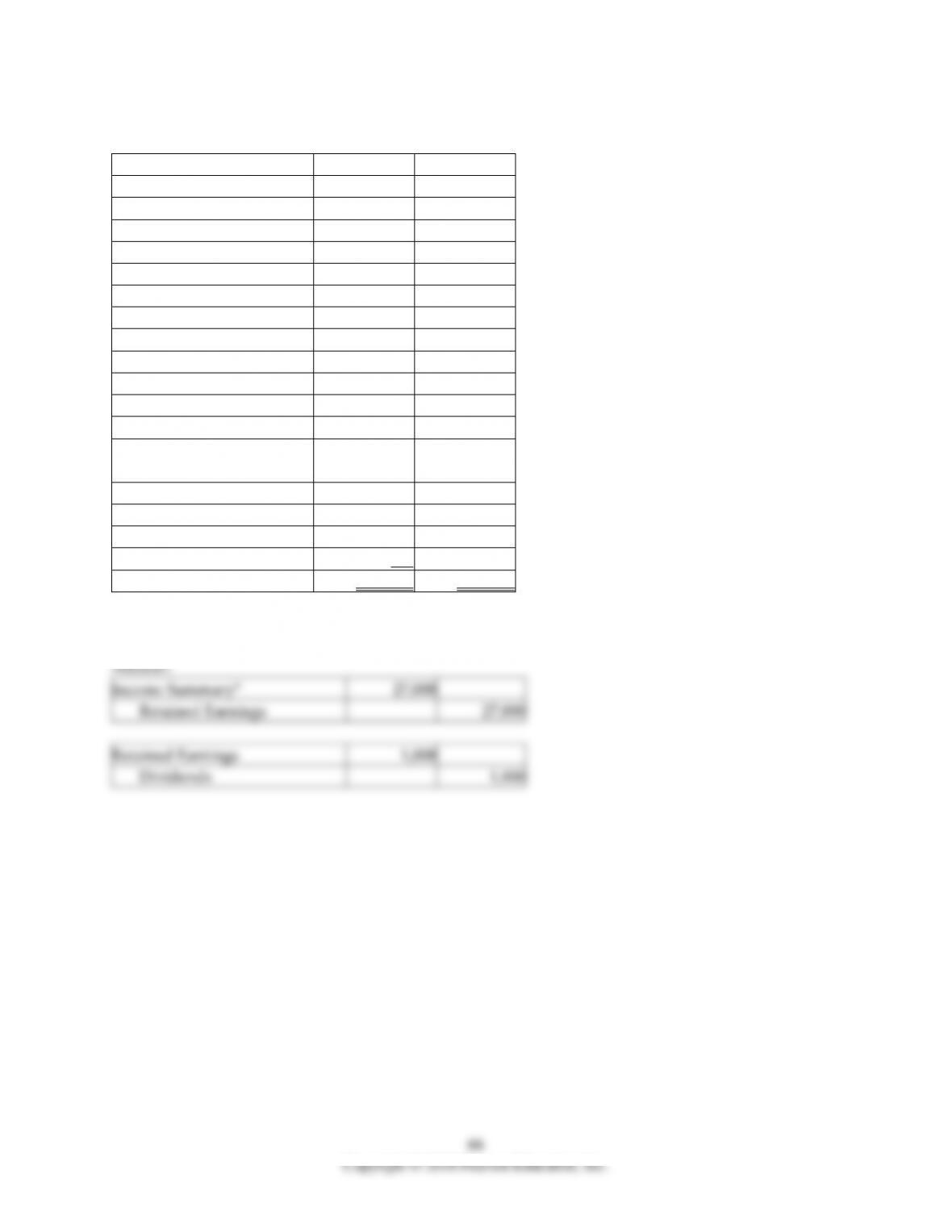
Prepare the journal entry to close the expense accounts. Omit explanation.
Income Summary
69,400
Cost of Goods Sold
23,000
Insurance Expense
2,400
Salaries Expense
21,000
Rent Expense
14,000
Selling Expense
8,500
Supplies Expense
500
Diff: 2
LO: 5-4
AACSB: Application of knowledge
AICPA Functional: Measurement
PE Question Type: Application
H2: Closing the Accounts of a Merchandiser
28) An adjusted trial balance for a merchandiser is given below.
Debit
Credit
Cash
$12,600
Accounts Receivable
2,400
Prepaid Rent
800
Merchandise Inventory
30,000
Accounts Payable
$4,200
Salaries Payable
1,000
Notes Payable
800
Common Stock
10,000
Retained Earnings
3,800
Dividends
1,000
Sales Revenue
96,000
Sales Discounts Forfeited
400
Cost of Goods Sold
23,000
Insurance Expense
2,400
Salaries Expense
21,000
Rent Expense
14,000
Selling Expense
8,500
Supplies Expense
500
________
Total
$116,200
$116,200
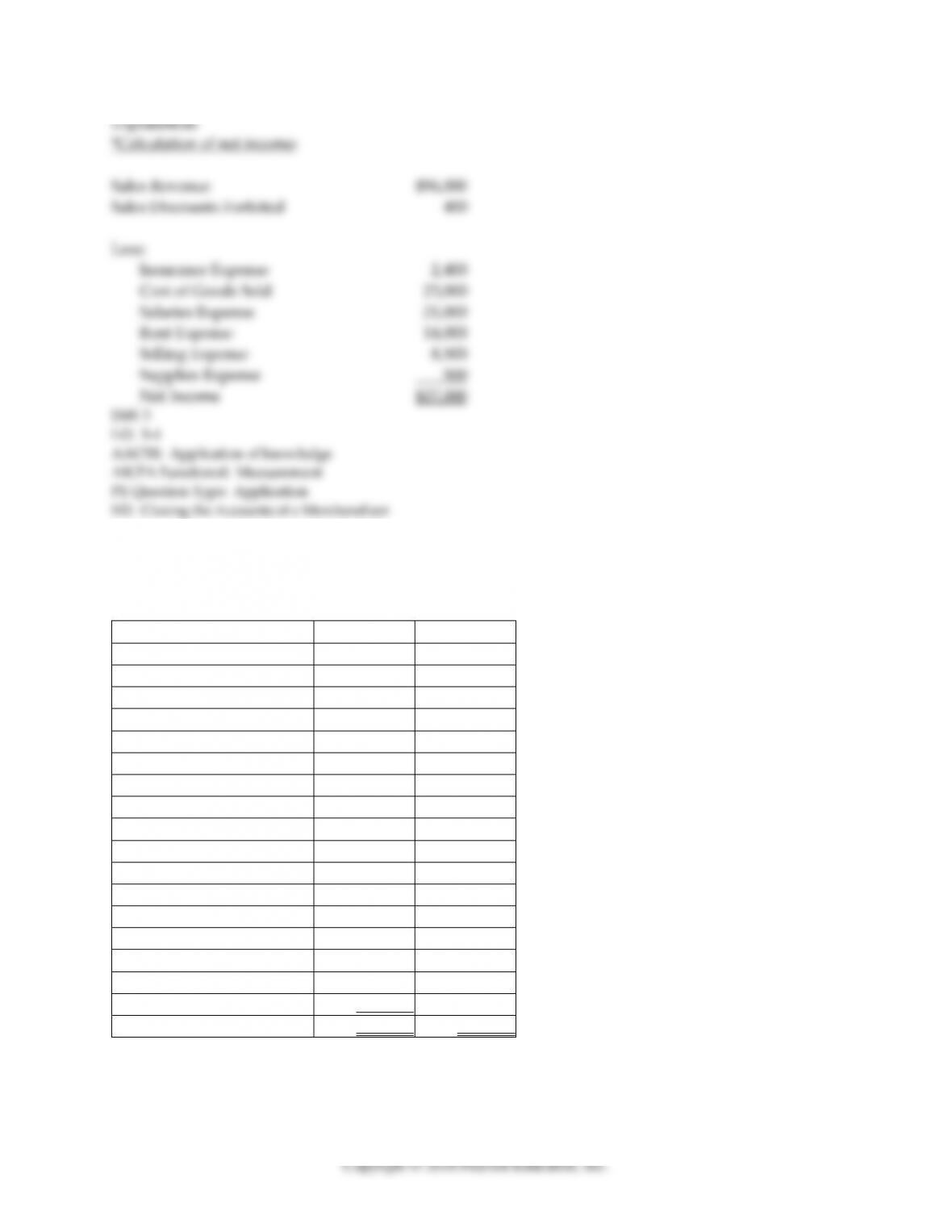
Provide journal entries to close the Income Summary account and the Dividends account. Omit
explanations.
Income Summary*
27,000
Retained Earnings
27,000
Retained Earnings
1,000
Dividends
1,000
67
Copyright © 2018 Pearson Education, Inc.
Explanation:
*Calculation of net income:
Sales Revenue $96,000
Sales Discounts Forfeited 400
Less:
Insurance Expense 2,400
Cost of Goods Sold 23,000
Salaries Expense 21,000
Rent Expense 14,000
Selling Expense 8,500
Supplies Expense 500
Net Income $27,000
Diff: 3
LO: 5-4
AACSB: Application of knowledge
AICPA Functional: Measurement
PE Question Type: Application
H2: Closing the Accounts of a Merchandiser
29) The trial balance for a merchandiser, before the journal entries below, is as follows. A physical count
of inventory at the end of the accounting year reveals $28,000 of inventory on hand. (Assume a perpetual
inventory system.)
Debit
Credit
Cash
$12,600
Accounts Receivable
2,400
Prepaid Rent
800
Merchandise Inventory
30,000
Accounts Payable
$4,200
Salaries Payable
1,000
Notes Payable
800
Common Stock
10,000
Retained Earnings
3,800
Dividends
1,000
Sales Revenue
96,000
Cost of Goods Sold
23,000
Delivery Expense
2,000
Salaries Expense
21,000
Rent Expense
14,000
Selling Expense
8,500
Supplies Expense
500
________
Total
$115,800
$115,800
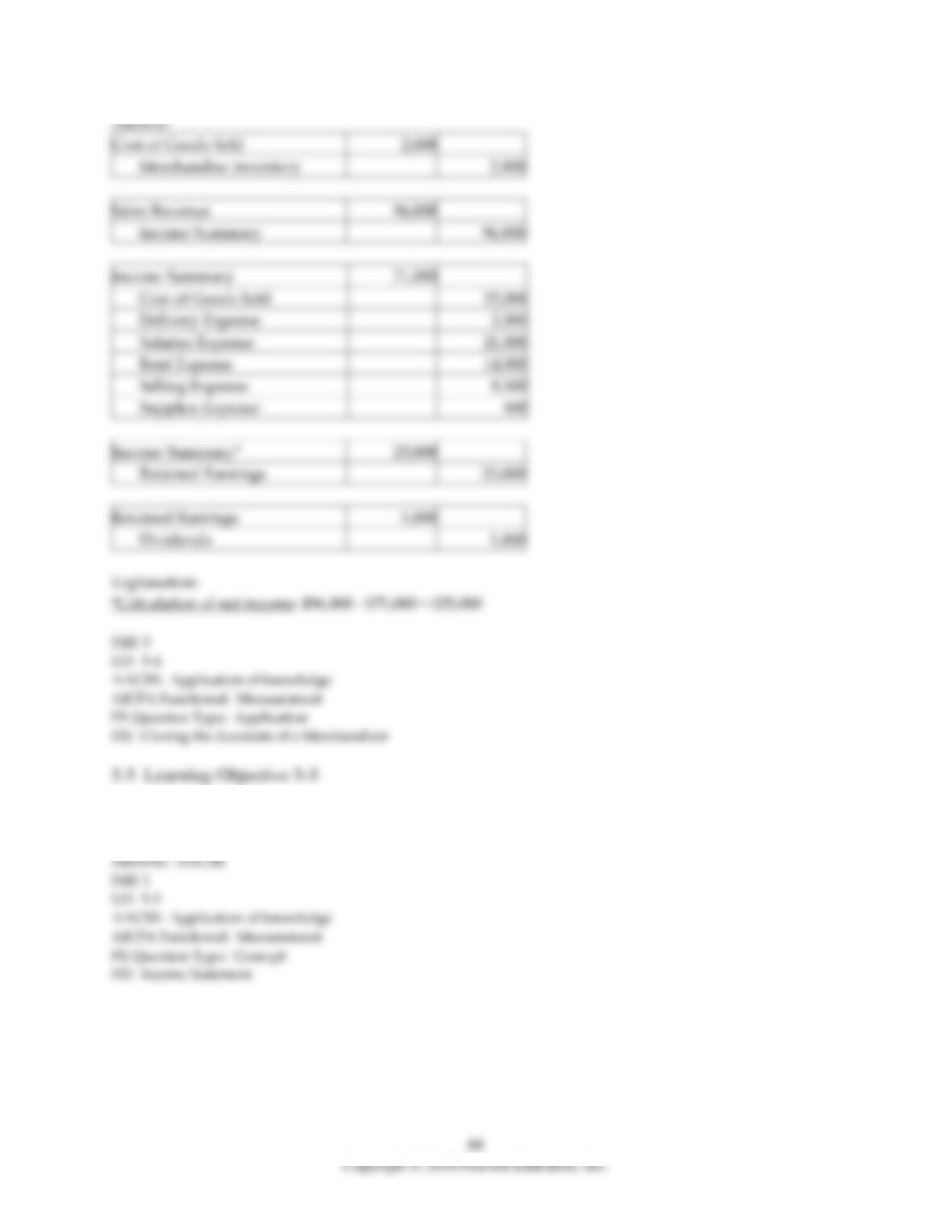
Prepare the journal entry to record the inventory shrinkage and prepare all closing entries. Omit
explanations.
68
Copyright © 2018 Pearson Education, Inc.
Answer:
Cost of Goods Sold
2,000
Merchandise Inventory
2,000
Sales Revenue
96,000
Income Summary
96,000
Income Summary
71,000
Cost of Goods Sold
25,000
Delivery Expense
2,000
Salaries Expense
21,000
Rent Expense
14,000
Selling Expense
8,500
Supplies Expense
500
Income Summary*
25,000
Retained Earnings
25,000
Retained Earnings
1,000
Dividends
1,000
Explanation:
*Calculation of net income: $96,000 – $71,000 = $25,000
Diff: 3
LO: 5-4
AACSB: Application of knowledge
AICPA Functional: Measurement
PE Question Type: Application
H2: Closing the Accounts of a Merchandiser
5.5 Learning Objective 5-5
1) Cost of Goods Sold appears on a multi-step income statement but not on a single-step income
statement.
2) The net income calculated using either the single-step or multi-step income statement formats is
always the same.
3) Operating income equals gross profit minus operating expenses.
4) Under IFRS, Cost of Goods Sold represents a functional expense which explains the purpose of the cost
incurred.
5) A single-step income statement shows subtotals for gross profit and operating income.
6) In a multi-step income statement, interest revenue and interest expense are included in operating
income.
7) On a multi-step income statement, merchandisers report operating expenses in two categories—selling
expenses and administrative expenses.
8) Sales Revenue is recorded net of sales discounts, so it is labeled Net Sales Revenue on the income
statement.
9) On a multi-step income statement, Sales Discounts Forfeited is reported as part of operating income.
10) Net sales revenue is sales revenue less sales discounts and estimated sales returns and allowances.