11
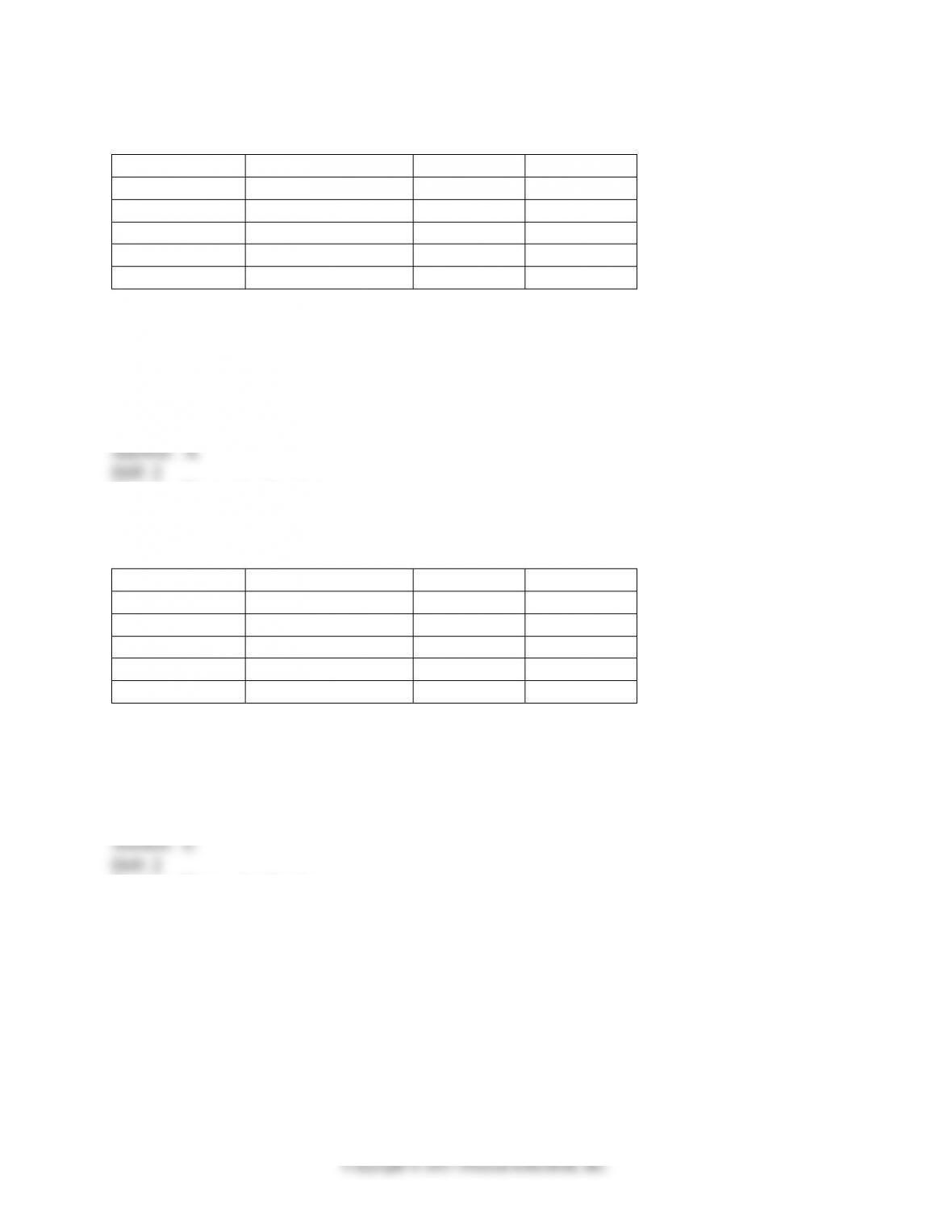
18) Lionworks Enterprises had the following inventory data:
Date
Quantity
Unit Cost
July 1
Beginning inventory
5
$53
July 4
Purchase
10
$52
July 7
Sale
12
July 11
Purchase
9
$57
July 14
Sale
8
Assuming FIFO, what is the cost of goods sold for the July 14 sale? (Round any intermediary
calculations to the nearest cent and your final answer to the nearest dollar.)
A) $441
B) $416
C) $444
D) $456
Question Type: Application
19) Lionworks Enterprises had the following inventory data:
Date
Quantity
Unit Cost
July 1
Beginning inventory
5
$53
July 4
Purchase
10
$52
July 7
Sale
12
July 11
Purchase
9
$59
July 14
Sale
8
Assuming LIFO, what is the cost of goods sold for the July 14 sale?
A) $451
B) $416
C) $472
D) $531
Question Type: Application
12
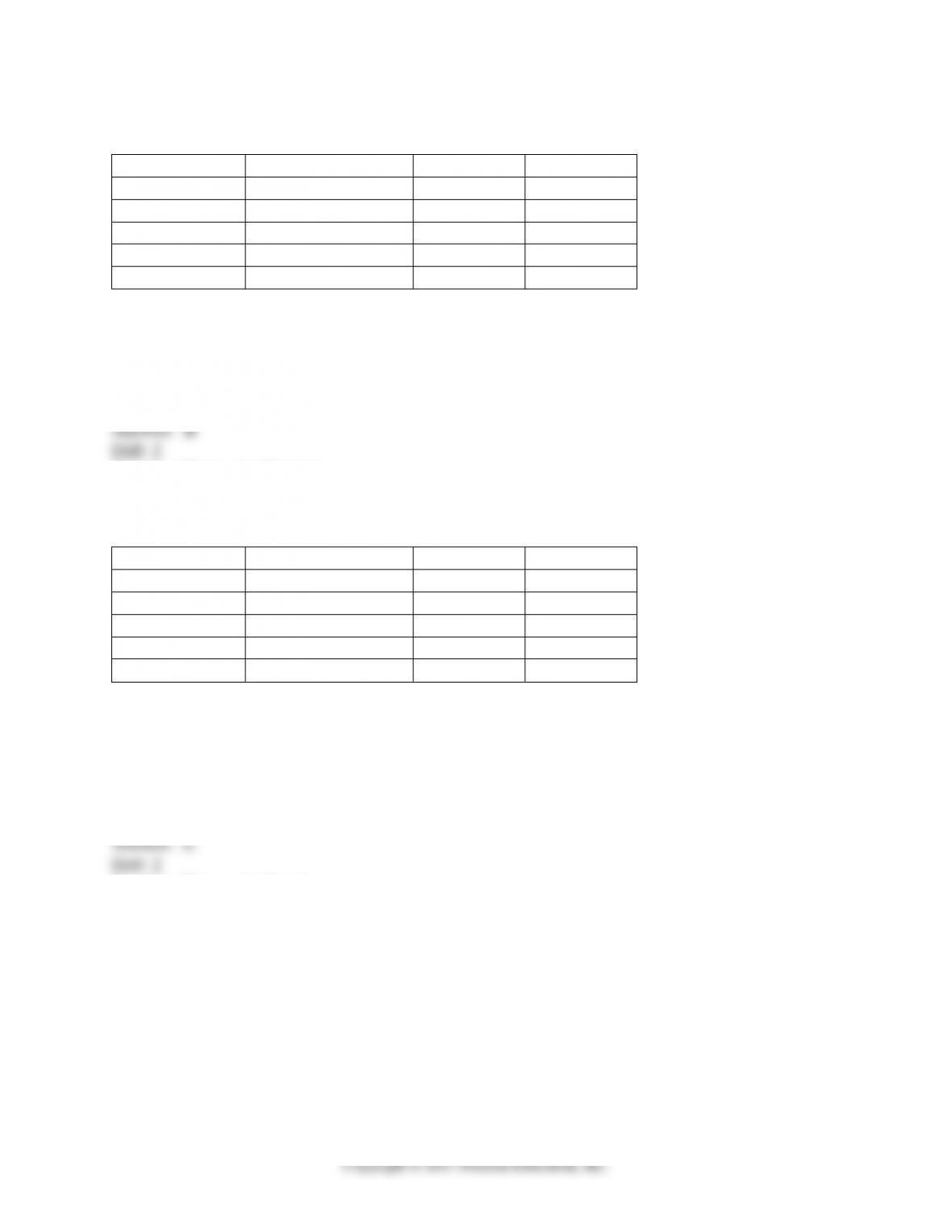
20) Lionworks Enterprises had the following inventory data:
Date
Quantity
Unit Cost
July 1
Beginning inventory
5
$55
July 4
Purchase
10
$52
July 7
Sale
12
July 11
Purchase
9
$57
July 14
Sale
8
Assuming average cost, what is the cost of goods sold for the July 14 sale?
A) $340
B) $448
C) $436
D) $456
Question Type: Application
21) Lionworks Enterprises had the following inventory data:
Date
Quantity
Unit Cost
July 1
Beginning inventory
5
$51
July 4
Purchase
10
$52
July 7
Sale
12
July 11
Purchase
9
$57
July 14
Sale
8
Assuming FIFO, what is the ending inventory after the July 14 sale? (Round any intermediary
calculations to the nearest cent and your final answer to the nearest dollar.)
A) $204
B) $65
C) $228
D) $206
Question Type: Application
13
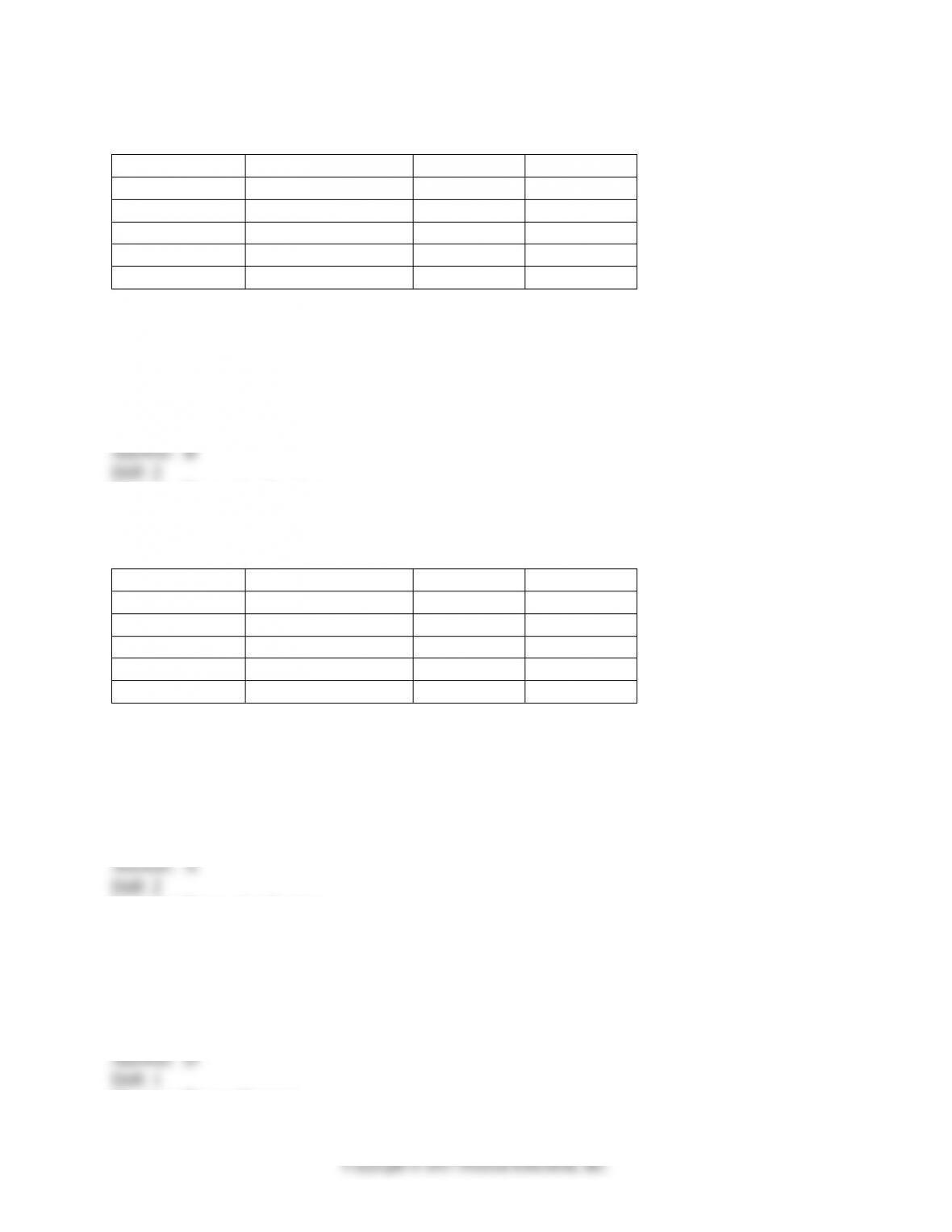
22) Lionworks Enterprises had the following inventory data:
Date
Quantity
Unit Cost
July 1
Beginning inventory
5
$48
July 4
Purchase
10
$53
July 7
Sale
12
July 11
Purchase
9
$56
July 14
Sale
8
Assuming LIFO, what is the ending inventory after the July 14 sale? (Round any intermediary
calculations to the nearest cent and your final answer to the nearest dollar.)
A) $224
B) $200
C) $214
D) $192
Question Type: Application
23) Lionworks Enterprises had the following inventory data:
Date
Quantity
Unit Cost
July 1
Beginning inventory
5
$52
July 4
Purchase
10
$58
July 7
Sale
12
July 11
Purchase
9
$64
July 14
Sale
8
Assuming average cost, what is the ending inventory after the July 14 sale? (Round any
intermediary calculations to the nearest cent and your final answer to the nearest dollar.)
A) $248
B) $256
C) $220
D) $232
Question Type: Application
24) Cost of goods sold equals:
A) ending inventory plus net purchases minus beginning inventory.
B) beginning inventory minus net purchases plus ending inventory.
C) beginning inventory plus net sales minus ending inventory.
D) beginning inventory plus net purchases minus ending inventory.
Question Type: Concept

14
25) When purchasing inventory on account in a perpetual inventory system, which of the
following is TRUE?
A) The journal entry would be exactly the same for all inventory costing methods.
B) LIFO and FIFO inventory valuation methods require a debit to inventory while all others
require a debit to purchases.
C) GAAP does not allow inventory to be purchased on account.
D) The average costing method requires a credit to inventory.
Question Type: Concept
26) In which case will the journal entries relating to inventory differ based on the chosen costing
method?
A) When inventory is purchased on account.
B) When inventory is purchased for cash.
C) When inventory is sold – the revenue entry will differ.
D) When inventory is sold – the inventory entry will differ.
Question Type: Concept
27) Given the following inventory activity, what is ending inventory using the perpetual average
costing method? (Round any intermediary calculations to the nearest cent and your final answer
to the nearest dollar.)
Date
Quantity
Unit Cost
Beginning
Balance
80
$6.00
September 17
Purchase
40
$5.50
September 24
Sale
25
September 29
Purchases
60
$5
A) 155 units @ $5.51
B) 80 units @ $6.00 and 15 units @ $5.50 and 60 units @ $5
C) 95 units @ $5.83 and 60 units @ $5
D) 55 units @ $6.00 and 40 units @ $5.50 and 60 units @ $5
Question Type: Application
15
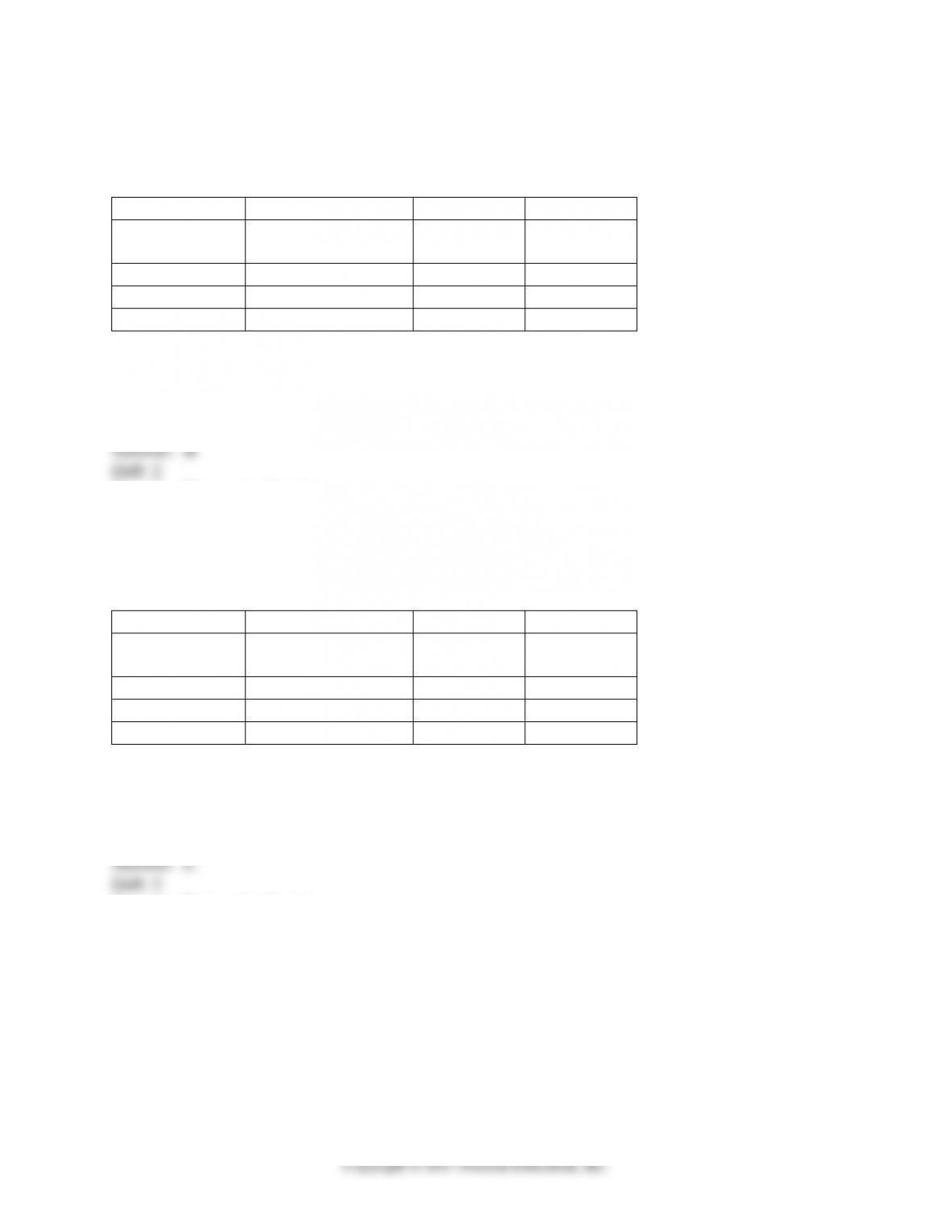
28) Given the following inventory activity, what is ending inventory using the perpetual LIFO
costing method? (Round any intermediary calculations to the nearest cent and your final answer
to the nearest dollar.)
Date
Quantity
Unit Cost
Beginning
Balance
120
$3.00
September 17
Purchase
60
$2.50
September 24
Sale
15
September 29
Purchases
30
$6.00
A) 195 units @ $3.32
B) 120 units @ $3.00 and 45 units @ $2.50 and 30 units @ $6.00
C) 165 units @ $2.83 and 30 units @ $6.00
D) 105 units @ $3.00 and 60 units @ $2.50 and 30 units @ $6.00
Question Type: Application
29) Given the following inventory activity, what is ending inventory using the perpetual FIFO
costing method? (Round any intermediary calculations to the nearest cent and your final answer
to the nearest dollar.)
Date
Quantity
Unit Cost
Beginning
Balance
100
$6.50
September 17
Purchase
30
$3.00
September 24
Sale
55
September 29
Purchases
15
$4.75
A) 90 units at $4.75
B) 80 units @ $6.50 and 10 units @ $4.75
C) 45 units @ $6.50 and 30 units @ $3.00 and 15 units @ $4.75
D) 85 units @ $6.50 and 5 units @ $3.00
Question Type: Application

16
Copyright © 2017 Pearson Education, Inc.
5.3 Compare the effects of the different costing methods on the financial statements
1) One benefit of the LIFO inventory method is that it most closely matches the actual flow of
goods in most cases.
Question Type: Concept
2) When using the FIFO inventory method, the ending inventory has the newer costs.
Question Type: Concept
3) When using the LIFO inventory method, the ending inventory has the newer, higher costs.
Question Type: Concept
4) The choice of inventory costing method does not have an effect on net income.
Question Type: Concept
5) According to the consistency principle, companies may change inventory costing methods
depending on circumstances.
Question Type: Concept
6) The average cost method generates gross profit, net income, and income tax amounts that fall
between the extremes of FIFO and LIFO.
Question Type: Concept
7) In order to pay the least income tax possible in periods of rising inventory costs, the company
should use which of the following inventory costing methods?
A) FIFO
B) LIFO
C) Average cost
D) Specific identification
Question Type: Critical Thinking

17
8) In order to pay the least income tax possible in periods of decreasing inventory costs, the
company should use which of the following inventory costing methods?
A) FIFO
B) LIFO
C) Average cost
D) Specific identification
Question Type: Critical Thinking
9) In order to pay the least income tax possible in periods of constant costs, the company should
use which of the following inventory costing methods?
A) FIFO
B) LIFO
C) Average cost
D) Any method, as there is no effect on net income or taxes for the period if costs are constant.
Question Type: Critical Thinking
10) The most popular inventory costing method is:
A) FIFO.
B) LIFO.
C) average cost.
D) specific identification.
Question Type: Concept
11) ________ produces the lowest cost of goods sold and the highest gross profit when prices are
increasing.
A) FIFO
B) LIFO
C) Average cost
D) Specific identification
Question Type: Critical Thinking

18
12) ________ produces the highest cost of goods sold and the lowest gross profit when prices are
increasing.
A) FIFO
B) LIFO
C) Average cost
D) Specific identification
Question Type: Critical Thinking
13) Companies that want a “middle ground” solution to net income and the amount of income
taxes that the company will pay will value their inventory at:
A) FIFO.
B) LIFO.
C) average cost.
D) specific identification.
Question Type: Critical Thinking
14) ________ helps investors compare a company’s financial statements from one period to the
next.
A) Reliability
B) Consistency
C) Objectivity
D) Entity
15) The consistency principle is mandated by:
A) the IRS.
B) the SEC.
C) GAAP.
D) the federal government.
Question Type: Concept
16) In order to attract investors and borrow on favorable terms, a company would use ________
in times when inventory costs are rising.
A) LIFO
B) FIFO
C) average costing
D) specific-identification costing
Question Type: Critical Thinking

19
17) A drawback to using ________ when inventory costs are rising is that the company reports
lower net income.
A) LIFO
B) FIFO
C) average costing
D) specific-identification costing
Question Type: Critical Thinking
18) Which inventory costing method results in the oldest costs in ending inventory?
A) Average cost
B) Last-In, First-Out
C) First–In, First-Out
D) Average-In, First-Out
Question Type: Concept
5.4 Value inventory using the lower–of-cost-or-market (LCM) rule
1) Under the LCM rule, a business must report inventory at the current replacement cost.
Question Type: Concept
2) Under the conservatism rule, assets and income would be understated, rather than overstated.
Question Type: Concept
3) Under the conservatism principle, liabilities and expenses would be understated, rather than
overstated.
4) The LCM rule compares original cost to current replacement cost to determine the amount at
which inventory should be valued.
Question Type: Concept

20
5) A material amount of value is one large enough to cause someone to change a decision that
has been made.
Question Type: Concept
6) Changing from LIFO to FIFO over two accounting periods could be viewed as a violation of
which accounting concept or principle?
A) Conservatism
B) Consistency
C) Materiality
D) Entity
Question Type: Concept
7) Ignoring a write-off of inventory because it will not make a difference to financial statement
users is an example of:
A) conservatism.
B) consistency.
C) materiality.
D) entity.
Question Type: Application
8) If the replacement cost of inventory is less than its historical cost, the company will write
down the inventory by:
A) debiting Cost of Goods Sold and crediting Inventory.
B) debiting Inventory and crediting Cost of Goods Sold.
C) making a note in the financial statements only.
D) debit Inventory for replacement cost, credit Inventory for historical cost.
Question Type: Application
9) One lot of merchandise was counted at $566.34. A second count of the same merchandise
showed $566.82. The difference could be ignored due to:
A) conservatism.
B) consistency.
C) materiality.
D) entity.
Question Type: Application