
21
95) Which of the following is the least liquid?
A) U.S. Treasury bills
B) commercial paper
C) money-market mutual funds
D) federal agency securities
Keywords: Commercial Paper, Liquidity
Learning Obj.: L.O. 17.1
AACSB: Reflective Thinking
96) The financial manager is concerned with
A) striking a balance between holding too much and too little cash.
B) maintaining high levels of profitability.
C) minimizing the chance of insolvency.
D) all of the above
Keywords: Working Capital Management
Learning Obj.: L.O. 17.1
AACSB: Reflective Thinking
97) Banker’s acceptances have the following characteristics EXCEPT
A) typical maturities of 1 to 5 years.
B) fully taxable at the federal, state, and local levels.
C) are sold on a discount basis and payable to the bearer.
D) are not “issued” in predetermined denominations.
Keywords: Banker’s Acceptances
Learning Obj.: L.O. 17.1
AACSB: Reflective Thinking
98) If you were a treasurer for a Fortune 1,000 corporation who has responsibility for investing “excess
cash balances,” which of the following alternatives would you be least likely to select?
A) commercial paper
B) common stock
C) bankers’ acceptances
D) U.S. Treasury bills
Keywords: Excess Cash, Marketable Securities
Learning Obj.: L.O. 17.1
AACSB: Reflective Thinking

22
99) ________ is a short-term promissory note sold by large corporations to raise cash.
A) Repurchase agreement
B) Money-market mutual fund
C) Commercial paper
D) U.S. Treasury bill
Keywords: Commercial Paper
Learning Obj.: L.O. 17.1
AACSB: Reflective Thinking
100) Considerations in the selection of a proper marketable-securities mix include all of the following
EXCEPT
A) financial risk.
B) interest rate risk.
C) maturity.
D) liquidity.
Keywords: Marketable Securities Mix
Learning Obj.: L.O. 17.1
AACSB: Reflective Thinking
101) Total float consists of each of the following elements EXCEPT
A) mail float.
B) processing float.
C) transit float.
D) audit float.
Keywords: Total Float, Mail Float, Processing Float, Transit Float
Learning Obj.: L.O. 17.1
AACSB: Reflective Thinking
102) A retailer sells most of its merchandise on credit and bills clients monthly. Which of the following
elements of float does the retailer have the most control over?
A) mail float
B) processing float
C) transit float
D) disbursing float
Keywords: Processing Float
Learning Obj.: L.O. 17.1
AACSB: Analytical Thinking
23
103) A large corporation has annual sales revenues of $6 billion. The corporation currently earns 2.25% on
its money-market account. If the corporation can reduce its float by three days by making its billing and
collection functions more efficient, the company‘s operating profits will increase by approximately
A) $3,069,863.
B) $2,196,500.
C) $1,350,000.
D) $1,109,589.
Keywords: Float
Learning Obj.: L.O. 17.1
AACSB: Analytical Thinking
104) Given that short-term interest rates typically fluctuate less than long-term rates, interest rate risk is
least for
A) treasury bills.
B) common stock.
C) long-term government bonds.
D) medium-term corporate bonds.
Keywords: U.S. Treasury Bills, Interest Rate Risk
Learning Obj.: L.O. 17.1
AACSB: Analytical Thinking
105) Money-market funds
A) are tax exempt.
B) typically invest in a diversified portfolio of short-term, high-grade debt instruments.
C) are generally very profitable but fail to provide liquidity to the small investor.
D) typically sell shares to the public in $25,000 denominations.
Keywords: Money-Market Mutual Funds
Learning Obj.: L.O. 17.1
AACSB: Reflective Thinking
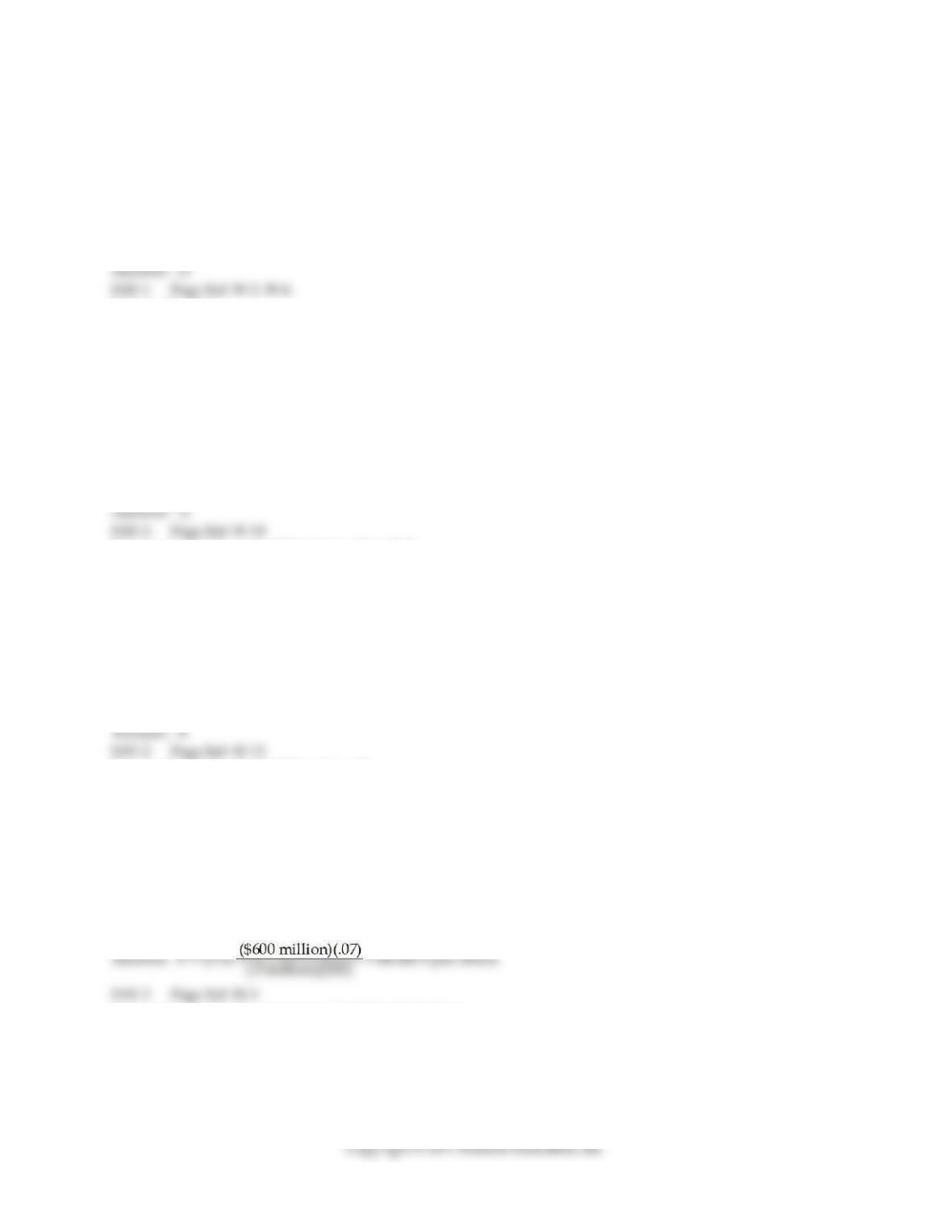
106) Brett‘s, Inc. has received a proposal from its bank to establish a lock-box system to accelerate the
receipt of $600 million annually on 900,000 checks. By its own analysis, Brett’s, Inc. believes such a system
would decrease total float by 3.5 days. If Brett’s, Inc. can earn 7 percent before taxes on the released funds,
what is the maximum that Brett’s, Inc. should be willing to pay the bank per check for the service? Use a
365-day year.
Keywords: Lockbox Arrangement, Cost/Benefit Analysis
Learning Obj.: L.O. 17.1
AACSB: Analytical Thinking
24
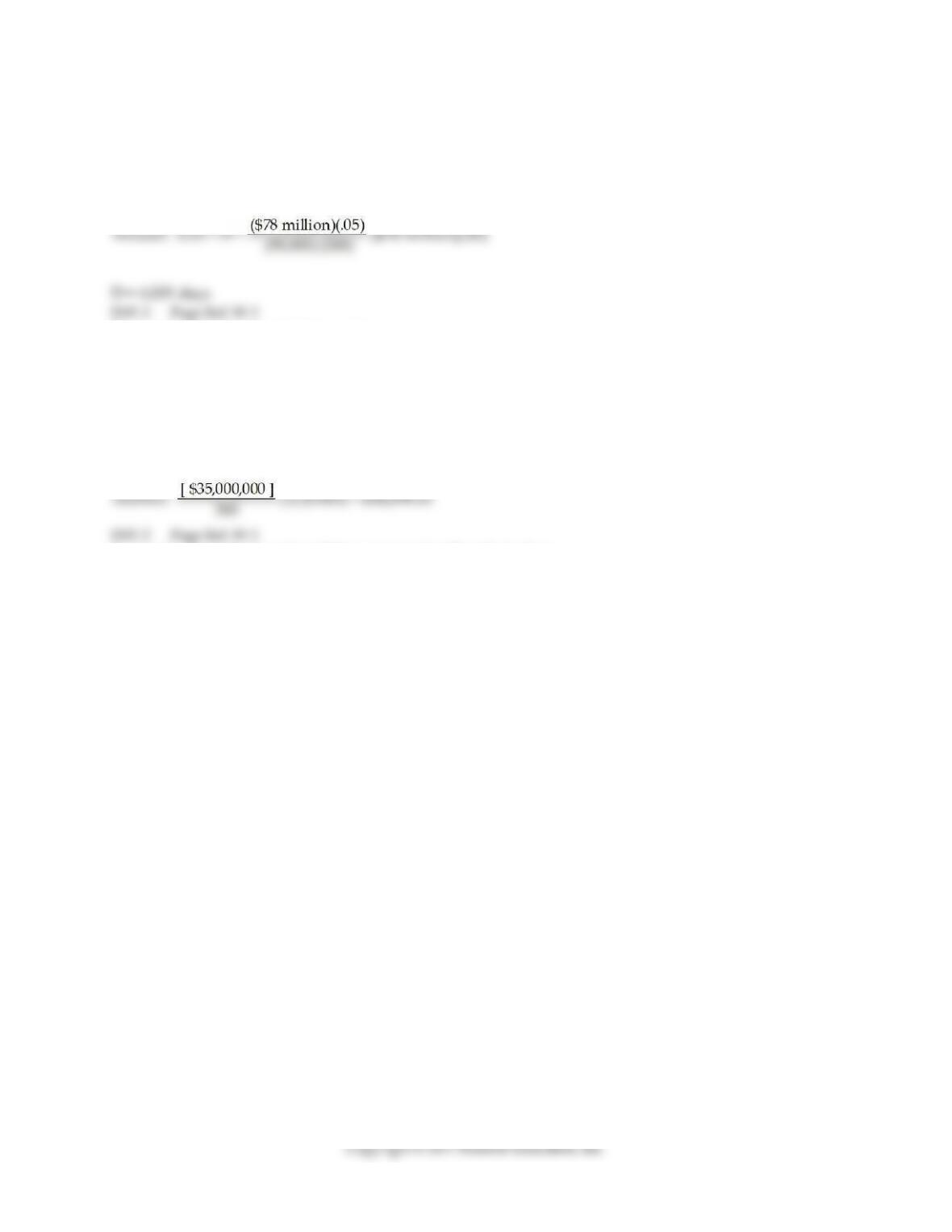
107) Brett‘s, Inc. is a national distributor of women’s apparel. The company expects to receive 95,000
checks during the coming year totaling $78 million. A large bank has offered to install a lock-box system
at a charge of $0.45 per processed check. If Brett’s, Inc. is able to earn 5 percent before tax on additional
funds, what is the minimum amount of total float days that must be saved to make the system
worthwhile? Use a 365-day year.
Keywords: Float, Lockbox Arrangement
Learning Obj.: L.O. 17.1
AACSB: Analytical Thinking
108) Brett‘s, Inc. expects to have $35 million in credit sales during the coming year. In spite of a national
distributing system, all remittances are sent to the home office. A proposed system can eliminate 3 days
of float, releasing funds which, when invested, will earn 6.5 percent. What annual savings can Brett’s, Inc.
expect if the system is implemented? Use a 365-day year.
Keywords: Float, Working Capital Management, Cost/Benefit Analysis
Learning Obj.: L.O. 17.1
AACSB: Analytical Thinking
25
109) Jay‘s Lumber Supplies earns 2.5 percent on its investment in marketable securities. A draft
disbursing system has been proposed that will increase disbursement float by 4 days. Purchases next year
are expected to total $18 million. Individual payments average $1,000. Use a 365-day year.
a. If the draft system is adopted, what amount of funds can the firm expect to release during the year?
b. If each issue draft costs the firm $0.30, should the draft system be adopted?
c. Should the firm consider any other factors?
Keywords: Draft System
Learning Obj.: L.O. 17.1
AACSB: Analytical Thinking
110) Howton Mining expects to have credit sales of $8,000,000 this year. First National Bank is offering
Howton Mining a lock-box system for $1,200 per month. Howton Mining estimates that the new lock-box
system will reduce float by 4.5 days. What rate of return must Howton Mining earn on its marketable
securities to make it worthwhile for the company to institute this lock–box system? Use a 365-day year.
Keywords: Lockbox System, Rate of Return, Cost/Benefit Analysis
Learning Obj.: L.O. 17.1
AACSB: Analytical Thinking
26
111) Crimson Plumbing Supplies expects total sales of $9,000,000 this year. Ten percent of the company‘s
sales are paid in cash; credit sales are usually paid by check. The average check size is $3,000. Second
National Bank is offering the company a lock-box system. The fees are $800 per month plus $.60 per
check. Short-term marketable securities are currently earning 8 percent per year. What reduction in check
collection time is necessary for Carrollton Plumbing Supplies to be neither better nor worse off from
adopting the proposed system? Use a 365-day year.
Keywords: Float, Cost/Benefit Analysis, Lockbox System
Learning Obj.: L.O. 17.1
AACSB: Analytical Thinking
112) Premium Seed Sales, Inc. expects to generate sales of $22,000,000 in the coming year. All sales are
done on a credit basis, net 45 days. Premium Seed has estimated that it takes an average of three days for
payments to reach their central office and an additional two days to process the payments. What is the
opportunity cost of the funds tied up in the mail and processing? Premium Seed uses a 360-day year in all
calculations and can invest free funds at 6.5%.
Keywords: Opportunity Cost, Float
Learning Obj.: L.O. 17.1
AACSB: Analytical Thinking
113) You have a choice between investing in a corporate bond or a municipal bond. The corporate bond
has an annual yield of 10 percent, while the municipal bond has an annual yield of 7 percent. At what tax
rate would you be indifferent between buying the corporate bond or the municipal bond?
Keywords: Municipal Bond, Taxes
Learning Obj.: L.O. 17.1
AACSB: Analytical Thinking
27
114) The corporate treasurer of Wooden Furniture Inc. is considering the purchase of either a municipal
obligation with a 6.1% coupon or a corporate bond with a 9.5% return. Both bonds have a $1,000 par
value. The company is currently in the 35% marginal tax bracket. Which security should the treasurer
recommend?
Keywords: Municipal Bond, After-Tax Yield
Learning Obj.: L.O. 17.1
AACSB: Reflective Thinking
115) The selection of a proper marketable-securities mix involves evaluation of certain criteria. What are
these criteria and why are they important?
Keywords: Marketable Securities, Financial Risk, Interest Rate Risk, Liquidity, Taxability, Yields
Learning Obj.: L.O. 17.1
AACSB: Reflective Thinking
116) What are the three motives for holding cash?
Keywords: Cash Management Program, Precautionary Motive, Cash Flow Forecasting
Learning Obj.: L.O. 17.1
AACSB: Reflective Thinking
28
117) Describe the relationship between the firm‘s cash management program and the firm‘s risk of
insolvency.
Keywords: Cash Management, Insolvency
Learning Obj.: L.O. 17.1
AACSB: Reflective Thinking
118) Define float and its origins in the cash management process (that is, mail processing and transit).
Keywords: Float
Learning Obj.: L.O. 17.1
AACSB: Reflective Thinking
119) What is a lockbox arrangement, and how does its use reduce a firm’s float?
Keywords: Lock-Box Arrangement
Learning Obj.: L.O. 17.1
AACSB: Reflective Thinking

29
Copyright © 2017 Pearson Education, Inc.
Learning Objective 17.2
1) Accounts receivable is an asset representing sales made on credit.
Keywords: Accounts Receivable
Learning Obj.: L.O. 17.2
AACSB: Reflective Thinking
2) For many industries, accounts receivable comprise as much as 25 percent of total assets.
Keywords: Accounts Receivable
Learning Obj.: L.O. 17.2
AACSB: Reflective Thinking
3) Accounts receivable variables under control of the financial manager include the terms of credit sales
and the quality of credit customers.
Keywords: Accounts Receivable, Credit Terms, Credit Quality
Learning Obj.: L.O. 17.2
AACSB: Reflective Thinking
4) The financial manager typically cannot control the level of credit sales, and hence the company‘s
investment in accounts receivable, as the level of credit sales is determined in large part by the nature of
the business enterprise.
Keywords: Accounts Receivable Management, Credit Terms
Learning Obj.: L.O. 17.2
AACSB: Reflective Thinking
5) Terms of sale are frequently changed by the financial manager in order to increase sales.
Keywords: Terms of Sale
Learning Obj.: L.O. 17.2
AACSB: Reflective Thinking
6) One method used to monitor the collections of accounts receivable is aging.
Keywords: Accounts Receivable Aging
Learning Obj.: L.O. 17.2
AACSB: Reflective Thinking
30
7) Efficient collection of accounts receivable helps to determine both the profitability and the liquidity of
the firm.
Keywords: Accounts Receivable, Profitability, Liquidity
Learning Obj.: L.O. 17.2
AACSB: Reflective Thinking
8) In terms of trade credit, default costs vary indirectly with the quality of the customer.
Keywords: Trade Credit, Customer Quality
Learning Obj.: L.O. 17.2
AACSB: Reflective Thinking
9) The decision to forgo the discount available to those customers who pay early has an advantage as well
as a disadvantage.
Keywords: Trade Credit, Cash Discount
Learning Obj.: L.O. 17.2
AACSB: Reflective Thinking
10) According to the Altman model, multiple discriminant analysis indicates that those applicants with a
Z score below 2.7 have a significant probability of filing for bankruptcy within a year.
Keywords: Altman Model, Z-Score, Bankruptcy
Learning Obj.: L.O. 17.2
AACSB: Reflective Thinking
11) A company‘s investment in accounts receivable is determined by the company’s level of sales, percent
of credit sales to total sales, and credit and collection policies.
Keywords: Accounts Receivable
Learning Obj.: L.O. 17.2
AACSB: Reflective Thinking
12) Current assets in order of liquidity are cash, marketable securities, inventory, and accounts receivable.
Keywords: Current Assets, Liquidity
Learning Obj.: L.O. 17.2
AACSB: Reflective Thinking