Chapter 7
Multiple Choice
1. Being able to read and understand cues of others and clearly express thoughts, feelings, and
intentions through facial expressions, gestures, and body language refers to which categories of
social functioning?
a. Social reciprocity
b. Social validity
c. Nonverbal communication
d. Social cognition
2. The give-and-take of social interactions is referred to as what?
a. Social reciprocity
b. Social validity
c. Nonverbal communication
d. Social cognition
3. Which category of social functioning is referred to as understanding the thoughts, intentions,
motives, and behaviors of ourselves and others, including social norms and values?
a. Social reciprocity
b. Social validity
c. Nonverbal communication
d. Social cognition
4. What concepts is referred to as responsible for understanding the unwritten social rules and
customs of society, including figures of speech?
a. Social reciprocity
b. Declarative knowledge
c. Nonverbal communication
d. Social cognition
5. Which concept is referred to as the social significance of treatment objectives, intervention
strategies, and intervention results?
a. Social reciprocity
b. Social validity
c. Declarative knowledge
d. Social cognition
6. Which instructional strategy is known as the “incidental activation of knowledge structures”?
a. Social Stories
b. Video Modeling
c. Peer-mediated instruction
d. Priming
7. Using nondisabled classmates to help with social skills instruction is known as what strategy?
a. Social Stories
b. Peer-mediated instruction
c. Priming
d. Scripting
8. Using an explicit description of what to say is known as what instructional strategy?
a. Social Stories
b. Video Modeling
c. Priming
d. Scripting
9. Narratives used to teach social skills are known as what?
a. Social Stories
b. Video Modeling
c. Peer-mediated instruction
d. Priming
10. Which instructional strategy uses the student himself or a model to demonstrate social skills?
a. Social Stories
b. Video Modeling
c. Priming
d. Scripting
Short answer
1. List the four common social skills deficits in individuals with ASD.
2. Briefly describe the difference between a skill acquisition deficit and a performance deficit.
3. What is meant by “social competence”?
4. List 4 strategies for social skills acquisition.
5. List 4 strategies for enhancing performance of existing social skills.
Essay
1. Discuss the importance of social skills instruction for students with ASD, including deficit areas.
2. Describe the research on social skills instruction for students with ASD.
3. Describe the social development of children from early childhood to adolescence.
4. List and briefly describe each of the 5 strategies for social skills acquisition.
5. List and briefly describe each of the 5 strategies for enhancing the performance of existing social
skills.
6. Describe how teachers can facilitate generalization of social skills.
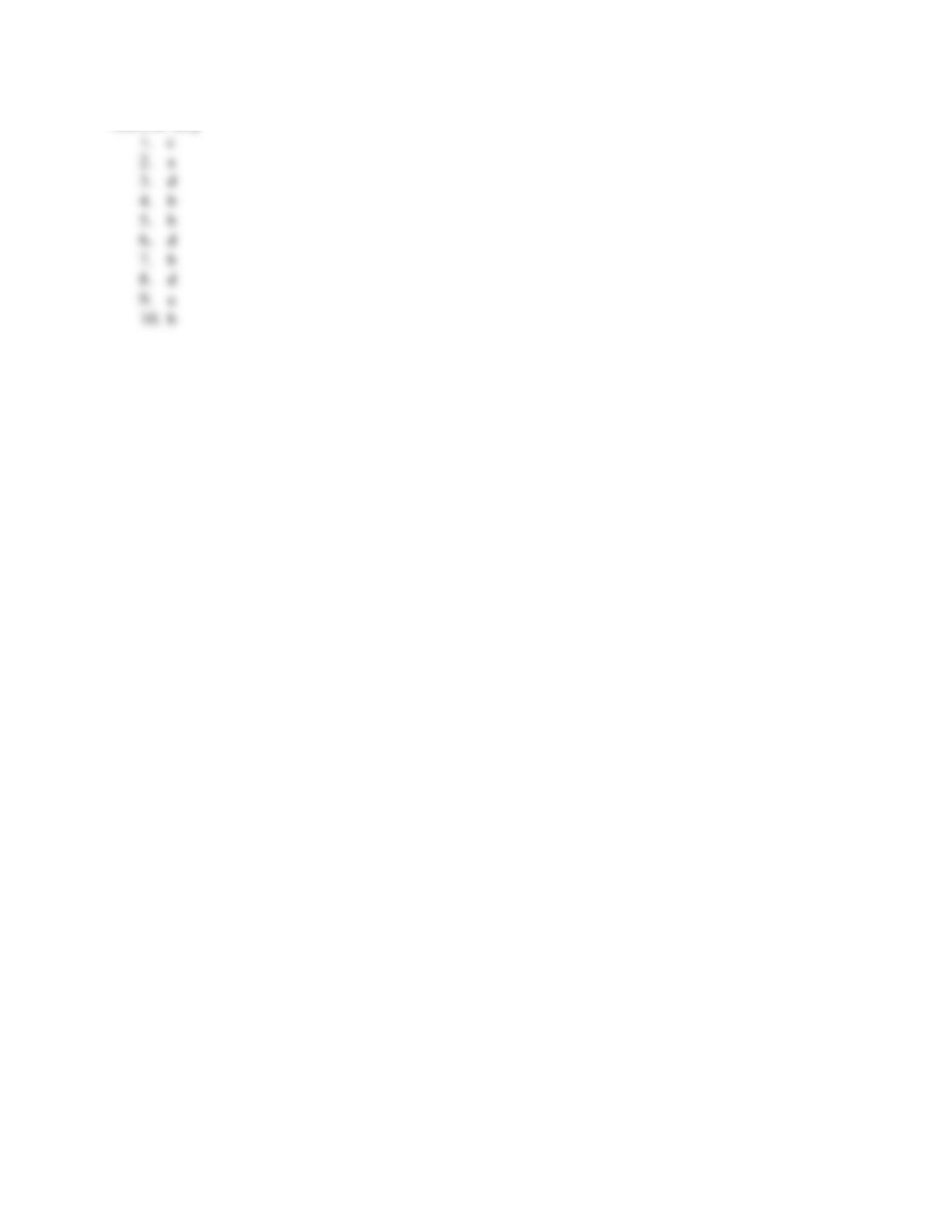
Answer Key