Exam
Name___________________________________
SHORT ANSWER. Write the word or phrase that best completes each statement or answers the question.
Answer the question.
1)
The initial cost of constructing a flood control dam is estimated to be $5 million, with
annual upkeep costs of $340,000. Annual benefits (e.g., reduced flood damage, agricultural
development, and tourism, etc.) are expected to be $1.25 million, whereas the disbenefits
from significant ecological and human social changes are expected to be $0.025 million per
year. Assume the dam will have a useful life of 53 years. At an interest rate of 17% per
year, should the dam be constructed on the basis of its conventional B–C ratio, with AW as
the equivalent–worth measure?
1)
Answer:
Conventional B–C =1.03 > 1; therefore construct the dam.
Explanation:
AWB (17%) =$1,250,000 –$25,000
=$1,225,000
AWC(17%) =$5,000,000(A/P, 17%, 53) +$340,000
=$5,000,000(0.1700) +$340,000
=$1,190,000.00
Conventional B–C =$1,225,000/$1,190,000.00
=1.03
2)
Two alternatives have been proposed for a government project. The estimated costs
associated with each alternative are given below. Use the modified B–C ratio method, with
AW as the equivalent–worth measure, to determine which alternative should be selected at
an interest rate of 3% per year.
Alternative I Alternative II
Initial cost, $ $1,250,000 $1,050,000
Annual maintenance, $/yr $180,000 $125,000
Annual benefits, $/yr $550,000 $540,000
Salvage value, $ $11,000 $9800
Project life, years 28 28
2)
Answer:
B/CModified(II) =7.45
B
CModified(I–II) = –4.23
Select Alternative II.
1
Explanation:
AW(Benefits– O&M, I) =$550,000 –$180,000 =$370,000
AW(Benefits– O&M, II) =$540,000 –$125,000 =$415,000
AW(Costs, I) =$1,250,000(A/P, 3%, 28) –$11,000(A/F, 3%, 28)
=$1,250,000(0.0533) –$11,000(0.0233)
=$66,368.70
AW(Costs, II) =$1,050,000(A/P, 3%, 28) –$9800(A/F, 3%, 28)
=$1,050,000(0.0533) –$9800(0.0233)
=$55,736.66
Rank order: DN II I
B/CModified (II) =$415,000/$55,736.66
=7.45
B–C(II) > 1.0; therefore, Alternative II is acceptable.
B
CModified(I–II) = $(10,000– 55,000)/[$200,000(A/P, 3%, 28)– $1,200(A/F, 3%,
28)] = –$45,000/[$200,000(0.0533)– $1,200(0.0233)]
= –4.23
B
C(I–II) < 1.0; therefore, the increment required for Alternative I is not
acceptable.
Select Alternative II.
3)
For flood control purposes, the government is considering three undeveloped sites for a
water detention area. The estimated costs associated with each alternative are given
below. Use the conventional B–C ratio method, with AW as the equivalent–worth
measure, to determine which alternative should be selected at an interest rate of 6% per
year. Assume the site will be used for 17 years before being developed for other purposes.
Site A Site B Site C
Initial cost, $ $1,350,000 $1,250,000 $1,500,000
Annual maintenance, $/yr $320,000 $300,000 $345,000
Annual benefits, $/yr $1,540,000 $1,500,000 $1,595,000
Annual disbenefits, $/yr $530,000 $500,000 $560,000
3)
Answer:
B/C (B) =2.39
B
C(A–B) =0.34
B
C(C–B) =0.51
Select Site B.
2

Explanation:
Rank order: DN B A C
AW(Benefits, B) =$1,500,000 –$500,000 =$1,000,000
AW(Costs, B) =$1,250,000(A/P, 6%, 17) +$300,000
=$1,250,000(0.0954) +$300,000
=$419,250.00
B/C (B) =$1,000,000/$419,250.00
=2.39
B–C(B) > 1.0; therefore, Site B is acceptable.
B
C(A–B) = $(40,000–30,000)/[$100,000(A/P, 6%, 17) + $20,000]
= $10,000/[$100,000(0.0954) + $20,000]
=0.34
B
C(A–B) < 1.0; therefore, the increment required for Site A is unacceptable.
Discard A.
B
C(C–B) = $(95,000–60,000)/[$250,000(A/P, 6%, 17) + $45,000]
= $35,000/[$250,000(0.0954) + $45,000]
=0.51
B
C(C–B) < 1.0; therefore, the increment required for Site C is unacceptable.
Discard C.
Select Site B.
3
4)
A Chinese official is considering construction of a gondola lift system that transports
visitors from the tops of the mountain peaks to the valley at one of the National Forest
Parks in China. The lift system is expected to last for 20 years. Annual maintenance cost of
$260,000 and inspection and repaint costs of $45,000 every 5 years are expected. Annual
benefits are estimated to be $420,000. If an interest rate of 17% per year and a B–C ratio of
at least 2.5 are used, what is the maximum investment cost allowed for the lift system?
4)
Answer:
Initial cost = –$551,861.83
Explanation:
Let P = initial cost
For B–C to equal 2.5, AWB(17%) =2.5AWC(17%)
AWB(12%) =$420,000
2.5AWC(12%) = (2.5)($P(A/P, 17%, 20)) + (2.5)$260,000 + ($2.5)$45,000[(F/P, 17%,
5) +
(F/P, 17%, 10)+(F/P, 17%, 15)](A/F, 17%, 20))
= $(2.5)($P($0.1777) + $(650,000) + ($112,500)([(2.1924) + (4.8068)
+ (10.5387)]
(0.0077))
=$0.4443P +$665,192.21
P = [$420,000 –$665,192.21]/[0.4443]
= –$551,861.83
5)
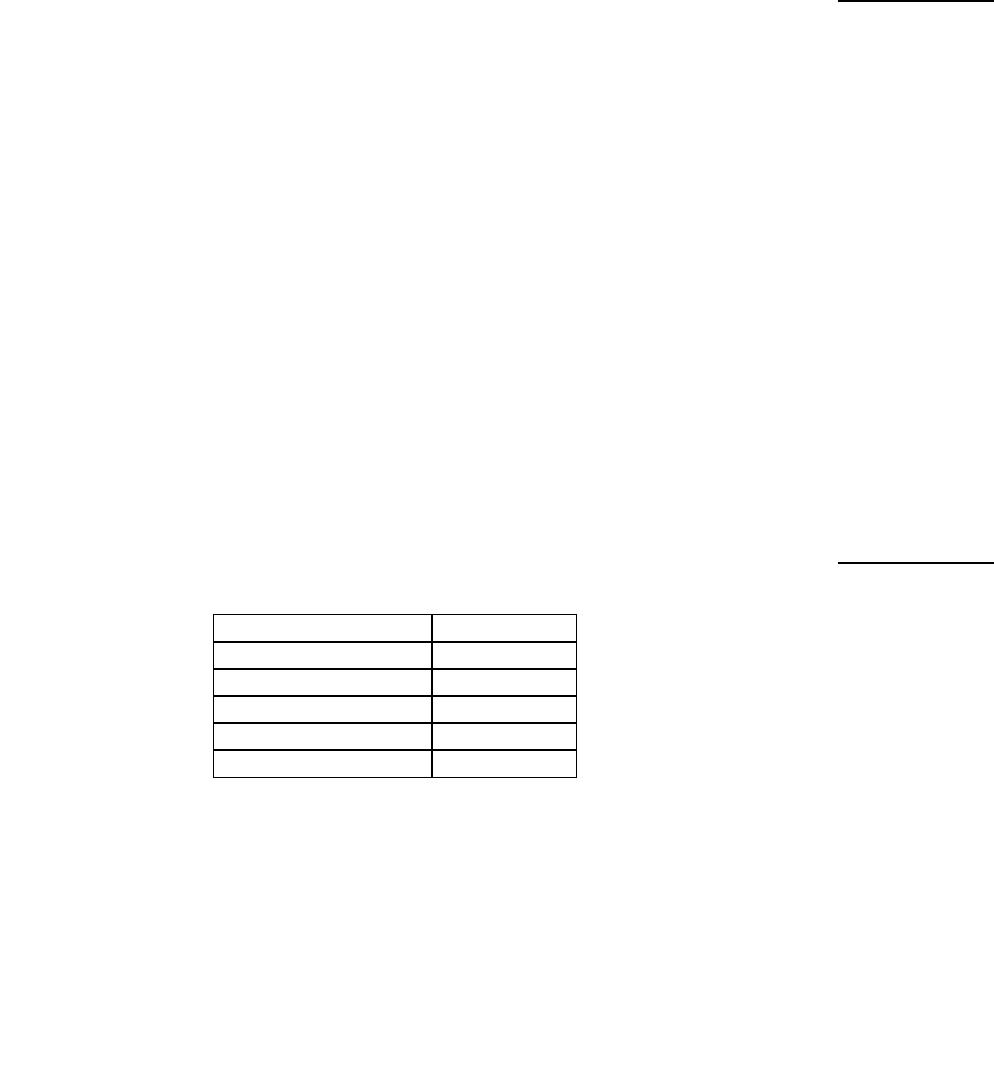
Calculate the modified B–C ratio, with PW as the equivalent–worth measure, for the
following cash flow estimates of a public project at an interest rate of 2% per year.
Items Cash Flow, $
Initial cost, $ 600,000
AW of benefits, $/yr 580,000
PW of disbenefits, $ 580,000
O&M costs, $/yr 25,000
Project life, yr 20
5)
Answer:
Modified B–C =14.16
Explanation:
PWB–O&M–D(2%) = ($580,000 –$25,000)(P/A, 2%, 20) –$580,000
=$555,000(16.3514) –$580,000
=$8,495,027.00
PWC(2%) =$600,000
Modified B–C =$8,495,027.00/$600,000
=14.16
4

6)
As part of a broad effort to invigorate its pipeline and move more aggressively into
biotechnology, a major pharmaceutical company plans to set up a new division dedicated
to developing biotherapeutic drugs and research technologies. The company expects to
pay $120 million for set up costs of its new division now and $6 million operating costs
each year for the next 12 years. The company estimates that the new division will be able
to generate annual revenue of $42 million beginning 7 years from now. What is the
conventional B–C ratio for this investment if the company’s minimum attractive rate of
return is 14% per year and the project life is 12 years?
6)
Answer:
Conventional B–C =0.48
Explanation:
PWB(14%) = $(42,000,000)(P/A, 14%, 6)(P/F, 14%, 6)
= $(42,000,000)(3.8887)(0.4556)
=$74,411,052.24
PWC(14%) =$120,000,000 + $(6,000,000)(P/A, 14%, 12)
=$120,000,000 + $(6,000,000)(5.6603)
=$153,961,800.00
Conventional B–C =$74,411,052.24/$153,961,800.00
=0.48
7)
The cost of building Runyang Bridge in China, the world’s third longest suspension bridge,
was approximately $5 million. The indefinite upkeep costs are estimated to be $250,000
per year. Annual benefits of $340,000 and annual disbenefits of $41,000 have also been
identified. Using an interest rate of 17% per year, determine the conventional B–C ratio.
7)
Answer:
Conventional B–C =0.27
Explanation:
CWB (17%) =$340,000/0.17 –$41,000/0.17
=$1,758,823.53
CWC (17%) =$5,000,000 +$250,000/0.17
=$6,470,588.24
Conventional B–C =$1,758,823.53/$6,470,588.24
=0.27
5
8)
Two renewal energy alternatives are available for providing energy at a remote federal
research facility. The cash flow estimates associated with each alternative are given below.
Use the conventional B–C ratio method, with AW as the equivalent–worth measure, to
determine which alternative should be selected at an interest rate of 14% per year over a
25–year study period. One alternative must be selected.
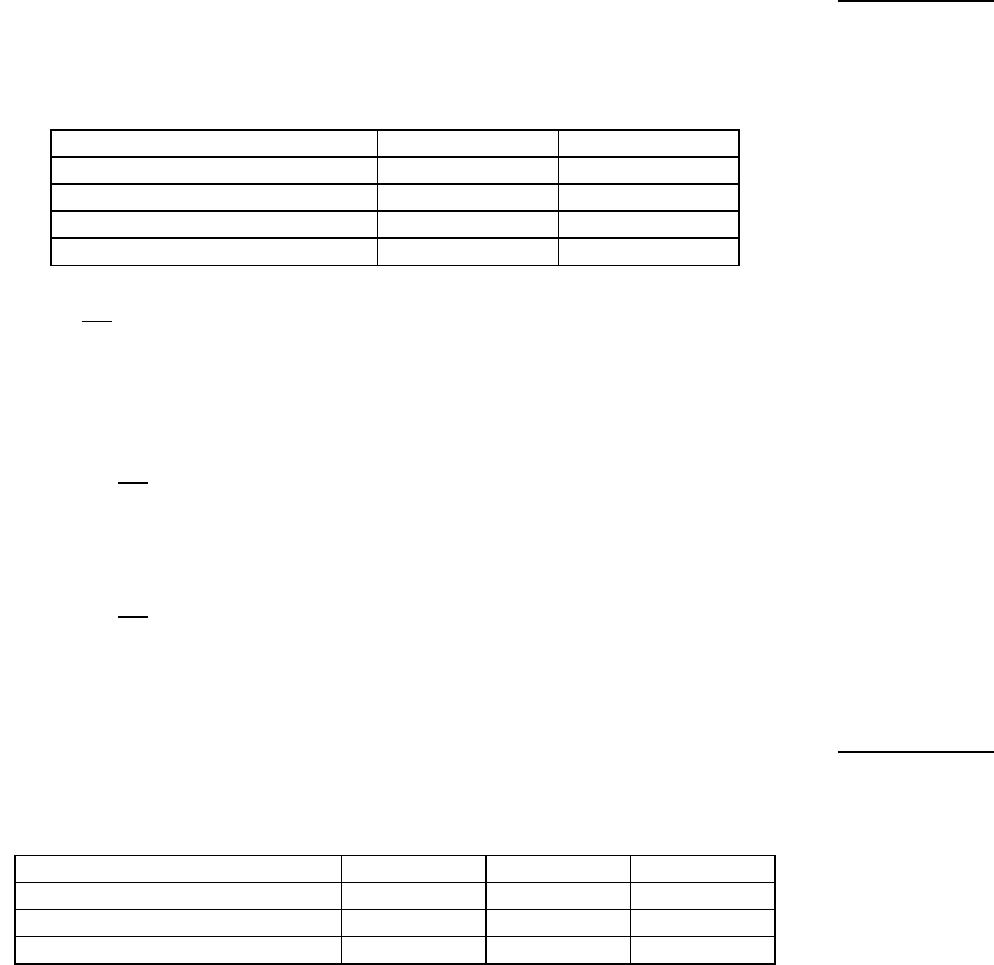
Alternative I Alternative II
Initial cost, $ $1,000,000 $990,000
Annual maintenance, $/yr $380,000 $359,500
Annual benefits, $/yr $500,000 $459,500
Salvage value, $ $17,000 $15,800
8)
Answer:
B
C(I–II) =1.85
Select Alternative I.
Explanation:
Rank order: II I
B
C(I–II) = $40,500/[$10,000(A/P, 14%, 25) + $20,500 – $1,200(A/F, 14%, 25)]
= $40,500/[$10,000(0.1455) + $20,500 – $1,200(0.0055)]
=1.85
B
C(I–II) > 1.0; therefore, the increment required for Alternative I is acceptable.
Select Alternative I.
9)
Three independent projects are available for a secret government agency. The estimated
costs associated with each alternative are given below. Use the conventional B–C ratio
method to determine which alternative(s), if any, should be selected at an interest rate of
7% per year. Assume a project life of 20 years and a B–C ratio of at least 1 for evaluation.
Project A Project B Project C
Initial cost, $ $1,300,000 $1,200,000 $1,450,000
Annual benefits, $/year $490,000 $450,000 $535,000
Annual disbenefits, $/year $310,000 $280,000 $345,000
9)
Answer:
B/C (A) =1.47
B/C (B) =1.50
B/C (C) =1.39
Select the projects that have a B–C ratio of at least 1.
6
Explanation:
AW(Benefits, A) =$490,000 –$310,000 =$180,000
AW(Costs, A) =$1,300,000(A/P, 7%, 20)
=$1,300,000(0.0944)
=$122,720.00
B/C (A) =$180,000/$122,720.00
=1.47
AW(Benefits, B) =$450,000 –$280,000 =$170,000
AW(Costs, B) =$1,200,000(A/P, 7%, 20)
=$1,200,000(0.0944)
=$113,280.00
B/C (B) =$170,000/$113,280.00
=1.50
AW(Benefits, C) =$535,000 –$345,000 =$190,000
AW(Costs, C) =$1,450,000(A/P, 7%, 20)
=$1,450,000(0.0944)
=$136,880.00
B/C (C) =$190,000/$136,880.00
=1.39
Select the projects that have a B–C ratio of at least 1.
10)
Duck Construction has proposed two alternatives for constructing a new bridge in Oregon.
Based on data from recent bridge construction projects of comparable size, the estimated
costs for each alternative are given below. Use the conventional B–C ratio method, with
PW as the equivalent–worth measure, to determine which alternative should be selected at
an interest rate of 9% per year. Assume a study period of 35 years.
Alternative I Alternative II
Construction and design costs, $M $1,400,000 $1,410,000
Annual maintenance, $/yr $170,000 $190,500
Annual benefits, $/yr $690,000 $712,500
10)
Answer:
Conventional B–C(I) =2.28
B
C(II–I) =1.05
Select Alternative II.
7

Explanation:
PW(Benefits, I) =$690,000(P/A, 9%, 35)
=$690,000(10.5668)
=$7,291,092.00
PW(Benefits, II) =$712,500(P/A, 9%, 35)
=$712,500(10.5668)
=$7,528,845.00
PW(Costs, I) =$1,400,000 +$170,000(P/A, 9%, 35)
=$1,400,000 +$170,000(10.5668)
=$3,196,356.00
PW(Costs, II) =$1,410,000 +$190,500(P/A, 9%, 35)
=$1,410,000 +$190,500(10.5668)
=$3,422,975.40
Rank order: DN I II
B–C(I) =$7,291,092.00/3,196,356.00
=2.28
B–C(I) > 1.0; therefore, Alternative I is acceptable.
B
C(II–I) = $22,500(P/A, 9%, 35)/[$10,000 + $20,500(P/A, 9%, 35)]
=$237,753.00/$226,619.40
=1.05
B
C(II–I) > 1.0; therefore, the increment required for Alternative II is acceptable.
8
Answer Key
Testname: C10
1)
Conventional B–C =1.03 > 1; therefore construct the dam.
2)
B/CModified(II) =7.45
B
CModified(I–II) = –4.23
Select Alternative II.
3)
B/C (B) =2.39
B
C(A–B) =0.34
B
C(C–B) =0.51
Select Site B.
4)
Initial cost = –$551,861.83
5)
Modified B–C =14.16
6)
Conventional B–C =0.48
7)
Conventional B–C =0.27
8)
B
C(I–II) =1.85
Select Alternative I.
9)
B/C (A) =1.47
B/C (B) =1.50
B/C (C) =1.39
Select the projects that have a B–C ratio of at least 1.
10)
Conventional B–C(I) =2.28
B
C(II–I) =1.05
Select Alternative II.